
Science Worksheets
44,980 subject resources
Ocean Currents Worksheet | Standards-Aligned Grade 6 Science Practice
JCreated byJ.S SheetsLearning Objectives
- Understand how ocean currents are driven by wind patterns and Earth's rotation.
- Explain how ocean currents influence regional climates and weather patterns.
- Identify the effects of warm and cold currents on coastal environments.
Also included in: Grade 6 Climate and Atmospheric Systems Science Lesson Bundle: Florida NGSSS +1 more
Instant download

Grade 6 Ocean Currents Worksheet | NGSS Practice PDF
 Created byClear Sky Classroom
Learning Objectives
- Explain how ocean currents move water and transport heat around Earth.
- Identify how wind patterns and Earth’s rotation influence surface currents.
- Describe how warm and cold currents affect coastal climates compared with inland areas.
Instant download

Ocean Currents Worksheet | Grade 6 Weather & Climate Science Activity
 Created byPrism Point Learning
Learning Objectives
- Explain how wind patterns and Earth’s rotation help create ocean current systems.
- Describe how moving warm and cool water affects coastal climates and weather.
- Identify key differences between surface currents and deeper ocean movement.
Also included in: Grade 6 Weather & Climate Science Lesson Bundle | Florida NGSSS
Instant download

Grade 6 Science | Ocean Currents - Daily Reading Comprehension
 Created byCoral Reef Learning
Learning Objectives
- Understand what ocean currents are and how they move water across the globe.
- Learn the causes of ocean currents, including wind patterns and Earth's rotation.
- Explore how ocean currents influence regional climates and weather.
Instant download

Grade 6 Science – Ocean Currents & Climate | Daily Reading Worksheet
 Created byBright Mind Resources
Learning Objectives
- Understand key concepts related to Science
- Apply knowledge through practice questions
- Demonstrate comprehension of the material
Also included in: Climate Grade 6 Science Daily Reading Worksheets Lesson Bundle | Florida NGSSS +1 more
Instant download

Grade 6 Science | Ocean Currents Worksheet | Florida NGSSS
 Created byLumora Learning
Learning Objectives
- Explain how wind patterns and Earth’s rotation drive ocean currents
- Describe how ocean currents transport heat and moisture and influence regional climates
- Use cause-and-effect reasoning to connect ocean current temperature to coastal weather
Instant download
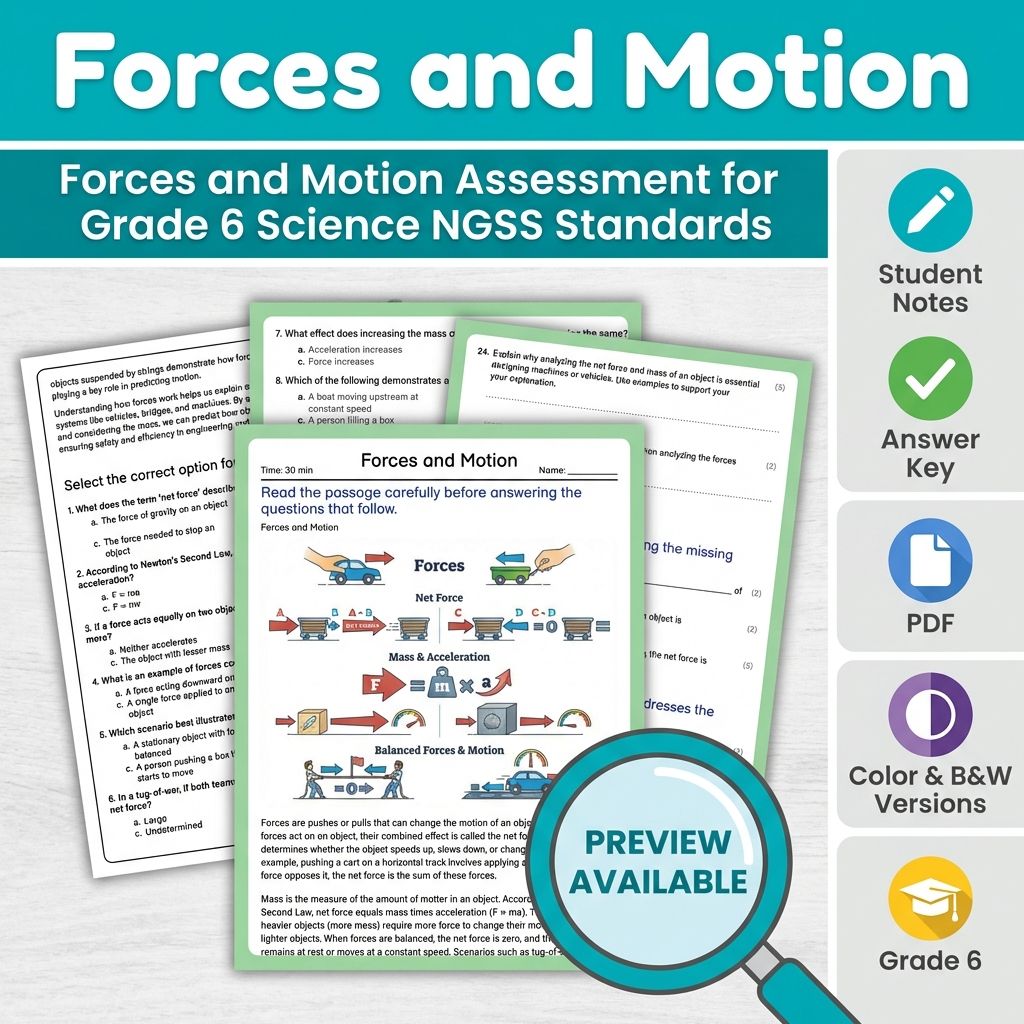
Forces and Motion Assessment for Grade 6 Science NGSS Standards
Created byPrism Point LearningLearning Objectives
- Explain how net force and mass influence the motion of objects.
- Describe real-life scenarios involving forces, such as carts on tracks and tugging systems.
- Apply the formula net force equals mass times acceleration to analyze motion.
Also included in: Grade 6 Science Mini Bundle | Forces and Interactions NGSS Standards +1 more
Instant download

Forces and Motion Net Force and Mass Worksheet | NGSS Grade 6 Science
 Created bySkylark Worksheets
Learning Objectives
- Explain how net force (the vector sum of forces) affects an object's motion.
- Use the relationship net force = mass × acceleration to predict changes in motion.
- Distinguish between balanced and unbalanced forces using real-world scenarios.
Also included in: Forces, Motion, and Interactions Grade 6 Science Lesson Bundle NGSS +1 more
Instant download
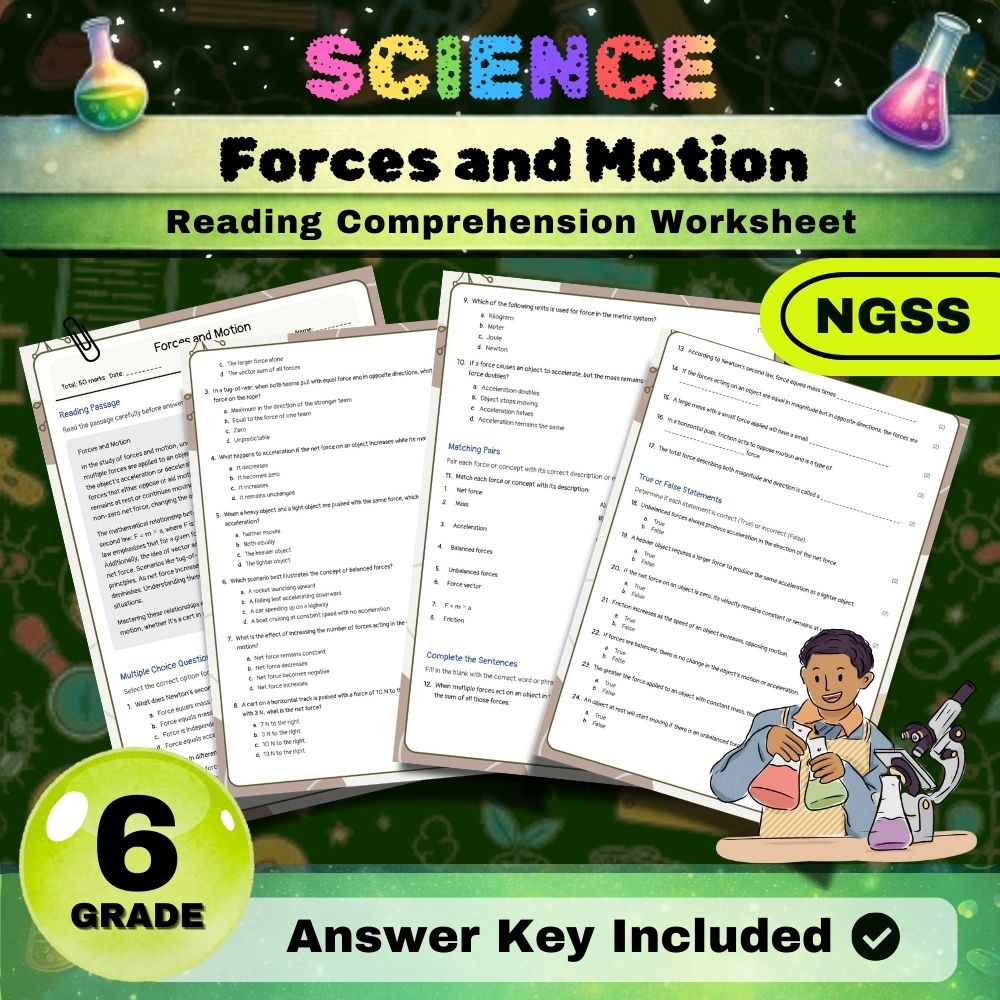
6th Grade Science | Forces and Motion NGSS Worksheet (PDF)
 Created byMaple Path Learning
Learning Objectives
- Explain how net force affects the motion of objects based on mass and force vectors.
- Use the equation net force equals mass times acceleration to analyze different scenarios.
- Identify and describe how multiple forces combine to produce net force.
Also included in: Grade 6 Science Forces & Motion Unit Bundle (NGSS Worksheets + Answer Keys) +1 more
Instant download

Forces and Motion Worksheet | Grade 6 Science Test Prep
Created byPrism Point LearningLearning Objectives
- Explain how net force (the vector sum of forces) affects the motion of an object.
- Use the relationship net force equals mass times acceleration to predict changes in acceleration.
- Distinguish between mass (inertia) and forces when reasoning about motion.
Also included in: Grade 6 Physical Science NGSS Lesson Bundle: Test Prep Worksheets
Instant download

Grade 6 Forces and Motion Worksheet | NGSS Science Activities & Answer Key
 Created byNorthstar Worksheets
Learning Objectives
- Explain how net force (vector sum of forces) and mass affect an object's acceleration
- Identify and use the relationship net force equals mass times acceleration to predict motion
- Interpret everyday scenarios involving tug-of-war, carts on tracks, and multiple forces on a hanging object
Also included in: Grade 6 Physical Science Forces, Gravity, Electricity & Momentum Lesson Bundle | NGSS +1 more
Instant download
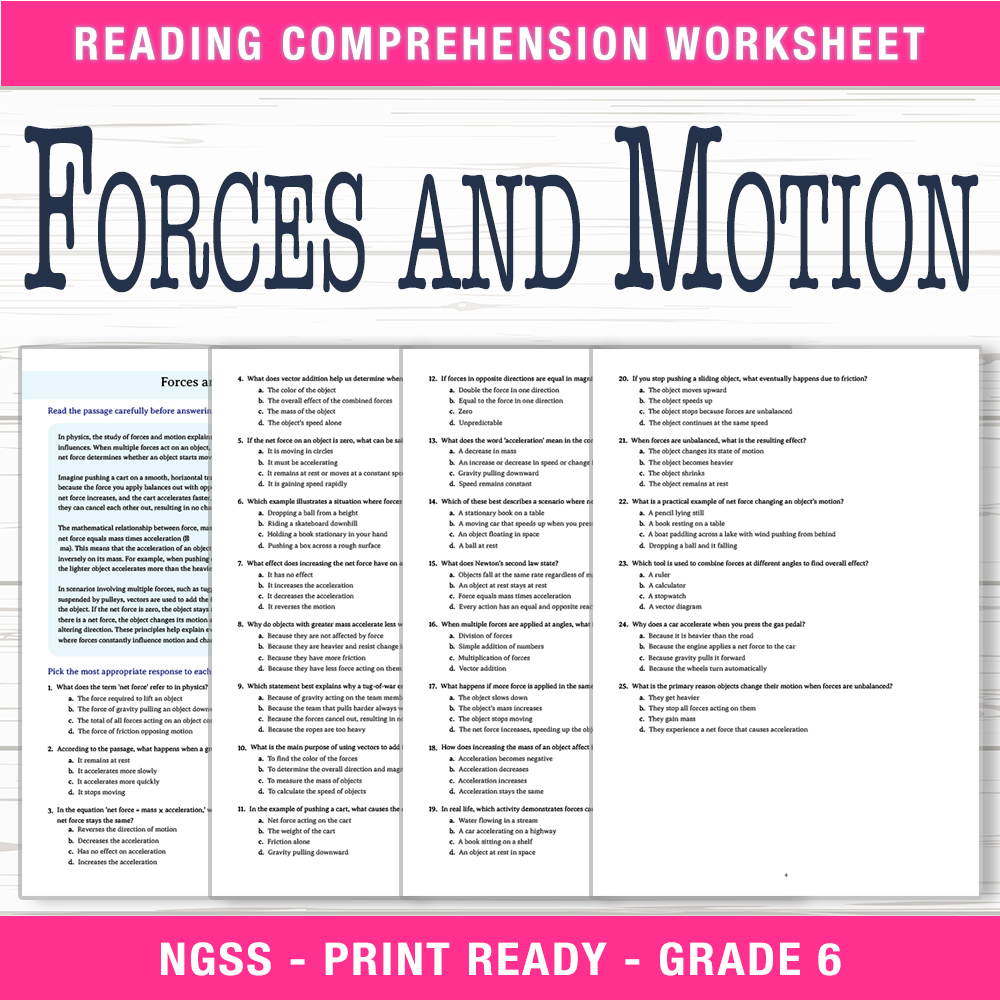
Grade 6 Science | Forces and Motion Worksheet (PDF + Answer Key)
 Created byRiverstone Classroom
Learning Objectives
- Understand how net force affects the motion of objects based on their mass.
- Explain the relationship between force, mass, and acceleration using the formula net force equals mass times acceleration.
- Identify scenarios where forces change and predict resulting motion alterations.
Instant download

Net Force and Motion Worksheets: Grade 6 Science Forces & Interactions
 Created byTeachers Club
Learning Objectives
- Explain how net force and mass affect an object's acceleration using vector addition
- Identify how changing one or more forces changes the direction and magnitude of motion
- Match common motion scenarios to definitions of net force and balanced forces
Also included in: Grade 6 Science Forces & Interactions Worksheets | NGSS Bundle +2 more
Instant download

Grade 6 Forces and Motion Worksheet | NGSS Practice PDF
Created byClear Sky ClassroomLearning Objectives
- Understand the relationship between net force, mass, and acceleration.
- Identify scenarios where forces act on objects and analyze their effects.
- Apply the formula net force equals mass times acceleration to solve problems.
Also included in: Grade 6 Motion and Stability: Forces and Interactions Science Lesson Bundle NGSS +1 more
Instant download

Forces, Net Force and Motion Grade 6 Science Practice Worksheets
 Created bythe curious pencil
Learning Objectives
- Explain how multiple forces combine to produce net force
- Calculate acceleration using net force and mass
- Predict acceleration changes when force or mass changes
Also included in: Grade 6 Science Forces and Motion Worksheets Bundle | NGSS +2 more
Instant download
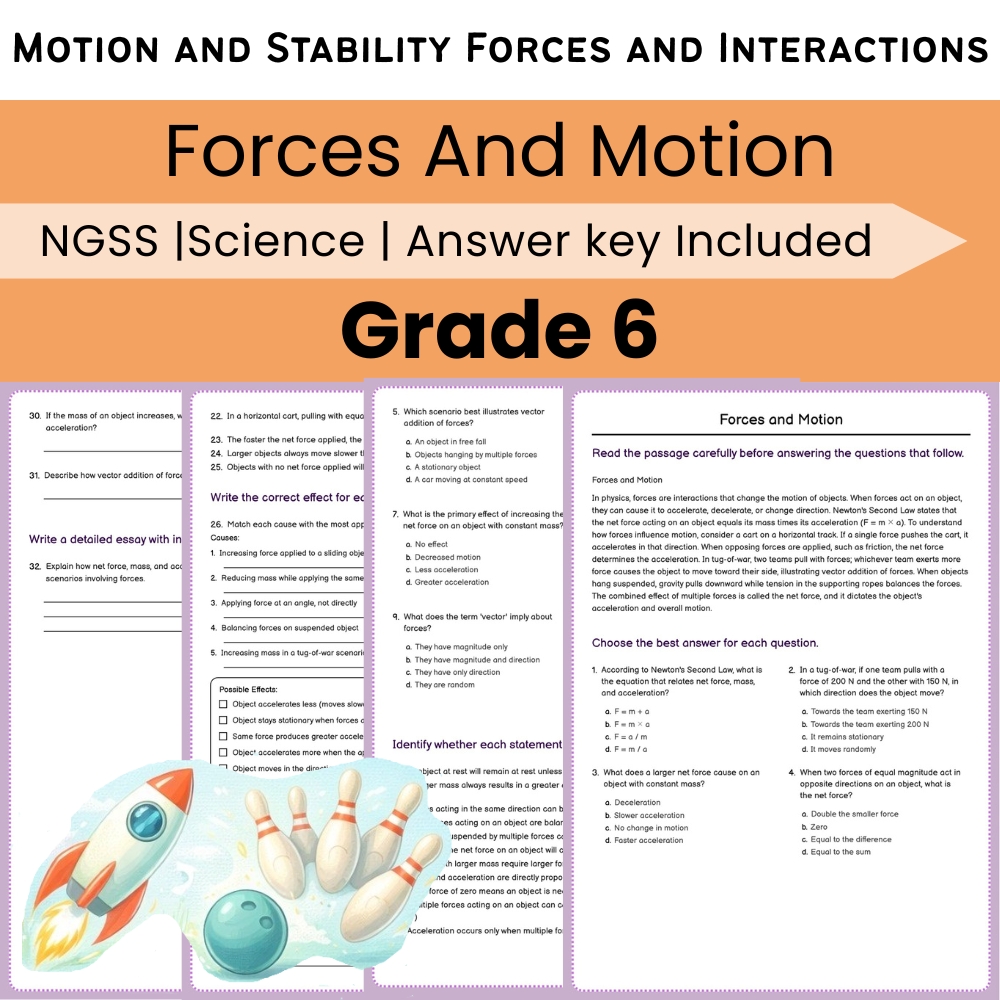
Forces and Motion Worksheet | NGSS Grade 6 Science printable PDF
Learning Objectives
- Understand the relationship between net force, mass, and acceleration.
- Explain how vector addition affects motion in different scenarios.
- Apply the formula net force equals mass times acceleration to solve problems.
Also included in: Grade 6 Science | Forces and Motion NGSS Unit Bundle (4 Worksheets Included) +1 more
Instant download

Forces and Motion Worksheet | NGSS-Aligned Grade 6 Science Practice
JCreated byJ.S SheetsLearning Objectives
- Understand the relationship between net force, mass, and acceleration.
- Identify how different forces affect motion in various scenarios.
- Apply the formula net force equals mass times acceleration to solve problems.
Also included in: Grade 6 Forces, Motion, and Interactions Science Lesson Bundle: NGSS +1 more
Instant download

Grade 6 Science | Forces & Motion - Daily Reading Comprehension
Created byCoral Reef LearningLearning Objectives
- Understand the concept of force and how it affects objects in motion.
- Identify different types of forces acting on objects.
- Learn the relationship between net force, mass, and acceleration.
Instant download
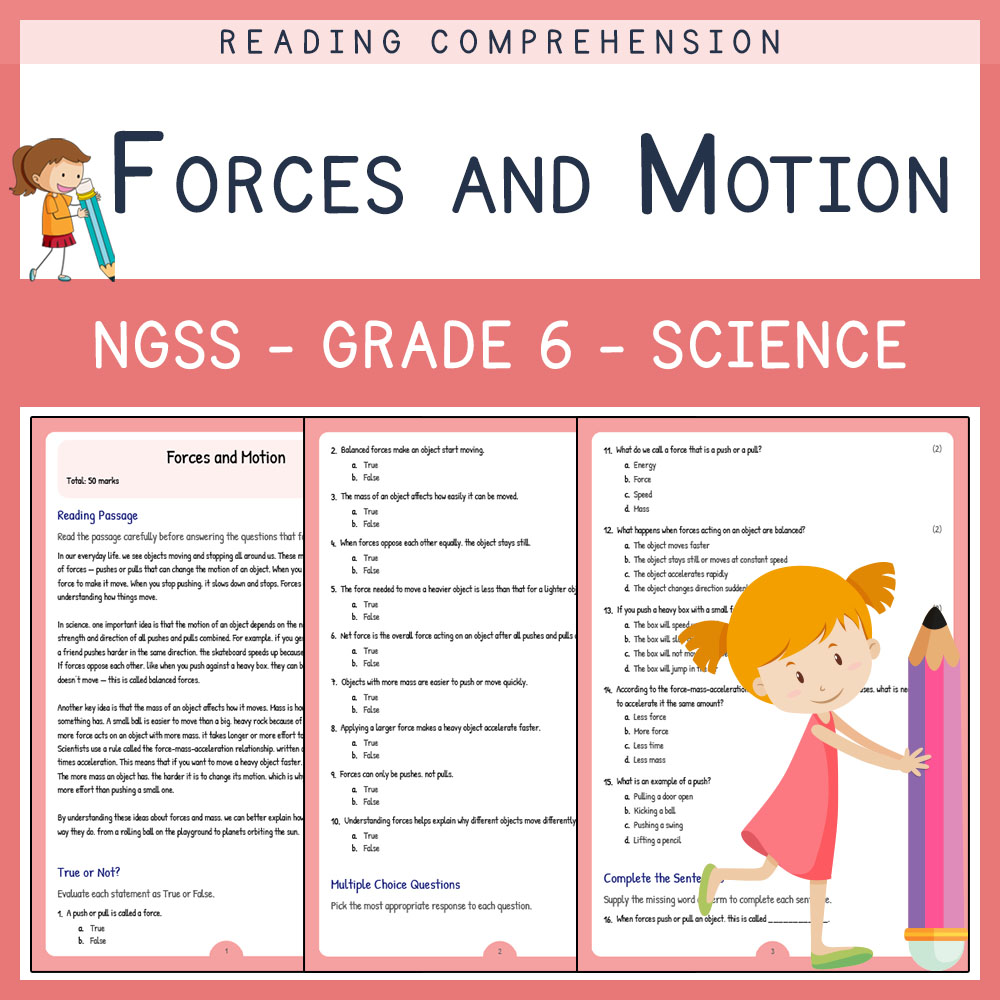
Grade 6 Science | Forces and Motion Worksheet with Answer Key (PDF) | NGSS
Created byLumora LearningLearning Objectives
- Understand the relationship between net force, mass, and acceleration
- Identify real-world examples of forces in motion
- Explain how changing forces affects movement of objects
Instant download

6th Grade Science | Forces and Motion Worksheet with Answer Key (Printable PDF)
Created byCoral Reef LearningLearning Objectives
- Describe the relationship between net force, mass, and acceleration based on Newton's Second Law.
- Explain how vector addition influences the motion of objects under multiple forces.
- Identify real-world scenarios involving net force and calculate resulting motion changes.
Instant download

Forces and Motion Worksheet | Grade 6 NGSS Science Activity & Doodle Notes
 Created byAmber Owl Education
Learning Objectives
- Explain how net force (the vector sum of forces) determines changes in an object's motion
- Use the relationship net force equals mass times acceleration to predict how acceleration changes
- Distinguish between balanced and unbalanced forces using real-world scenarios
Also included in: Grade 6 Science Forces and Motion Unit Lesson Bundle | NGSS +1 more
Instant download

Grade 6 Science – Forces & Motion | Daily Reading Worksheet
 Created byElena Brooks
Learning Objectives
- Identify different types of forces and understand their effects on objects
- Explain how net force influences the motion of objects
- Relate force, mass, and acceleration using mathematical concepts
Also included in: Grade 6 Science Motion and Stability Bundle | NGSS Forces and Interactions +1 more
Instant download
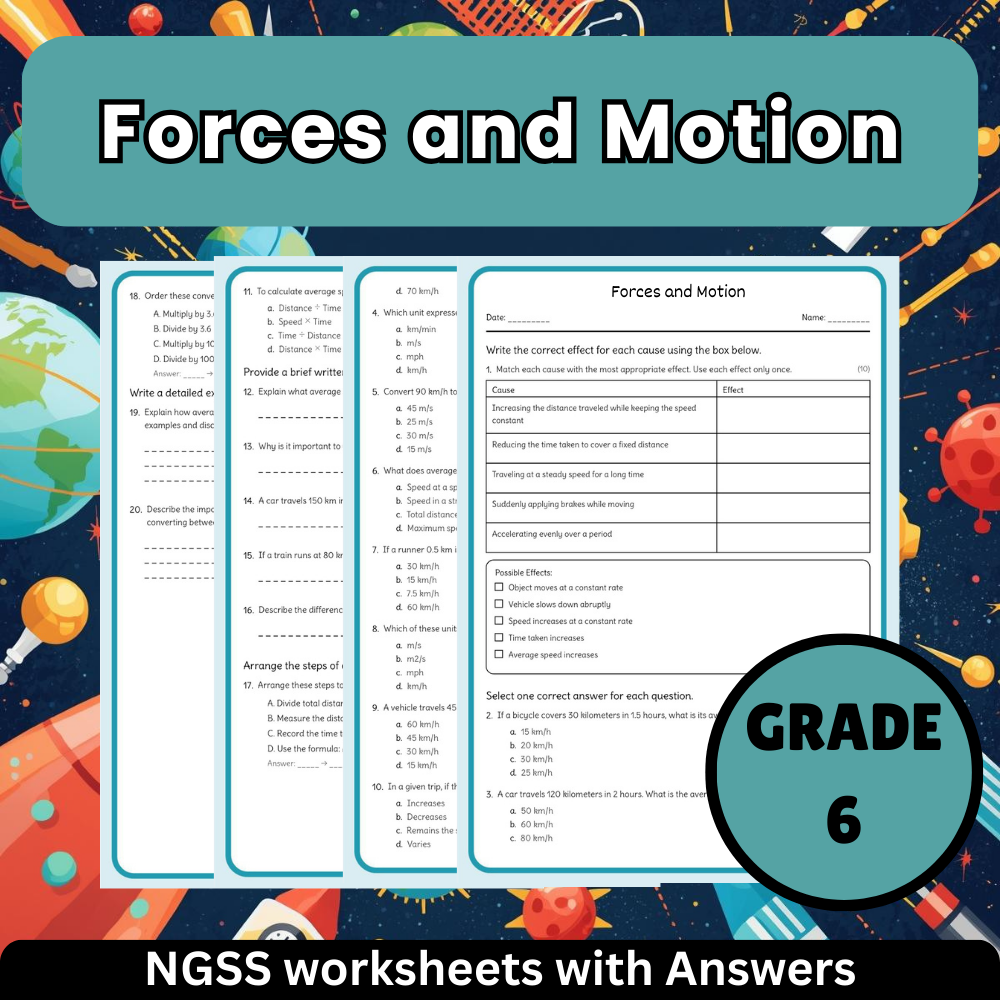
6th Grade Science | Forces and Motion Worksheet (Answer Key) – NGSS Standard
Created byBright Mind ResourcesLearning Objectives
- Understand how net force affects the motion of objects.
- Describe the relationship between mass, force, and acceleration.
Also included in: Grade 6 Science Unit Bundle – Forces, Motion & Magnetism Worksheets (NGSS) +2 more
Instant download
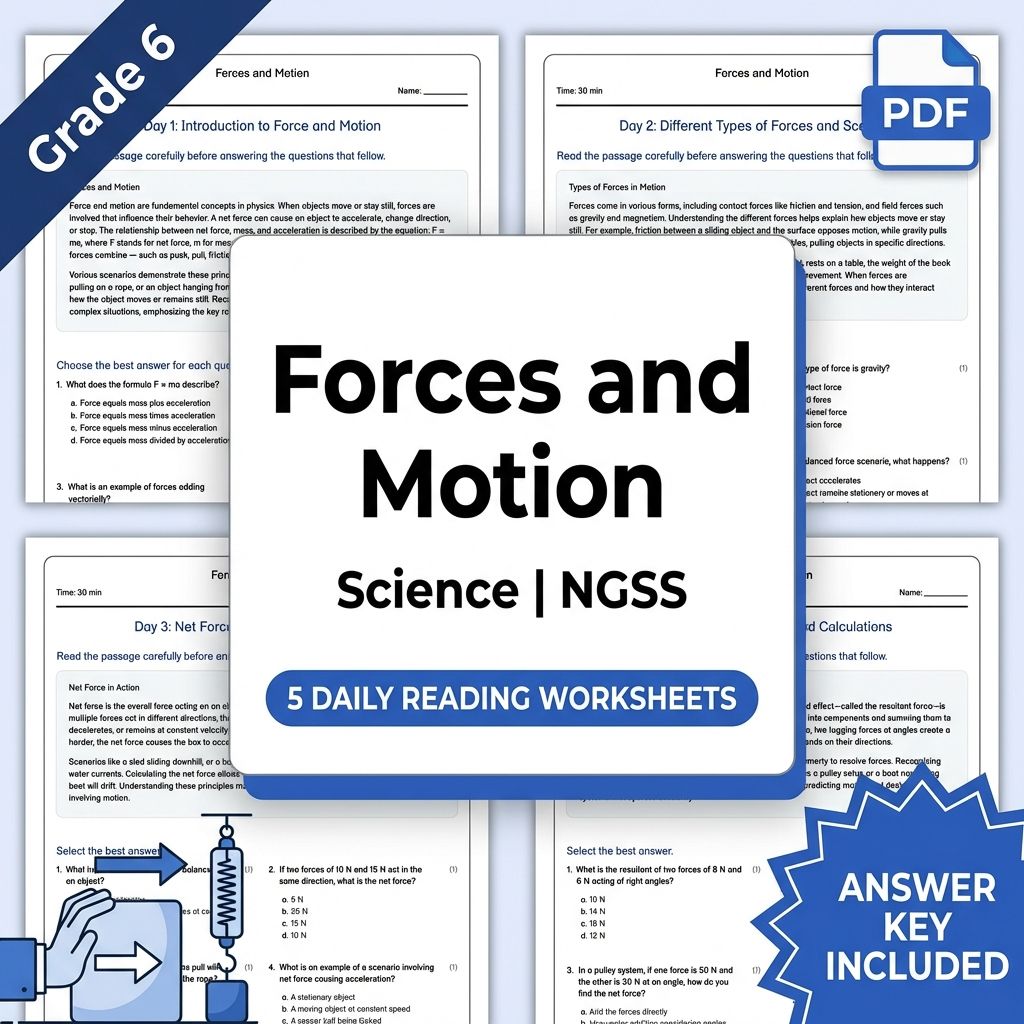
6th Grade Science | Forces and Motion Daily Reading Worksheet (PDF + Answer Key)
 Created byCopper Leaf Classroom
Learning Objectives
- Understand the relationship between net force, mass, and acceleration.
- Identify different scenarios where forces act on objects.
- Apply the equation net force equals mass times acceleration to real-world problems.
Instant download

Grade 6 Forces and Motion Science Worksheet | NGSS Printable Activity
 Created byBRIGHT PATH RESOURCES
Learning Objectives
- Understand the concept of net force and how it affects object motion.
- Identify different forces acting on an object and their directions.
- Relate net force, mass, and acceleration using mathematical formulas.
Also included in: Motion and Stability: Forces and Interactions Grade 6 Science Bundle | NGSS +2 more
Instant download
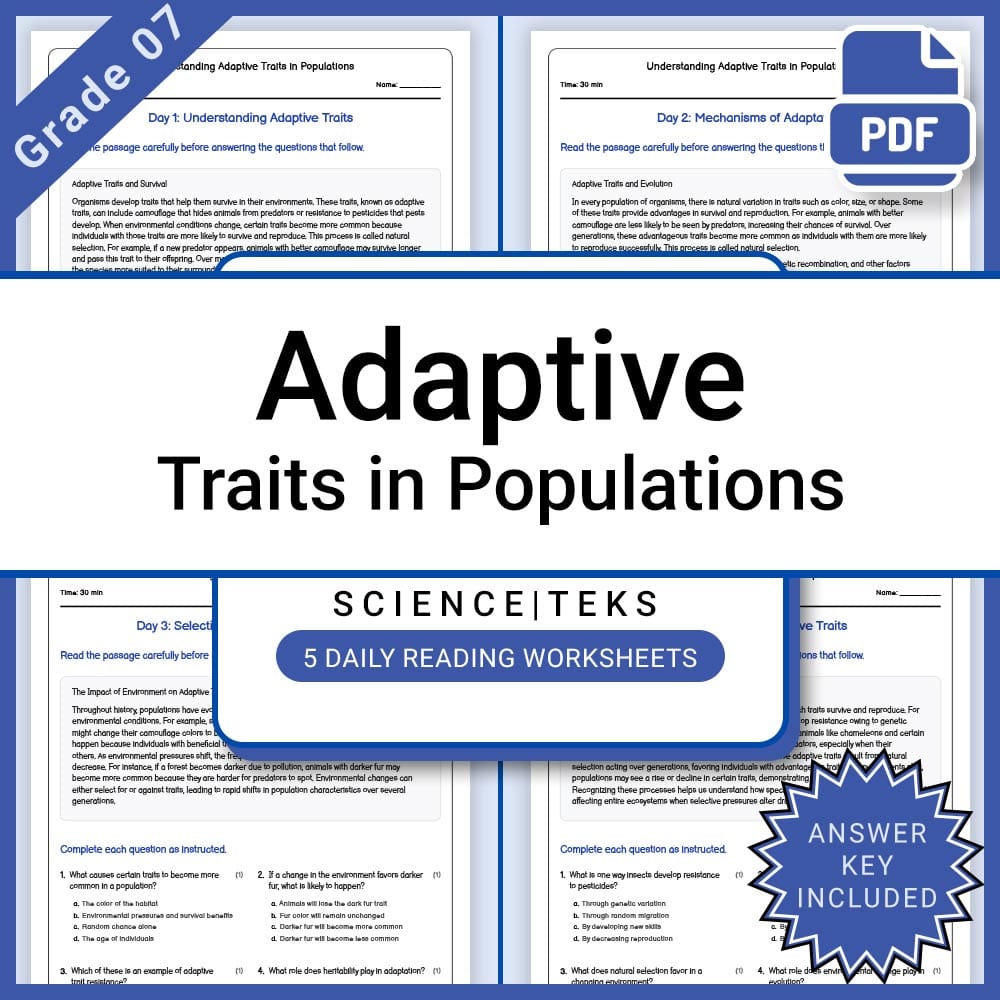
Grade 7 Science - Adaptive Traits Daily Reading Worksheet + Answer Key
JCreated byJ.S SheetsLearning Objectives
- Define adaptive traits and explain their role in survival.
- Recognize examples of adaptive traits such as camouflage and pesticide resistance.
- Describe how environmental pressures influence trait selection over generations.
Also included in: Grade 7 Science Lesson Bundle | Ecosystems, Cell Structure & Adaptations +1 more
Instant download
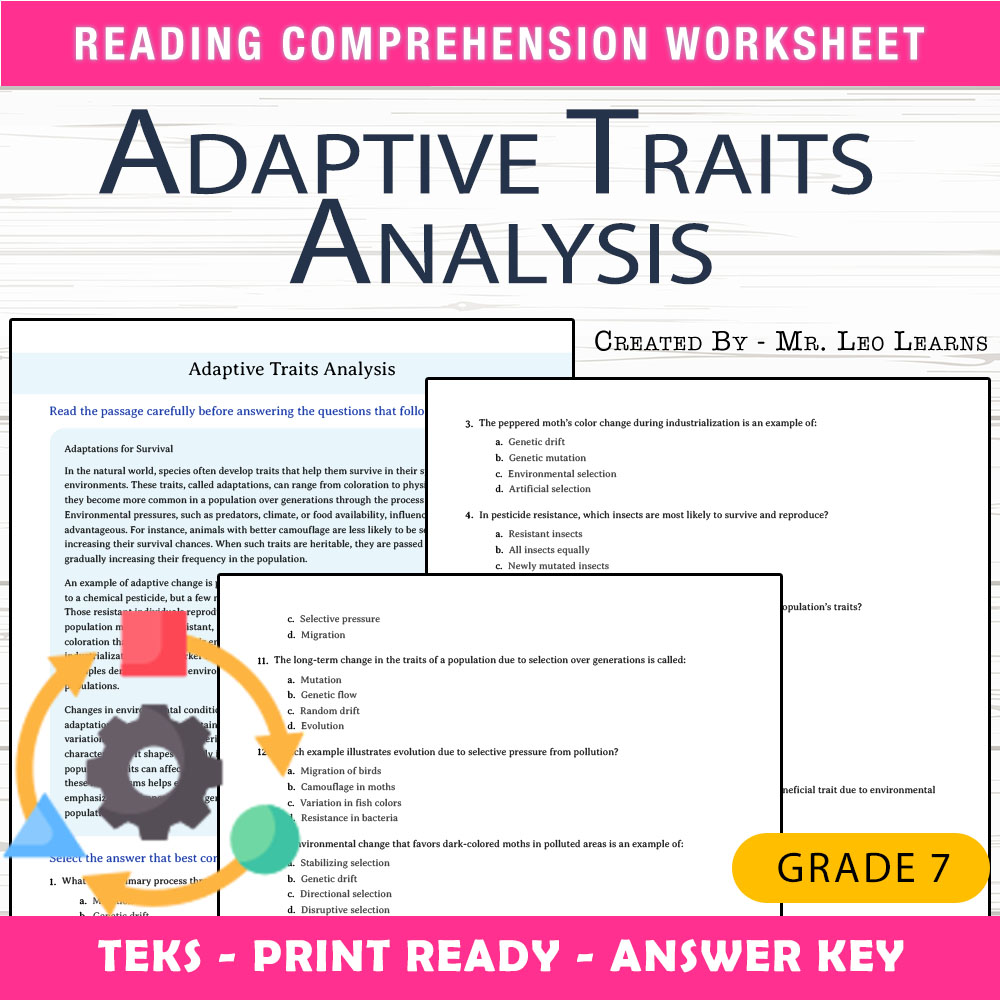
Grade 7 Science — Adaptive Traits Analysis Worksheet for Mastery
 Created byThe Resource Hub
Learning Objectives
- Understand how adaptive traits increase in populations through natural selection.
- Analyze examples such as pesticide resistance and camouflage to identify mechanisms of adaptation.
- Explain the role of environmental pressures in shaping trait distributions across generations.
Also included in: Grade 7 Science Unit Bundle – Ecosystems, Cells & Adaptations Worksheet Pack +1 more
Instant download
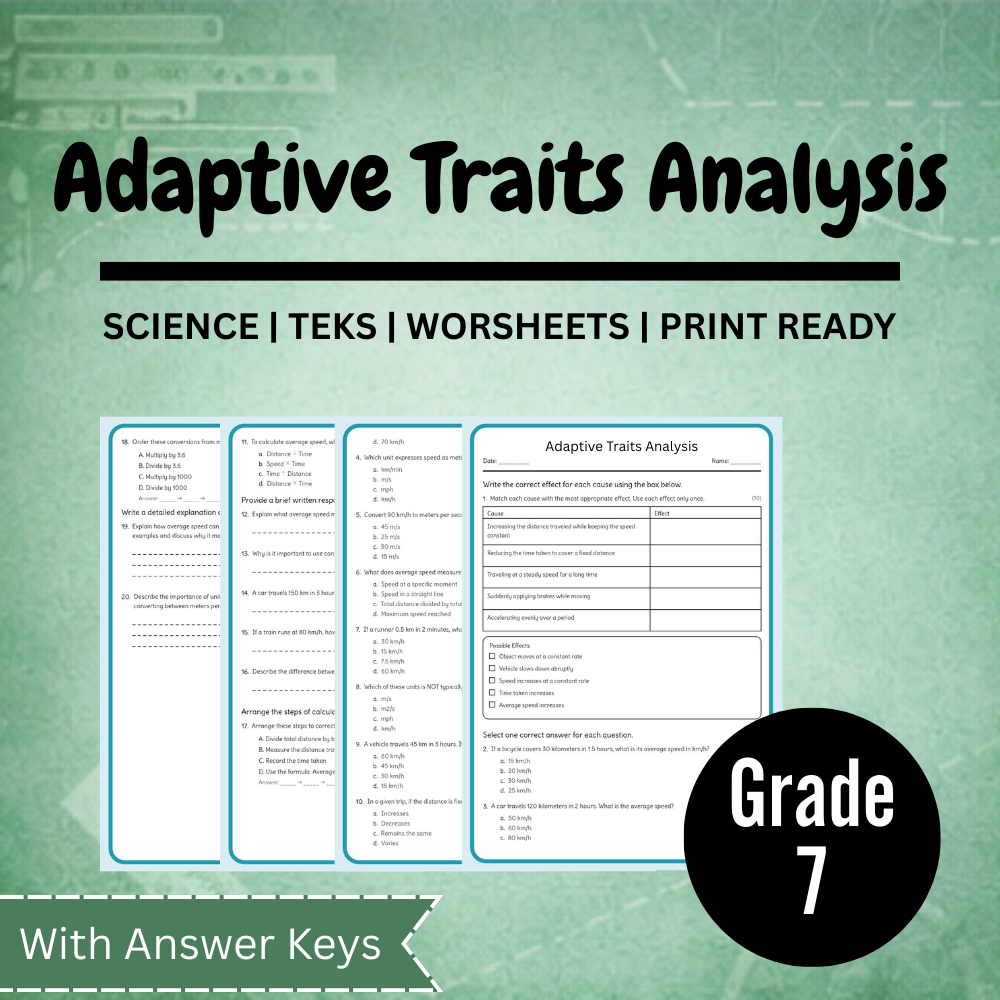
Grade 7 Science | Adaptive Traits Analysis Worksheet (PDF) – TEKS-Aligned
Created byBright Mind ResourcesLearning Objectives
- Understand how adaptive traits become common in populations through natural selection
- Identify examples of selective pressures such as pesticide resistance and camouflage
- Explain the mechanisms of variation, heritability, and differential survival
Also included in: Grade 7 Science Unit Bundle – Ecosystems, Adaptation & Environmental Impact +2 more
Instant download

Grade 7 Adaptive Traits Analysis Worksheet | TEKS Evolution Science Activity
Created byBRIGHT PATH RESOURCESLearning Objectives
- Define variation, selection, adaptation, and selective pressure in simple terms
- Explain how differences in survival and reproduction can change trait frequencies over time
- Connect environmental change to shifts in which traits are most helpful
Also included in: Grade 7 Ecosystems Science Daily Reading Worksheets Bundle | TEKS +1 more
Instant download
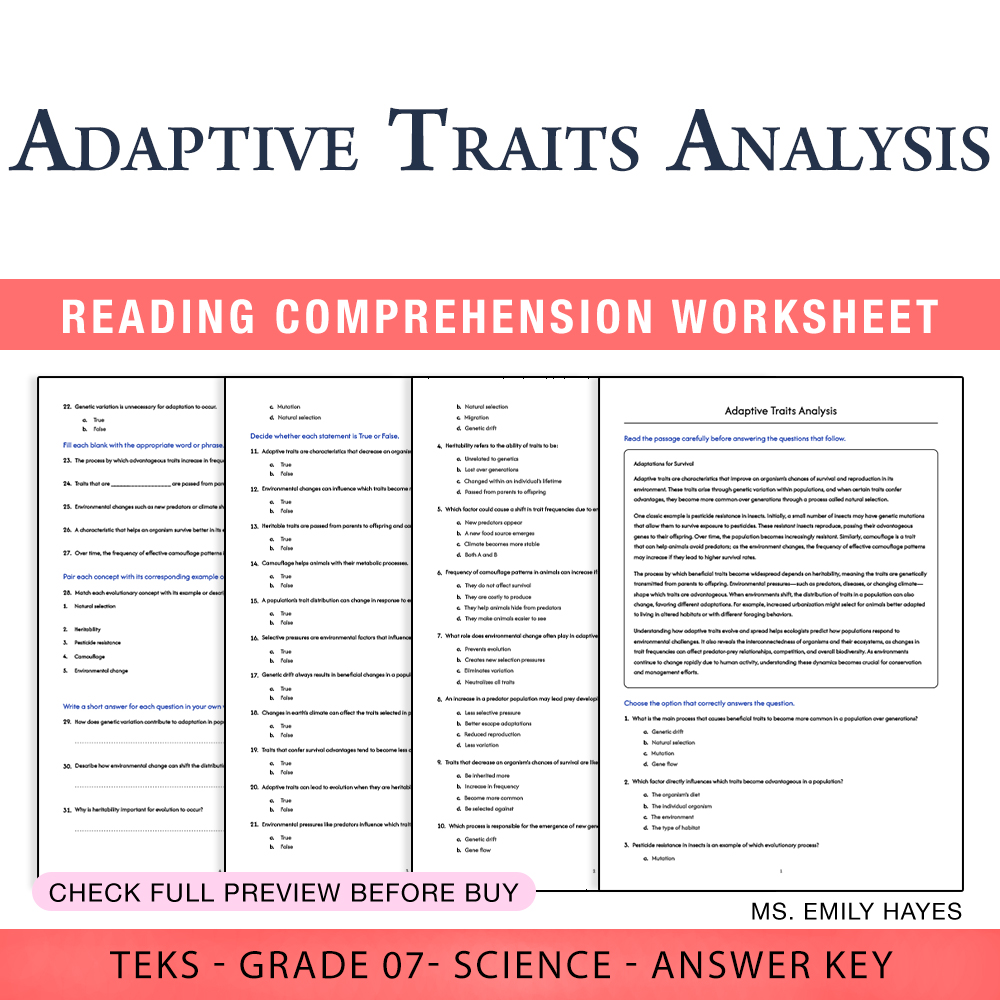
7th Grade Science | Adaptive Traits Analysis Worksheet (PDF+ Answer Key)
Created byCopper Leaf ClassroomLearning Objectives
- Explain how differential survival and reproduction influence the frequency of adaptive traits in populations.
- Describe the roles of variation, heritability, and selective pressures in evolution.
- Illustrate how environmental changes can shift trait distributions in populations.
Instant download
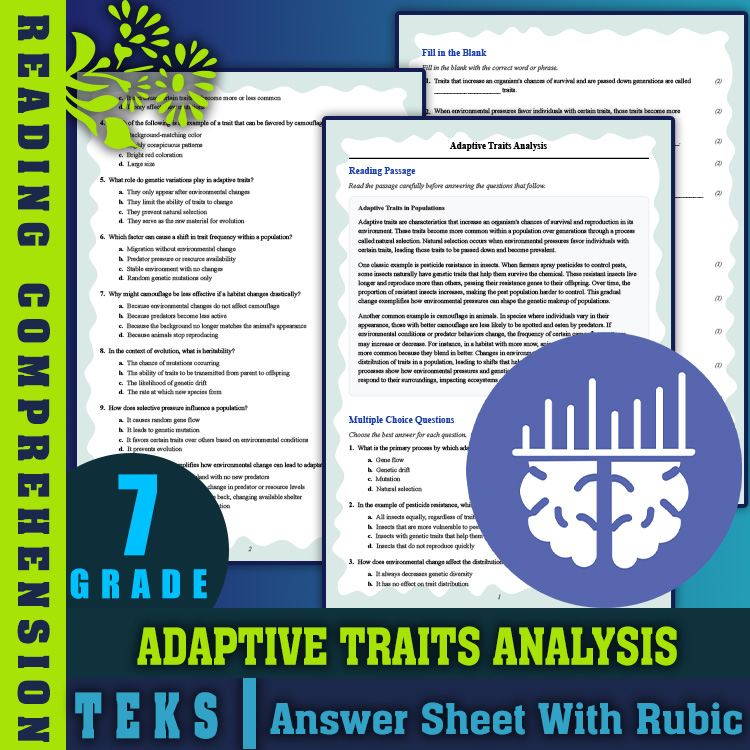
7th Grade Science | Adaptive Traits Analysis Reading Worksheet (PDF Answer Key)
JCreated byJ.S SheetsLearning Objectives
- Understand how adaptive traits become common in populations through natural selection
- Identify various mechanisms like heritability, variation, and selective pressures that influence adaptation
- Analyze real-world examples such as pesticide resistance and camouflage frequency changes
Instant download

Grade 7 Science – Adaptive Traits & Environmental Changes | Reading Worksheet
Created byBright Mind ResourcesLearning Objectives
- Understand what adaptive traits are and how they help animals survive.
- Identify examples of camouflage and other adaptive traits in animals.
- Analyze how environmental factors influence the development of adaptive traits.
Also included in: Grade 7 Ecosystems & Adaptations Science Daily Reading Lesson Bundle | TEKS +2 more
Instant download

Adaptive Traits Analysis Worksheet | TEKS Grade 7 Science Practice
JCreated byJ.S SheetsLearning Objectives
- Explain how variation, heritability, and selective pressure can cause adaptive traits to become more common in a population
- Describe how differential survival and reproduction affect trait frequencies across generations
- Interpret examples such as pesticide resistance and camouflage frequency changes as evidence of natural selection
Instant download

Grade 7 Science – Adaptive Traits Analysis Worksheet (TEKS) (PDF)
 Created byEvergreen Desk Education
Learning Objectives
- Explain how variation, heritability, and selective pressures can cause adaptive traits to become more common in a population.
- Use examples (pesticide resistance and camouflage) to describe differential survival and reproduction across generations.
- Predict how environmental change can shift which traits are favored and how that affects populations and ecosystems.
Instant download

Adaptive Traits Analysis Worksheet | Grade 7 Science Activities
Created byPrism Point LearningLearning Objectives
- Explain how variation, heritability, and selective pressures can change allele frequencies across generations.
- Use examples such as pesticide resistance and camouflage to describe differential survival and reproduction.
- Predict how environmental change can shift which adaptive traits become common in a population.
Also included in: Ecosystems & Adaptations Grade 7 Science Lesson Bundle TEKS Worksheets
Instant download

Adaptive Traits Analysis Assessment | TEKS Grade 7 Science Worksheet
Created byPrism Point LearningLearning Objectives
- Understand how adaptive traits become common in populations through natural selection.
- Identify factors such as variation, heritability, and environmental pressures that influence trait distribution.
- Apply examples like camouflage and pesticide resistance to illustrate the process of selection.
Instant download
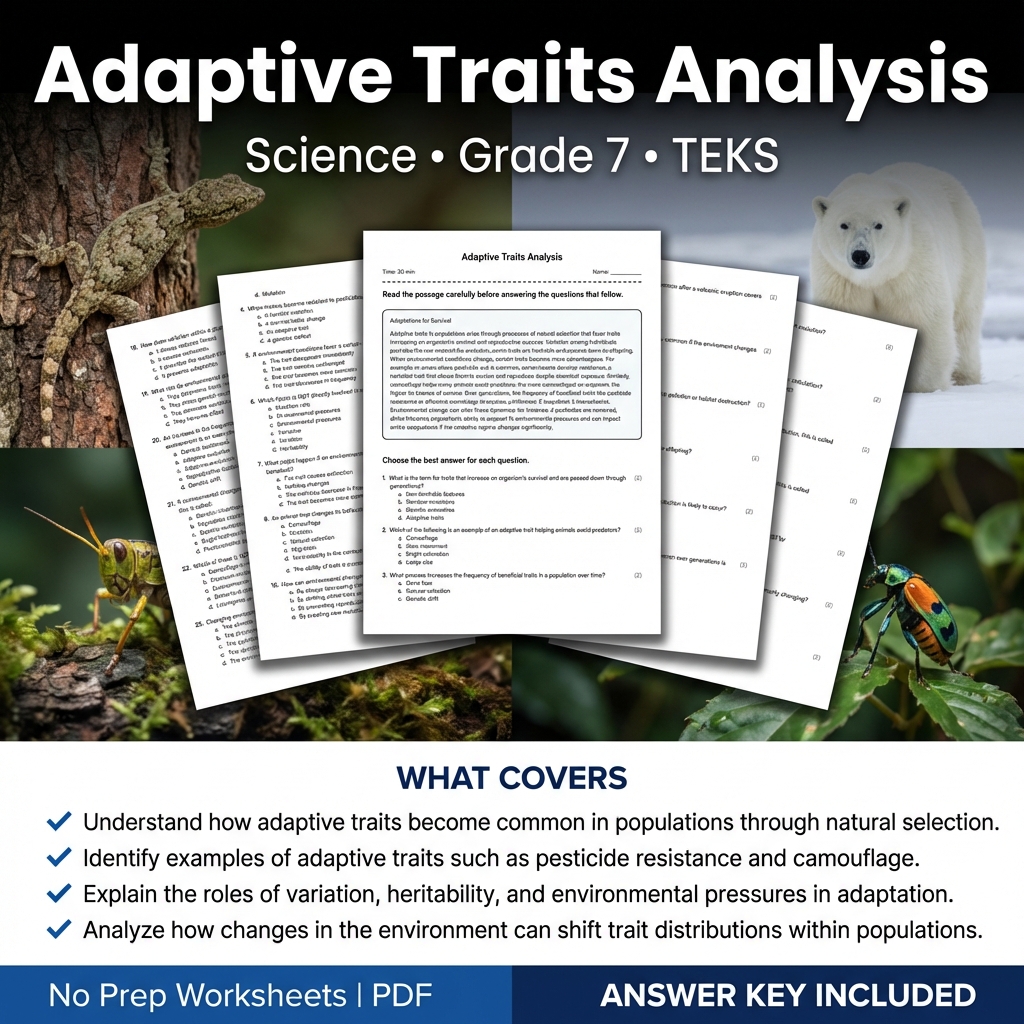
Grade 7 Science Worksheet on Adaptive Traits Analysis | TEKS Aligned
Created byCoral Reef LearningLearning Objectives
- Understand how adaptive traits become common in populations through natural selection.
- Identify examples of adaptive traits such as pesticide resistance and camouflage.
- Explain the roles of variation, heritability, and environmental pressures in adaptation.
Instant download

Grade 7 Science | Adaptive Traits Analysis - Daily Reading Comprehension
Created byCoral Reef LearningLearning Objectives
- Understand what adaptive traits are and how they help organisms survive
- Identify examples of adaptive traits in different species
- Learn how environmental pressures influence the frequency of traits in populations
Instant download

6th Grade Science Atoms & Particles Worksheet | Matter Properties (PDF)
Created byEvergreen Desk EducationLearning Objectives
- Explain how matter can be modeled as particles and how atoms form elements.
- Describe how different particle compositions lead to measurable properties of substances.
- Use particle model ideas to interpret properties like density, melting point, and reactivity.
Instant download

Atoms and Particles Grade 6 Science Worksheet | Standards-Aligned Practice
JCreated byJ.S SheetsLearning Objectives
- Understand that matter is made of tiny particles called atoms.
- Identify the basic units that make up elements and substances.
- Connect particle models to properties like density, melting point, and reactivity.
Also included in: Grade 6 Physical Science Lesson Bundle for Science – California Standards +1 more
Instant download

Grade 6 Science | Atoms & Particles - Daily Reading Comprehension
Created byCoral Reef LearningLearning Objectives
- Understand what atoms are and why they are the basic units of matter.
- Identify the similarities and differences between atoms of different elements.
- Recognize how atomic composition relates to the properties of substances.
Instant download

Grade 6 Science – Atoms & Particles Reading Worksheet | California Standards
Created byBright Mind ResourcesLearning Objectives
- Understand that matter is made up of tiny particles called atoms.
- Recognize that atoms are the basic units of elements.
- Learn how different substances have distinct combinations of atoms.
Also included in: Grade 6 Matter Science Daily Reading Worksheets Lesson Bundle | CA Standards +1 more
Instant download

Grade 6 Atoms and Particles Worksheet | NGSS Practice PDF
Created byClear Sky ClassroomLearning Objectives
- Explain how atoms and particles make up elements and different substances
- Describe how particle models help predict properties like density, melting point, and reactivity
- Connect the arrangement and relative numbers of particles to observable measurements
Instant download

Grade 6 Science | Atoms and Particles Worksheets | California Standards
Created byLumora LearningLearning Objectives
- Explain how atoms are the basic units that make up elements and how atoms combine to form substances
- Use a particle model to connect atomic composition to observable properties such as density, melting point, and reactivity
- Differentiate between macroscopic observations and particle-level explanations for matter
Instant download

Atoms and Particles Worksheet Grade 6 Science Particle Model Practice
Created byPrism Point LearningLearning Objectives
- Explain how particle models describe matter as being made of particles and how atoms build elements.
- Identify how different combinations and relative numbers of atoms help determine properties like density and melting point.
- Connect atomic composition to observable/measureable properties rather than only macroscopic appearance.
Instant download
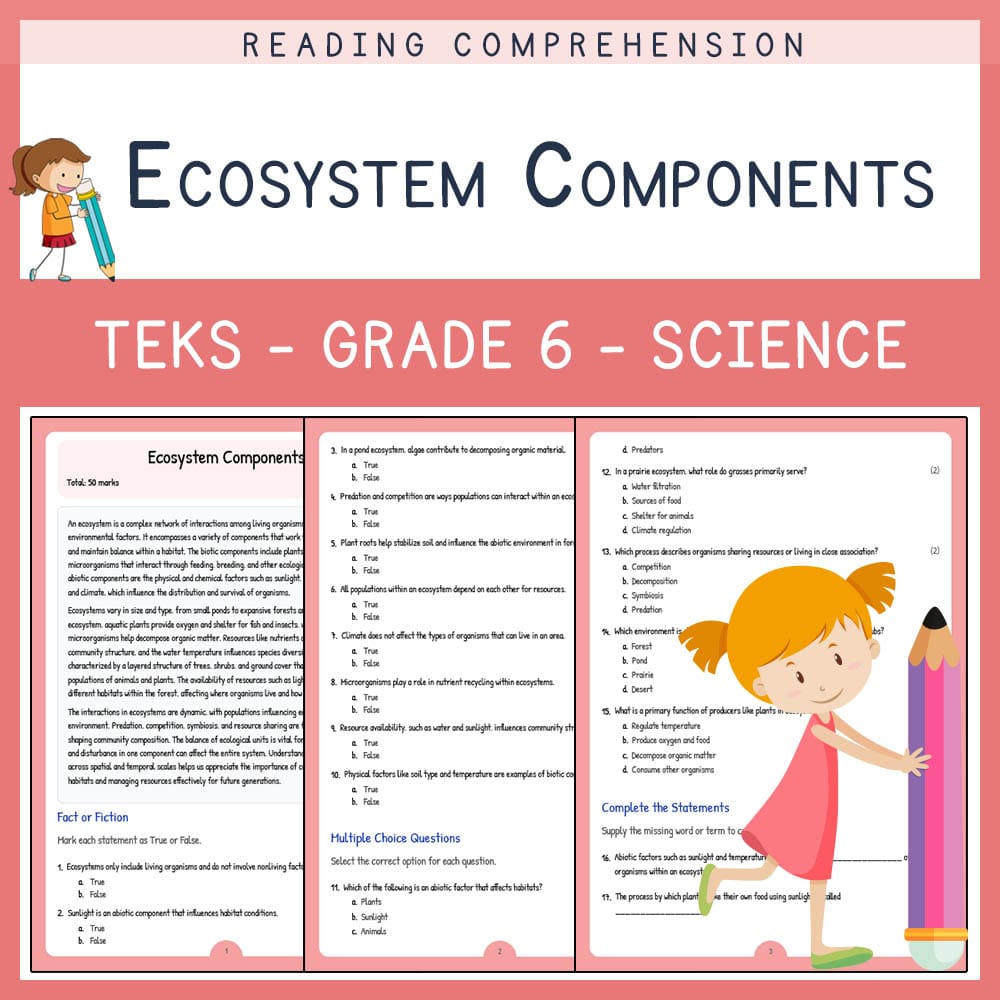
Grade 6 Science | Ecosystem Components Worksheet | TEKS-Aligned
Created byLumora LearningLearning Objectives
- Define ecosystems as interacting systems of populations, communities, and physical factors.
- Identify biotic and abiotic components and their roles in habitats.
- Describe examples such as ponds, prairies, and forests to illustrate resource distribution and community interdependence.
Instant download
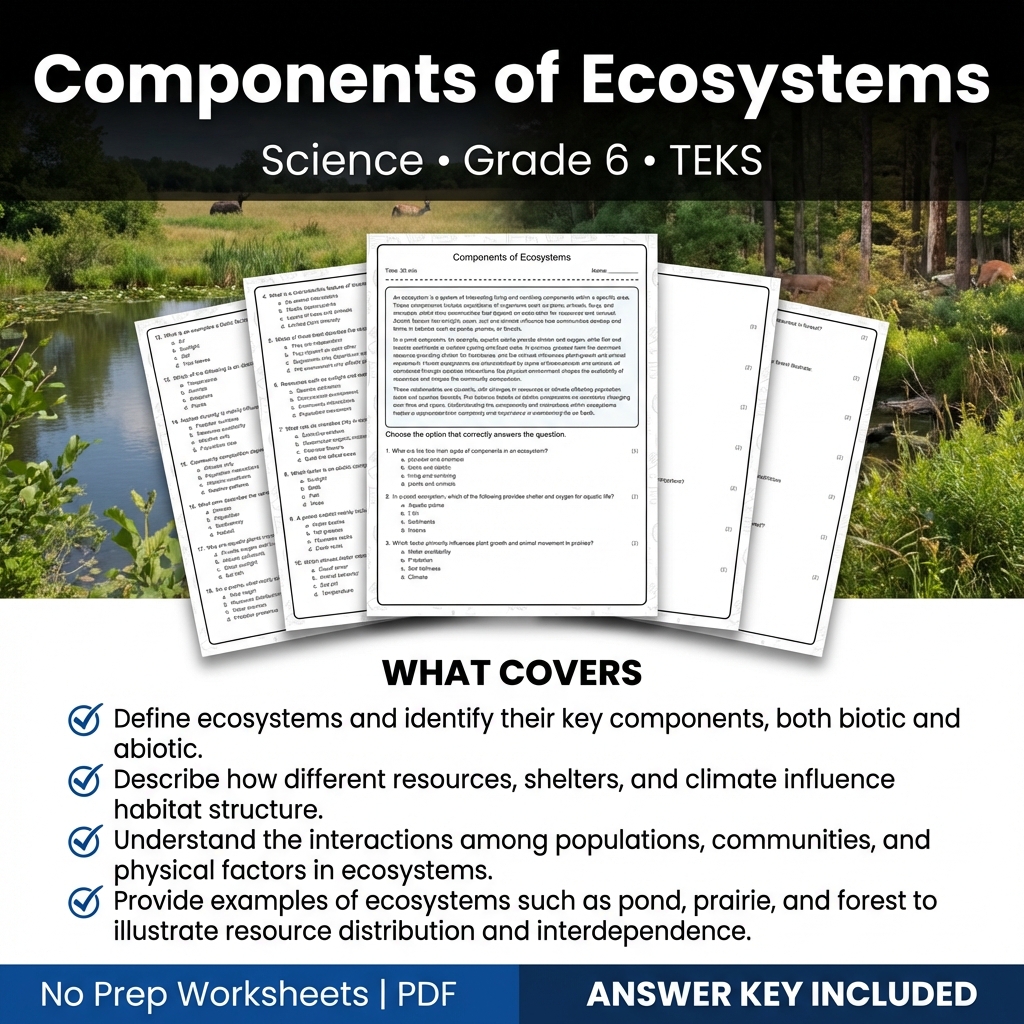
Grade 6 Science Worksheet on Components of Ecosystems | TEKS
Created byCoral Reef LearningLearning Objectives
- Define ecosystems and identify their key components, both biotic and abiotic.
- Describe how different resources, shelters, and climate influence habitat structure.
- Understand the interactions among populations, communities, and physical factors in ecosystems.
Instant download

Ecosystem Components Worksheet | Grade 6 Science Practice & Review
Created byPrism Point LearningLearning Objectives
- Define an ecosystem as an interacting system of biotic (living) and abiotic (nonliving) components
- Identify examples of biotic and abiotic factors in habitats such as ponds, prairies, and forests
- Explain how physical factors influence where populations can survive and how communities change over time
Also included in: Grade 6 Ecosystem Interactions Science Lesson Bundle Worksheets | TEKS +1 more
Instant download
Browse more categories
About Science Worksheets
Find Science worksheets spanning core skills, practice, and review. All 44,980 resources are instant PDF downloads for the classroom or home.
Every worksheet on MyTeachingSheets is created by independent teacher-authors and reviewed before publication. All resources download as printable PDFs for classroom, homework, or at-home practice, and many include answer keys. Preview any worksheet free before buying.