
Science Worksheets
42,685 subject resources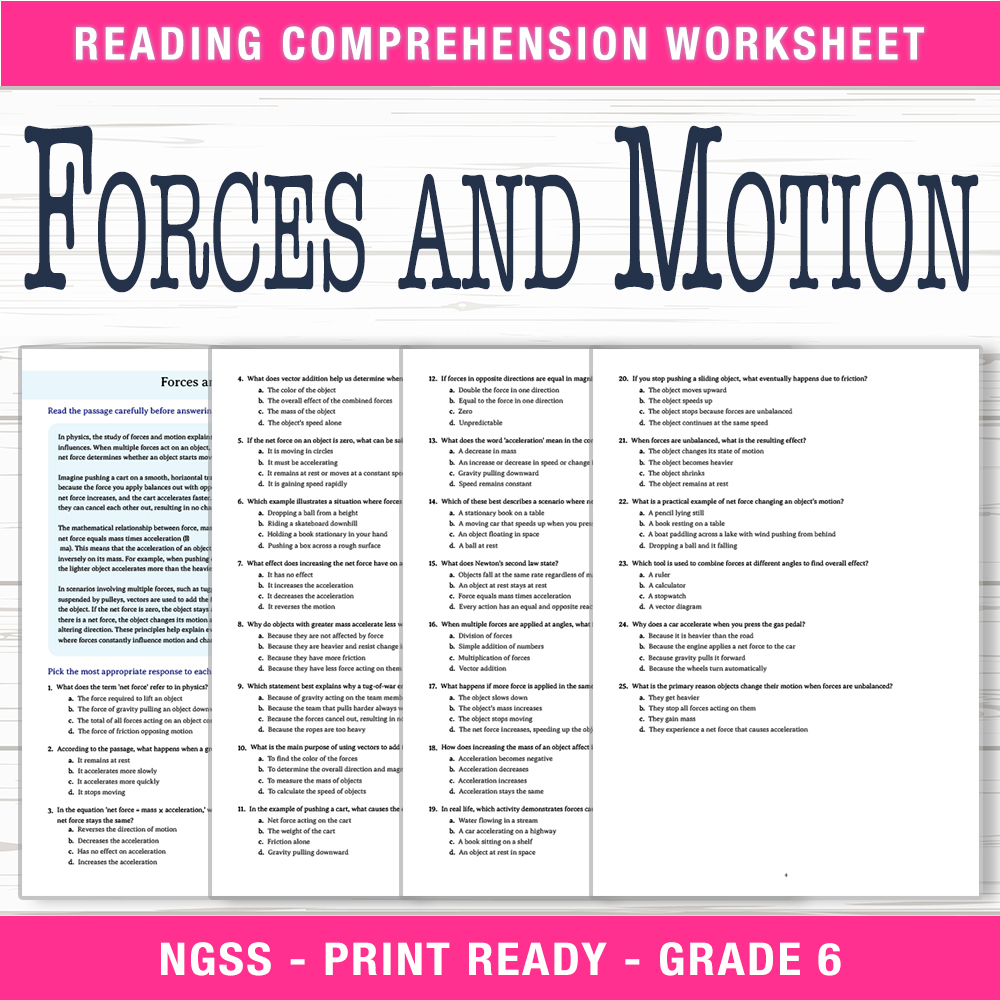
Grade 6 Science | Forces and Motion Worksheet (PDF + Answer Key)
 Created byRiverstone Classroom
Learning Objectives
- Understand how net force affects the motion of objects based on their mass.
- Explain the relationship between force, mass, and acceleration using the formula net force equals mass times acceleration.
- Identify scenarios where forces change and predict resulting motion alterations.
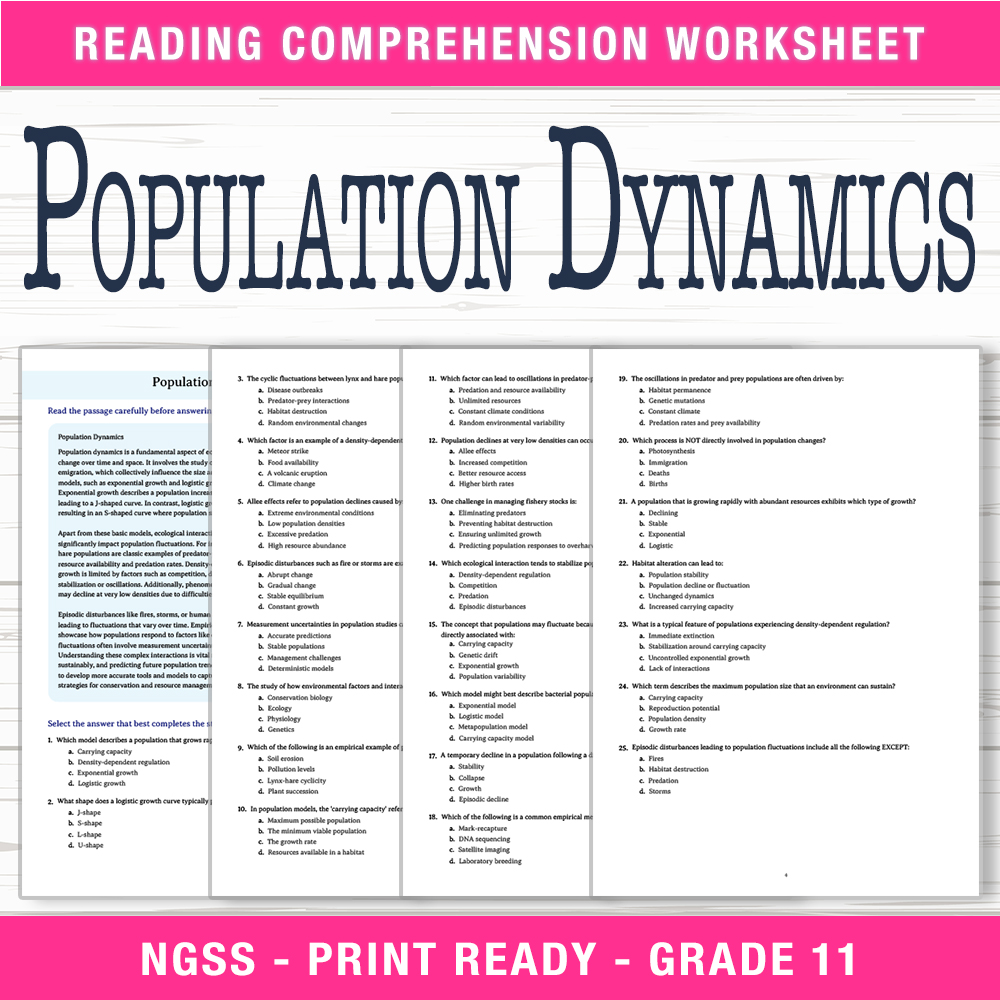
Grade 11 Science – Population Dynamics Worksheet (PDF + Answer Key)
Created byRiverstone ClassroomLearning Objectives
- Understand the key concepts of population growth, including exponential and logistic models.
- Identify factors influencing population size changes such as birth rates, death rates, immigration, and emigration.
- Explain the roles of predator-prey interactions, density-dependent regulation, and episodic disturbances in population variability.
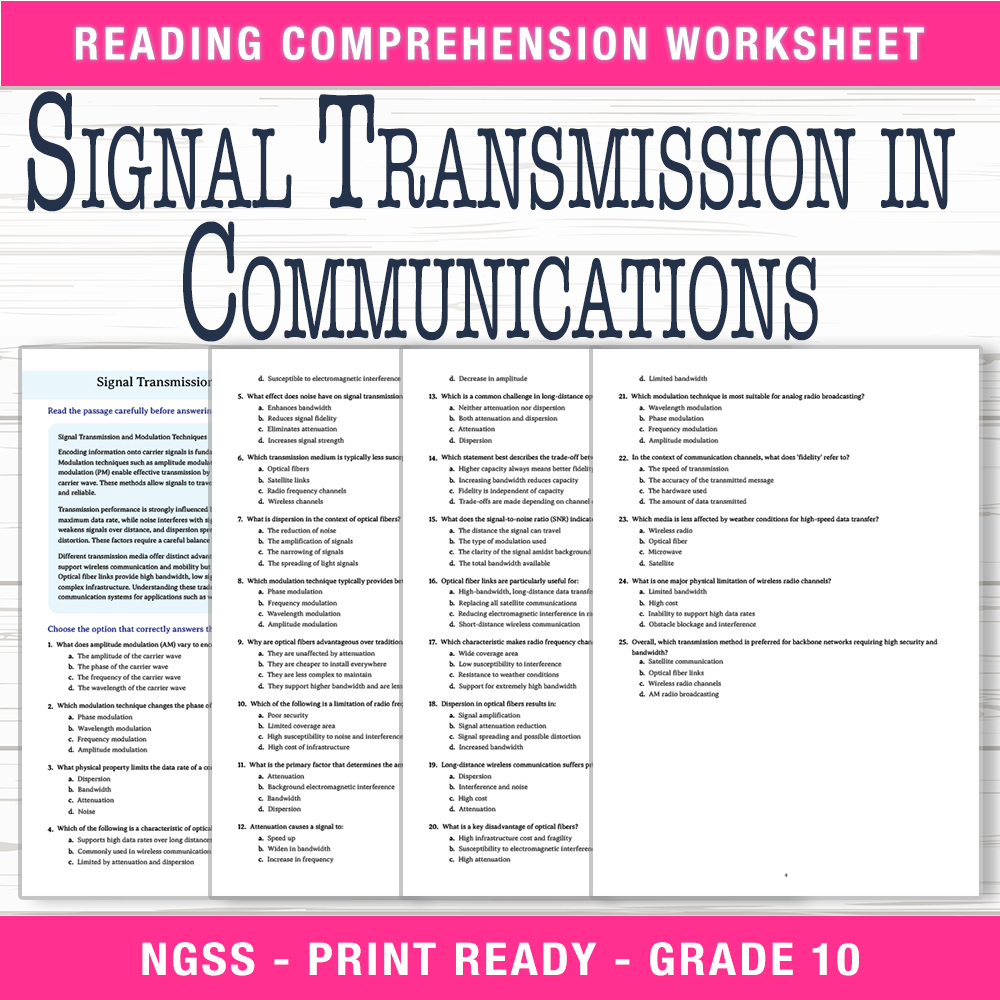
Grade 10 Science | Signal Transmission in Communications Worksheet (PDF + Answer Key)
Created byRiverstone ClassroomLearning Objectives
- Explain the principles of amplitude, frequency, and phase modulation techniques used in signal transmission.
- Identify the effects of channel constraints such as bandwidth, noise, attenuation, and dispersion on communication systems.
- Compare different transmission modes like radio frequency channels and optical fiber links in terms of advantages and limitations.
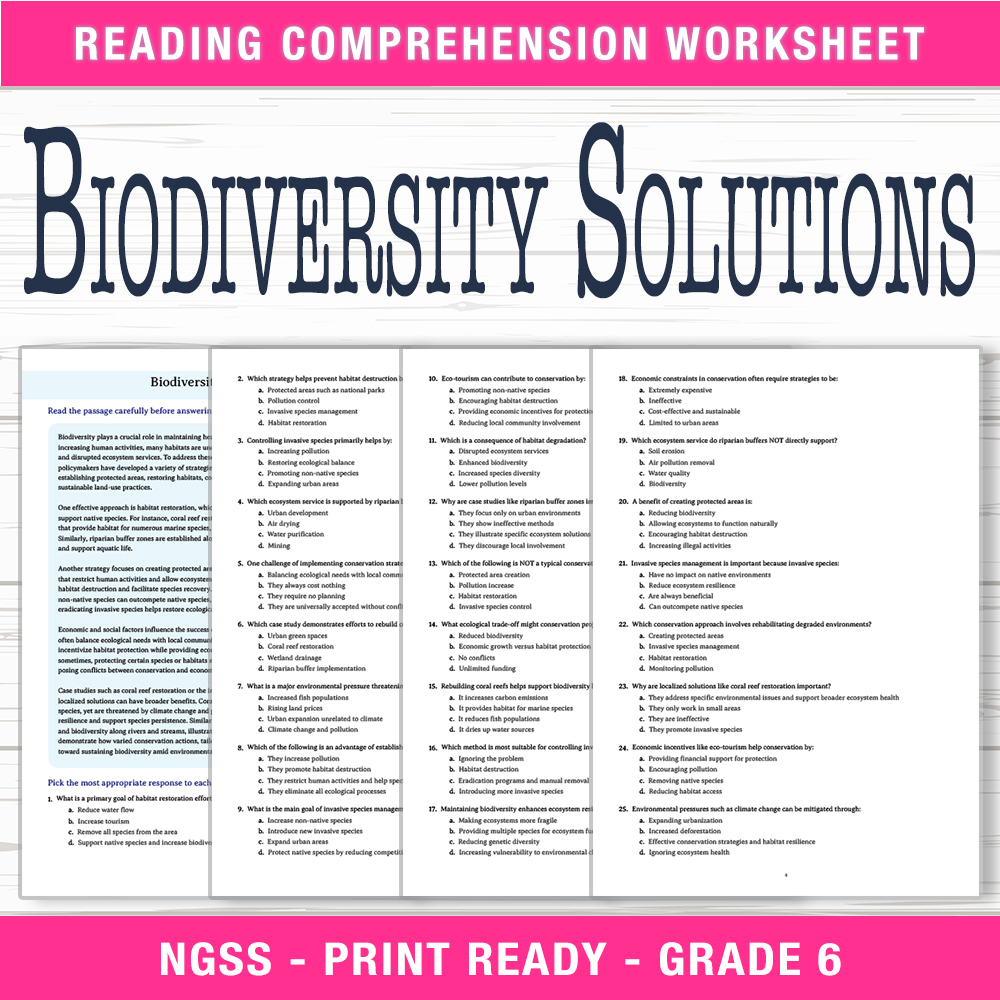
6th Grade Science | Biodiversity Solutions Worksheet (PDF + Answer Key)
Created byRiverstone ClassroomLearning Objectives
- Understand different conservation strategies and their ecological impacts.
- Compare and evaluate habitat restoration and invasive species management techniques.
- Analyze case studies to determine the effectiveness of biodiversity solutions under environmental pressures.
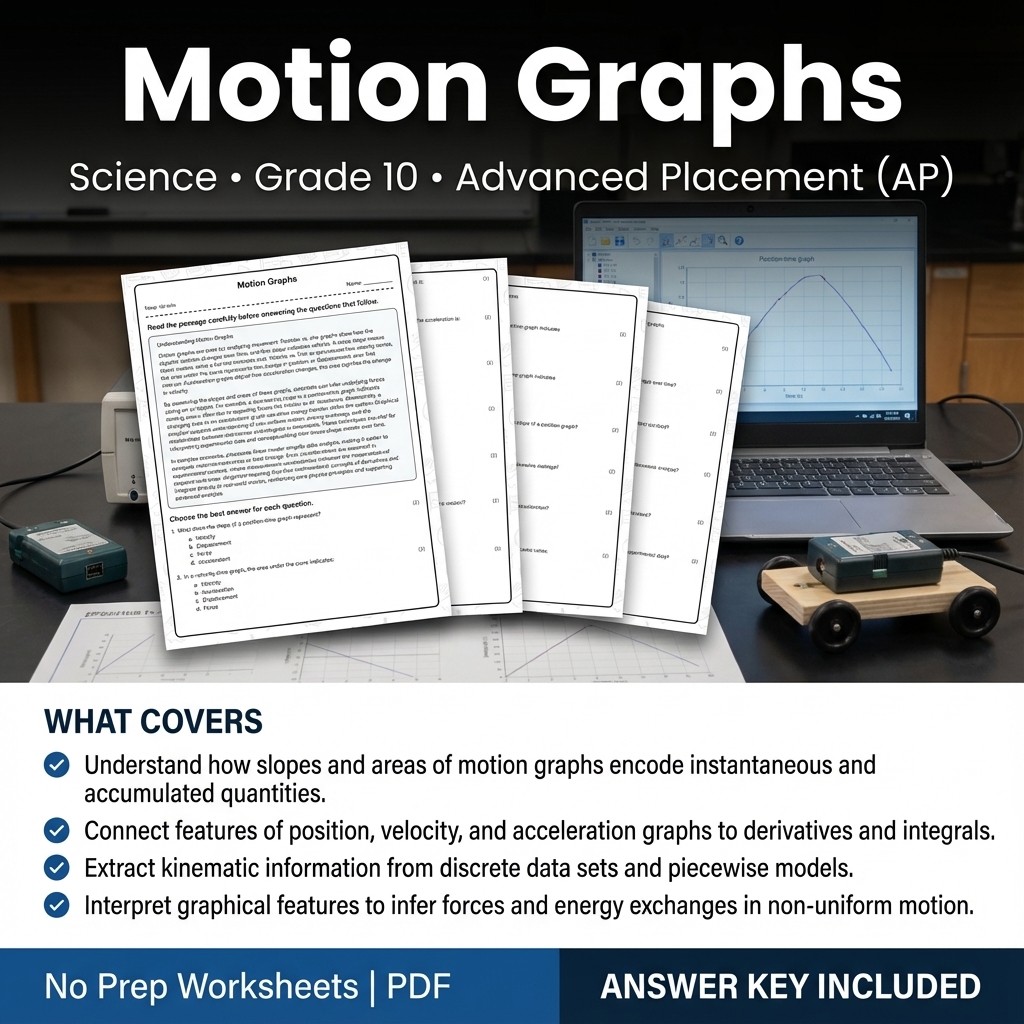
10th Grade Science | Motion Graphs Worksheet (Printable PDF + Answer Key)
 Created byCoral Reef Learning
Learning Objectives
- Understand how slopes and areas of motion graphs encode instantaneous and accumulated quantities.
- Connect features of position, velocity, and acceleration graphs to derivatives and integrals.
- Extract kinematic information from discrete data sets and piecewise models.
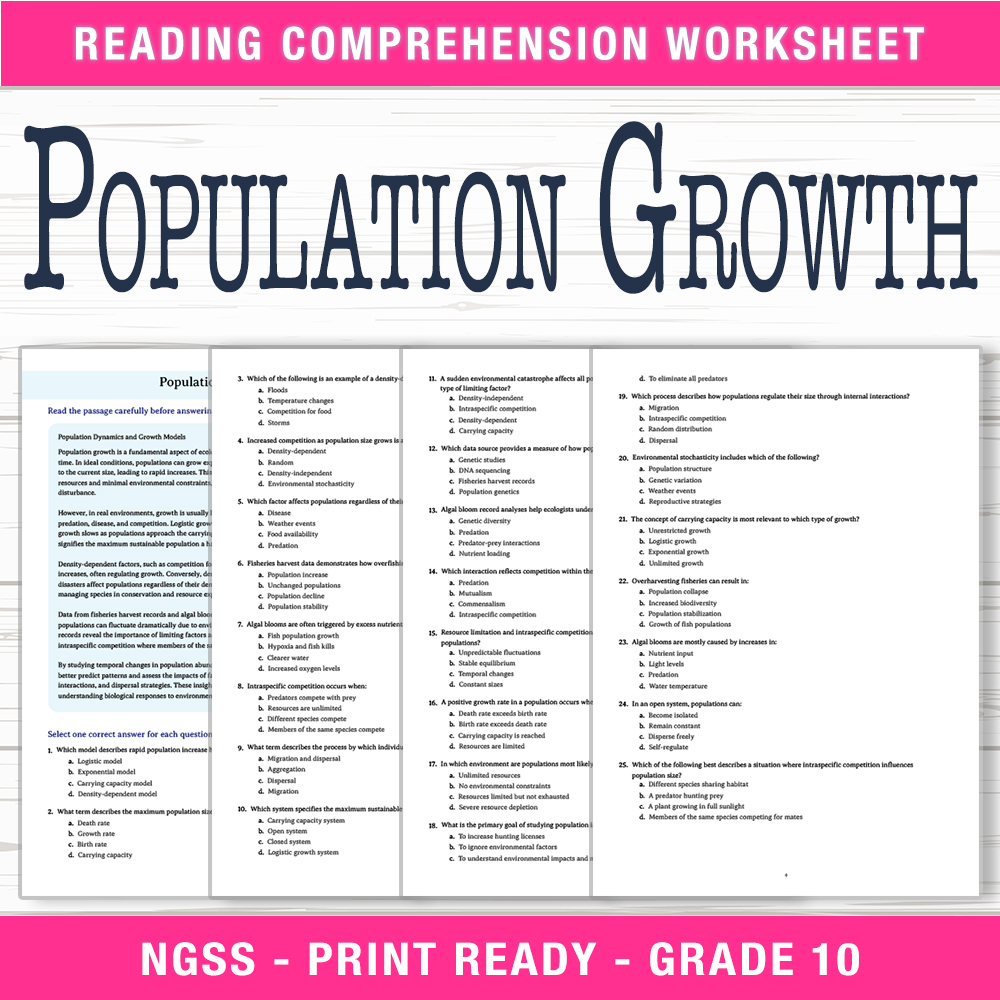
Grade 10 Science | Population Growth Worksheet (PDF + Answer Key)
Created byRiverstone ClassroomLearning Objectives
- Understand the principles of exponential and logistic population growth models.
- Identify density-dependent and density-independent limiting factors affecting populations.
- Analyze how reproductive strategies, competition, and resource availability influence population dynamics.
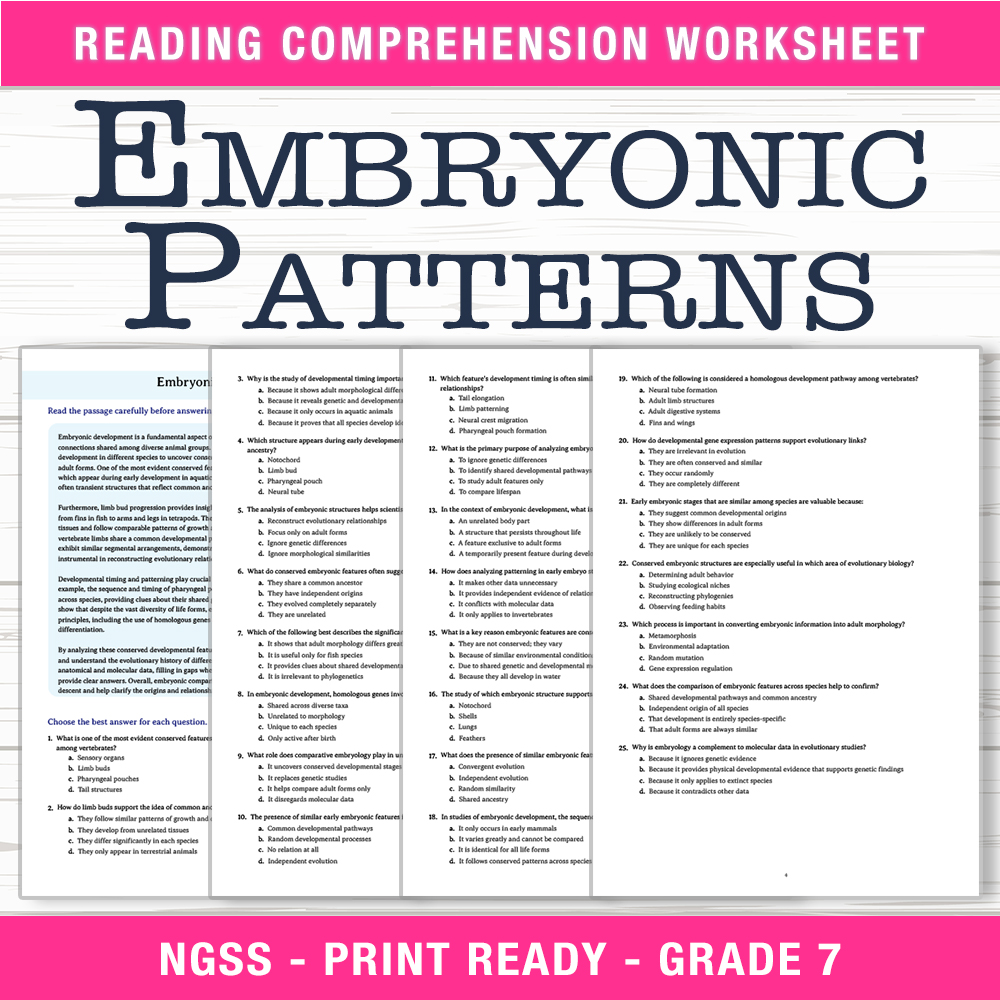
Grade 7 Science | Embryonic Patterns Worksheet (PDF + Answer Key)
Created byRiverstone ClassroomLearning Objectives
- Understand the concept of conserved embryonic development stages across different taxa.
- Identify morphological similarities in early embryonic structures that reflect evolutionary relationships.
- Analyze how developmental timing and patterning support phylogenetic reconstruction.
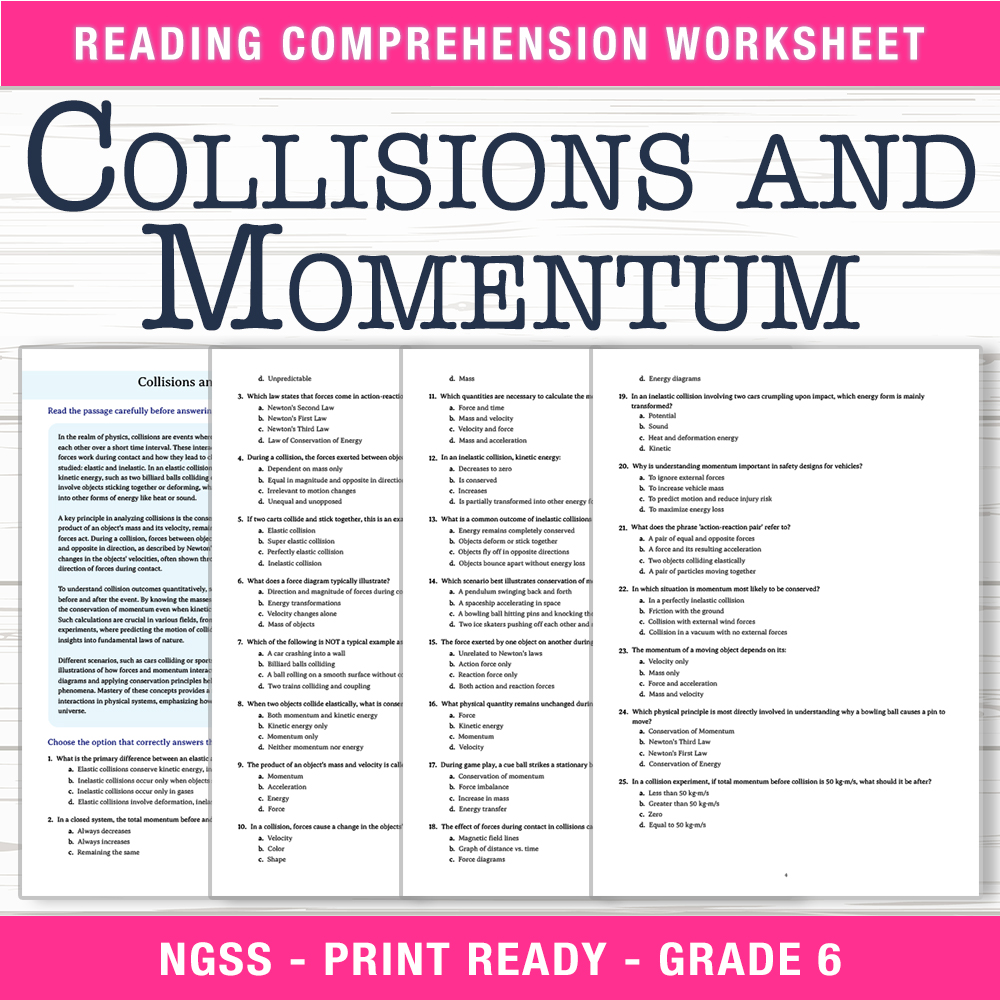
6th Grade Science | Collisions and Momentum Worksheet (PDF + Answer Key)
Created byRiverstone ClassroomLearning Objectives
- Explain the concept of conservation of momentum in two-body collisions.
- Distinguish between elastic and inelastic collisions using real-world examples.
- Analyze force diagrams to identify action-reaction pairs during collision events.
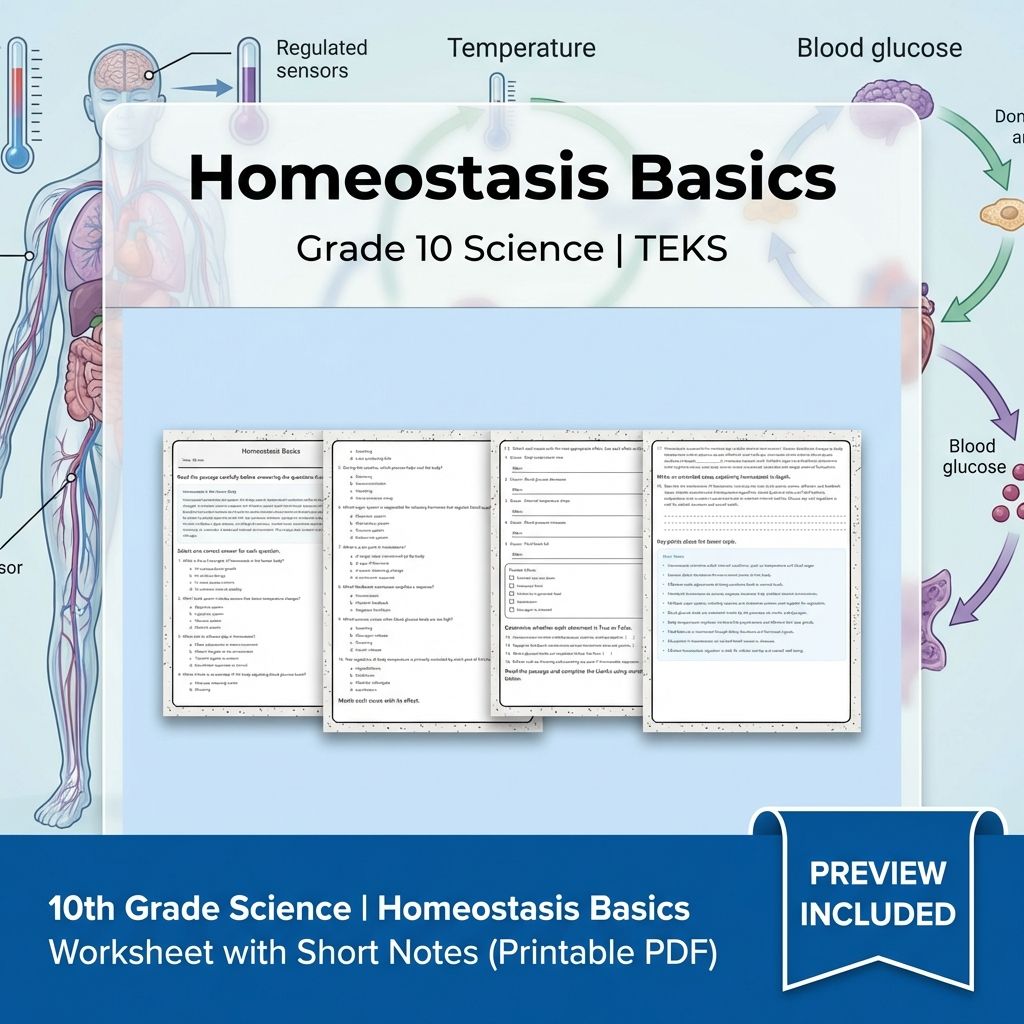
10th Grade Science | Homeostasis Basics Worksheet with Short Notes (PDF)
 Created byMeadowlark Worksheets
Learning Objectives
- Understand the concept of homeostasis and its importance in human physiology.
- Identify the roles of set points, sensors, and effectors in maintaining internal stability.
- Describe how different organ systems coordinate to regulate body temperature, fluid balance, and blood glucose.
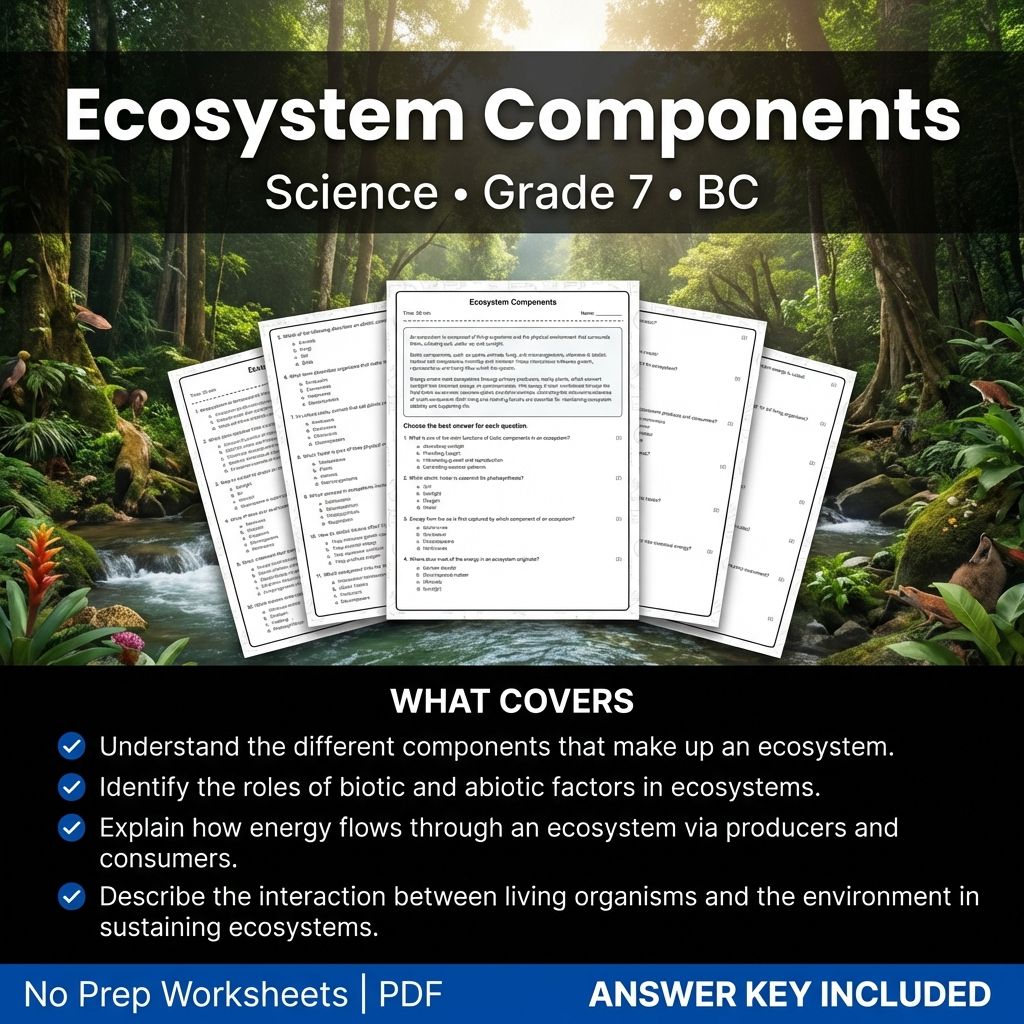
7th Grade Science | Ecosystem Components Worksheet & Answer Key (Printable PDF)
Created byCoral Reef LearningLearning Objectives
- Understand the different components that make up an ecosystem.
- Identify the roles of biotic and abiotic factors in ecosystems.
- Explain how energy flows through an ecosystem via producers and consumers.
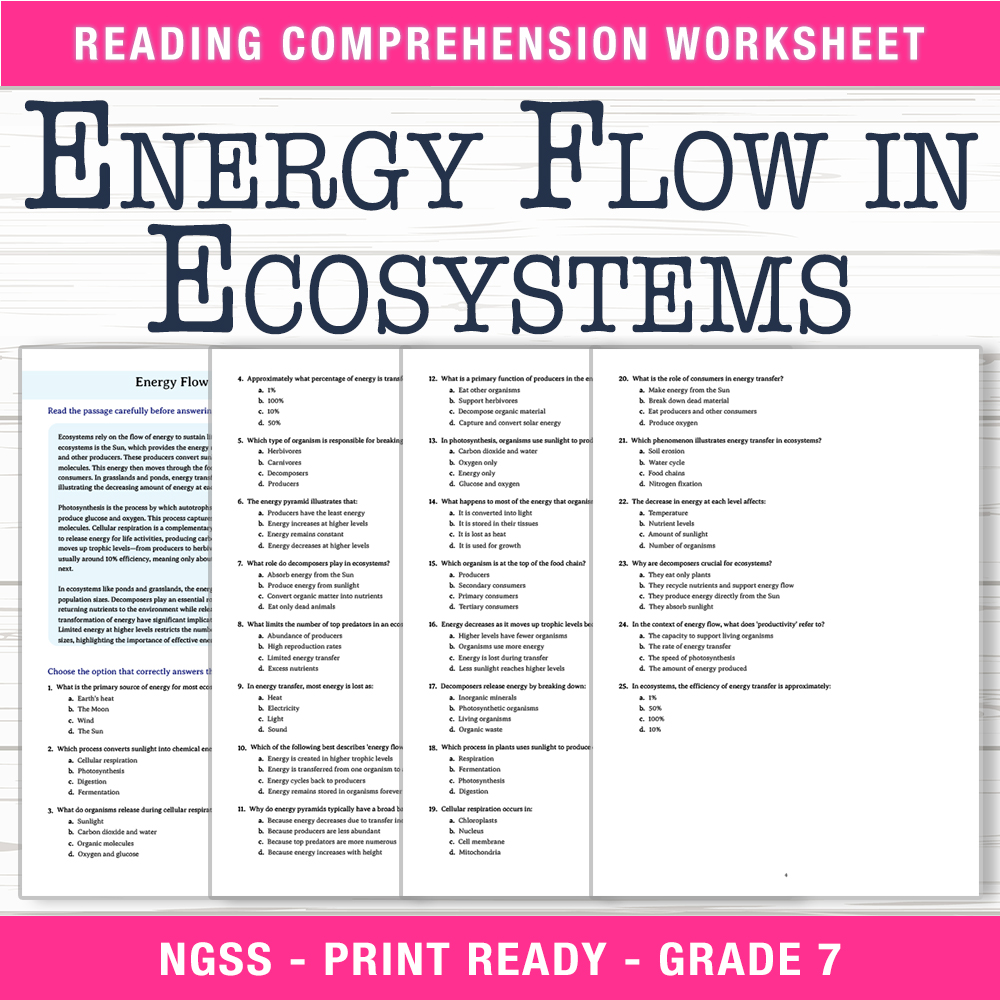
Grade 7 Science | Energy Flow in Ecosystems Worksheet (PDF + Answer Key)
Created byRiverstone ClassroomLearning Objectives
- Describe how energy is transferred through trophic levels in food webs and energy pyramids.
- Explain the roles of producers, consumers, and decomposers in ecosystem energy flow.
- Understand the mechanisms of photosynthesis and cellular respiration in energy capture and release.
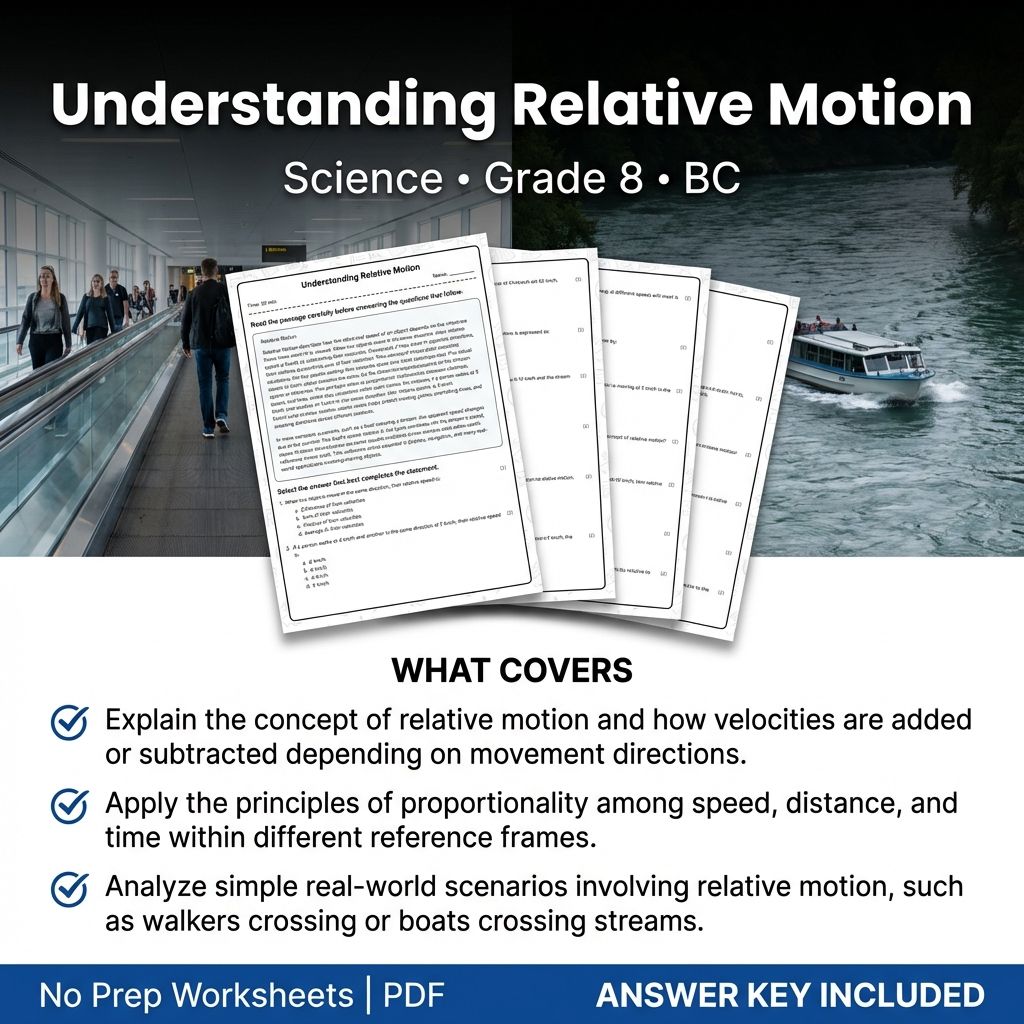
Understanding Relative Motion Grade 8 Science Worksheet & Answer Key
Created byCoral Reef LearningLearning Objectives
- Explain the concept of relative motion and how velocities are added or subtracted depending on movement directions.
- Apply the principles of proportionality among speed, distance, and time within different reference frames.
- Analyze simple real-world scenarios involving relative motion, such as walkers crossing or boats crossing streams.
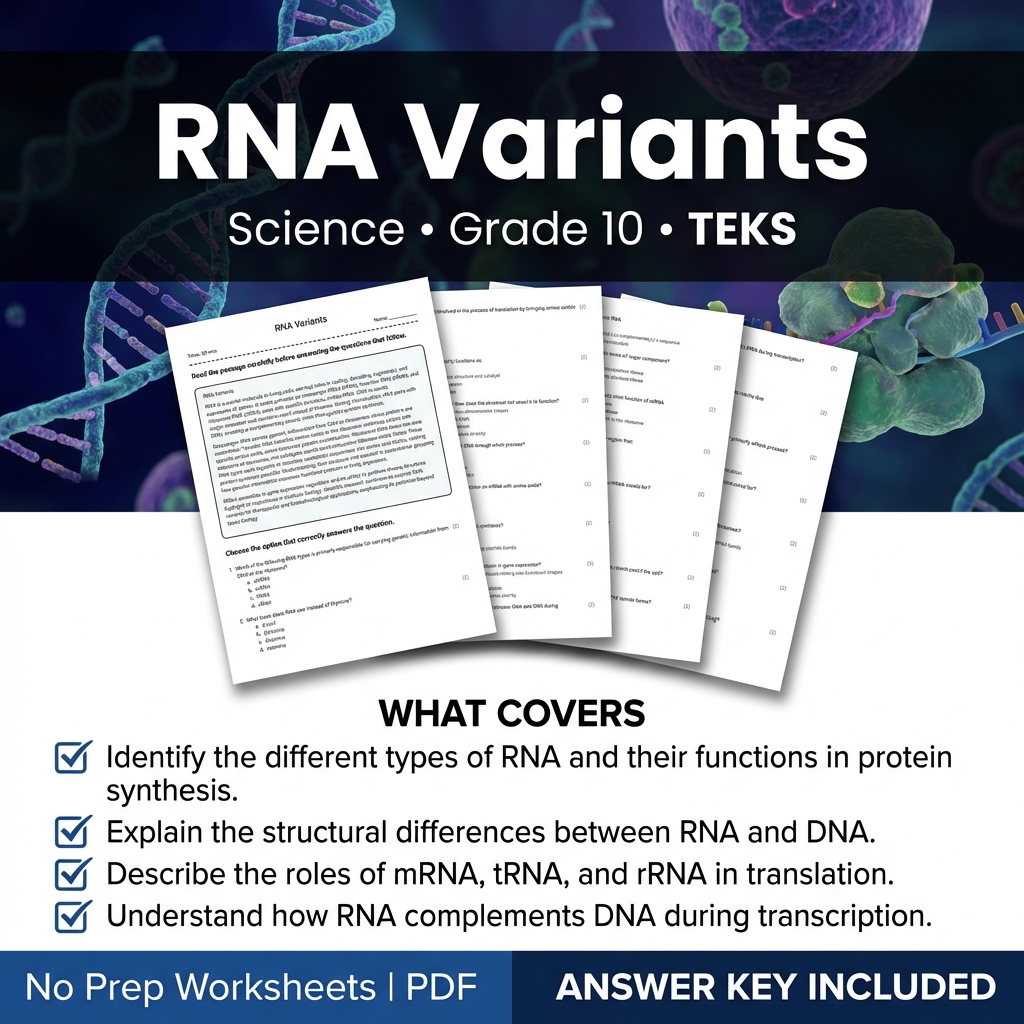
RNA Variants Worksheet for Grade 10 Science | TEKS Aligned Practice
Created byCoral Reef LearningLearning Objectives
- Identify the different types of RNA and their functions in protein synthesis.
- Explain the structural differences between RNA and DNA.
- Describe the roles of mRNA, tRNA, and rRNA in translation.
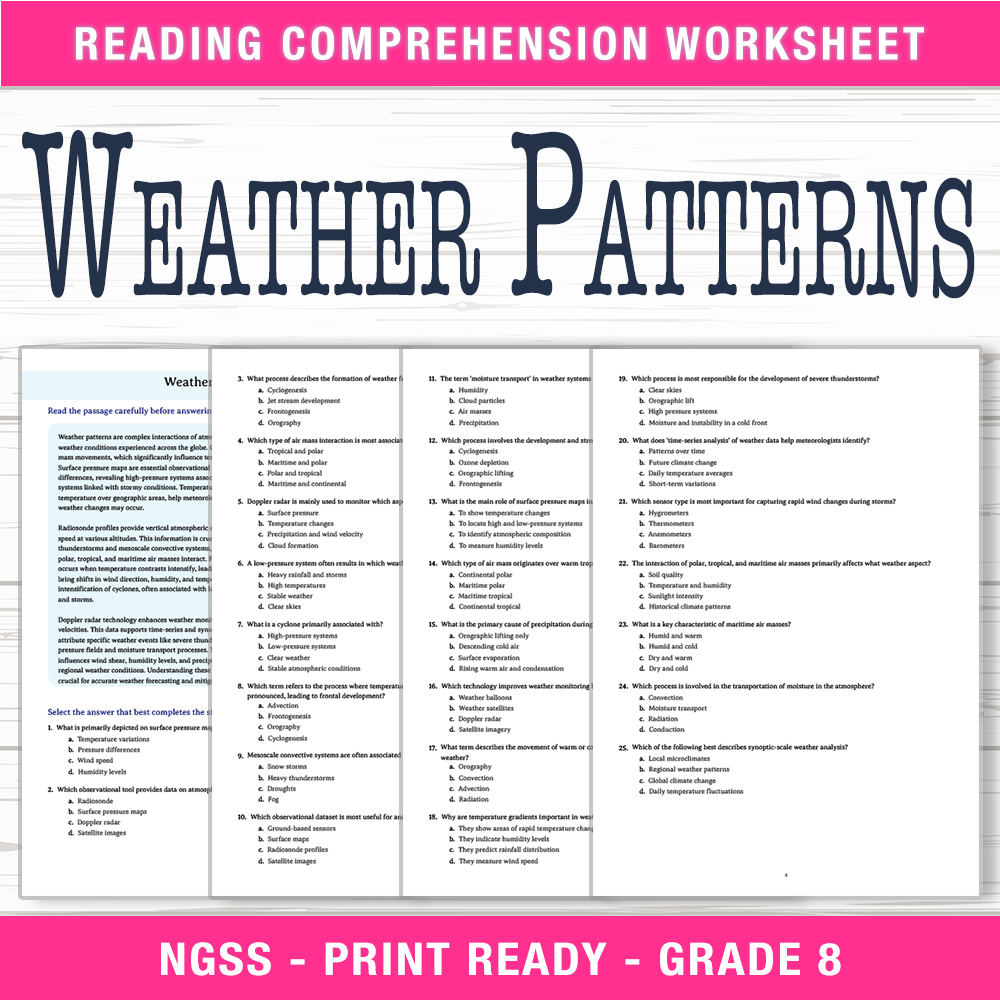
Grade 8 Science | Weather Patterns Worksheet (PDF + Answer Key)
Created byRiverstone ClassroomLearning Objectives
- Understand how different air masses interact and influence weather changes.
- Analyze surface pressure maps and temperature gradients to identify weather phenomena.
- Explain processes such as frontogenesis and cyclogenesis in weather systems.
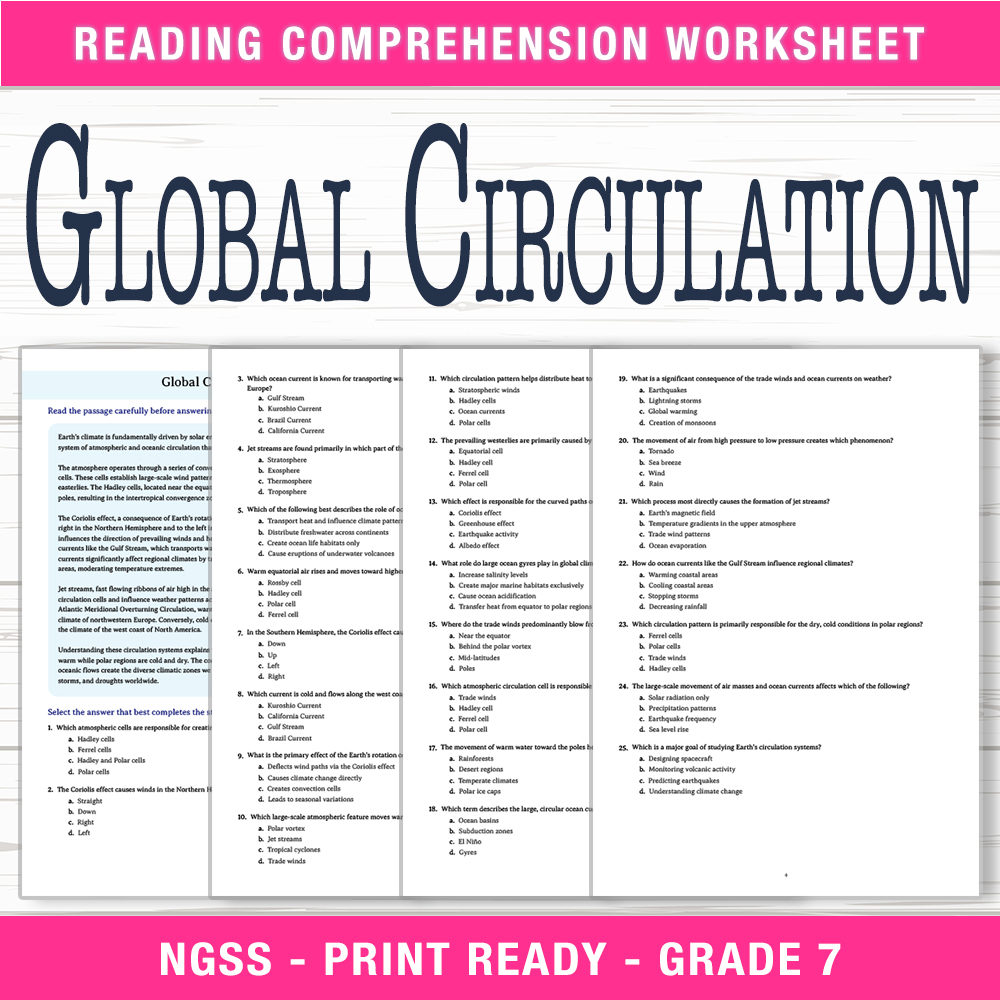
Grade 7 Science | Global Circulation Worksheet (PDF + Answer Key)
Created byRiverstone ClassroomLearning Objectives
- Explain the main components of Earth's atmospheric circulation cells and their role in climate.
- Identify major ocean currents and their influence on regional weather patterns.
- Describe how the Coriolis effect impacts wind and ocean current directions.
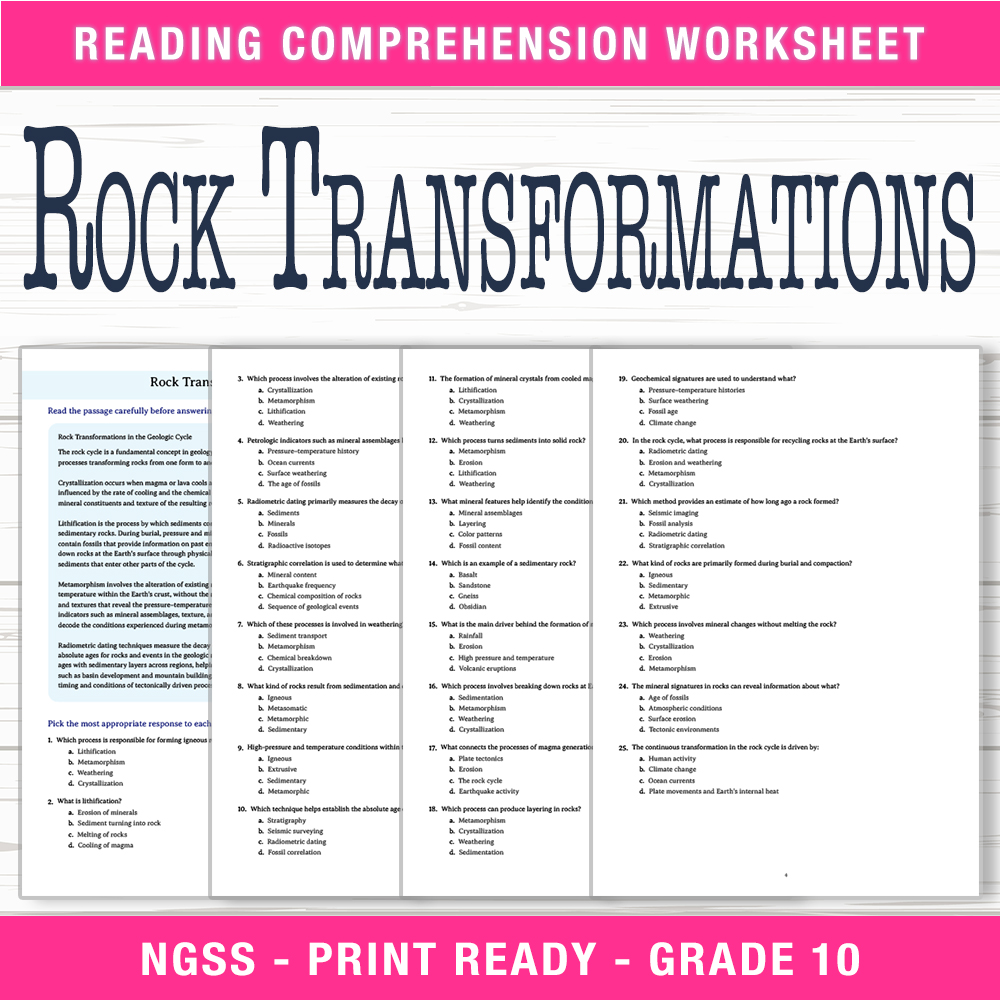
Grade 10 Science | Rock Transformations Worksheet (PDF + Answer Key)
Created byRiverstone ClassroomLearning Objectives
- Explain the processes of crystallization, lithification, metamorphism, and weathering in the rock cycle.
- Identify petrologic indicators such as mineral assemblages, texture, and geochemical signatures that inform tectonic histories.
- Describe how radiometric dating and stratigraphic correlation are used to reconstruct regional geologic events.
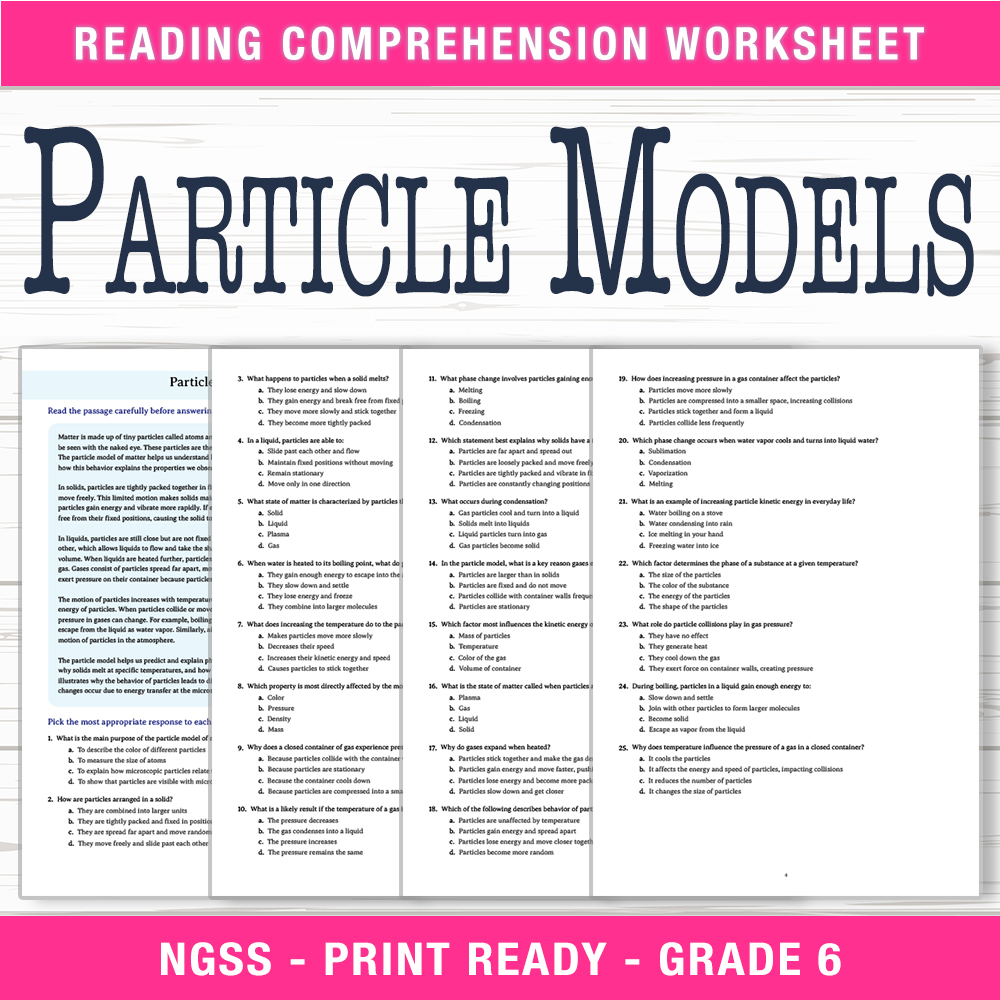
6th Grade Science | Particle Models Worksheet (PDF +Answer Key)
Created byRiverstone ClassroomLearning Objectives
- Explain how particles make up matter and how their behavior relates to the properties of solids, liquids, and gases.
- Describe how temperature affects particle motion and how this relates to changes of state such as melting, freezing, boiling, and condensation.
- Relate the microscopic behavior of particles to macroscopic phenomena like pressure changes and thermal energy effects.
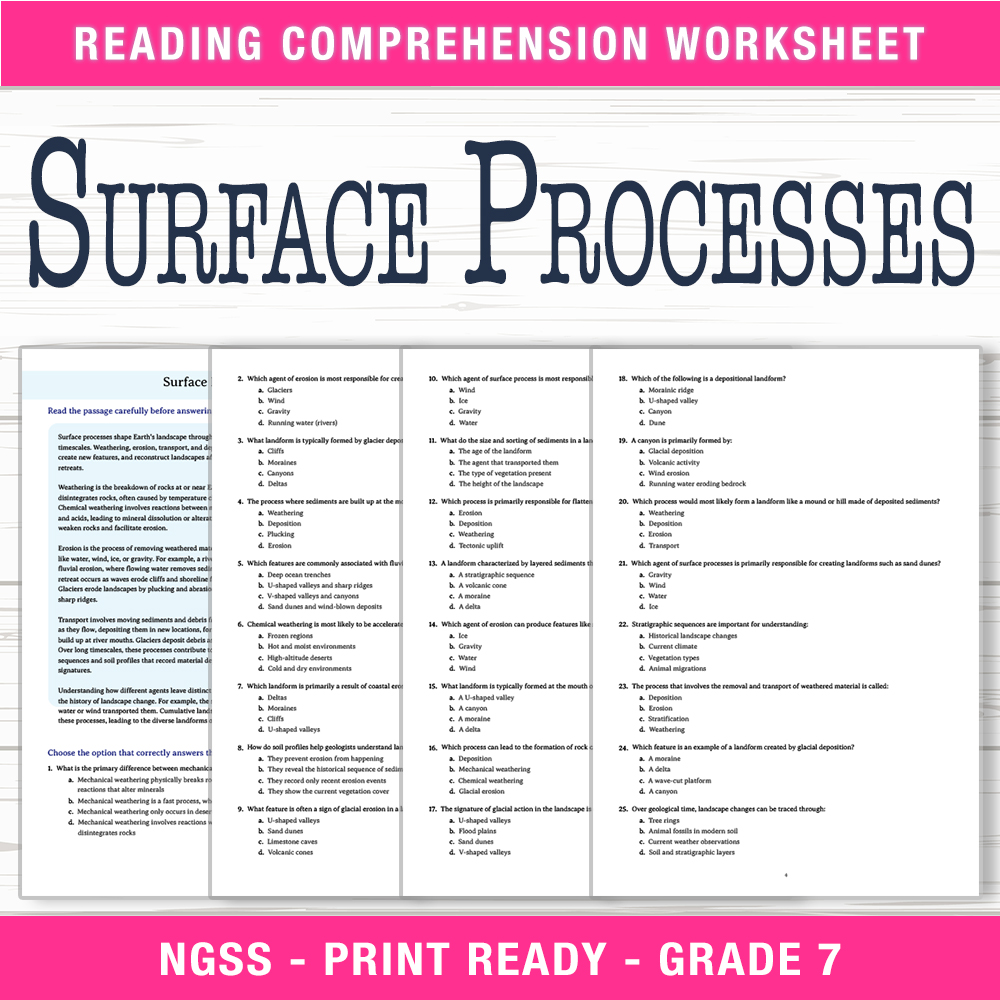
Grade 7 Science | Surface Processes Worksheet (PDF + Answer Key)
Created byRiverstone ClassroomLearning Objectives
- Understand the key geologic surface processes such as weathering, erosion, transport, and deposition
- Identify the differences between mechanical and chemical weathering and their impacts on landscapes
- Explain how landforms like canyons, deltas, and moraines are created by different agents over time
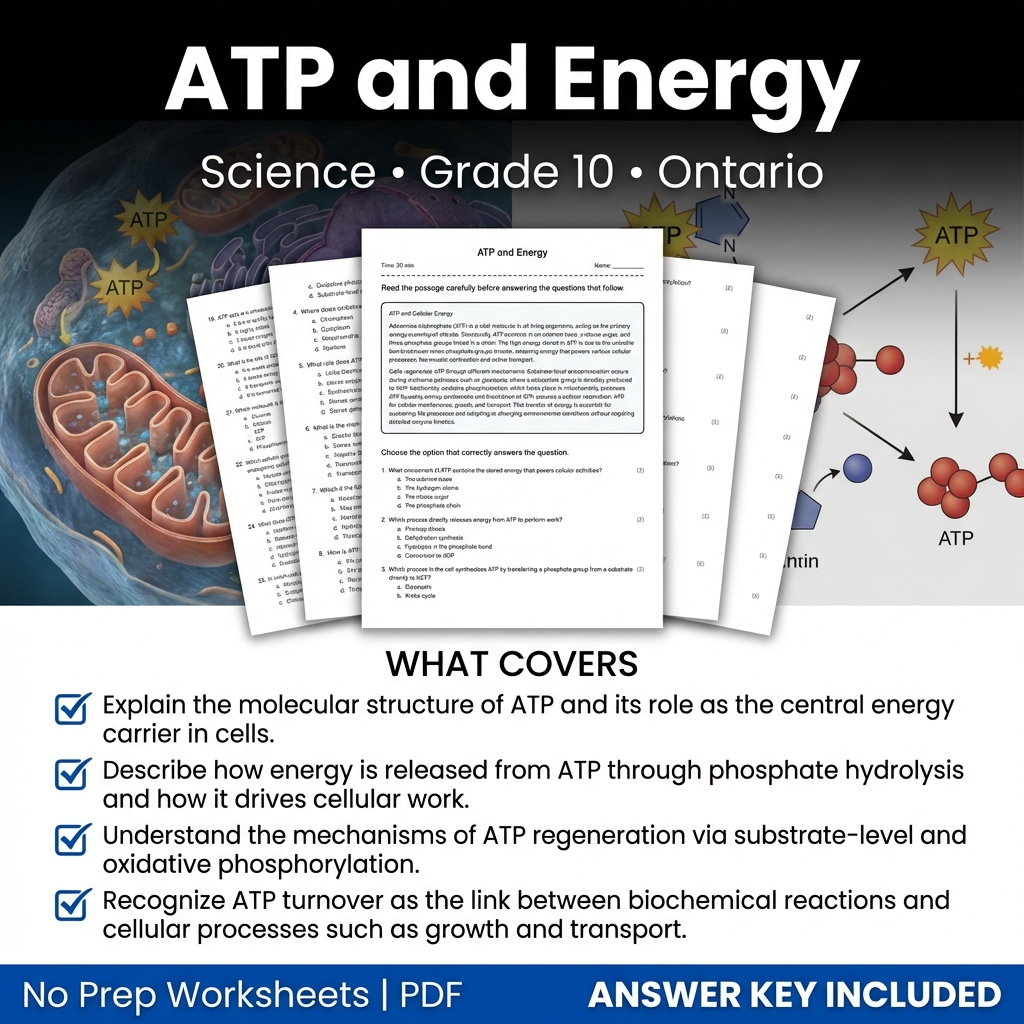
ATP and Energy Worksheet for Grade 10 Science | Ontario Standards Practice
Created byCoral Reef LearningLearning Objectives
- Explain the molecular structure of ATP and its role as the central energy carrier in cells.
- Describe how energy is released from ATP through phosphate hydrolysis and how it drives cellular work.
- Understand the mechanisms of ATP regeneration via substrate-level and oxidative phosphorylation.
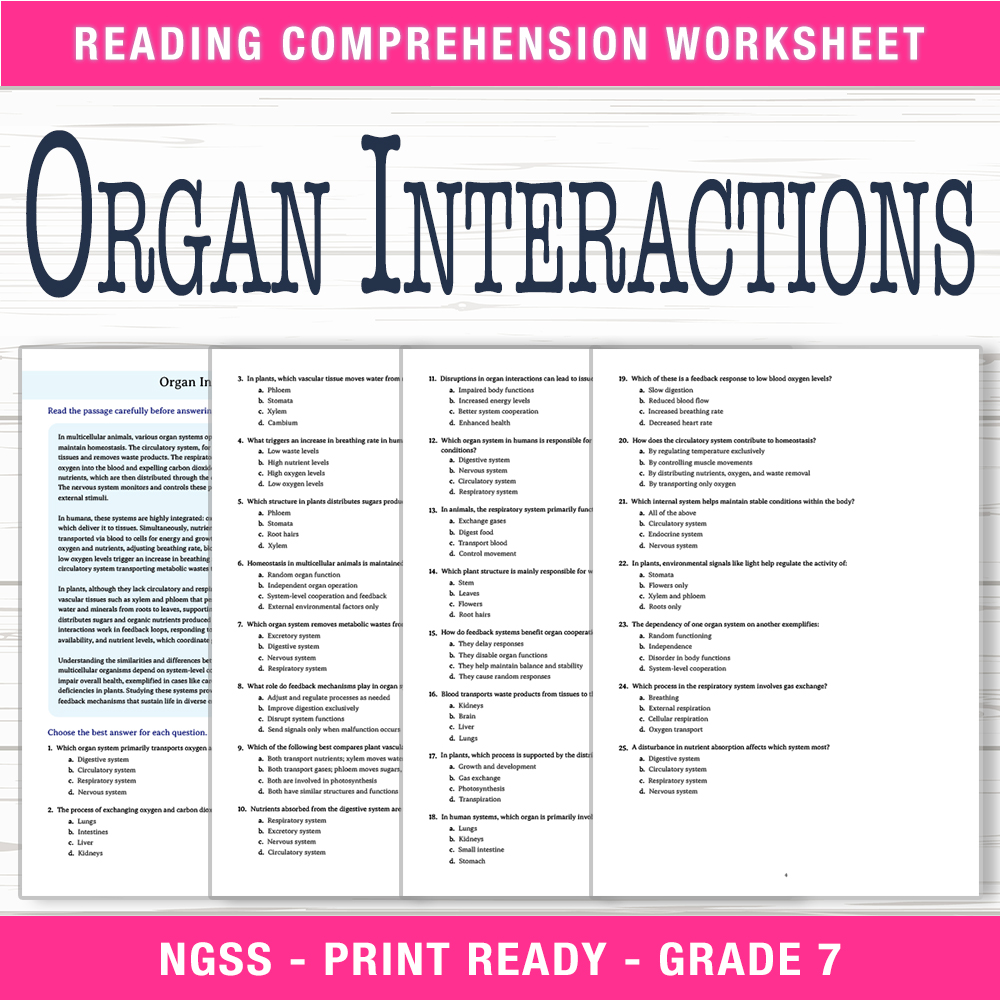
Grade 7 Science | Organ Interactions Worksheet (PDF + Answer Key)
Created byRiverstone ClassroomLearning Objectives
- Describe how different organ systems in multicellular animals work together to support vital functions.
- Explain mechanisms of cooperation such as oxygen transport, nutrient absorption, and waste removal within organ systems.
- Compare the organ system interactions in humans and plants to understand system-level dependencies and feedback.
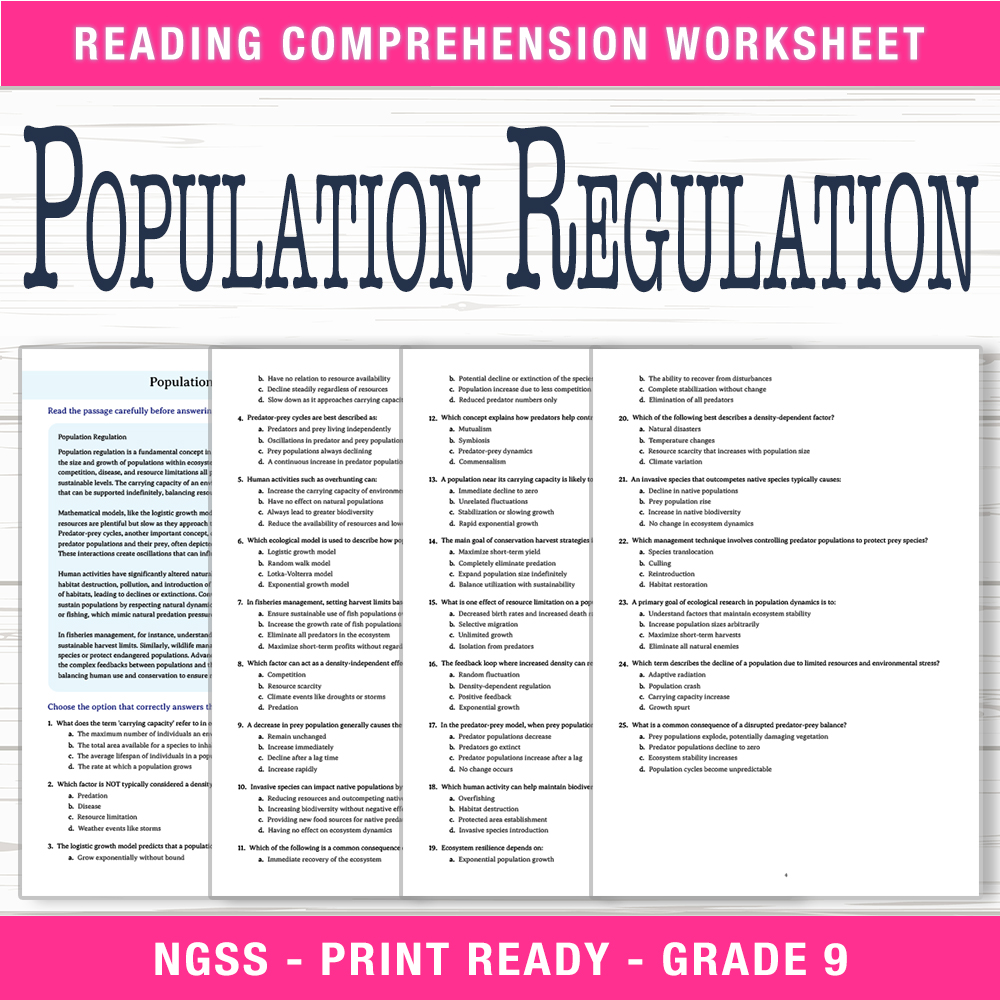
Grade 9 Science | Population Regulation Worksheet (PDF + Answer Key)
Created byRiverstone ClassroomLearning Objectives
- Explain the factors that influence population growth and size, including carrying capacity, predation, competition, and resource availability.
- Analyze mathematical models such as logistic growth and predator-prey cycles to understand population dynamics.
- Evaluate the impact of human activities on natural populations and discuss conservation strategies related to population regulation.
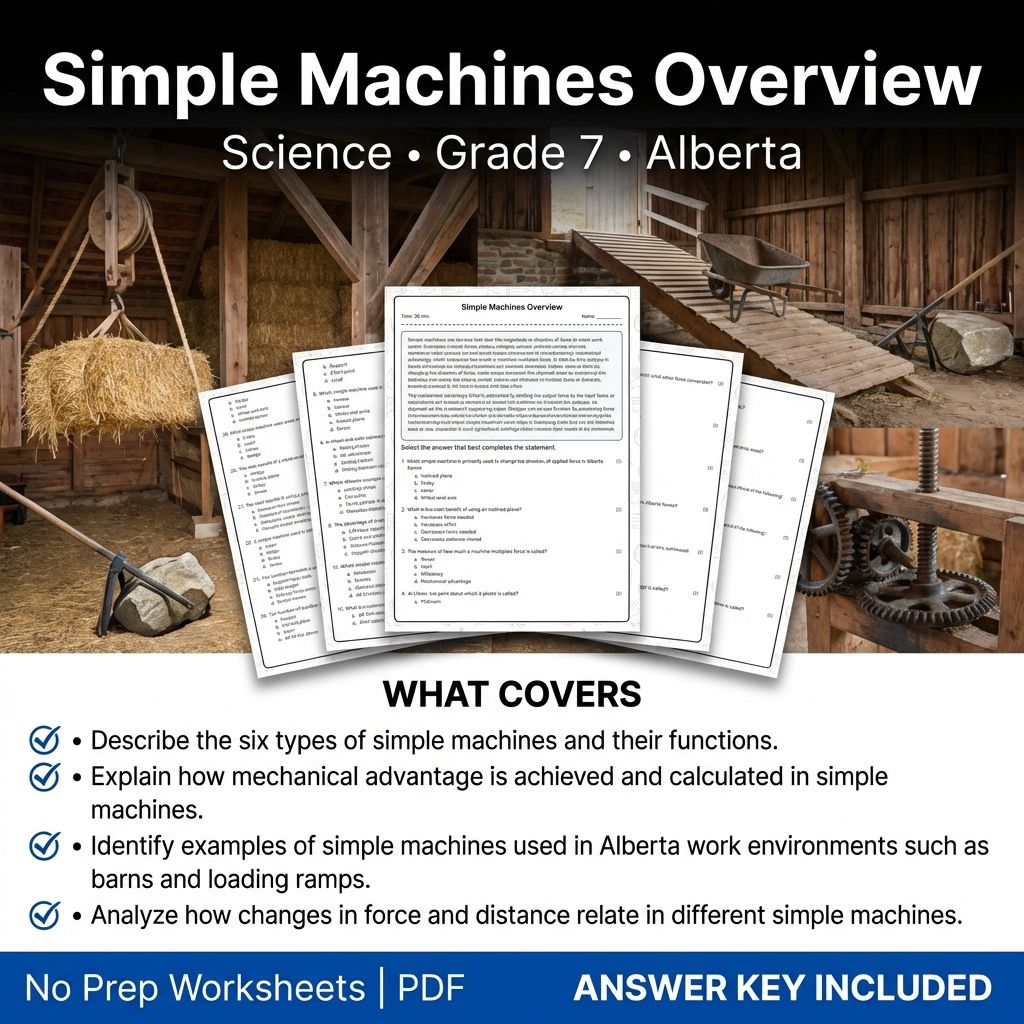
Grade 7 Science Worksheet | Simple Machines Overview | Alberta Standards
Created byCoral Reef LearningLearning Objectives
- Describe the six types of simple machines and their functions.
- Explain how mechanical advantage is achieved and calculated in simple machines.
- Identify examples of simple machines used in Alberta work environments such as barns and loading ramps.
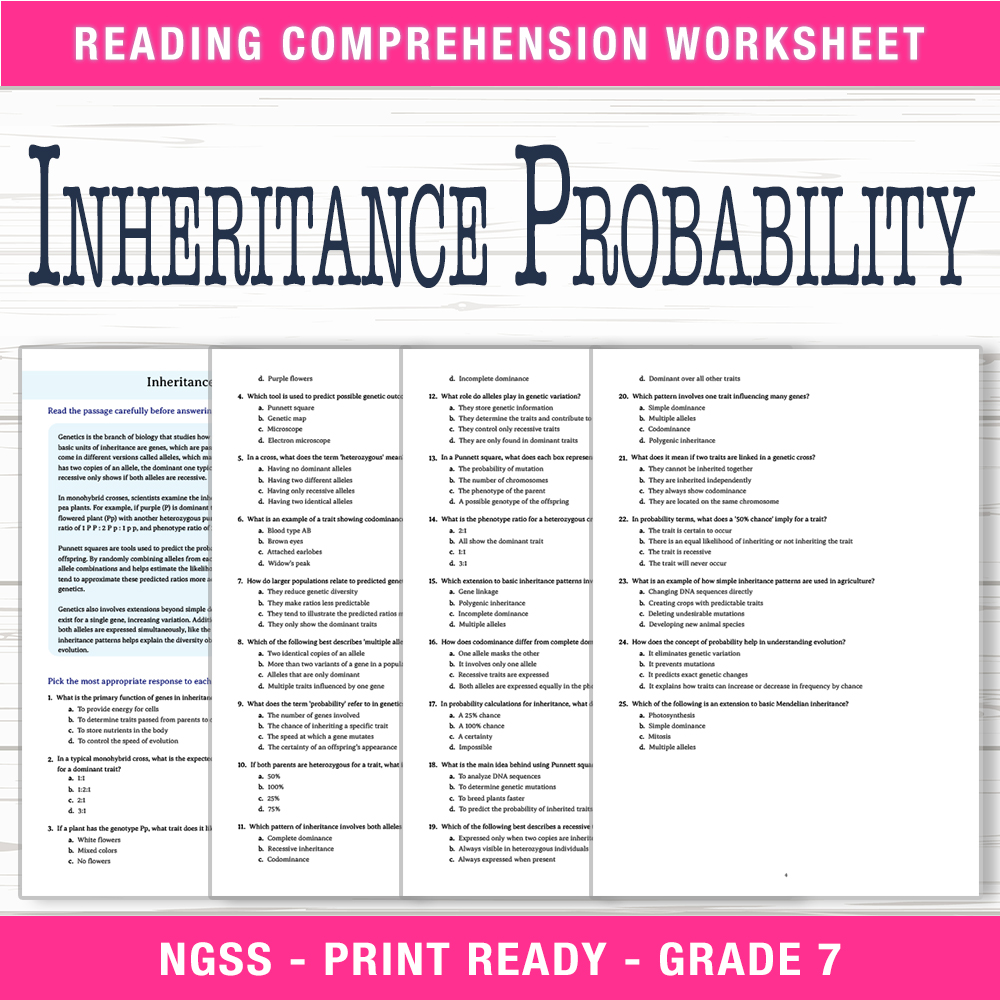
Grade 7 Science – Inheritance Probability Worksheet (PDF + Answer Key)
Created byRiverstone ClassroomLearning Objectives
- Understand and apply probability concepts to predict genetic variation among offspring.
- Interpret Punnett square outcomes to determine genotype and phenotype ratios.
- Calculate expected proportions of inherited traits in monohybrid crosses.
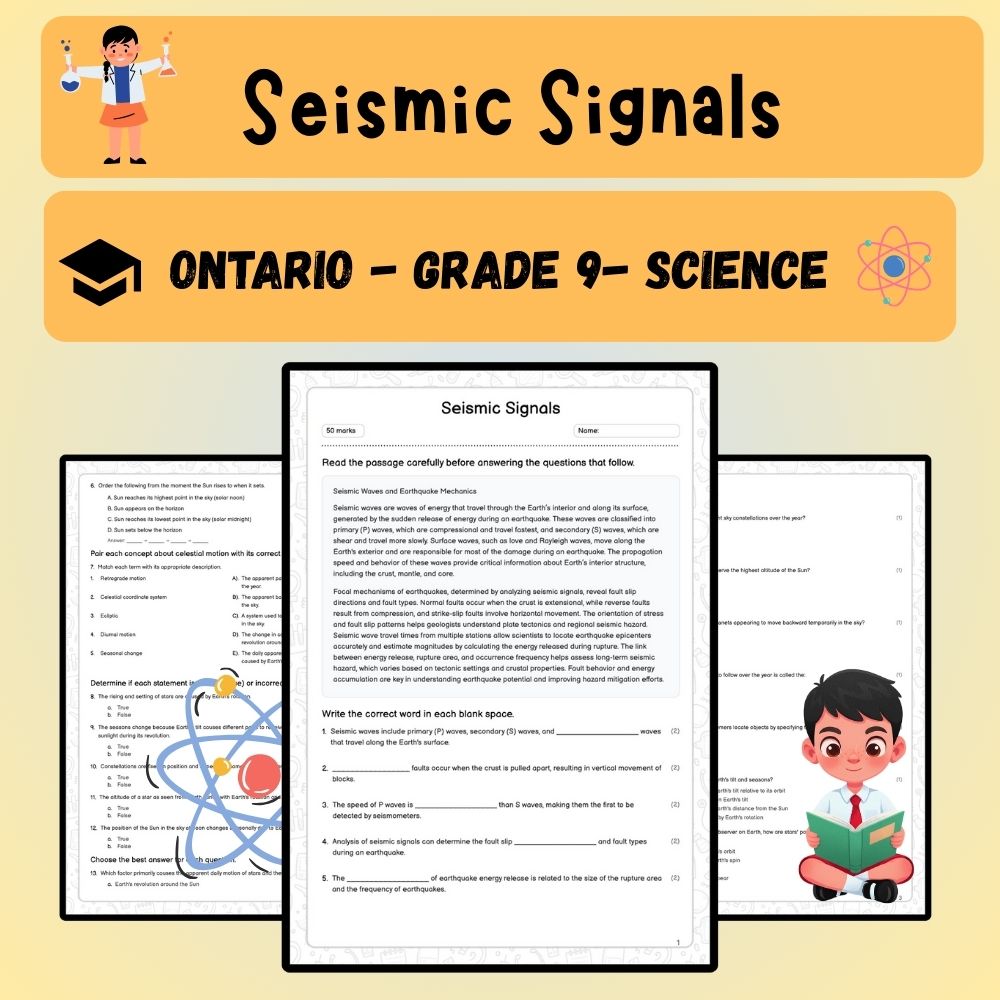
Grade 9 Science | Seismic Signals Worksheet (Worksheet + Answer Key) – Ontario Standards
 Created byPrism Point Learning
Learning Objectives
- Understand the types and propagation characteristics of seismic waves.
- Explain how earthquake focal mechanisms reveal fault types and stress orientations.
- Relate seismic wave travel times to Earth's interior structure and methods for locating epicentres.
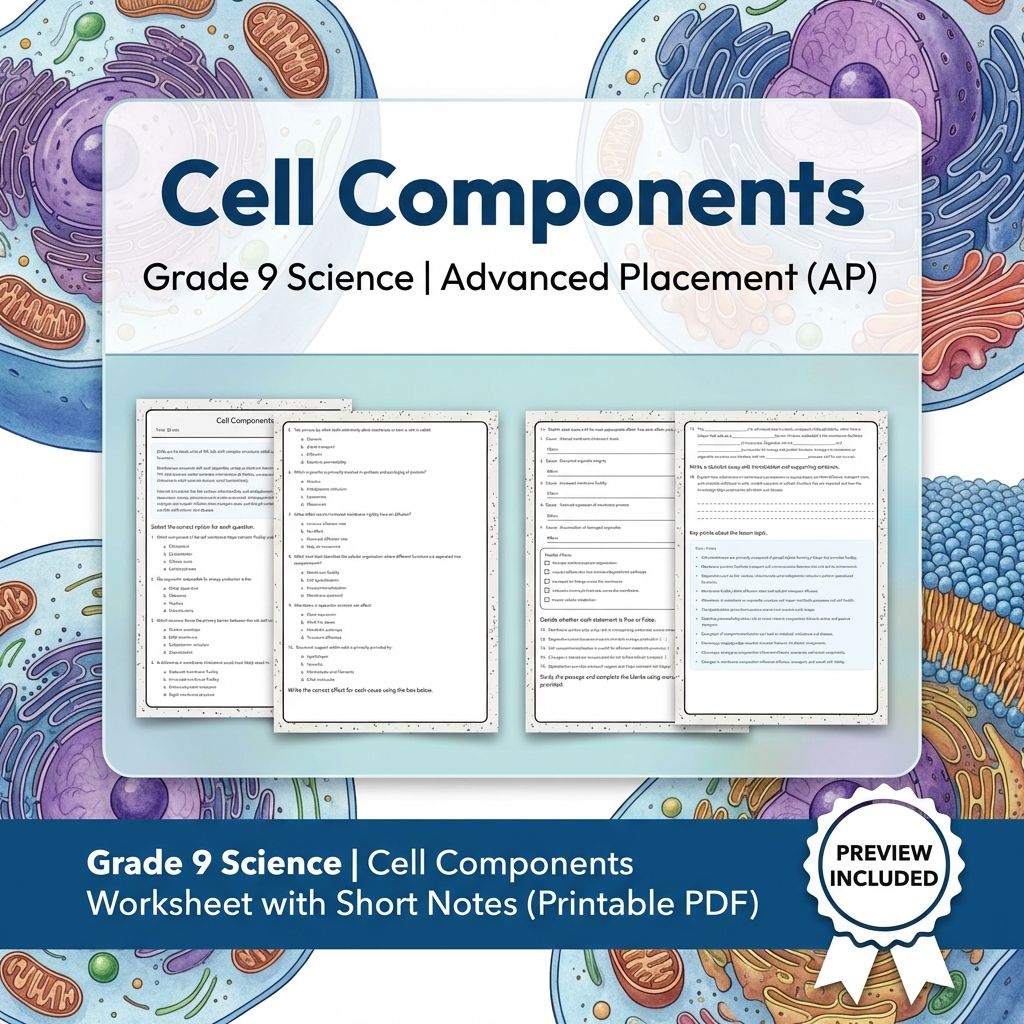
Grade 9 Science | Cell Components Worksheet with Short Notes (Printable PDF)
Created byMeadowlark WorksheetsLearning Objectives
- Describe the structure and function of cellular membranes and organelles.
- Explain how cellular compartmentalization affects metabolic processes.
- Identify the impact of alterations in membrane composition on diffusion and transport.
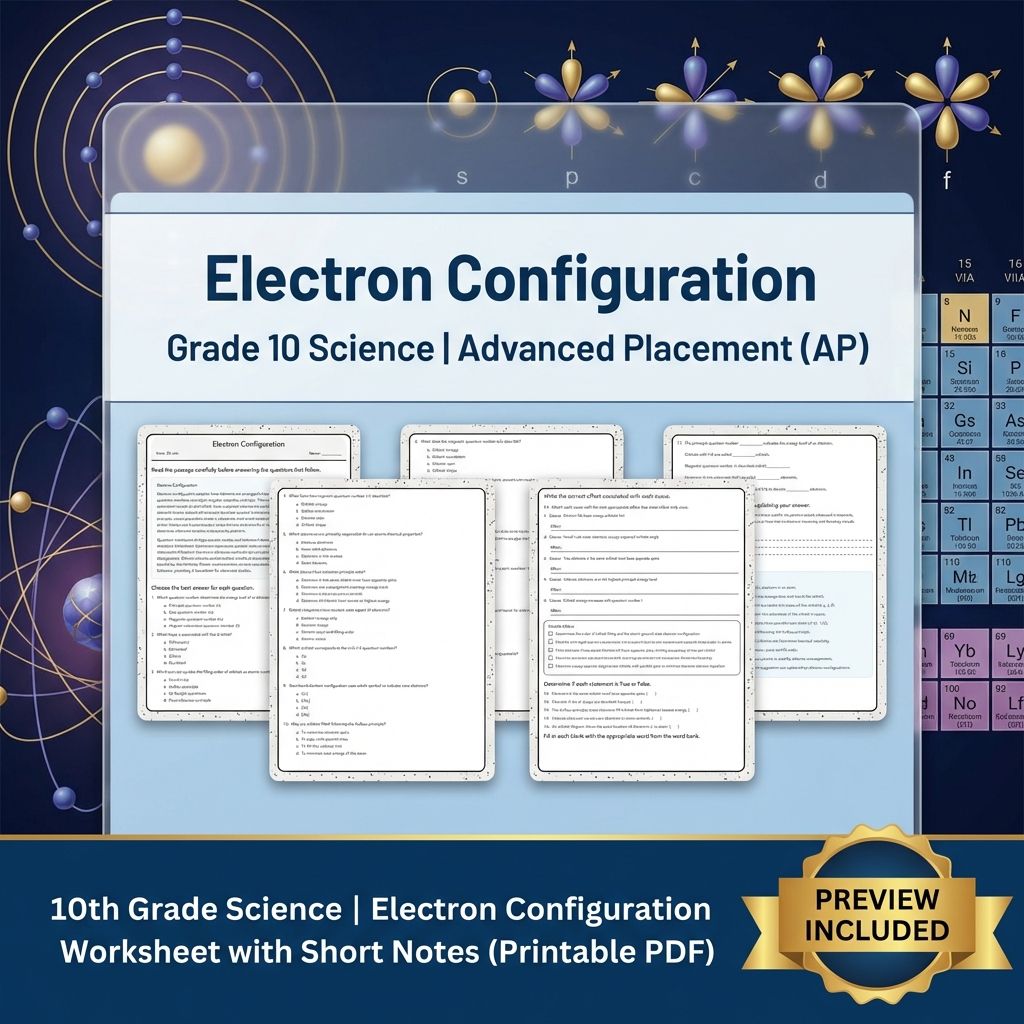
10th Grade Science | Electron Configuration Worksheet with Short Notes (PDF)
Created byMeadowlark WorksheetsLearning Objectives
- Understand quantum numbers and their role in electron distribution
- Identify orbital shapes and energy levels associated with electrons
- Interpret orbital diagrams and shorthand configurations
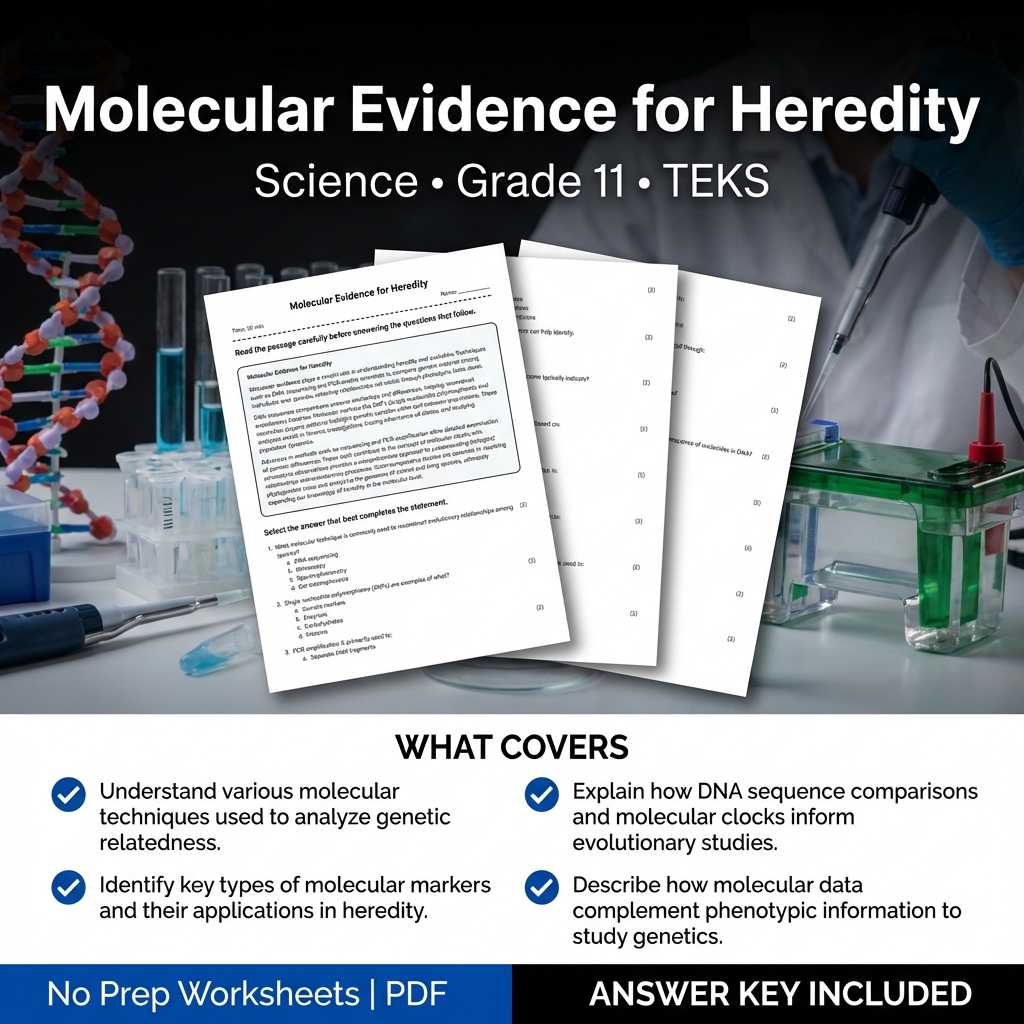
Molecular Evidence for Heredity Worksheet Grade 11 Science TEKS
Created byCoral Reef LearningLearning Objectives
- Understand various molecular techniques used to analyze genetic relatedness.
- Identify key types of molecular markers and their applications in heredity.
- Explain how DNA sequence comparisons and molecular clocks inform evolutionary studies.
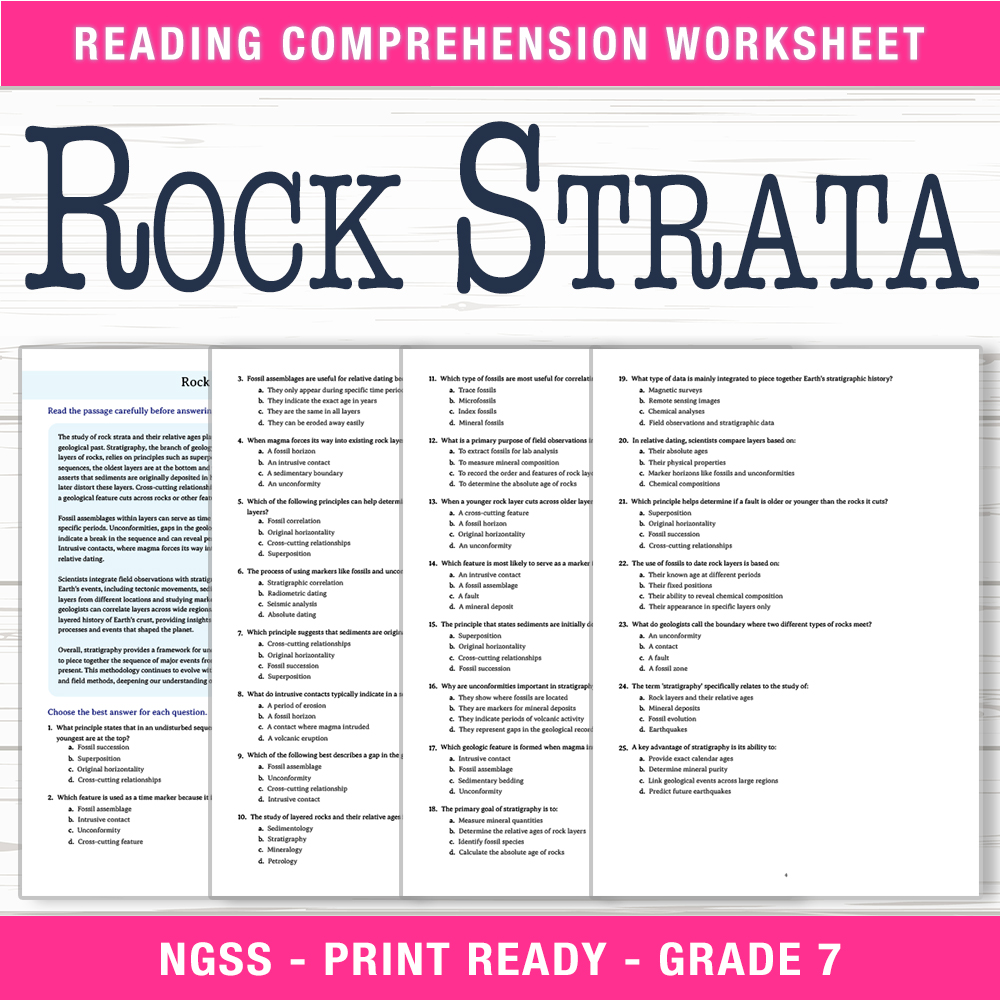
Grade 7 Science | Rock Strata Worksheet (PDF + Answer Key)
Created byRiverstone ClassroomLearning Objectives
- Understand the principles of relative dating such as superposition, original horizontality, and cross-cutting relationships.
- Identify key stratigraphic markers like fossils, unconformities, and intrusions used in correlating rock layers.
- Explain how field observations and stratigraphic data are used to reconstruct Earth's geological history.
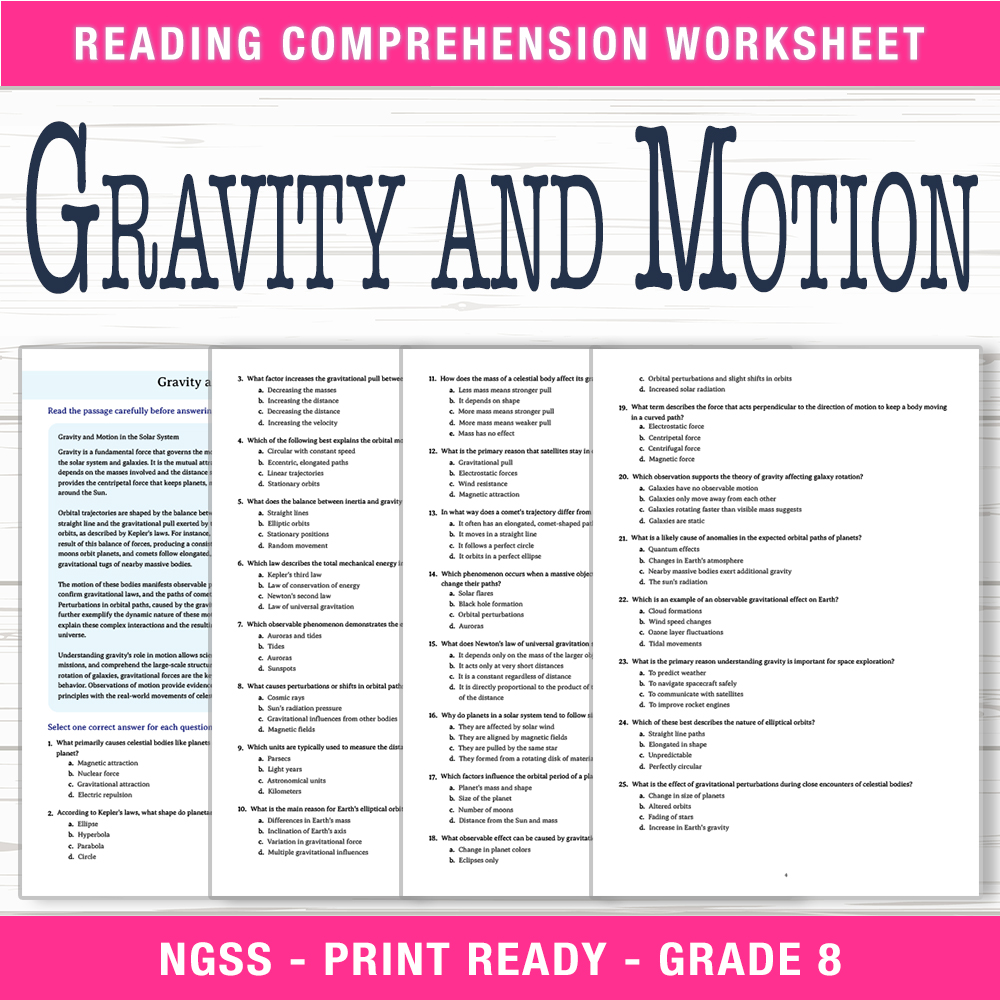
Grade 8 Science | Gravity and Motion Worksheet (PDF + Answer Key)
Created byRiverstone ClassroomLearning Objectives
- Understand how gravity governs the motions of celestial bodies within the solar system and galaxies.
- Explain the concepts of orbital trajectories, mutual gravitational attraction, and centripetal acceleration.
- Analyze how the balance between inertia and gravity results in elliptical orbits and determine orbital periods.
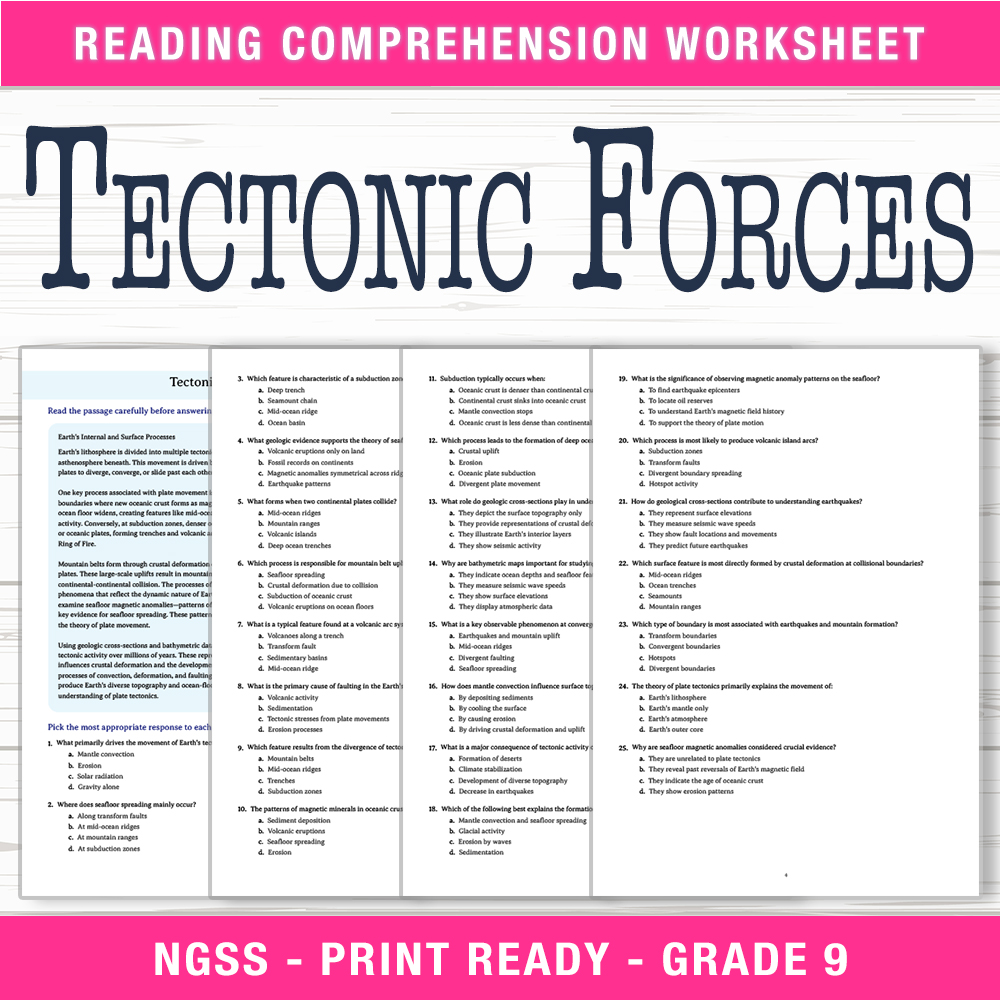
Grade 9 Science – Tectonic Forces Worksheet (PDF + Answer Key)
Created byRiverstone ClassroomLearning Objectives
- Explain the processes of seafloor spreading, subduction zones, and volcanic arc systems.
- Describe how mantle convection connects to surface features like mountain belts and ocean basins.
- Identify evidence such as seafloor magnetic anomalies and geologic cross-sections that support plate tectonics.
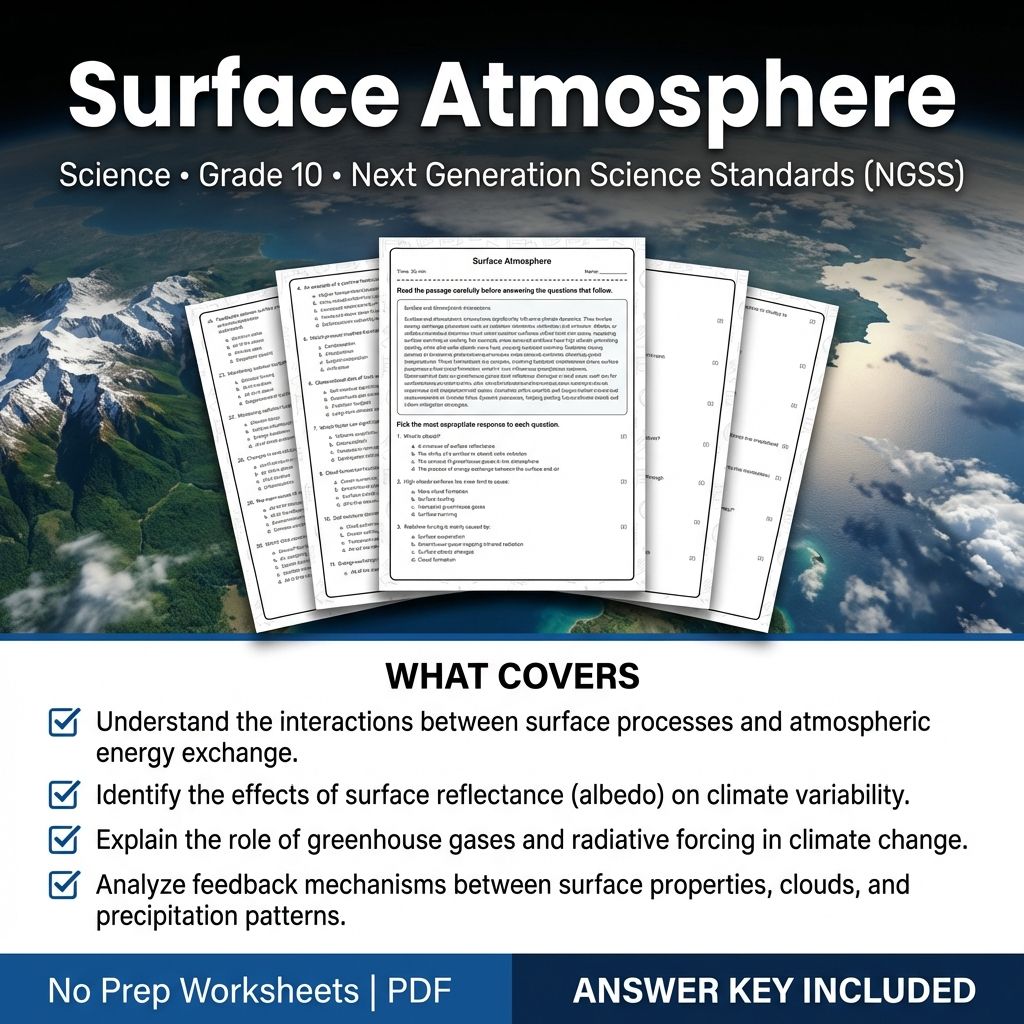
10th Grade Science | Surface Atmosphere Worksheet & Answer Key (Printable PDF)
Created byCoral Reef LearningLearning Objectives
- Understand the interactions between surface processes and atmospheric energy exchange.
- Identify the effects of surface reflectance (albedo) on climate variability.
- Explain the role of greenhouse gases and radiative forcing in climate change.
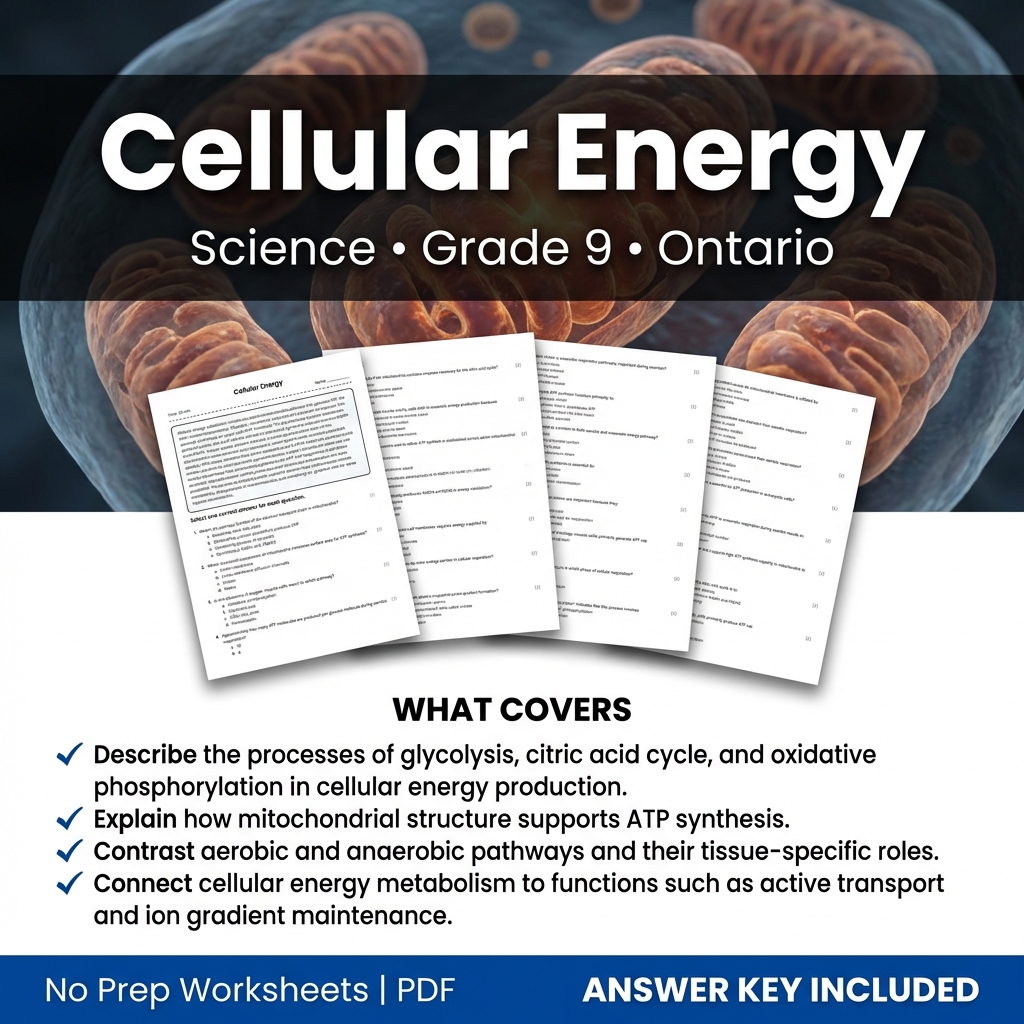
Cellular Energy Worksheet for Grade 9 Science | Ontario Standards
Created byCoral Reef LearningLearning Objectives
- Describe the processes of glycolysis, citric acid cycle, and oxidative phosphorylation in cellular energy production.
- Explain how mitochondrial structure supports ATP synthesis.
- Contrast aerobic and anaerobic pathways and their tissue-specific roles.
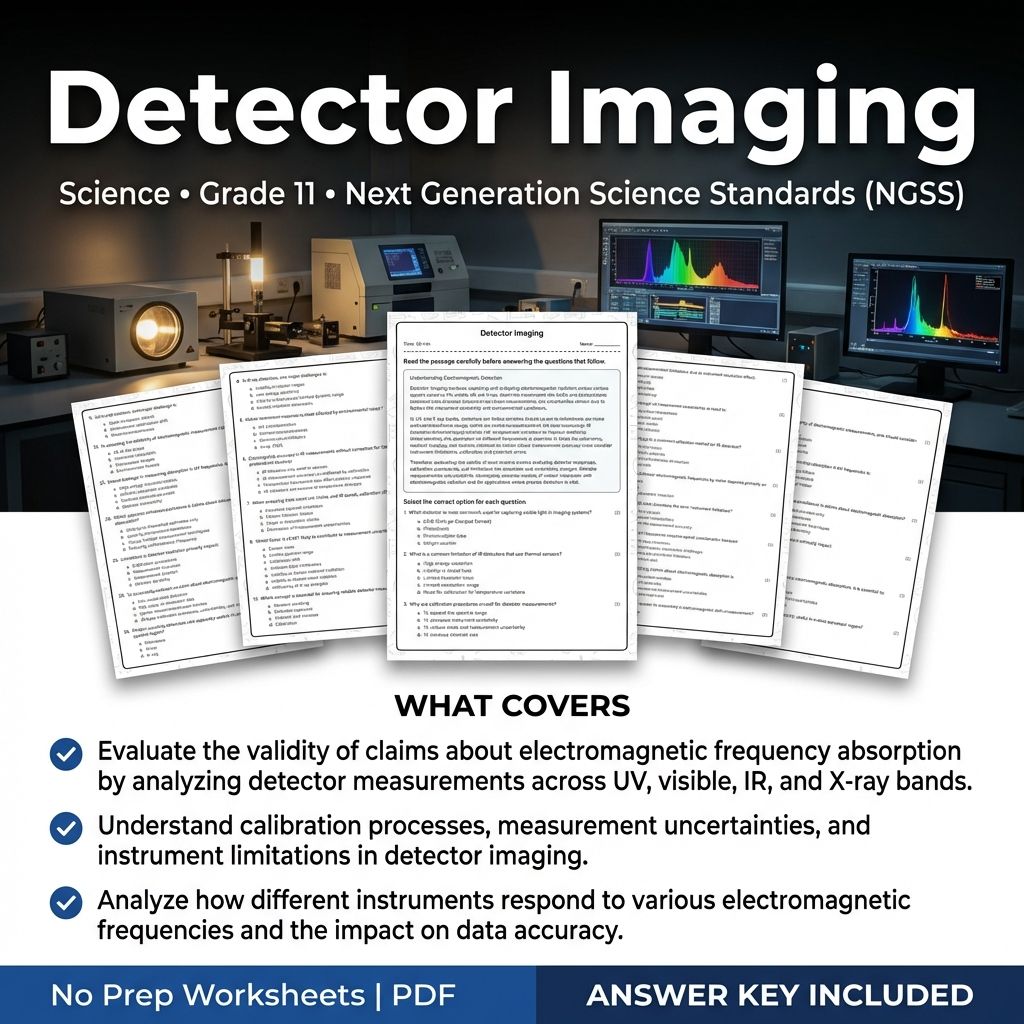
Grade 11 Science | Detector Imaging Worksheet & Answer Key (Printable PDF)
Created byCoral Reef LearningLearning Objectives
- Evaluate the validity of claims about electromagnetic frequency absorption by analyzing detector measurements across UV, visible, IR, and X-ray bands.
- Understand calibration processes, measurement uncertainties, and instrument limitations in detector imaging.
- Analyze how different instruments respond to various electromagnetic frequencies and the impact on data accuracy.
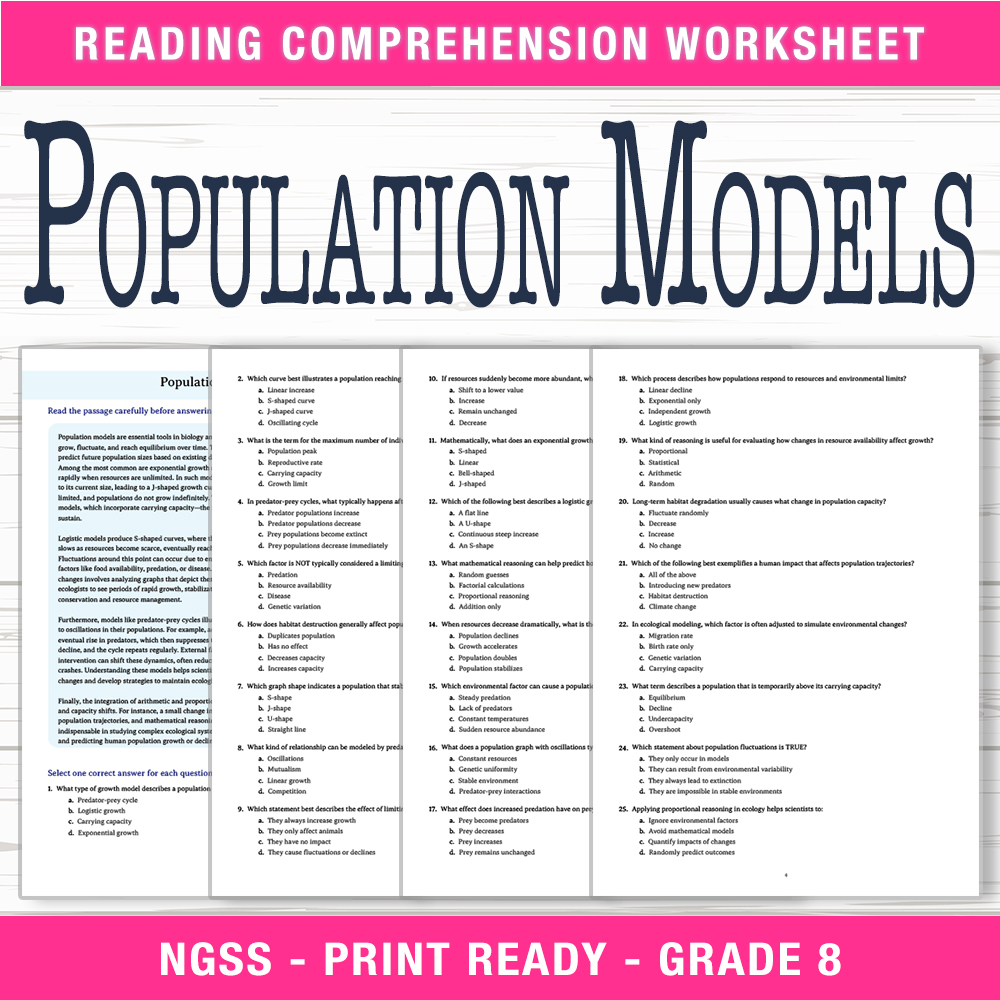
Grade 8 Science | Population Models Worksheet (PDF + Answer Key)
Created byRiverstone ClassroomLearning Objectives
- Describe different types of population growth models, including exponential and logistic growth.
- Interpret graphs of population dynamics to identify steady states, oscillations, and overshoot scenarios.
- Explain how limiting factors such as resources and predation influence long-term population trajectories.
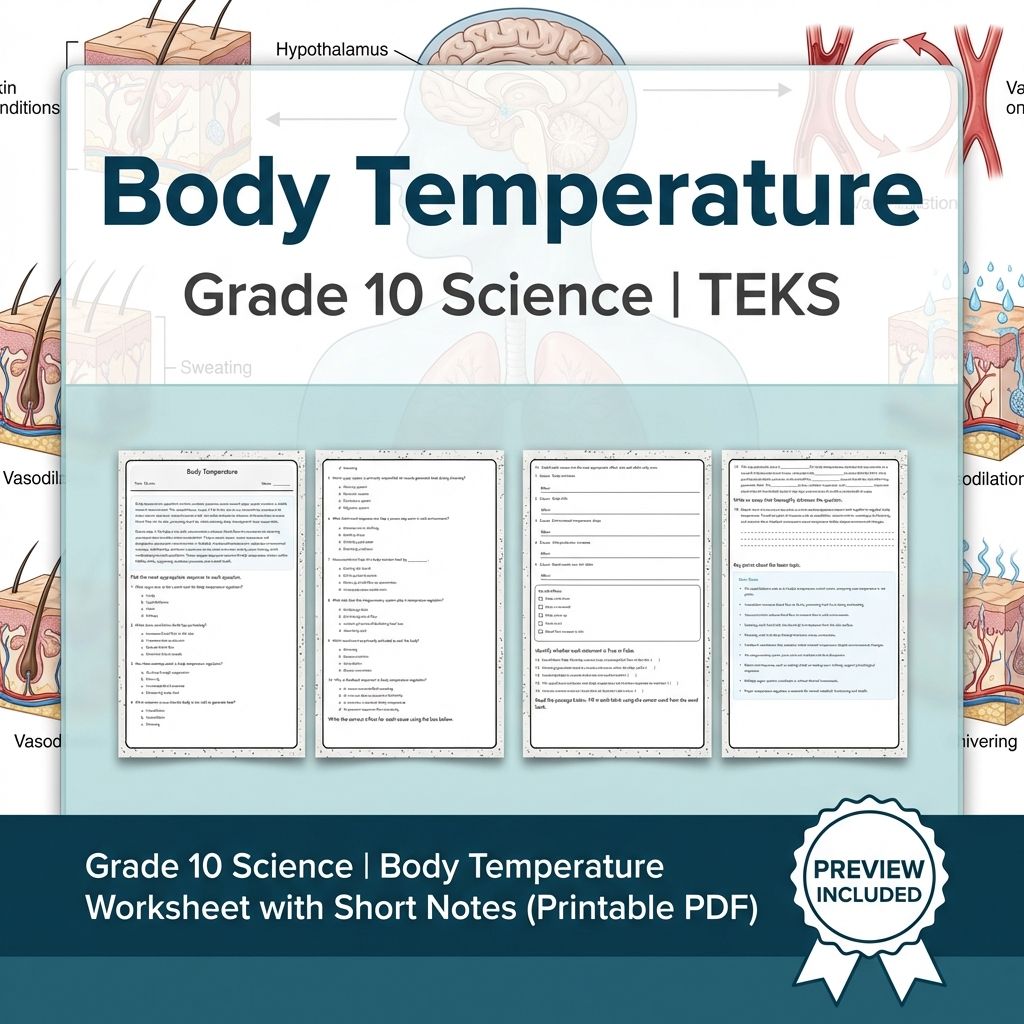
Grade 10 Science | Body Temperature Worksheet with Short Notes (Printable PDF)
Created byMeadowlark WorksheetsLearning Objectives
- Understand the mechanisms involved in body temperature regulation.
- Identify the roles of different organ systems in maintaining thermal balance.
- Explain feedback processes like vasodilation, vasoconstriction, sweating, and shivering.
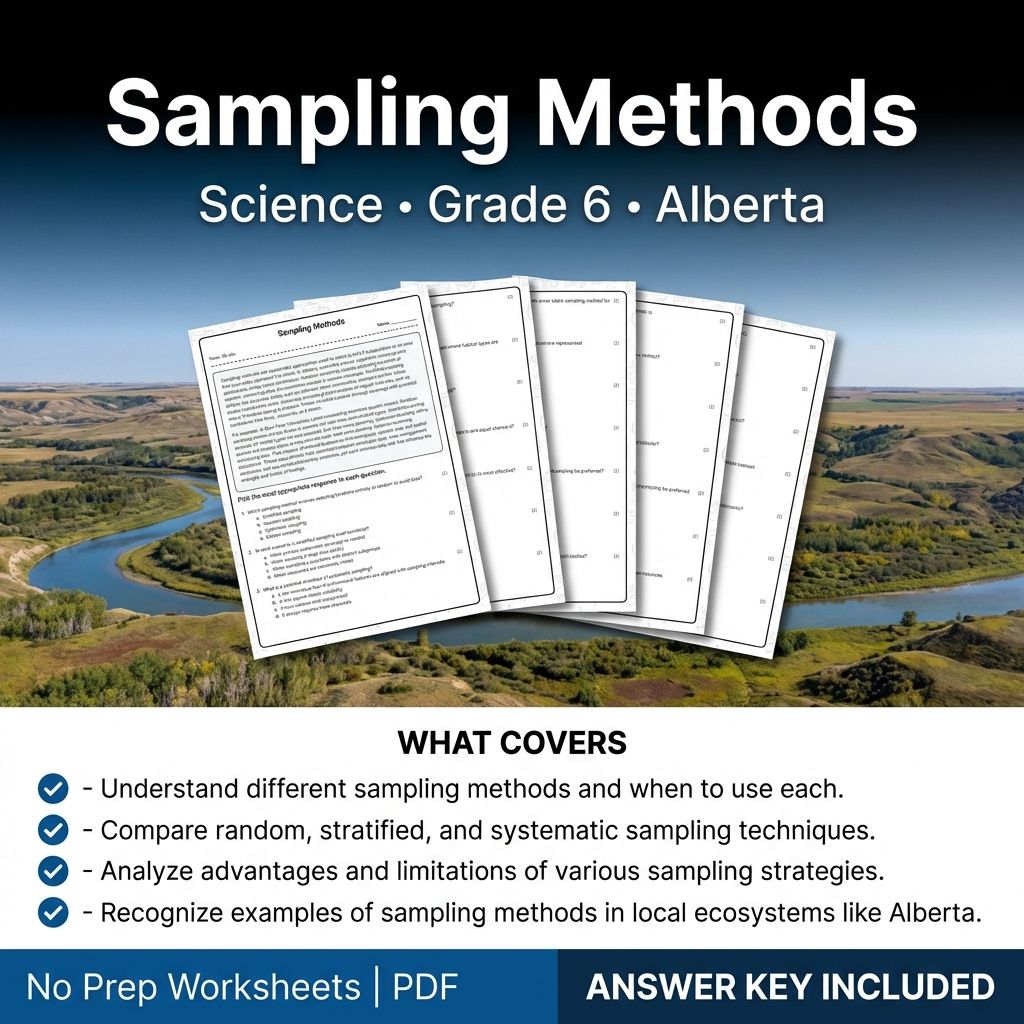
Sampling Methods Worksheet for Grade 6 Science | Alberta Standards Practice
Created byCoral Reef LearningLearning Objectives
- Understand different sampling methods and when to use each.
- Compare random, stratified, and systematic sampling techniques.
- Analyze advantages and limitations of various sampling strategies.
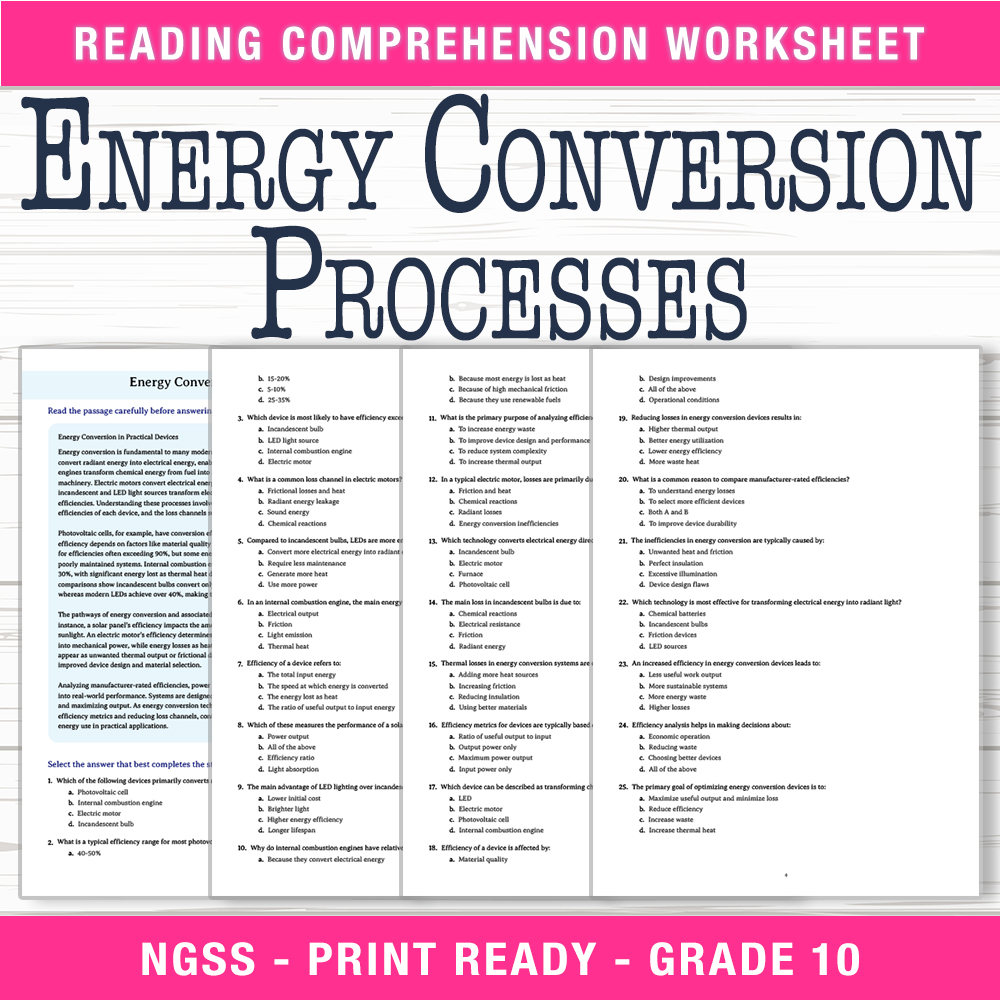
Grade 10 Science | Energy Conversion Processes Worksheet (PDF + Answer Key)
Created byRiverstone ClassroomLearning Objectives
- Describe different types of energy conversions in practical systems such as photovoltaic cells, motors, and engines.
- Analyze the efficiency pathways and common loss channels during energy conversions.
- Evaluate and compare the performance metrics of energy conversion devices based on manufacturer data.
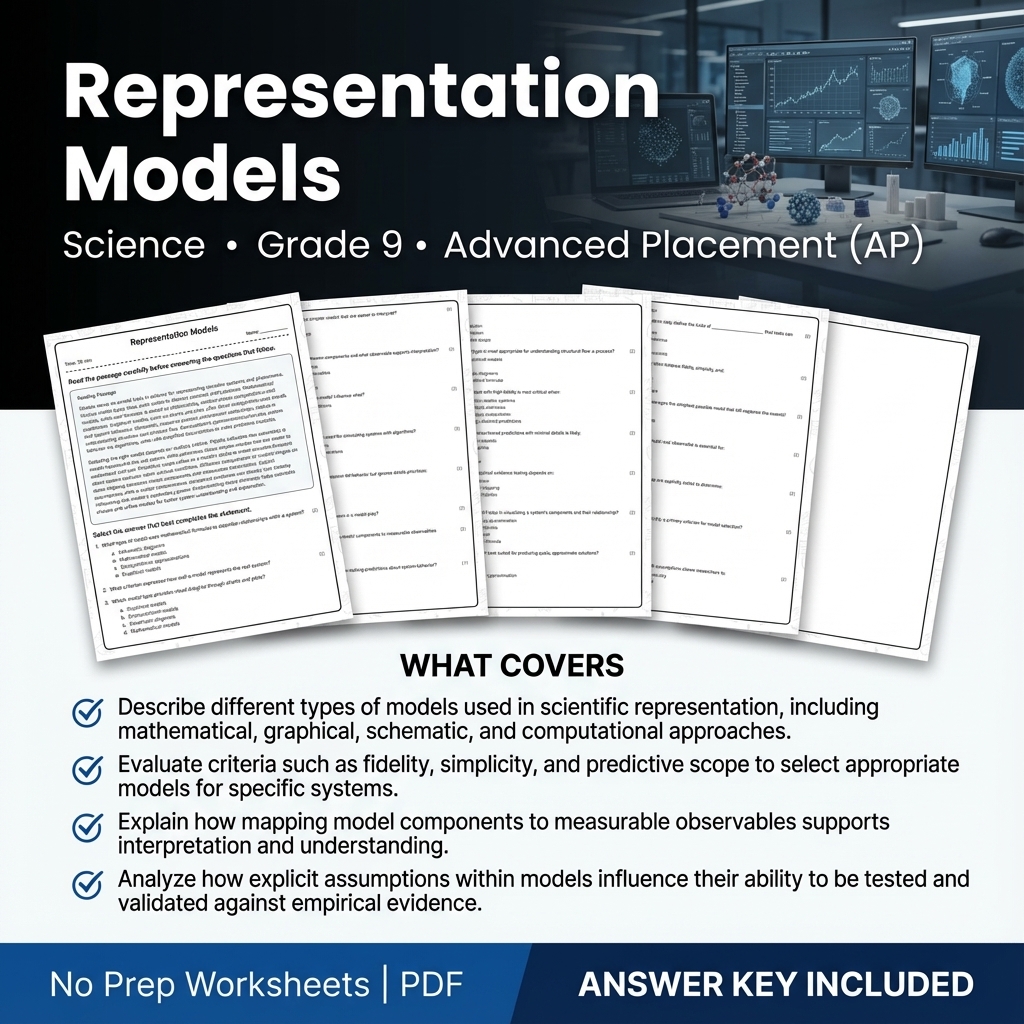
Grade 9 Science | Representation Models Worksheet (Printable PDF + Answer Key)
Created byCoral Reef LearningLearning Objectives
- Describe different types of models used in scientific representation, including mathematical, graphical, schematic, and computational approaches.
- Evaluate criteria such as fidelity, simplicity, and predictive scope to select appropriate models for specific systems.
- Explain how mapping model components to measurable observables supports interpretation and understanding.
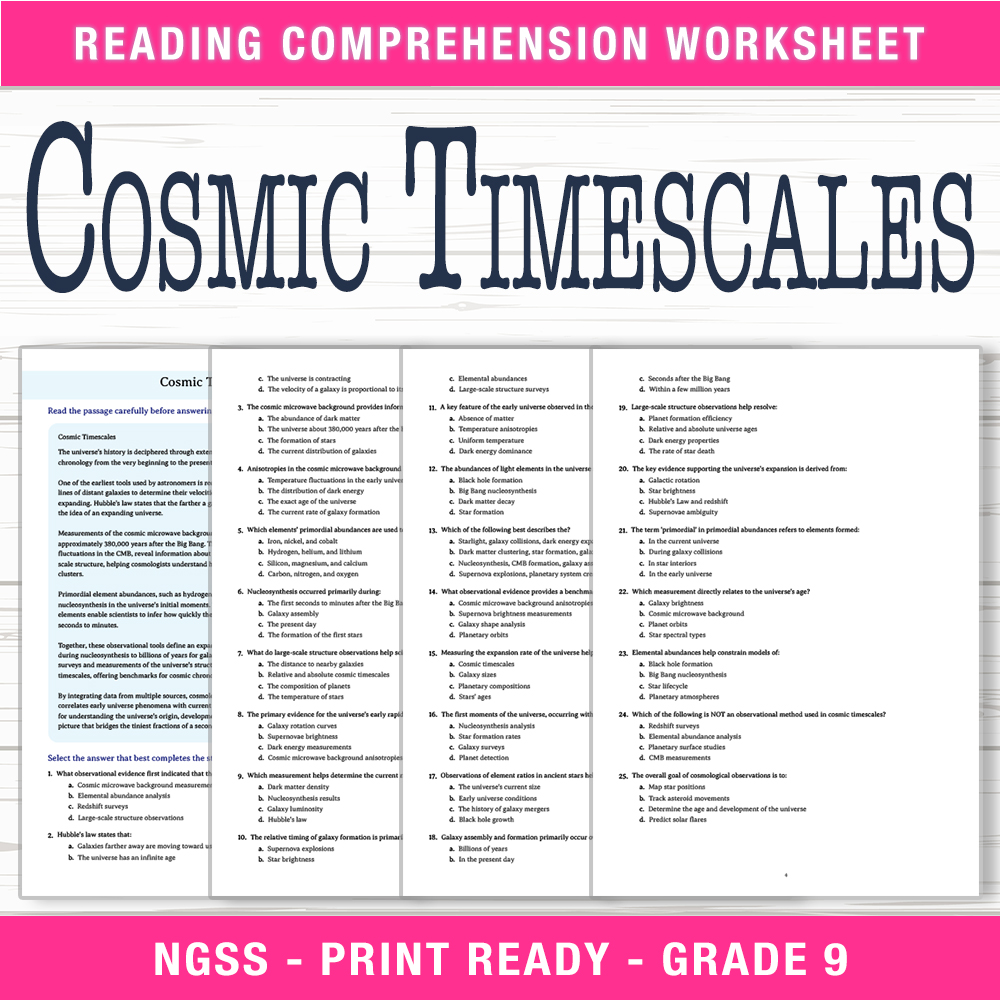
Grade 9 Science | Cosmic Timescales Worksheet (PDF + Answer Key)
Created byRiverstone ClassroomLearning Objectives
- Understand the observational methods used to determine the age and expansion of the universe.
- Describe key cosmic measurements such as redshift, cosmic microwave background, and elemental abundances.
- Explain how these measurements establish a timeline of the universe from its origins to present.
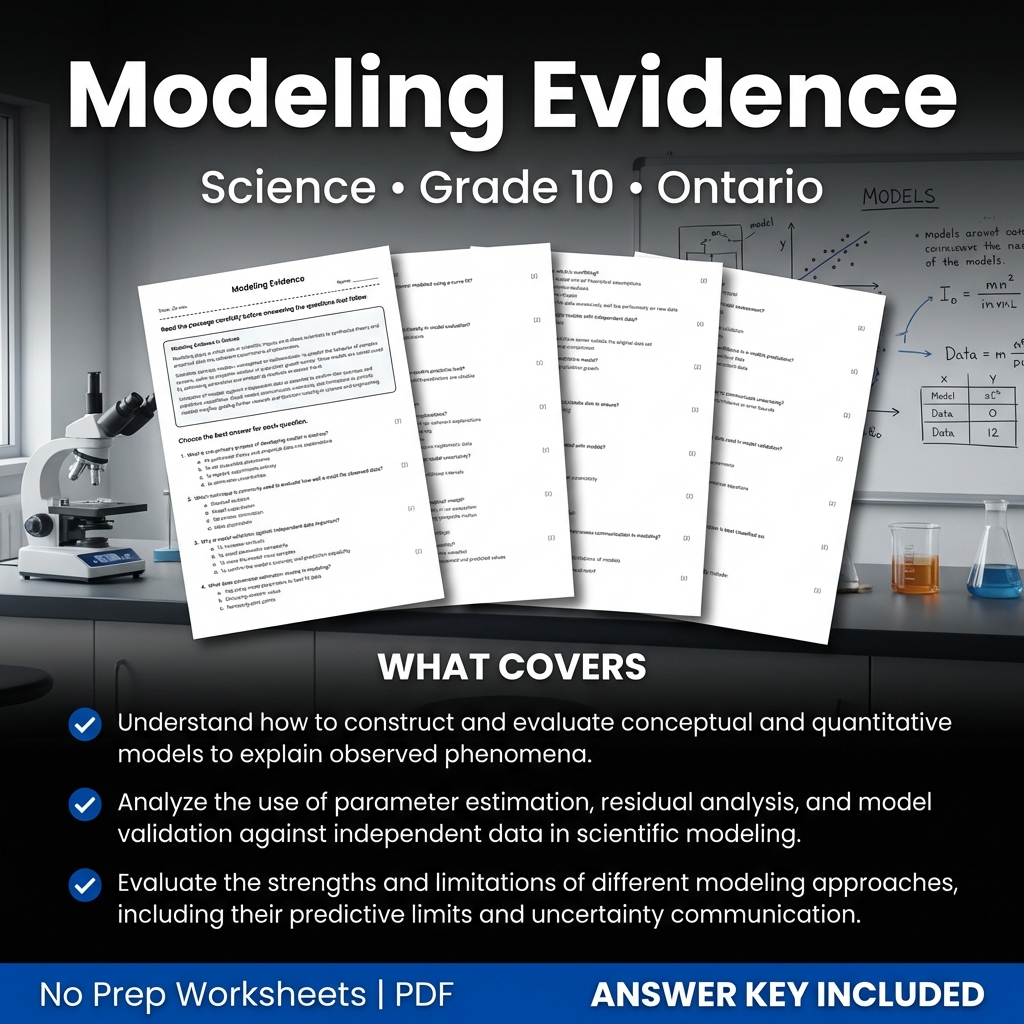
Modeling Evidence Science Worksheet Grade 10 | Ontario Standards
Created byCoral Reef LearningLearning Objectives
- Understand how to construct and evaluate conceptual and quantitative models to explain observed phenomena.
- Analyze the use of parameter estimation, residual analysis, and model validation against independent data in scientific modeling.
- Evaluate the strengths and limitations of different modeling approaches, including their predictive limits and uncertainty communication.
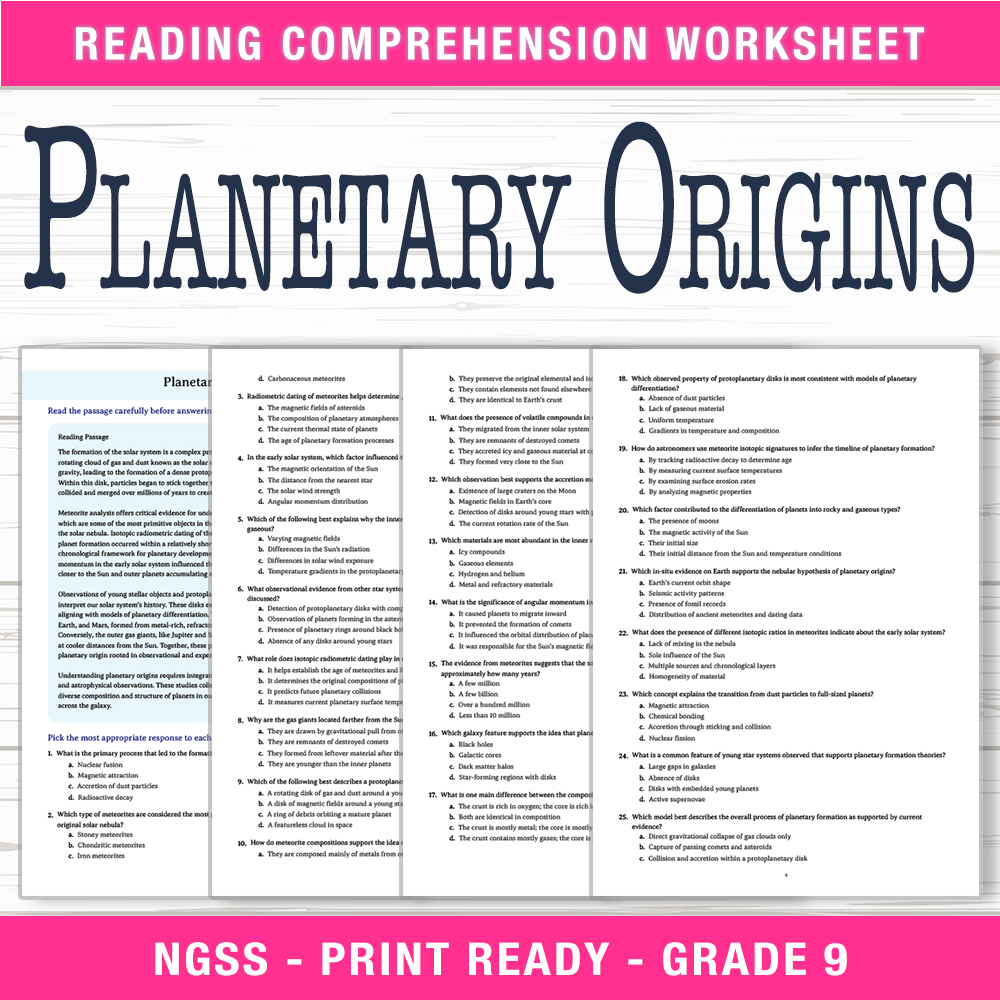
Grade 9 Science | Planetary Origins Worksheet (PDF + Answer Key)
Created byRiverstone ClassroomLearning Objectives
- Describe the formation process of the solar system from a protoplanetary disk.
- Identify key evidence supporting planetary formation theories such as meteorite composition and radiometric dating.
- Explain differences between inner rocky planets and outer gas giants based on gradients in volatile content.
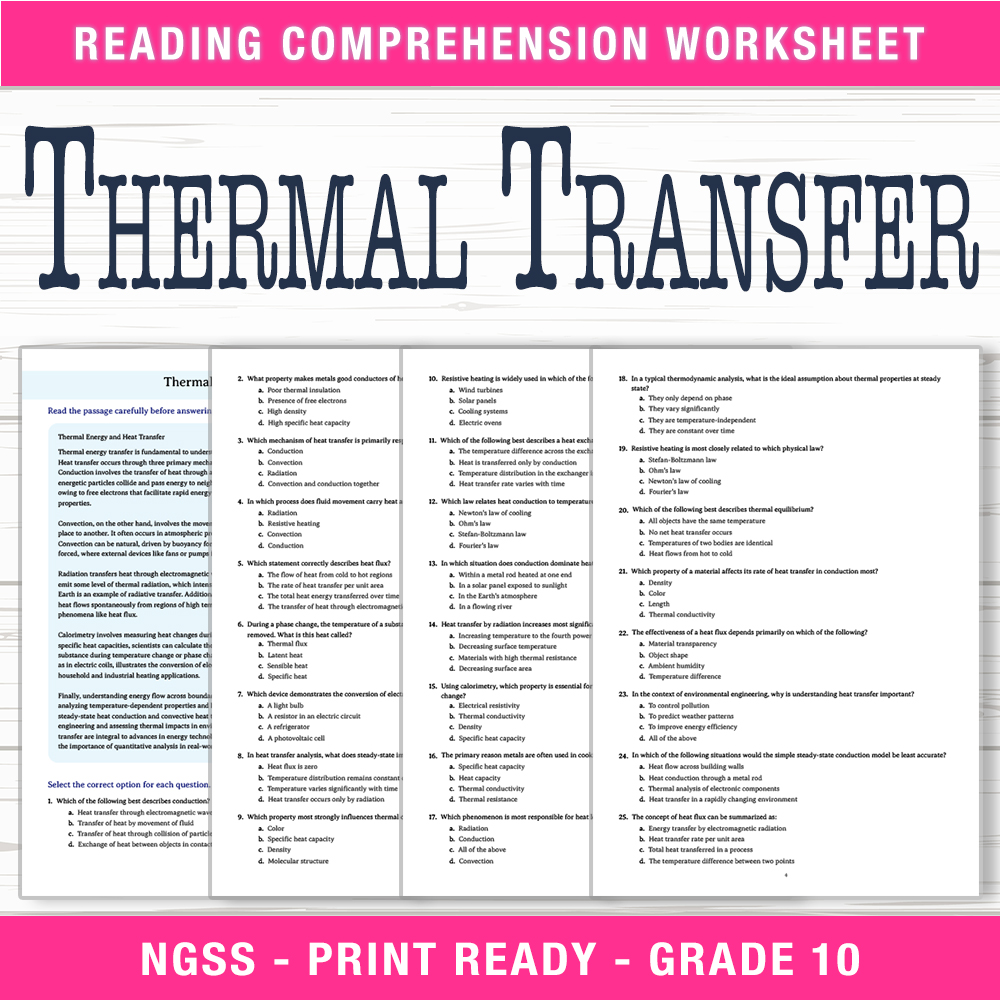
Grade 10 Science | Thermal Transfer Worksheet (PDF + Answer Key)
Created byRiverstone ClassroomLearning Objectives
- Describe the mechanisms of heat transfer: conduction, convection, and radiation.
- Apply calorimetric reasoning to relate thermal energy change to specific heat and phase changes.
- Explain resistive heating and how electrical energy converts to thermal energy.
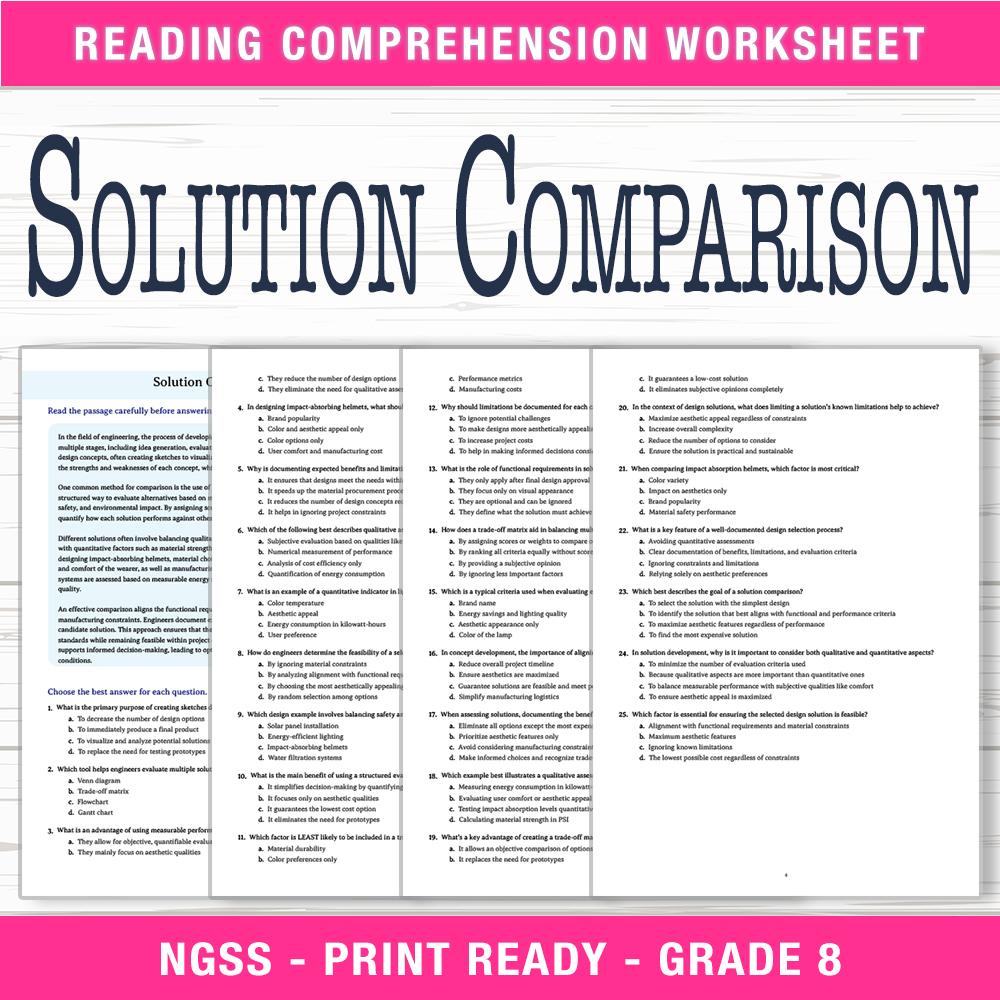
Grade 8 Science | Solution Comparison Worksheet (PDF + Answer Key)
Created byRiverstone ClassroomLearning Objectives
- Identify and describe various design concepts for solutions such as impact absorption and energy efficiency.
- Evaluate and compare different design options using criteria like effectiveness, materials, and limitations.
- Develop trade-off matrices and concept sketches to aid in decision-making.
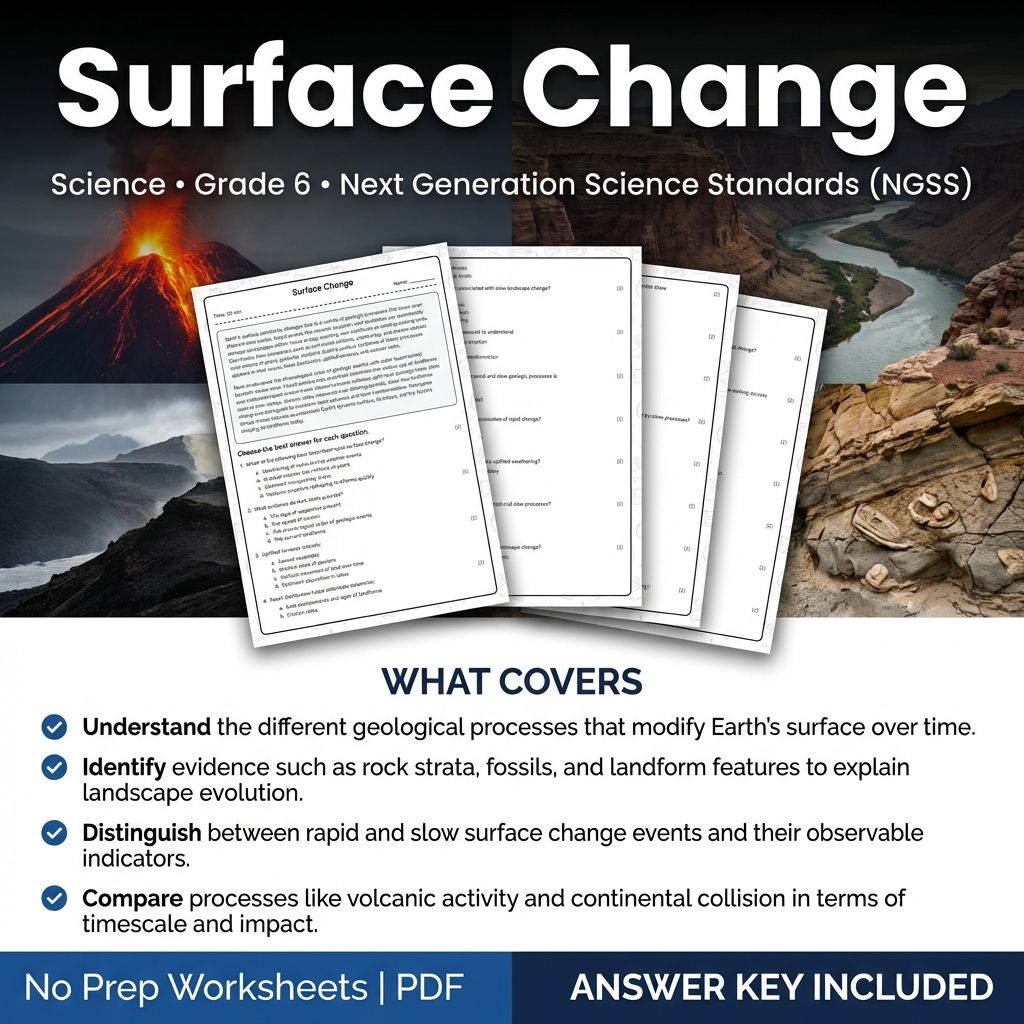
Grade 6 Science | Surface Change Worksheet & Answer Key (PDF Printable)
Created byCoral Reef LearningLearning Objectives
- Understand the different geological processes that modify Earth's surface over time.
- Identify evidence such as rock strata, fossils, and landform features to explain landscape evolution.
- Distinguish between rapid and slow surface change events and their observable indicators.
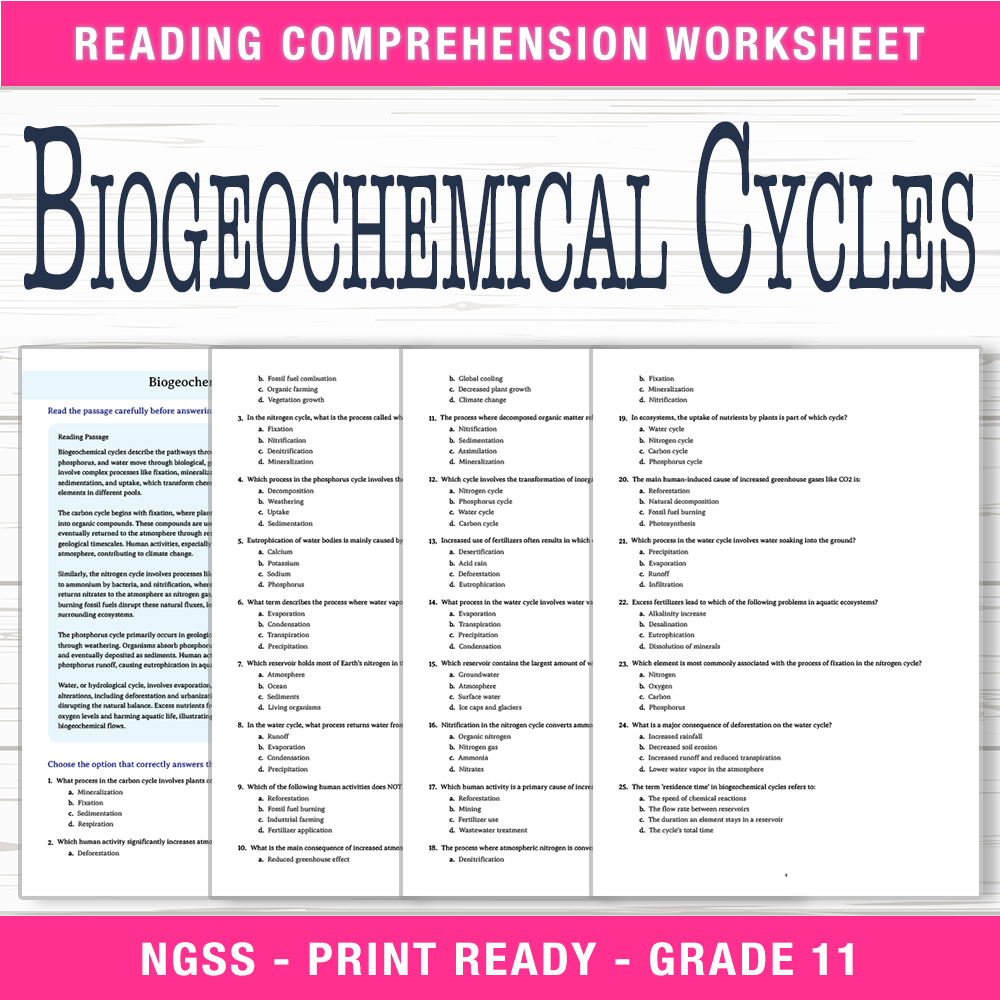
Grade 11 Science – Biogeochemical Cycles Worksheet (PDF + Answer Key)
Created byRiverstone ClassroomLearning Objectives
- Describe the main types of biogeochemical cycles and their processes.
- Explain how human activities affect biogeochemical pools and fluxes.
- Identify the environmental consequences of altered biogeochemical cycles.
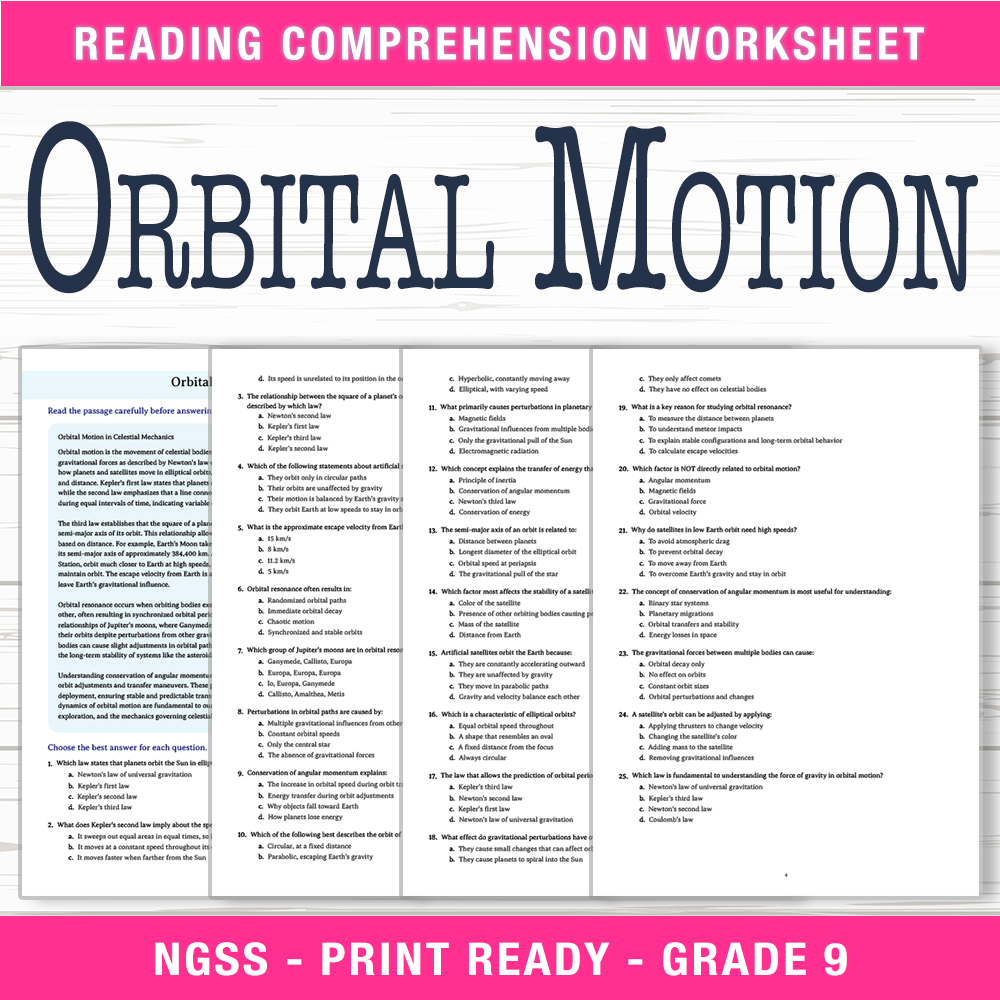
Grade 9 Science | Orbital Motion Worksheet (PDF + Answer Key)
Created byRiverstone ClassroomLearning Objectives
- Explain the principles governing planetary and satellite orbits based on Kepler's laws and Newton's law of gravitation.
- Analyze relationships between orbital period, semi-major axis, and escape velocity through examples such as Earth's Moon and artificial satellites.
- Describe the concepts of orbital resonance, perturbations, and their effects on the stability of celestial orbits.
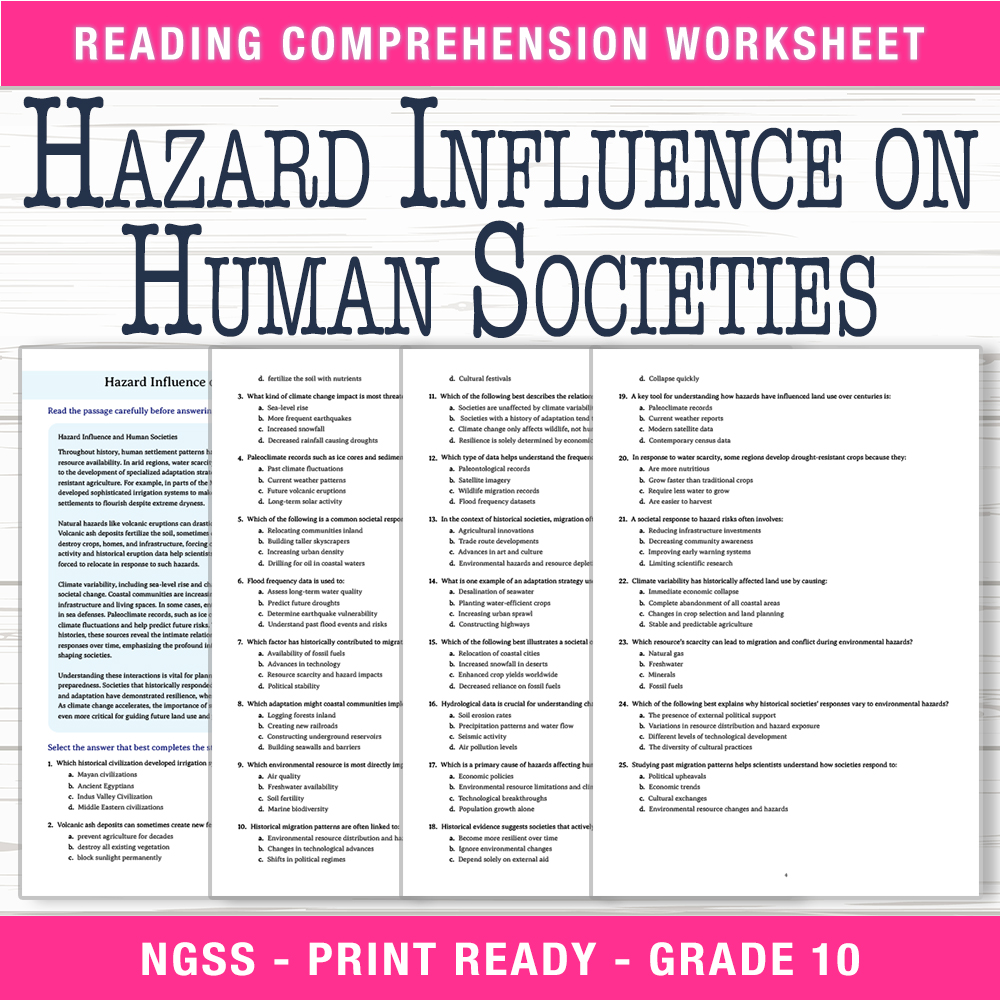
Grade 10 Science | Hazard Influence on Human Societies Worksheet (PDF)
Created byRiverstone ClassroomLearning Objectives
- Analyze how freshwater availability affects human settlement and land use decisions.
- Understand how natural hazards and climate variability influence economic systems and migration patterns.
- Interpret paleoclimate records, flood data, and historical migration to identify links between resource distribution and societal responses.
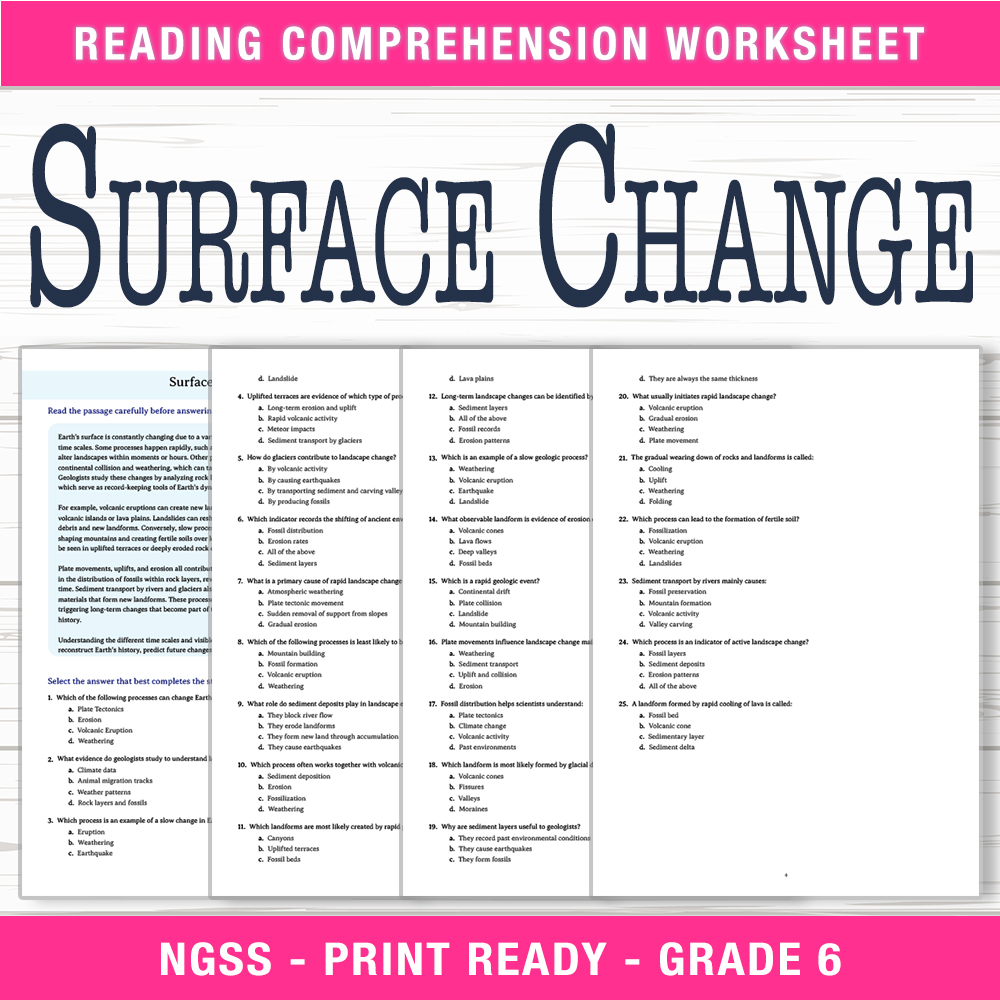
6th Grade Science | Surface Change Worksheet (PDF + Answer Key)
Created byRiverstone ClassroomLearning Objectives
- Understand the geologic processes that modify Earth's surface over different time scales.
- Identify evidence such as rock layers, fossils, and landforms that indicate landscape change.
- Differentiate between rapid events like volcanic eruptions and slow processes like weathering.
Browse more categories
About Science Worksheets
Find Science worksheets spanning core skills, practice, and review. All 42,685 resources are instant PDF downloads for the classroom or home.
Every worksheet on MyTeachingSheets is created by independent teacher-authors and reviewed before publication. All resources download as printable PDFs for classroom, homework, or at-home practice, and many include answer keys. Preview any worksheet free before buying.