
Science Worksheets
42,685 subject resources
Grade 8 Science – Tradeoff Analysis Worksheet (PDF + Answer Key)
 Created byRiverstone Classroom
Learning Objectives
- Understand how to apply multi-criteria decision methods to evaluate project options.
- Learn to use tools like weighted scoring and Pareto comparisons for prioritization.
- Analyze tradeoffs among performance, manufacturability, and sustainability constraints.
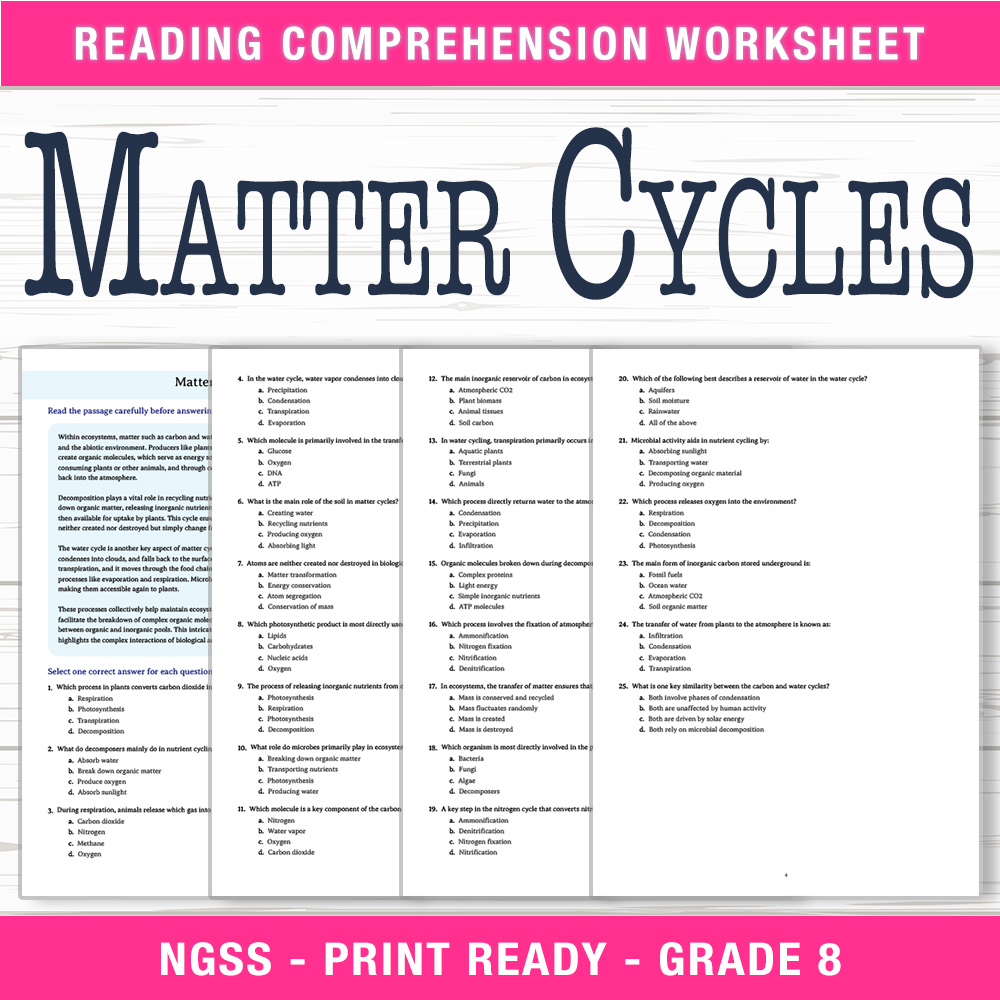
Grade 8 Science – Matter Cycles Worksheet (PDF + Answer Key)
Created byRiverstone ClassroomLearning Objectives
- Describe the flow of matter, such as carbon and water, through ecosystems involving producers, consumers, and decomposers.
- Explain how biological processes like photosynthesis, respiration, and decomposition contribute to nutrient cycling.
- Understand the concept of conservation of mass in biological systems and distinguish between different molecular forms of matter.
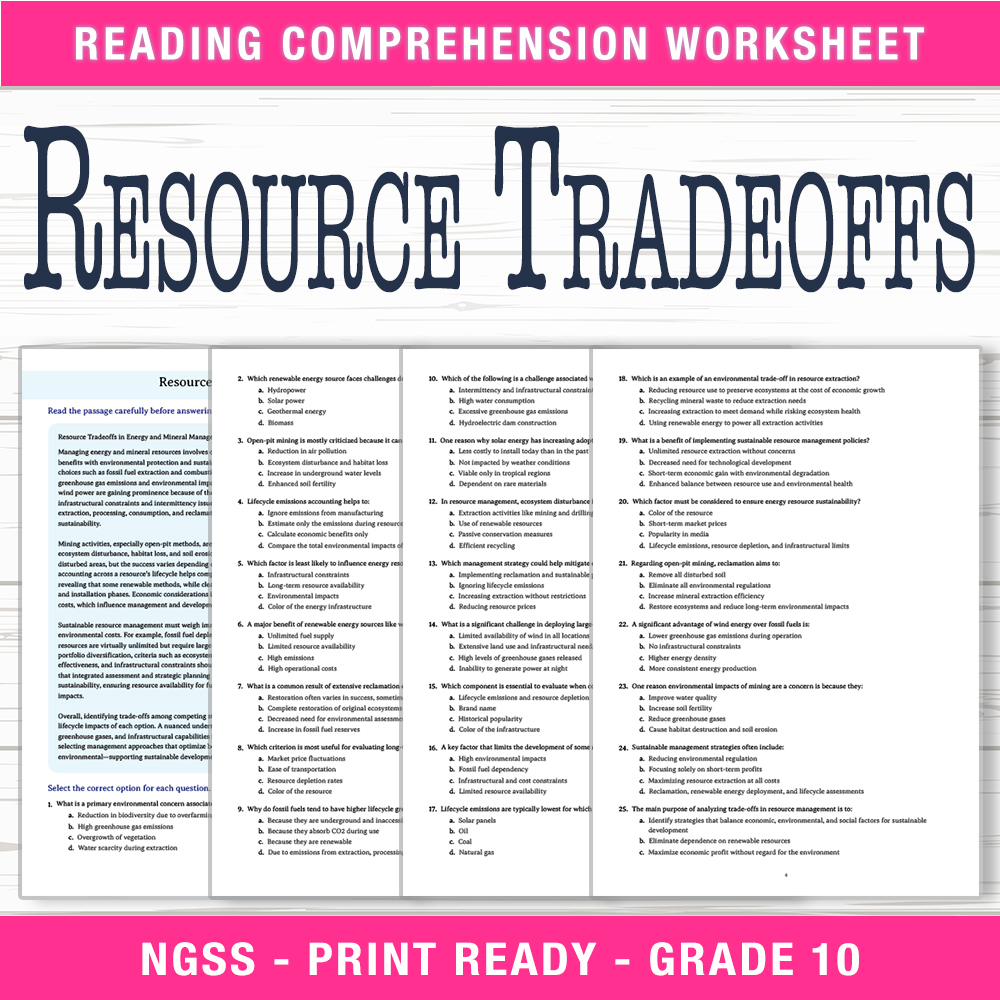
Grade 10 Science | Resource Tradeoffs Worksheet (PDF + Answer Key)
Created byRiverstone ClassroomLearning Objectives
- Analyze different energy and mineral resource options based on economic, environmental, and sustainability criteria.
- Evaluate case studies involving fossil fuels, renewable energy sources, mining impacts, and lifecycle emissions.
- Apply trade-off analysis using criteria such as resource depletion, ecosystem disturbance, and greenhouse gas emissions.
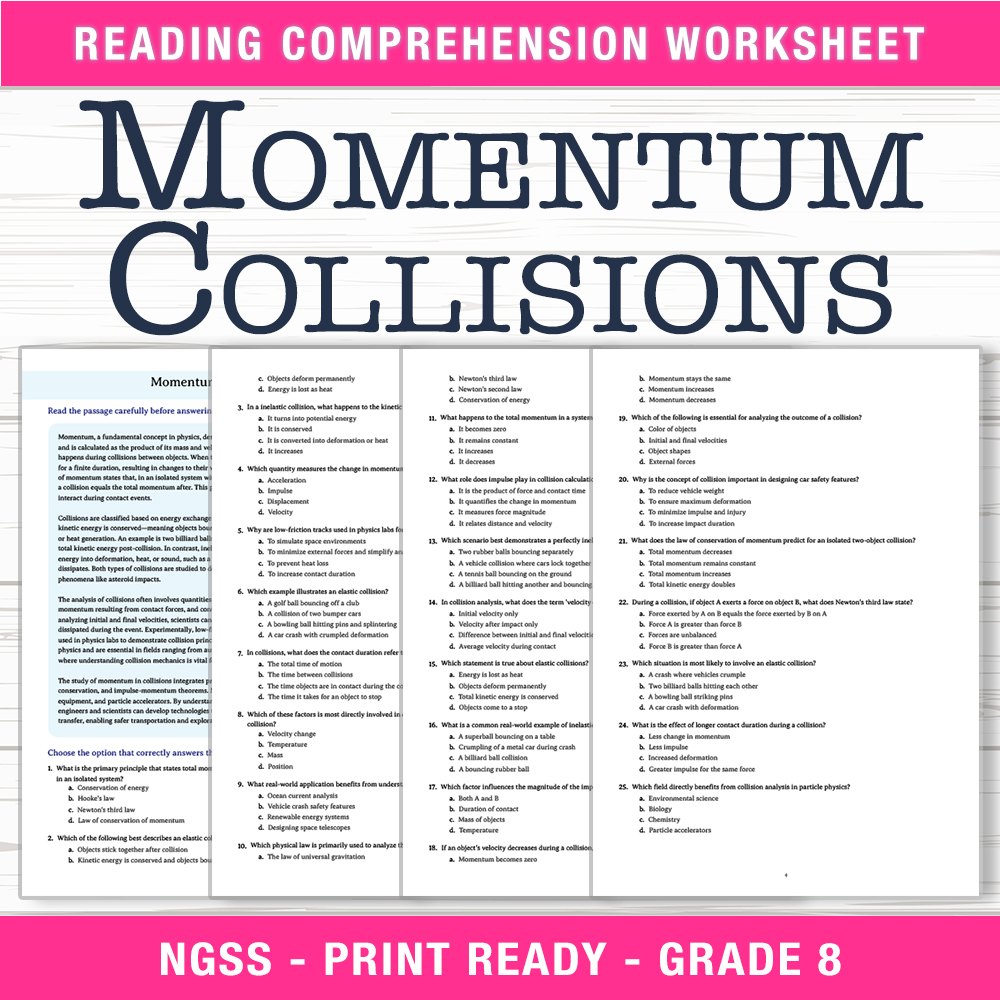
Grade 8 Science | Momentum & Collisions Worksheet (PDF + Answer Key)
Created byRiverstone ClassroomLearning Objectives
- Explain the principle of conservation of linear momentum during collisions.
- Differentiate between elastic and inelastic collisions using examples.
- Calculate changes in velocity and momentum in collision scenarios.

Grade 10 Science | Trait Origins Worksheet (PDF + Answer Key)
Created byRiverstone ClassroomLearning Objectives
- Explain how mutations, recombination, gene flow, and chromosomal changes contribute to heritable trait variation.
- Describe population-level processes such as genetic drift and nonrandom mating and their effects on trait distribution.
- Connect molecular genetic changes to phenotypic novelty and shifts in trait prevalence across generations.
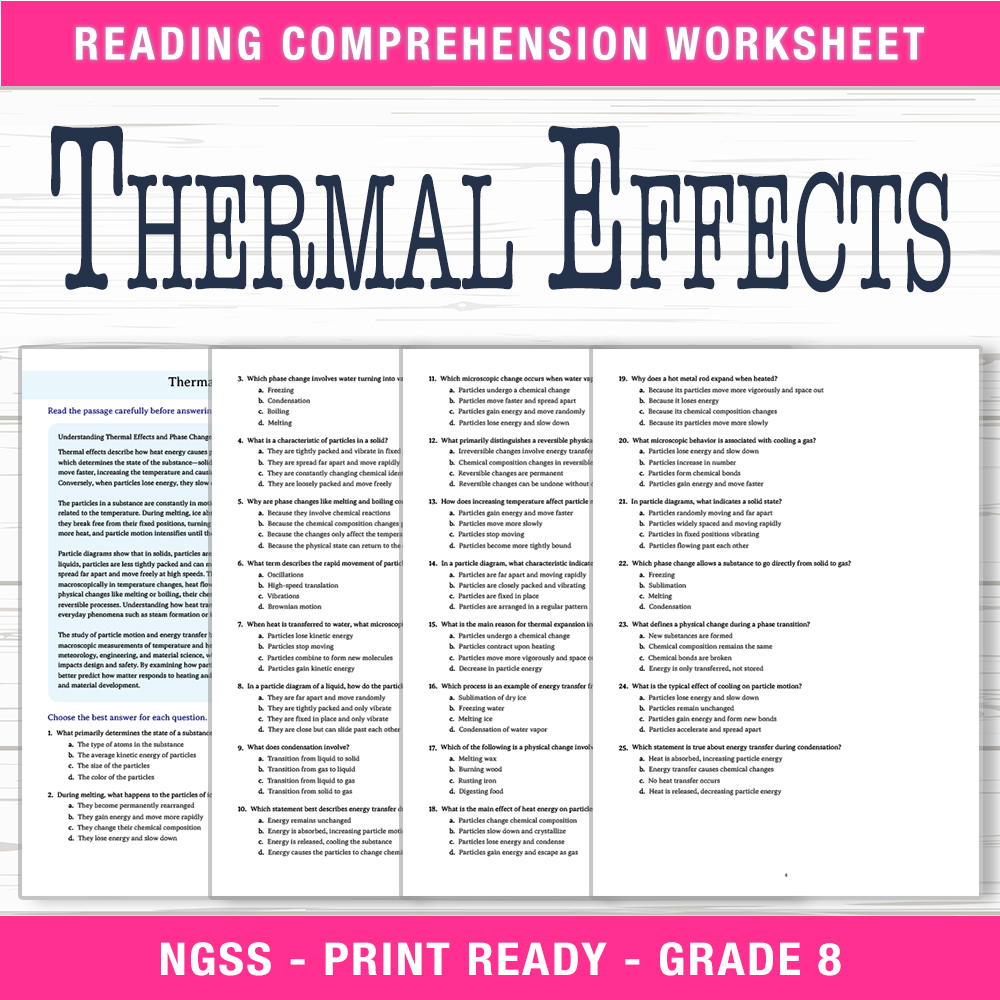
Grade 8 Science | Thermal Effects Worksheet (PDF + Answer Key)
Created byRiverstone ClassroomLearning Objectives
- Explain how particle motion relates to temperature and states of matter.
- Describe phase changes such as melting, boiling, and condensation in terms of energy transfer.
- Relate microscopic particle behavior to macroscopic measurements of temperature and heat flow.
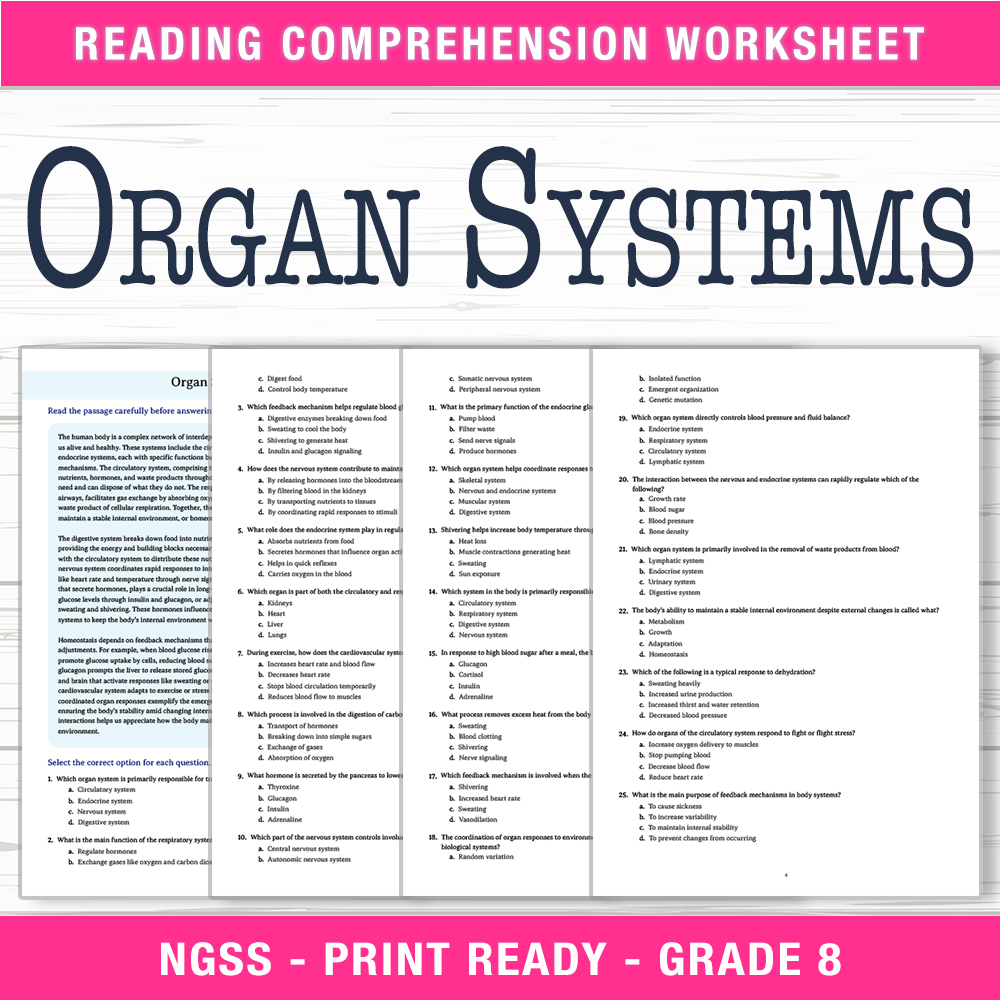
Grade 8 Science | Organ Systems Worksheet (PDF + Answer Key)
Created byRiverstone ClassroomLearning Objectives
- Describe how different organ systems interact to maintain homeostasis in the human body.
- Explain the roles of the circulatory, respiratory, digestive, nervous, and endocrine systems in physiological regulation.
- Identify feedback mechanisms involved in regulating blood glucose, temperature, and other vital functions.
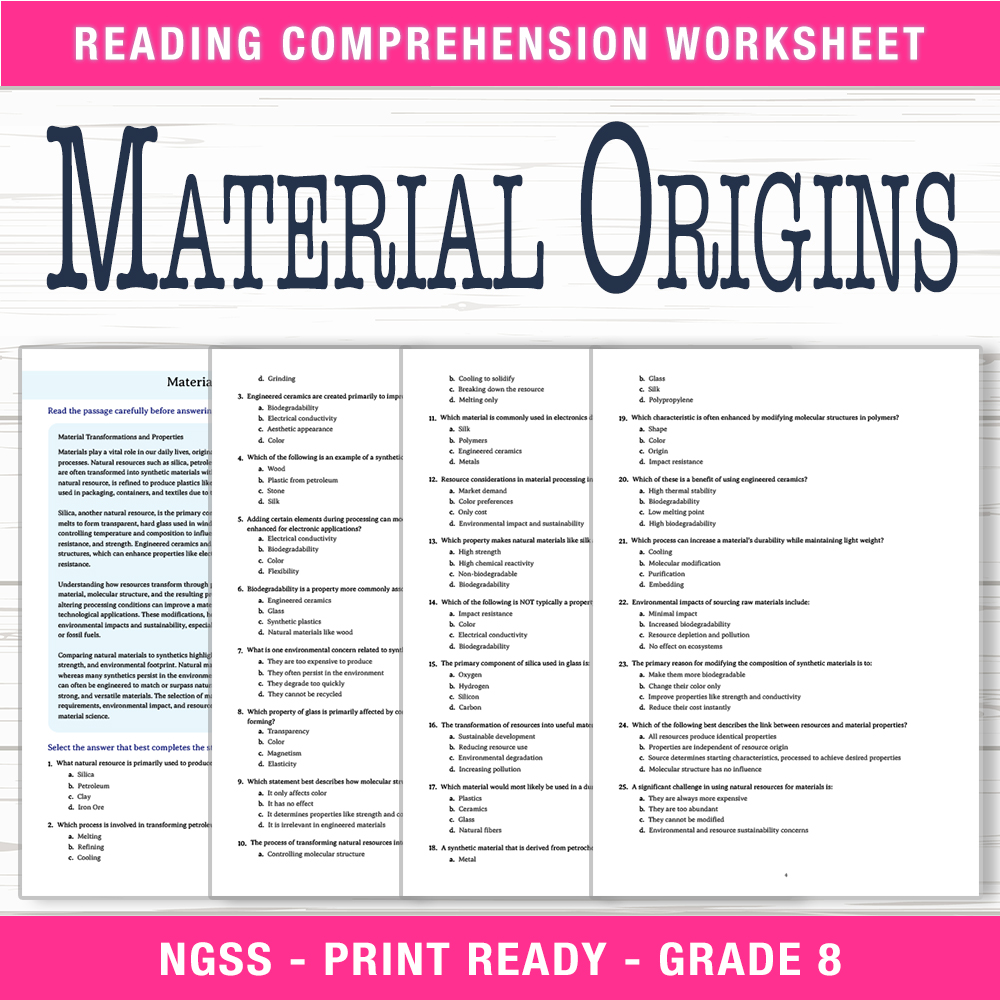
Grade 8 Science | Material Origins Worksheet (PDF + Answer Key)
Created byRiverstone ClassroomLearning Objectives
- Explain how natural resources are transformed into synthetic materials.
- Describe the influence of processing and composition on material properties.
- Compare natural and synthetic materials in terms of properties and environmental impact.
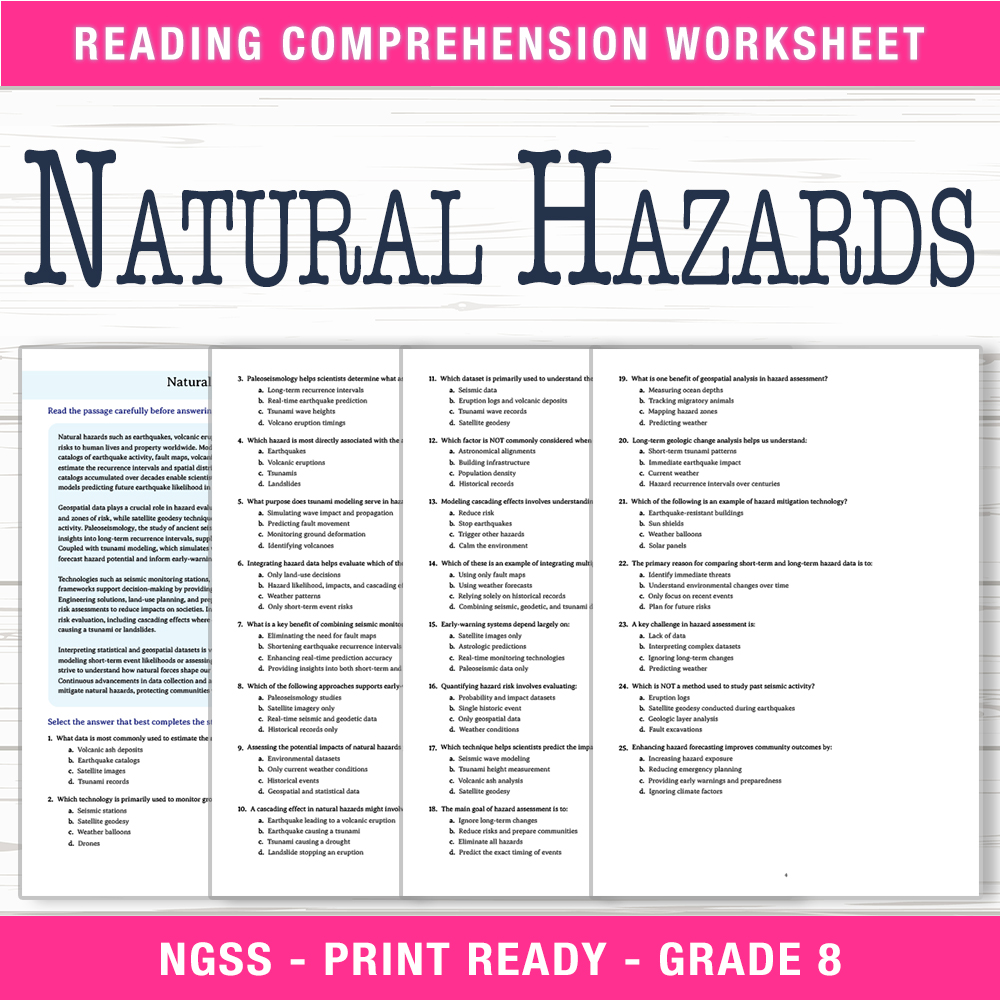
Grade 8 Science | Natural Hazards Worksheet (PDF + Answer Key)
Created byRiverstone ClassroomLearning Objectives
- Understand how earthquake, volcanic, tsunami, and fault data are used to assess natural hazard risks.
- Interpret geospatial and statistical data to evaluate recurrence intervals and hazard potential.
- Learn how monitoring technologies inform hazard forecasting and mitigation efforts.
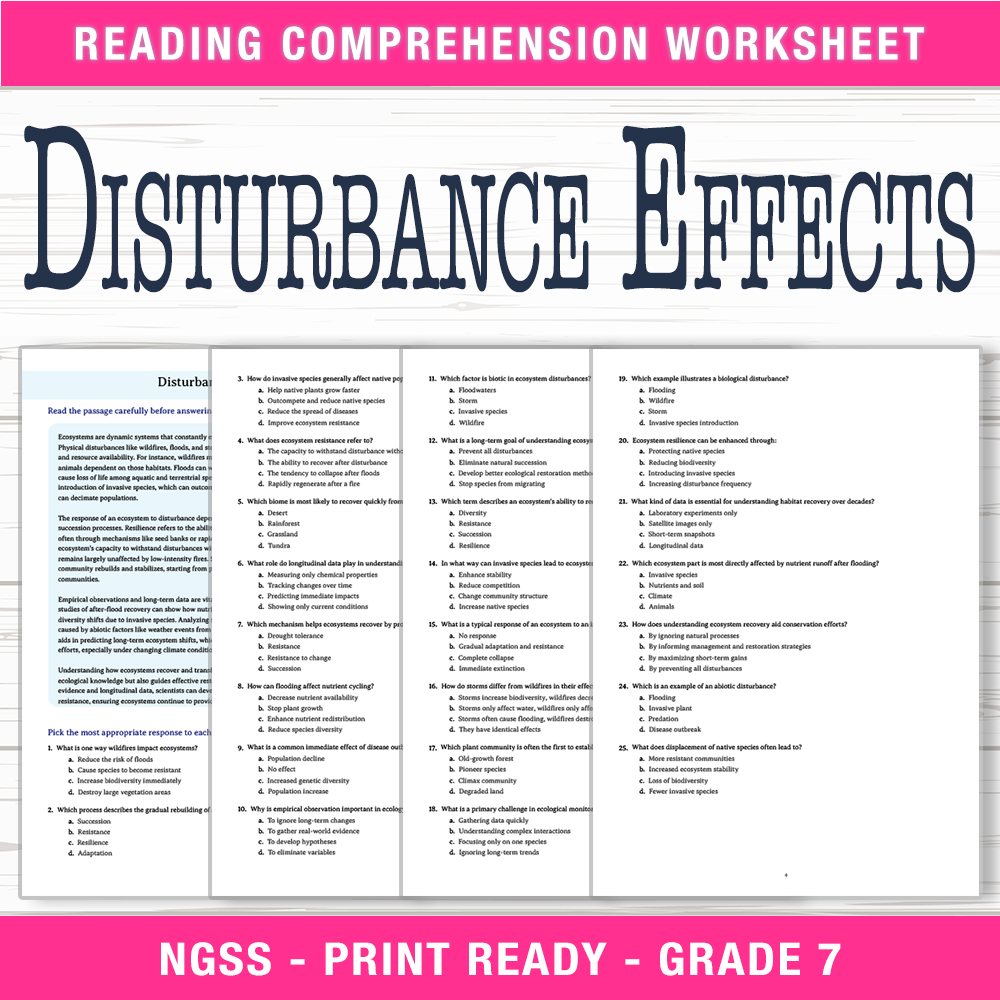
Grade 7 Science – Disturbance Effects Worksheet (PDF + Answer Key)
Created byRiverstone ClassroomLearning Objectives
- Understand how physical and biological disturbances impact ecosystems and populations
- Interpret empirical observations and longitudinal data to analyze ecosystem changes
- Explain mechanisms of resilience, resistance, and succession after disturbances
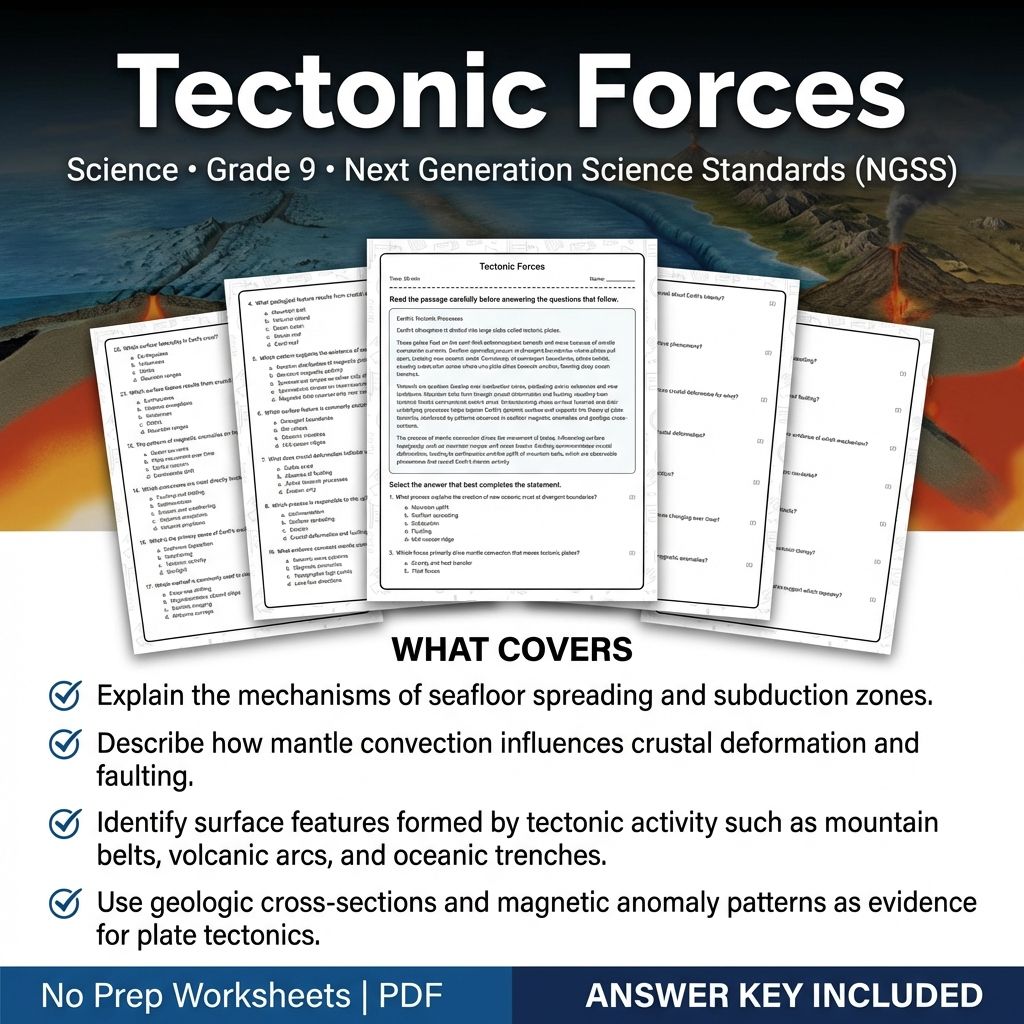
9th Grade Science | Tectonic Forces Worksheet & Answer Key (Printable PDF)
 Created byCoral Reef Learning
Learning Objectives
- Explain the mechanisms of seafloor spreading and subduction zones.
- Describe how mantle convection influences crustal deformation and faulting.
- Identify surface features formed by tectonic activity such as mountain belts, volcanic arcs, and oceanic trenches.
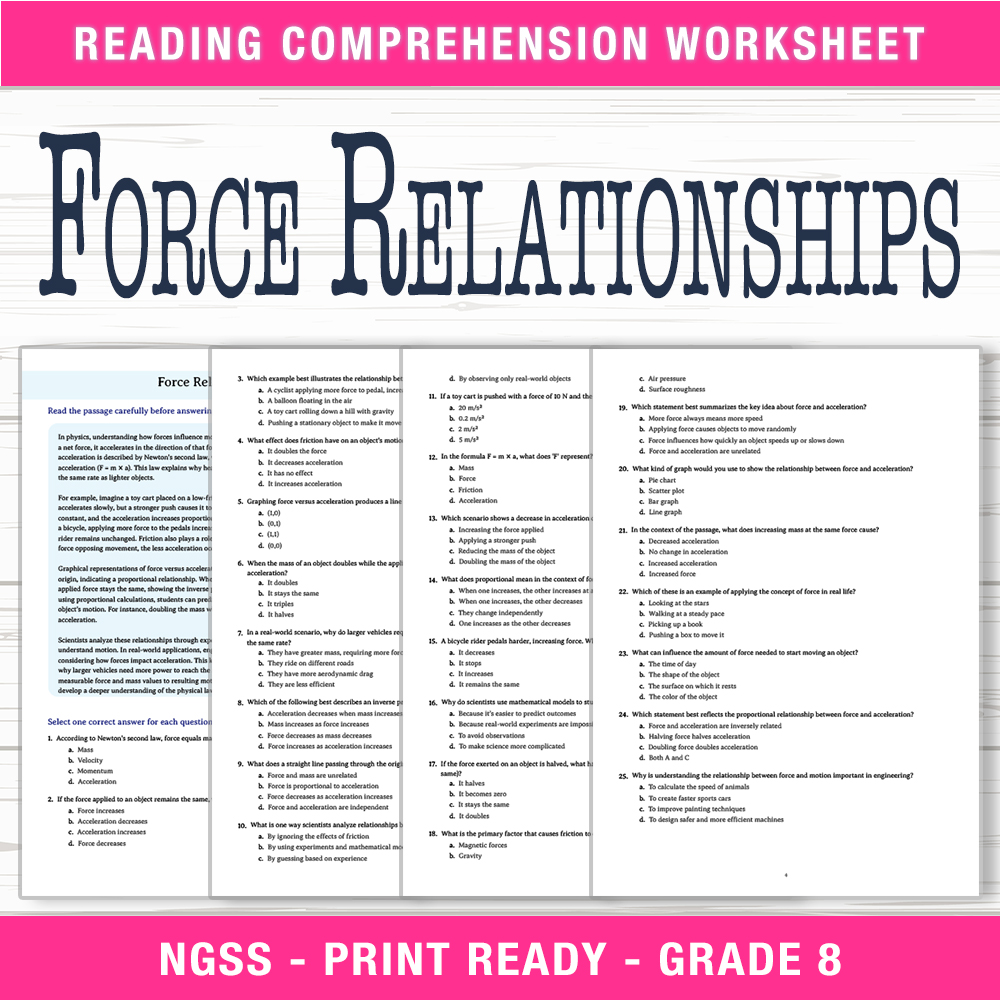
Grade 8 Science – Force Relationships Worksheet (PDF + Answer Key)
Created byRiverstone ClassroomLearning Objectives
- Understand how net force, mass, and acceleration are related through mathematical models.
- Analyze examples involving toy carts, bicycles, and friction to connect force and motion.
- Use graphical representations and calculations to predict changes in motion.
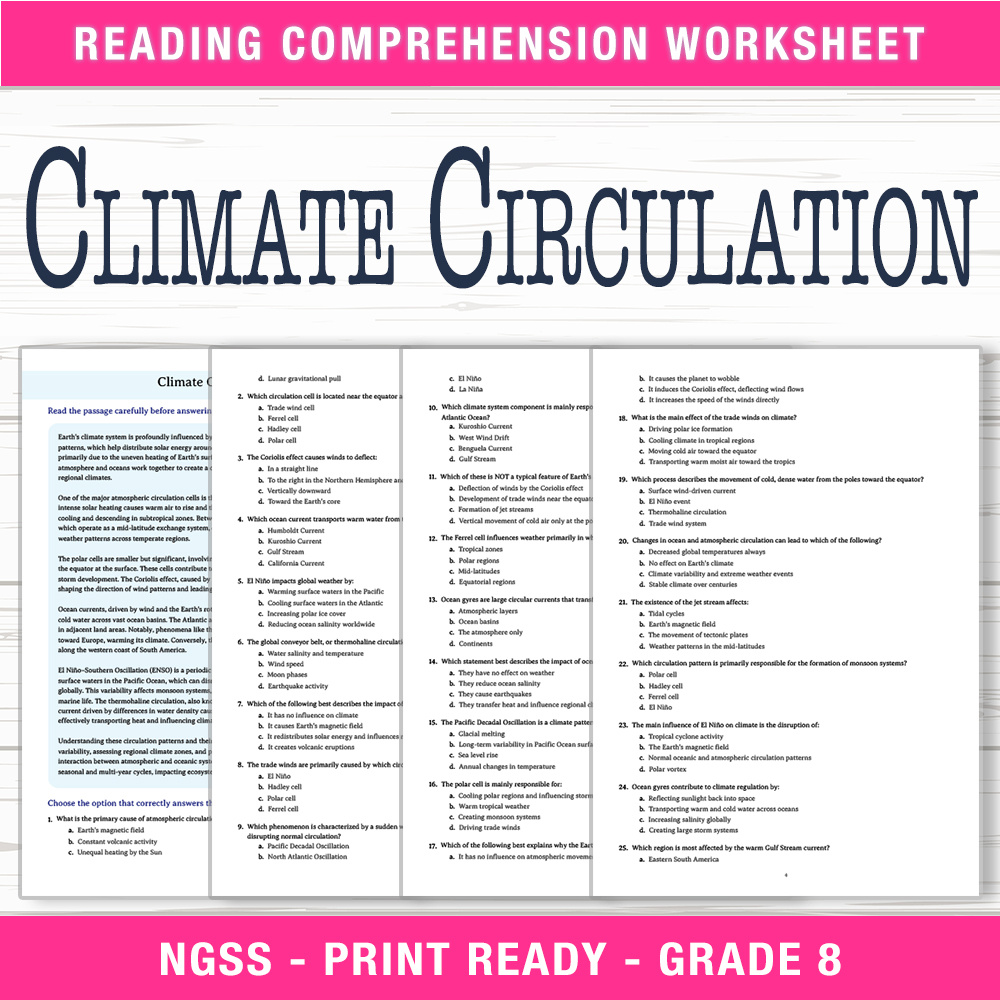
Grade 8 Science | Climate Circulation Worksheet (PDF + Answer Key)
Created byRiverstone ClassroomLearning Objectives
- Understand the main patterns of atmospheric and oceanic circulation and their causes.
- Identify how circulation patterns influence regional climates and weather systems.
- Explain the roles of the Hadley, Ferrel, and polar cells in climate regulation.
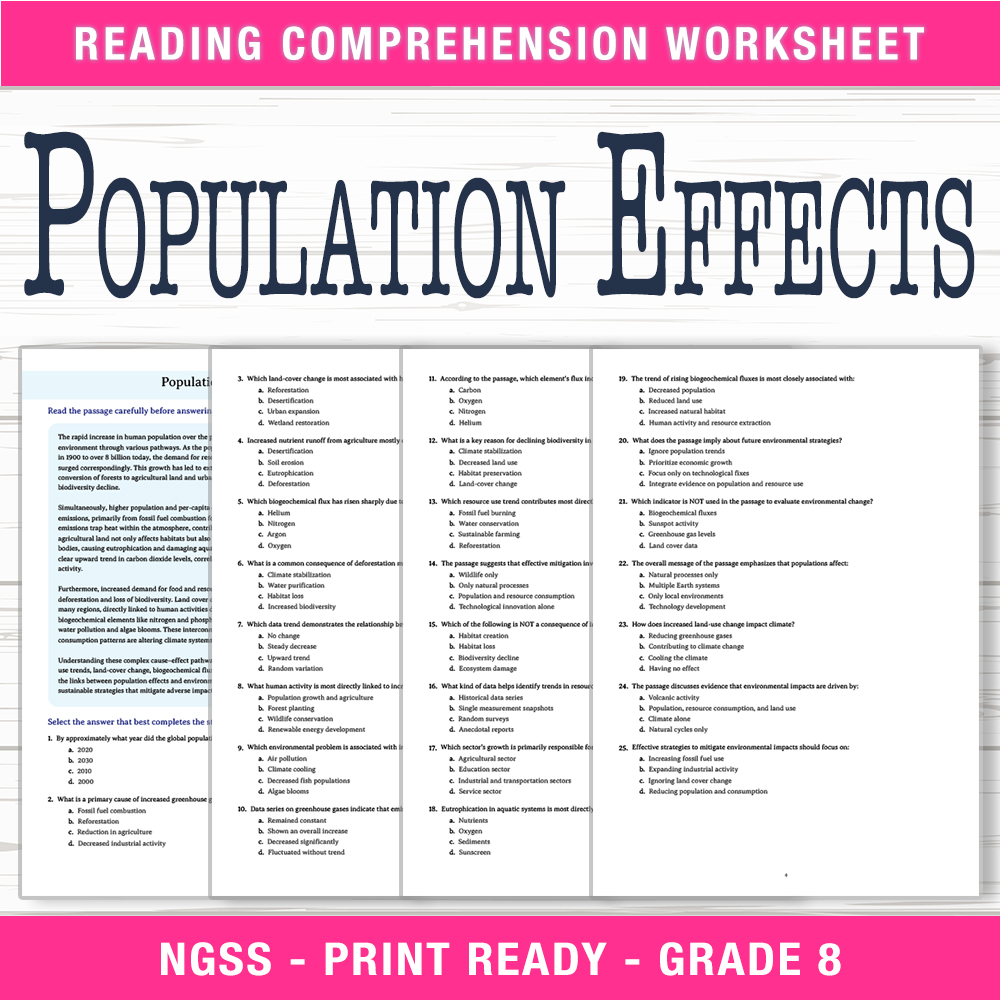
Grade 8 Science | Population Effects Worksheet (PDF + Answer Key)
Created byRiverstone ClassroomLearning Objectives
- Understand how population growth influences resource consumption and Earth system changes.
- Analyze data trends related to greenhouse gases, land use, and nutrient fluxes.
- Evaluate cause-effect relationships between demographic patterns and environmental impacts.
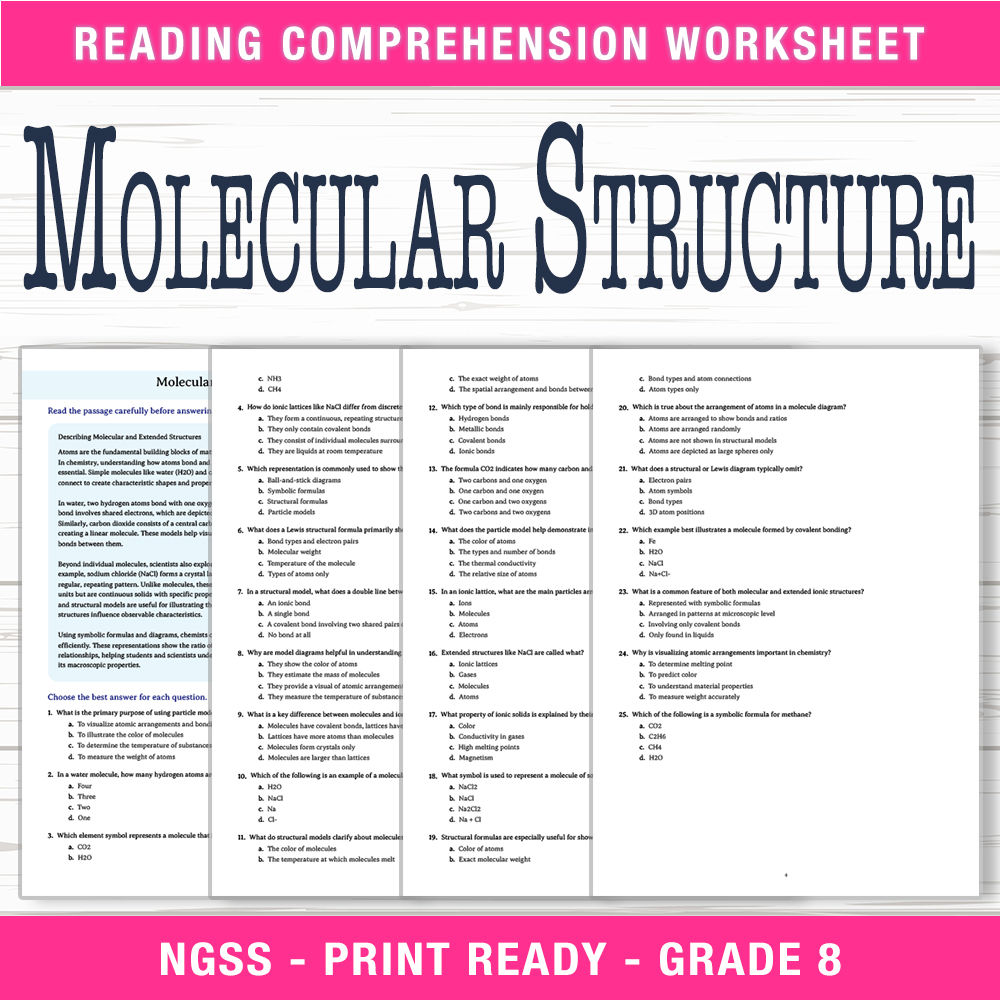
Grade 8 Science – Molecular Structure Worksheet (PDF + Answer Key)
Created byRiverstone ClassroomLearning Objectives
- Understand the basic atomic composition of simple molecules such as water and carbon dioxide.
- Interpret particle models and symbolic formulas to represent molecules and extended structures.
- Distinguish between molecular units and extended solids through structural diagrams.
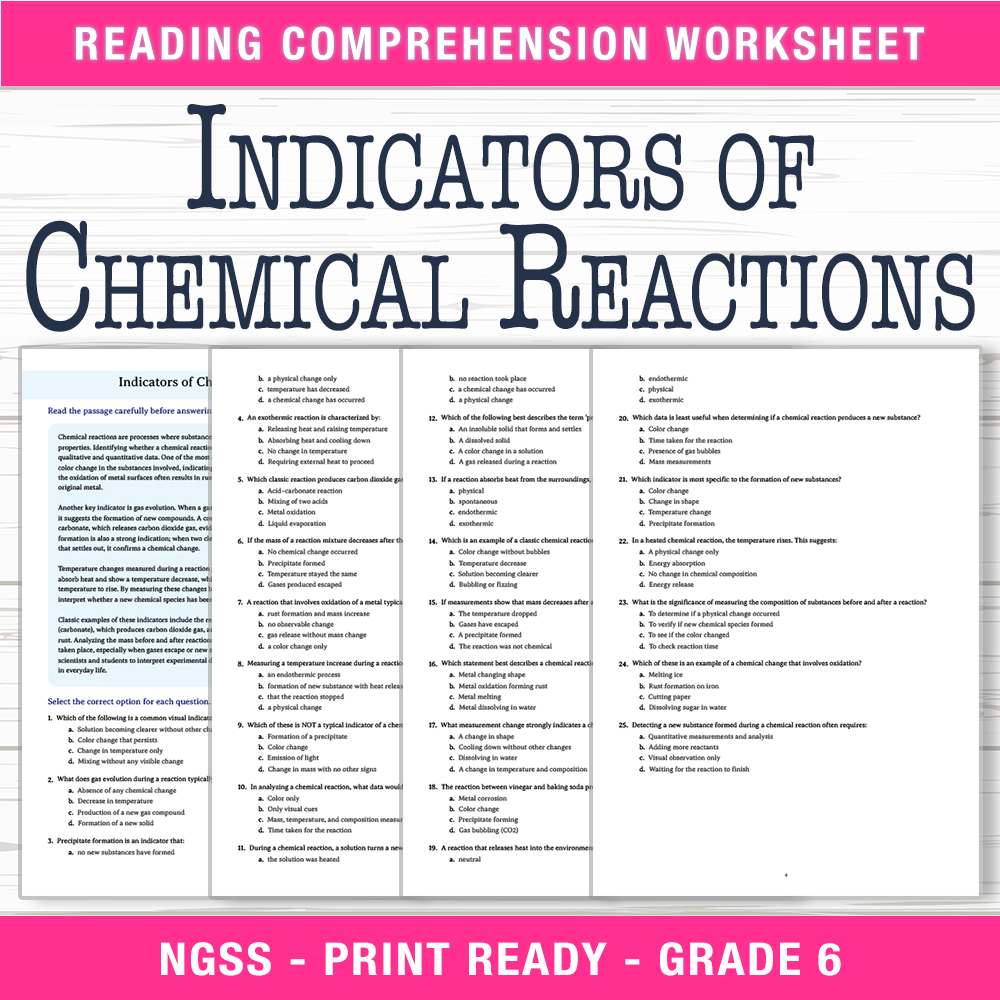
Grade 6 Science | Indicators of Chemical Reactions Workbook (PDF +Answer Key)
Created byRiverstone ClassroomLearning Objectives
- Identify key indicators that suggest a chemical reaction has occurred.
- Analyze qualitative and quantitative data to determine if a new substance has formed.
- Interpret measurements such as mass, temperature, and composition before and after reactions.
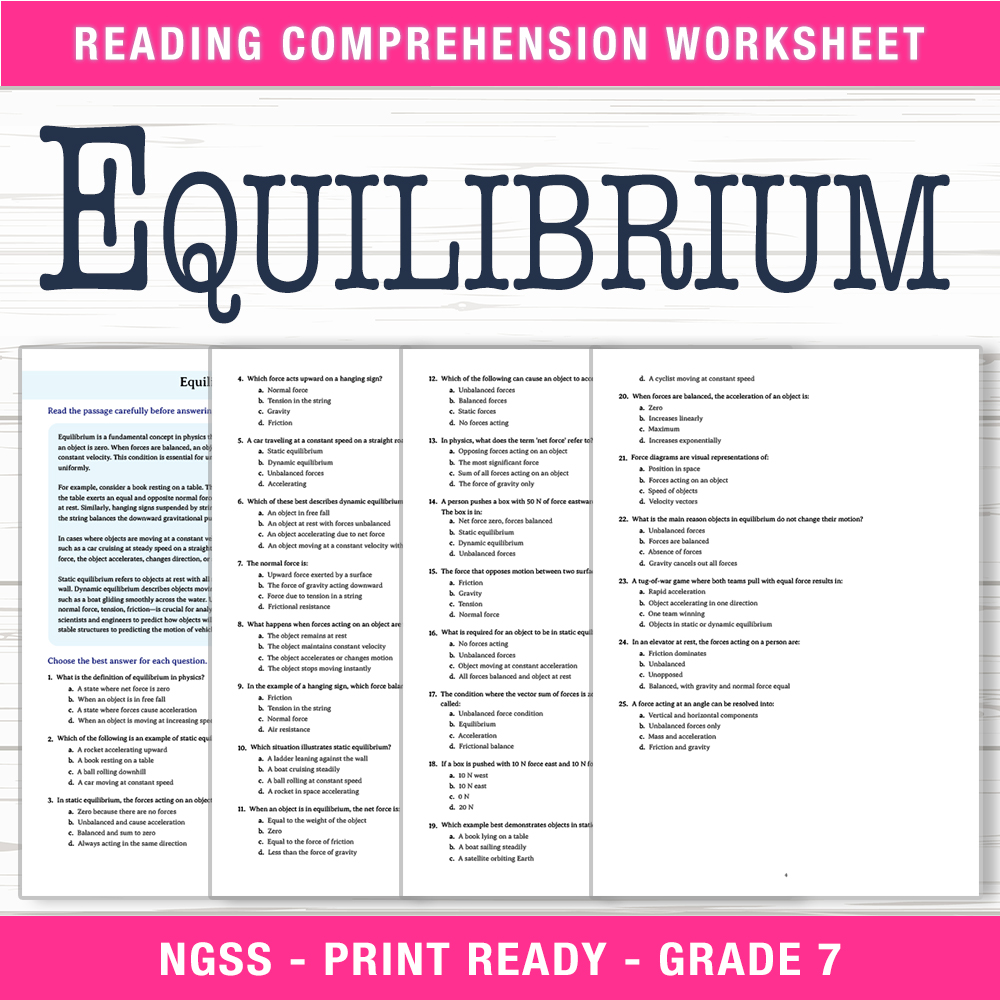
Grade 7 Science – Equilibrium Worksheet (PDF + Answer Key)
Created byRiverstone ClassroomLearning Objectives
- Describe the concept of equilibrium as the balance of forces acting on an object.
- Differentiate between static and dynamic equilibrium with real-world examples.
- Apply qualitative and simple quantitative analyses to determine if forces are balanced in various situations.
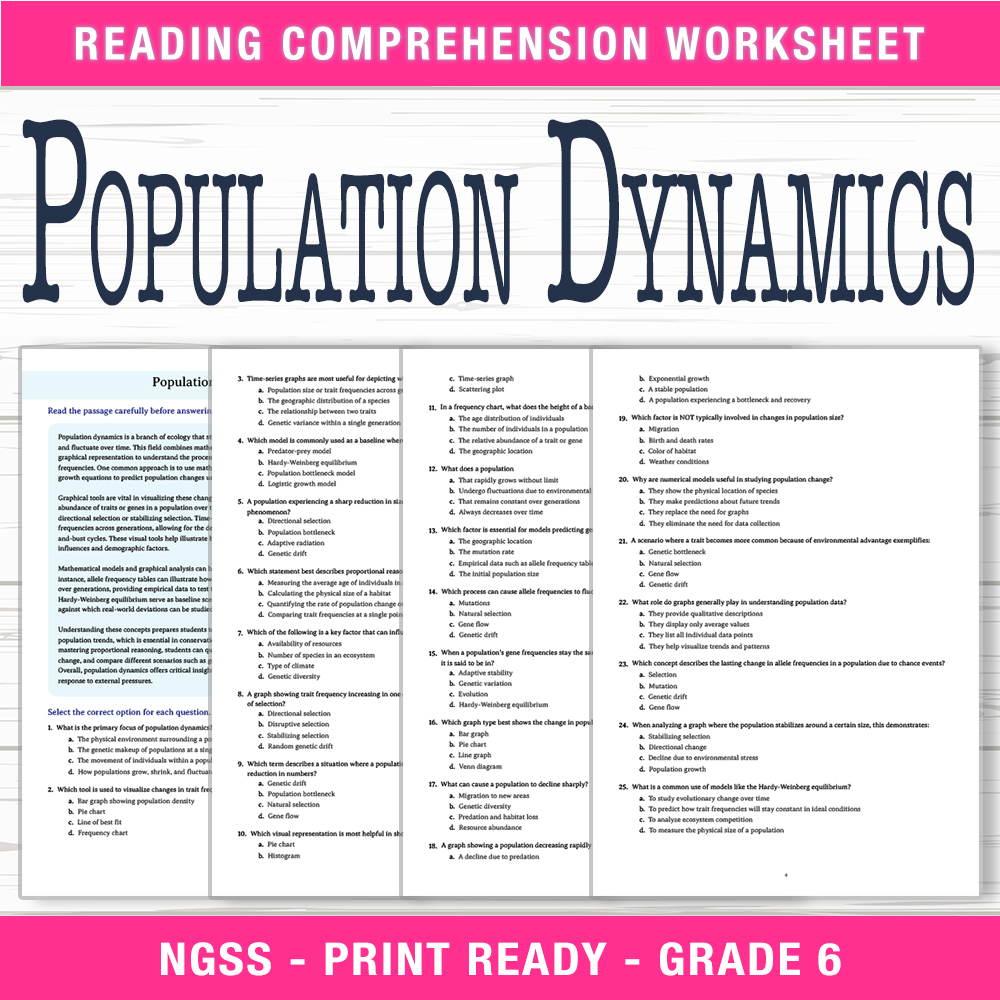
6th Grade Science | Population Dynamics Worksheet (PDF + Answer Key)
Created byRiverstone ClassroomLearning Objectives
- Explain how trait frequencies and population sizes change over generations using mathematical models.
- Interpret and analyze graphical representations such as frequency charts and time-series graphs related to population change.
- Apply proportional reasoning to quantify rates of increase or decline in populations.
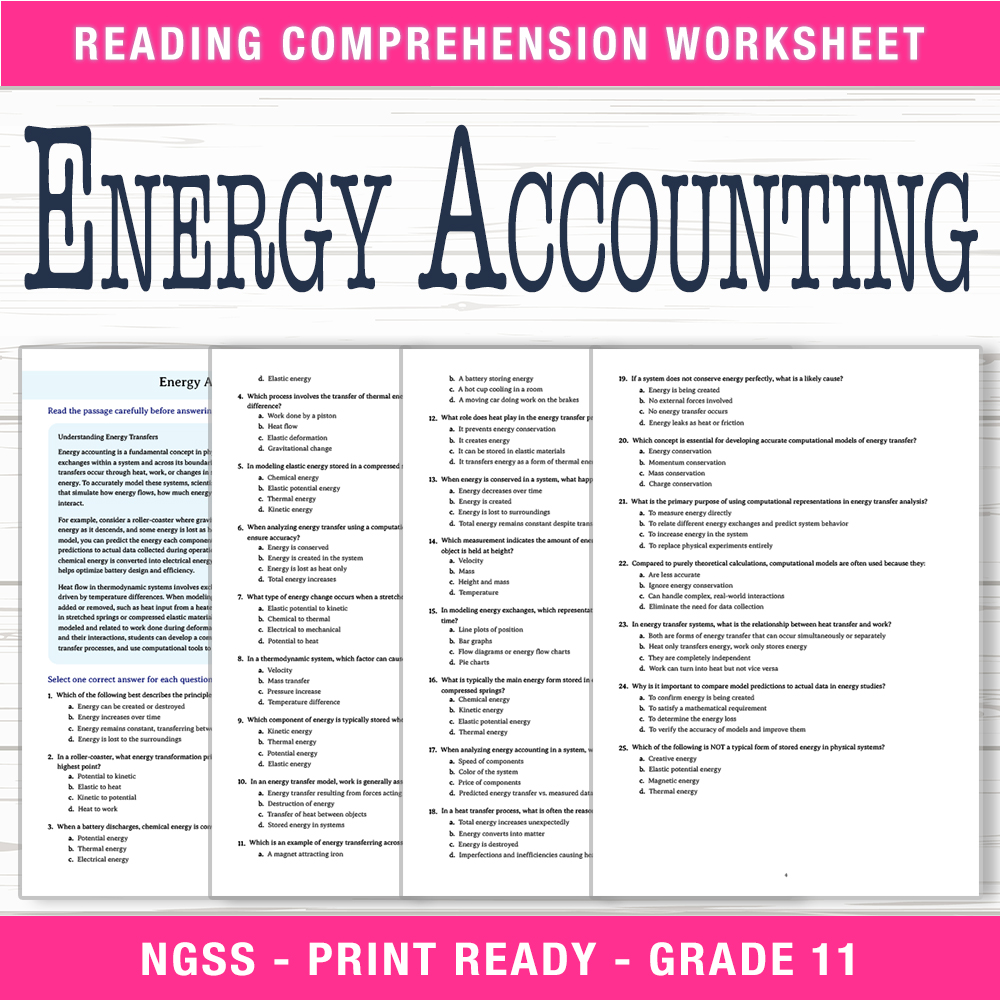
Grade 11 Science – Energy Accounting Worksheet (PDF + Answer Key)
Created byRiverstone ClassroomLearning Objectives
- Understand and model energy transfers among system components using computational methods.
- Relate heat, work, and stored energy exchanges in systems such as roller-coasters, batteries, and heat flow processes.
- Apply conservation of total energy principle to predict and analyze energy flows and compare with data.
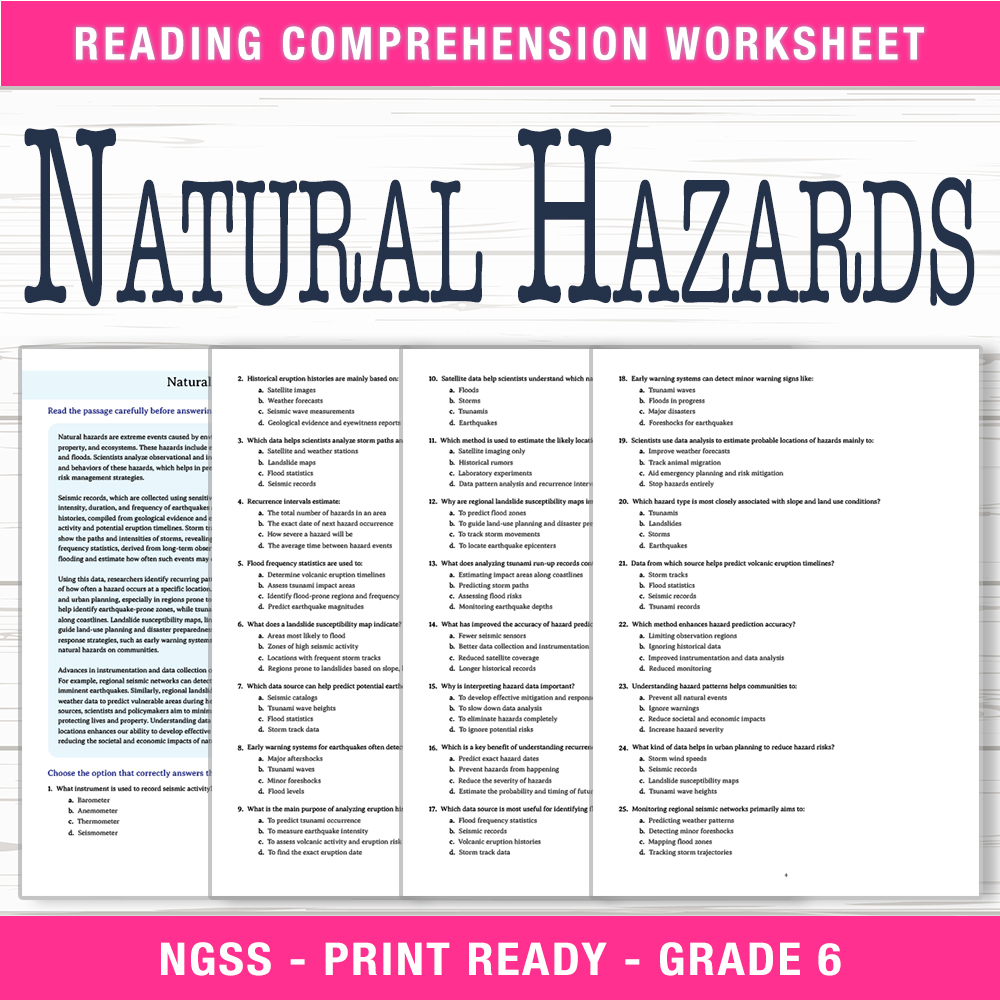
6th Grade Science | Natural Hazards Worksheet (PDF + Answer Key)
Created byRiverstone ClassroomLearning Objectives
- Describe the types of natural hazards and how observational data are used to analyze them.
- Interpret data such as seismic records, eruption histories, and flood statistics to understand patterns.
- Explain methods for estimating the recurrence intervals and potential locations of natural hazards.
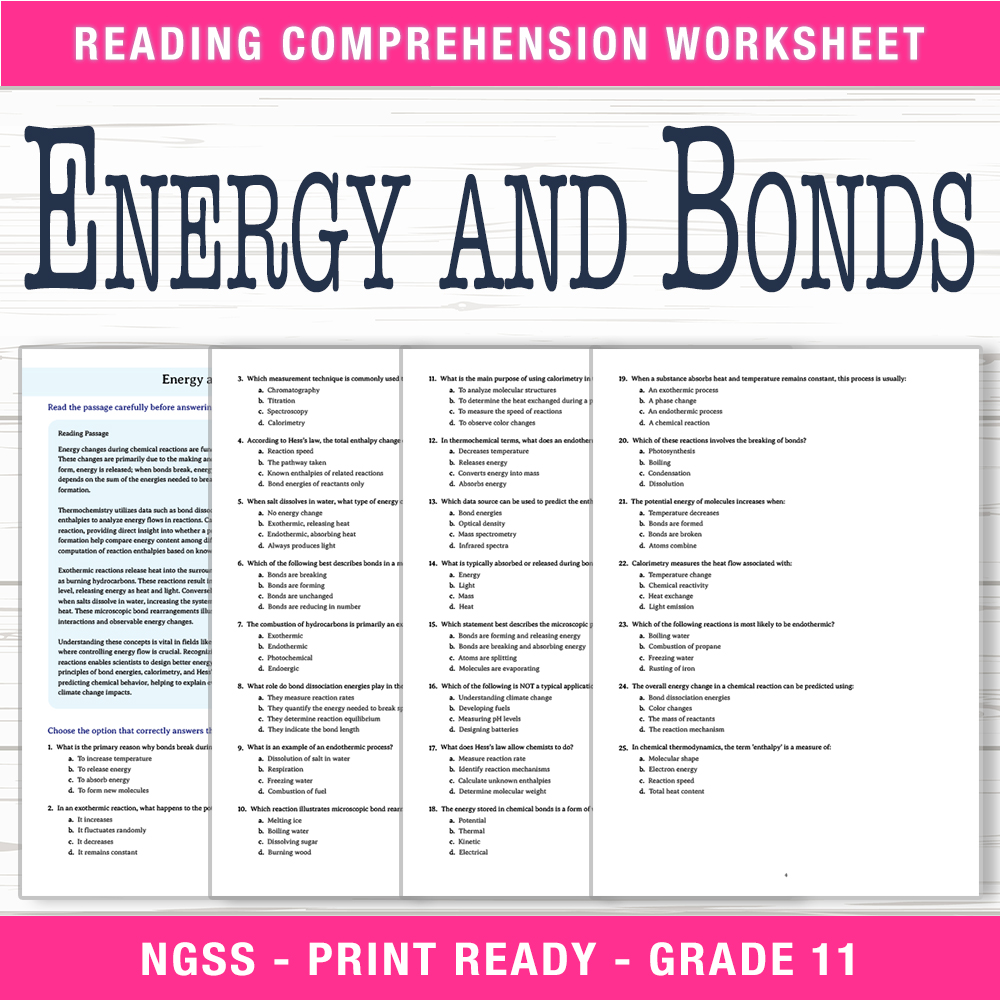
Grade 11 Science | Energy & Bonds Worksheet (PDF + Answer Key)
Created byRiverstone ClassroomLearning Objectives
- Understand how chemical energy changes involve bond formation and breaking.
- Interpret thermochemical data such as bond energies, formation enthalpies, and calorimetry results.
- Differentiate between exothermic and endothermic reactions through microscopic bond rearrangements.
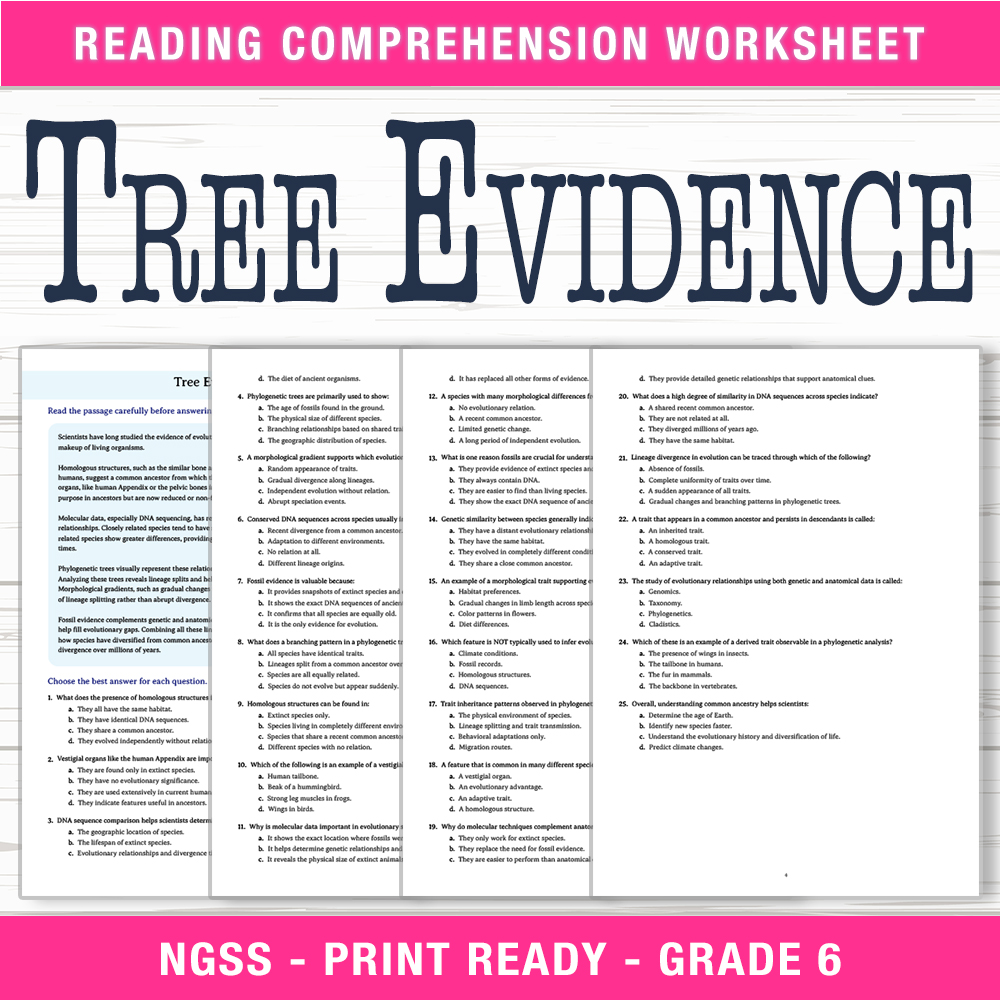
6th Grade Science – Tree Evidence Worksheet (PDF + Answer Key)
Created byRiverstone ClassroomLearning Objectives
- Explain how homologous structures provide evidence for common ancestry.
- Interpret molecular data such as DNA sequences to understand evolutionary relationships.
- Identify key features like vestigial organs and their significance in evolutionary history.
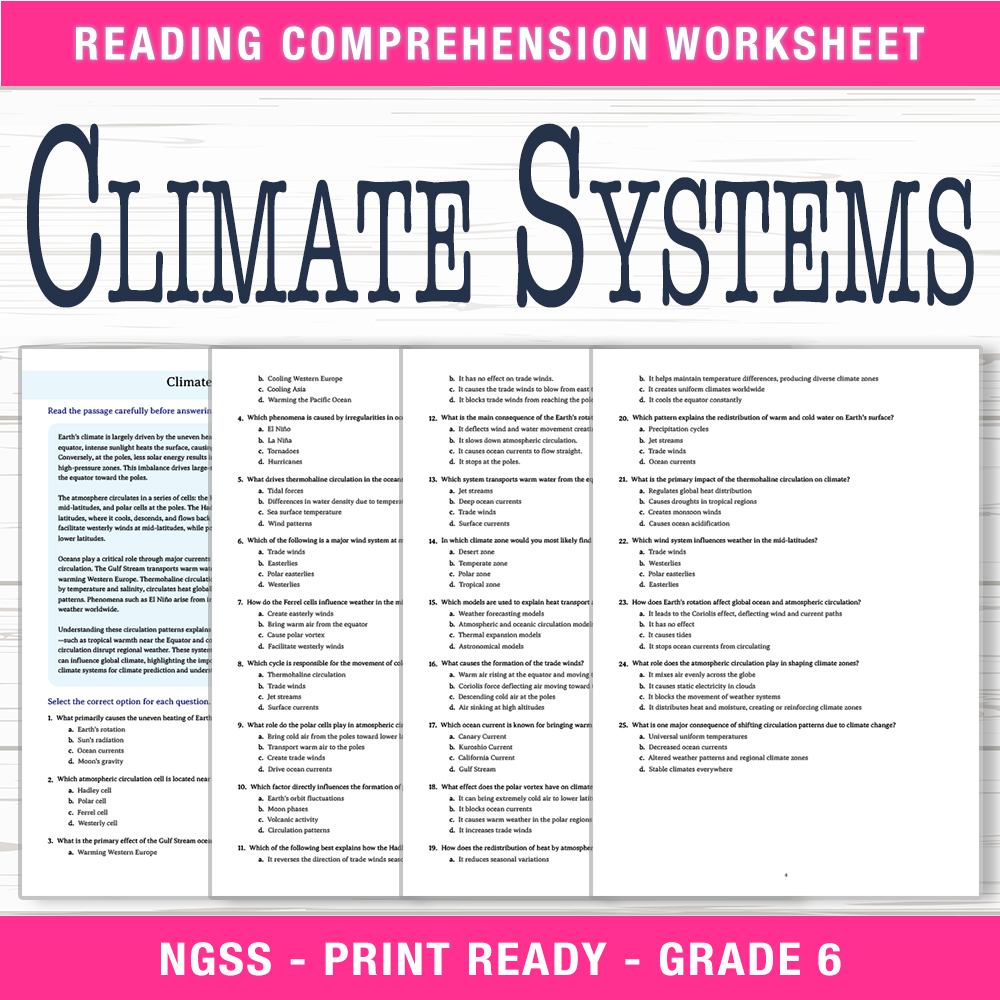
6th Grade Science | Climate Systems Worksheet ( PDF + Answer Key)
Created byRiverstone ClassroomLearning Objectives
- Understand how unequal solar heating influences global atmospheric and oceanic circulation patterns.
- Identify the main circulation cells, wind systems, and ocean currents affecting regional climates.
- Explain the connections between circulation patterns and climate zones, including phenomena like El Niño.
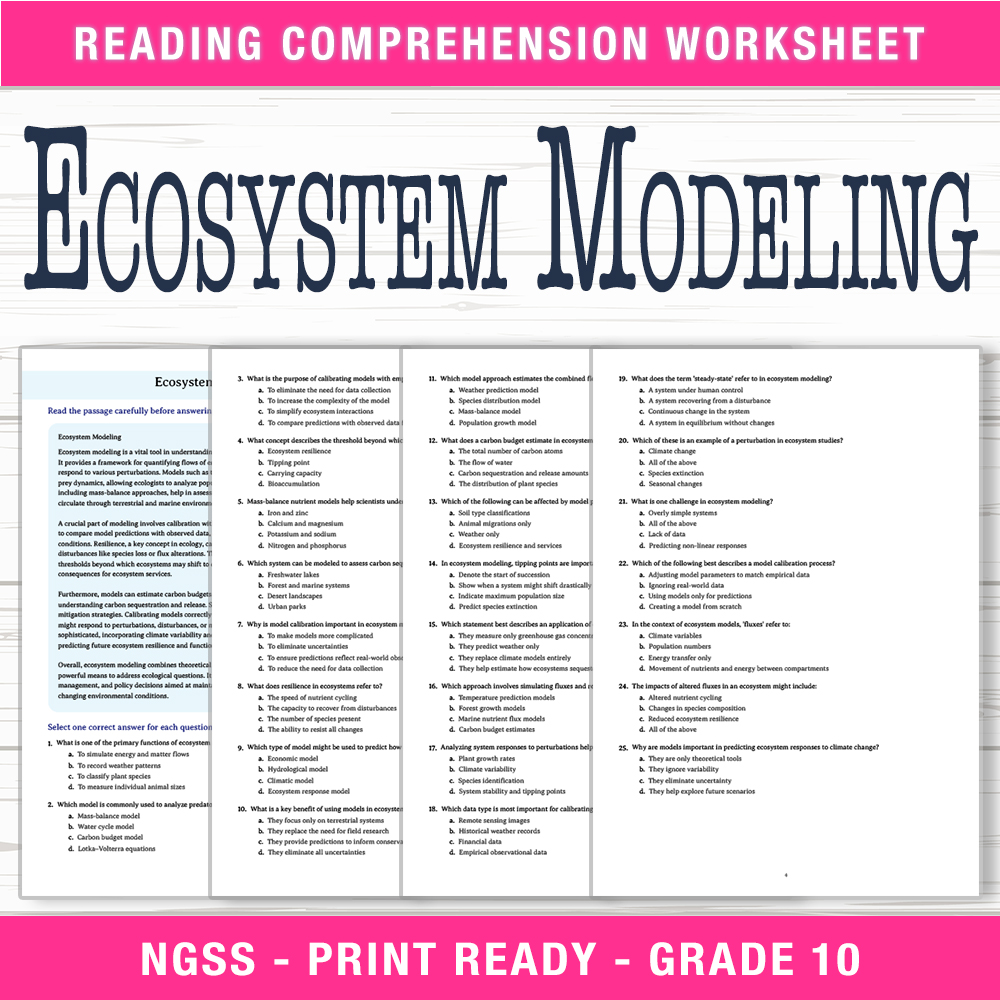
Grade 10 Science – Ecosystem Modeling Worksheet (PDF + Answer Key)
Created byRiverstone ClassroomLearning Objectives
- Understand the fundamental concepts of ecosystem modeling and how they represent energy and matter flows.
- Interpret different types of ecological models such as Lotka–Volterra equations and nutrient flux models.
- Analyze the role of empirical data in calibrating ecosystem models and predicting system responses.

6th Grade Science | Synthetic Materials Worksheet (PDF + Answer Key)
Created byRiverstone ClassroomLearning Objectives
- Understand the origins of synthetic materials and their connection to natural resources.
- Compare the properties of materials such as plastic, fiber, and glass used for specific purposes.
- Analyze the processes involved in extracting and processing resources to produce synthetic materials.
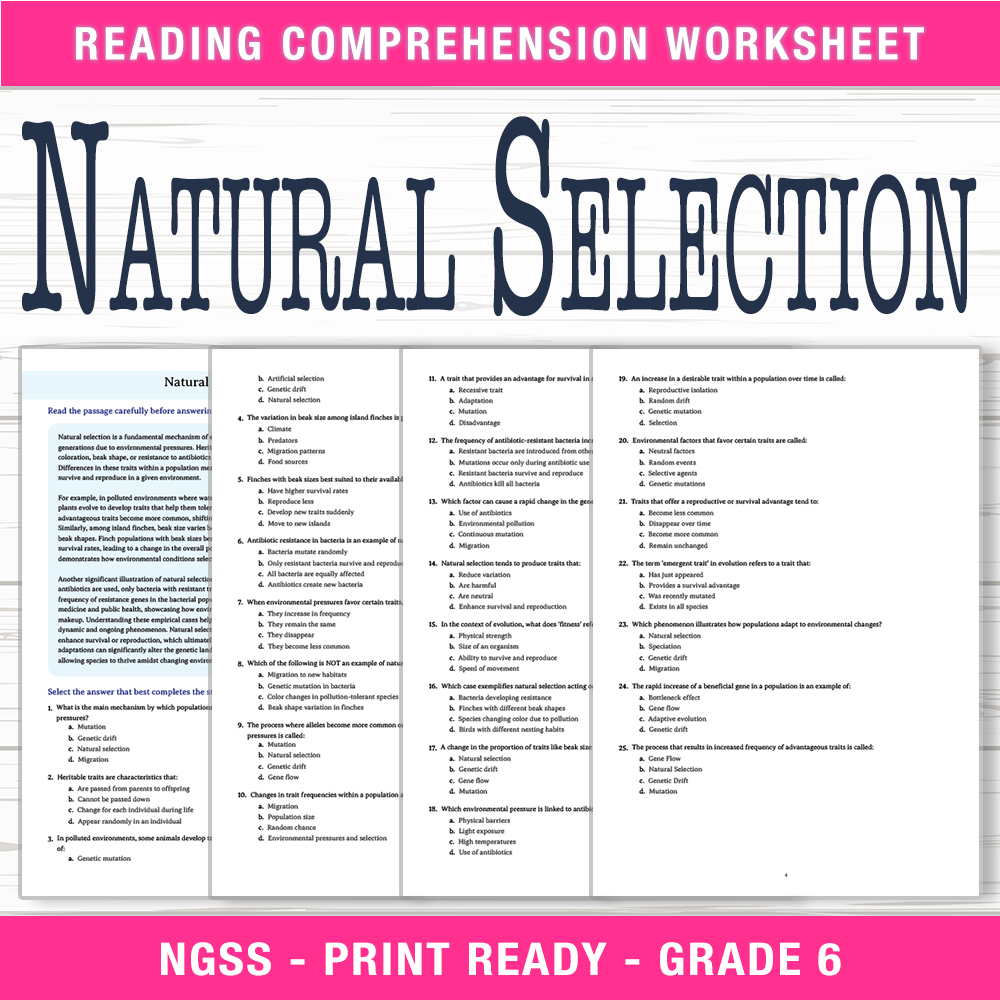
6th Grade Science | Natural Selection Worksheet (PDF + Answer Key)
Created byRiverstone ClassroomLearning Objectives
- Understand the concept of natural selection and how it drives changes in populations over time.
- Identify and analyze examples of trait variation and environmental pressures affecting evolution.
- Explain how empirical cases demonstrate the process of natural selection in different species.

6th Grade Science | Species Interactions Worksheet (PDF + Answer Key)
Created byRiverstone ClassroomLearning Objectives
- Explain different types of species interactions such as mutualism, competition, predation, and parasitism.
- Compare patterns of species interactions across forest, grassland, and freshwater ecosystems.
- Relate species traits, resource overlap, and abiotic conditions to the strength and outcomes of interactions.
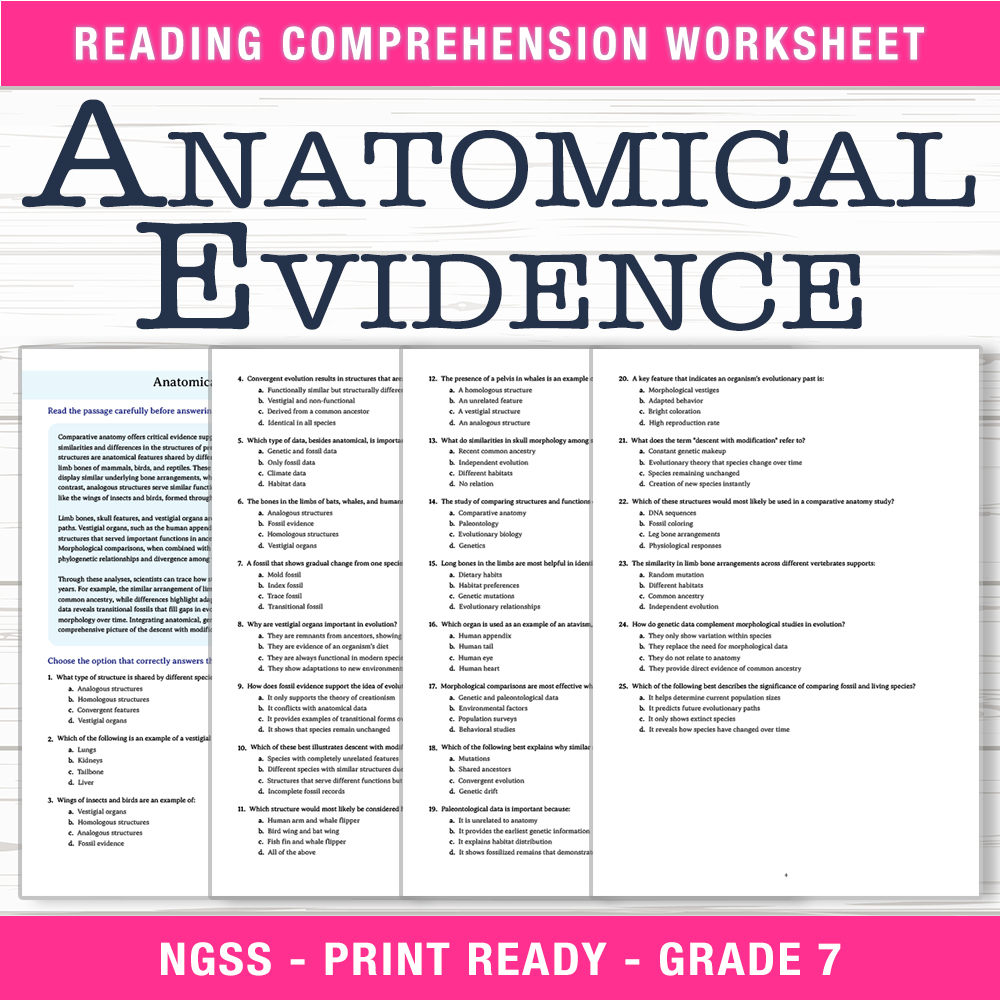
Grade 7 Science | Anatomical Evidence Worksheet (PDF + Answer Key)
Created byRiverstone ClassroomLearning Objectives
- Describe how homologous and analogous structures provide evidence for evolution.
- Identify different morphological features used to compare species, such as limb arrangements and skull morphology.
- Explain the significance of vestigial organs in understanding evolutionary relationships.
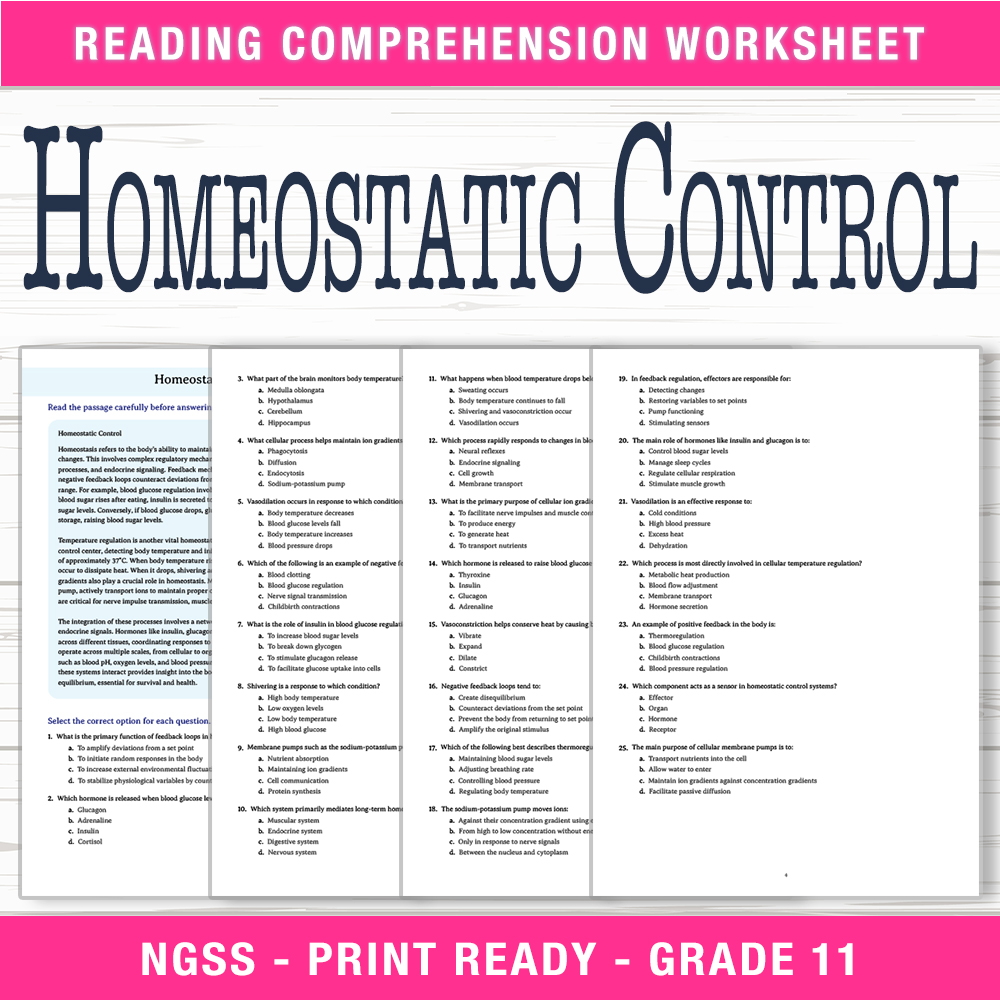
Grade 11 Science | Homeostatic Control Worksheet (PDF + Answer Key)
Created byRiverstone ClassroomLearning Objectives
- Explain the mechanisms of feedback loops in maintaining internal physiological stability.
- Describe how cellular transport processes contribute to homeostasis.
- Analyze examples of homeostatic regulation such as blood glucose levels, temperature, and ion gradients.
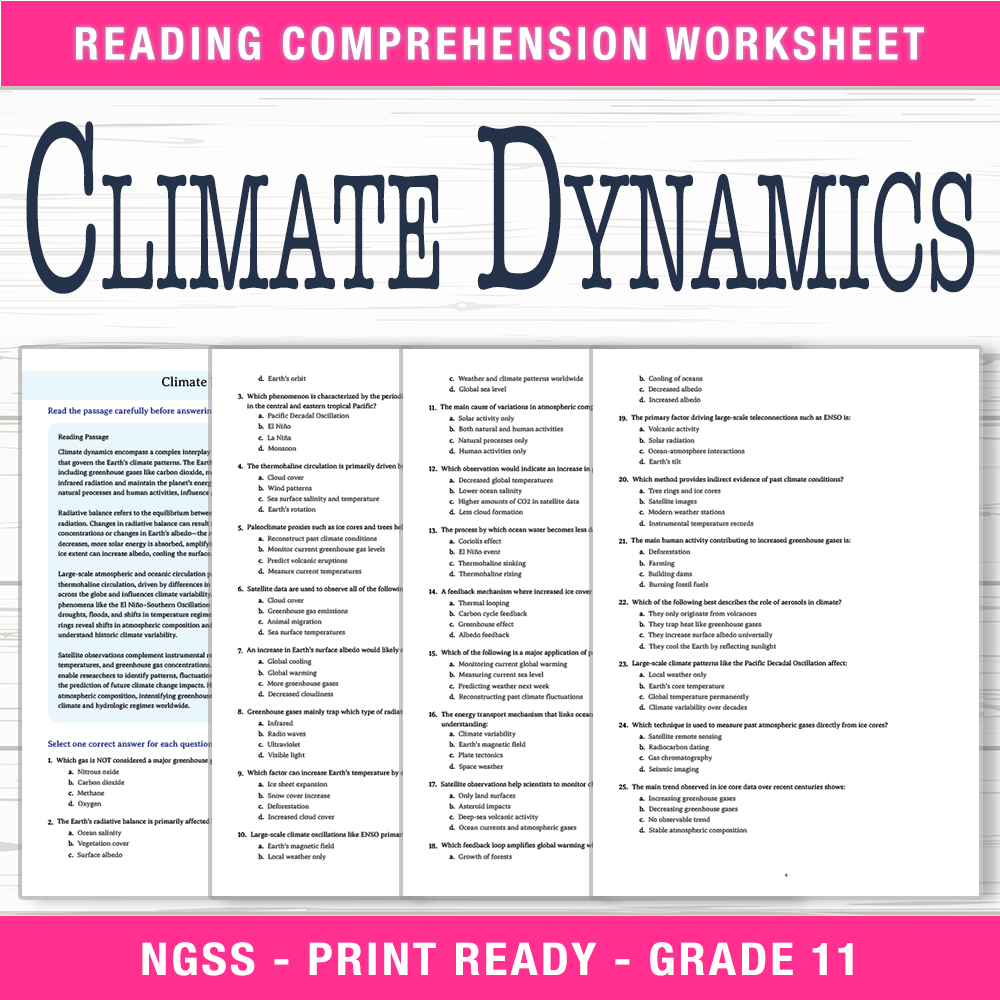
Grade 11 Science | Climate Dynamics Worksheet (PDF + Answer Key)
Created byRiverstone ClassroomLearning Objectives
- Understand the mechanisms driving climate variability such as greenhouse gas forcing and albedo feedbacks.
- Analyze how ocean-atmosphere interactions influence large-scale climate patterns like El Niño and thermohaline circulation.
- Interpret instrumental, satellite, and paleoclimate proxy data to assess shifts in temperature and hydrologic regimes.
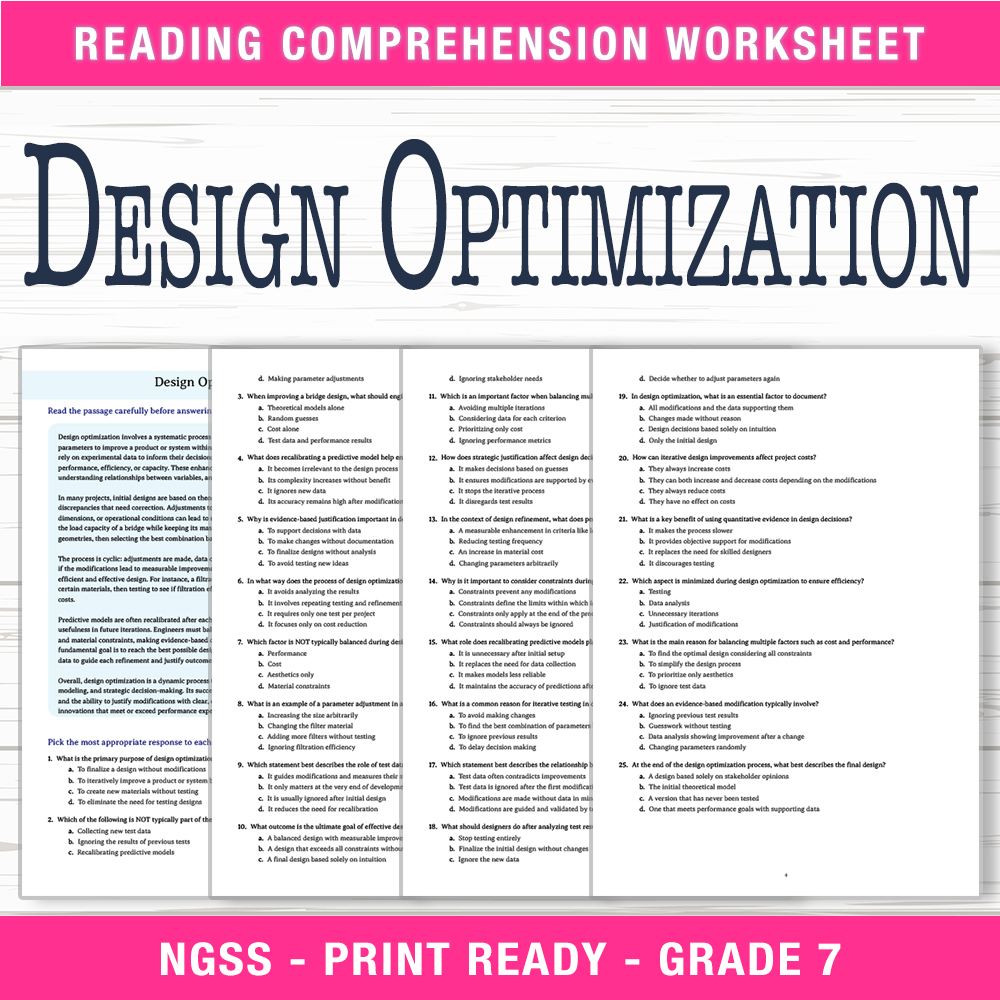
Grade 7 Science – Design Optimization Worksheet (PDF + Answer Key)
Created byRiverstone ClassroomLearning Objectives
- Analyze test data to identify factors affecting design performance.
- Refine design parameters through iterative adjustments to improve outcomes.
- Develop justifications for modifications based on quantitative comparisons.
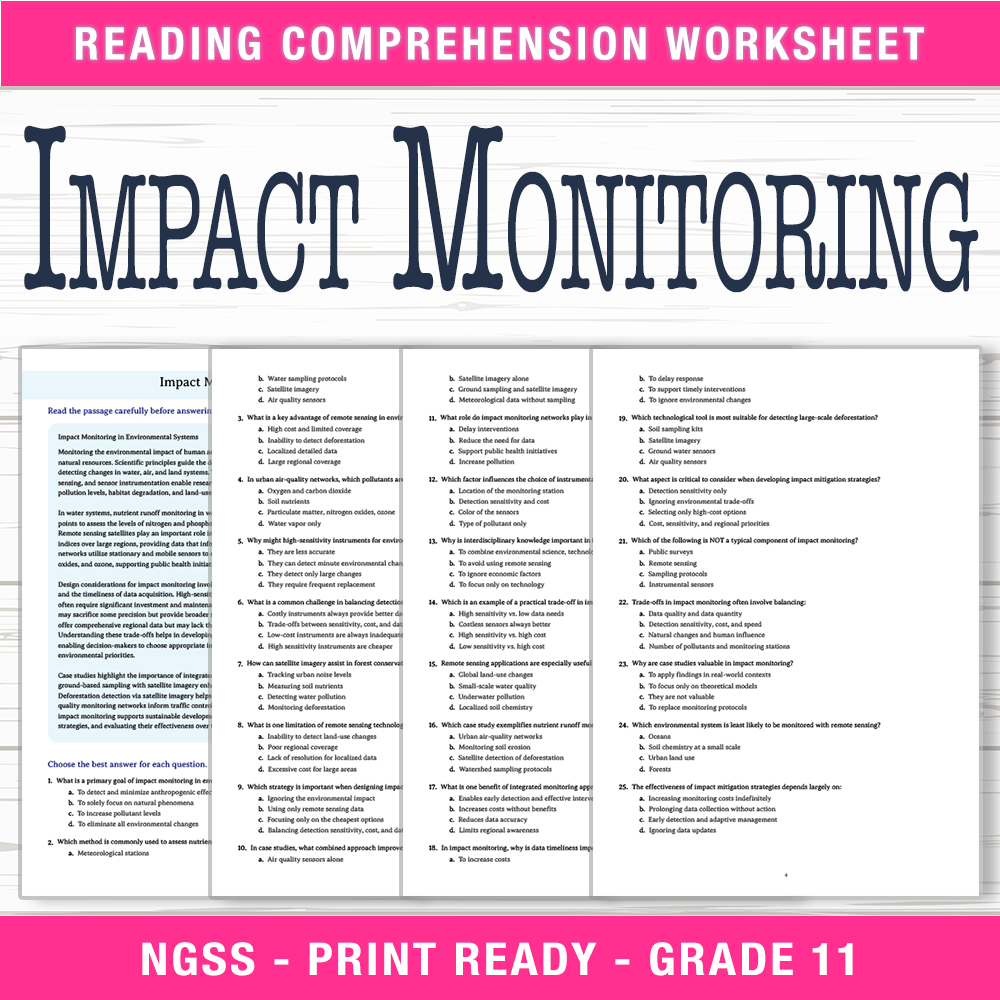
Grade 11 Science Impact Monitoring Worksheet (PDF + Answer Key)
Created byRiverstone ClassroomLearning Objectives
- Explain scientific principles used in monitoring anthropogenic effects on environmental systems.
- Identify methods and instrumentation for detecting pollutants and environmental changes.
- Analyze case studies of monitoring strategies for water, air, and land systems.
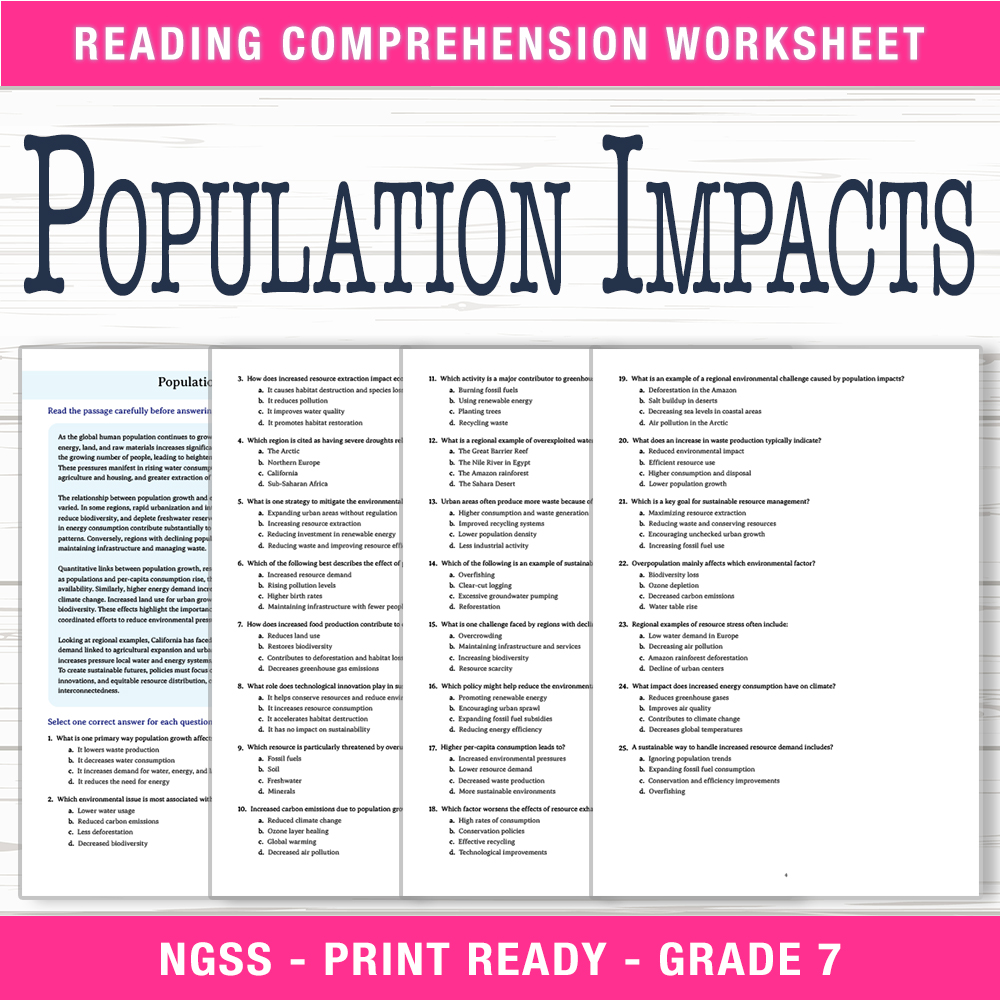
Grade 7 Science | Population Impacts Worksheet (PDF + Answer Key)
Created byRiverstone ClassroomLearning Objectives
- Explain how human population growth influences demand for water, energy, and land resources.
- Analyze the environmental consequences of increased consumption patterns on ecosystems and biodiversity.
- Evaluate regional examples of how population and consumption affect resource cycles and sustainability.
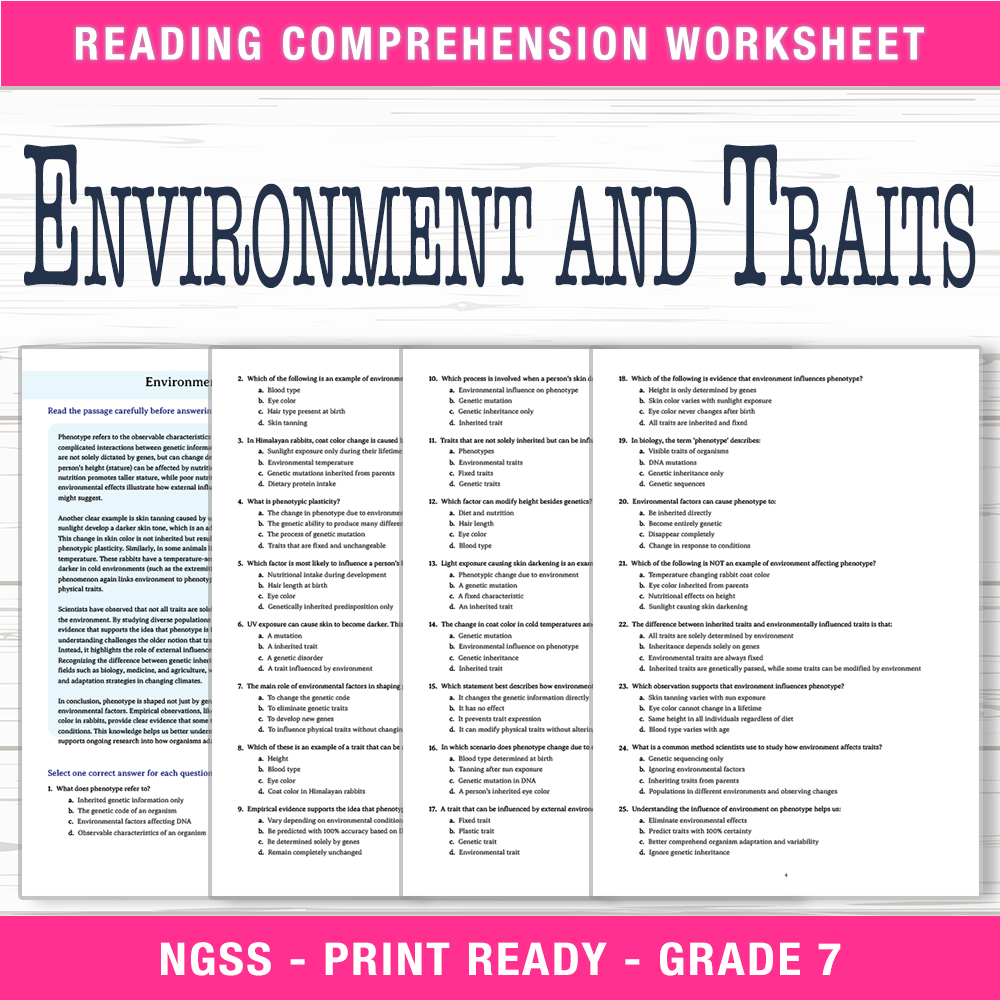
Grade 7 Science | Environment and Traits Worksheet (PDF + Answer Key)
Created byRiverstone ClassroomLearning Objectives
- Explain how phenotype results from interactions between genetic makeup and environmental factors.
- Identify examples of traits influenced by external environmental conditions.
- Distinguish between inherited genetic traits and environmentally modulated traits.
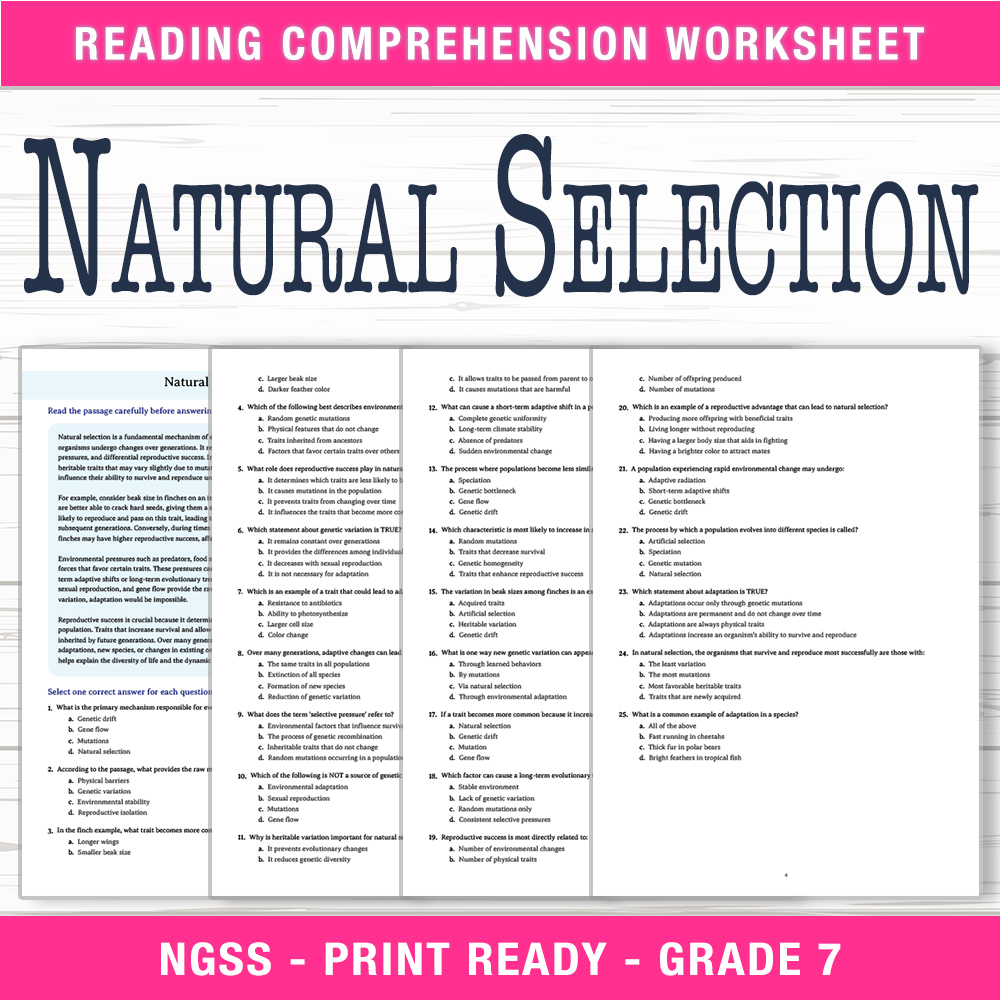
Grade 7 Science | Natural Selection Worksheet (PDF + Answer Key)
Created byRiverstone ClassroomLearning Objectives
- Explain the mechanisms of natural selection and how they lead to adaptation in populations.
- Identify key sources of genetic variation and describe their roles in evolution.
- Analyze how environmental pressures influence the survival and reproductive success of organisms.
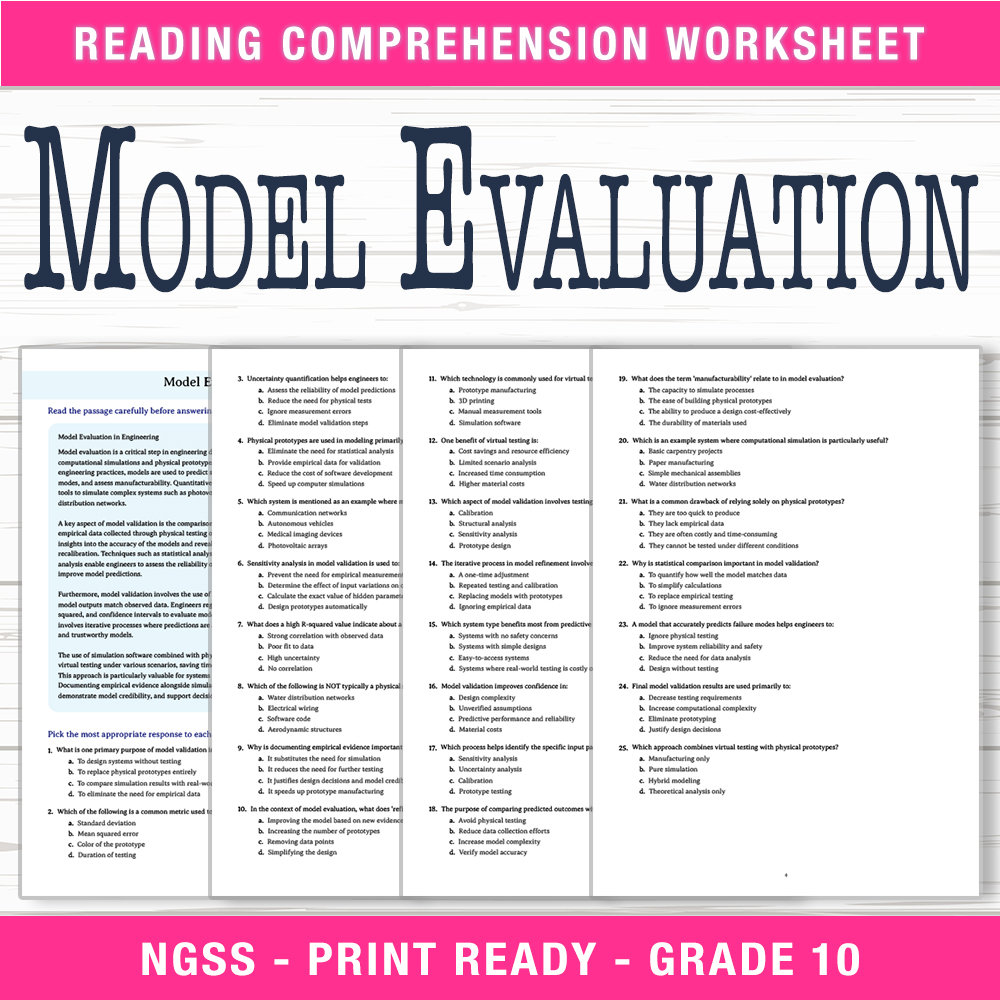
Grade 10 Science – Model Evaluation Worksheet (PDF + Answer Key)
Created byRiverstone ClassroomLearning Objectives
- Understand the process of quantitative modeling and data analysis in engineering
- Evaluate the reliability and accuracy of models through comparison with empirical data
- Apply statistical methods to assess model predictions against observed measurements
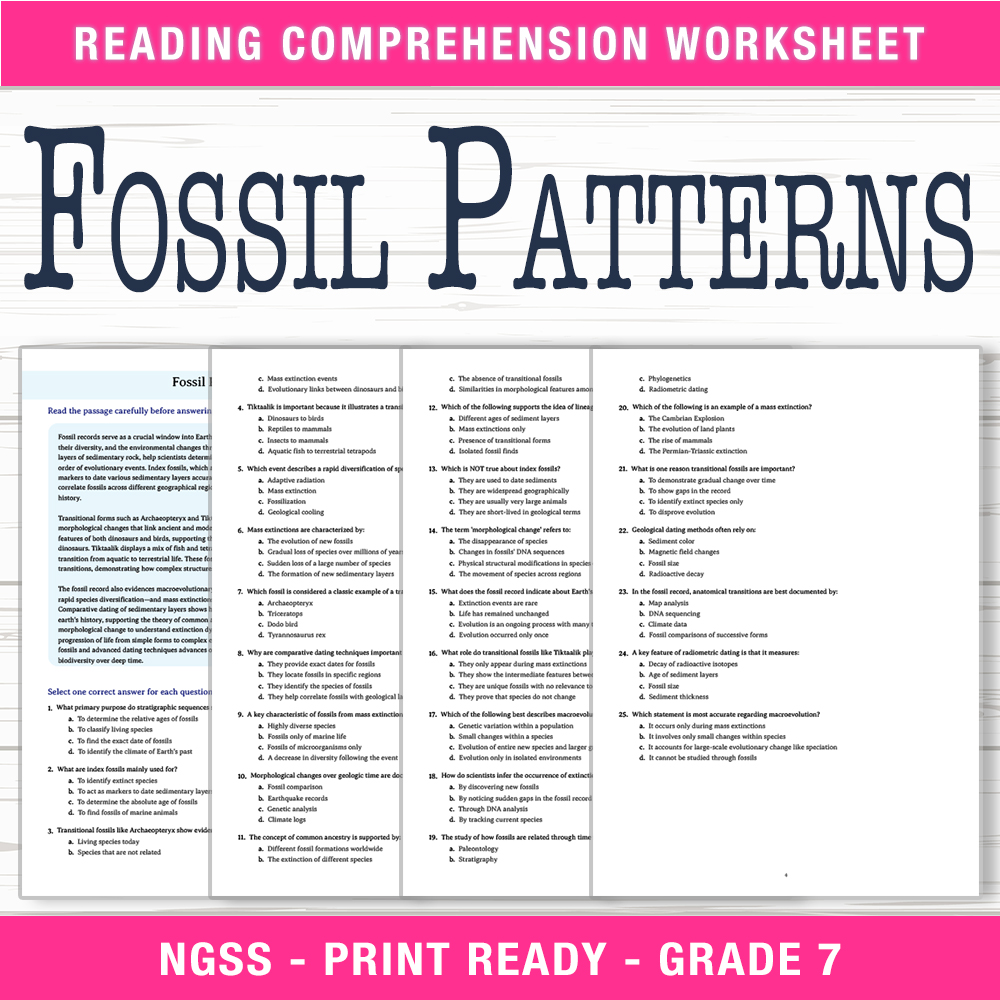
Grade 7 Science | Fossil Patterns Worksheet (PDF + Answer Key)
Created byRiverstone ClassroomLearning Objectives
- Analyze the significance of stratigraphic sequences and index fossils in dating and correlating fossils.
- Understand the concept of transitional forms and what they reveal about evolutionary lineage.
- Interpret paleontological data to infer macroevolutionary trends such as radiation events and mass extinctions.
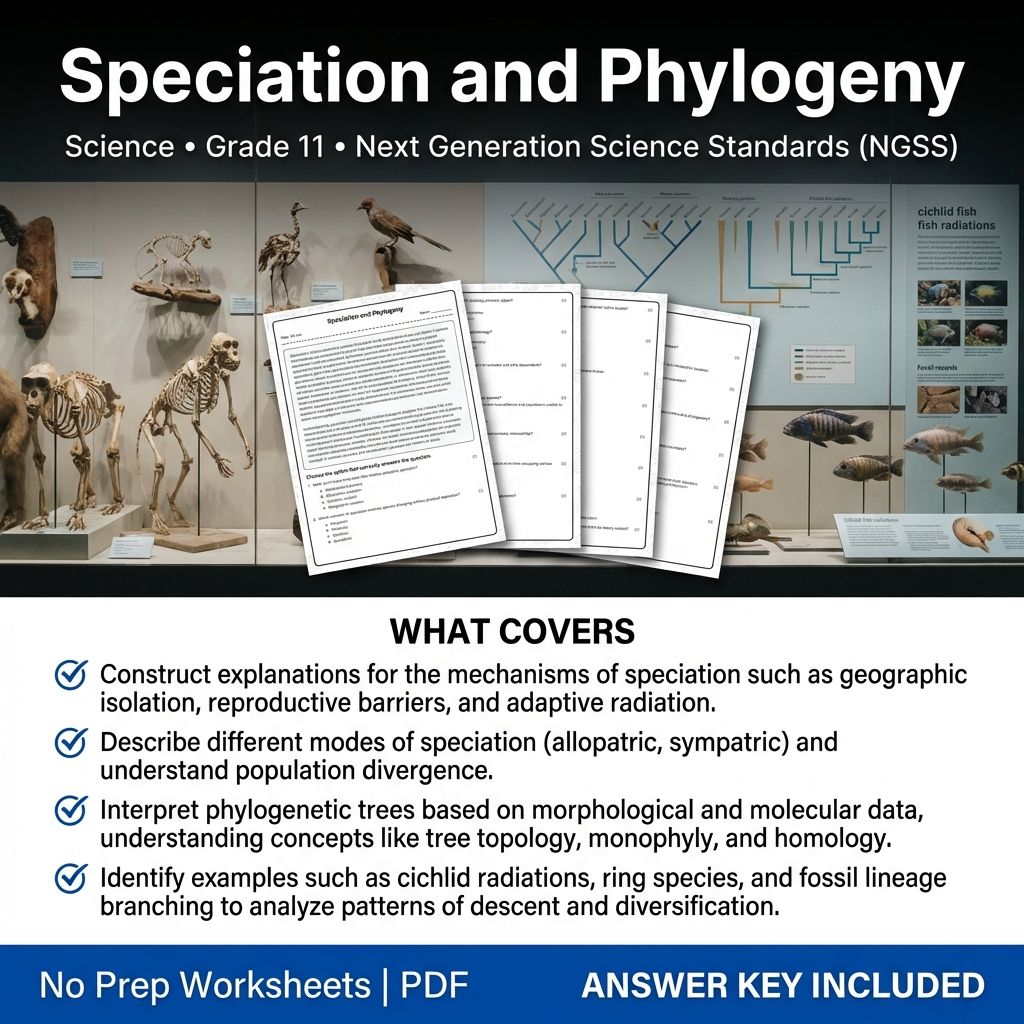
11th Grade Science | Speciation and Phylogeny Worksheet & Answer Key (PDF)
Created byCoral Reef LearningLearning Objectives
- Construct explanations for the mechanisms of speciation such as geographic isolation, reproductive barriers, and adaptive radiation.
- Describe different modes of speciation (allopatric, sympatric) and understand population divergence.
- Interpret phylogenetic trees based on morphological and molecular data, understanding concepts like tree topology, monophyly, and homology.
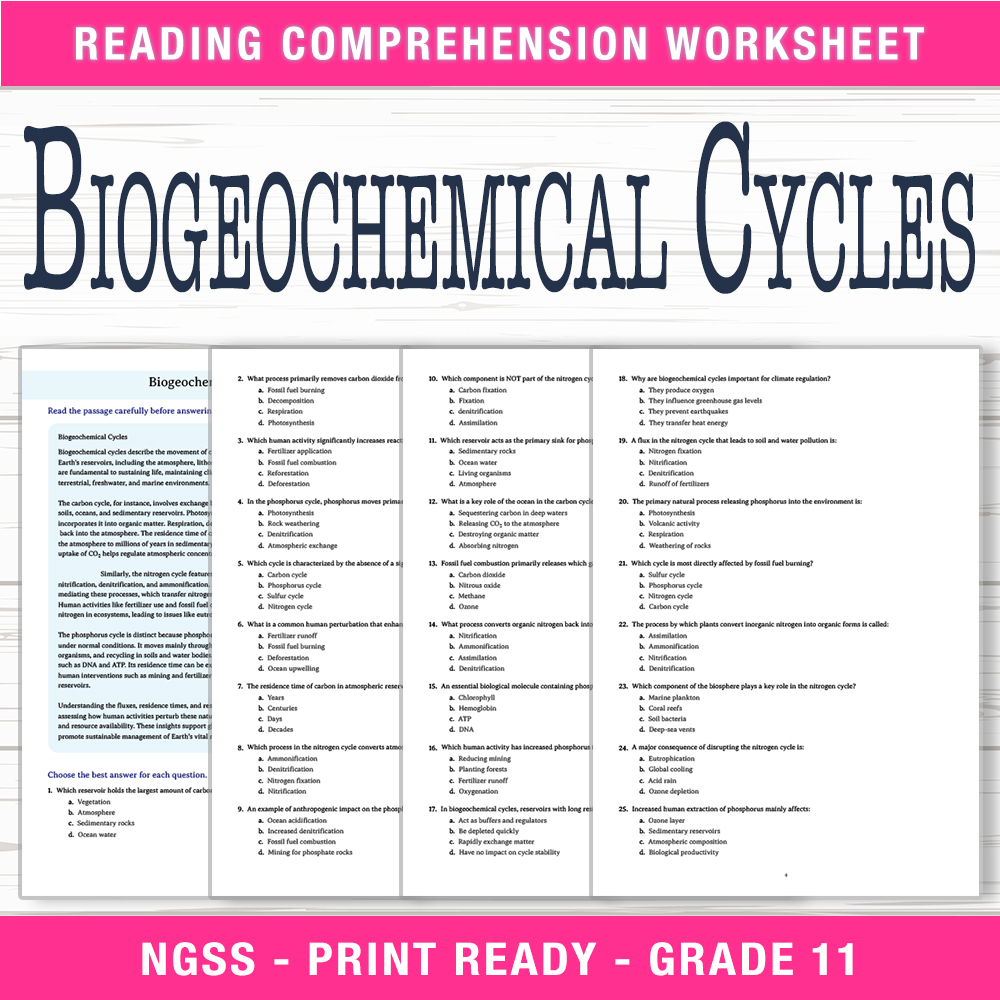
Grade 11 Science | Biogeochemical Cycles Worksheet (PDF + Answer Key)
Created byRiverstone ClassroomLearning Objectives
- Describe the main reservoirs involved in the carbon, nitrogen, and phosphorus cycles.
- Explain the pathways and fluxes that transfer matter among reservoirs in biogeochemical cycles.
- Analyze the impact of human activities on biogeochemical cycles and their fluxes.
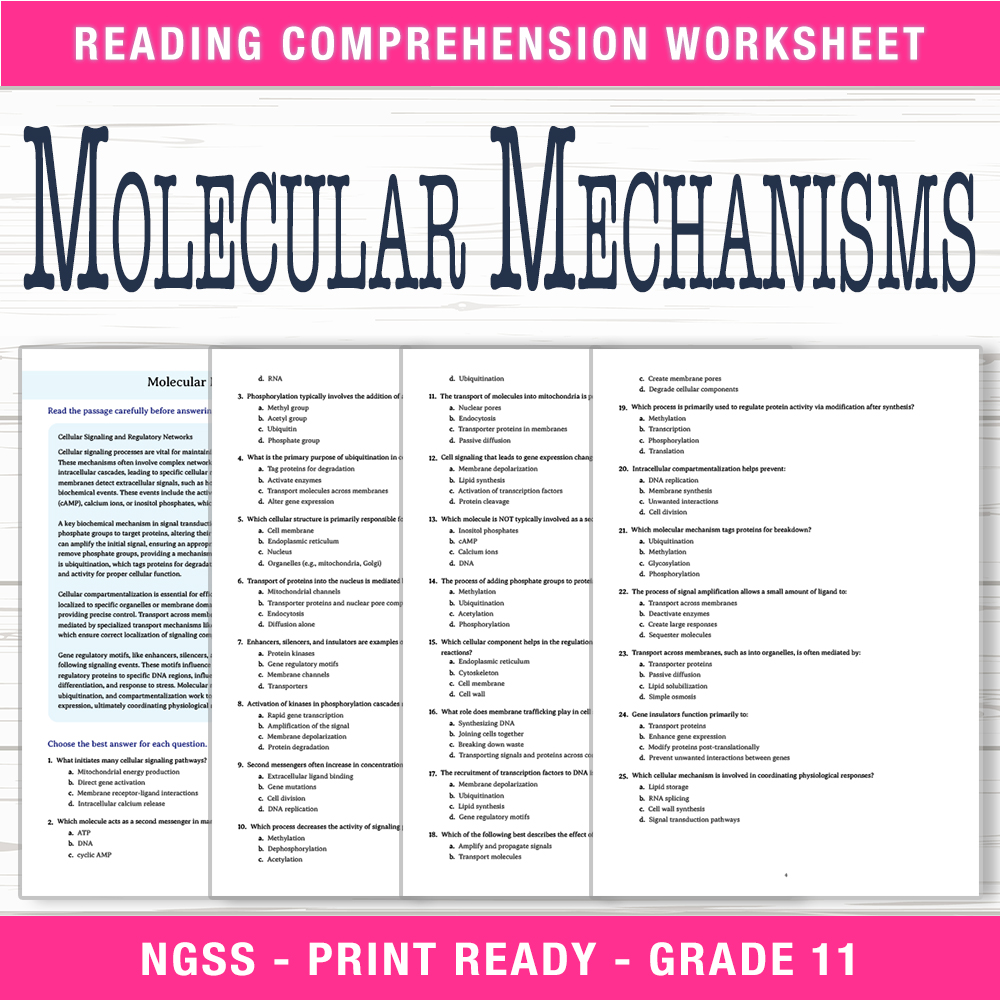
Grade 11 Science – Molecular Mechanisms Worksheet (PDF + Answer Key)
Created byRiverstone ClassroomLearning Objectives
- Explain the biochemical mechanisms underlying cellular signaling pathways, including phosphorylation cascades and ubiquitination.
- Describe the role of intracellular compartmentalization and transport across membranes in regulating protein function.
- Analyze gene regulatory motifs and their influence on cellular behavior and physiological responses.
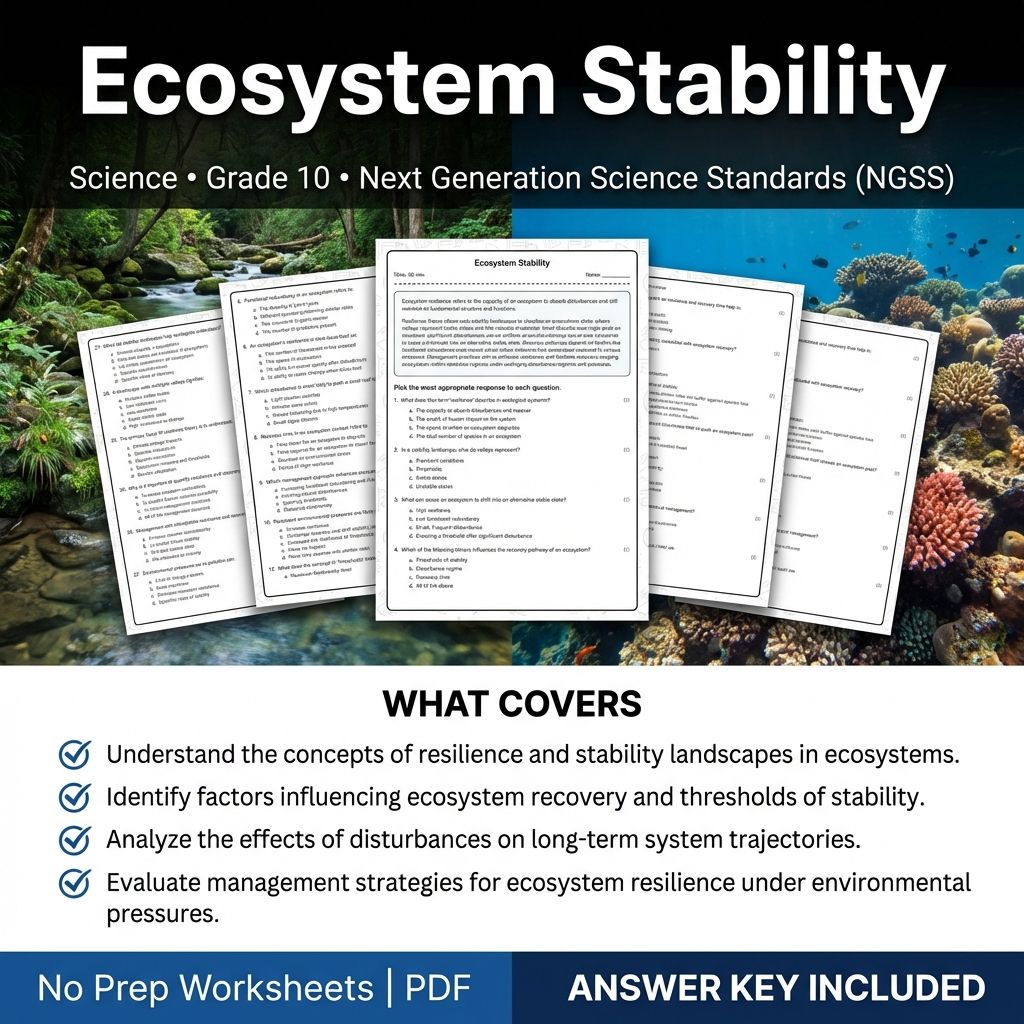
10th Grade Science | Ecosystem Stability Worksheet & Answer Key (Printable PDF)
Created byCoral Reef LearningLearning Objectives
- Understand the concepts of resilience and stability landscapes in ecosystems.
- Identify factors influencing ecosystem recovery and thresholds of stability.
- Analyze the effects of disturbances on long-term system trajectories.
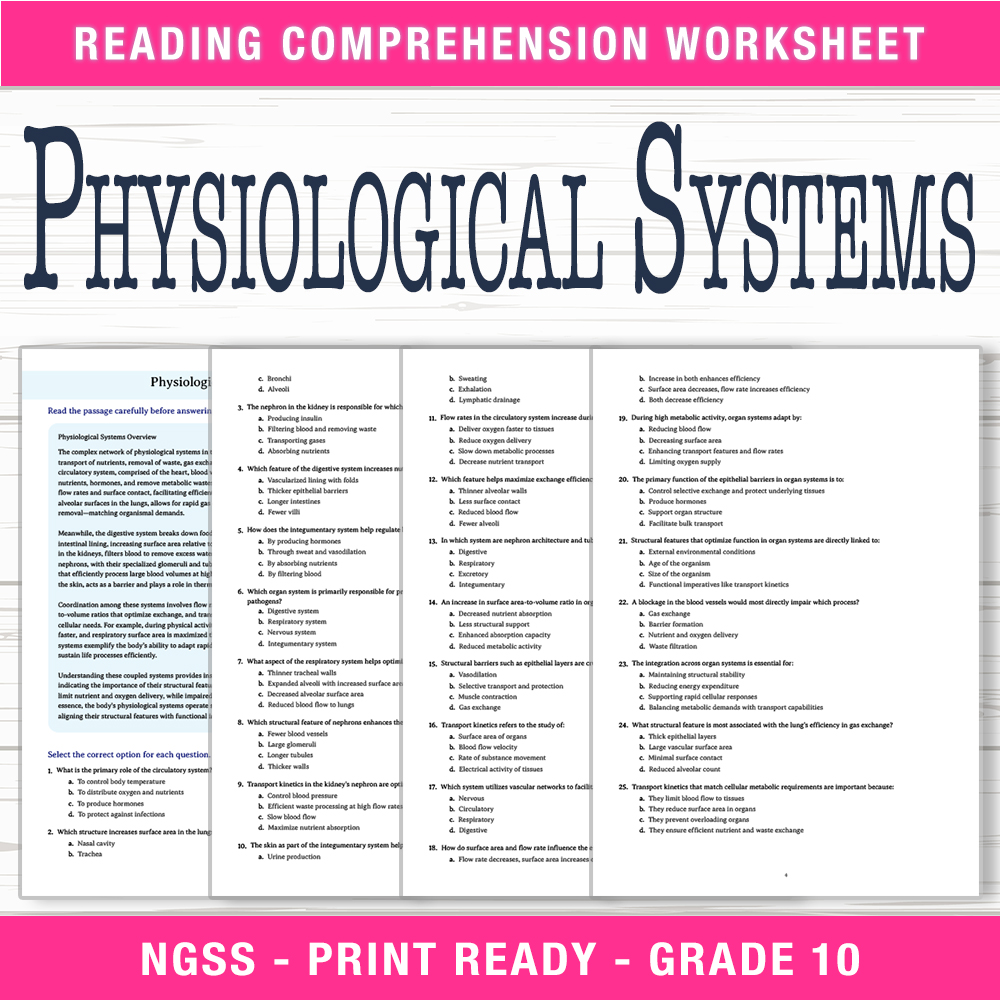
Grade 10 Science | Physiological Systems Worksheet (PDF + Answer Key)
Created byRiverstone ClassroomLearning Objectives
- Understand the structure and function of circulatory, respiratory, digestive, excretory, and integumentary systems.
- Analyze how organ systems coordinate to maintain homeostasis through transport, gas exchange, and waste removal.
- Explain how structural features like vascular networks, alveoli, nephron architecture, and epithelial barriers relate to their functions.
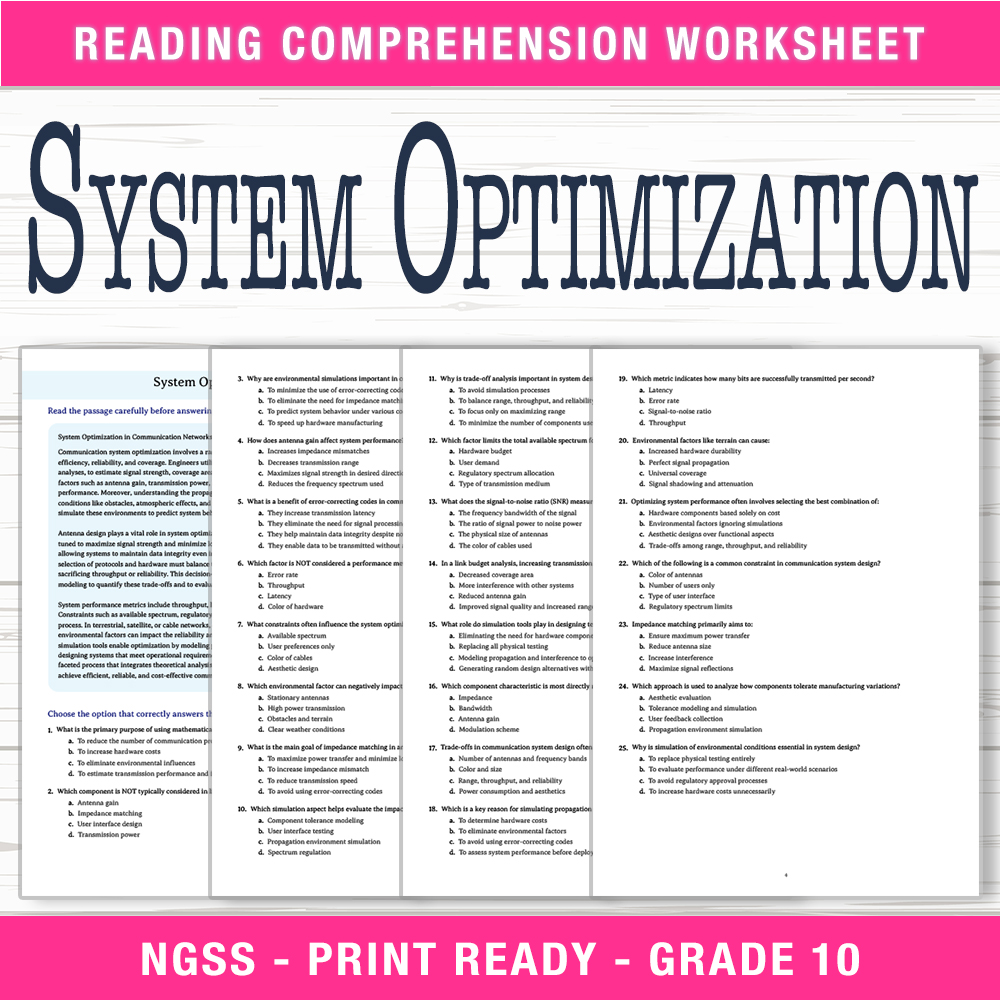
Grade 10 Science | System Optimization Worksheet (PDF + Answer Key)
Created byRiverstone ClassroomLearning Objectives
- Explain the key components involved in optimizing communication systems.
- Apply mathematical models such as link budget calculations to assess system performance.
- Evaluate trade-offs between range, throughput, and reliability in communication links.
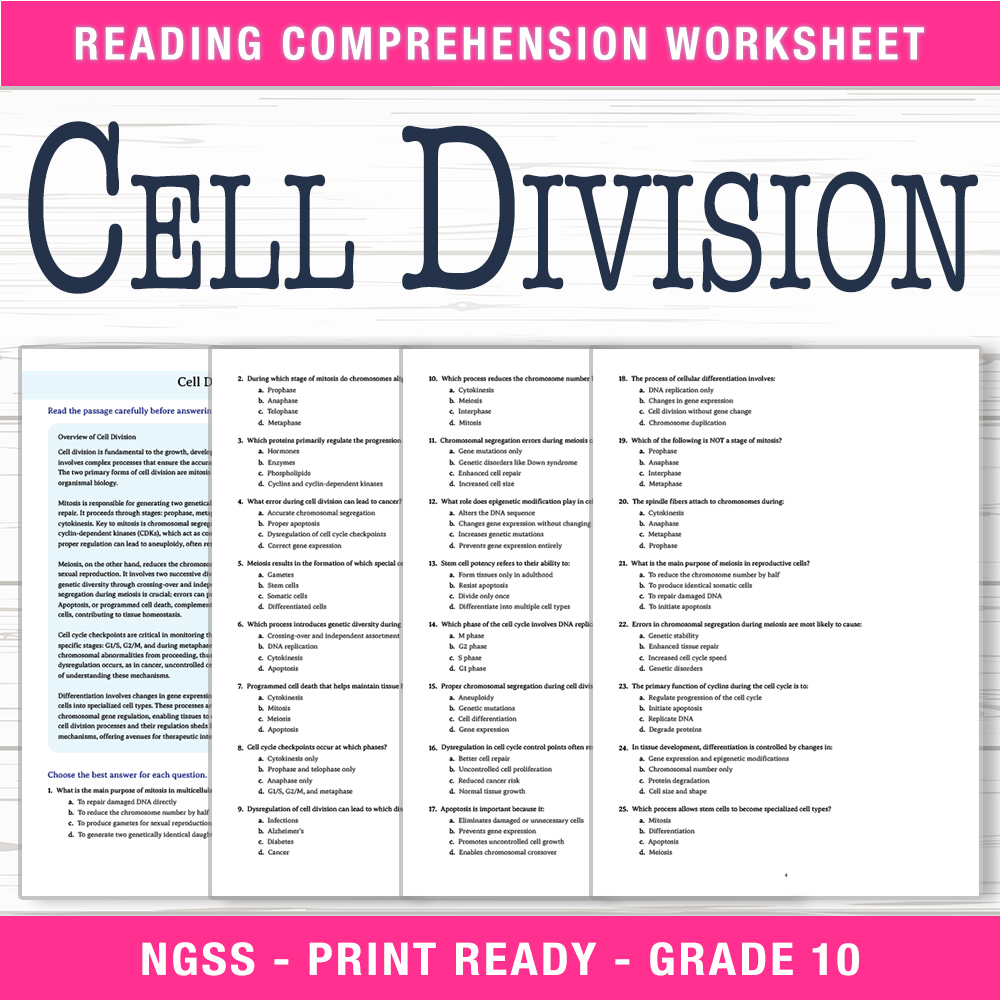
Grade 10 Science | Cell Division Worksheet (PDF + Answer Key)
Created byRiverstone ClassroomLearning Objectives
- Describe the processes of mitosis and meiosis and their roles in cell division.
- Explain how cell cycle checkpoints regulate cell division and prevent dysregulation.
- Understand the mechanisms of apoptosis and their importance in tissue homeostasis.
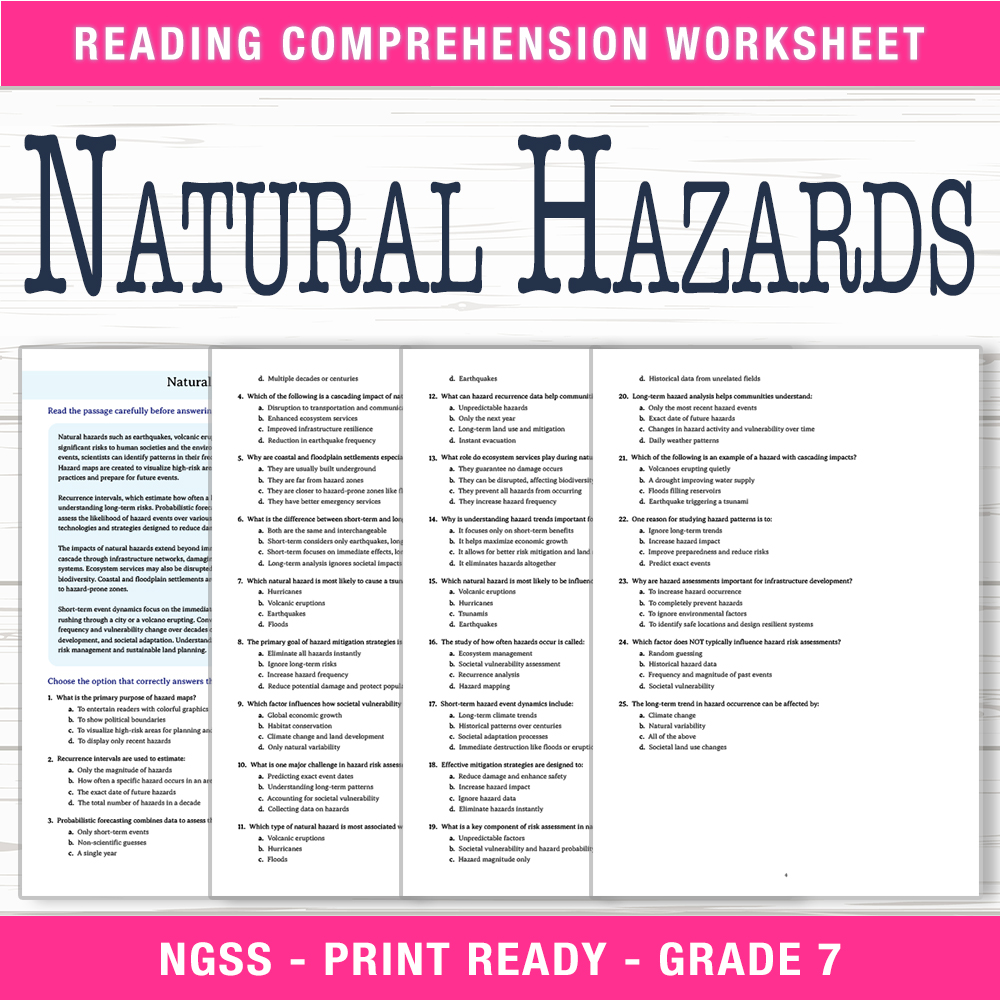
Grade 7 Science | Natural Hazards Worksheet (PDF + Answer Key)
Created byRiverstone ClassroomLearning Objectives
- Understand the patterns and frequency of various natural hazards like earthquakes, volcanoes, hurricanes, floods, and tsunamis.
- Interpret hazard maps, recurrence intervals, and probabilistic data to assess risk and mitigation strategies.
- Analyze the cascading impacts of natural hazards on infrastructure, ecosystems, and settlements.
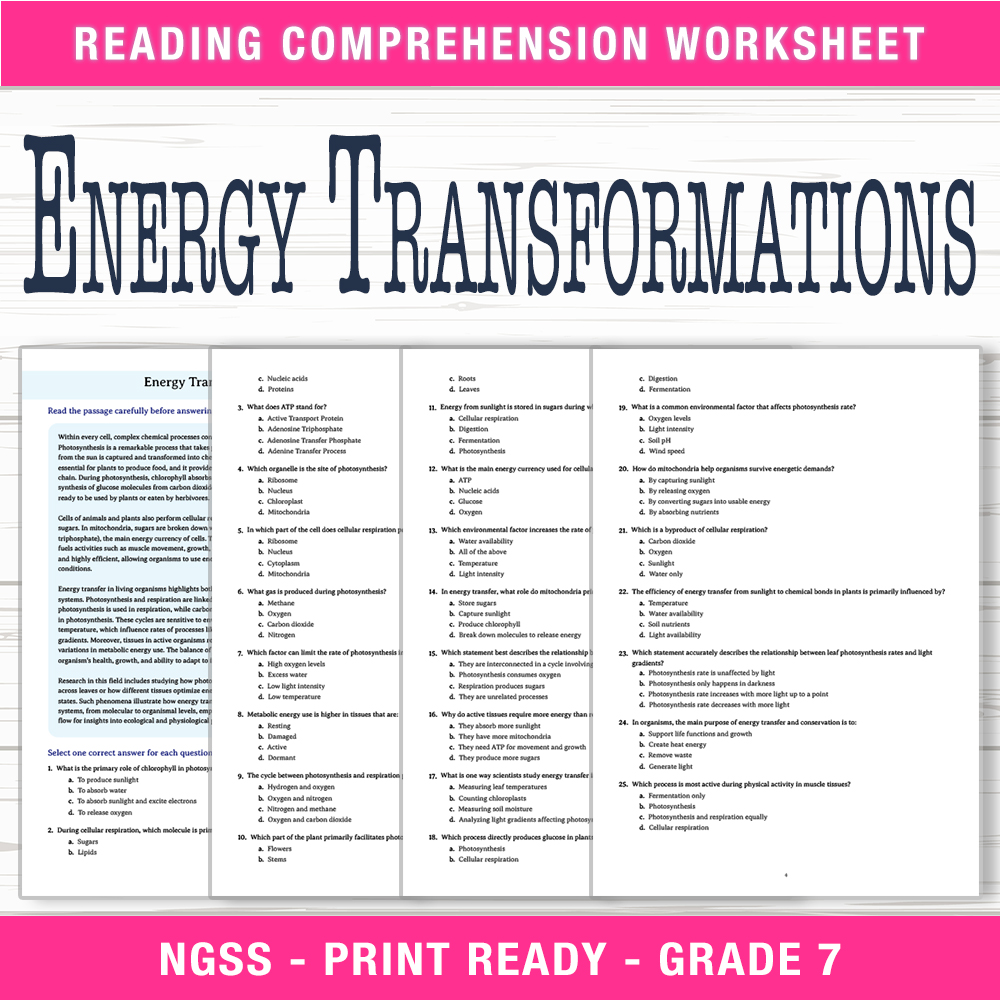
Grade 7 Science – Energy Transformations Worksheet (PDF + Answer Key)
Created byRiverstone ClassroomLearning Objectives
- Describe how light energy is converted into chemical energy during photosynthesis.
- Explain the process of cellular respiration and how organisms harvest energy from food.
- Connect chloroplast-based sugar production to mitochondrial ATP generation across different taxa.
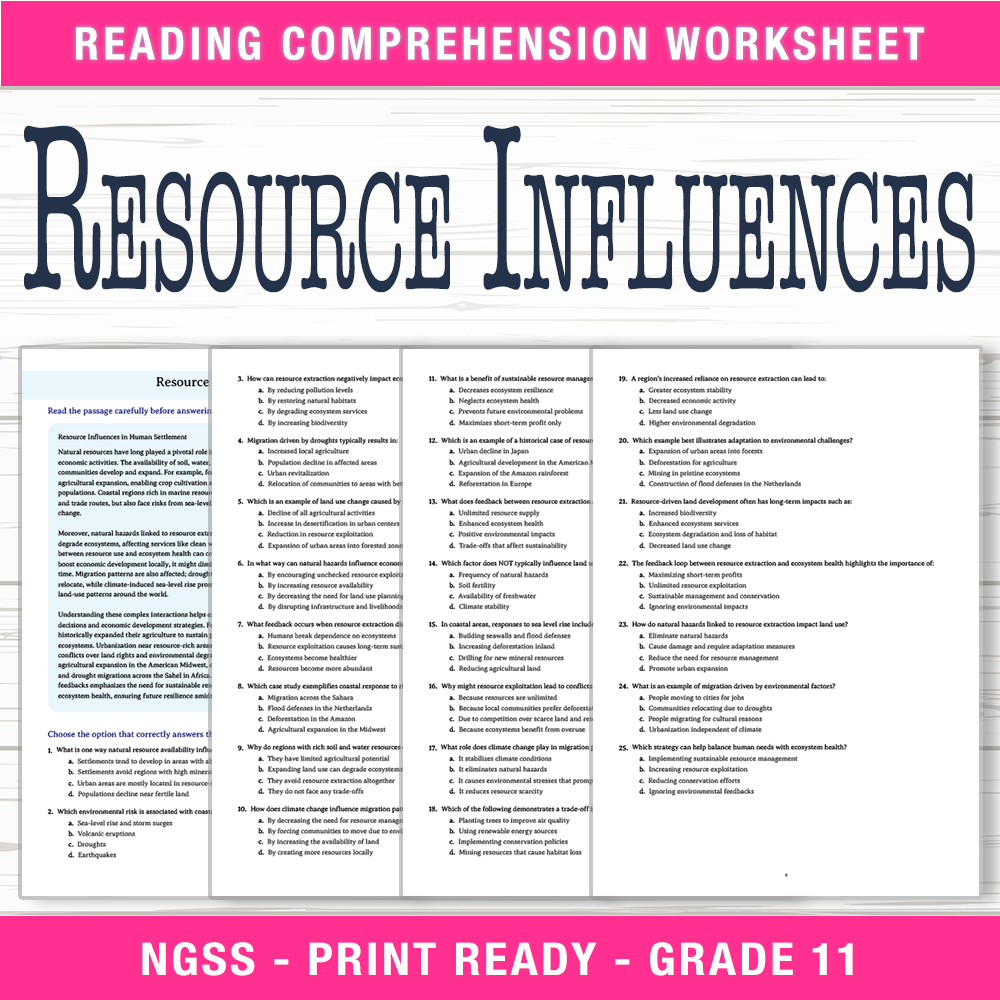
Grade 11 Science | Resource Influences Worksheet (PDF + Answer Key)
Created byRiverstone ClassroomLearning Objectives
- Analyze how natural resource availability, hazards, and climate change influence patterns of human settlement and land use.
- Evaluate examples of resource-driven land development, migration, and coastal responses to environmental challenges.
- Identify trade-offs between resource extraction and ecosystem services and understand sustainability implications.
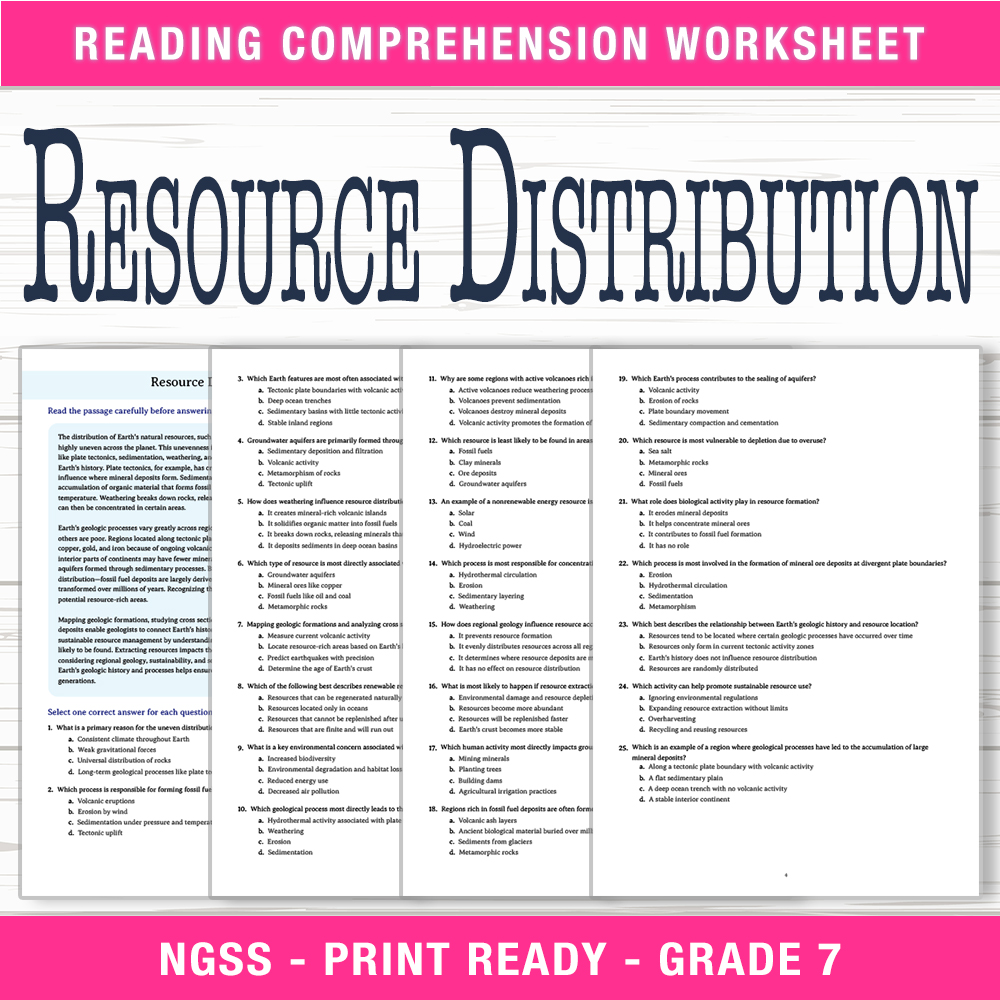
Grade 7 Science | Resource Distribution Worksheet (PDF + Answer Key)
Created byRiverstone ClassroomLearning Objectives
- Understand how geologic processes contribute to the uneven distribution of mineral, energy, and groundwater resources.
- Connect plate tectonics, sedimentation, weathering, and biological activity to the location of natural resources.
- Analyze case studies involving geologic maps and cross sections to identify resource deposits.
Browse more categories
About Science Worksheets
Find Science worksheets spanning core skills, practice, and review. All 42,685 resources are instant PDF downloads for the classroom or home.
Every worksheet on MyTeachingSheets is created by independent teacher-authors and reviewed before publication. All resources download as printable PDFs for classroom, homework, or at-home practice, and many include answer keys. Preview any worksheet free before buying.