
Grade 6 Science Worksheets
5,997 worksheets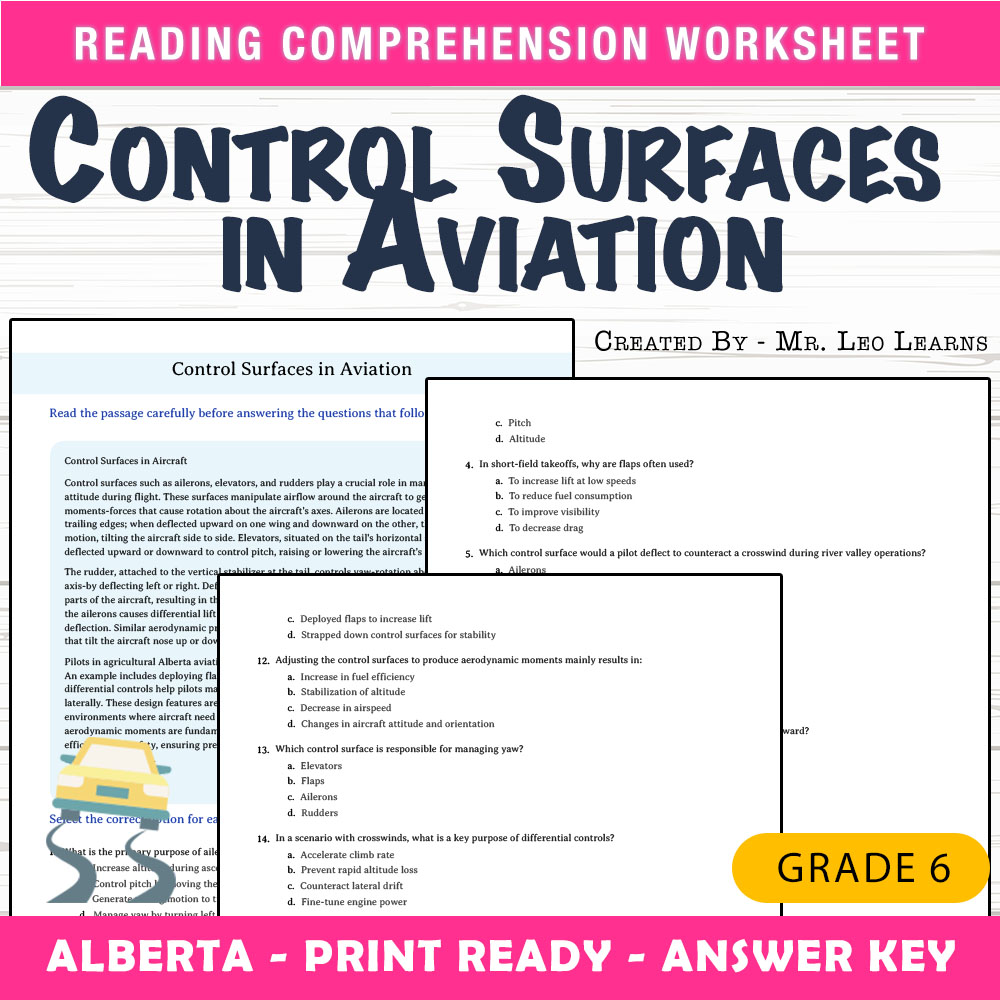
Grade 6 Science — Control Surfaces in Aviation Worksheet MCQ Paper
 Created byThe Resource Hub
Learning Objectives
- Understand the function of control surfaces such as ailerons, elevators, and rudders.
- Explain how deflection of control surfaces alters airflow to produce aircraft movements.
- Describe how aerodynamic moments create rolling, pitching, and yawing motions.
Also included in: Grade 6 Science | Air and Aerodynamics UNIT Worksheet Bundle (Alberta Framework) +1 more
Instant download
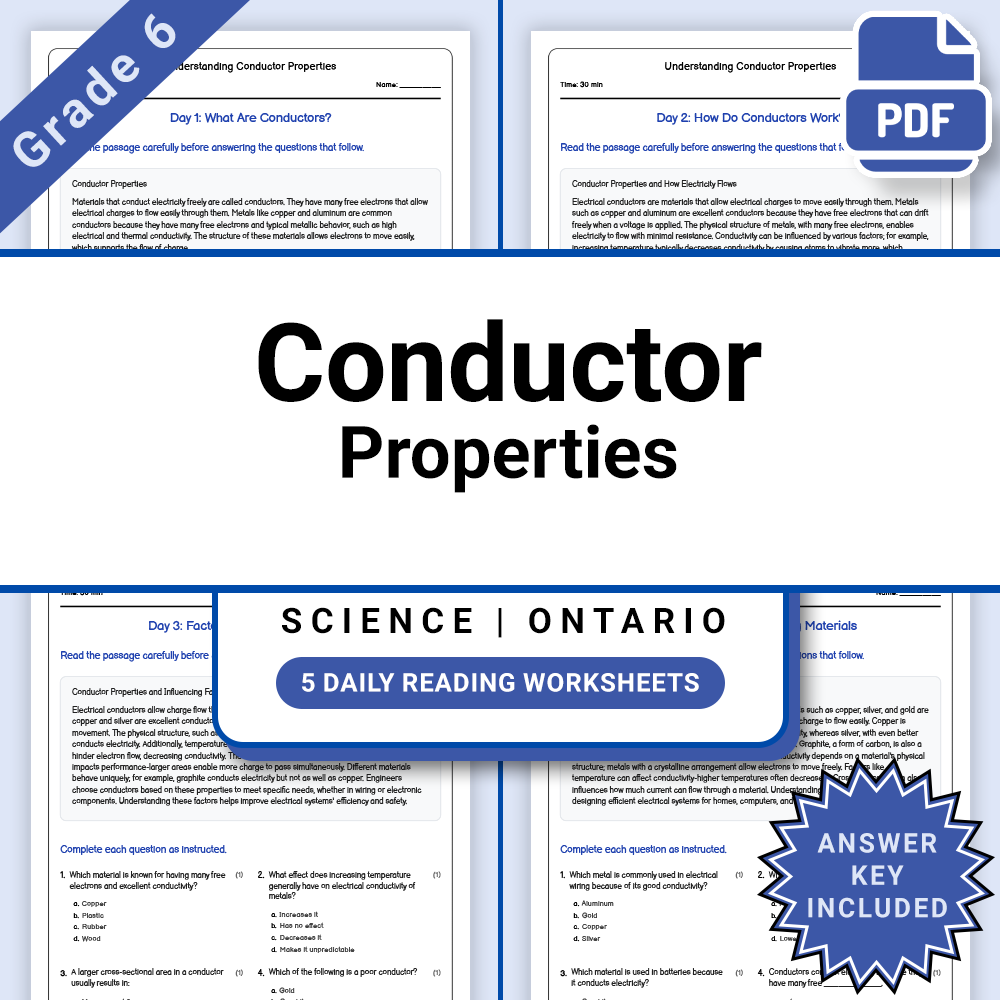
Grade 6 Science – Conductor Properties Daily Reading Worksheet with Answer Key
JCreated byJ.S SheetsLearning Objectives
- Understand key concepts related to Science
- Apply knowledge through practice questions
- Demonstrate comprehension of the material
Also included in: Grade 6 Science Lesson Group – Circuits and Energy Ontario Framework +1 more
Instant download
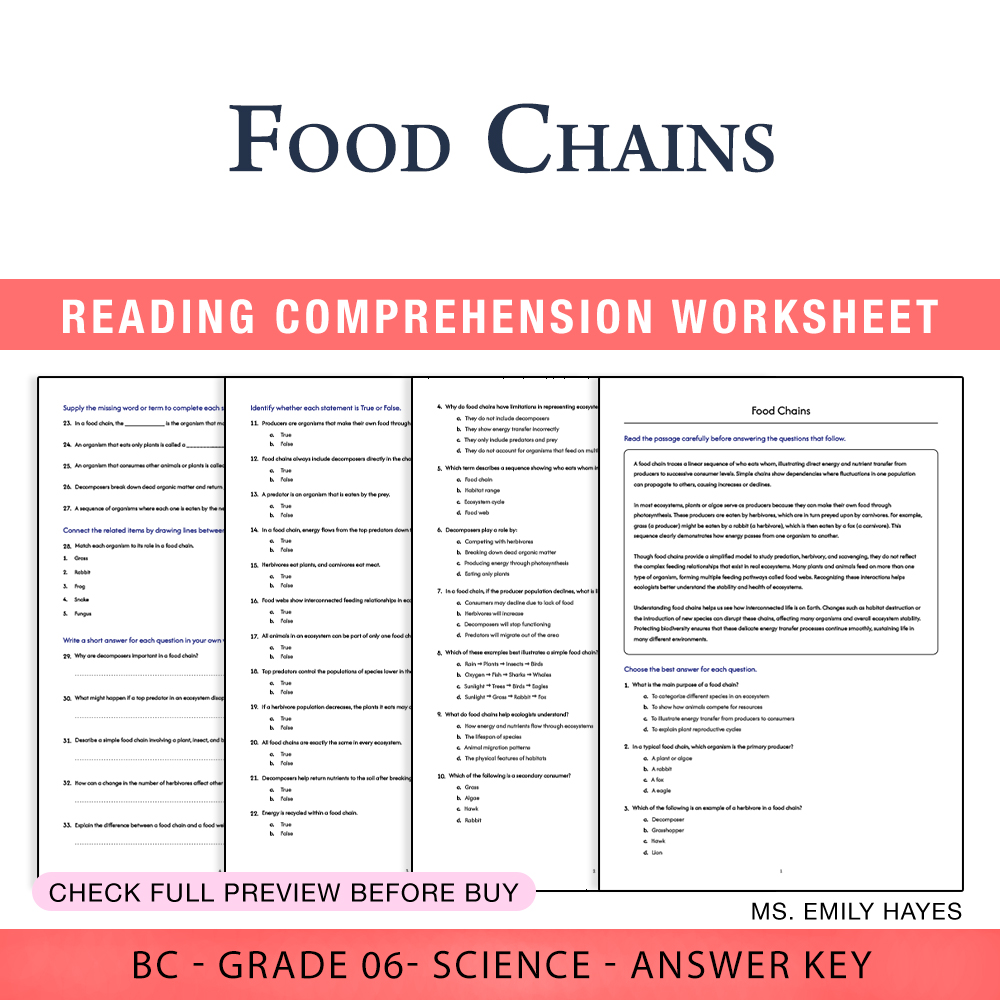
6th Grade Science | Food Chains Worksheet (PDF+ Answer Key)
 Created byCopper Leaf Classroom
Learning Objectives
- Understand the concept of a food chain and how energy flows from producer to consumer.
- Identify the roles of producers, consumers, and decomposers in an ecosystem.
- Illustrate and explain examples of simple food chains in different habitats.
Also included in: Grade 6 Science BC | Ecosystems and Human Impact Unit (PDF + Answer Keys) +1 more
Instant download
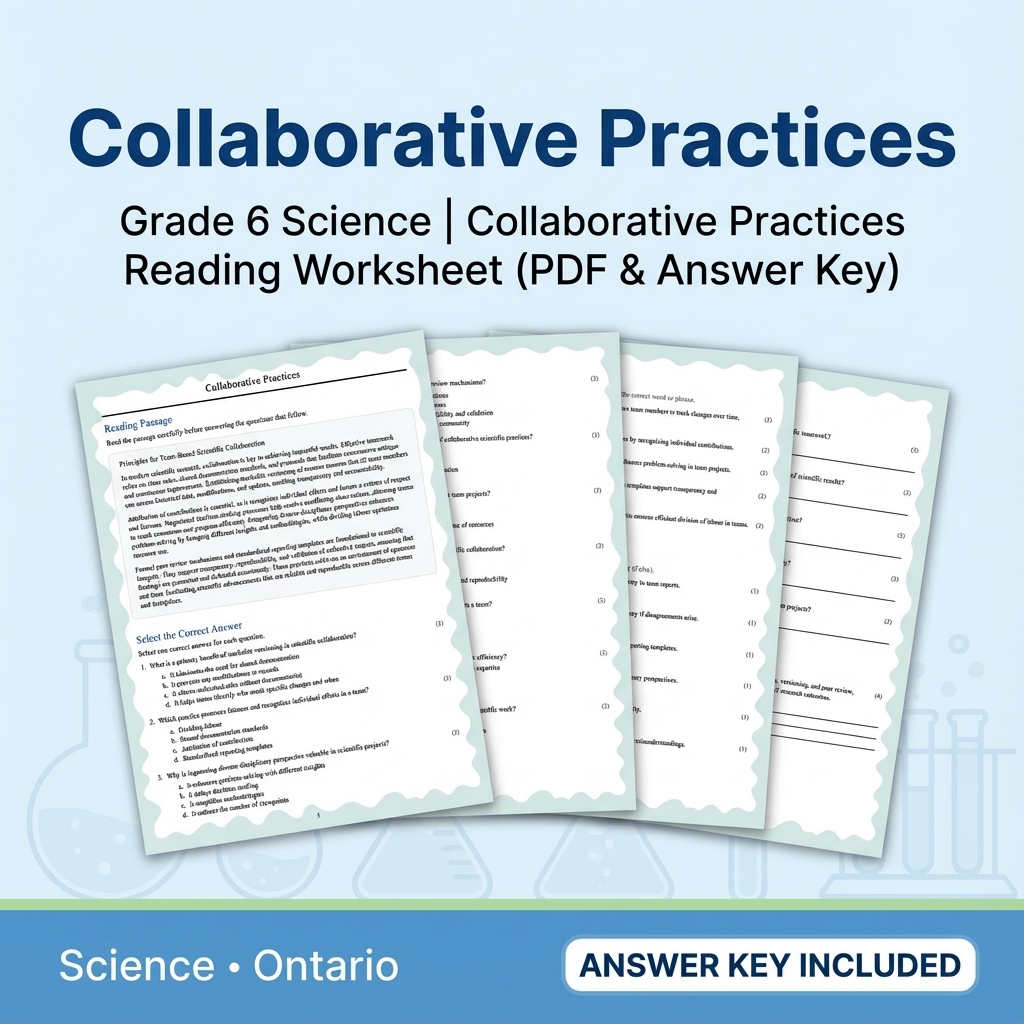
Grade 6 Science | Collaborative Practices Reading Worksheet (PDF & Answer Key)
JCreated byJ.S SheetsLearning Objectives
- Understand principles of team-based organization and communication in scientific contexts.
- Recognize the importance of versioning, attribution, and standardized reporting to enhance transparency.
- Identify methods for integrating diverse perspectives and resolving conflicts in collaborative projects.
Also included in: Grade 6 Science Unit | Inquiry, Data, & Ethical Practices Worksheet Pack +1 more
Instant download

Grade 6 Science | Forces & Motion - Daily Reading Comprehension
 Created byCoral Reef Learning
Learning Objectives
- Identify different types of forces affecting motion
- Understand how unbalanced forces change an object's speed or direction
- Recognize situations involving balanced forces
Instant download

Biodiversity Solutions Worksheet Grade 6 Science NGSS Answer Key
 Created byNorthstar Worksheets
Learning Objectives
- Compare conservation strategies, habitat restoration, protected areas, and invasive species management as solutions for maintaining biodiversity.
- Explain how ecological trade-offs can affect species persistence and ecosystem services such as pollination, water purification, and nutrient cycling.
- Use case studies to evaluate which biodiversity solutions may work best under different environmental pressures.
Also included in: Grade 6 Ecosystems Lesson Bundle | NGSS Science: Species, Energy & Biodiversity +1 more
Instant download
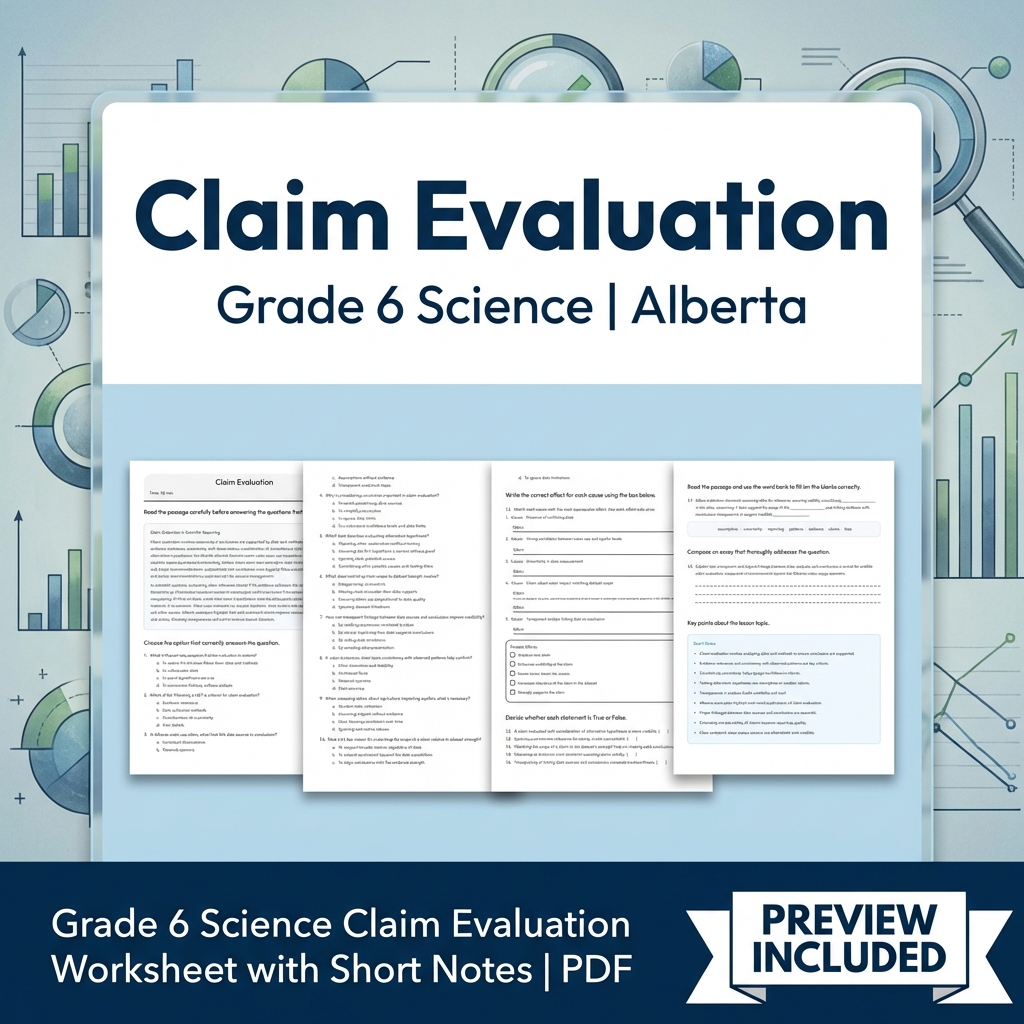
Grade 6 Science Claim Evaluation Worksheet with Short Notes | PDF
 Created byMeadowlark Worksheets
Learning Objectives
- Understand criteria for assessing whether conclusions logically follow from data and methods.
- Evaluate evidence relevance, consistency with observed patterns, and consideration of uncertainty.
- Apply principles to real-world examples, such as Alberta agricultural water use claims.
Also included in: Grade 6 Science | Evidence & Investigation Unit Worksheet Bundle +1 more
Instant download
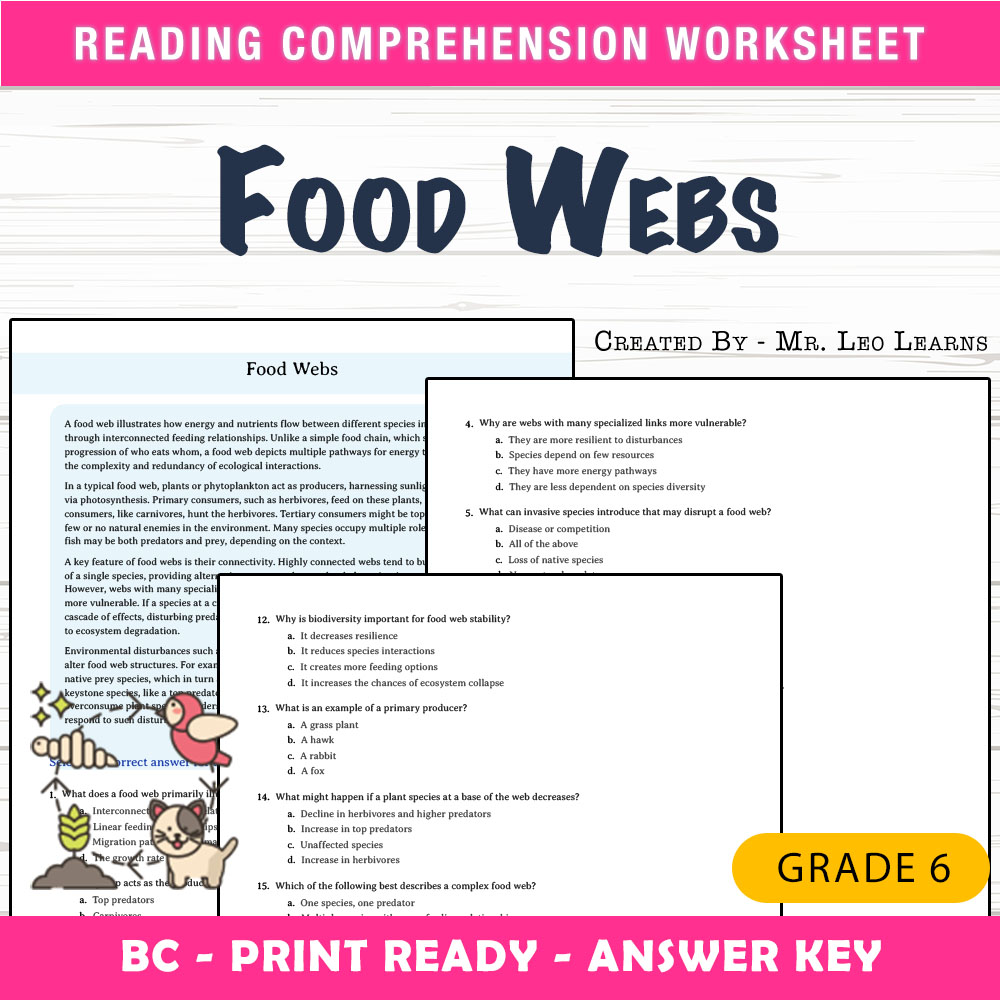
Grade 6 Science — Food Webs Worksheet MCQ Paper for Mastery
Created byThe Resource HubLearning Objectives
- Understand the components of a food web and how species are interconnected.
- Identify the roles of producers, consumers, and predators in an ecosystem.
- Explain how changes in one species can affect the entire food web.
Also included in: Grade 6 Science Ecosystems & Interdependence Worksheet Bundle – BC Curriculum +1 more
Instant download

Scientific Inquiry Worksheet for Grade 6 | Standards-Aligned Science Practice
JCreated byJ.S SheetsLearning Objectives
- Understand the key components of scientific inquiry and how observations are used to form questions.
- Learn the importance of evidence and logical reasoning in developing scientific explanations.
- Recognize measurement and observation terms used in describing natural phenomena.
Also included in: Grade 6 Scientific Inquiry Evidence Reasoning Science Lesson Bundle +1 more
Instant download
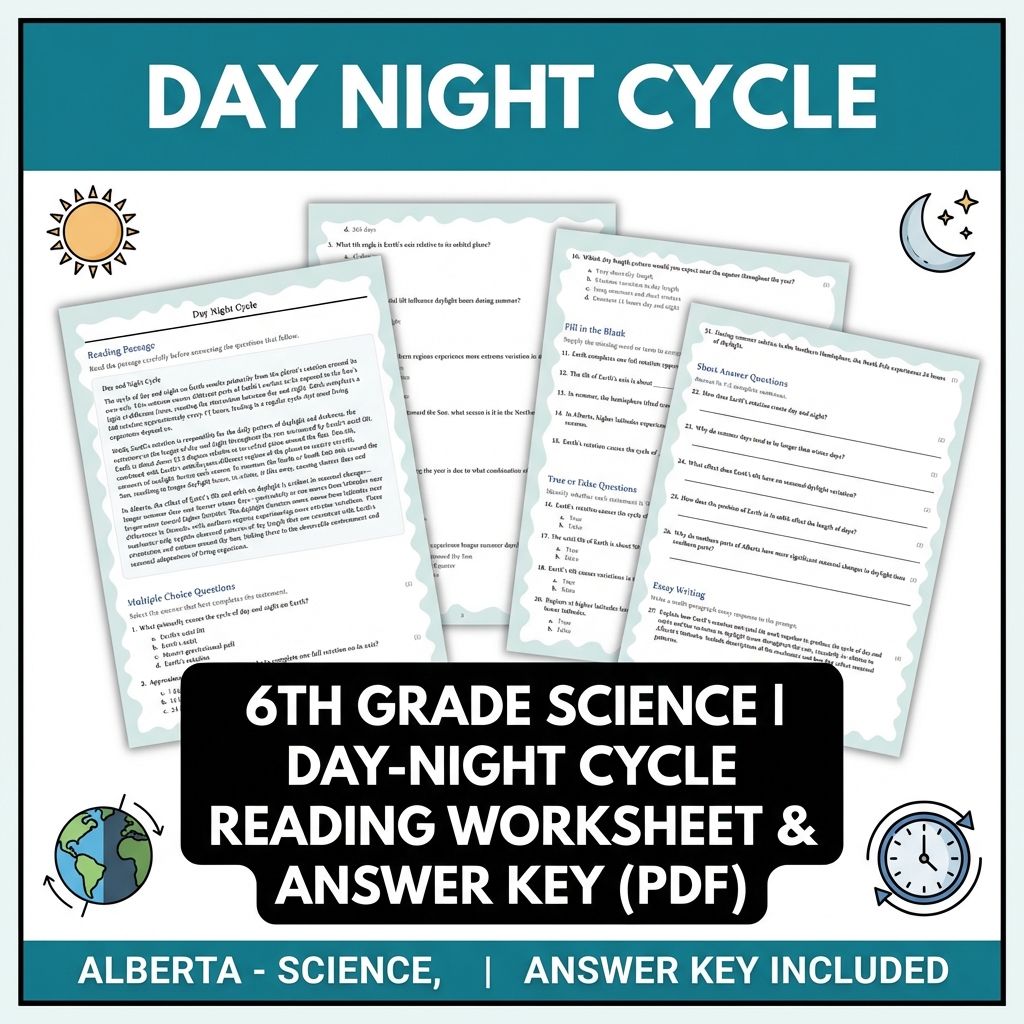
6th Grade Science | Day-Night Cycle Reading Worksheet & Answer Key (PDF)
JCreated byJ.S SheetsLearning Objectives
- Describe the mechanics of Earth's rotation that create day and night.
- Explain how axial tilt and Earth's orbit affect daylight duration throughout the year.
- Relate changes in day length to Earth's position and orientation relative to the Sun.
Also included in: Grade 6 Science | Celestial Motion & Sky Observation Worksheets Bundle +1 more
Instant download
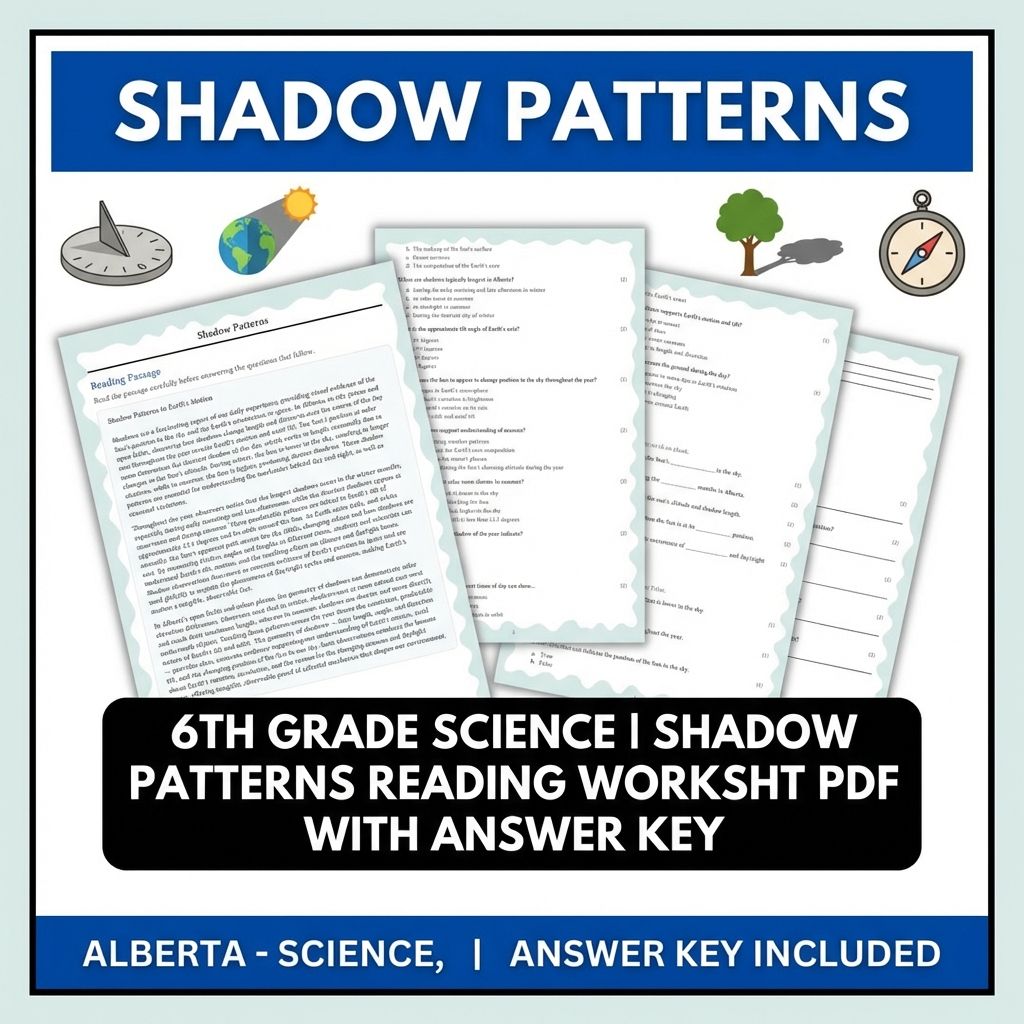
6th Grade Science | Shadow Patterns Reading Worksheet PDF with Answer Key
JCreated byJ.S SheetsLearning Objectives
- Understand how daily and seasonal changes in the Sun's angle affect shadow length and direction.
- Identify patterns in shadow noon, longest, and shortest shadows throughout the year.
- Explain how Earth's motion and axial tilt influence shadow geometry.
Also included in: Grade 6 Science | Celestial Motion & Sky Observation Worksheets Bundle +1 more
Instant download
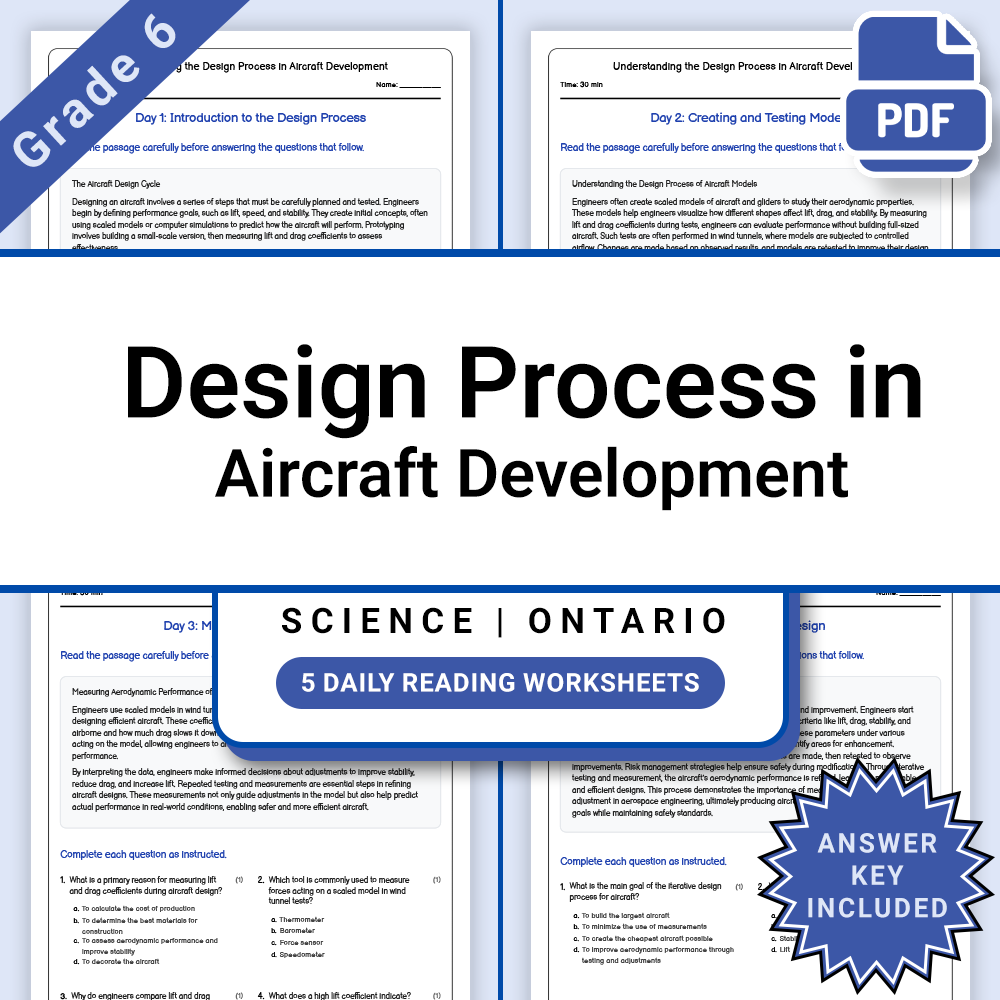
Grade 6 Science – the Design Process Daily Reading Worksheet + Answer Key
JCreated byJ.S SheetsLearning Objectives
- Identify and describe the steps involved in designing an aircraft.
- Understand the importance of planning and iterative testing in engineering.
- Learn how measurement and refinement improve aerodynamic performance.
Also included in: Grade 6 Science Flight Lesson Bundle | Ontario Framework +1 more
Instant download
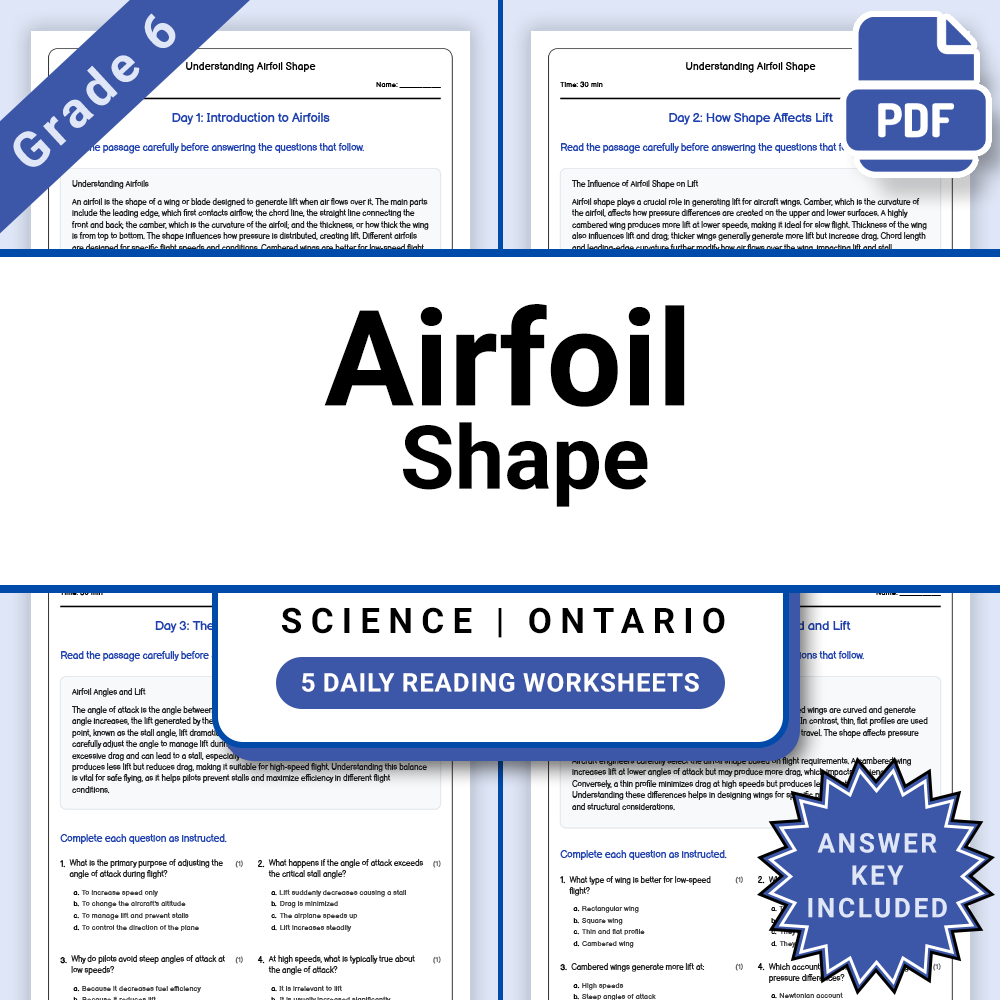
Grade 6 Science – Airfoil Shape Daily Reading Worksheet + Answer Key
JCreated byJ.S SheetsLearning Objectives
- Identify parts of an airfoil and understand their functions
- Describe how airfoil shape affects lift and pressure distribution
- Distinguish between different factors influencing airfoil performance
Also included in: Grade 6 Science Flight Lesson Bundle | Ontario Framework +1 more
Instant download
Grade 6 Science – Pressure Maps in Aerodynamics Daily Worksheet + Answer Key
JCreated byJ.S SheetsLearning Objectives
- Identify key pressure areas on an airfoil, such as stagnation points, suction peaks, and pressure minima.
- Understand how surface pressure distribution affects lift and stability.
- Recognize factors that shift pressure patterns, including camber and angle of attack.
Also included in: Grade 6 Science Flight Lesson Bundle | Ontario Framework +1 more
Instant download
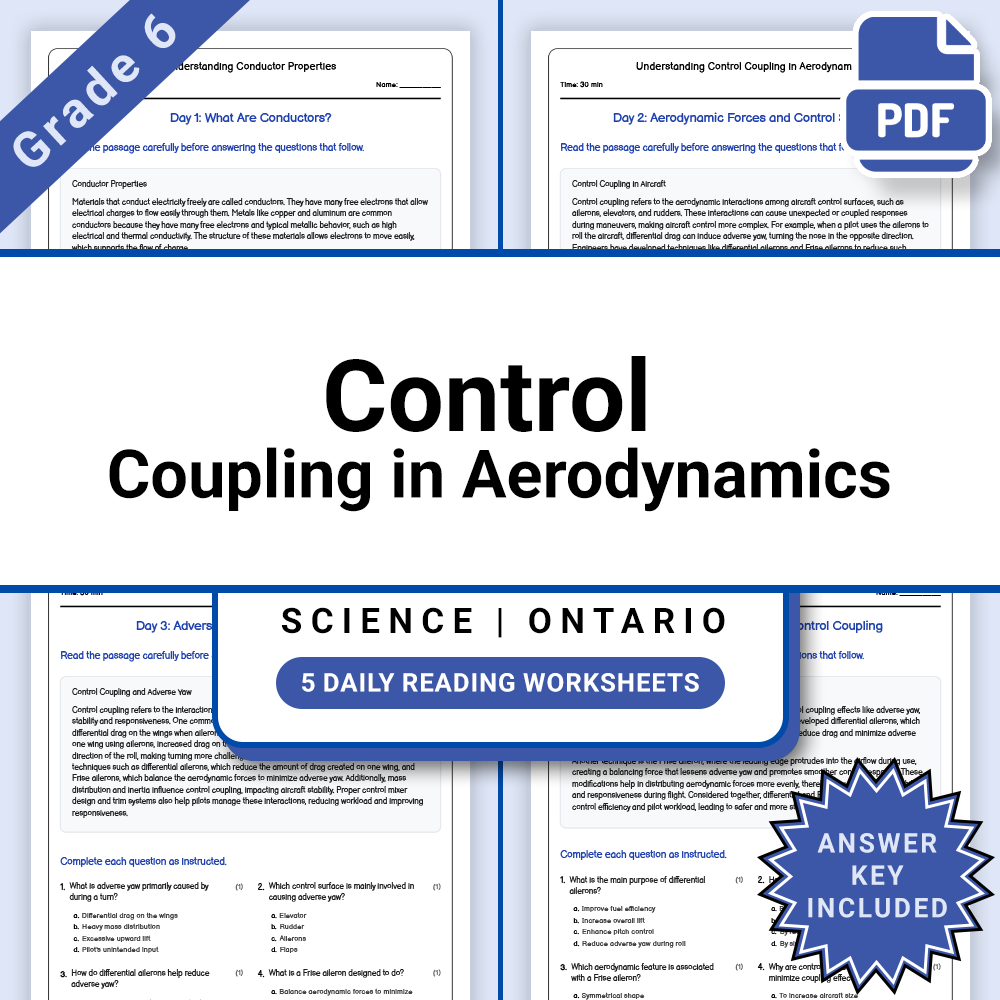
Grade 6 Science – Understanding Control Coupling Daily Worksheet + Answer Key
JCreated byJ.S SheetsLearning Objectives
- Understand key concepts related to Science
- Apply knowledge through practice questions
- Demonstrate comprehension of the material
Also included in: Grade 6 Science Flight Lesson Bundle | Ontario Framework +1 more
Instant download
Grade 6 Science – Angle Effects in Flight Daily Reading Worksheet + Answer Key
JCreated byJ.S SheetsLearning Objectives
- Identify different angles related to wings and airflow.
- Understand how changing angles affects lift and airflow.
- Describe the role of wing incidence and pilot input in flight performance.
Also included in: Grade 6 Science Flight Lesson Bundle | Ontario Framework +1 more
Instant download
Grade 6 Science – Control Surfaces Daily Reading Worksheet + Answer Key
JCreated byJ.S SheetsLearning Objectives
- Identify primary control surfaces such as ailerons, elevators, rudder, and flaps.
- Explain how each control surface affects roll, pitch, and yaw movements.
- Describe how deflections in control surfaces change lift and moments.
Also included in: Grade 6 Science Flight Lesson Bundle | Ontario Framework +1 more
Instant download
Grade 6 Science – Aircraft Stability Daily Reading Worksheet + Answer Key
JCreated byJ.S SheetsLearning Objectives
- Define static and dynamic stability in aircraft
- Identify how aircraft geometry affects different stability modes
- Explain the roles of center of gravity and aerodynamic center
Also included in: Grade 6 Science Flight Lesson Bundle | Ontario Framework +1 more
Instant download
Grade 6 Science – Optimization Daily Reading Worksheet + Answer Key
JCreated byJ.S SheetsLearning Objectives
- Define what optimization tradeoffs are in engineering design.
- Identify the factors involved in optimizing aerodynamic structures.
- Explain how tradeoffs impact performance, safety, and manufacturability.
Also included in: Grade 6 Science Flight Lesson Bundle | Ontario Framework +1 more
Instant download
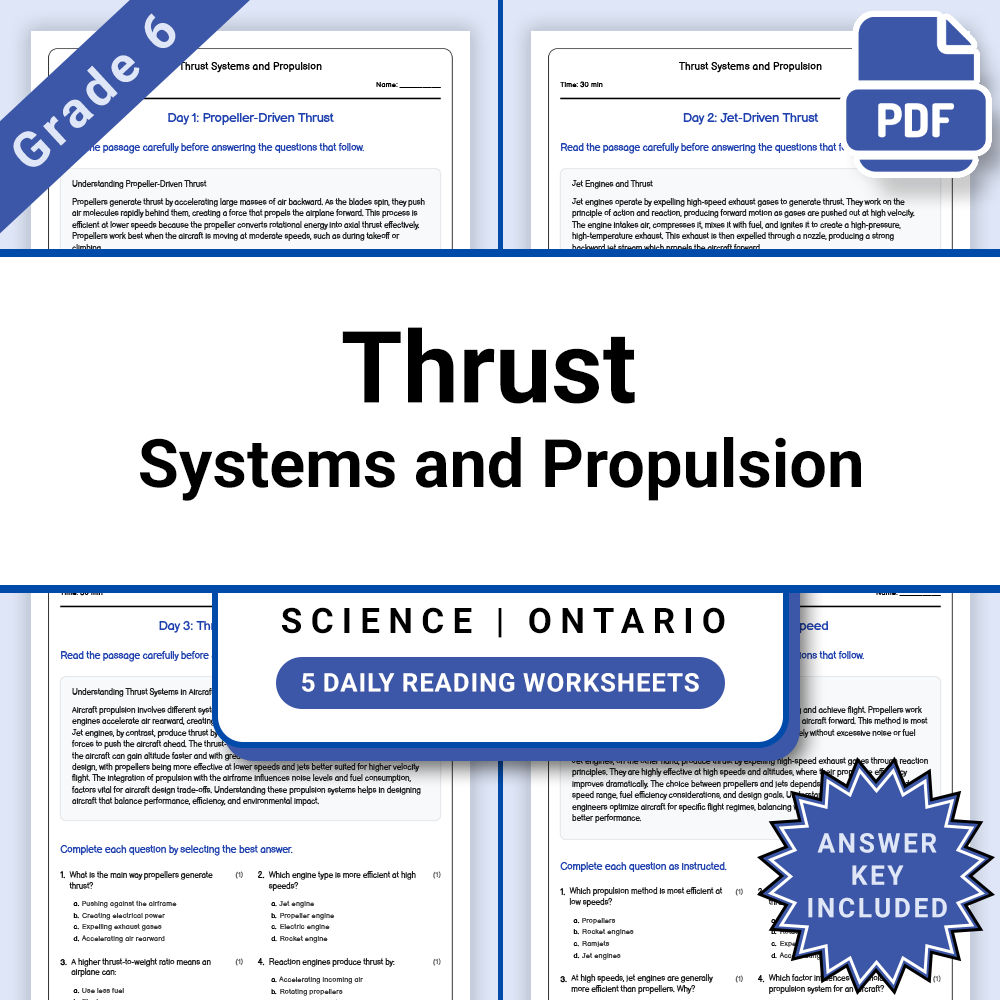
Grade 6 Science – Thrust Systems and Propulsion Daily Worksheet + Answer Key
JCreated byJ.S SheetsLearning Objectives
- Understand key concepts related to Science
- Apply knowledge through practice questions
- Demonstrate comprehension of the material
Also included in: Grade 6 Science Flight Lesson Bundle | Ontario Framework +1 more
Instant download
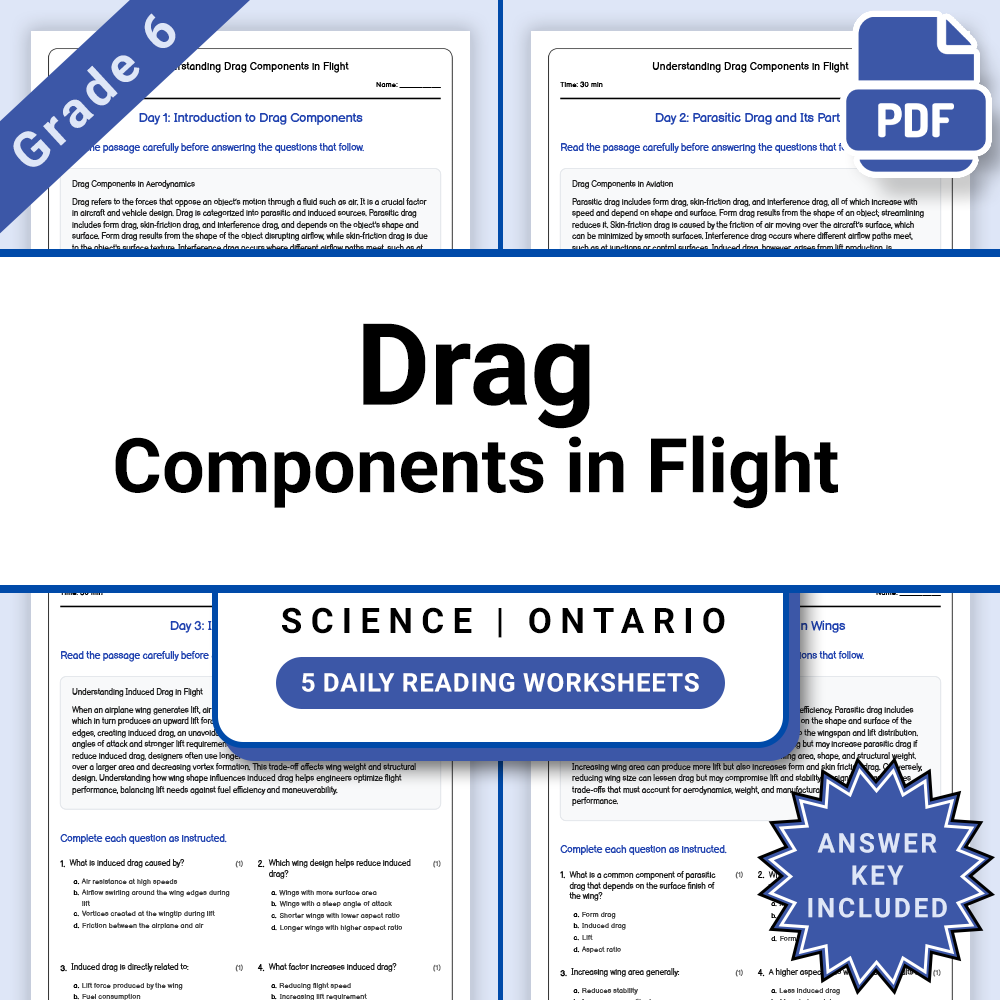
Grade 6 Science – Drag Components in Flight Daily Reading Worksheet + Answer Key
JCreated byJ.S SheetsLearning Objectives
- Understand key concepts related to Science
- Apply knowledge through practice questions
- Demonstrate comprehension of the material
Also included in: Grade 6 Science Flight Lesson Bundle | Ontario Framework +1 more
Instant download
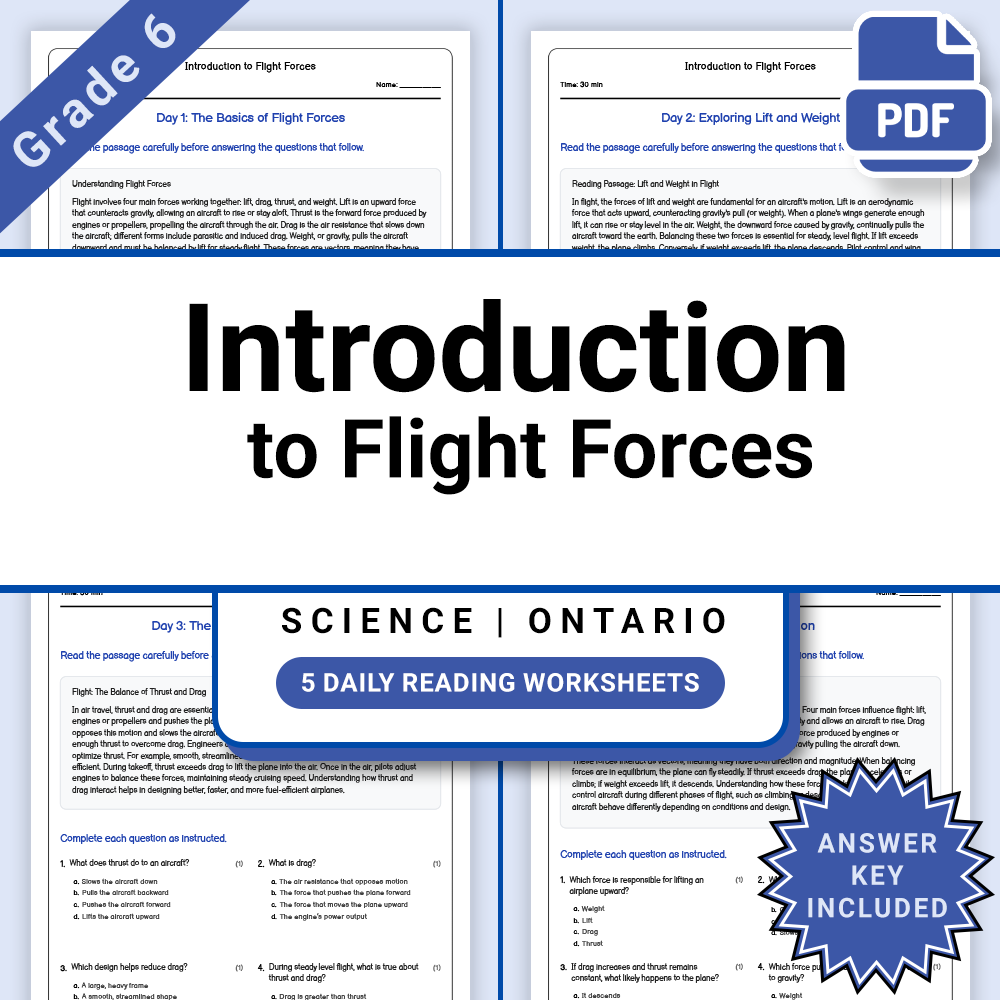
Grade 6 Science – Introduction to Flight Forces Reading Worksheet + Answer Key
JCreated byJ.S SheetsLearning Objectives
- Identify the four main aerodynamic forces: lift, drag, thrust, and weight.
- Understand how these forces interact to produce motion in flight.
- Explain the role of gravity as weight and propulsion as thrust.
Also included in: Grade 6 Science Flight Lesson Bundle | Ontario Framework +1 more
Instant download
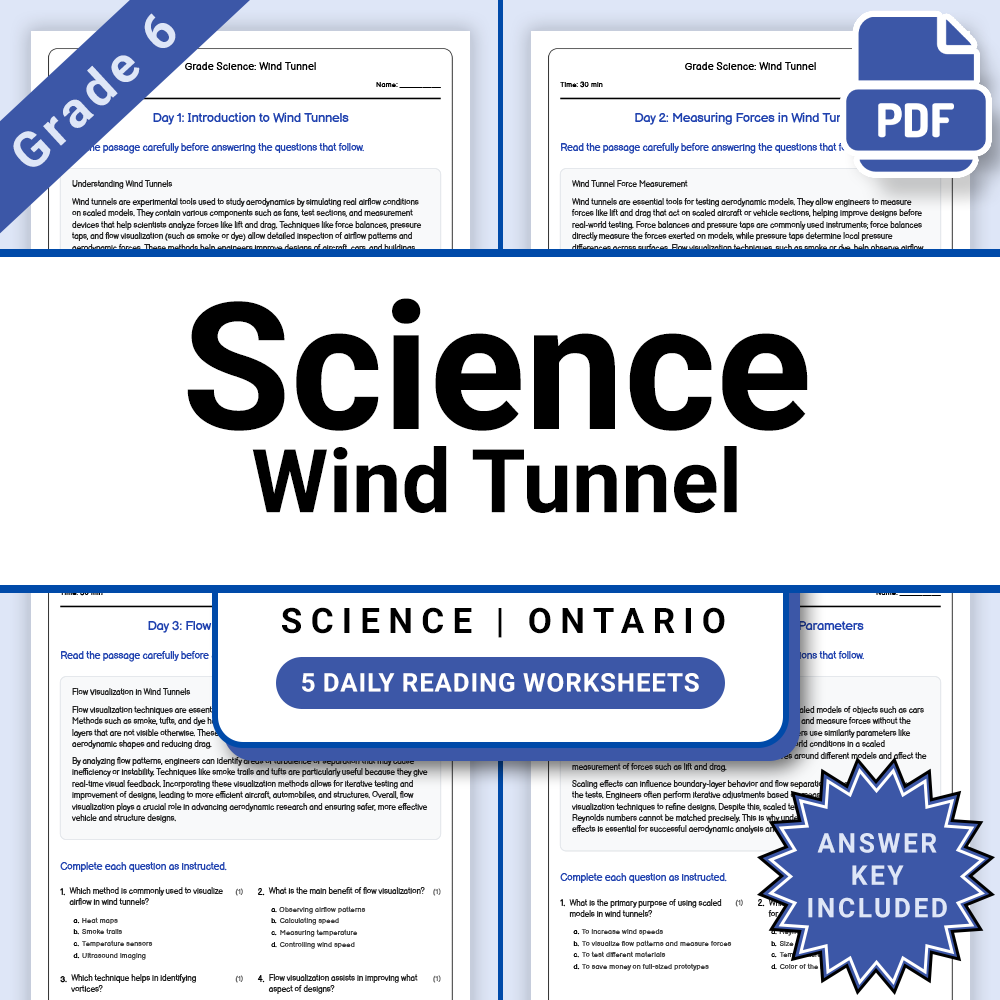
Grade 6 Science Wind Tunnel Daily Worksheet with Answer Key | Ontario Standards
JCreated byJ.S SheetsLearning Objectives
- Understand the purpose of wind tunnels in aerodynamics testing.
- Identify key components and methods used in wind tunneling.
- Learn how force balance, pressure taps, and flow visualization techniques contribute to aerodynamic measurements.
Also included in: Grade 6 Science Flight Lesson Bundle | Ontario Framework +1 more
Instant download
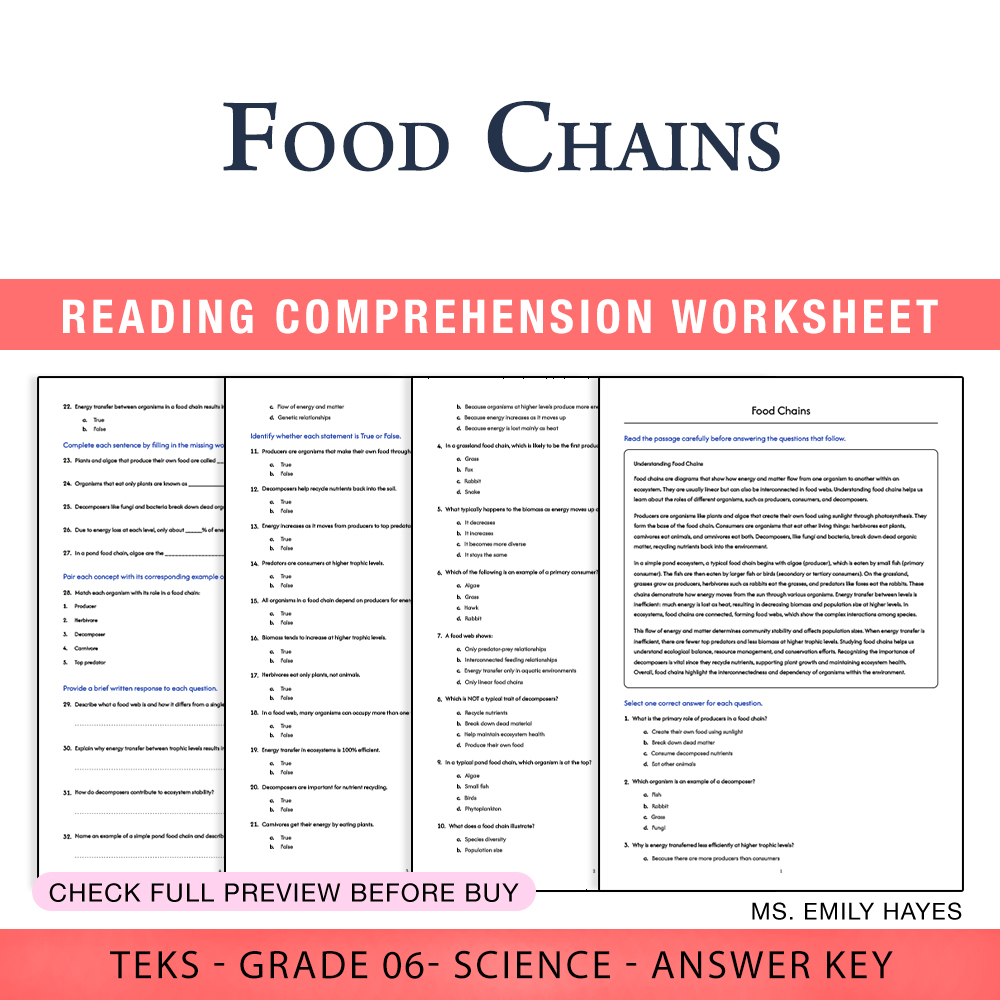
6th Grade Science | Food Chains Worksheet (PDF+ Answer Key)
Created byCopper Leaf ClassroomLearning Objectives
- Describe the roles of producers, consumers, and decomposers in food chains.
- Identify different trophic levels within a food chain.
- Explain energy transfer and energy loss between trophic levels.
Instant download

Grade 6 Science | Cell Evidence - Daily Reading Comprehension
Created byCoral Reef LearningLearning Objectives
- Understand the basic structure and features of cells through microscopy images.
- Identify different cell types and their specialized structures.
- Distinguish between single-celled and multicellular organisms based on cellular features.
Instant download

Flight Forces Worksheet | Grade 6 Science Activities
 Created byPrism Point Learning
Learning Objectives
- Describe how lift, thrust, drag, and weight affect motion through air
- Explain how balancing forces can lead to steady flight or controlled descent
- Use real-world examples (kites, aircraft, parachutes) to connect forces to motion
Also included in: Aerodynamics and Flight Design Lesson Bundle – Grade 6 Science Alberta
Instant download

Distillation Principles Worksheet | Grade 6 Science Review and Practice
Created byPrism Point LearningLearning Objectives
- Explain how distillation separates mixture components using boiling points and phase changes
- Distinguish between simple distillation and fractional distillation
- Describe how vapor formation and condensation help collect separated liquids
Also included in: Matter, Properties & Change Lesson Bundle — Grade 6 Science BC Framework +1 more
Instant download
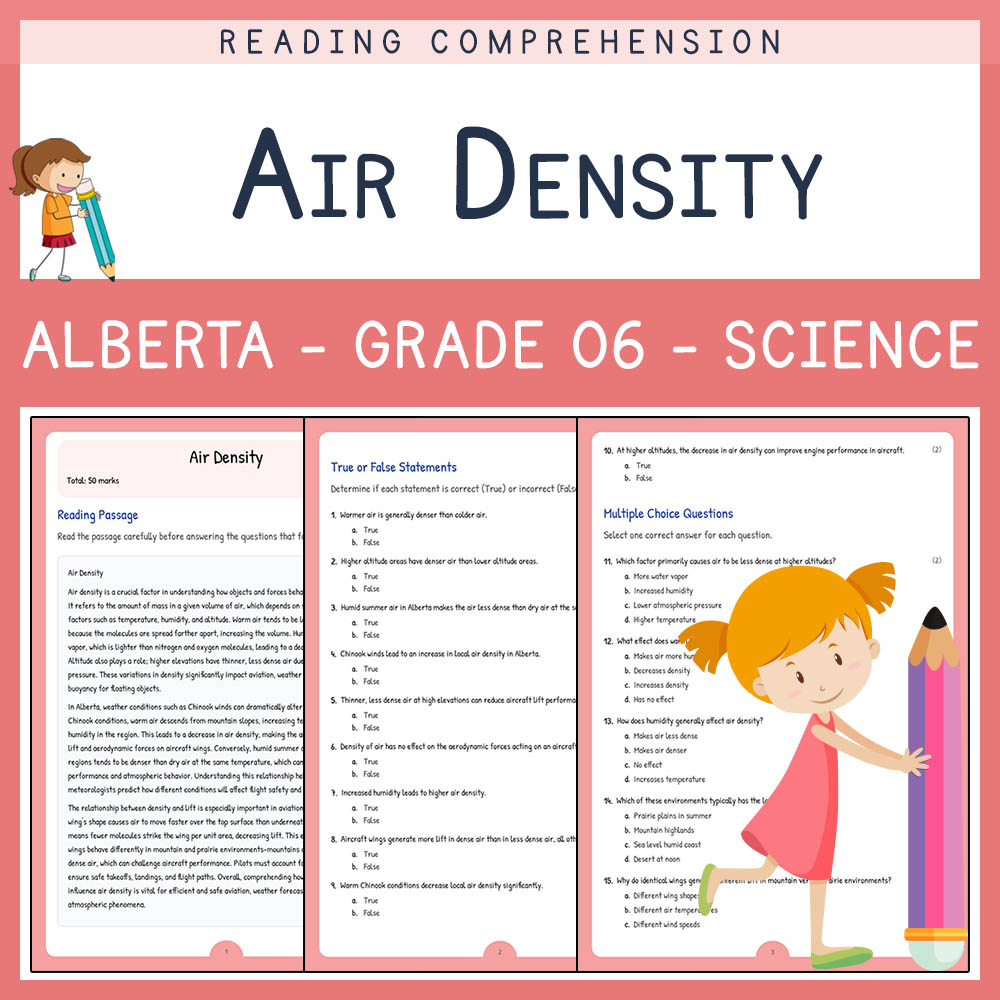
Grade 6 Science Assessment | Air Density Worksheet Elena | Alberta Standard
 Created byLumora Learning
Learning Objectives
- Understand how temperature, humidity, and altitude influence air density.
- Explain the effects of air density on buoyancy and aerodynamic forces.
- Recognize how environmental conditions affect lift generation in different environments.
Also included in: Grade 6 Science | Air and Aerodynamics Science Lesson Bundle | Alberta
Instant download
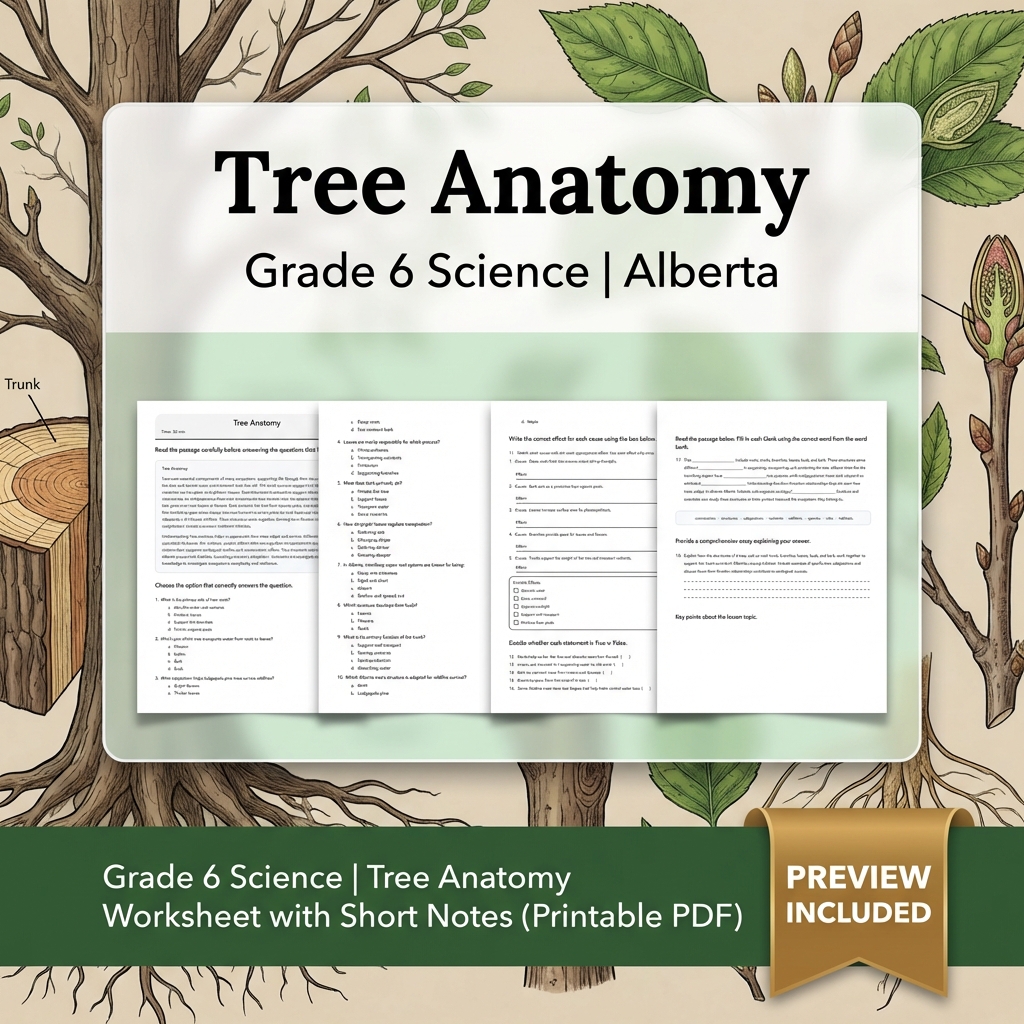
Grade 6 Science | Tree Anatomy Worksheet with Short Notes (Printable PDF)
Created byMeadowlark WorksheetsLearning Objectives
- Identify major structures of a tree and their functions.
- Understand how form–function relationships contribute to tree survival.
- Recognize adaptations of Alberta trees to their habitats.
Also included in: Grade 6 Science | Trees and Forests Unit Worksheet Bundle – Alberta Curriculum +1 more
Instant download
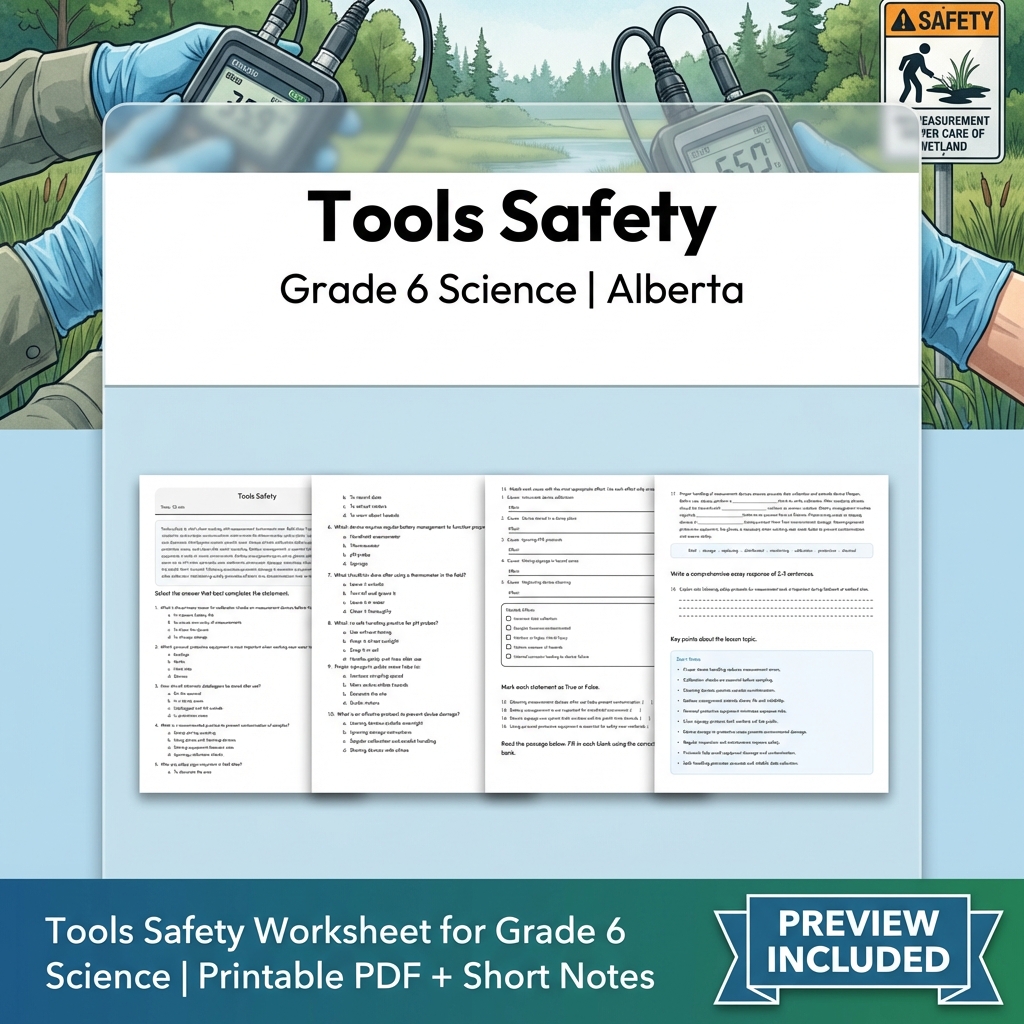
Tools Safety Worksheet for Grade 6 Science | Printable PDF + Short Notes
Created byMeadowlark WorksheetsLearning Objectives
- Understand proper handling and safety practices for measurement tools.
- Identify safe storage, cleaning, and calibration procedures for instruments.
- Recognize personal protective equipment and signage requirements in field work.
Also included in: Grade 6 Science | Evidence & Investigation Unit Worksheet Bundle +1 more
Instant download
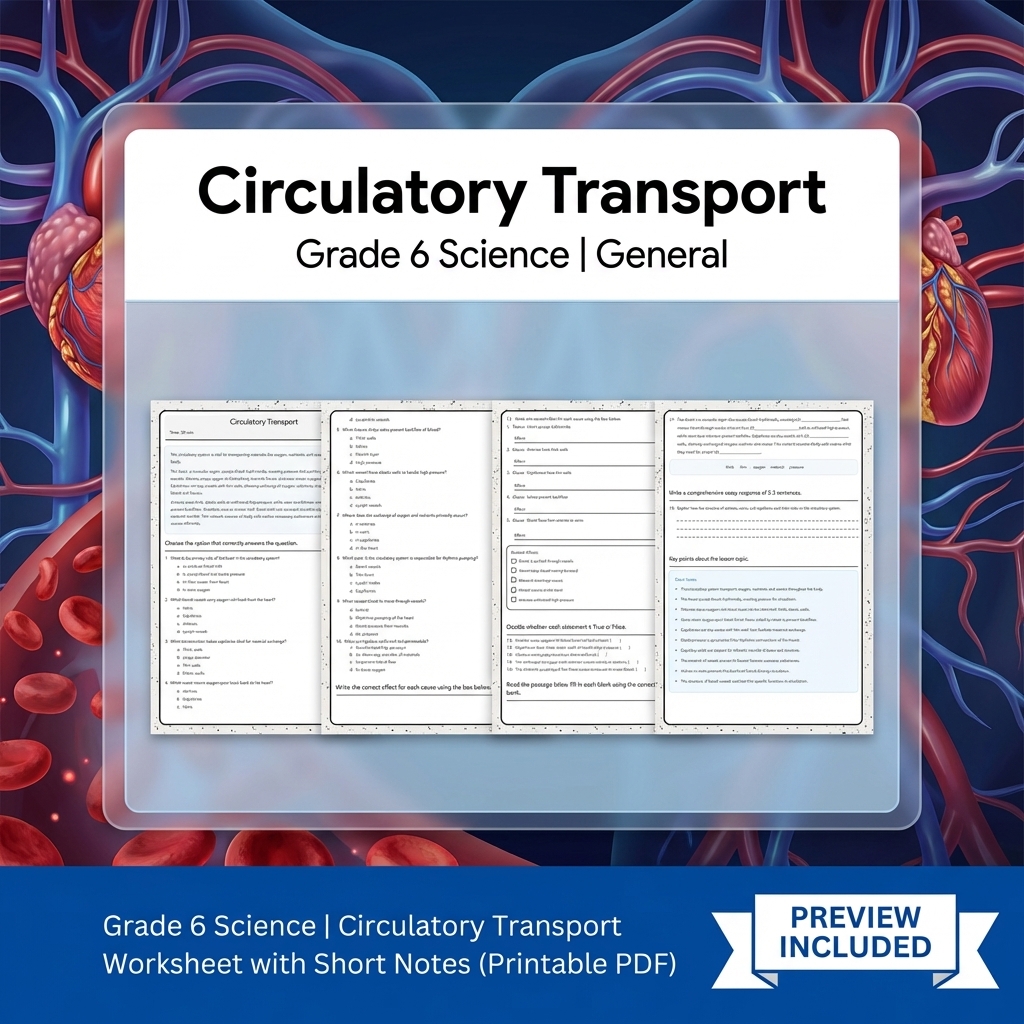
Grade 6 Science | Circulatory Transport Worksheet with Short Notes
Created byMeadowlark WorksheetsLearning Objectives
- Describe the structure and function of the heart in the circulatory system.
- Identify different blood vessels and their roles in transportation.
- Explain how blood pressure is generated and maintained.
Also included in: Grade 6 Science Lesson Group | Body Systems and Life Processes Worksheet Bundle +1 more
Instant download
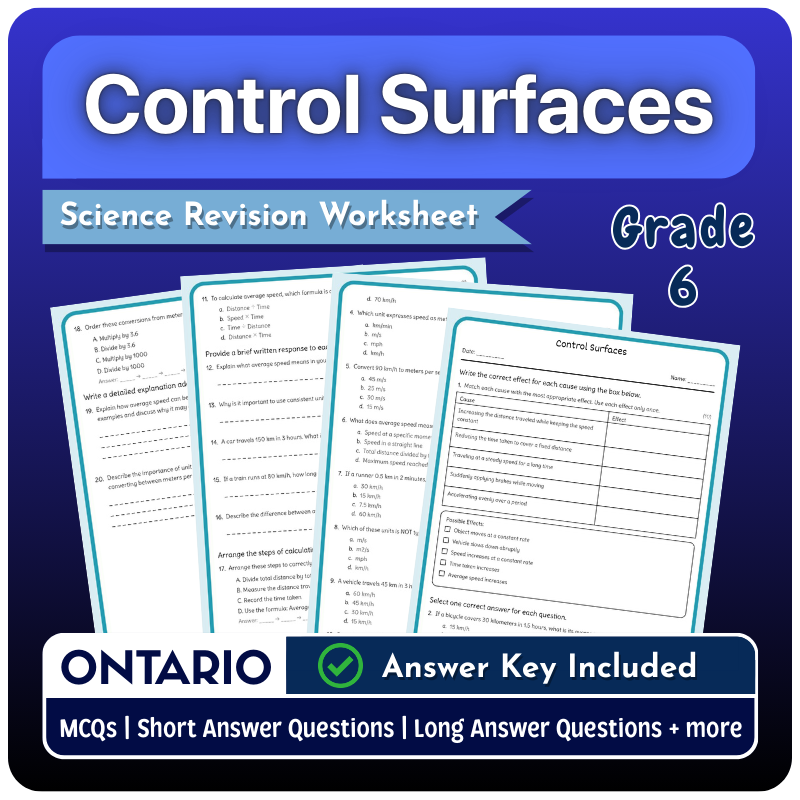
6th Grade Science | Control Surfaces Worksheet (Ontario) (PDF)
 Created byBright Mind Resources
Learning Objectives
- Identify primary and secondary control surfaces such as ailerons, elevators, rudder, and flaps.
- Explain how deflection of control surfaces affects aircraft roll, pitch, and yaw.
- Understand the concepts of control authority, aerodynamic stability, and responsiveness during maneuvers.
Instant download
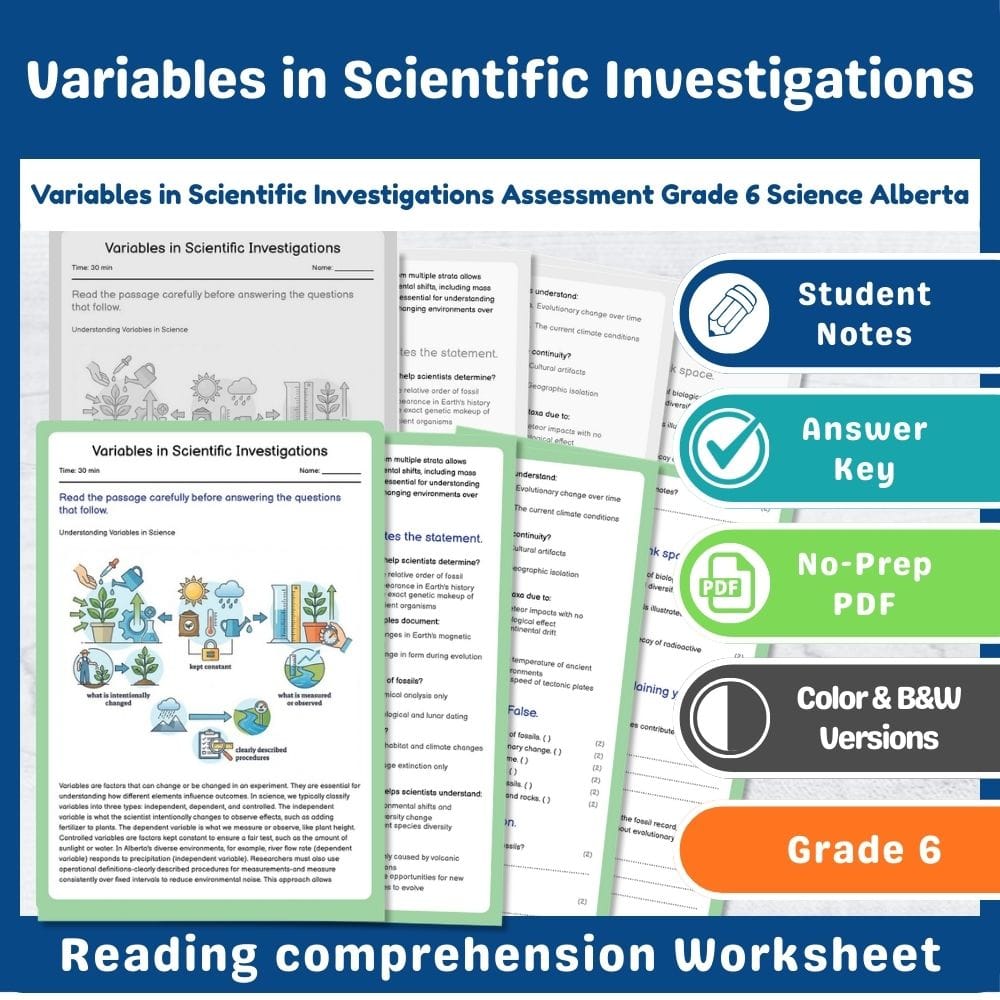
Variables in Scientific Investigations Assessment Grade 6 Science Alberta
Created byPrism Point LearningLearning Objectives
- Understand the types of variables used in scientific experiments and their roles.
- Identify independent, dependent, and controlled variables in Alberta-based examples.
- Explain the importance of operational definitions and measurement consistency.
Also included in: Lesson Grade 6 Science Mini Bundle | Evidence and Investigation
Instant download
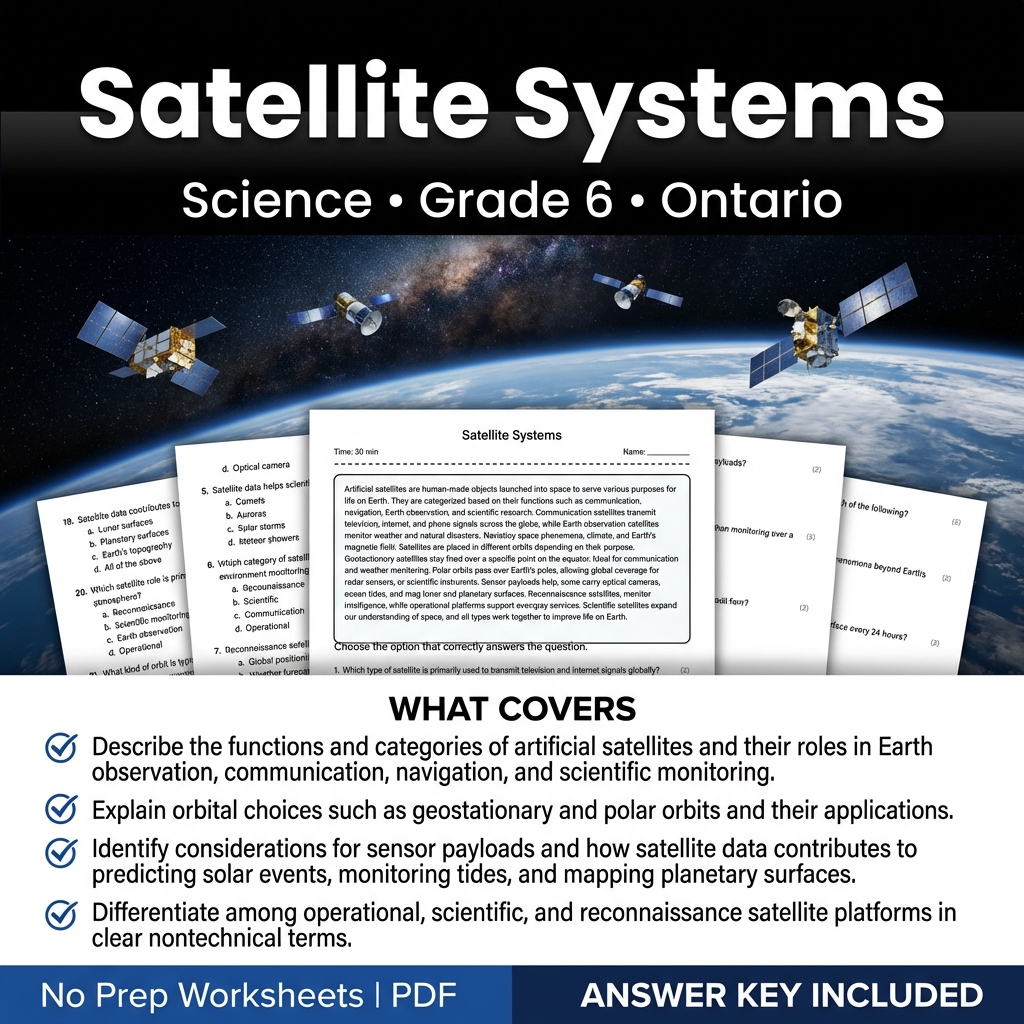
Grade 6 Science Worksheet on Satellite Systems | Ontario Standards
Created byCoral Reef LearningLearning Objectives
- Describe the functions and categories of artificial satellites and their roles in Earth observation, communication, navigation, and scientific monitoring.
- Explain orbital choices such as geostationary and polar orbits and their applications.
- Identify considerations for sensor payloads and how satellite data contributes to predicting solar events, monitoring tides, and mapping planetary surfaces.
Instant download
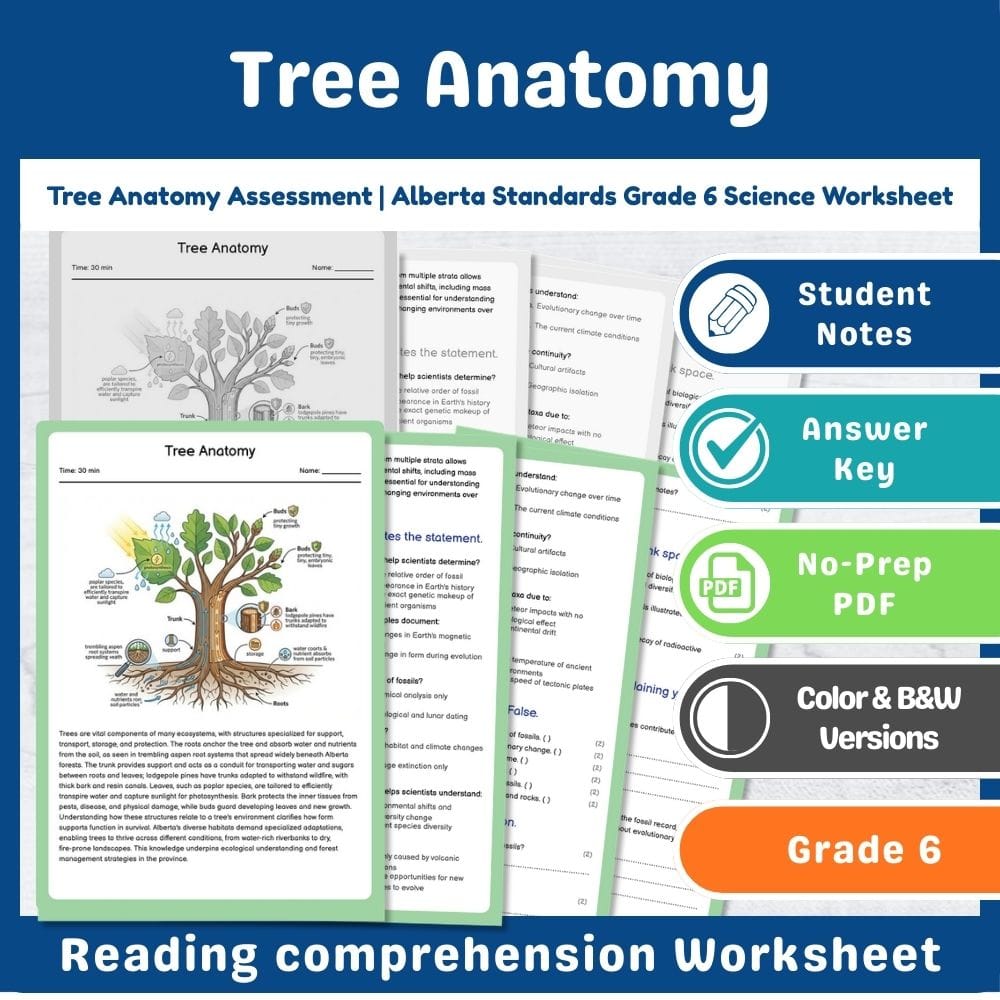
Tree Anatomy Assessment | Alberta Standards-Aligned Grade 6 Science Worksheet
Created byPrism Point LearningLearning Objectives
- Identify the major structures of a tree and their functions.
- Describe how form–function relationships contribute to tree survival in different habitats.
- Explain examples of tree structures from Alberta ecosystems such as roots, trunks, and leaves.
Also included in: Lesson Grade 6 Science Mini Bundle Trees and Forests Alberta Standards
Instant download
Grade 6 Science – Levels Of Life Daily Reading Worksheet with Answer Key
JCreated byJ.S SheetsLearning Objectives
- Understand the hierarchy of biological levels from cells to organisms.
- Identify the characteristics of cells, tissues, organs, and organ systems.
- Explain how these levels work together to support life.
Also included in: Grade 6 Science Lesson Group | Body Systems and Adaptations Bundle +1 more
Instant download
Grade 6 Science – Measuring Circuits Daily Reading Worksheet with Answer Key
JCreated byJ.S SheetsLearning Objectives
- Understand the purpose of measurement tools in electrical circuits.
- Identify how current and voltage are measured in circuits.
- Interpret readings from multimeters and other instruments.
Also included in: Grade 6 Science Lesson Group – Circuits and Energy Ontario Framework +1 more
Instant download
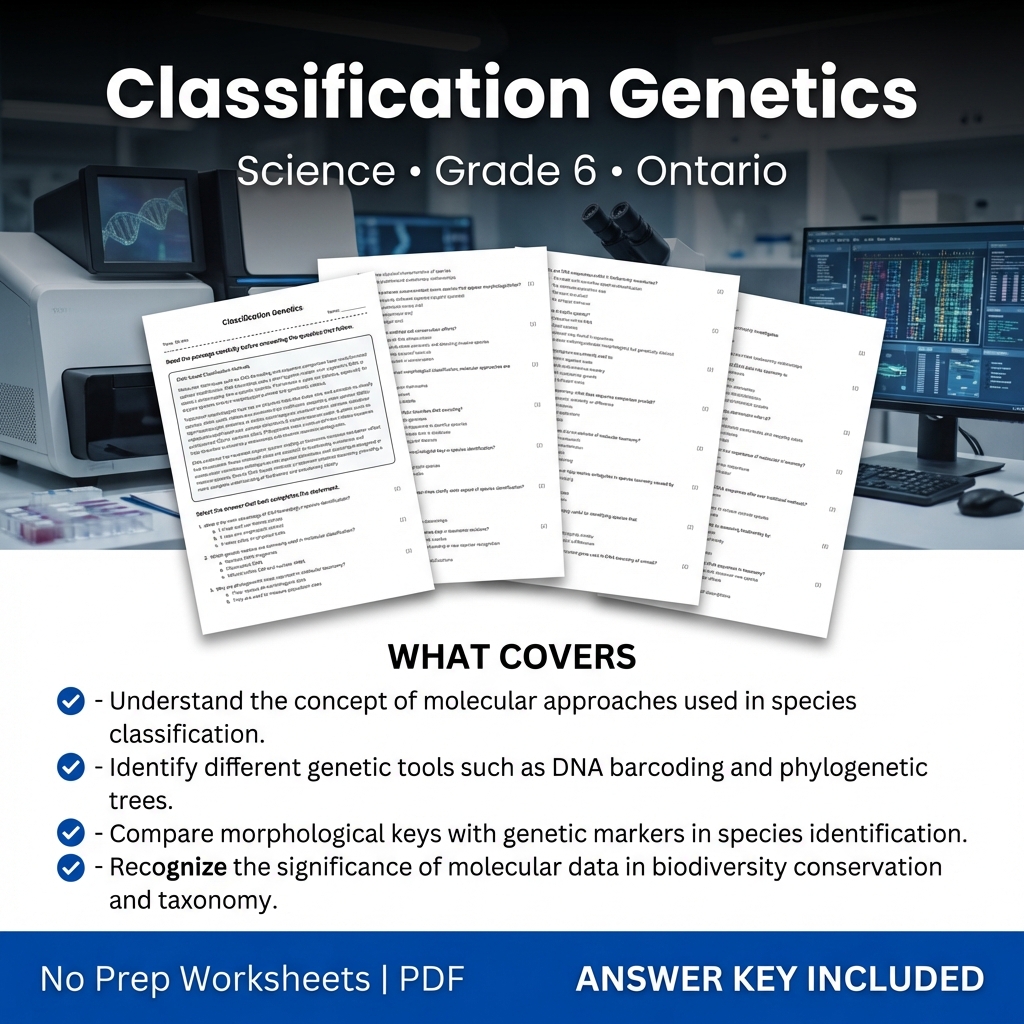
Grade 6 Science Worksheet on Classification Genetics | Ontario Standards
Created byCoral Reef LearningLearning Objectives
- Understand the concept of molecular approaches used in species classification.
- Identify different genetic tools such as DNA barcoding and phylogenetic trees.
- Compare morphological keys with genetic markers in species identification.
Instant download

Grade 6 Science Stewardship Strategies Worksheet with Short Notes PDF
Created byMeadowlark WorksheetsLearning Objectives
- Understand key stewardship strategies used in biodiversity conservation.
- Identify different approaches such as habitat restoration and community monitoring.
- Evaluate trade-offs among conservation methods and criteria for prioritization.
Also included in: Grade 6 Science Lesson Bundle for Ontario | Ecosystems & Genetics +1 more
Instant download

Grade 6 Science | Keystone Species Worksheet with Short Notes (Printable PDF)
Created byMeadowlark WorksheetsLearning Objectives
- Understand what keystone species are and their role in ecosystems.
- Identify examples of keystone species like beavers and top predators.
- Analyze the cascading effects caused by keystone species on biodiversity.
Also included in: Grade 6 Science Lesson Bundle for Ontario | Ecosystems & Genetics +1 more
Instant download

Grade 6 Science | Trait Heritability Worksheet with Short Notes (Printable PDF)
Created byMeadowlark WorksheetsLearning Objectives
- Understand the concept of heritability and its role in genetic variation.
- Distinguish between heritable and environmental influences on traits.
- Describe basic mechanisms of inheritance and natural selection in populations.
Also included in: Grade 6 Science Lesson Bundle for Ontario | Ecosystems & Genetics +1 more
Instant download

Grade 6 Science | Adaptation Basics Worksheet with Short Notes (Printable PDF)
Created byMeadowlark WorksheetsLearning Objectives
- Understand the different types of biological adaptations: structural, behavioral, and physiological.
- Identify examples of adaptations in regional species, such as beak variation, coat color change, and hibernation.
- Explain how adaptations influence survival and reproductive success within specific niches.
Also included in: Grade 6 Science Lesson Bundle for Ontario | Ecosystems & Genetics +1 more
Instant download
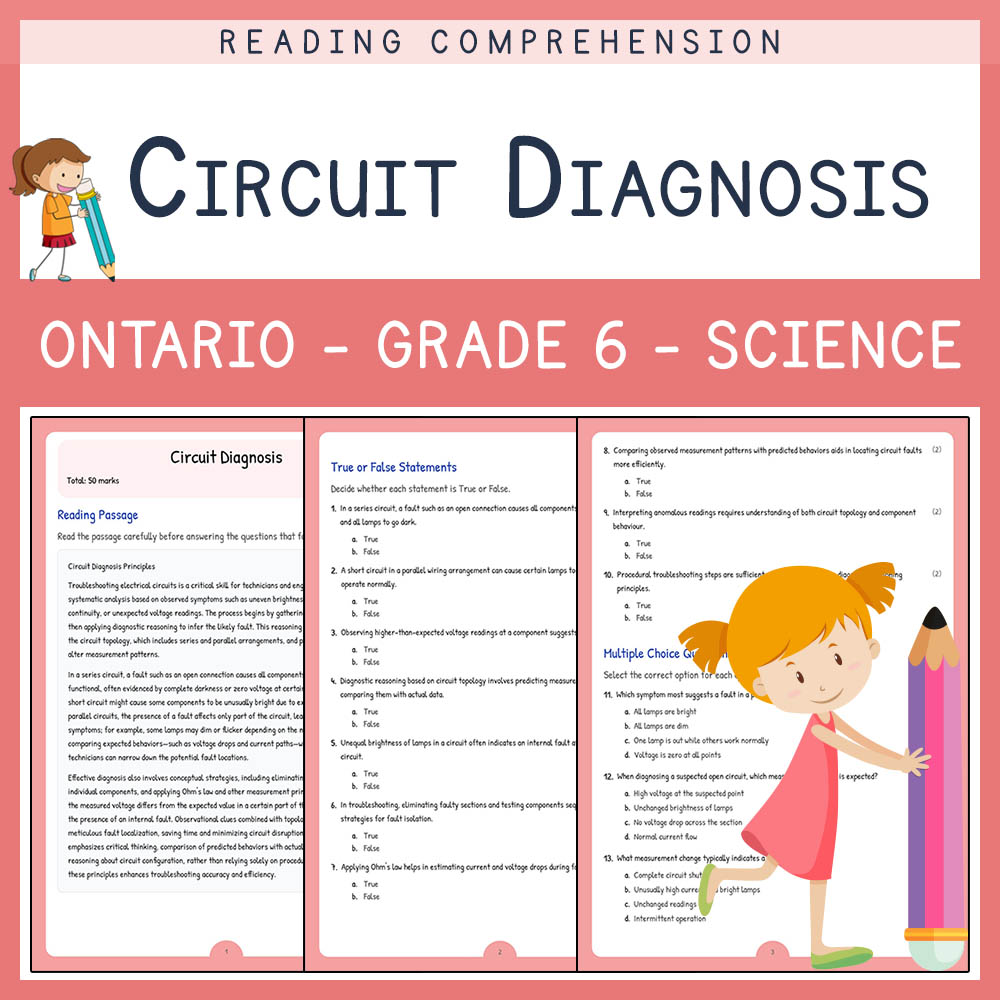
Grade 6 Science | Circuit Diagnosis Worksheet (Answer Key) – Ontario Standard
Created byLumora LearningLearning Objectives
- Understand the principles of troubleshooting electrical circuits using observed symptoms.
- Apply logical reasoning to infer faults based on circuit topology and measurement patterns.
- Differentiate between series and parallel circuit behaviours during fault diagnosis.
Also included in: Grade 6 Science | Electricity Unit Custom Bundle | Ontario Framework
Instant download

Grade 6 Science – Criteria & Constraints in Design | Daily Reading Worksheet
Created byBright Mind ResourcesLearning Objectives
- Understand the difference between criteria and constraints in a design process.
- Identify criteria and constraints in given design scenarios.
- Explain how criteria help determine success and constraints restrict options.
Also included in: Engineering & Technology Grade 6 Science Worksheets Lesson Bundle | General +1 more
Instant download

Lunar Phase Geometry & Timing Worksheets Grade 6 Science
Created byPrism Point LearningLearning Objectives
- Explain how Sun-Earth-Moon positions create different lunar phases
- Identify the sequence of lunar phases through the cycle
- Describe how the visible illuminated fraction changes between phases
Also included in: Grade 6 Space Science Lesson Bundle | Ontario Science Framework
Instant download
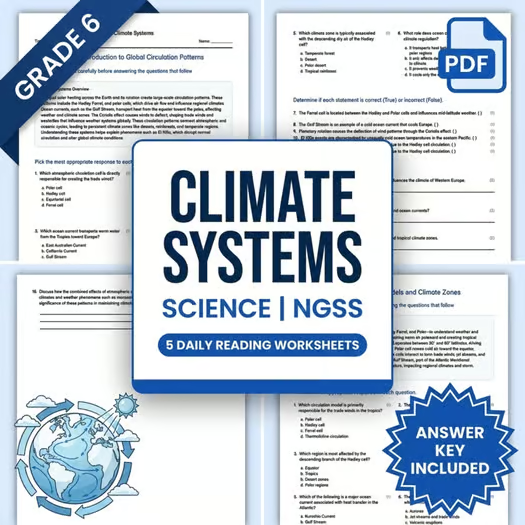
Grade 6 Science – Climate Systems Daily Reading Worksheet (PDF + Answer Key)
Created byCopper Leaf ClassroomLearning Objectives
- Describe how unequal solar heating and planetary rotation produce global atmospheric and oceanic circulation patterns.
- Identify key circulation models such as Hadley, Ferrel, and polar cells and their influence on regional climates.
- Explain the role of major ocean currents like the Gulf Stream and thermohaline circulation in heat transport and climate regulation.
Instant download

Grade 6 Science | Energy Flow in Ecosystems - Daily Reading Comprehension
Created byCoral Reef LearningLearning Objectives
- Identify producers in different ecosystems.
- Explain the role of producers in energy flow.
- Understand how producers contribute to food webs.
Instant download

Moon Phases Worksheets and Lunar Motion Review Activity Grade 6 Science
 Created bySunny Desk Resources
Learning Objectives
- Describe how the Moon’s orbit around Earth leads to predictable changes in lunar phase and position in the night sky.
- Use Sun–Earth–Moon geometry to explain why the Moon appears to move through new, crescent, quarter, gibbous, and full phases.
- Interpret observations from different nights to identify patterns in the Moon’s phase and direction.
Also included in: Sky Science Grade 6 Bundle | Alberta Science Worksheets & Activities +1 more
Instant download
About Grade 6 Science Worksheets
Explore Grade 6 Science worksheets for classwork, homework, or review. Our 5,997 printables download instantly as PDFs.
MyTeachingSheets worksheets are made by real teacher-authors and checked before they go live. Download any as a print-ready PDF for lessons, homework, or independent practice — most include answer keys, and previews are always free.