
Science Worksheets
42,550 subject resources
Reasoned Claims Assessment | TEKS Grade 12 Science Standards PDF
 Created byPrism Point Learning
Learning Objectives
- Understand the principles of scientific reasoning and argumentation.
- Analyze evidence and formulate well-supported scientific claims.
- Evaluate competing hypotheses using logical frameworks and evidence strength.

Cell Division Assessment | TEKS Standards Grade 12 Science Evaluation
Created byPrism Point LearningLearning Objectives
- Describe the processes of mitosis and meiosis and their roles in cell division.
- Explain chromosome segregation, homologous recombination, and the consequences of nondisjunction.
- Analyze chromosomal alterations, karyotype analysis, and indicators of aneuploidy in inheritance and phenotype.

Genetic Traits Evidence Assessment | General Grade 8 Science Standards
Created byPrism Point LearningLearning Objectives
- Understand how observable traits are influenced by genetic instructions and gene variations.
- Explain patterns of dominant and recessive traits and their inheritance across generations.
- Analyze how similarities among related organisms provide evidence of heredity.
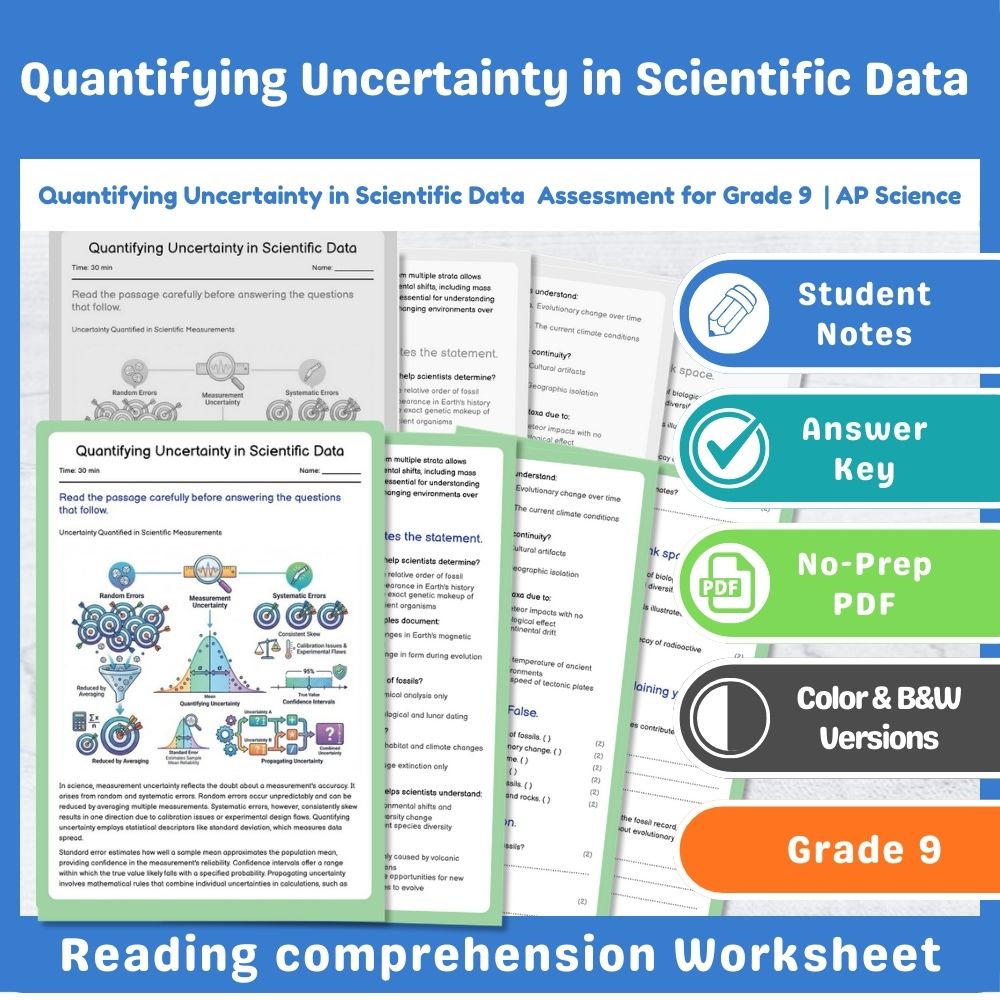
Quantifying Uncertainty in Scientific Data Assessment | Standard Aligned Grade 9 Science
Created byPrism Point LearningLearning Objectives
- Understand how to quantify and interpret random and systematic uncertainties in measurements.
- Learn to apply statistical descriptors such as standard deviation, standard error, and confidence intervals.
- Explore procedures for propagating uncertainty through calculations and combined data.

Energy in Changes Assessment for Grade 9 Science | Standards-Based
Created byPrism Point LearningLearning Objectives
- Compare physical and chemical changes in terms of energy transfer.
- Explain the concepts of endothermic and exothermic reactions.
- Describe how energy transfer affects temperature during phase and bond changes.

Data Quality Controls Assessment | General Grade 8 Science Standards
Created byPrism Point LearningLearning Objectives
- Understand the importance of calibration and measurement practices in ensuring data accuracy.
- Identify methods for managing outliers and reducing bias in data collection.
- Explain the role of documentation and replication in maintaining data integrity.
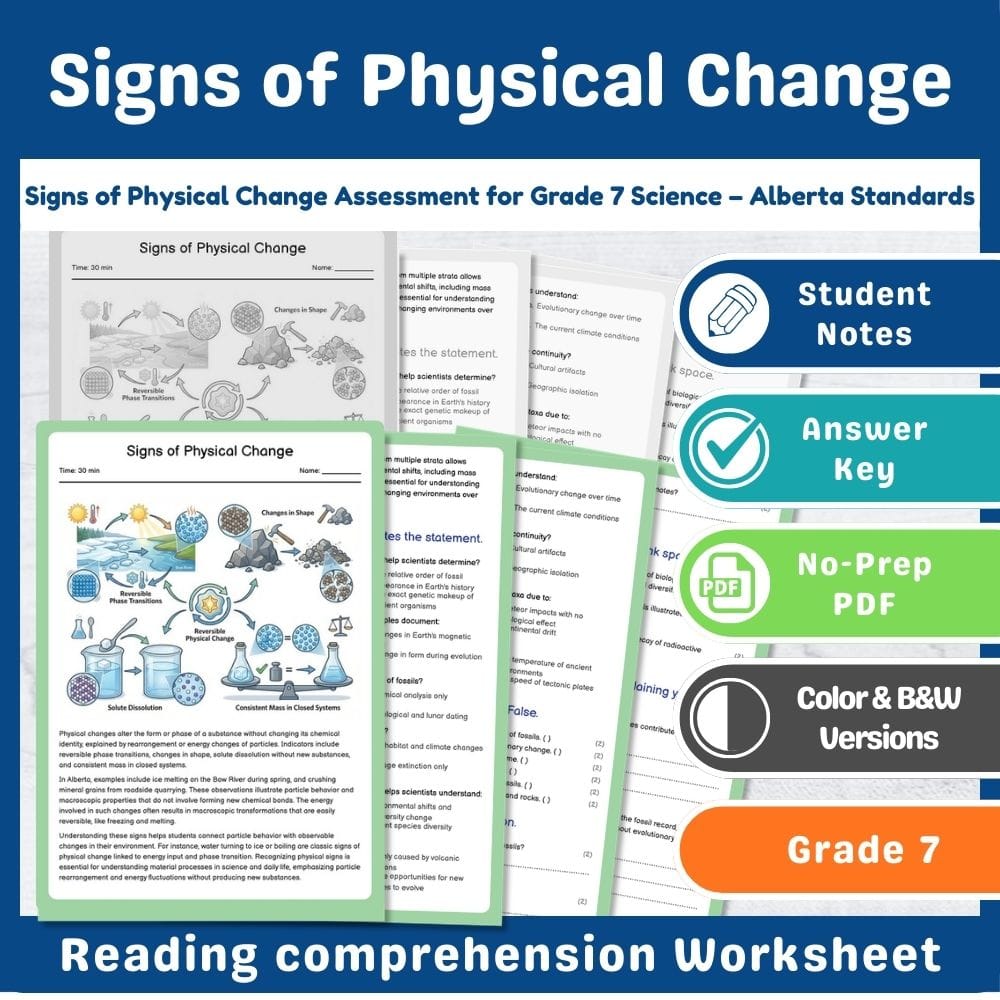
Signs of Physical Change Assessment for Grade 7 Science – Alberta Standards
Created byPrism Point LearningLearning Objectives
- Define physical change and identify its key indicators.
- Explain how particle behavior relates to observable signs of physical changes.
- Differentiate between physical and chemical changes based on physical signs.
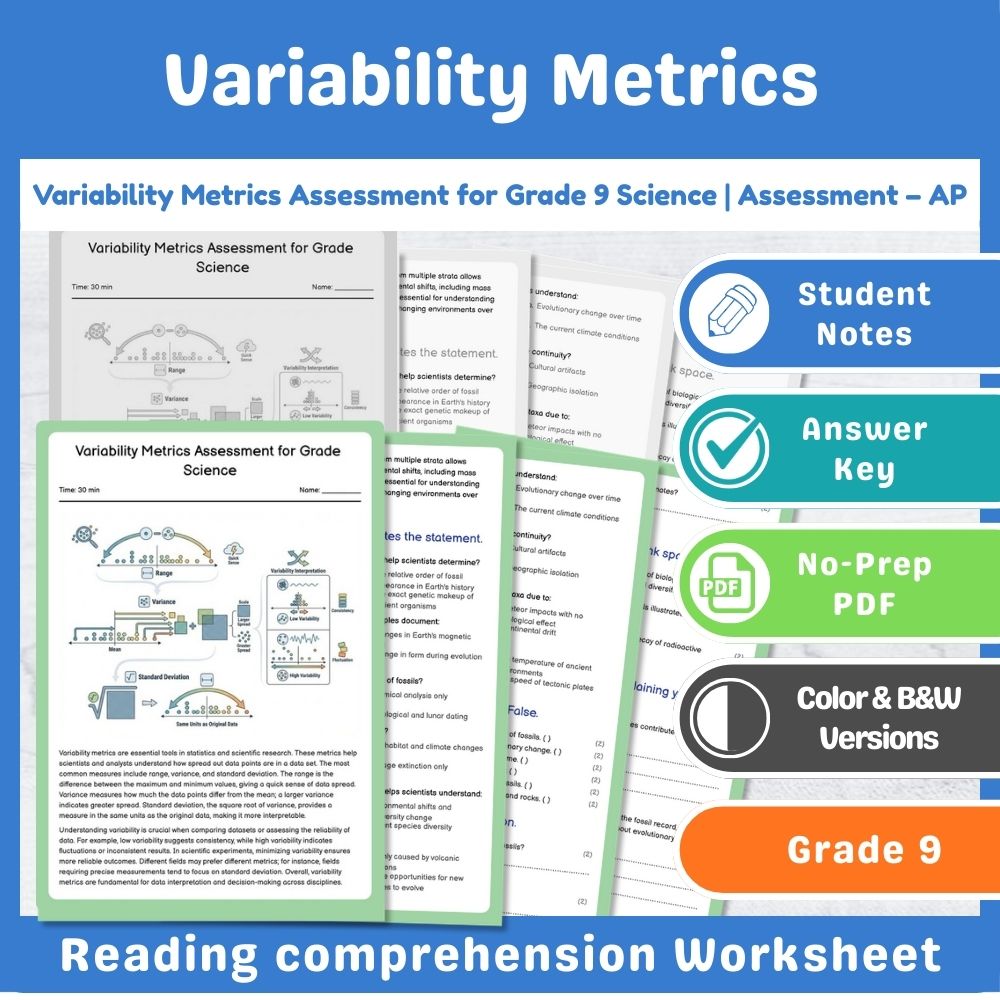
Variability Metrics Assessment for Grade 9 Science | Assessment – AP
Created byPrism Point LearningLearning Objectives
- Understand the concept of variability metrics and their application in data analysis.
- Identify various measures of variability such as range, variance, and standard deviation.
- Analyze data sets to calculate variability metrics and interpret their significance.
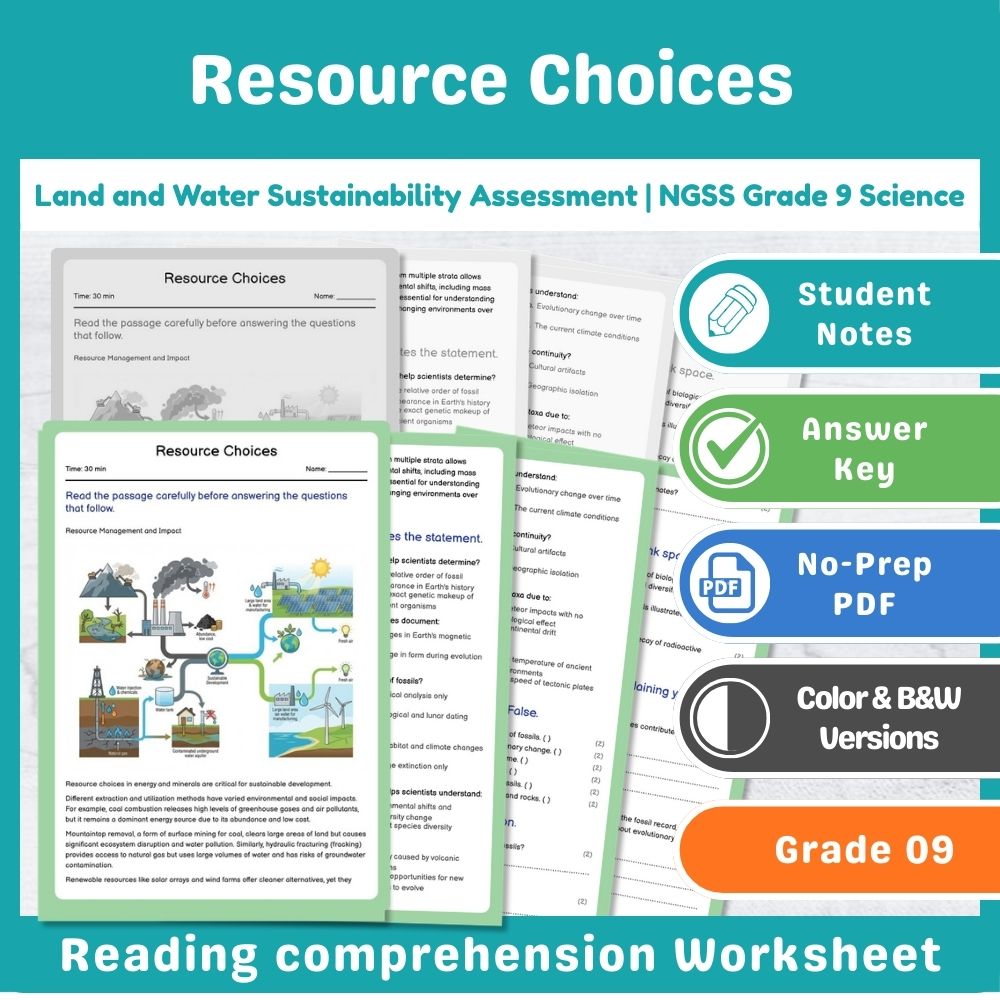
Resource Choices Assessment | NGSS Standards-Based Assessment for Grade 9 Science
Created byPrism Point LearningLearning Objectives
- Compare and evaluate different energy and mineral resource options.
- Analyze impacts of resource extraction methods on environment and society.
- Understand trade-offs related to resource management, sustainability, and lifecycle costs.

Nutrient Cycling Assessment for Grade 8 Science | Alberta Standards
Created byPrism Point LearningLearning Objectives
- Describe the processes involved in nutrient cycling within ecosystems.
- Explain the roles of decomposers, nitrogen fixation, and sedimentation.
- Analyze how environmental factors like temperature and moisture influence nutrient cycles.
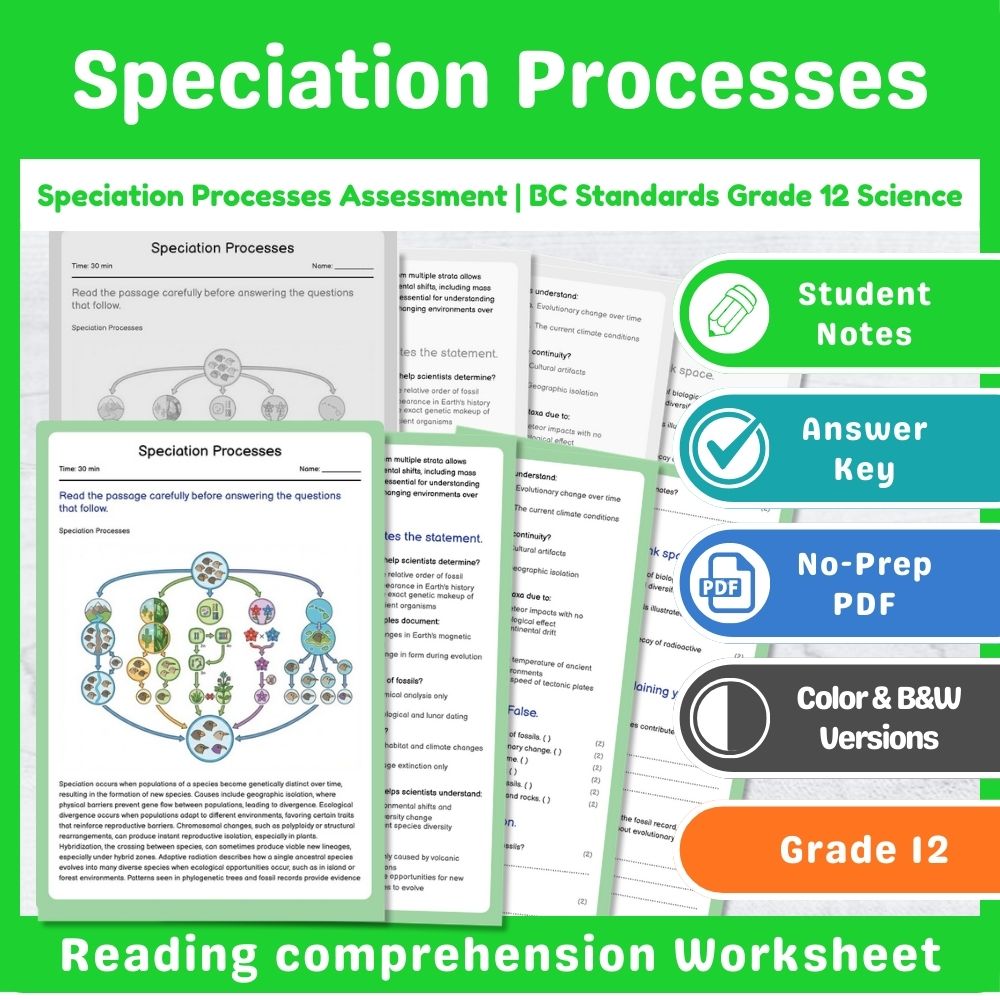
Speciation Processes Assessment | BC Standards Grade 12 Science
Created byPrism Point LearningLearning Objectives
- Understand the mechanisms that lead to the formation of new species.
- Identify different patterns and evidence supporting speciation events.
- Explain the roles of geographic isolation, ecological divergence, and chromosomal changes.
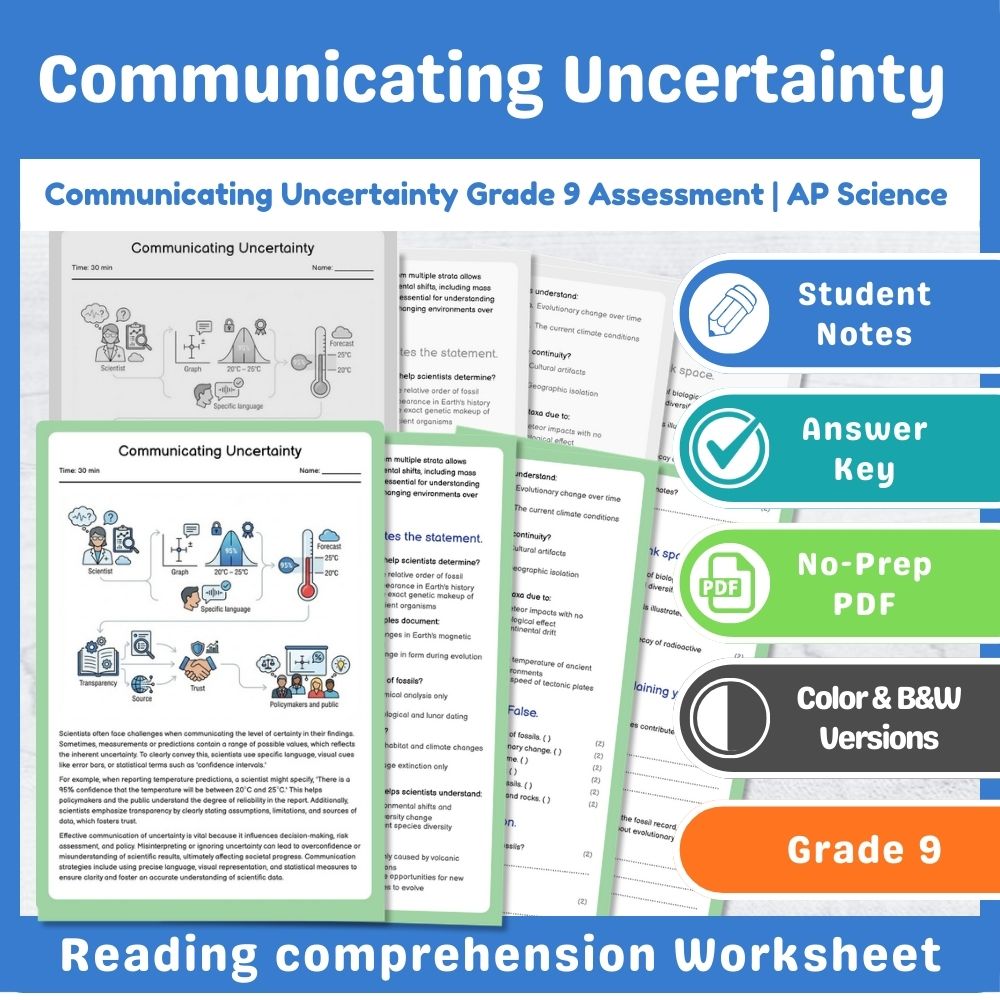
Communicating Uncertainty Grade 9 Assessment | AP Science Standards-Aligned
Created byPrism Point LearningLearning Objectives
- Understand how scientists communicate uncertainty in data and results.
- Identify different methods used to express uncertainty.
- Evaluate the importance of transparency and clarity when communicating scientific findings.
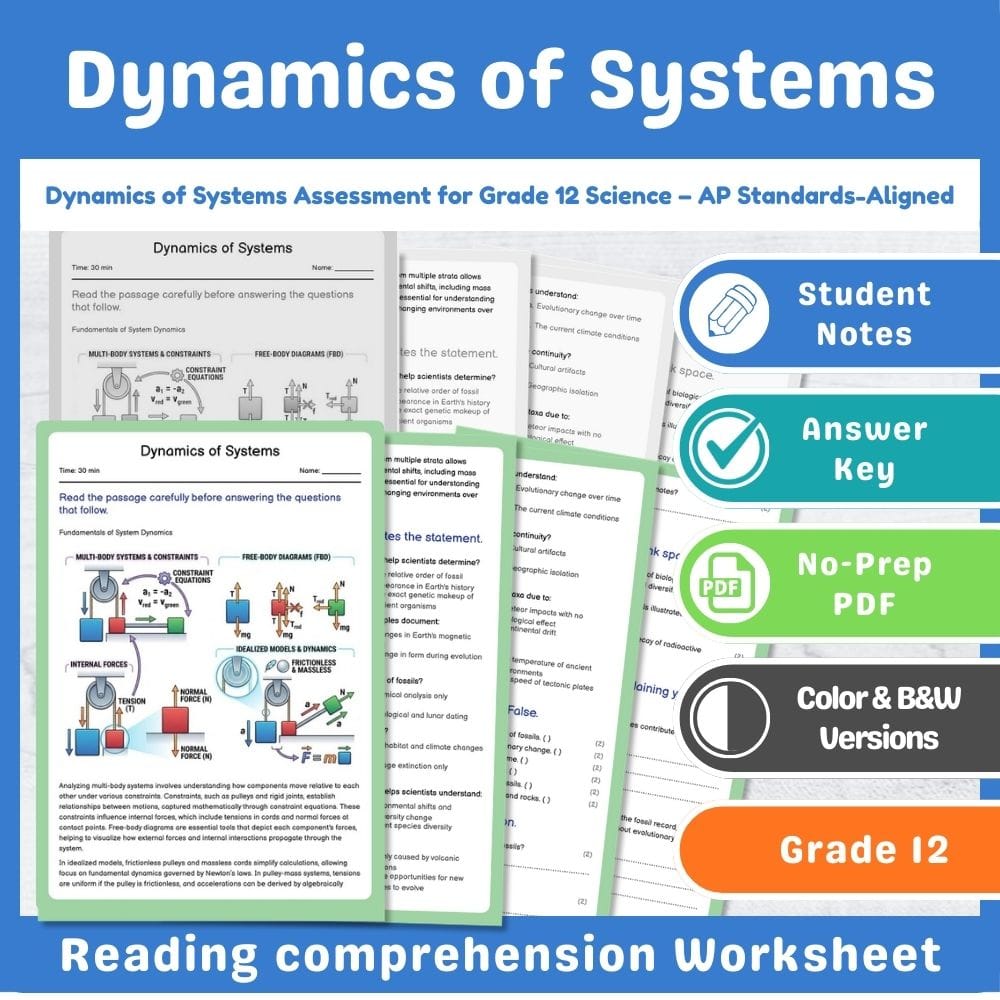
Dynamics of Systems Assessment for Grade 12 Science – AP Standards-Aligned
Created byPrism Point LearningLearning Objectives
- Understand the use of constraint equations in multi-body systems.
- Analyze pulley, connected-mass configurations, and rigid-body approximations.
- Apply Newton’s laws algebraically to derive system accelerations and internal forces.
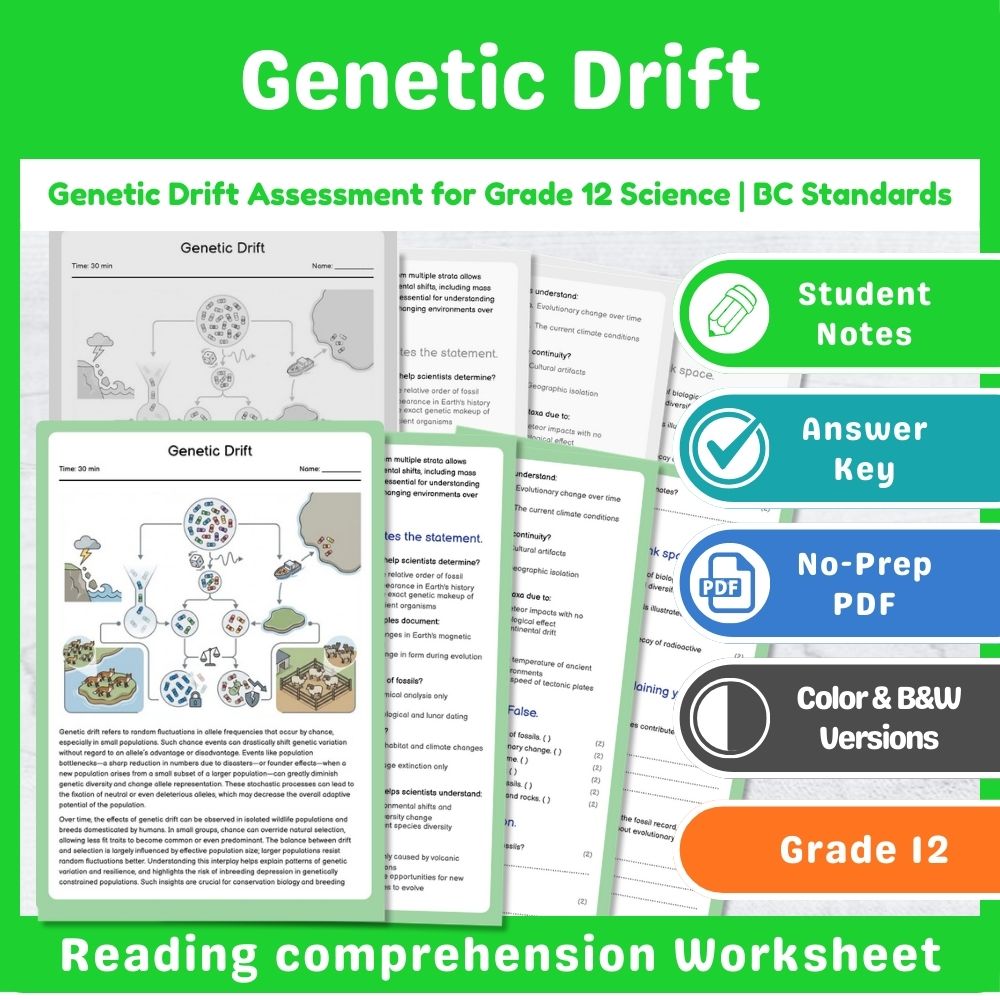
Genetic Drift Assessment for Grade 12 Science | BC Standards
Created byPrism Point LearningLearning Objectives
- Describe the concept of genetic drift and its effects on allele frequencies in populations.
- Explain how bottlenecks and founder events influence genetic diversity.
- Analyze the role of genetic drift in small isolated populations and domesticated breeds.

Control Methods Assessment | Standards-Based Grade 7 Science Evaluation
Created byPrism Point LearningLearning Objectives
- Understand the purpose of control methods in scientific experiments.
- Identify key features of a well-designed control plan.
- Explain how consistent timing and calibration contribute to reliable results.
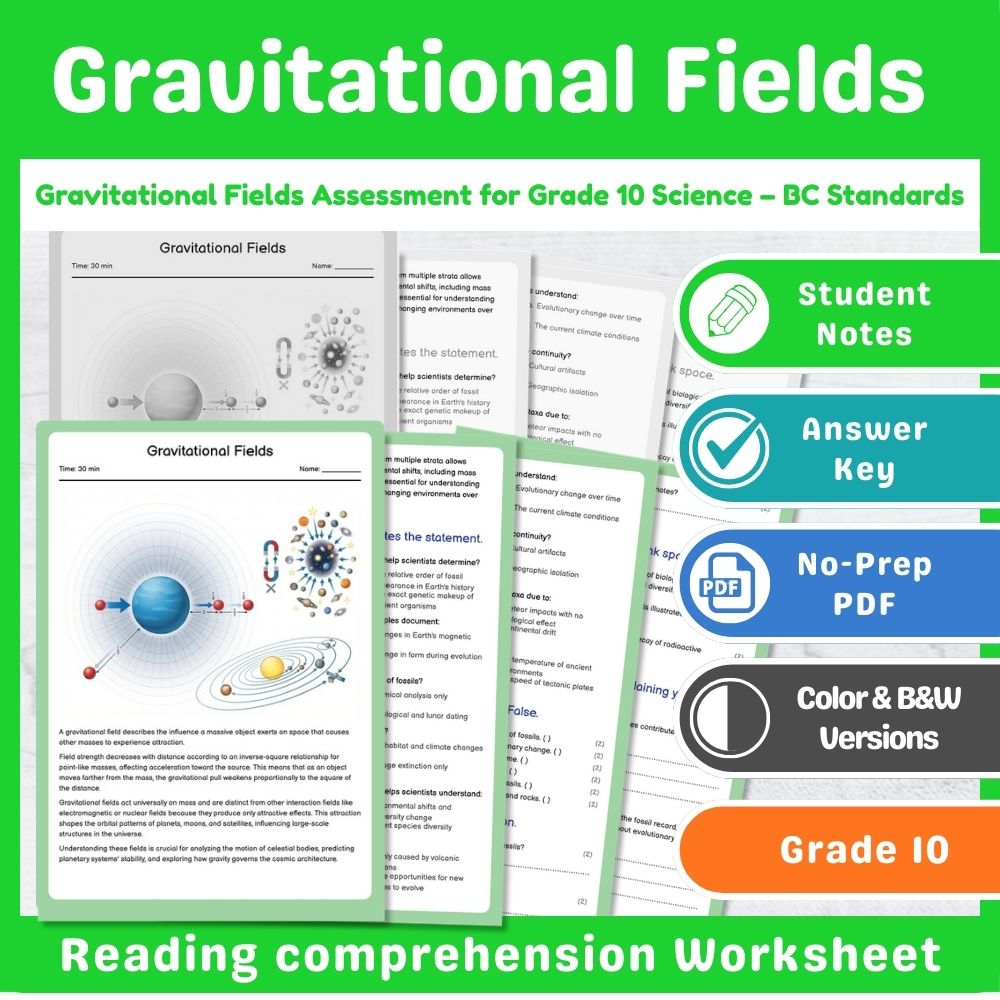
Gravitational Fields Assessment for Grade 10 Science – BC Standards
Created byPrism Point LearningLearning Objectives
- Understand the concept of gravitational fields and their influence.
- Explain how field strength varies with distance.
- Describe the effects of gravitational fields on objects in space.
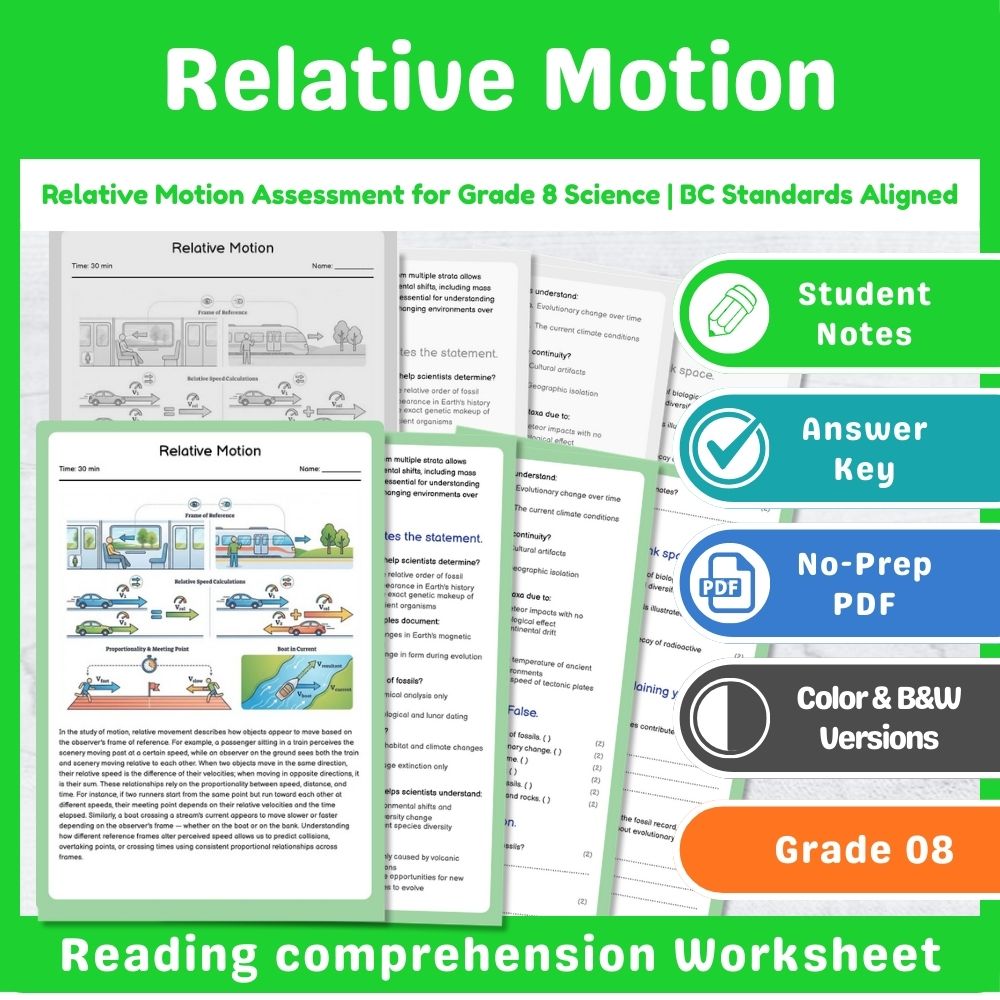
Relative Motion Assessment for Grade 8 Science | BC Standards Aligned
Created byPrism Point LearningLearning Objectives
- Understand the concept of relative motion and how velocity depends on reference frames.
- Apply proportional relationships among speed, distance, and time within different frames.
- Analyze simple scenarios such as two walkers moving towards each other or a boat crossing a stream to determine apparent speeds.
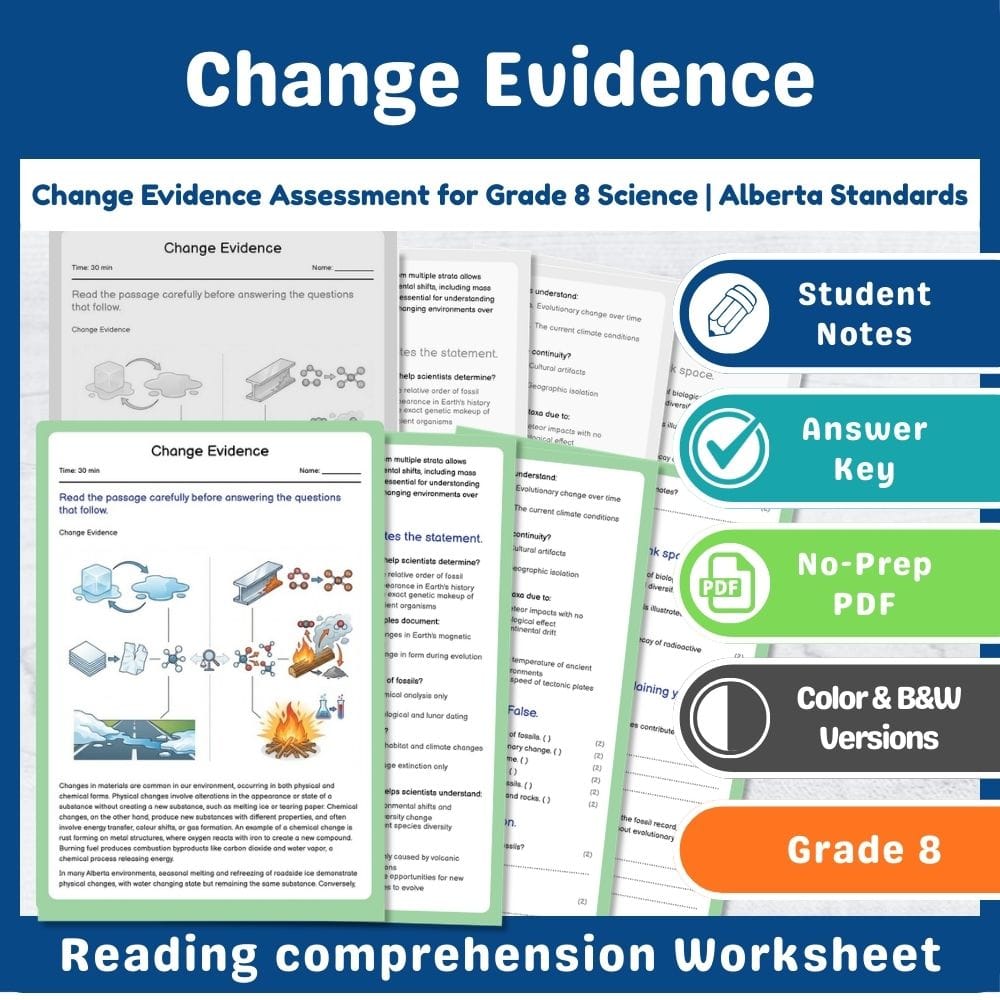
Change Evidence Assessment for Grade 8 Science | Alberta Standards
Created byPrism Point LearningLearning Objectives
- Identify differences between physical and chemical changes in materials.
- Recognize evidence indicating chemical reactions such as colour shifts, gas release, or energy transfer.
- Analyze examples of physical and chemical changes in Alberta environments.

Energy and Matter Flow Assessment for Grade 9 Science – Standards-Aligned Evaluation
Created byPrism Point LearningLearning Objectives
- Understand how energy flows through food chains from producers to consumers.
- Explain how matter cycles through organisms and the environment via processes like photosynthesis and respiration.
- Interpret models and evidence such as trophic level relationships and biomass changes to understand energy and matter transfer.
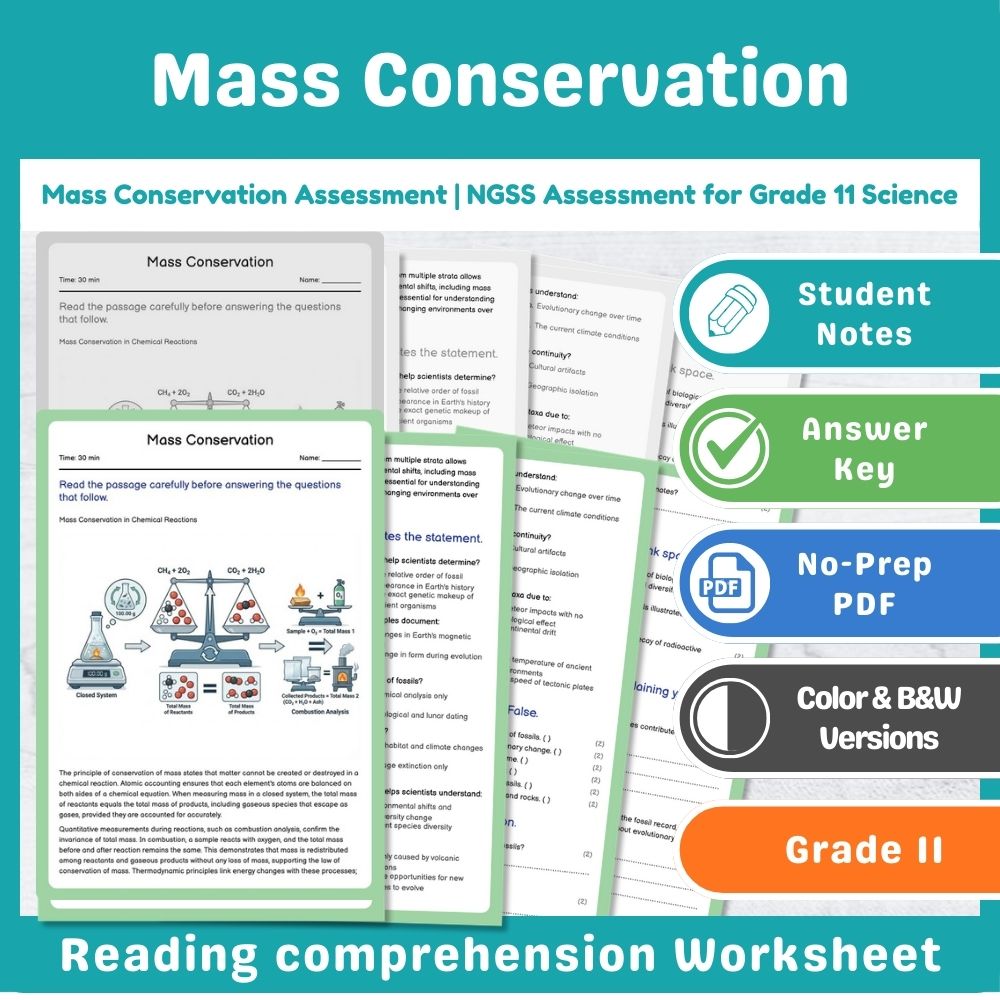
Mass Conservation Assessment | NGSS Assessment for Grade 11 Science
Created byPrism Point LearningLearning Objectives
- Explain the principle of atomic accounting in chemical reactions.
- Describe how mass is conserved in closed systems and combustion processes.
- Understand the relationship between energy, mass, and thermodynamics in chemical transformations.
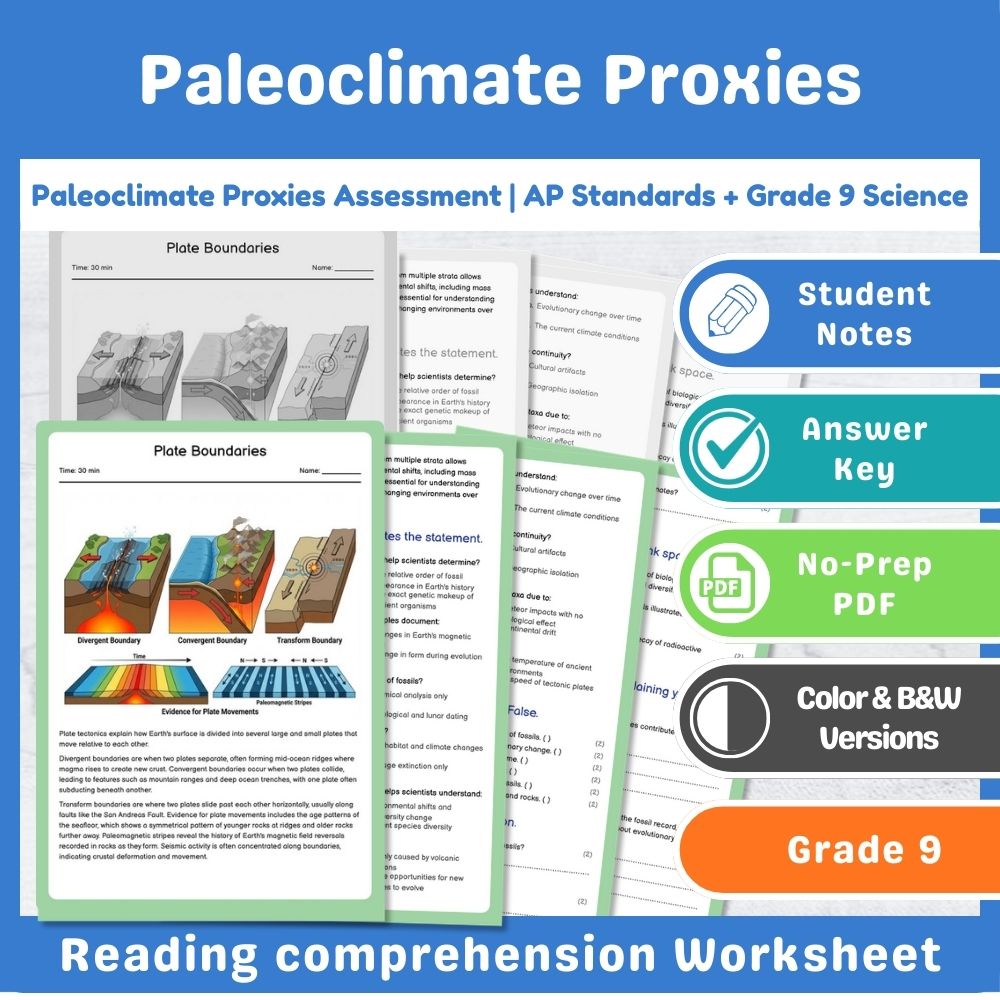
Paleoclimate Proxies Assessment | AP Standards + Grade 9 Science
Created byPrism Point LearningLearning Objectives
- Interpret paleoclimate evidence from ice cores, tree rings, marine sediments, and speleothems using proxy indicators.
- Relate proxy records to past climate variability including glacial-interglacial cycles and abrupt events.
- Employ age models and quantify uncertainties to link proxy signals to climate forcing mechanisms.
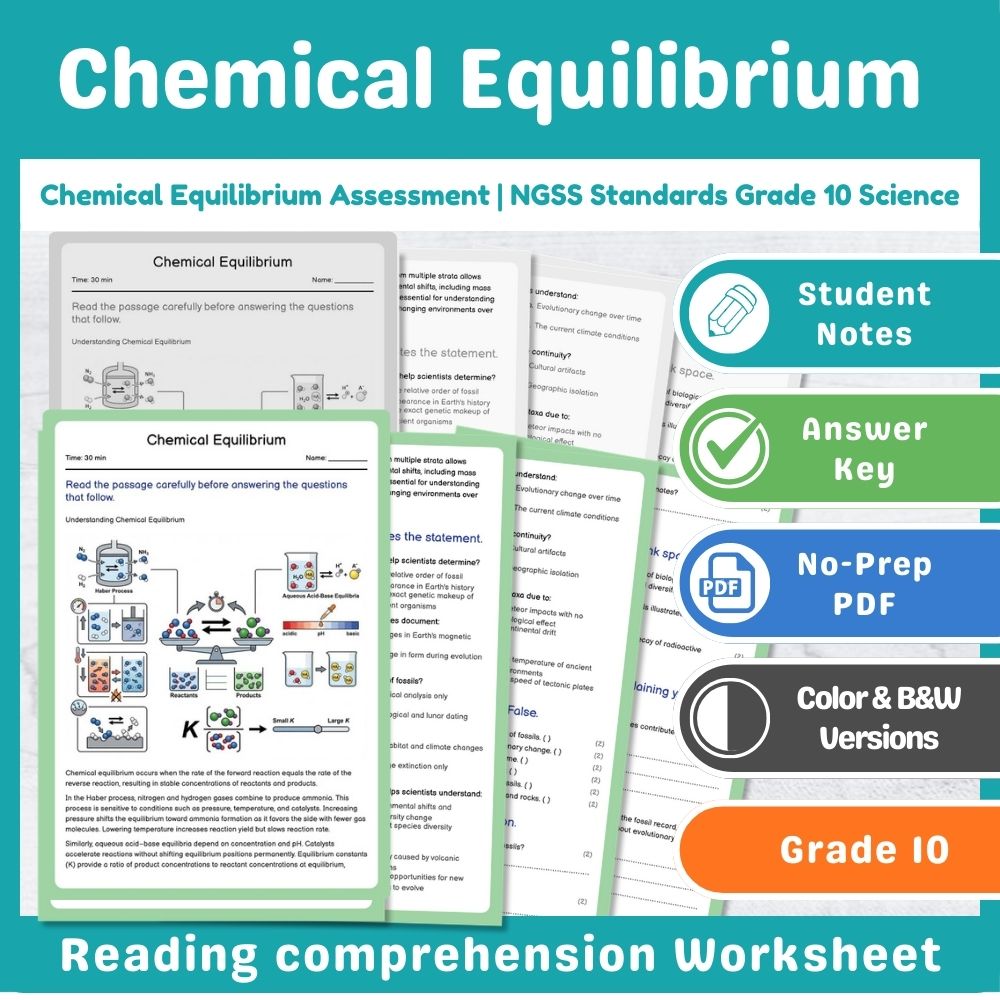
Chemical Equilibrium Assessment | NGSS Standards Grade 10 Science
Created byPrism Point LearningLearning Objectives
- Understand the concept of chemical equilibrium and factors affecting it.
- Identify how changes in pressure, temperature, and concentration influence equilibrium positions.
- Explain the role of catalysts and equilibrium constants in chemical reactions.
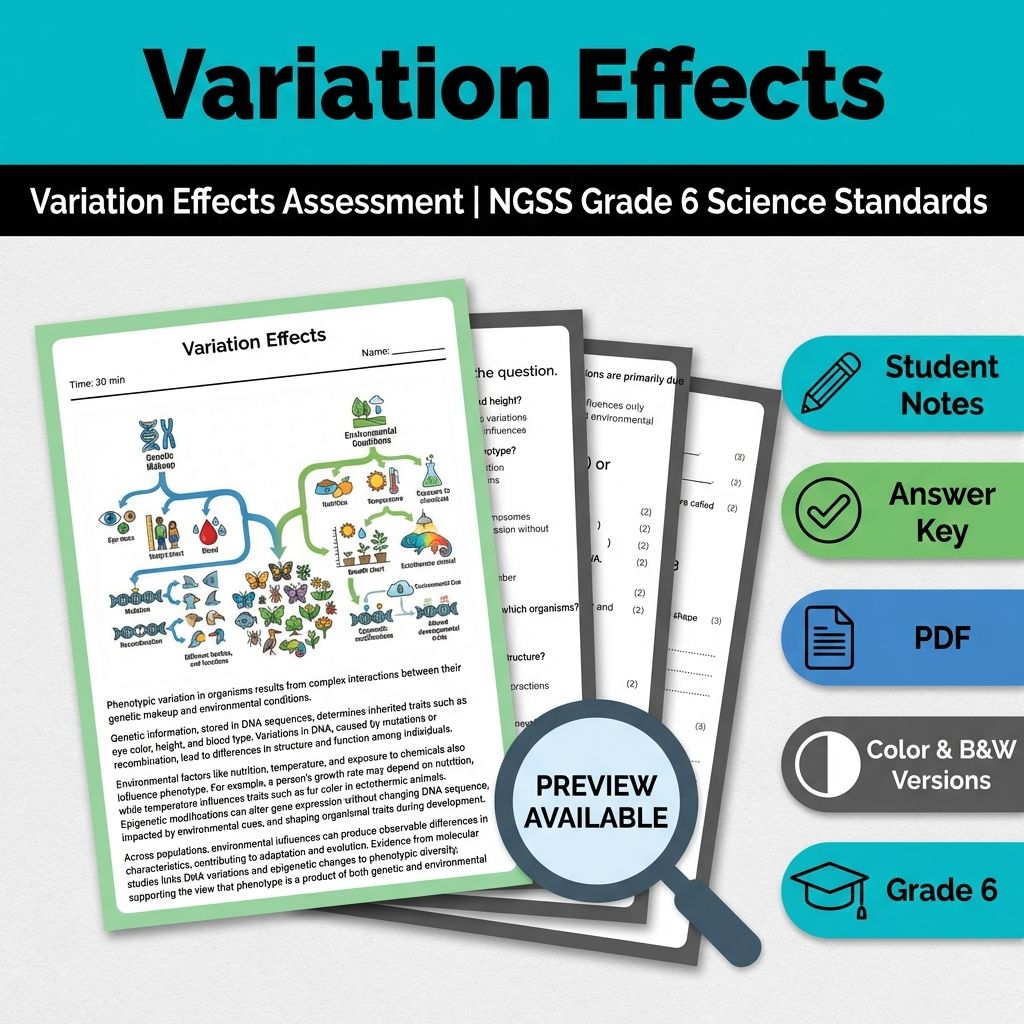
Variation Effects Assessment | NGSS Grade 6 Science Standards
Created byPrism Point LearningLearning Objectives
- Understand how phenotypic variation results from genetic and environmental interactions.
- Identify examples of inherited traits, environmental influences, and temperature-dependent gene expression.
- Explain the links between DNA sequence variation, macromolecular processes, and organismal differences.
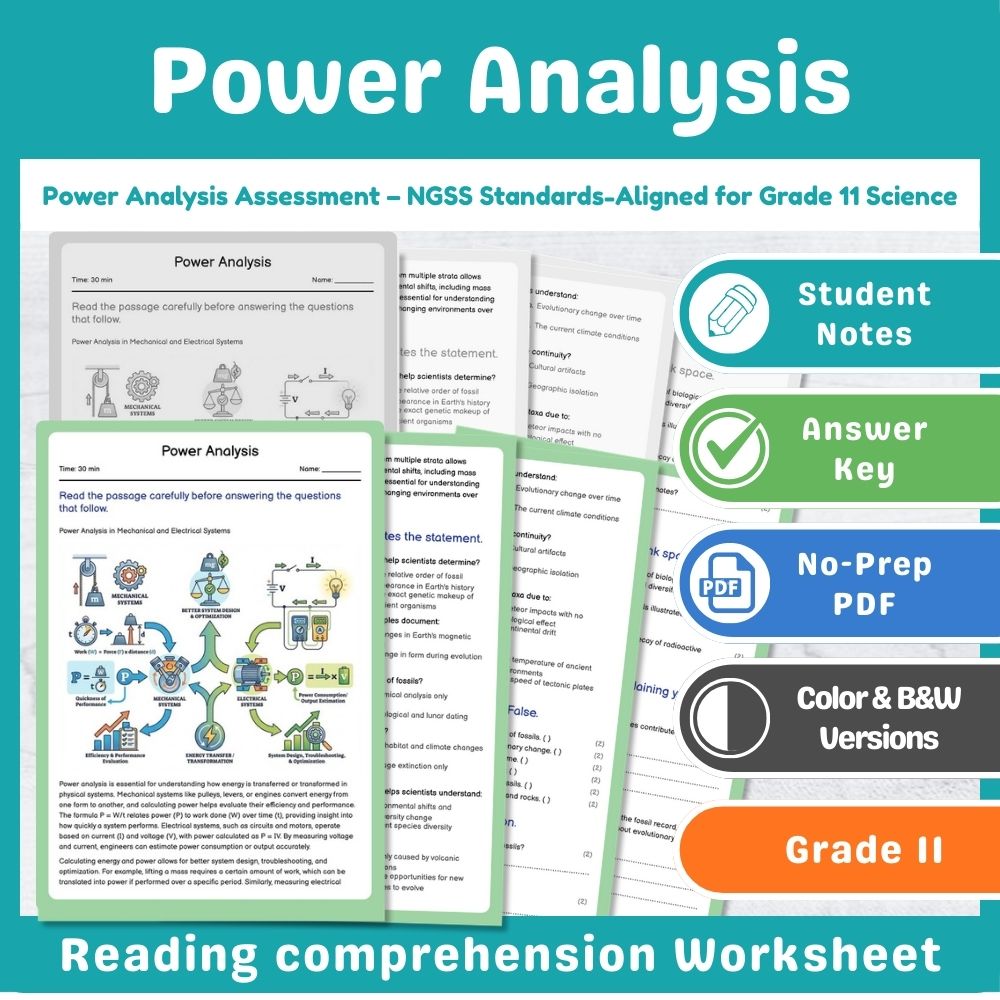
Power Analysis Assessment – NGSS Standards-Aligned for Grade 11 Science
Created byPrism Point LearningLearning Objectives
- Understand the principles of power calculation in mechanical and electrical systems.
- Apply formulas P = W/t and P = IV to analyze energy transfer and power output.
- Measure relevant data and compare theoretical predictions with actual observations.

Friction And Stability Assessment | California Standards Grade 7 Science
Created byPrism Point LearningLearning Objectives
- Explain how friction opposes relative motion and how it affects whether forces balance or not.
- Predict how changes in surface texture (roughness/smoothness) change the size of friction and the resulting motion.
- Use the idea of net force to describe when an object speeds up, slows down, or moves at constant velocity.
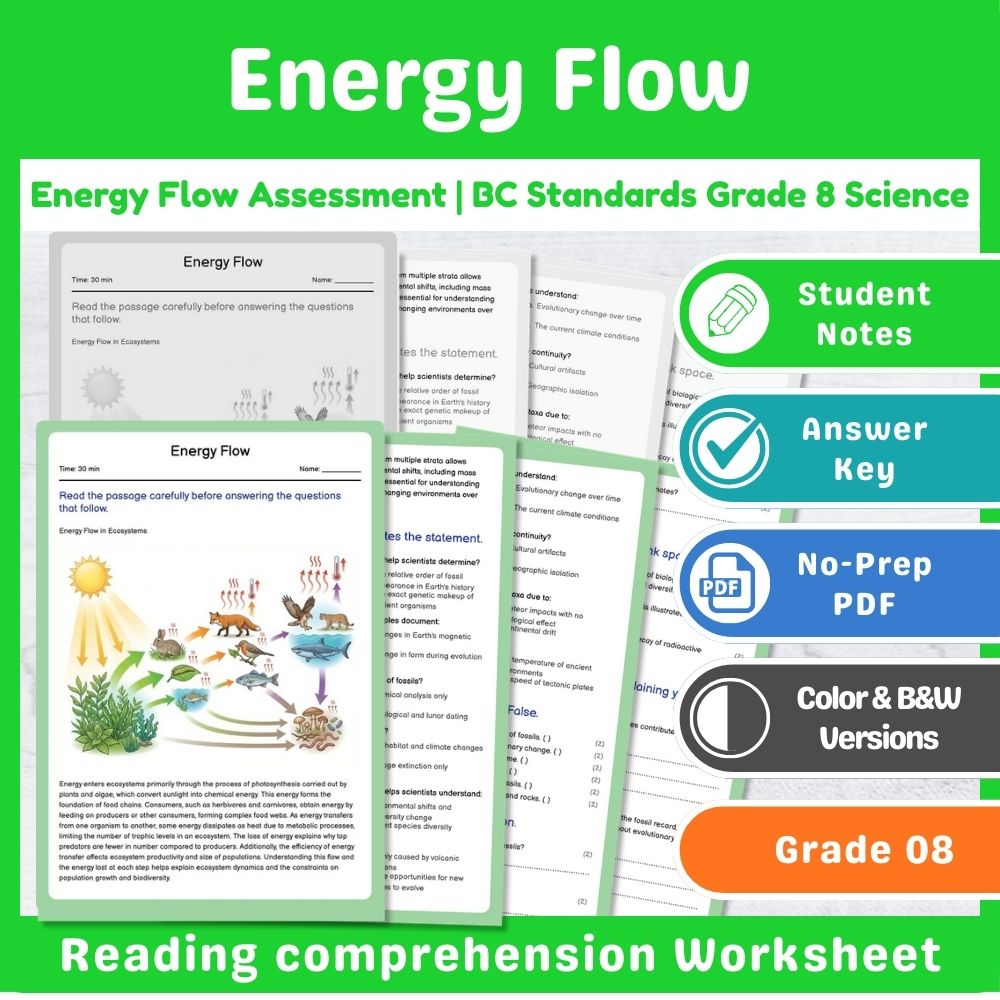
Energy Flow Assessment | BC Standards Grade 8 Science
Created byPrism Point LearningLearning Objectives
- Understand how energy enters ecosystems through photosynthesis.
- Explain the flow of energy through food chains and food webs.
- Describe how energy dissipates as heat at each transfer in an ecosystem.
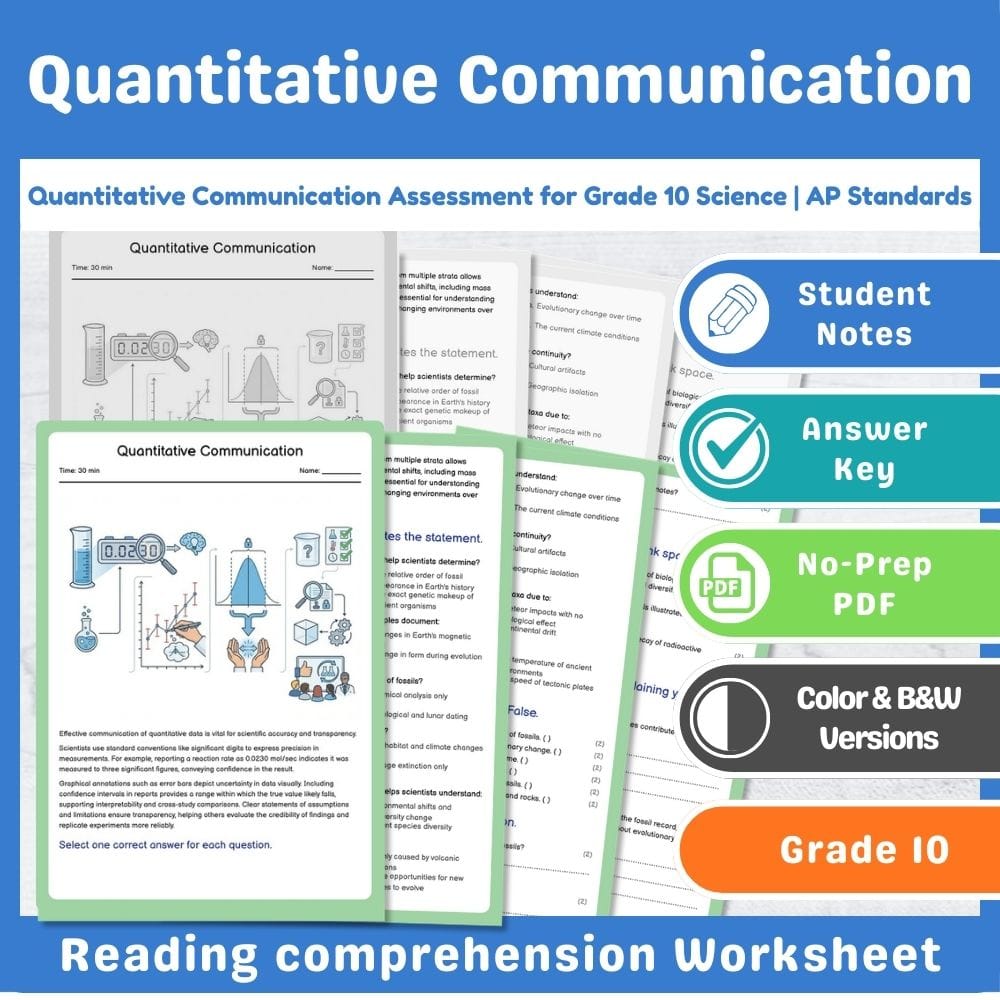
Quantitative Communication Assessment for Grade 10 Science | AP Standards
Created byPrism Point LearningLearning Objectives
- Understand conventions for reporting quantitative results, including uncertainty notation and significant digits.
- Learn strategies for visualizing data using graphs and annotations effectively.
- Identify how to articulate assumptions, limitations, and confidence intervals transparently.
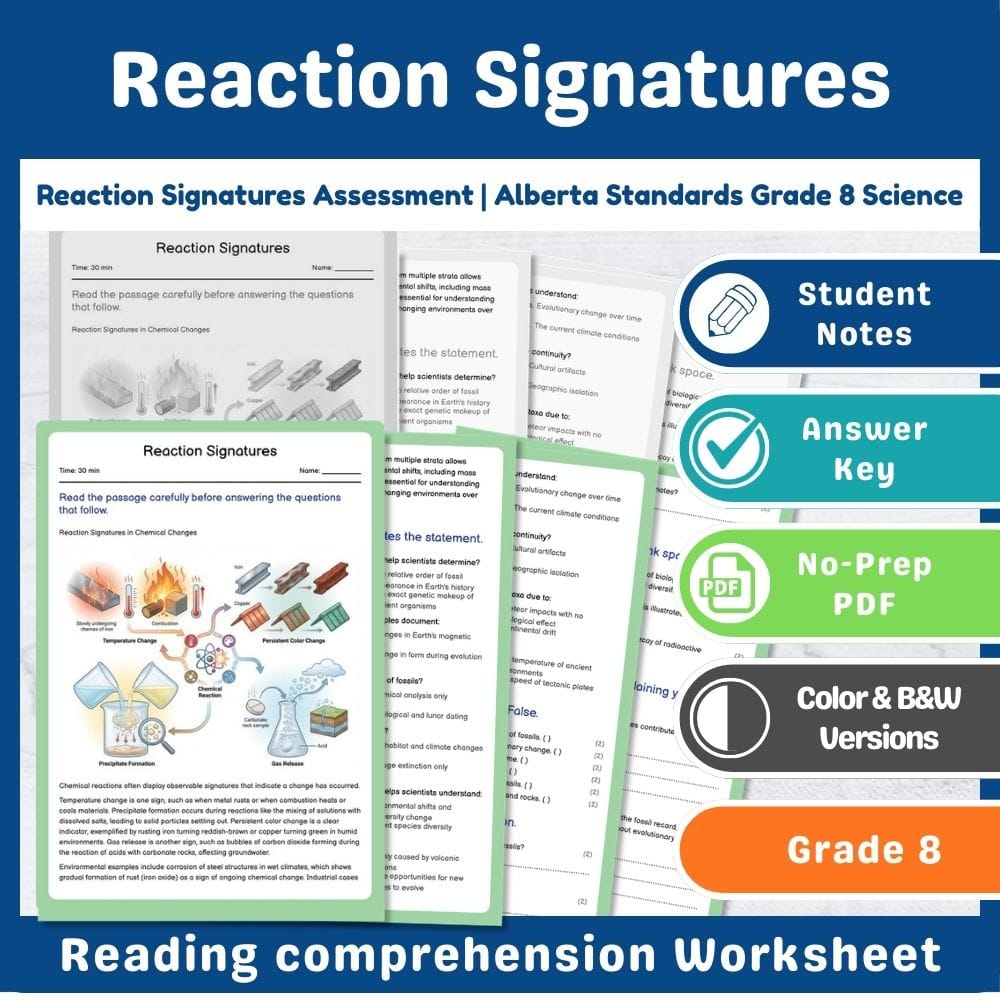
Reaction Signatures Assessment | Alberta Standards Grade 8 Science
Created byPrism Point LearningLearning Objectives
- Identify observable signatures of chemical change such as temperature change, precipitate formation, color change, and gas release.
- Explain the significance of reaction signatures in environmental and industrial contexts.
- Analyze examples involving corrosion, effervescence, and combustion residues to understand chemical transformations.
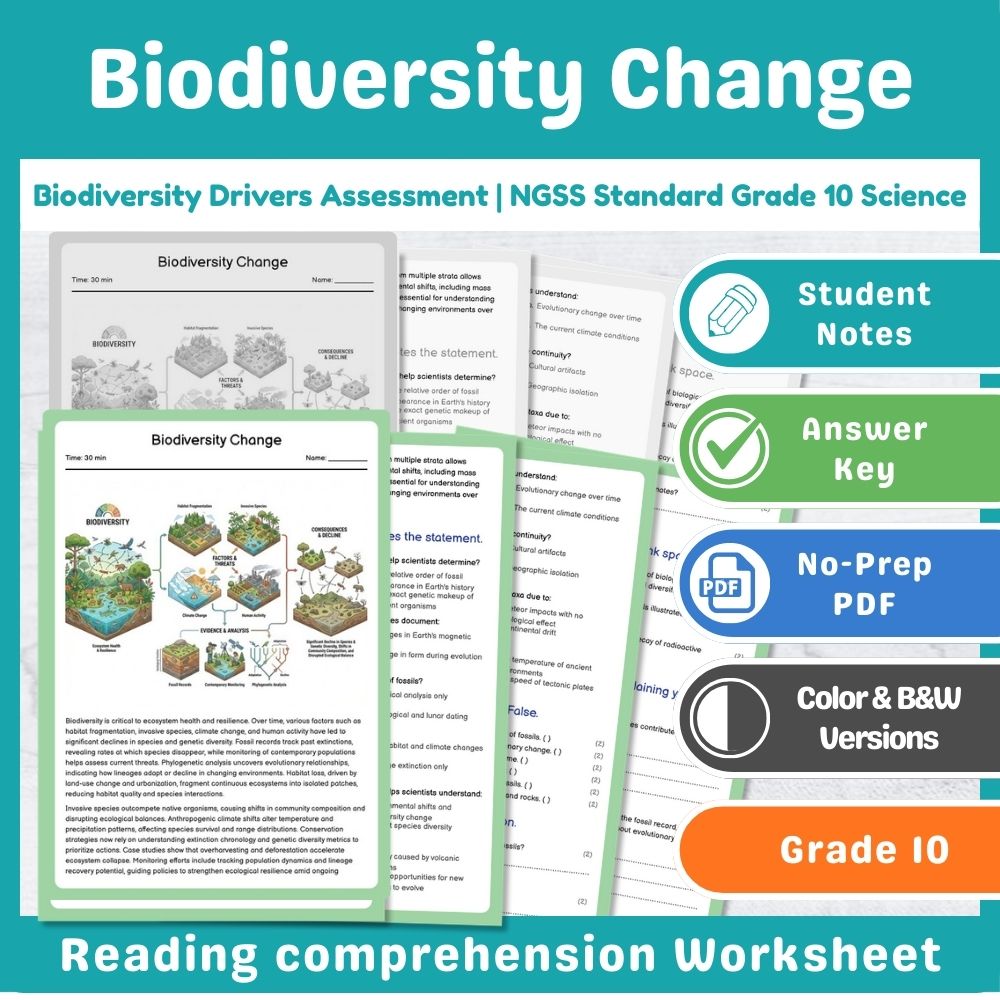
Biodiversity Change Assessment for Grade 10 Science NGSS Standards
Created byPrism Point LearningLearning Objectives
- Understand the factors that influence biodiversity loss and ecosystem change.
- Identify evidence and methods used to monitor biodiversity and extinction rates.
- Analyze the impacts of human actions on ecological resilience and genetic diversity.
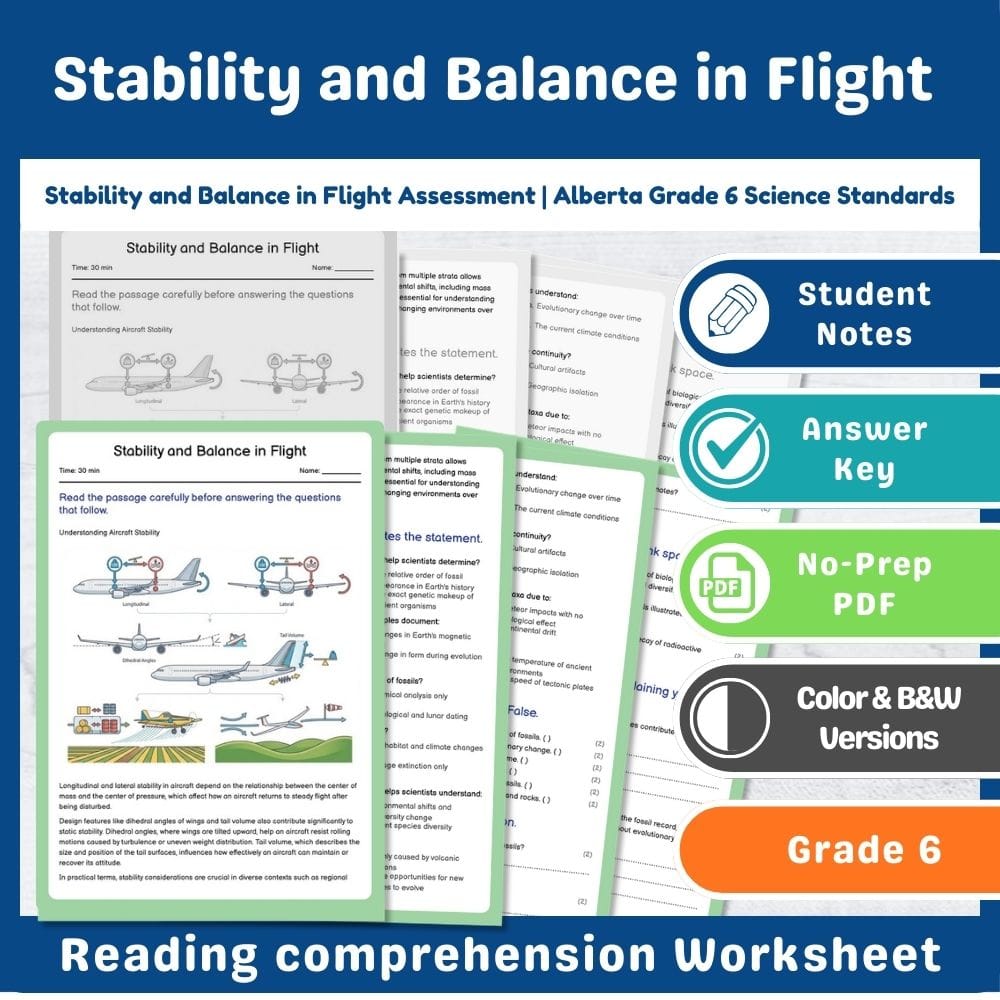
Stability and Balance in Flight Assessment | Alberta Grade 6 Science Standards
Created byPrism Point LearningLearning Objectives
- Understand how center of mass and center of pressure affect aircraft stability.
- Explain how design features like dihedral angles and tail volume influence static stability.
- Describe how balance impacts aircraft behavior under different payloads and wind conditions.

Reaction Energetics Assessment | Alberta Standards for Grade 11 Science
Created byPrism Point LearningLearning Objectives
- Explain the concept of enthalpy changes during chemical reactions.
- Calculate reaction enthalpy using standard enthalpies of formation.
- Analyze heat transfer in exothermic and endothermic processes in industrial settings.

Energy Flow Assessment for Grade 9 Science | TEKS Standards-Aligned
Created byPrism Point LearningLearning Objectives
- Explain how energy moves through ecosystems from primary producers to consumers and decomposers.
- Describe the process of photosynthesis and its role in transferring energy within an ecosystem.
- Understand the concept of energy transfer efficiency and how energy pyramids illustrate trophic levels.

Ecosystem Change and Resilience Assessment | General Grade 9 Science
Created byPrism Point LearningLearning Objectives
- Understand how disturbances impact ecosystem stability and composition.
- Identify factors that influence ecosystem resilience and recovery.
- Analyze evidence from population trends and community changes to infer ecological shifts.
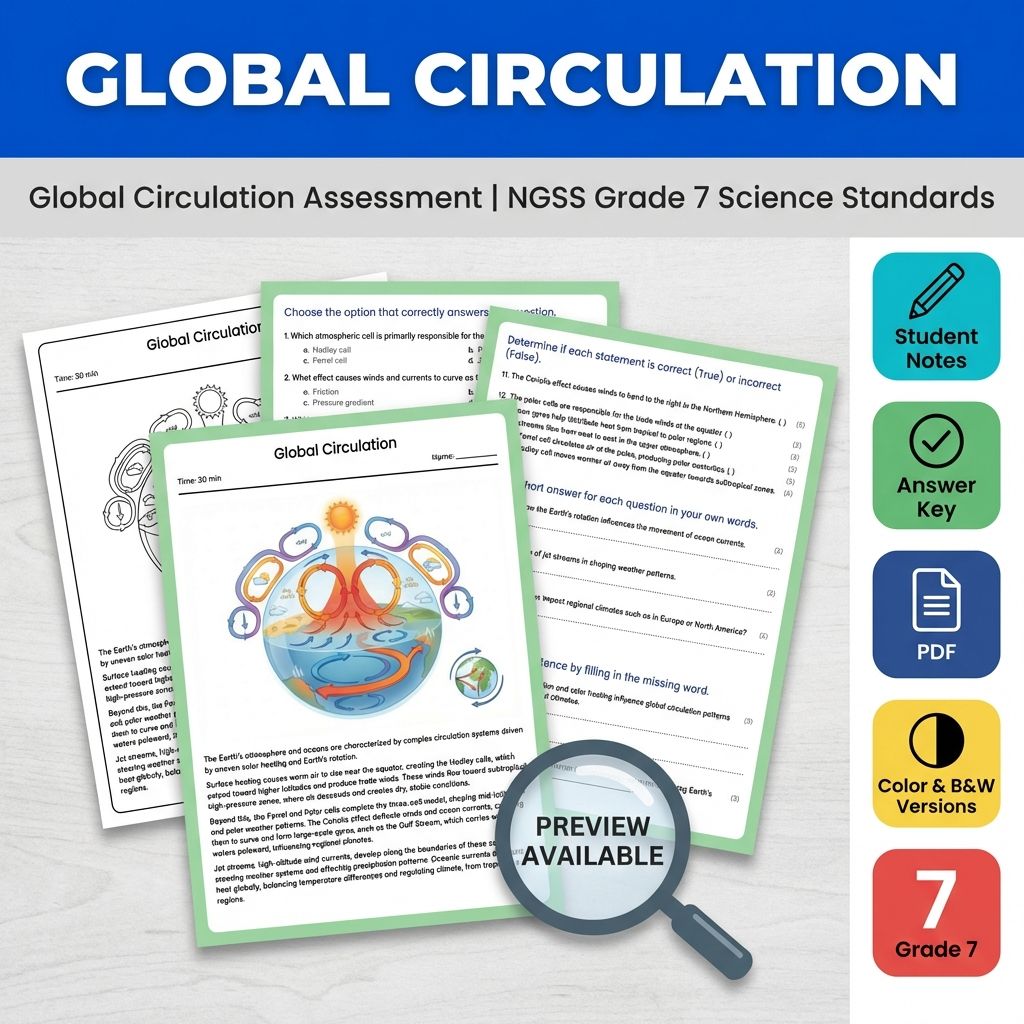
Global Circulation Assessment | NGSS Grade 7 Science Standards
Created byPrism Point LearningLearning Objectives
- Explain the basic principles of Earth's atmospheric and oceanic circulation patterns.
- Identify the main cells, wind belts, and ocean currents associated with global climate.
- Understand the influence of Coriolis effect and jet streams on weather and climate zones.
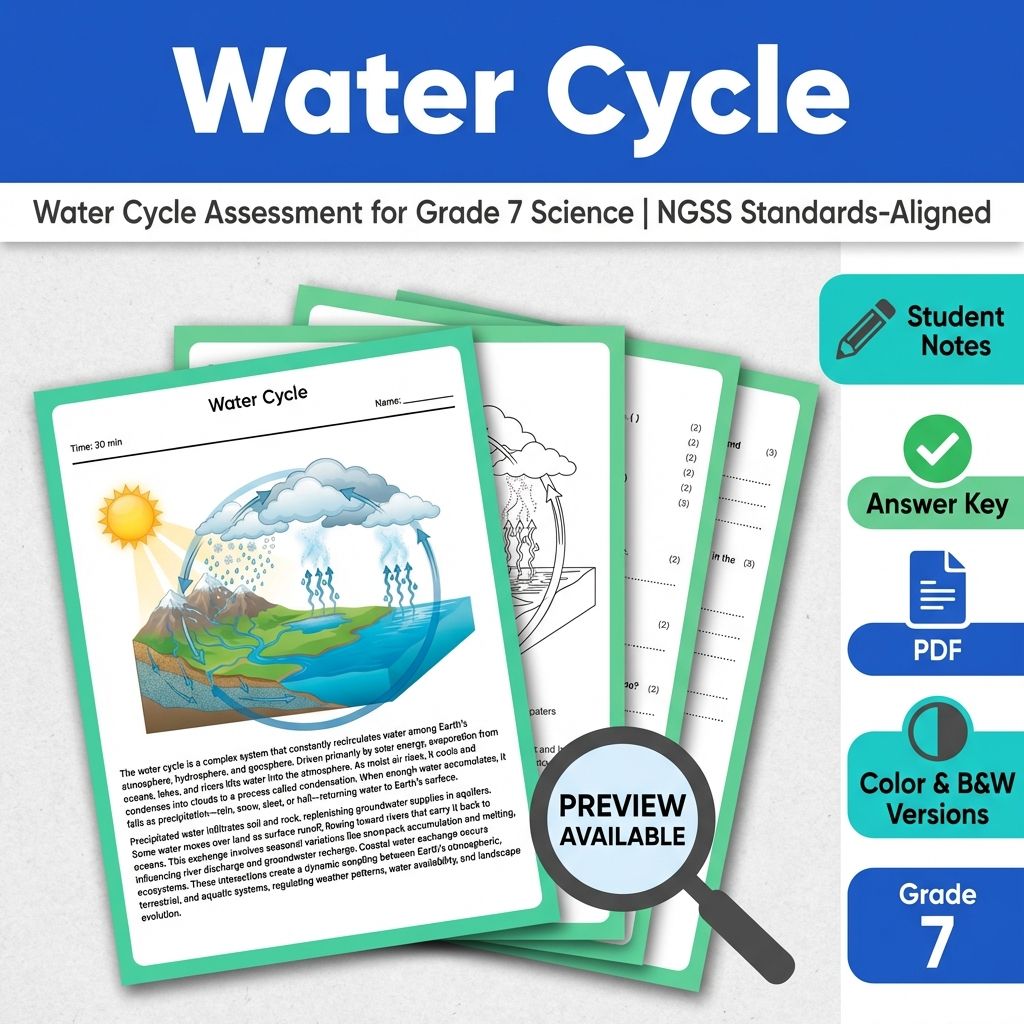
Water Cycle Assessment for Grade 7 Science | NGSS Standards-Aligned
Created byPrism Point LearningLearning Objectives
- Describe the processes involved in the water cycle, including evaporation, condensation, and precipitation.
- Explain how water moves through Earth's spheres via processes such as infiltration, runoff, and groundwater flow.
- Identify the interactions among rivers, aquifers, and ocean exchange in the water cycle, especially seasonal and seasonal variations.
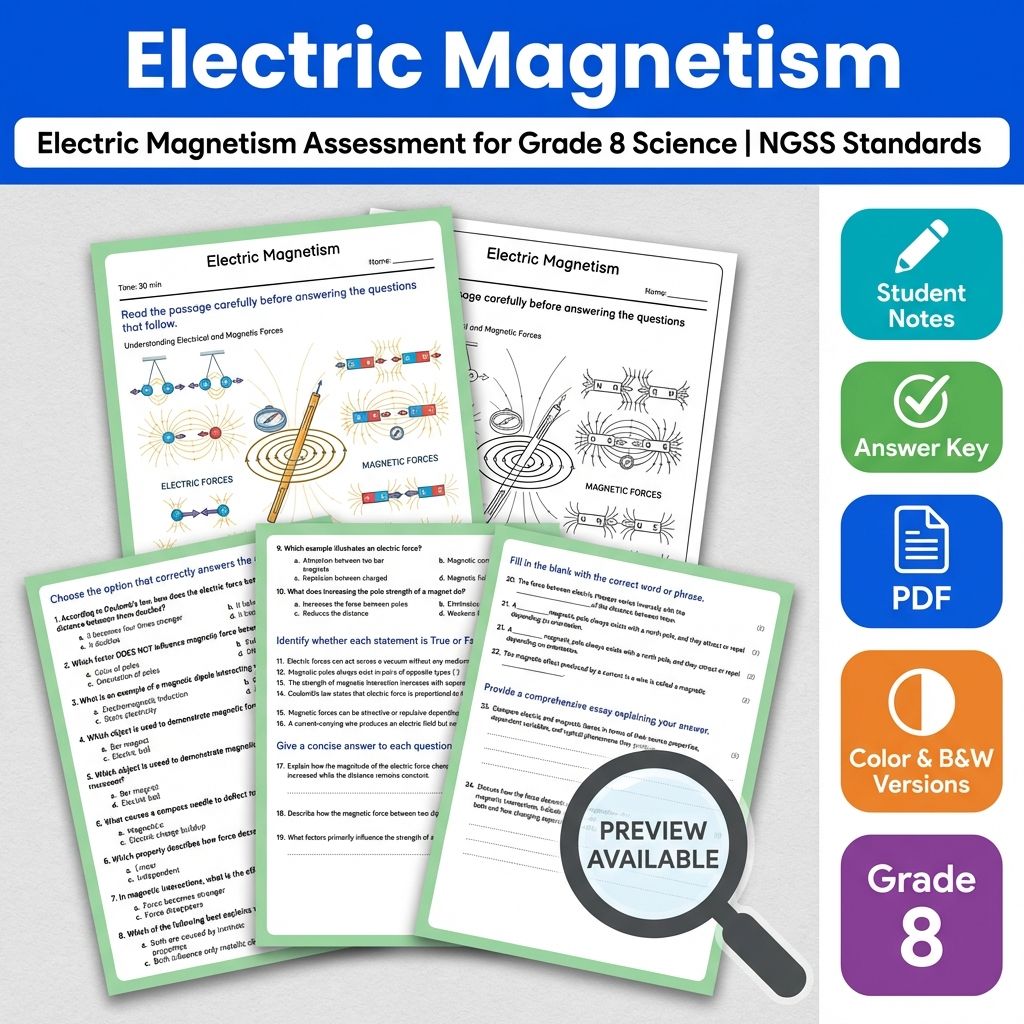
Electric Magnetism Assessment for Grade 8 Science | NGSS Standards
Created byPrism Point LearningLearning Objectives
- Understand how electric and magnetic forces are described through field interactions.
- Identify the relationships between force magnitude, charge/pole properties, and distance.
- Analyze examples such as charged objects, magnetic dipoles, and compass deflections to understand forces.
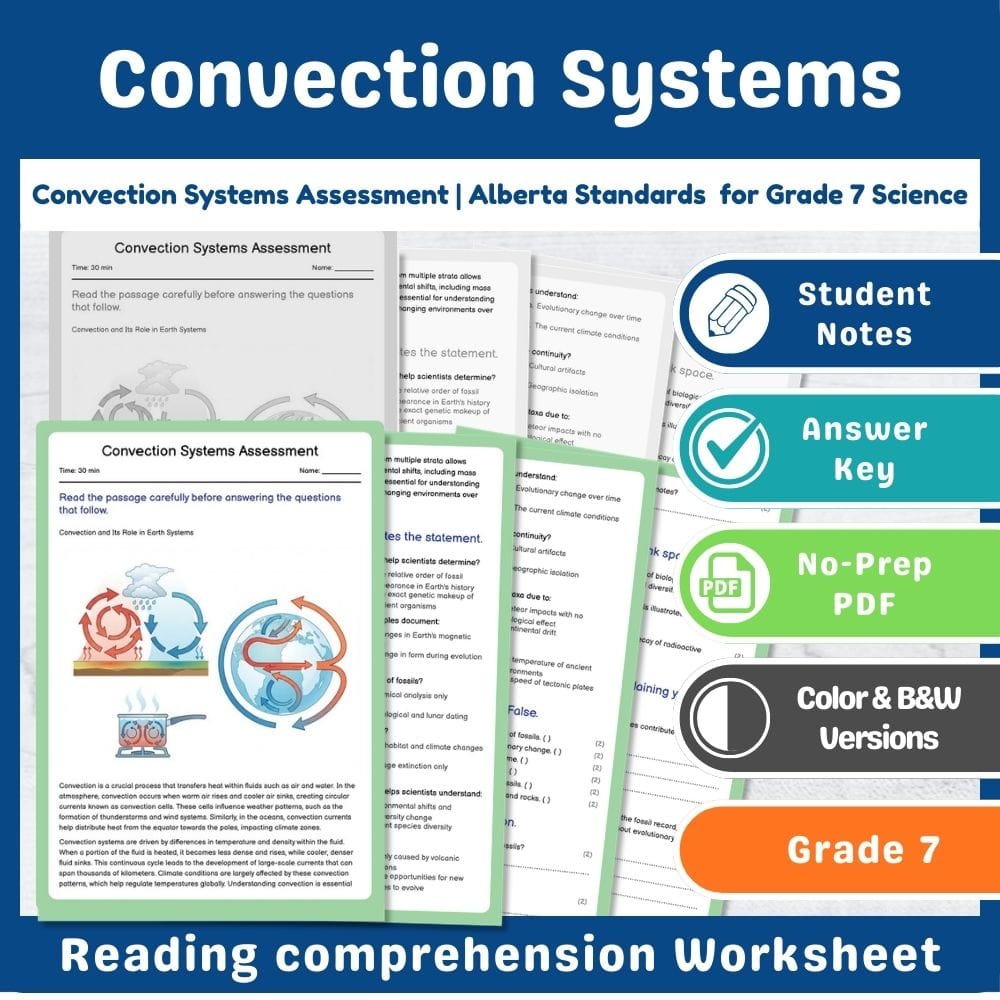
Convection Systems Assessment | Alberta Standards Assessment for Grade 7 Science
Created byPrism Point LearningLearning Objectives
- Understand the fundamental principles of convection currents in atmospheric and oceanic systems.
- Identify the factors that influence convection in different environments.
- Analyze the effects of convection currents on weather patterns and climate.
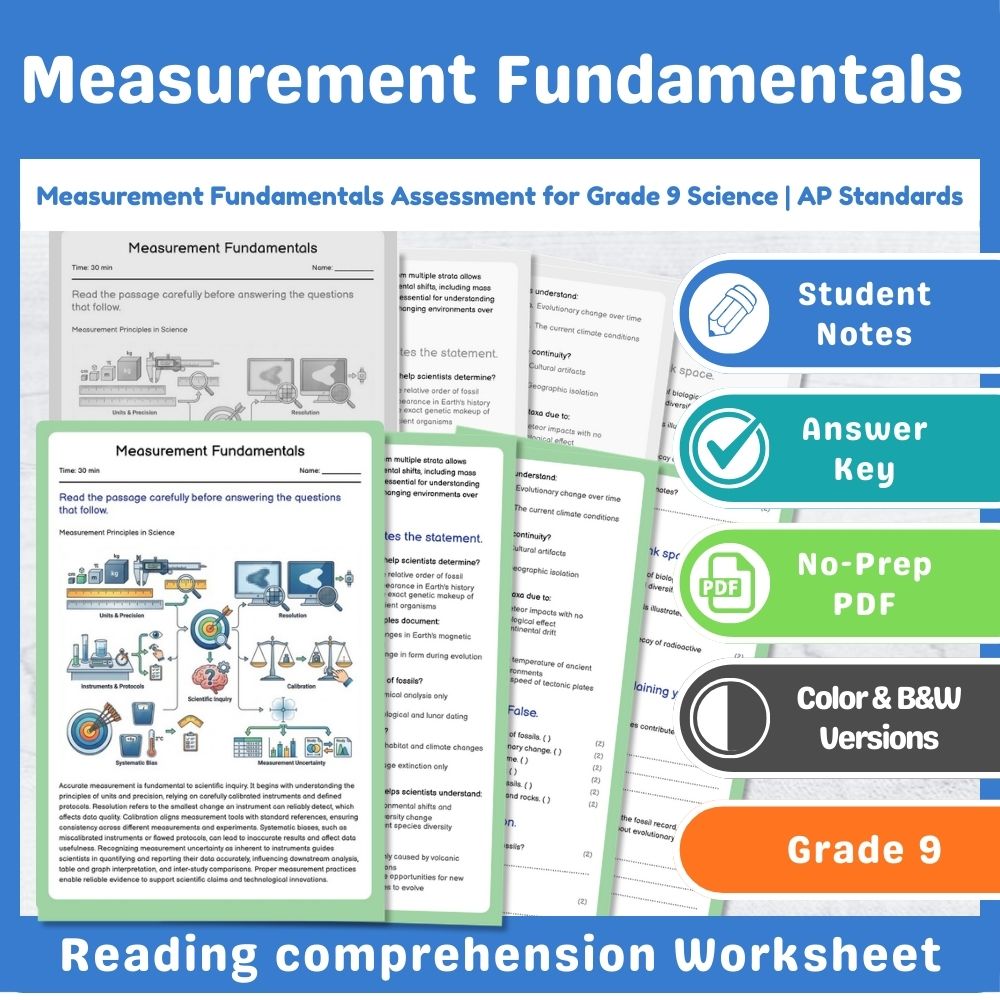
Measurement Fundamentals Assessment for Grade 9 Science | AP Standards
Created byPrism Point LearningLearning Objectives
- Understand the principles of metric measurement and instrument resolution.
- Recognize the importance of calibration in obtaining reliable data.
- Connect raw measurements to data representations and assess measurement uncertainty.
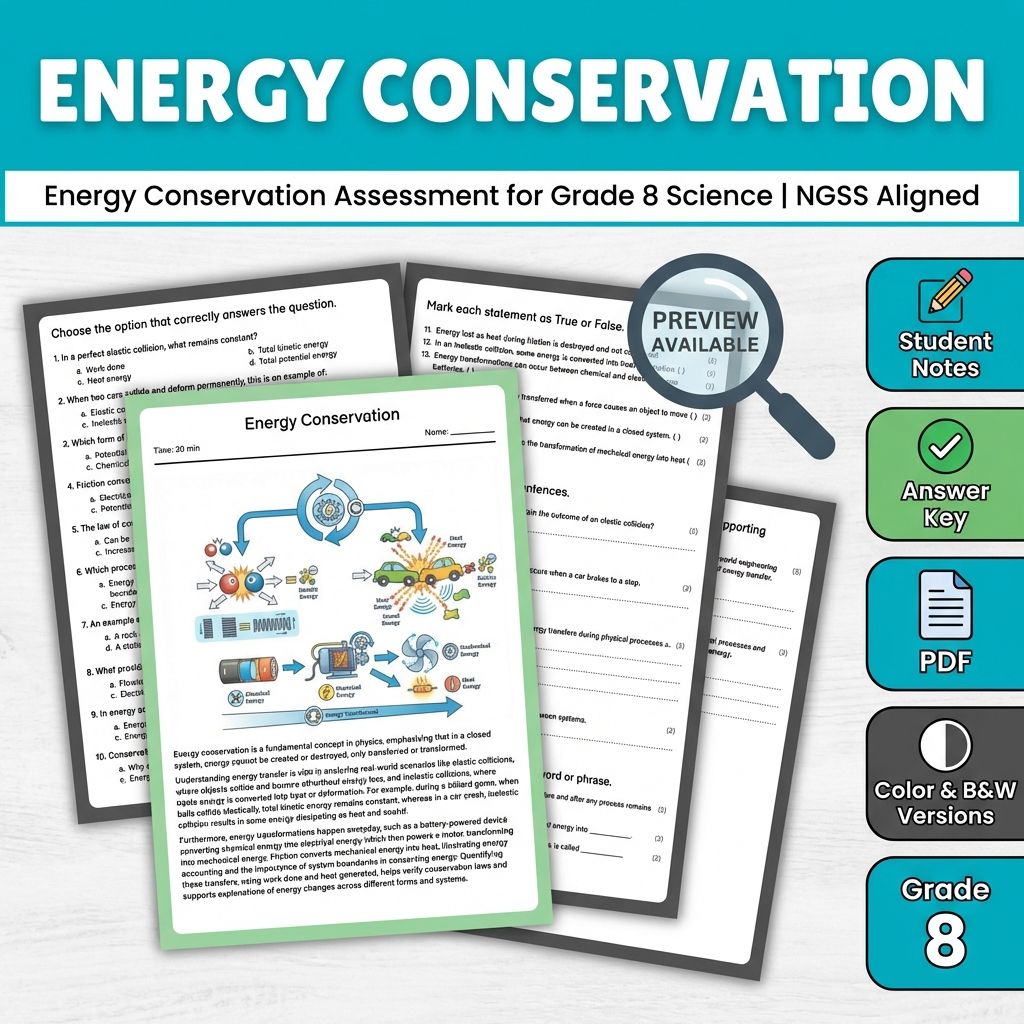
Energy Conservation Assessment for Grade 8 Science | NGSS Aligned
Created byPrism Point LearningLearning Objectives
- Explain the principle of energy conservation in various systems.
- Describe how energy transfers occur during elastic and inelastic collisions.
- Analyze the conversion of energy between chemical, electrical, and mechanical forms.

Grade 9 Science | Systems Thinking Worksheet | California Standards
 Created byLumora Learning
Learning Objectives
- Explain how a design functions as part of a larger system using matter, energy, and information flows
- Identify feedback and unintended effects that can occur when system components interact
- Use systems thinking to evaluate boundary conditions and how system behavior changes over time

Grade 10 Science | Specialized Cells Worksheet | NGSSS Aligned
Created byLumora LearningLearning Objectives
- Explain how specialized cell structures relate to specific cell functions in multicellular organisms
- Identify examples of specialized cells for transport, protection, absorption, and signaling and connect them to internal and surface features
- Describe how cell connections and communication pathways support tissue and system performance

Grade 6 Science | Watershed Pathways Worksheet Elena | California Standards
Created byLumora LearningLearning Objectives
- Explain how gravity, terrain, and land cover shape water movement within a watershed
- Describe how infiltration and soil storage affect runoff timing and streamflow
- Identify how vegetation influences erosion and sediment movement in watershed pathways

Grade 10 Science | Optimizing Design Worksheet Elena | California Standards
Created byLumora LearningLearning Objectives
- Explain how optimization uses criteria and constraints to guide engineering design choices
- Identify trade-offs involved in bridge truss optimization (strength, weight, cost, and constructability)
- Apply optimization reasoning to evaluate whether a design meets required limits

Grade 6 Science | Decomposition Recycling Worksheet | NGSSS Aligned
Created byLumora LearningLearning Objectives
- Explain how decomposers (fungi and bacteria) break down dead organisms and waste
- Describe how decomposition returns nutrients to the environment for producers to use again
- Identify factors that affect the rate of decomposition (oxygen, moisture, temperature, and surface area)

Grade 8 Science | Water Cycle Worksheet Elena | California Standards
Created byLumora LearningLearning Objectives
- Explain the main processes of the water cycle, including evaporation, condensation, precipitation, and runoff.
- Describe how energy from the Sun and gravity drive the continuous movement of water through Earth systems.
- Connect water cycle processes to weather, climate, and habitats.
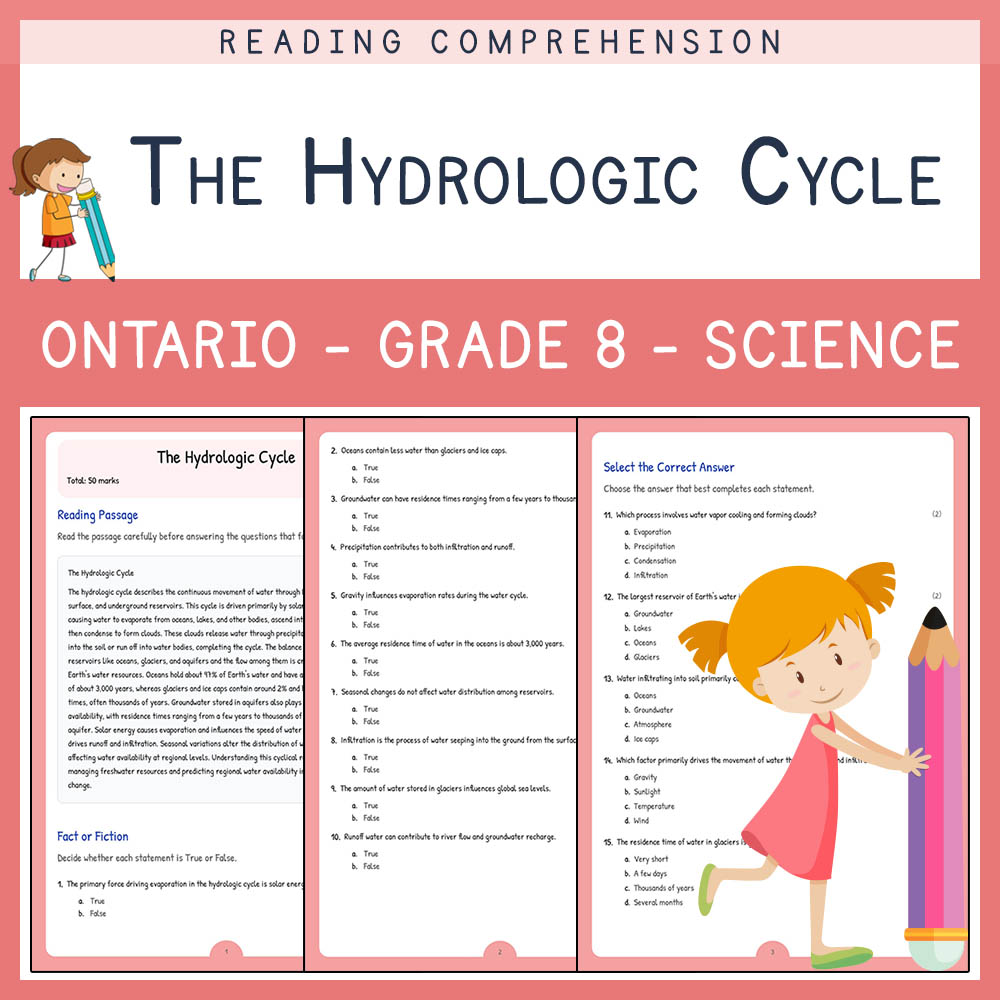
Grade 8 Science | The Hydrologic Cycle Worksheet Elena | Ontario
Created byLumora LearningLearning Objectives
- Describe the main processes involved in the hydrologic cycle.
- Explain the role of solar energy and gravity in water movement.
- Identify the different reservoirs of water and their residence times.

Grade 11 Science | Momentum Conservation Worksheet | California Standards
Created byLumora LearningLearning Objectives
- Explain momentum as a vector quantity and use p = mv to predict direction and magnitude of motion.
- Apply conservation of momentum to analyze collisions and interactions in isolated systems.
- Connect impulse to changes in momentum and interpret action–reaction force pairs.

Grade 9 Science | Conservation Of Matter Worksheet | Florida NGSSS Aligned
Created byLumora LearningLearning Objectives
- Explain conservation of matter in terms of atoms being rearranged during chemical reactions
- Use balanced chemical equations to verify that the number of atoms of each element is conserved from reactants to products
- Connect conservation of mass in a closed system to particle-level models of reactions
Browse more categories
About Science Worksheets
Find Science worksheets spanning core skills, practice, and review. All 42,550 resources are instant PDF downloads for the classroom or home.
Every worksheet on MyTeachingSheets is created by independent teacher-authors and reviewed before publication. All resources download as printable PDFs for classroom, homework, or at-home practice, and many include answer keys. Preview any worksheet free before buying.