
Science Worksheets
42,685 subject resources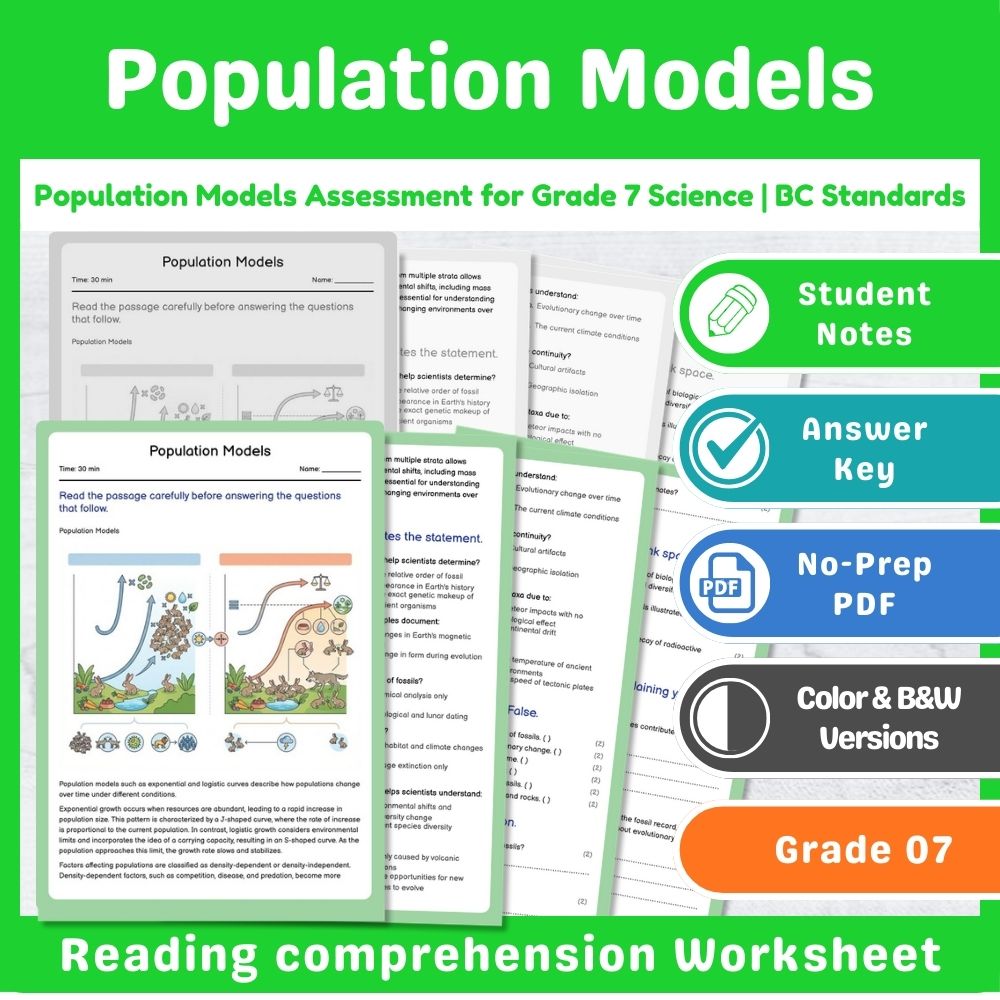
Population Models Assessment for Grade 7 Science | BC Standards
 Created byPrism Point Learning
Learning Objectives
- Understand the differences between exponential and logistic population growth models.
- Explain factors influencing population change, including density-dependent and density-independent factors.
- Interpret patterns in real-world population dynamics using simple models.
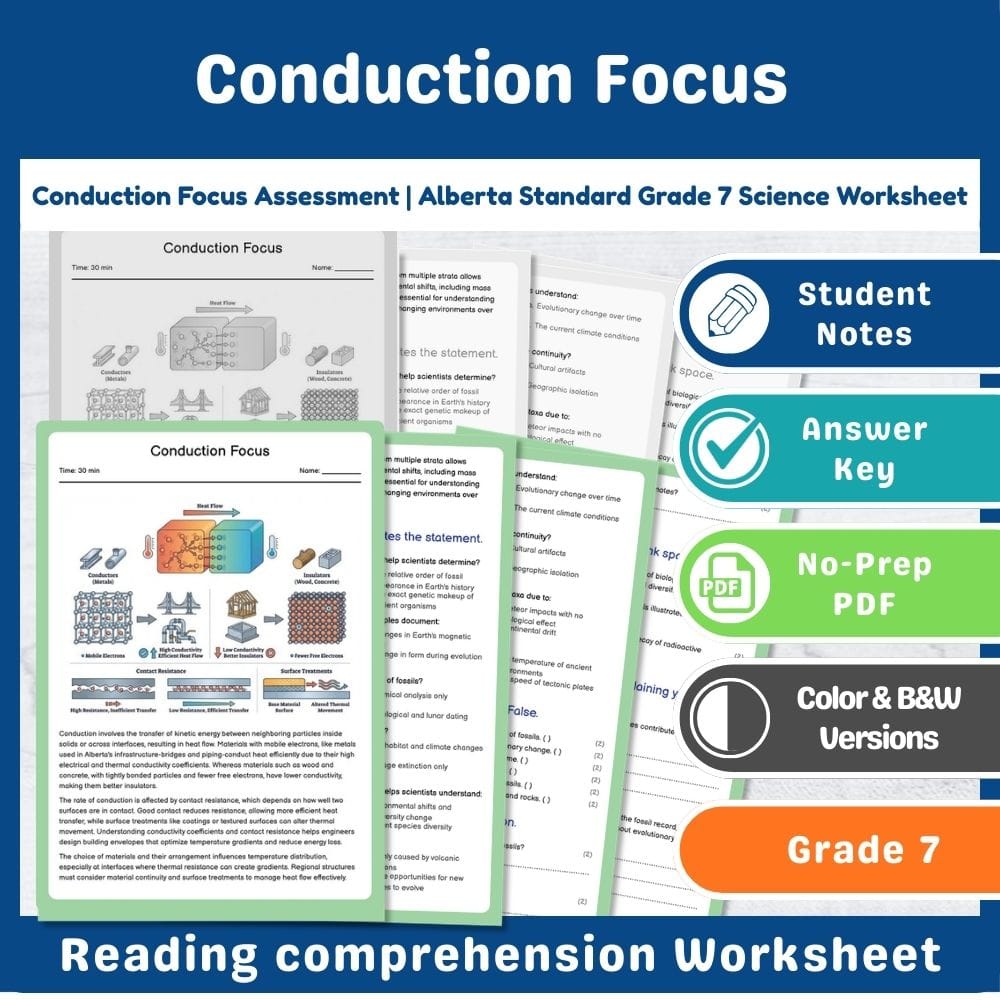
Conduction Focus Assessment | Alberta Standard Grade 7 Science Worksheet
Created byPrism Point LearningLearning Objectives
- Explain how energy is transferred through conduction in solids.
- Identify materials with high and low thermal conductivity and their applications.
- Describe the effects of contact resistance and surface treatments on heat flow in structures.
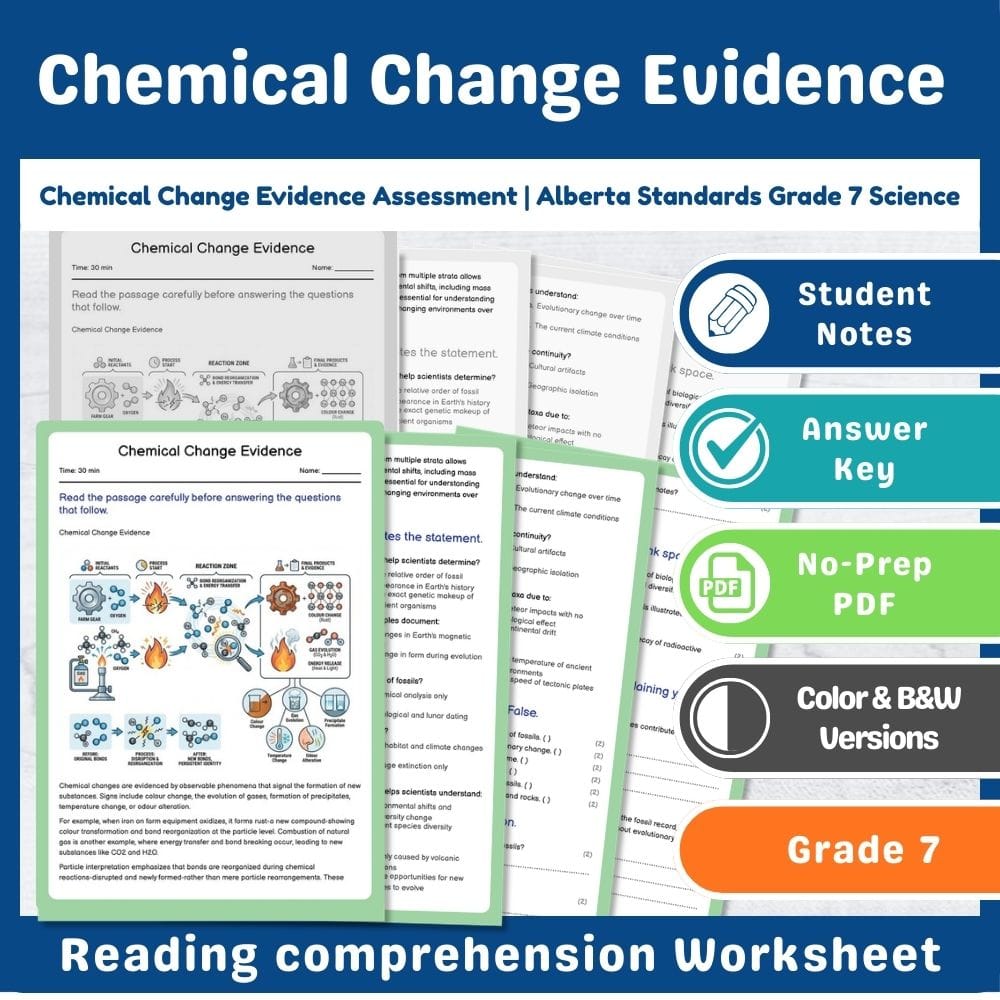
Chemical Change Evidence Assessment | Alberta Standards Grade 7 Science
Created byPrism Point LearningLearning Objectives
- Identify observable signs of chemical changes such as colour change, gas production, and precipitate formation.
- Understand the particle-level interpretation involving bond reorganization during chemical reactions.
- Differentiate between physical and chemical changes based on evidence of chemical alteration.
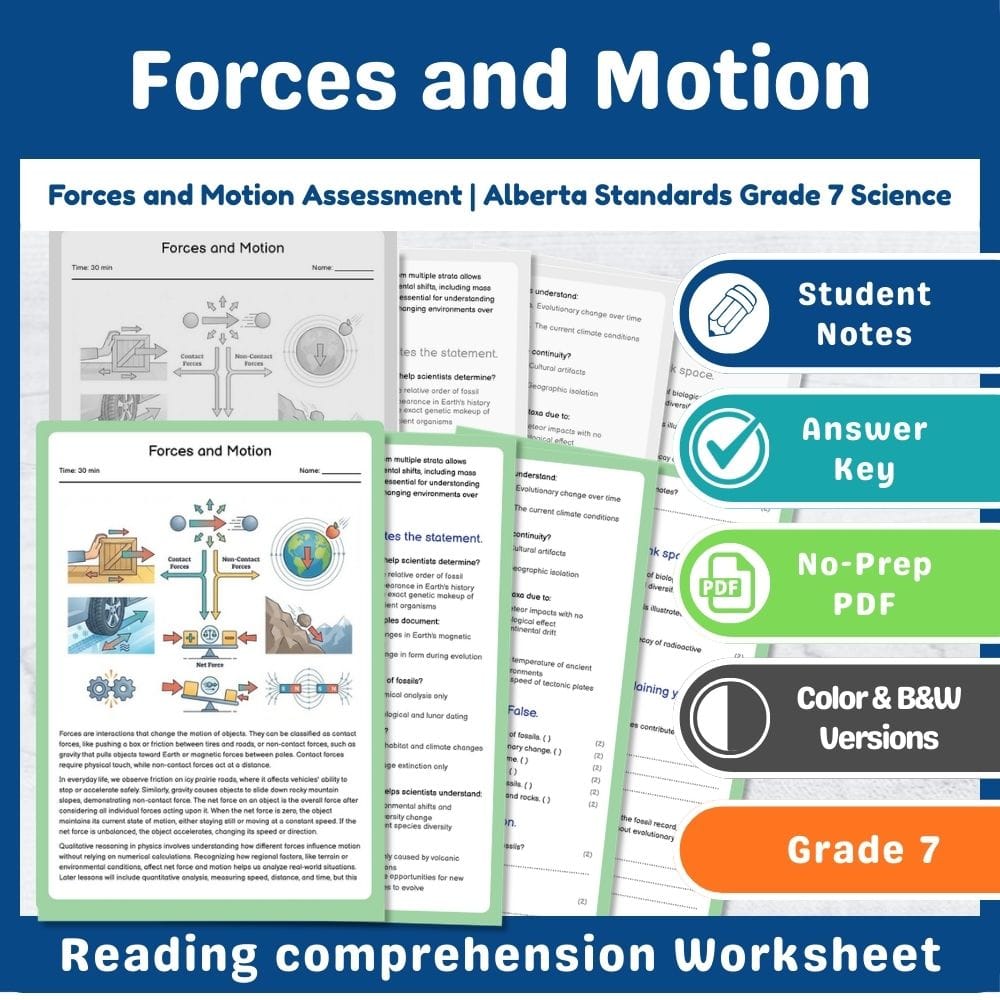
Forces and Motion Assessment | Alberta Standards Grade 7 Science
Created byPrism Point LearningLearning Objectives
- Understand the difference between contact and non-contact forces.
- Explain how net force affects the motion of an object.
- Identify examples of forces in regional contexts such as friction and gravity.
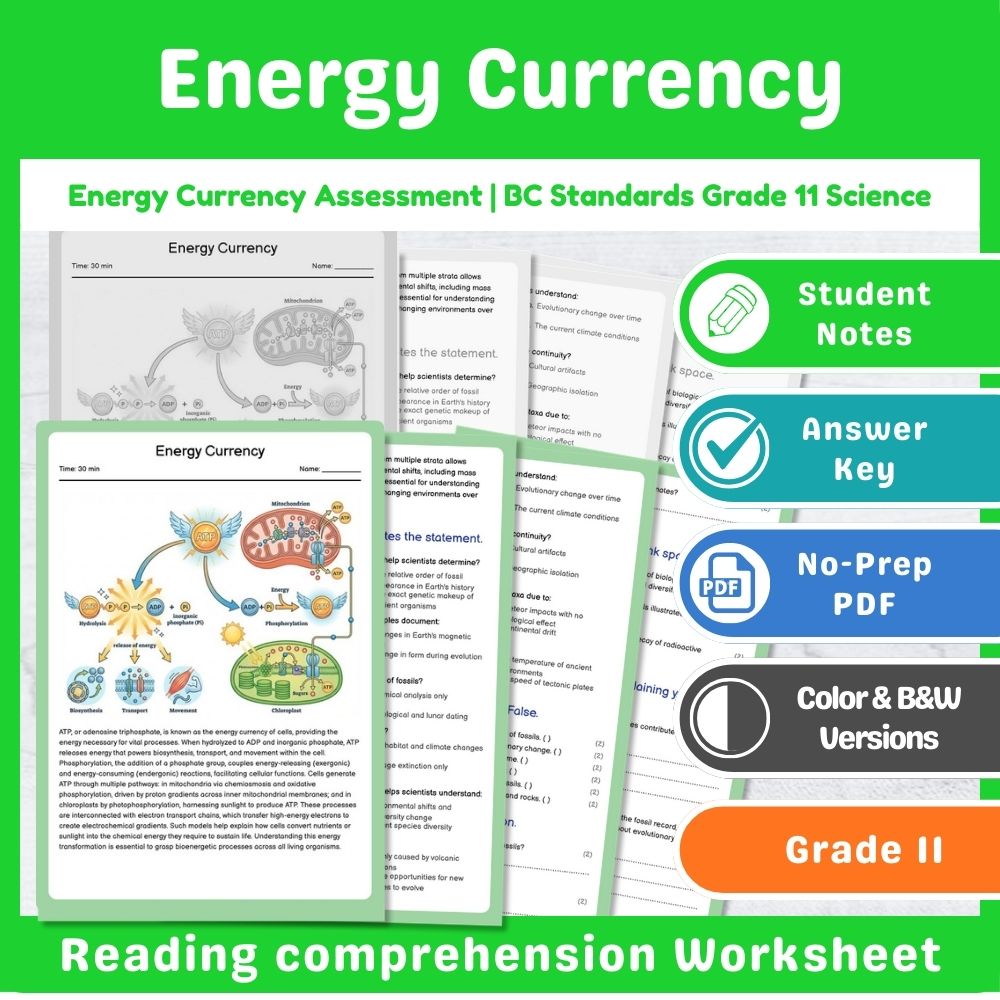
Energy Currency Assessment for Grade 11 Science | Standards-Aligned
Created byPrism Point LearningLearning Objectives
- Understand how ATP functions as the primary energy currency in cells.
- Describe processes of ATP synthesis such as chemiosmosis and photophosphorylation.
- Explain how energy from nutrients and sunlight is converted into usable chemical energy.
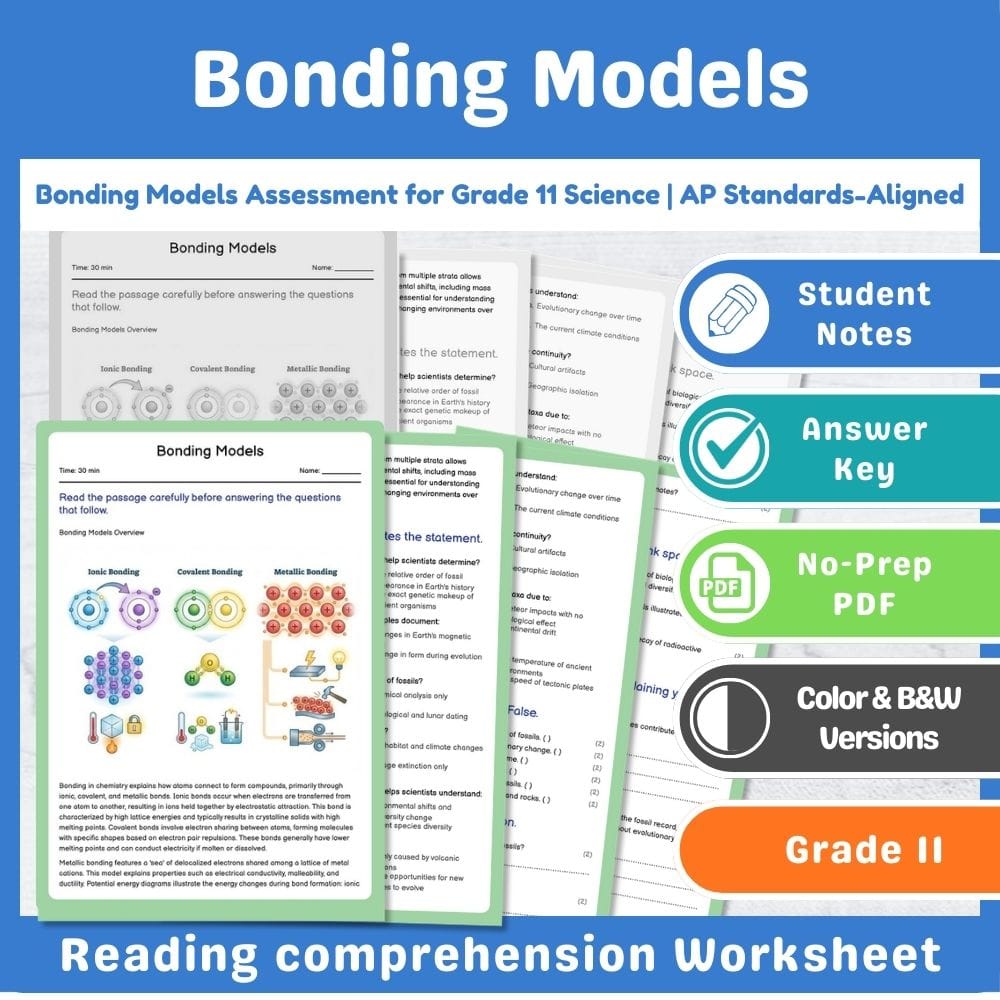
Bonding Models Assessment for Grade 11 Science | AP Standards-Aligned
Created byPrism Point LearningLearning Objectives
- Understand the differences between ionic, covalent, and metallic bonding through potential-energy diagrams and lattice considerations.
- Use electronegativity differences and formal charge concepts to distinguish bond types.
- Compare model predictions for bond strengths, lattice energies, and properties like conductivity and melting point.
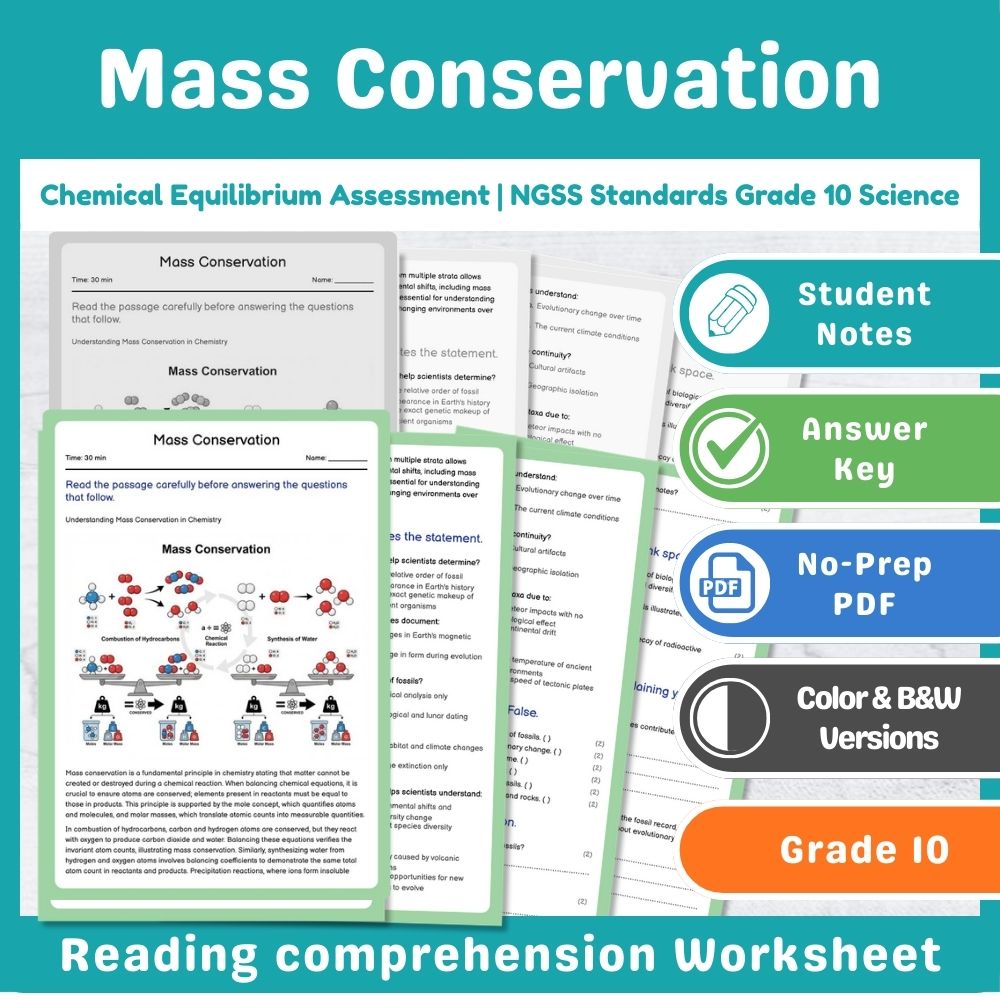
Mass Conservation Assessment for Grade 10 Science NGSS Standards
Created byPrism Point LearningLearning Objectives
- Understand the concept of atomic and mass conservation during chemical reactions.
- Apply balancing techniques to demonstrate atom count invariance across reactions.
- Utilize quantitative representations like mole concepts and molar masses to verify mass invariance.
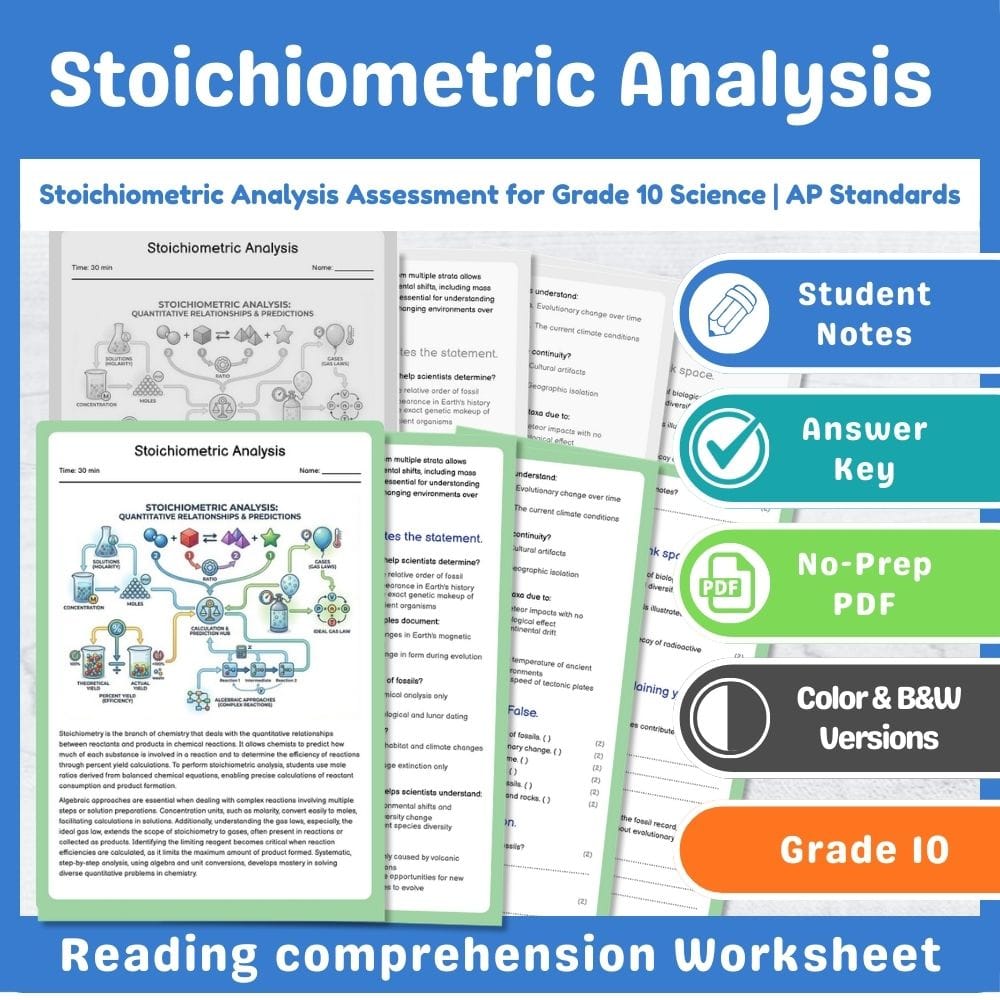
Stoichiometric Analysis Assessment for Grade 10 Science | AP Standards
Created byPrism Point LearningLearning Objectives
- Develop algebraic strategies for complex stoichiometric relationships.
- Apply unit conversions and solution concentration calculations in chemical problems.
- Identify limiting reagents and calculate theoretical vs. actual yields using mole ratios.
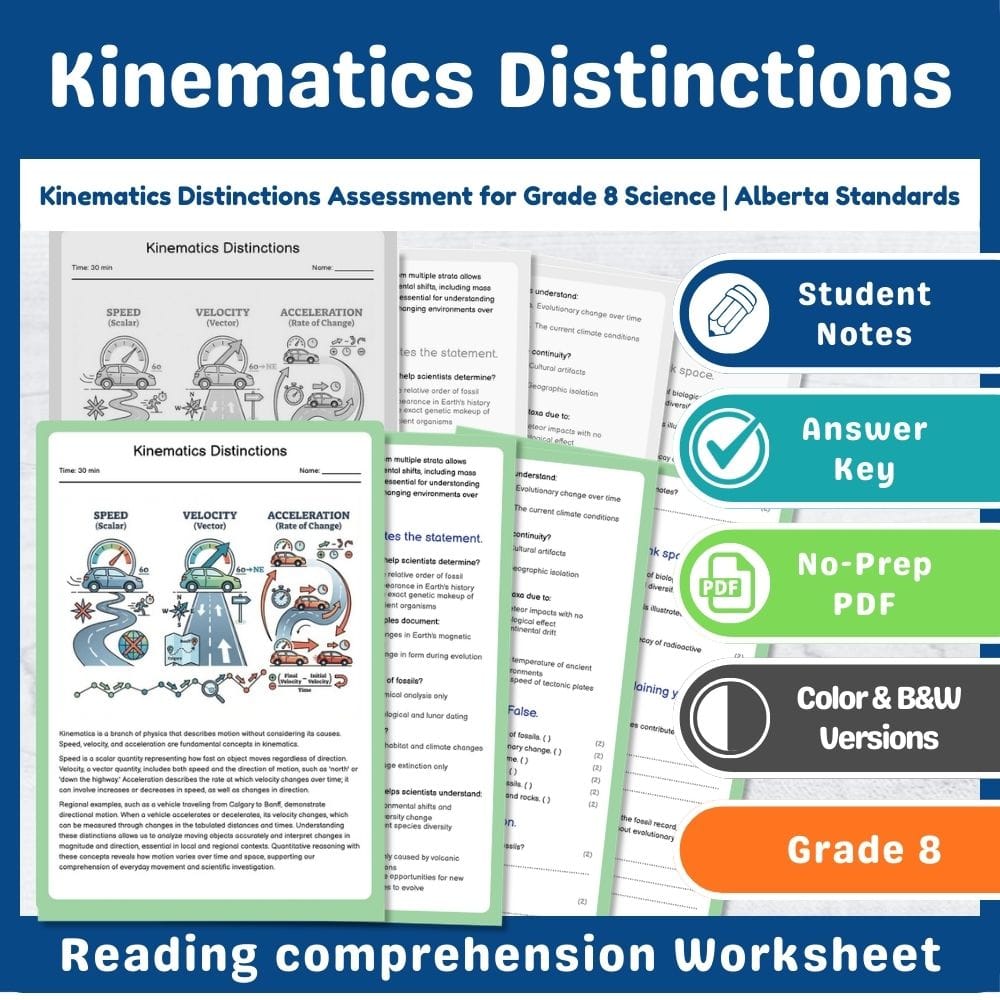
Kinematics Distinctions Assessment for Grade 8 Science | Alberta Standards
Created byPrism Point LearningLearning Objectives
- Define speed, velocity, and acceleration with precision and clarity.
- Differentiate between scalar and vector quantities in motion.
- Interpret real-world examples of directional motion in the context of regions such as Calgary and Banff.
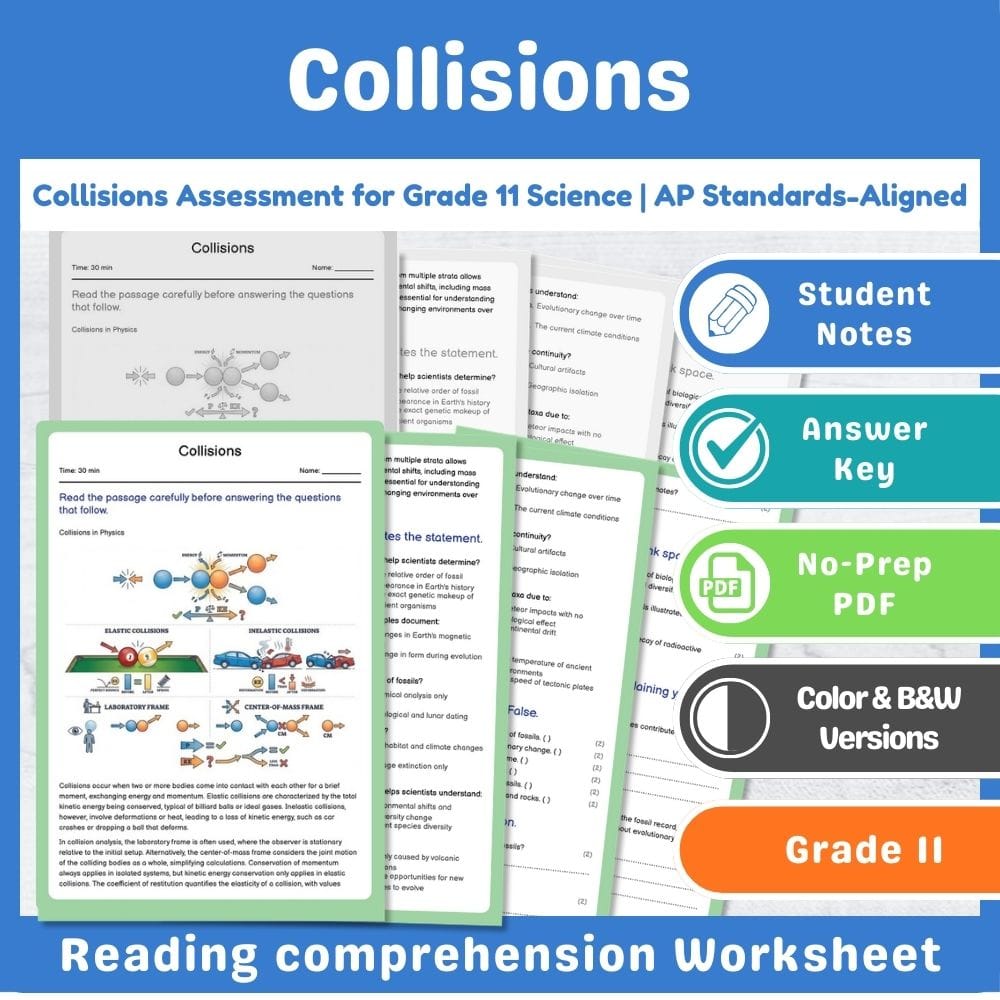
Collisions Assessment for Grade 11 Science | AP Standards-Aligned
Created byPrism Point LearningLearning Objectives
- Analyze elastic and inelastic collisions in one and two dimensions using conservation of momentum and kinetic energy.
- Compare laboratory and center-of-mass reference frames in collision analysis.
- Employ algebraic and vector methods to predict post-collision velocities.
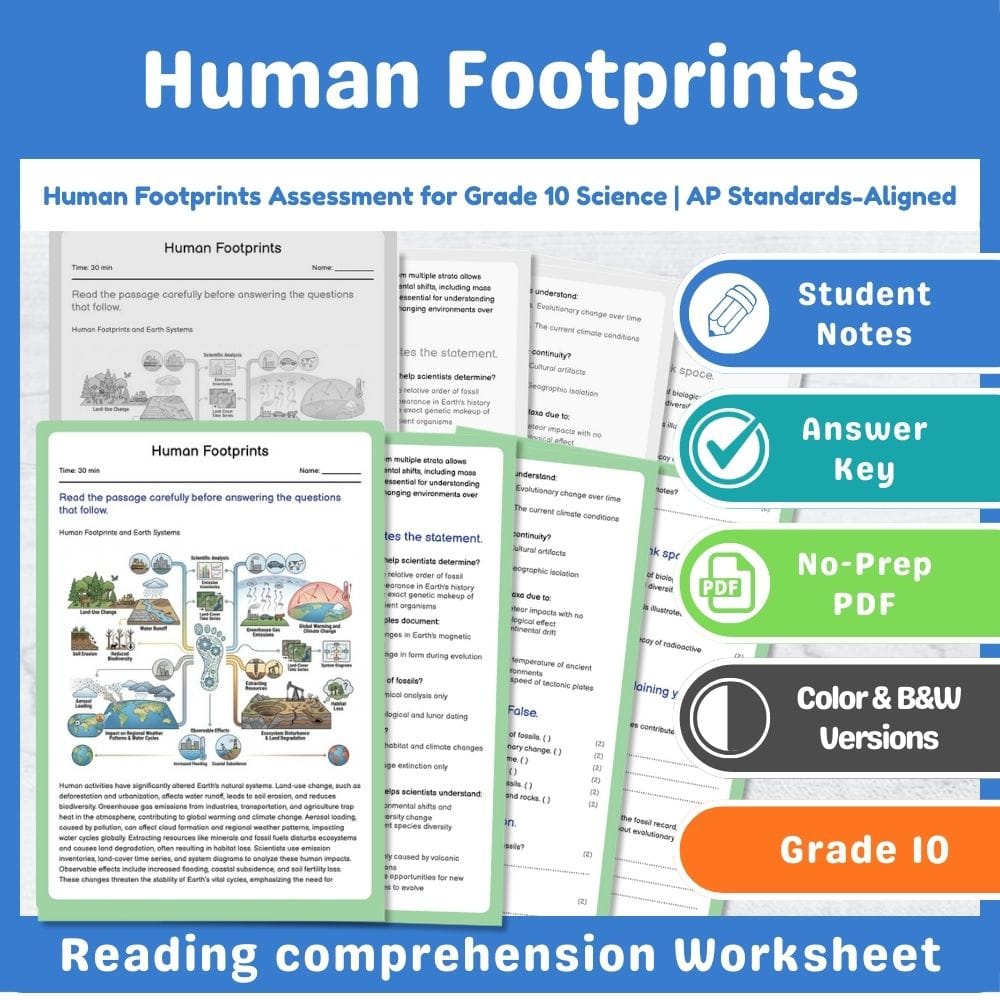
Human Footprints Assessment for Grade 10 Science | AP Standards-Aligned
Created byPrism Point LearningLearning Objectives
- Understand how human activities alter Earth's land, water, and air systems.
- Identify indicators and signs of environmental change caused by human actions.
- Analyze data and diagrams to evaluate human impact on ecosystems.
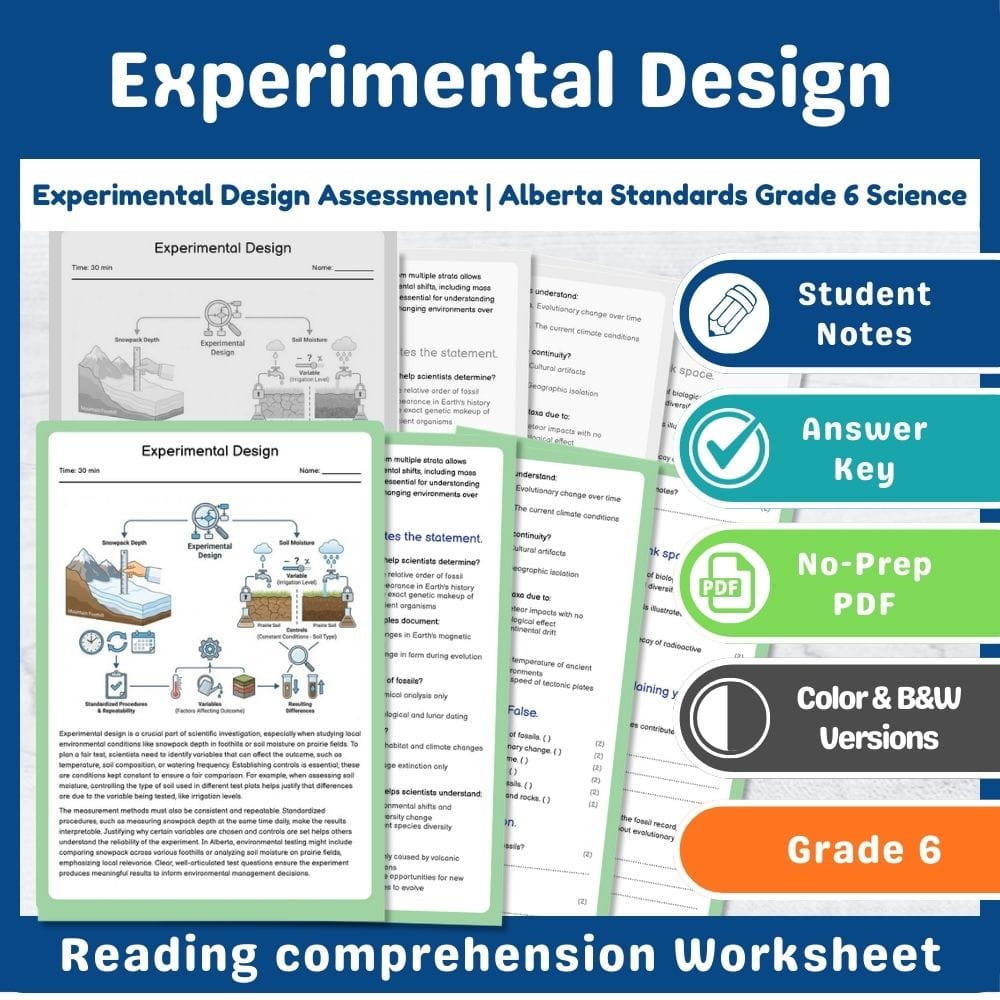
Experimental Design Assessment | Alberta Standards Grade 6 Science
Created byPrism Point LearningLearning Objectives
- Understand the importance of variables, controls, and measurement procedures in experimental design.
- Identify and justify appropriate control conditions in fair tests.
- Describe how to formulate testable questions that yield interpretable results in local environmental studies.
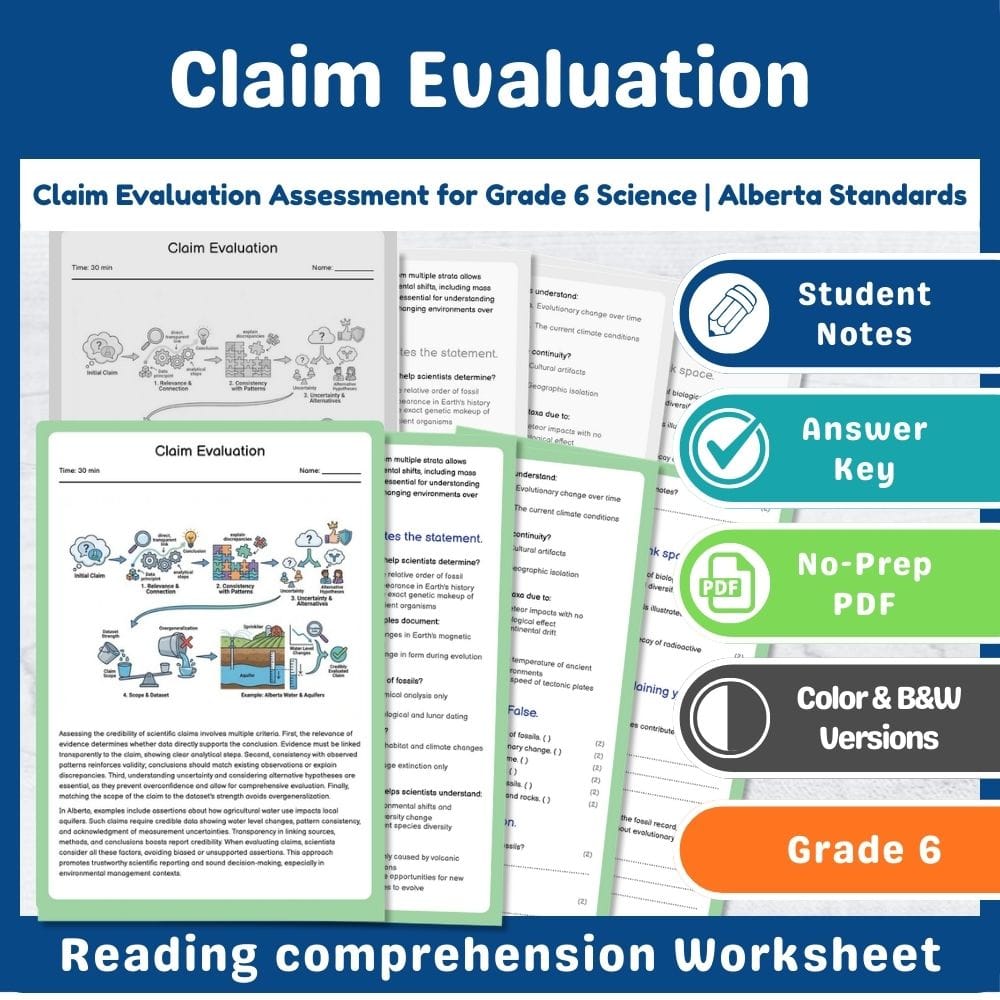
Claim Evaluation Assessment for Grade 6 Science | Alberta Standards
Created byPrism Point LearningLearning Objectives
- Understand criteria for assessing the relevance and consistency of evidence in claims.
- Evaluate the scope of claims in relation to data strength and uncertainty.
- Analyze examples of claim assessment in environmental contexts, such as agriculture and water use.
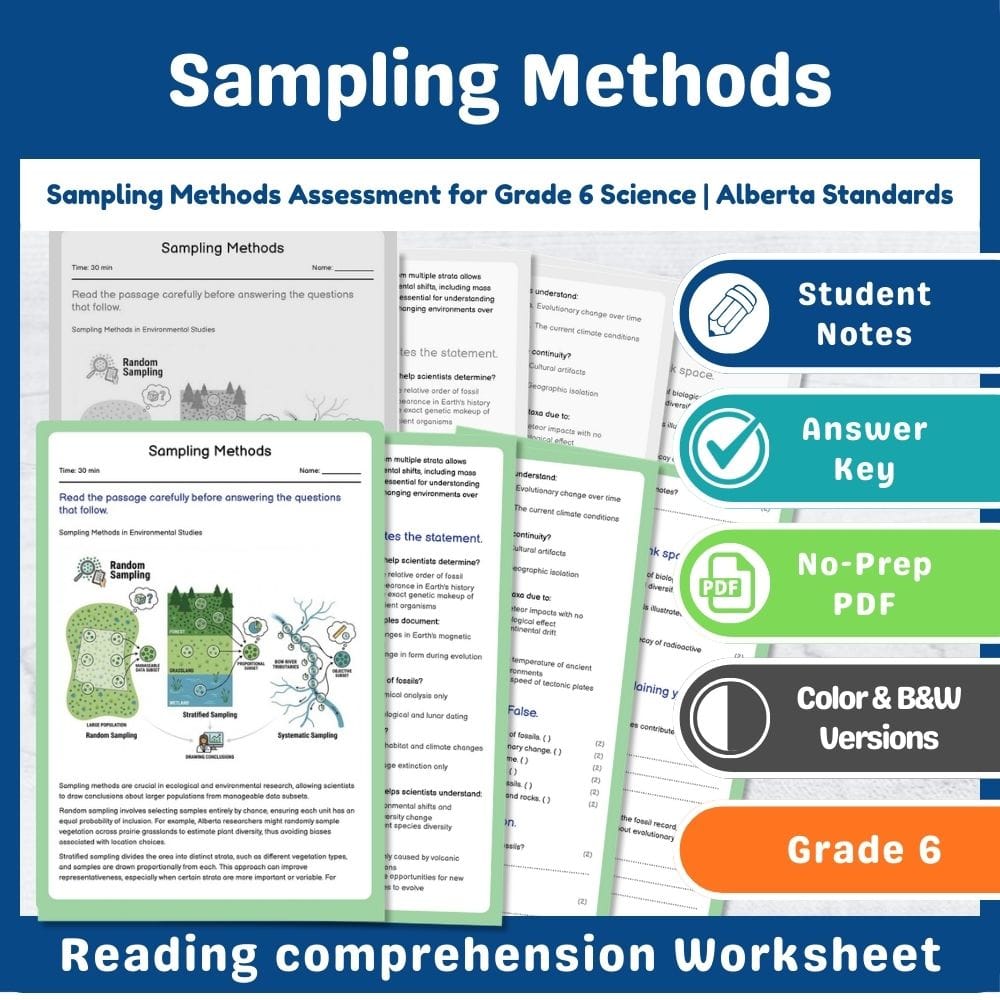
Sampling Methods Assessment for Grade 6 Science | Alberta Standards
Created byPrism Point LearningLearning Objectives
- Understand different sampling methods and their applications.
- Compare systematic, stratified, and random sampling techniques.
- Evaluate trade-offs between coverage, practicality, and interpretation in sampling.
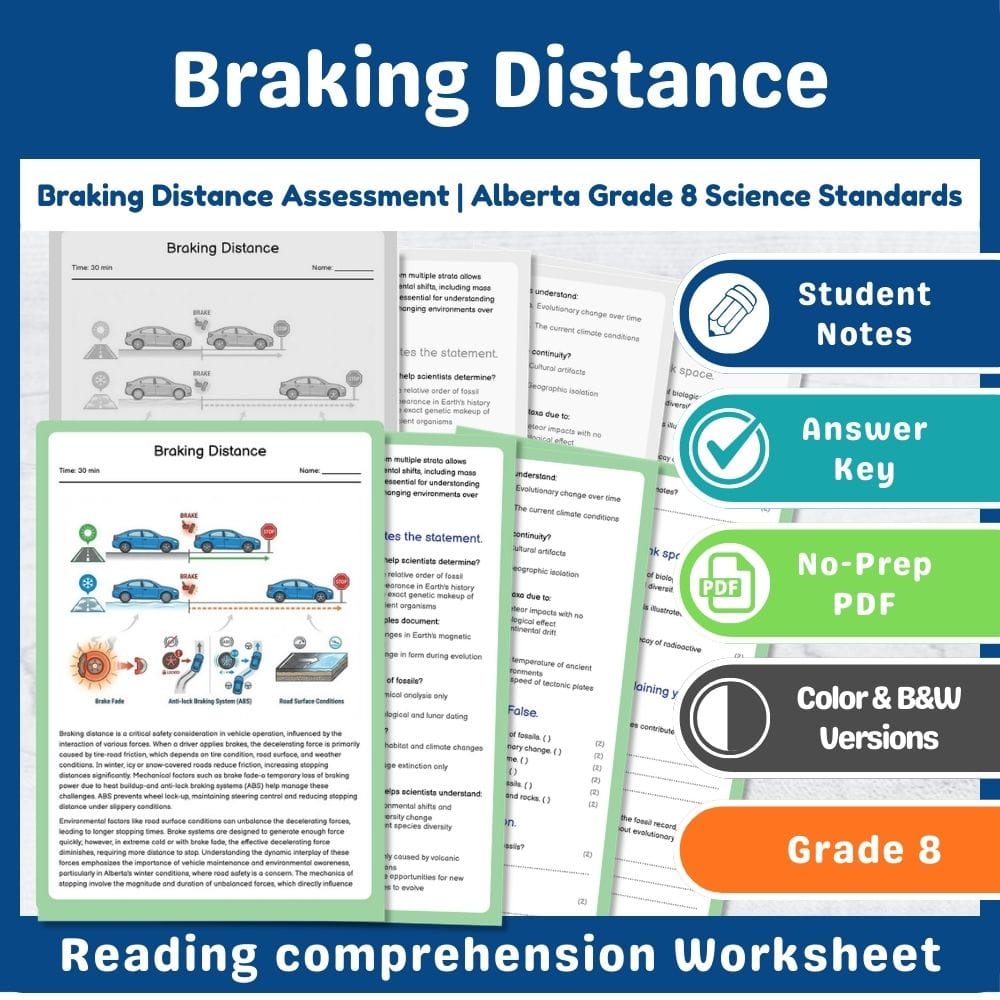
Braking Distance Assessment | Alberta Grade 8 Science Standards
Created byPrism Point LearningLearning Objectives
- Understand the factors affecting stopping distance during braking.
- Explain the role of tire-road friction and mechanical systems in deceleration.
- Analyze how environmental conditions influence braking effectiveness.
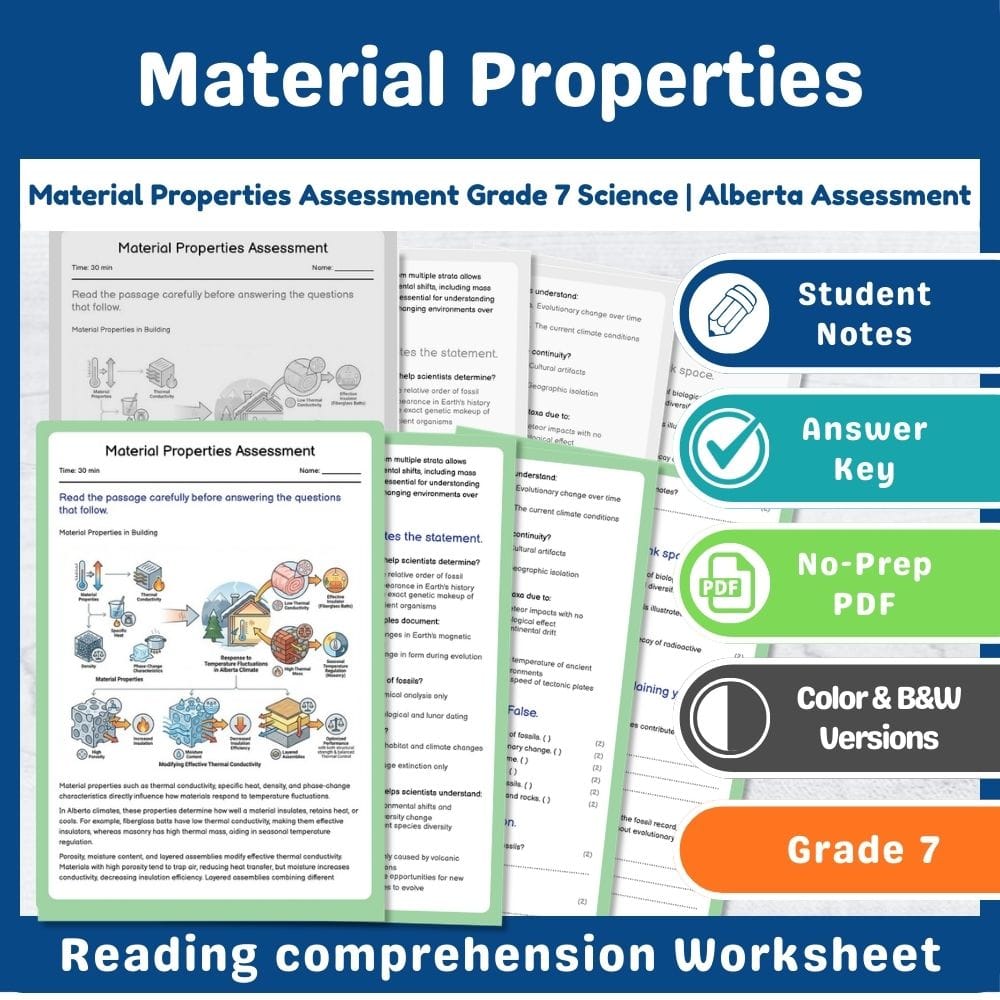
Material Properties Assessment Grade 7 Science | Alberta Assessment
Created byPrism Point LearningLearning Objectives
- Understand how intrinsic properties like thermal conductivity, specific heat, and density affect material behavior.
- Compare construction materials based on their thermal resistance and structural features.
- Explain how porosity, moisture, and layered assemblies influence thermal performance.
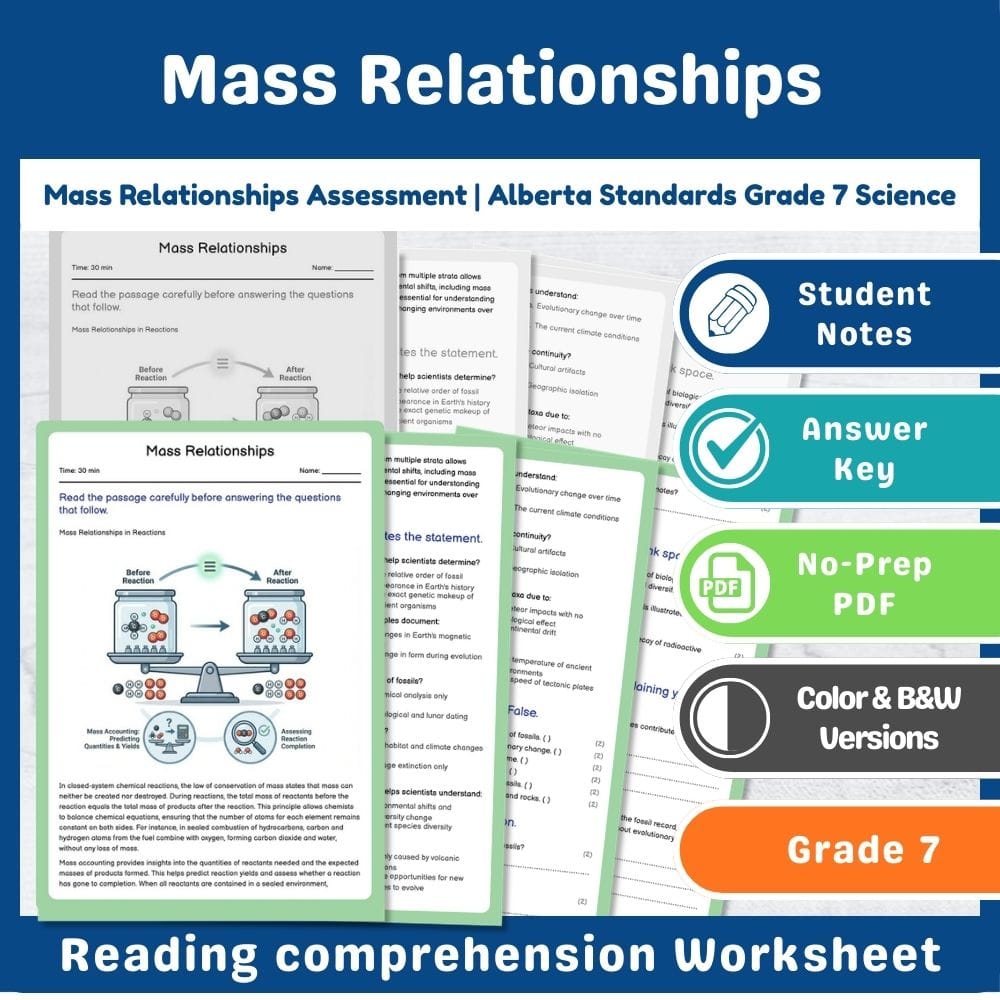
Mass Relationships Assessment | Alberta Standards Grade 7 Science
Created byPrism Point LearningLearning Objectives
- Understand how conservation of mass governs the behavior of substances in closed-system reactions.
- Learn to balance chemical inputs and outputs to predict reaction yields.
- Recognize examples like sealed combustion and closed corrosion assays that model mass transfers.

Magnetic Separation Assessment for Grade 6 Science – Standards Aligned
Created byPrism Point LearningLearning Objectives
- Understand the principle of magnetic separation and its applications.
- Identify materials that respond to magnetic forces versus those that do not.
- Describe how magnetic separation can be used in everyday technology and recycling.
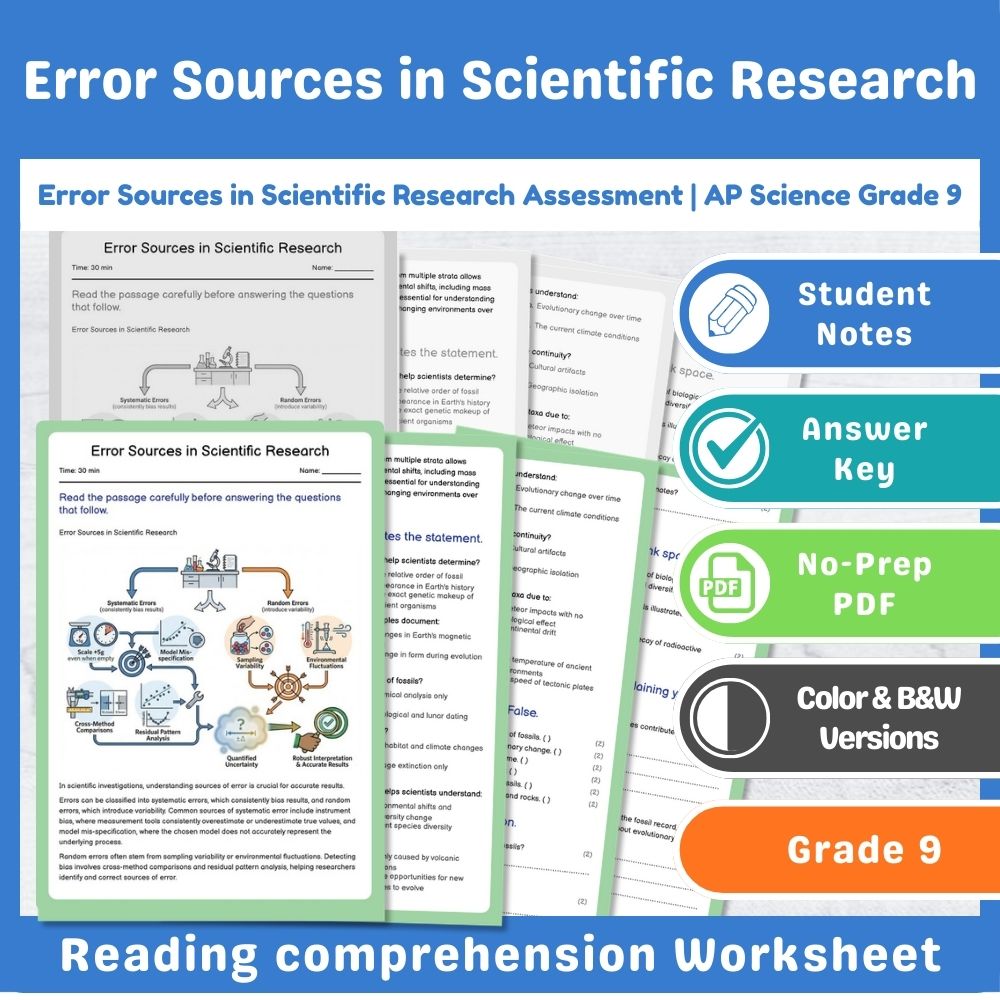
Error Sources in Scientific Research Assessment | AP Science Grade 9
Created byPrism Point LearningLearning Objectives
- Understand key concepts related to Science
- Apply knowledge through practice questions
- Demonstrate comprehension of the material
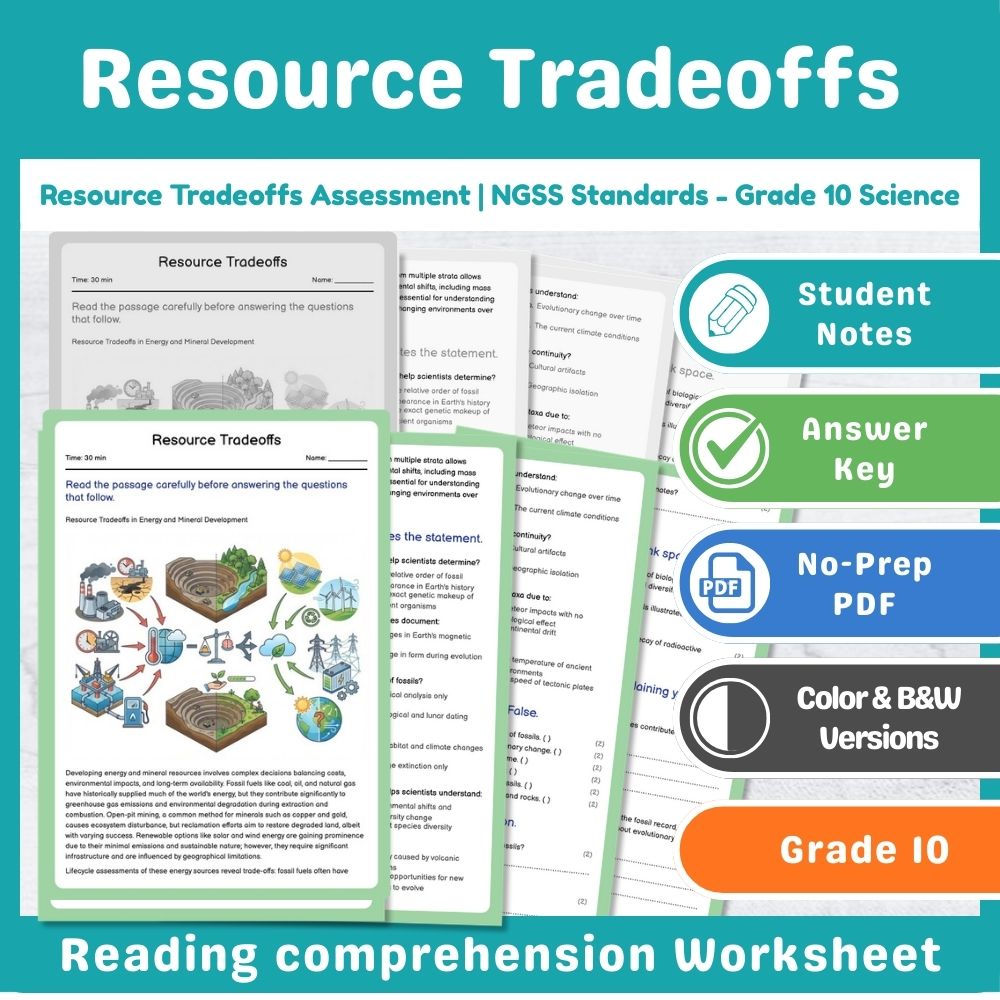
Resource Tradeoffs Assessment | NGSS Standards - Grade 10 Science
Created byPrism Point LearningLearning Objectives
- Analyze the economic, environmental, and sustainability trade-offs in energy and mineral resource development.
- Compare and evaluate different resource management strategies such as fossil fuels, solar, wind, and mining reclamation.
- Apply criteria like resource depletion, ecosystem impact, greenhouse gas emissions, and infrastructure constraints to assess trade-offs.

Energy Flow Assessment for Grade 10 Science TEKS Standards
Created byPrism Point LearningLearning Objectives
- Explain how sunlight enters ecosystems and is used by photosynthetic organisms.
- Describe the transfer and loss of energy through trophic levels in food chains and webs.
- Analyze how energy constraints influence biomass and population sizes in ecosystems.
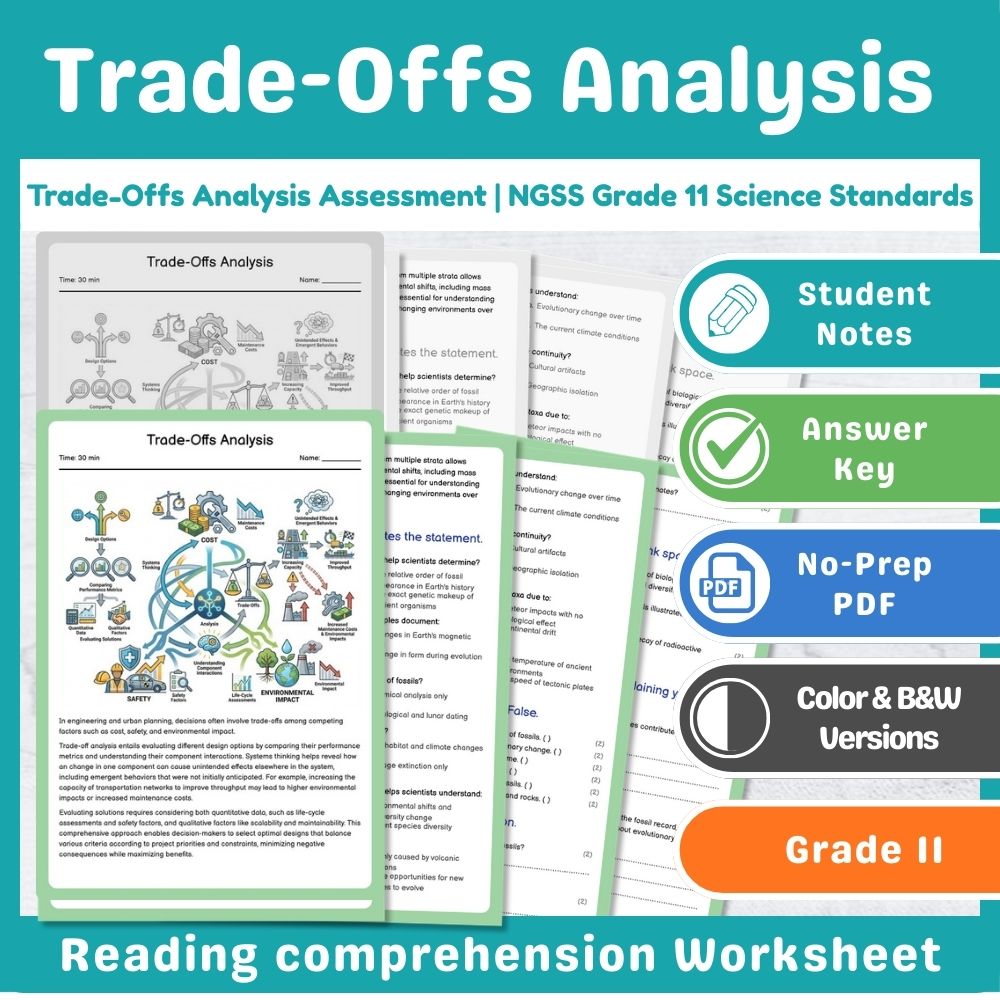
Trade-Offs Analysis Assessment | NGSS Grade 11 Science Standards
Created byPrism Point LearningLearning Objectives
- Evaluate proposed solutions against specified criteria and constraints using quantitative and qualitative methods.
- Apply systems thinking to analyze component interactions, emergent behavior, and unintended consequences in complex systems.
- Examine trade-offs among cost, safety, environmental impact, scalability, and maintainability in engineering and urban systems.
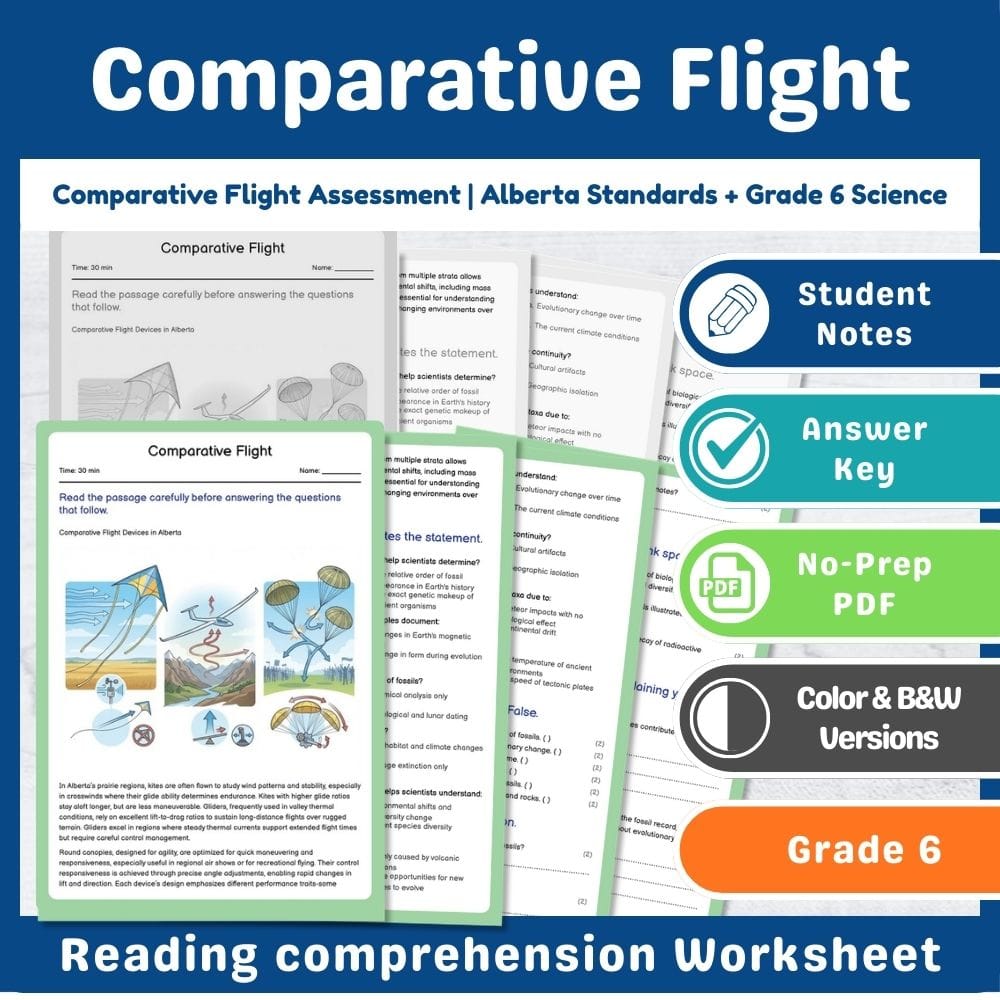
Comparative Flight Assessment | Alberta Standards + Grade 6 Science
Created byPrism Point LearningLearning Objectives
- Analyze the differences in glide ratio, lift-to-drag performance, and control responsiveness among kites, gliders, and round canopies.
- Understand why certain flying device designs favor endurance over maneuverability in regional atmospheric conditions.
- Compare quantitative and qualitative performance parameters of different flying devices in Alberta contexts such as prairie crosswinds and valley thermals.
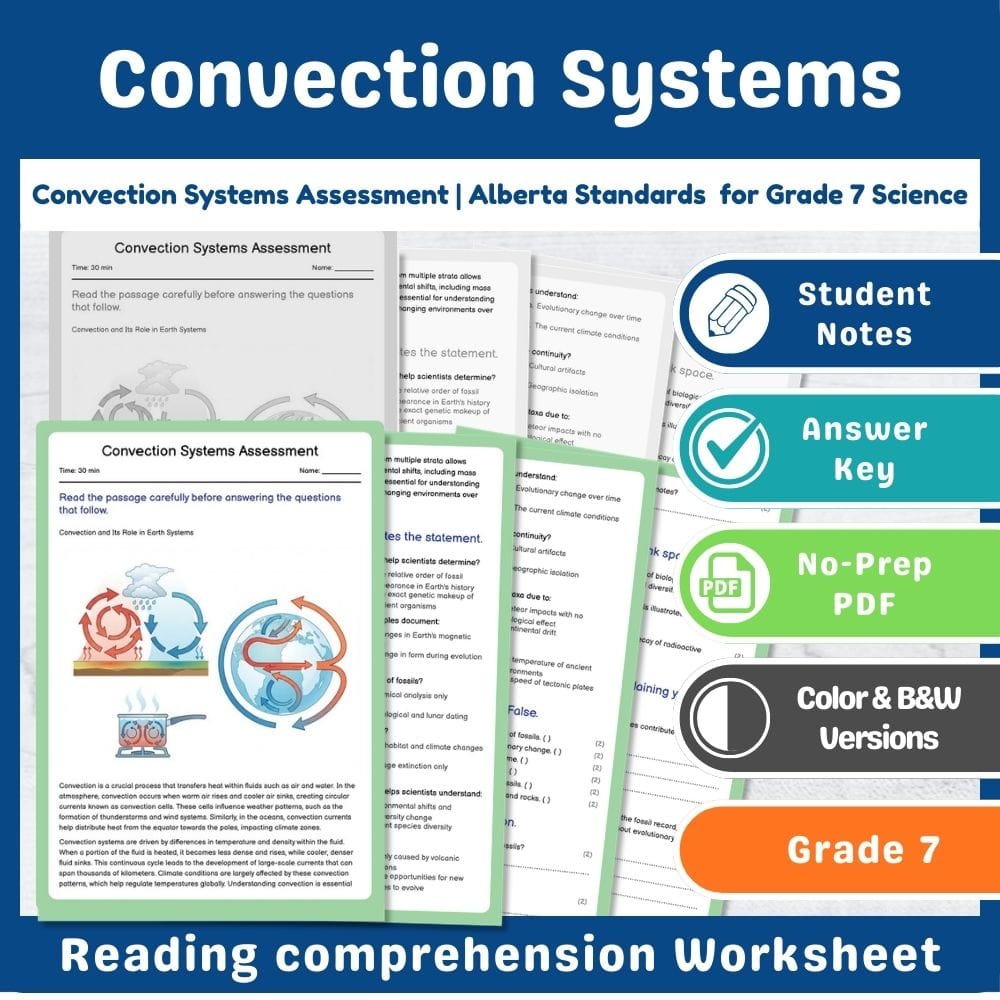
Convection Systems Assessment | Alberta Standards Assessment for Grade 7 Science
Created byPrism Point LearningLearning Objectives
- Understand the fundamental principles of convection currents in atmospheric and oceanic systems.
- Identify the factors that influence convection in different environments.
- Analyze the effects of convection currents on weather patterns and climate.

Linkage and Recombination Assessment for Grade 11 Science TEKS
Created byPrism Point LearningLearning Objectives
- Understand the concepts of linkage and recombination in genetics.
- Explain how crossover frequency reflects physical distance between genes.
- Identify factors like interference and hot spots that influence crossover distribution.

Reasoned Claims Assessment | TEKS Grade 12 Science Standards PDF
Created byPrism Point LearningLearning Objectives
- Understand the principles of scientific reasoning and argumentation.
- Analyze evidence and formulate well-supported scientific claims.
- Evaluate competing hypotheses using logical frameworks and evidence strength.

Uncertainty in Graphs Assessment for Grade 9 Science | Standards-Aligned
Created byPrism Point LearningLearning Objectives
- Understand how uncertainty is represented in data displays such as error bars and uncertainty bands.
- Interpret the significance of overlapping uncertainty ranges across different conditions.
- Connect the size of uncertainty to the credibility of observed patterns and trends.

Moon Phases and Eclipses Assessment | General Standards | Grade 9 Science
Created byPrism Point LearningLearning Objectives
- Understand the relative motions of the Moon, Earth, and Sun that produce different Moon phases.
- Explain how the geometry of the Earth-Moon-Sun system causes eclipses.
- Describe the reasons why eclipses do not happen every month.
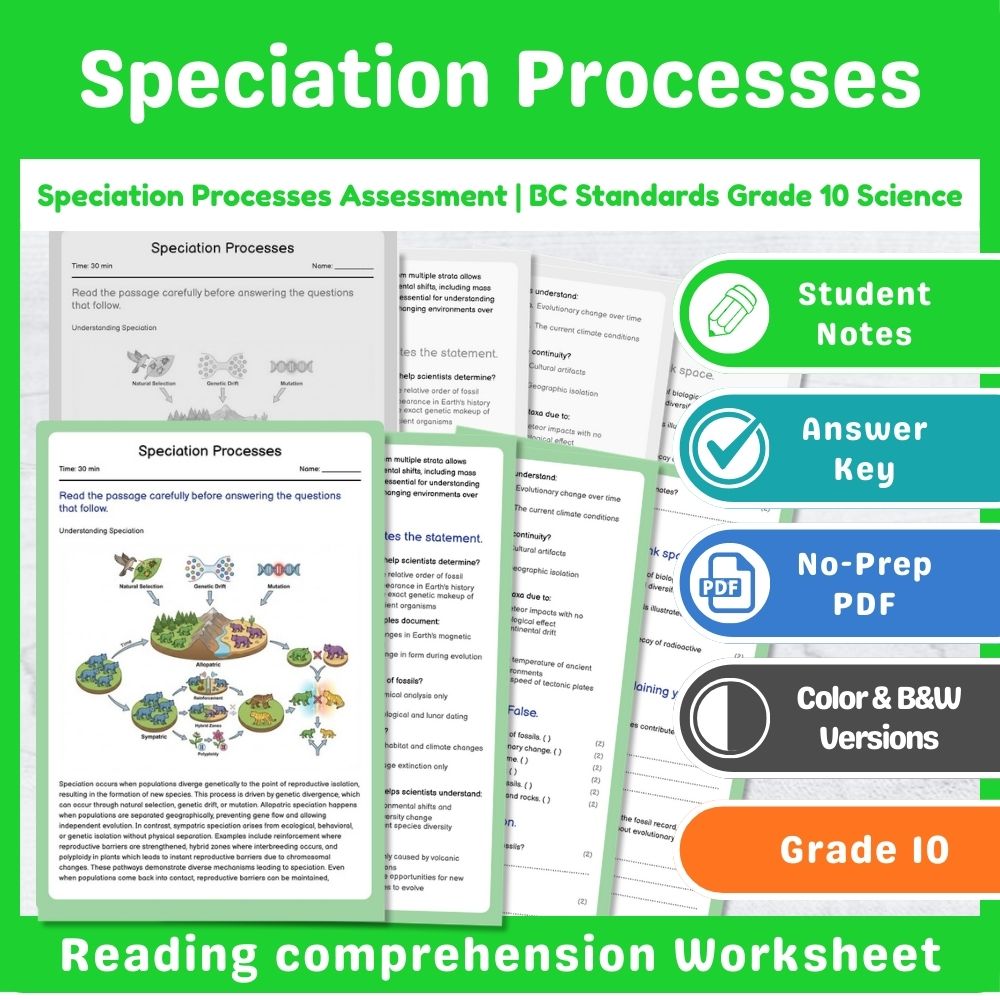
Speciation Processes Assessment | BC Standards Grade 10 Science
Created byPrism Point LearningLearning Objectives
- Describe the key mechanisms involved in speciation, including allopatric and sympatric pathways.
- Explain how reproductive barriers maintain species divergence even after contact.
- Identify different pathways of speciation such as reinforcement, hybrid zones, and polyploidy.
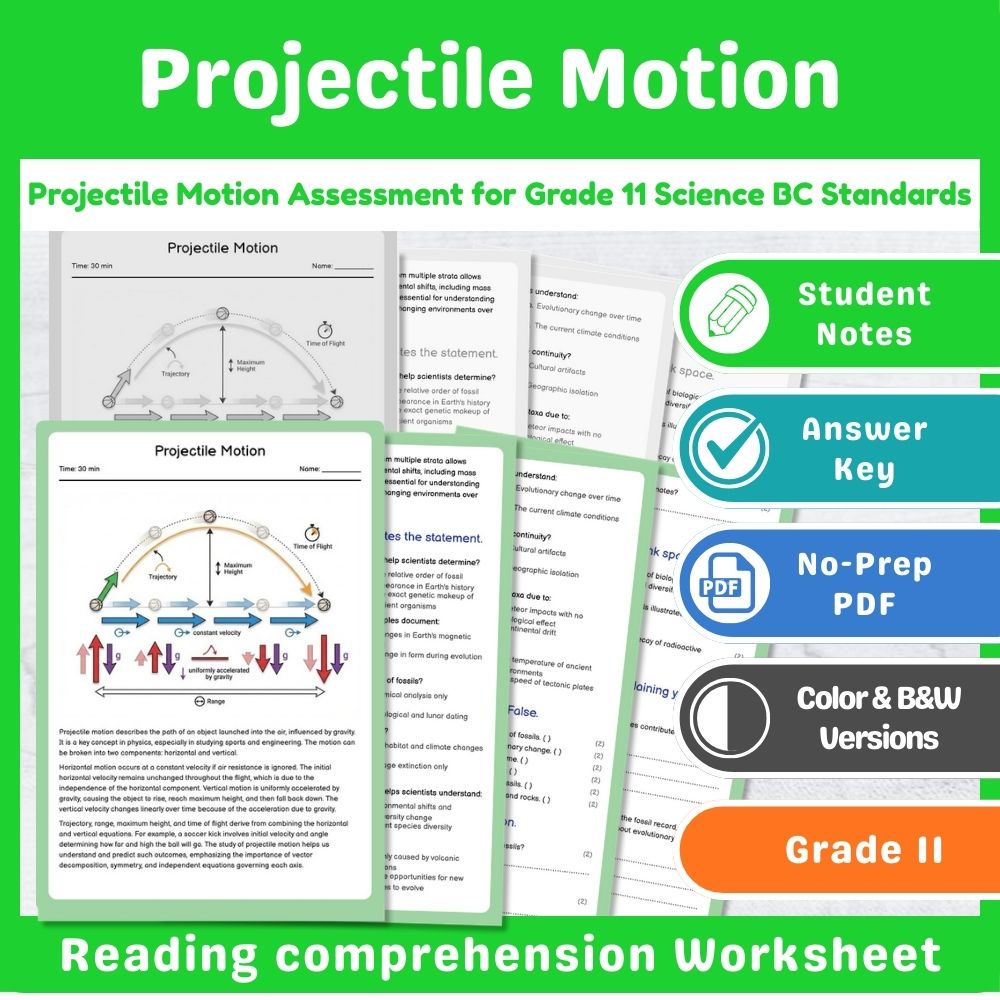
Projectile Motion Assessment for Grade 11 Science BC Standards
Created byPrism Point LearningLearning Objectives
- Understand the decomposition of projectile motion into horizontal and vertical components.
- Identify the effects of initial speed and launch angle on projectile trajectories.
- Apply equations of motion to calculate range, maximum height, and time of flight.
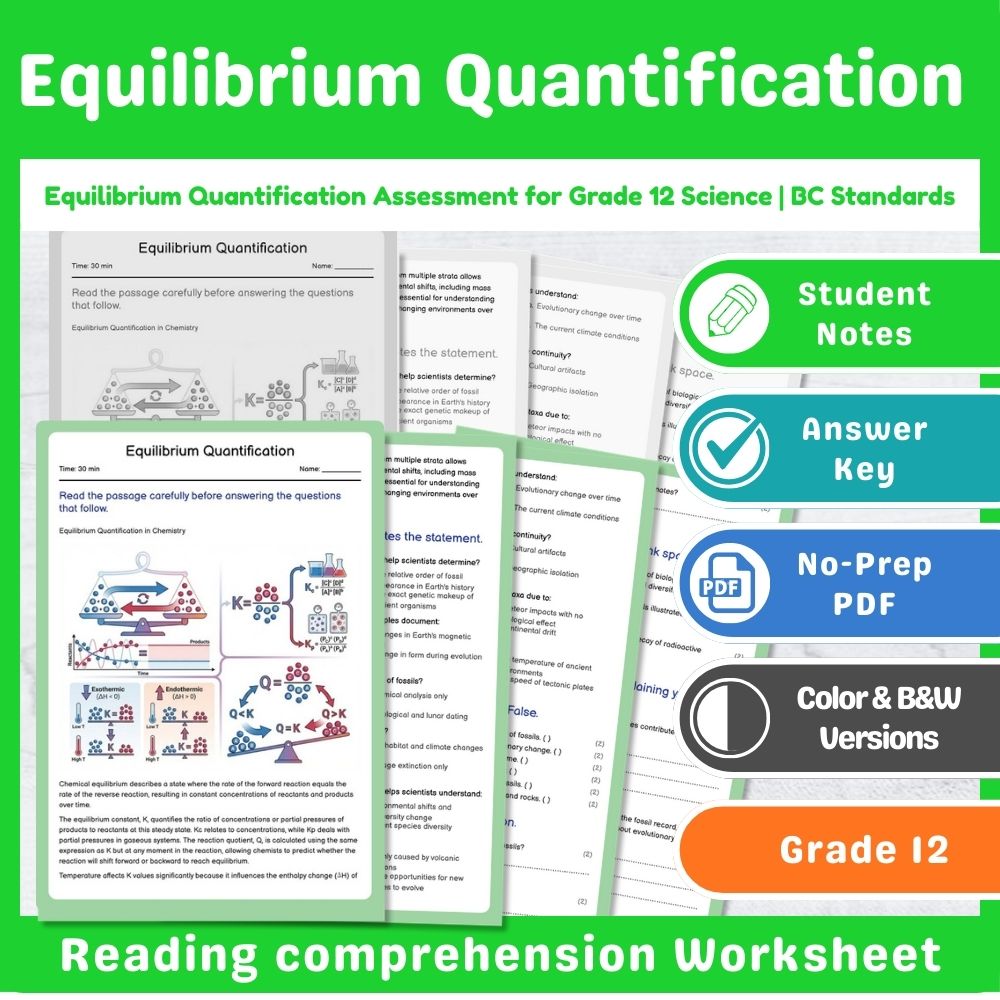
Equilibrium Quantification Assessment for Grade 12 Science | BC Standards
Created byPrism Point LearningLearning Objectives
- Explain the concept of equilibrium constants (Kc and Kp) and their significance in chemical reactions.
- Describe the role of the reaction quotient (Q) in predicting reaction direction and equilibrium state.
- Analyze how temperature influences equilibrium constants through enthalpy effects.
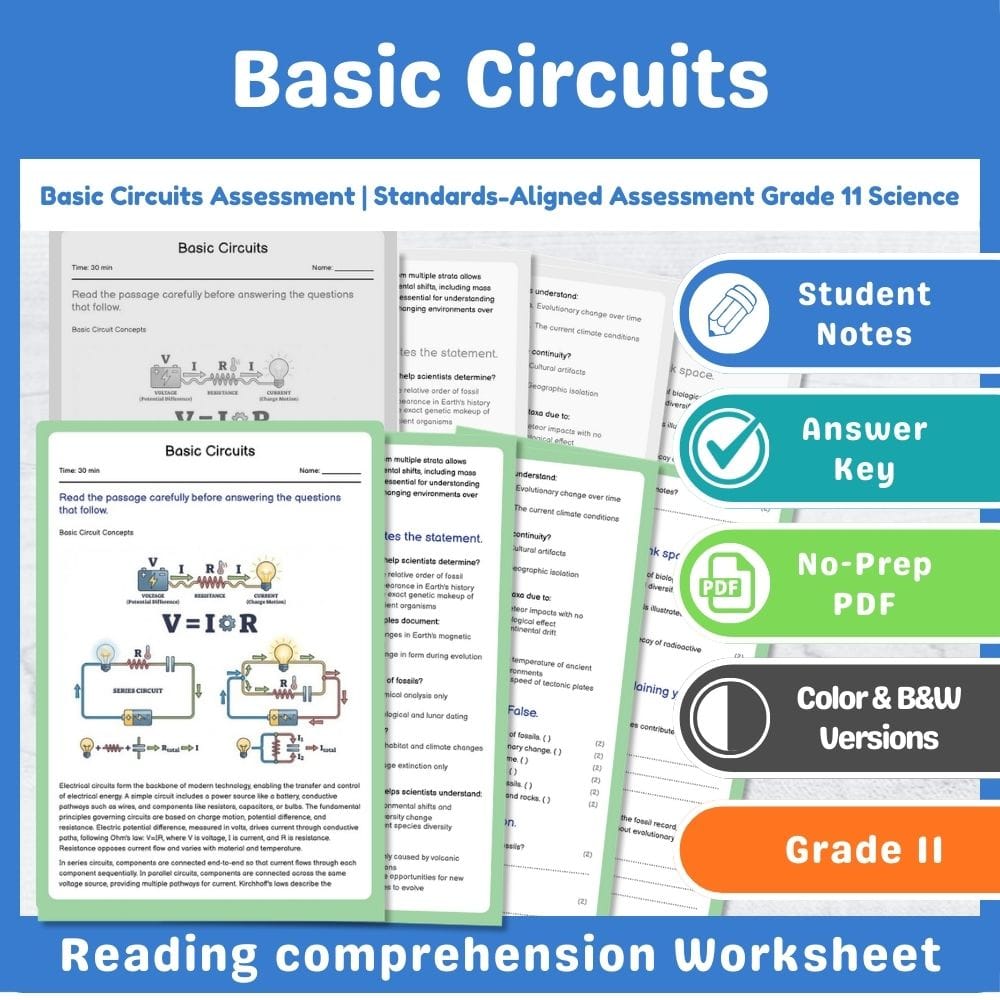
Basic Circuits Assessment | Standards-Aligned Assessment Grade 11 Science
Created byPrism Point LearningLearning Objectives
- Explain the concepts of electric potential difference, current, resistance, and energy transfer in DC circuits.
- Apply Ohm's law and Kirchhoff's laws to analyze series and parallel circuits.
- Calculate power dissipation and energy in simple electrical systems using algebraic methods.

Forces and Change Assessment | General Standards Grade 7 Science
Created byPrism Point LearningLearning Objectives
- Understand how forces act as causes of motion changes.
- Differentiate between balanced and unbalanced forces.
- Explain how friction, air resistance, and gravity influence motion.

RNA Variants Assessment for Grade 10 Science | TEKS Standards-Aligned Assessment
Created byPrism Point LearningLearning Objectives
- Understand key concepts related to Science
- Apply knowledge through practice questions
- Demonstrate comprehension of the material
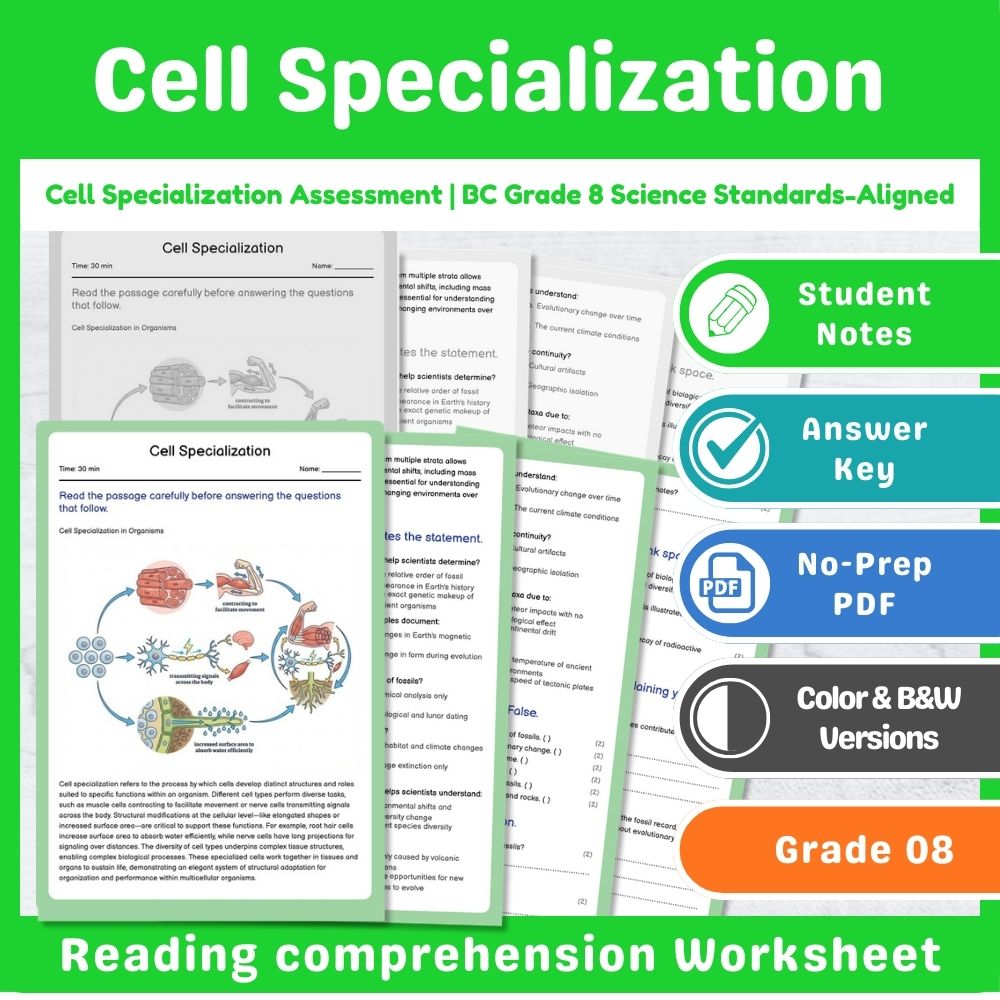
Cell Specialization Assessment | BC Grade 8 Science Standards-Aligned
Created byPrism Point LearningLearning Objectives
- Explain how cells develop unique structures suited for specific functions.
- Identify examples of specialized cells in the human body and plants.
- Describe how cellular modifications support tissue and organism functions.

Impulse And Momentum Assessment for Grade 12 Science – Florida NGSSS
Created byPrism Point LearningLearning Objectives
- Explain impulse as the product of net force and time interval and relate it to the change in momentum
- Analyze force–time graphs to determine how the area under the curve equals impulse and affects final momentum
- Apply vector reasoning to determine direction of impulse and momentum during collisions

Variation From Meiosis Assessment for Grade 8 Science | NGSSS Standards
Created byPrism Point LearningLearning Objectives
- Explain how meiosis creates genetic variation through independent assortment and recombination.
- Describe why sexual reproduction leads to offspring that are not genetically identical to either parent.
- Connect genetic variation in populations to the raw material for evolution over time.
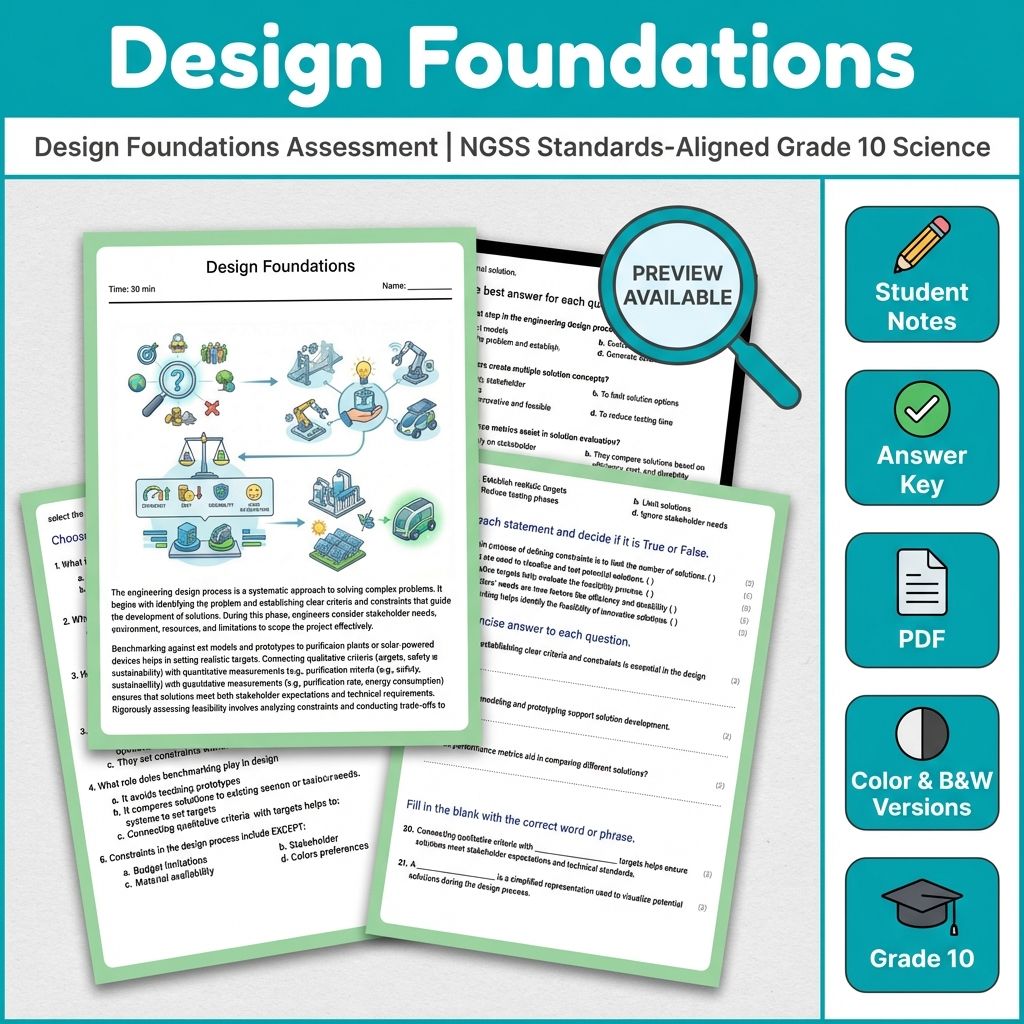
Design Foundations Assessment | NGSS Standards-Aligned Grade 10 Science
Created byPrism Point LearningLearning Objectives
- Understand the steps of the engineering design process for complex problems.
- Define criteria and constraints, and learn how to construct models.
- Develop multiple solution concepts and evaluate them against performance metrics.

Biotech Ethics Assessment for Grade 9 Science | TEKS Standards-Aligned
Created byPrism Point LearningLearning Objectives
- Understand key ethical issues related to biotechnology and genetic manipulation.
- Evaluate societal implications, including privacy, consent, and ecological impact.
- Analyze regulatory frameworks and the role of public engagement in biotech policies.
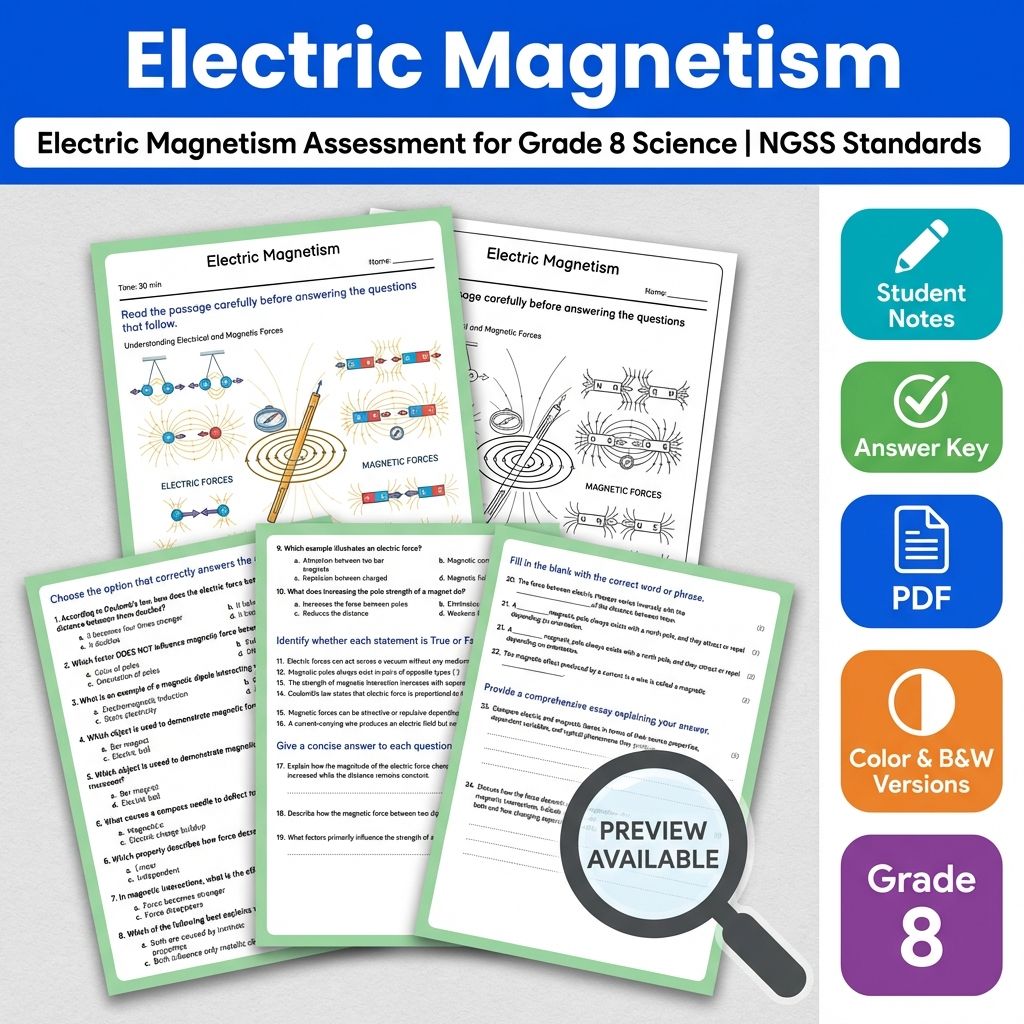
Electric Magnetism Assessment for Grade 8 Science | NGSS Standards
Created byPrism Point LearningLearning Objectives
- Understand how electric and magnetic forces are described through field interactions.
- Identify the relationships between force magnitude, charge/pole properties, and distance.
- Analyze examples such as charged objects, magnetic dipoles, and compass deflections to understand forces.

Carrying Capacity Assessment for Grade 10 Science TEKS Standards
Created byPrism Point LearningLearning Objectives
- Understand the concept of carrying capacity and its importance in ecosystems.
- Identify factors that influence an environment's carrying capacity.
- Apply knowledge of resource limitations, predation, disease, and ecosystem interactions.
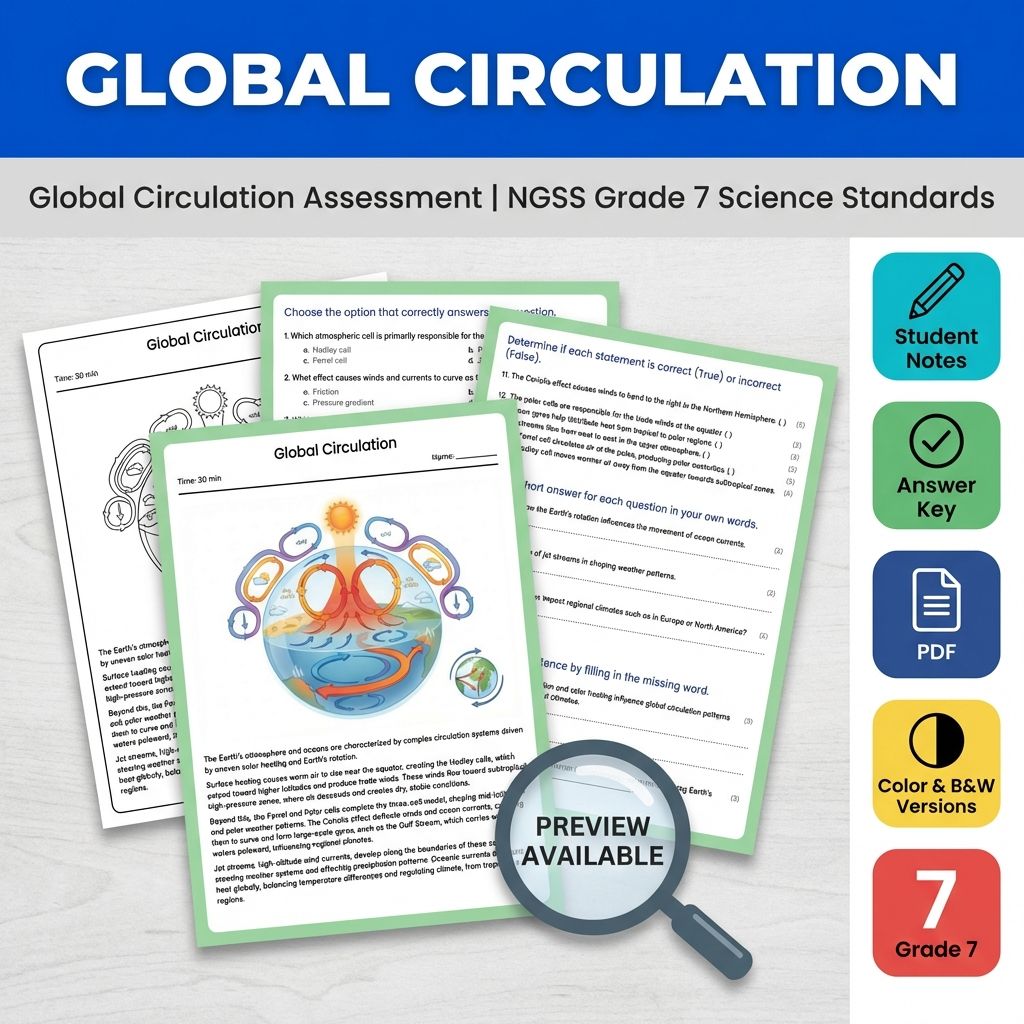
Global Circulation Assessment | NGSS Grade 7 Science Standards
Created byPrism Point LearningLearning Objectives
- Explain the basic principles of Earth's atmospheric and oceanic circulation patterns.
- Identify the main cells, wind belts, and ocean currents associated with global climate.
- Understand the influence of Coriolis effect and jet streams on weather and climate zones.
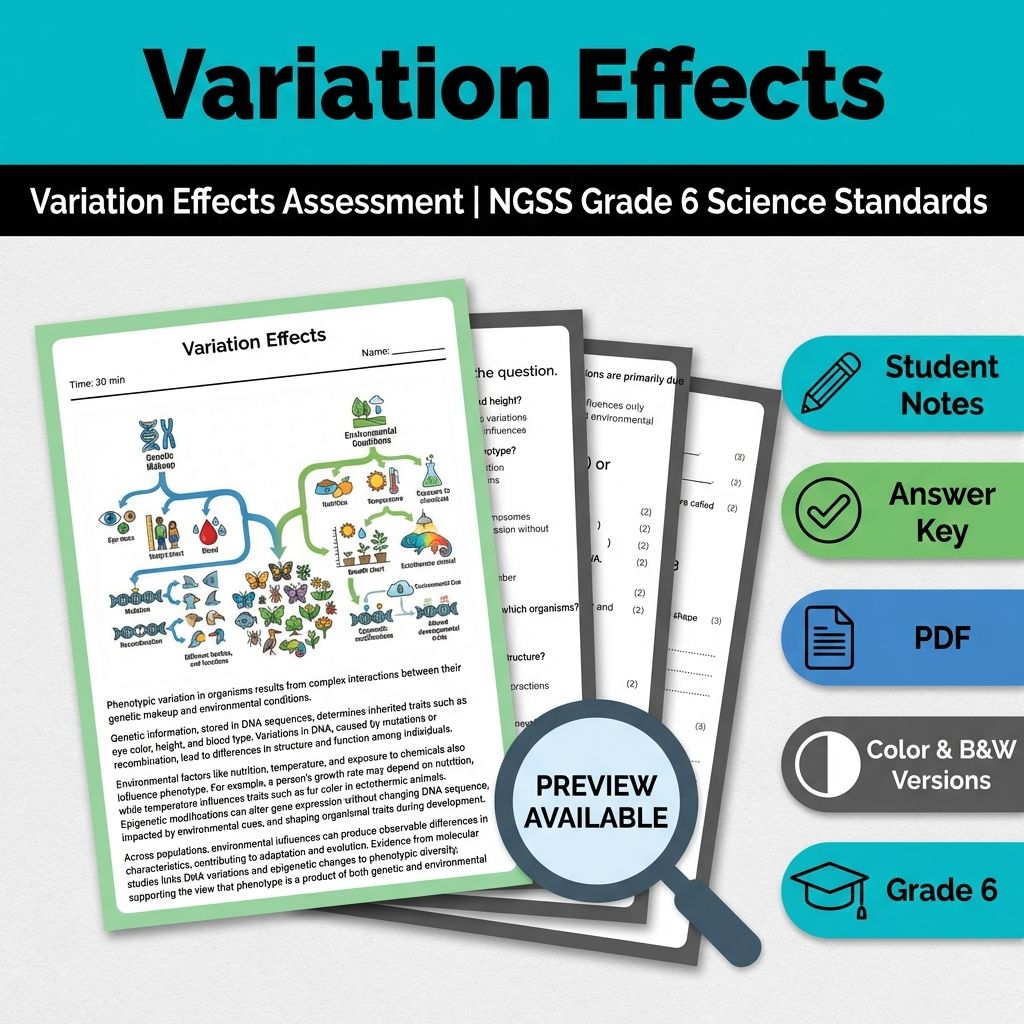
Variation Effects Assessment | NGSS Grade 6 Science Standards
Created byPrism Point LearningLearning Objectives
- Understand how phenotypic variation results from genetic and environmental interactions.
- Identify examples of inherited traits, environmental influences, and temperature-dependent gene expression.
- Explain the links between DNA sequence variation, macromolecular processes, and organismal differences.
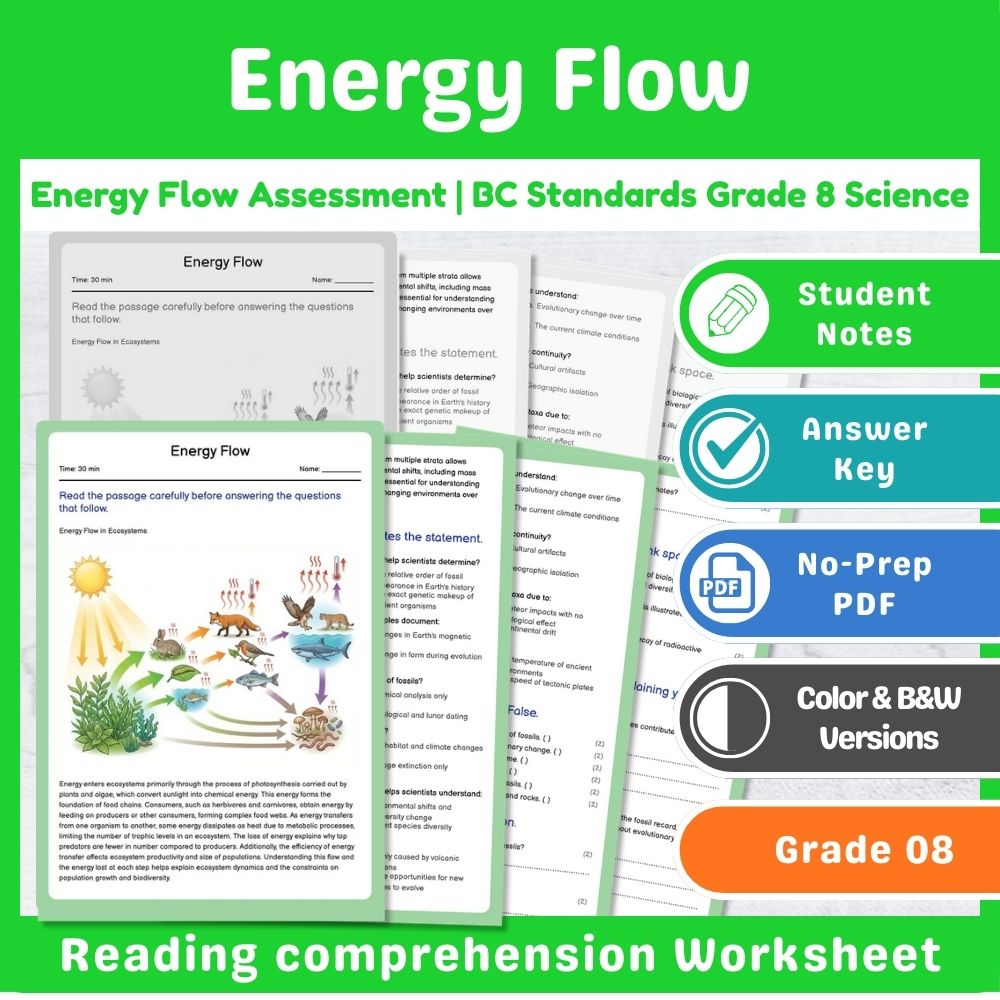
Energy Flow Assessment | BC Standards Grade 8 Science
Created byPrism Point LearningLearning Objectives
- Understand how energy enters ecosystems through photosynthesis.
- Explain the flow of energy through food chains and food webs.
- Describe how energy dissipates as heat at each transfer in an ecosystem.

Innovation History Assessment | TEKS Grade 7 Science Standards
Created byPrism Point LearningLearning Objectives
- Trace the causes and diffusion of technological inventions across history.
- Identify factors that enable invention, such as needs, materials, and incremental improvements.
- Differentiate between invention and innovation through historical examples.

Friction And Stability Assessment | California Standards Grade 7 Science
Created byPrism Point LearningLearning Objectives
- Explain how friction opposes relative motion and how it affects whether forces balance or not.
- Predict how changes in surface texture (roughness/smoothness) change the size of friction and the resulting motion.
- Use the idea of net force to describe when an object speeds up, slows down, or moves at constant velocity.

Light and Carbon Assessment | TEKS Grade 10 Science
Created byPrism Point LearningLearning Objectives
- Describe the process of light reactions and their role in photosynthesis.
- Understand how the Calvin cycle fixes carbon dioxide into sugars.
- Identify the roles of chlorophyll, accessory pigments, and enzymes like RuBisCO.
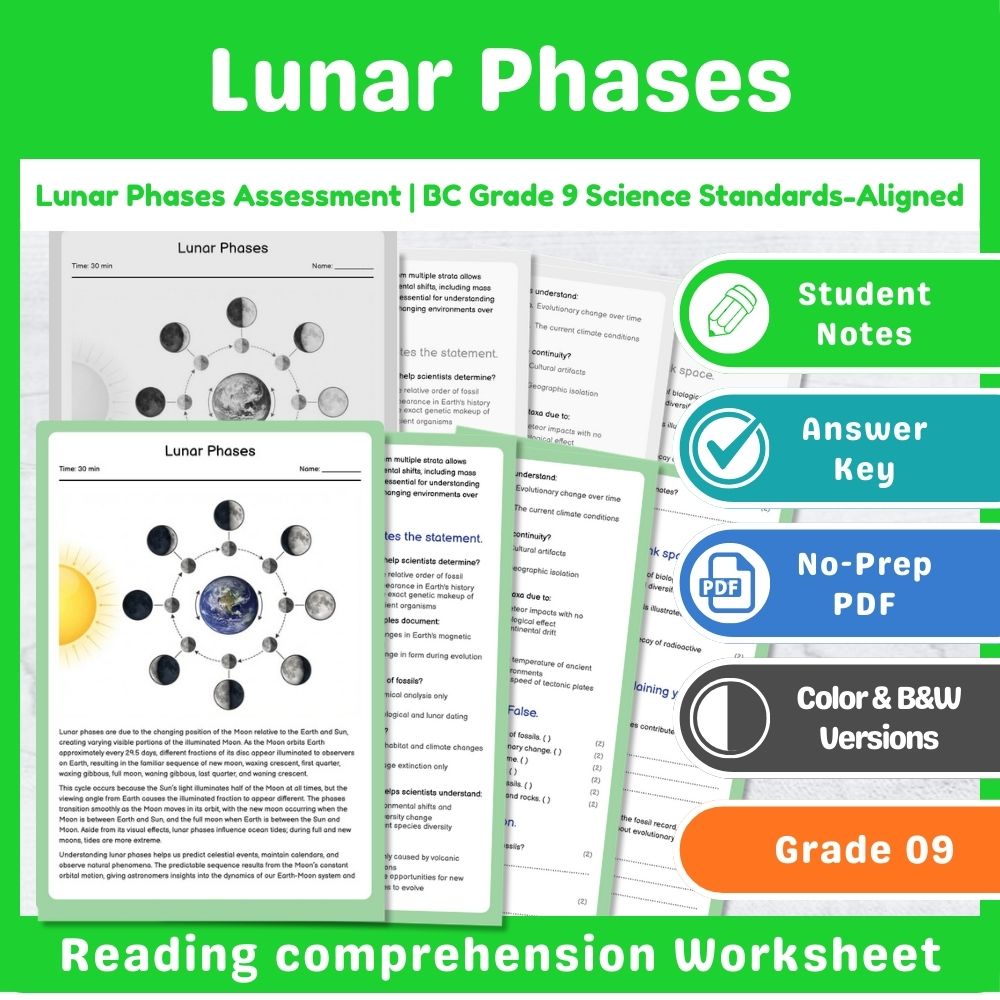
Lunar Phases Assessment | BC Grade 9 Science Standards-Aligned
Created byPrism Point LearningLearning Objectives
- Understand the sequence and causes of lunar phases.
- Identify the relationship between the Sun, Earth, and Moon in lunar cycles.
- Describe how lunar phases influence tides and nocturnal illumination.
Browse more categories
About Science Worksheets
Find Science worksheets spanning core skills, practice, and review. All 42,685 resources are instant PDF downloads for the classroom or home.
Every worksheet on MyTeachingSheets is created by independent teacher-authors and reviewed before publication. All resources download as printable PDFs for classroom, homework, or at-home practice, and many include answer keys. Preview any worksheet free before buying.