
Science Worksheets
42,685 subject resources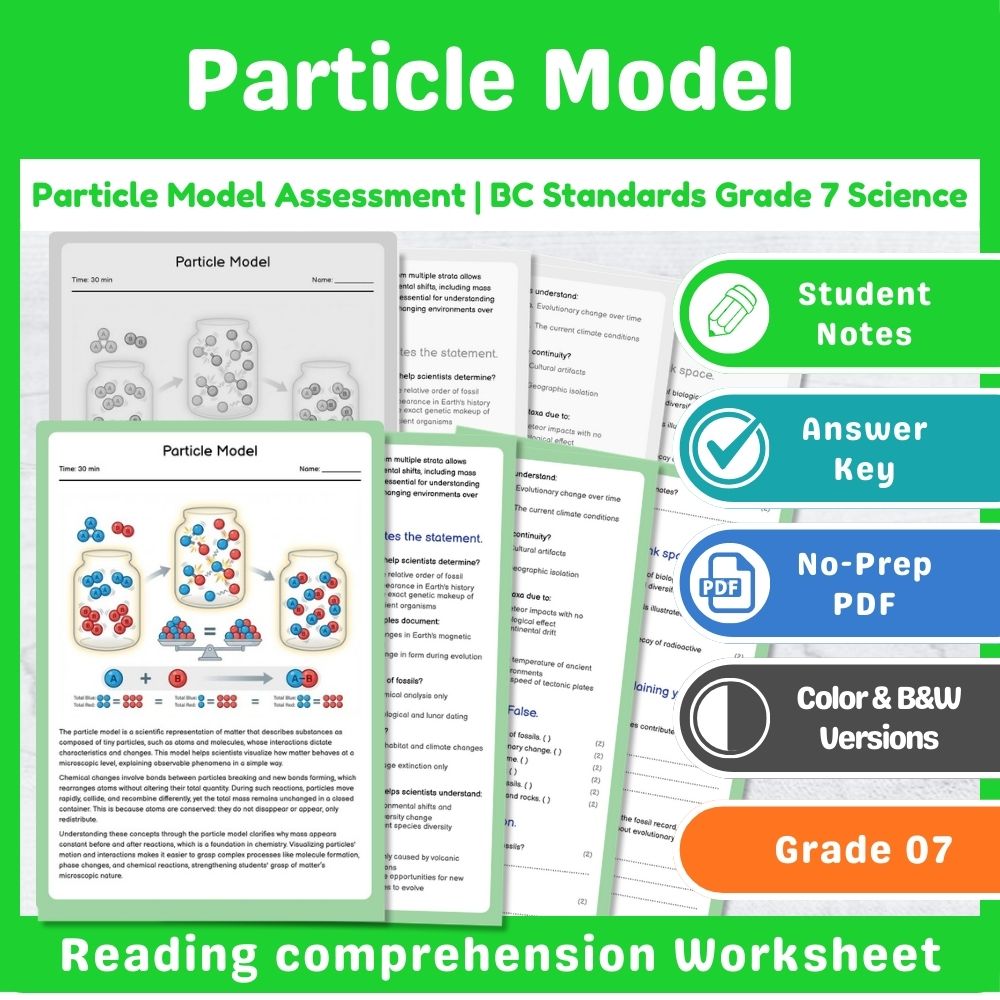
Particle Model Assessment | BC Standards Grade 7 Science
 Created byPrism Point Learning
Learning Objectives
- Explain the particle model as a way to represent matter at the atomic and molecular level.
- Describe how particles behave during chemical changes, including breaking and forming bonds.
- Understand and illustrate why total mass remains constant during reactions in a closed environment.
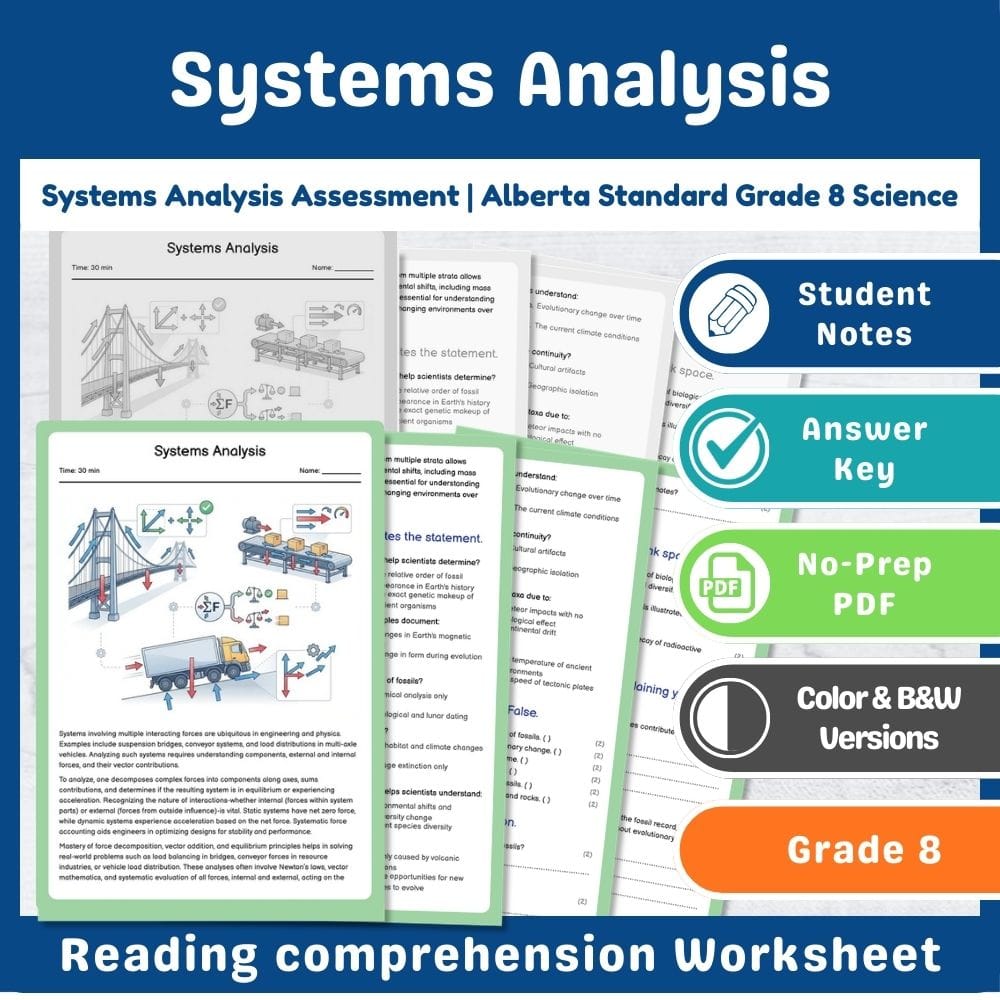
Systems Analysis Assessment | Alberta Standard Grade 8 Science
Created byPrism Point LearningLearning Objectives
- Identify the key components of complex systems involving multiple forces.
- Understand how to decompose system forces into vector components.
- Analyze static versus dynamic behavior by summing forces.
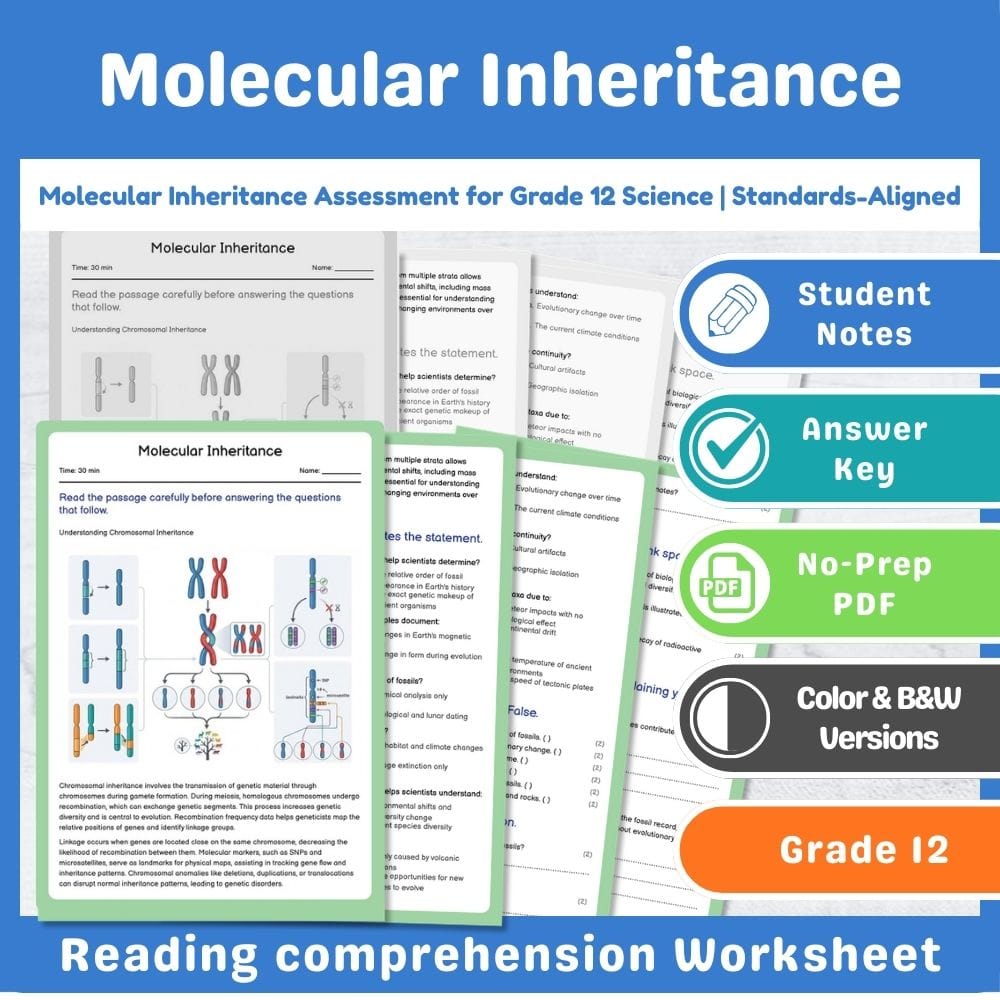
Molecular Inheritance Assessment for Grade 12 Science | Standards-Aligned
Created byPrism Point LearningLearning Objectives
- Understand chromosomal behavior and mechanisms of inheritance.
- Explain the concepts of recombination, linkage, and molecular markers.
- Differentiate between single-gene effects and polygenic influences on inheritance patterns.
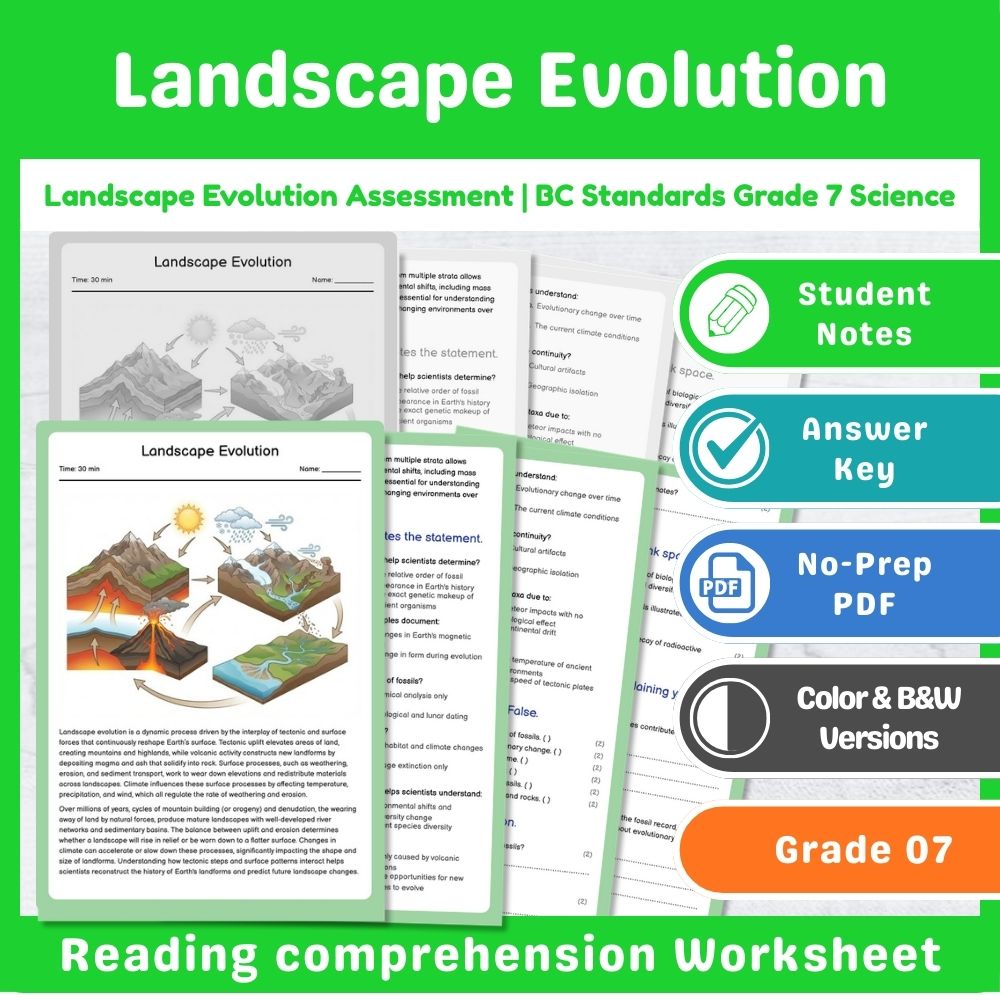
Landscape Evolution Assessment | BC Standards Grade 7 Science
Created byPrism Point LearningLearning Objectives
- Explain how tectonic uplift, volcanic construction, and surface processes influence landscape change.
- Analyze the balance between uplift and erosion in shaping landforms over time.
- Describe how climate variations affect weathering and material transport in landscapes.

Third Law Pairs Assessment | NGSSS Standards Grade 9 Science
Created byPrism Point LearningLearning Objectives
- Explain Newton’s Third Law using the action–reaction model and identify force pairs acting on different objects.
- Predict the direction, magnitude relationship, and object involved for forces in common real-world interactions.
- Distinguish between forces on one body versus forces on two different bodies and explain why they do not cancel on a single object.

Biotechnology Ethics Assessment for Grade 12 Science | Alberta Standards
Created byPrism Point LearningLearning Objectives
- Analyze key ethical issues related to biotechnology applications such as cloning and genome editing.
- Evaluate legal and social considerations surrounding biotechnology deployment in Alberta.
- Identify regulatory frameworks and community engagement processes shaping biotechnology innovations.

Nutrient Cycling Assessment for Grade 8 Science | Alberta Standards
Created byPrism Point LearningLearning Objectives
- Describe the processes involved in nutrient cycling within ecosystems.
- Explain the roles of decomposers, nitrogen fixation, and sedimentation.
- Analyze how environmental factors like temperature and moisture influence nutrient cycles.
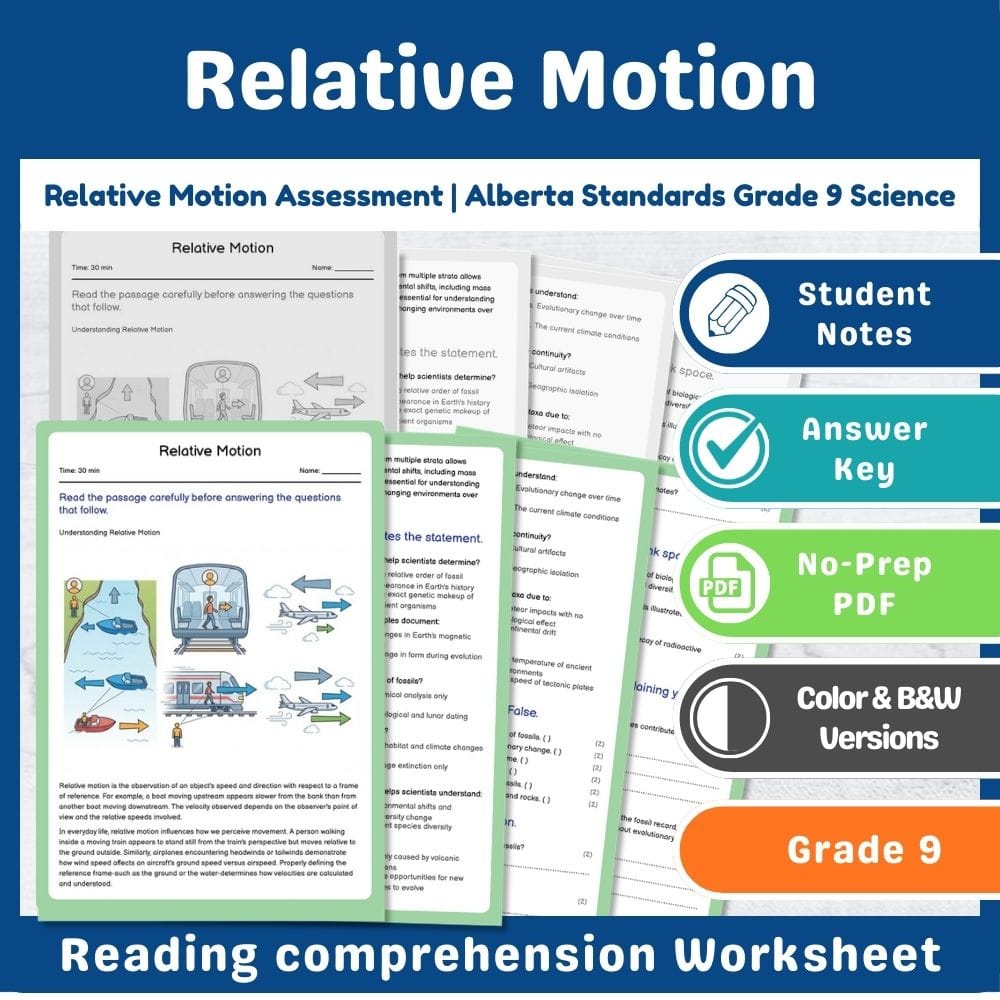
Relative Motion Assessment | Alberta Standards Grade 9 Science
Created byPrism Point LearningLearning Objectives
- Understand the concept of relative motion and how velocities combine in different reference frames.
- Describe how observed speed and direction depend on the observer's frame of reference.
- Apply vector addition principles to various motion scenarios involving boats, trucks, and aircraft.

Metabolic Regulation Assessment | TEKS Standards Grade 11 Science
Created byPrism Point LearningLearning Objectives
- Understand the mechanisms of enzyme regulation in metabolic pathways.
- Identify different types of enzyme modifications such as allosteric modulation and covalent changes.
- Explain how compartmentalization and membrane transport influence metabolic flux.
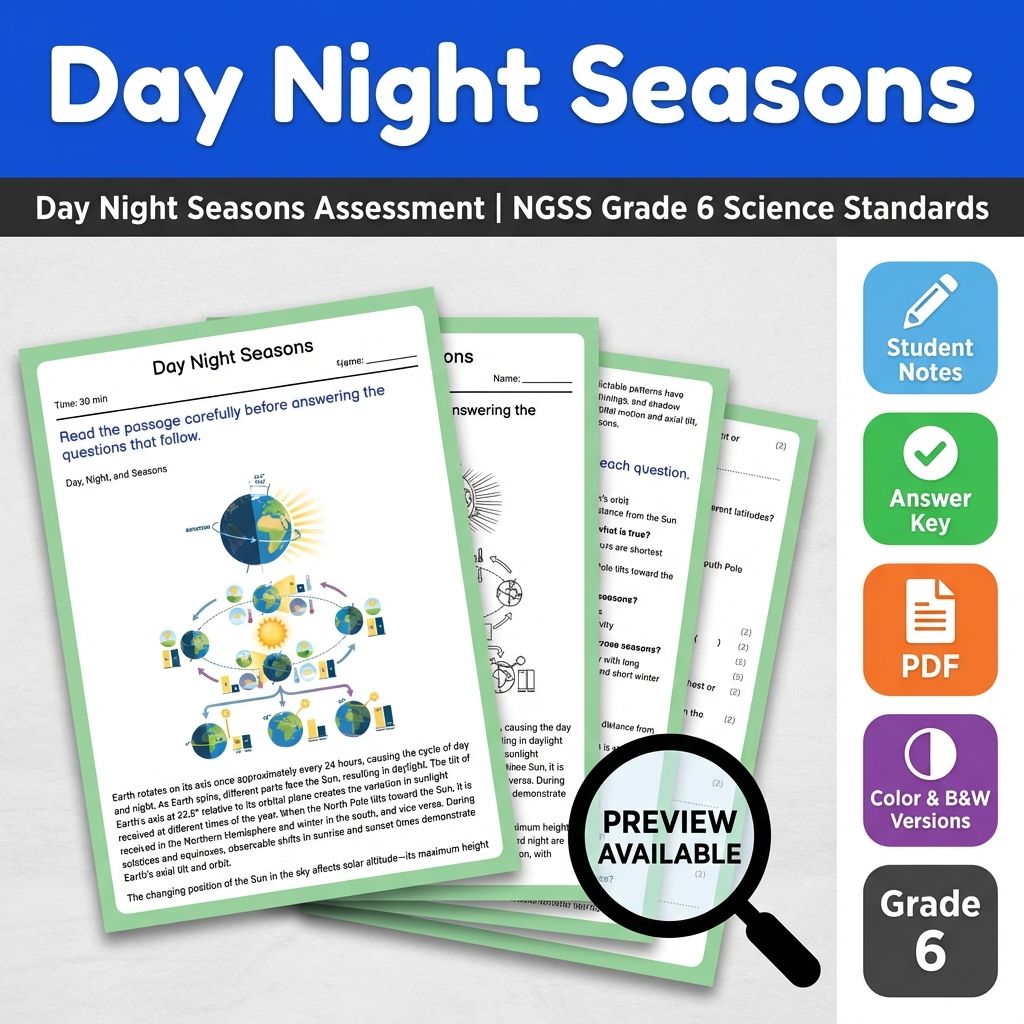
Day Night Seasons Assessment | NGSS Grade 6 Science Standards
Created byPrism Point LearningLearning Objectives
- Explain Earth's rotation and how it produces day and night.
- Describe Earth's orbit around the Sun and how axial tilt causes seasonal changes.
- Identify key observational markers such as solstices and equinoxes.
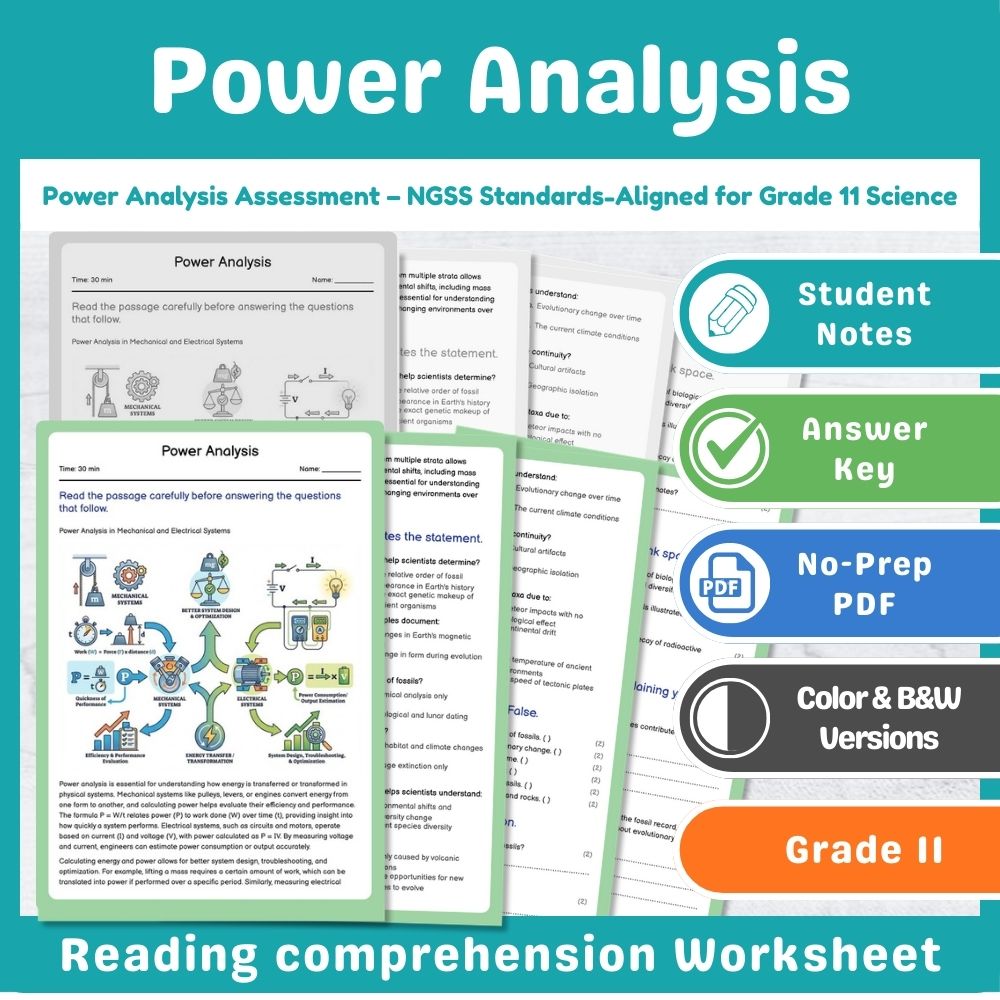
Power Analysis Assessment – NGSS Standards-Aligned for Grade 11 Science
Created byPrism Point LearningLearning Objectives
- Understand the principles of power calculation in mechanical and electrical systems.
- Apply formulas P = W/t and P = IV to analyze energy transfer and power output.
- Measure relevant data and compare theoretical predictions with actual observations.
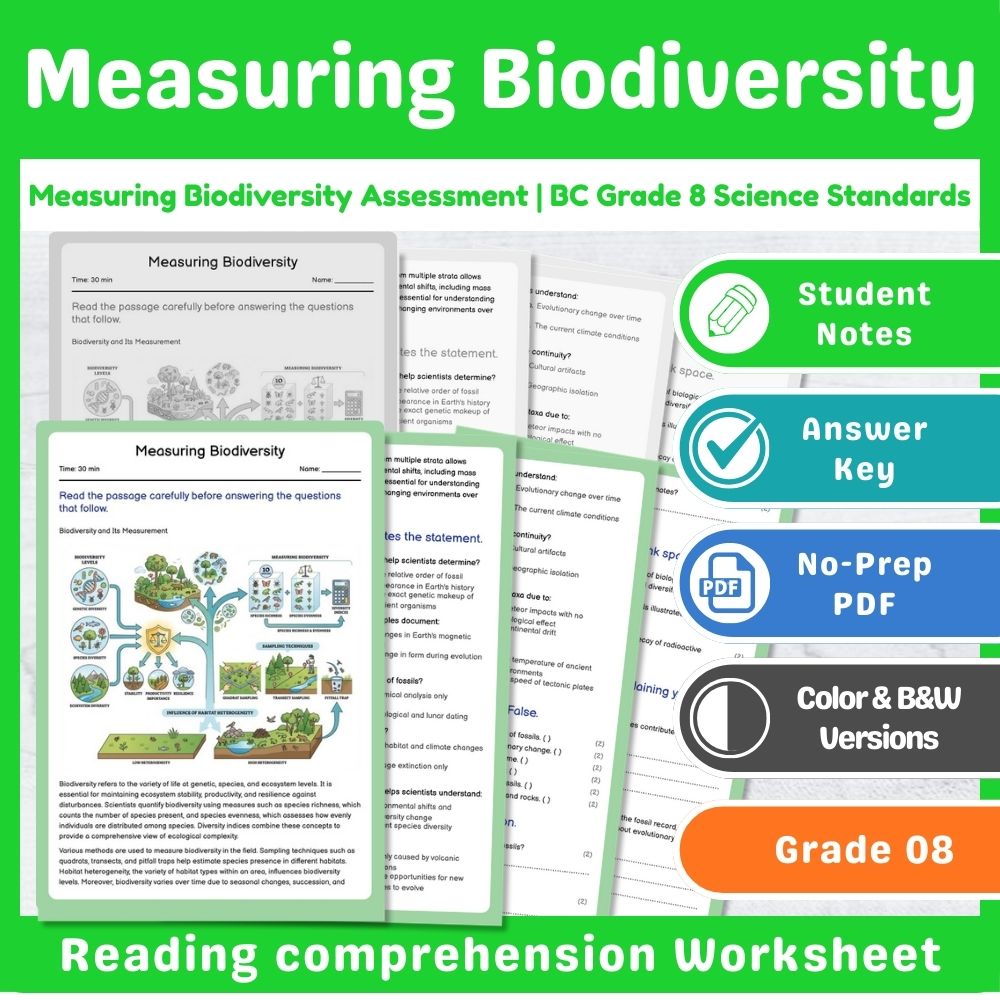
Measuring Biodiversity Assessment | BC Grade 8 Science Standards
Created byPrism Point LearningLearning Objectives
- Understand the concepts of biodiversity, species richness, evenness, and diversity indices.
- Identify methods used to measure biodiversity in different ecosystems.
- Analyze how sampling techniques, habitat heterogeneity, and temporal variation influence biodiversity measurements.
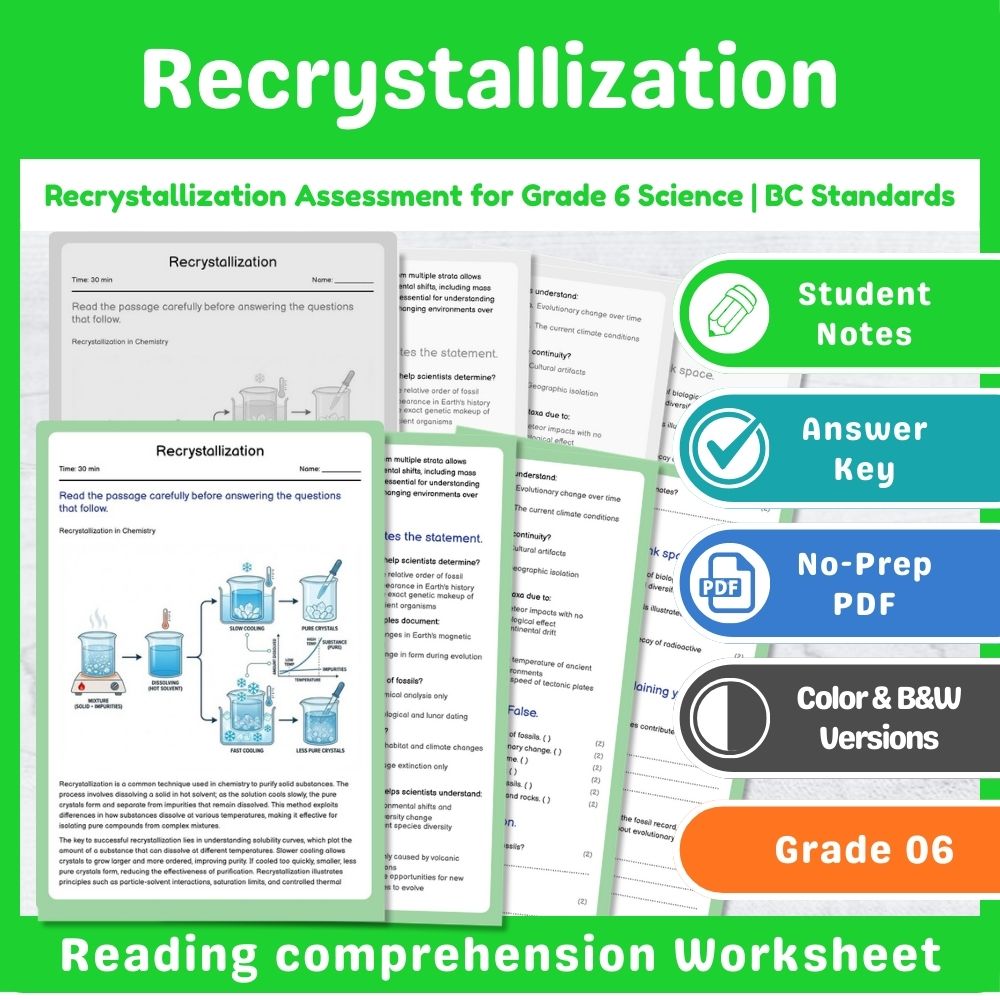
Recrystallization Assessment for Grade 6 Science | BC Standards
Created byPrism Point LearningLearning Objectives
- Understand the process of recrystallization and its role in purifying solids.
- Explain how temperature and solubility affect crystal formation during recrystallization.
- Describe the importance of controlled cooling in obtaining pure, large crystals.

Physiological Regulation Assessment for Grade 11 Science TEKS
Created byPrism Point LearningLearning Objectives
- Describe the mechanisms involved in maintaining internal stability in the human body.
- Explain the roles of sensors, control centers, and effectors in physiological regulation.
- Identify examples of negative and positive feedback mechanisms in human physiology.
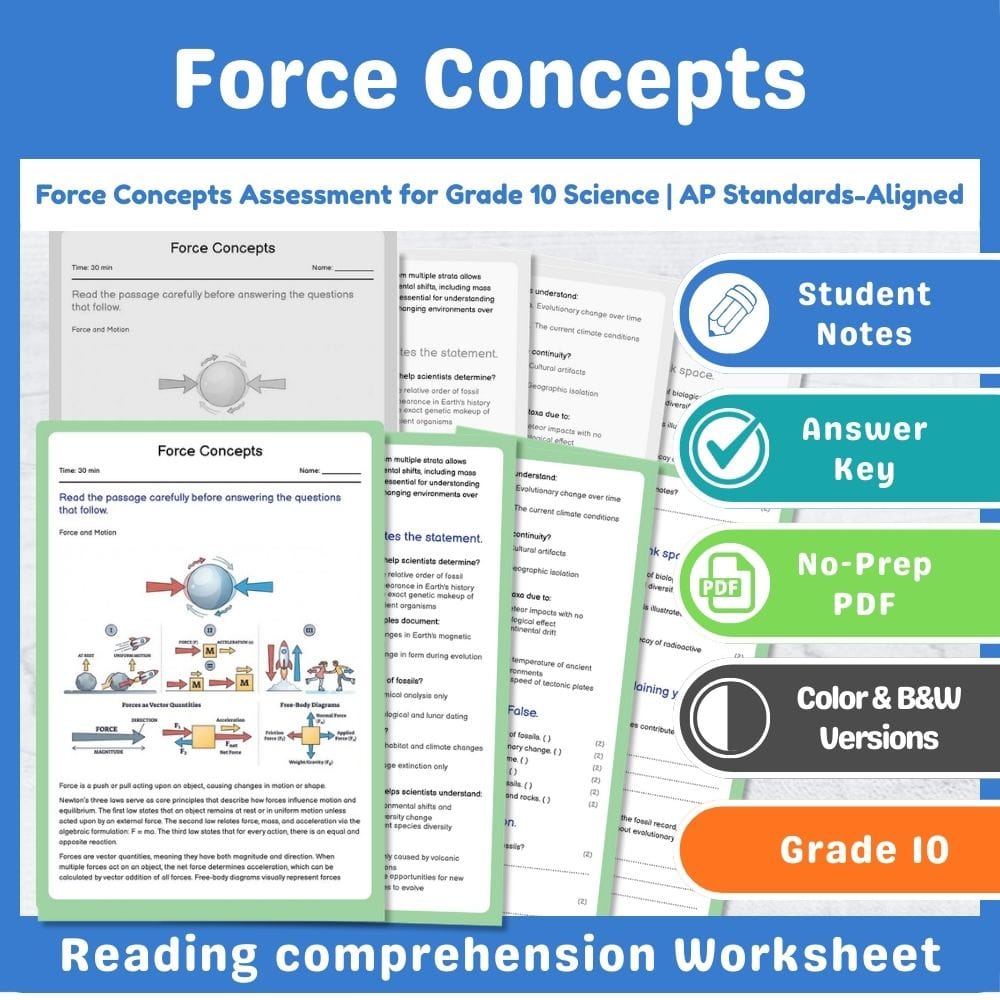
Force Concepts Assessment for Grade 10 Science | AP Standards-Aligned
Created byPrism Point LearningLearning Objectives
- Understand the vector nature of forces and how to determine net force in various scenarios.
- Explain Newton's three laws and their applications to motion and equilibrium.
- Interpret free-body diagrams and algebraic formulations of forces.
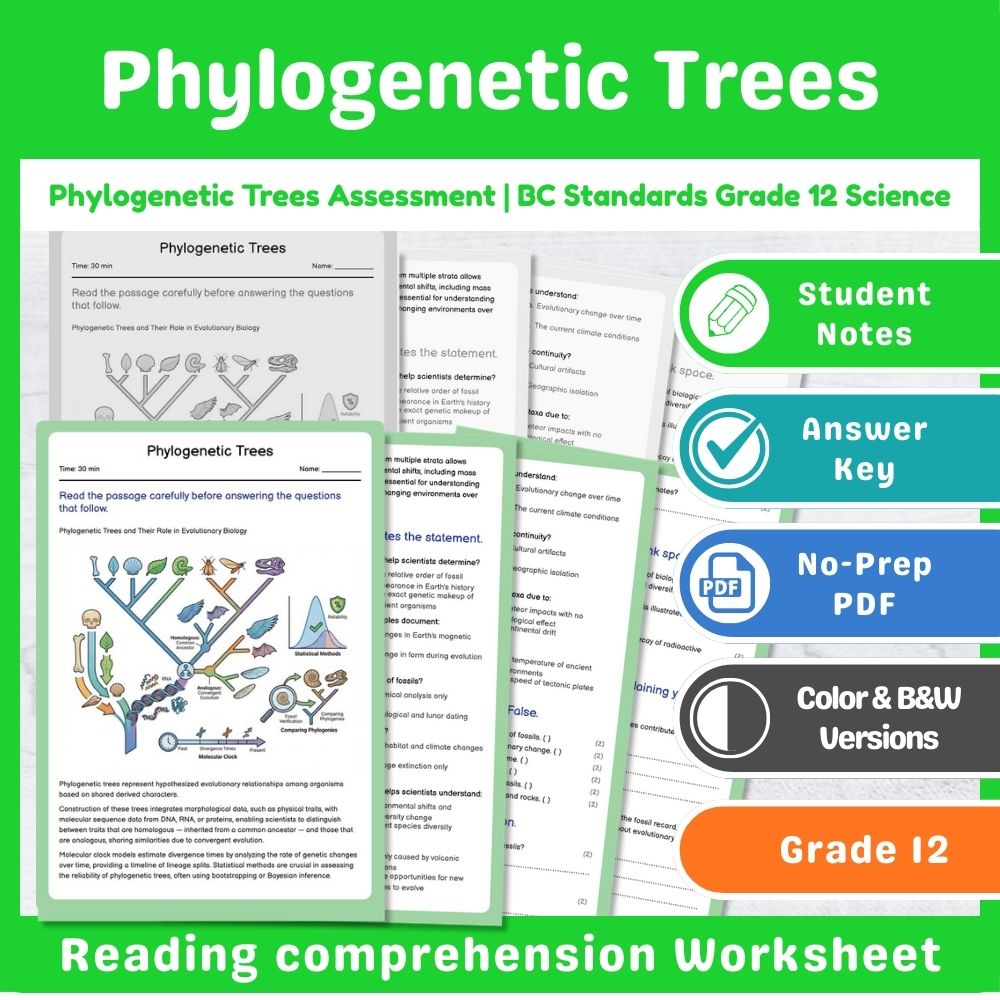
Phylogenetic Trees Assessment | BC Standards Grade 12 Science
Created byPrism Point LearningLearning Objectives
- Understand the concepts and purpose of phylogenetic trees in depicting evolutionary relationships.
- Describe methods used in constructing phylogenetic trees, including morphological and molecular data integration.
- Explain the significance of molecular clock models and statistical methods in analyzing phylogenies.
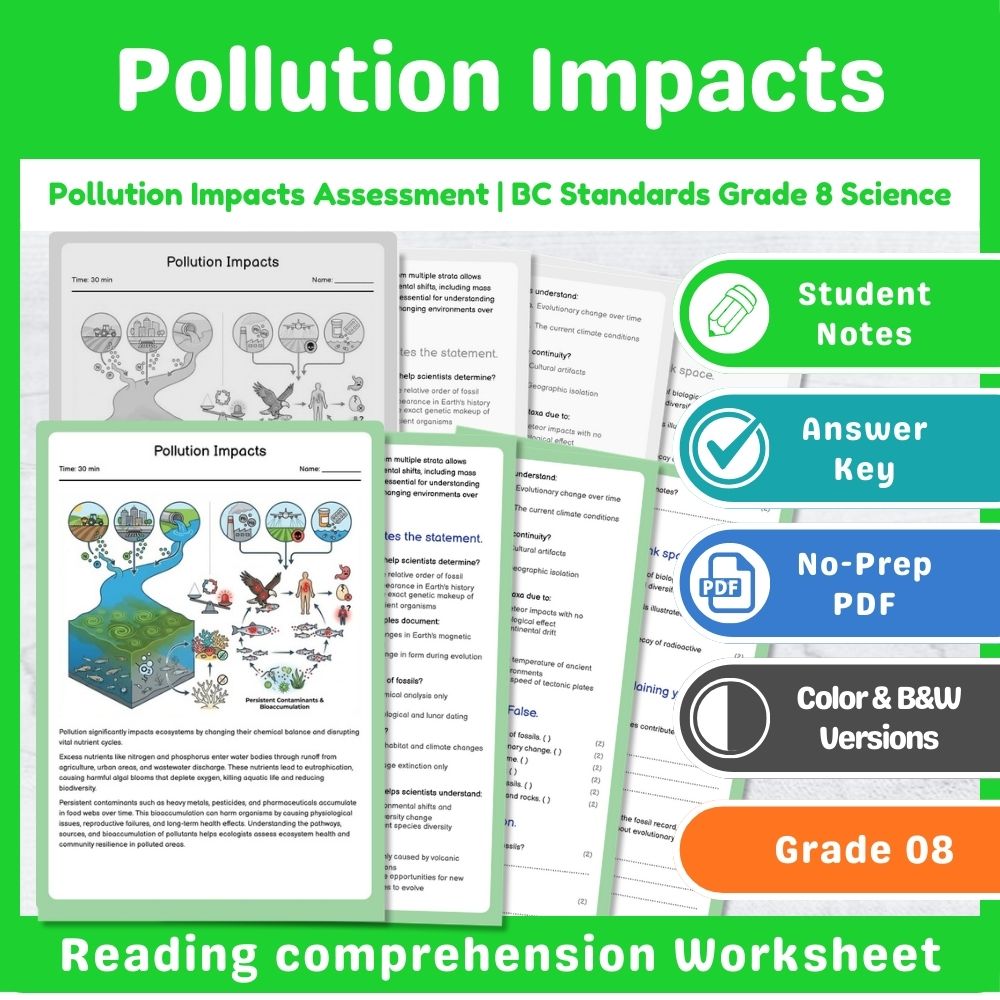
Pollution Impacts Assessment | BC Standards Grade 8 Science
Created byPrism Point LearningLearning Objectives
- Understand how pollution alters ecosystem chemistry and nutrient cycles.
- Identify the effects of excess nutrients and persistent contaminants on water, soil, and organisms.
- Explain the processes of eutrophication, bioaccumulation, and ecological resilience in polluted environments.

Species Interactions Assessment for Grade 8 Science | Florida NGSSS
Created byPrism Point LearningLearning Objectives
- Explain how competition, predation, mutualism, commensalism, and parasitism affect survival and reproduction
- Describe how species interactions can change population sizes over time
- Use evidence from examples to identify the type of species interaction and its ecosystem impact
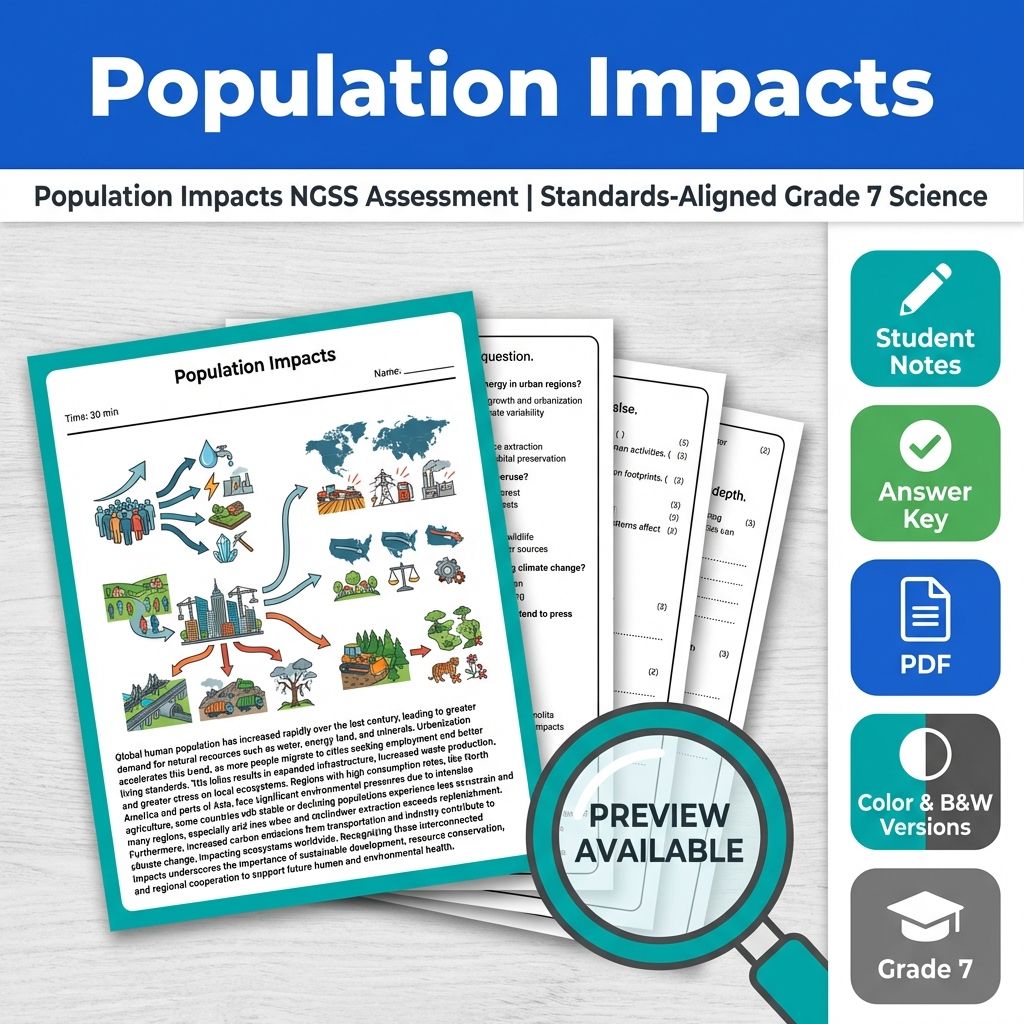
Population Impacts NGSS Assessment | Standards-Aligned Grade 7 Science
Created byPrism Point LearningLearning Objectives
- Understand how increased human population affects demand for water, energy, land, and raw materials.
- Analyze the consequences of population growth on ecosystems, biodiversity, and resource cycles.
- Evaluate regional examples to compare how consumption patterns influence environmental pressures.

Redox Fundamentals Assessment | BC Standards Grade 12 Science
Created byPrism Point LearningLearning Objectives
- Explain the process of electron transfer in redox reactions.
- Identify oxidation and reduction agents in chemical equations.
- Balance redox equations using half-reaction methods.
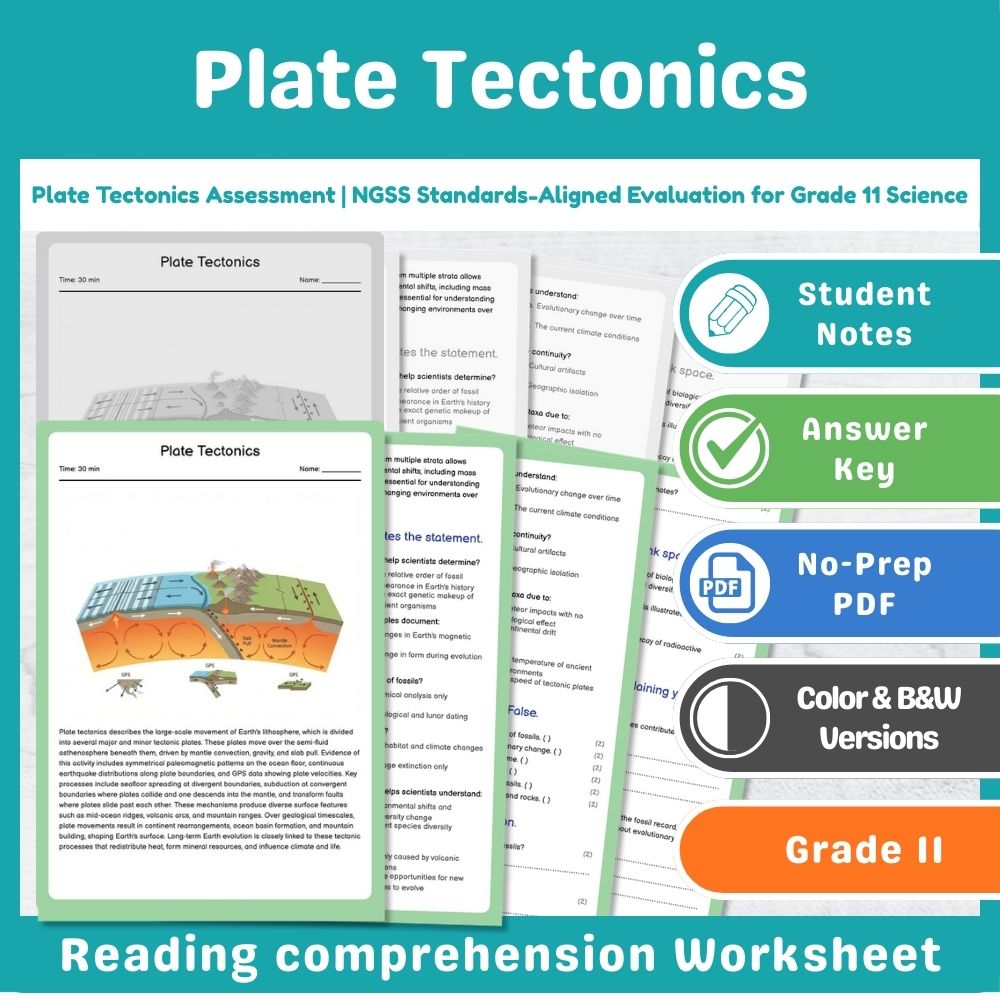
Plate Tectonics Assessment | NGSS Standards-Aligned Evaluation for Grade 11 Science
Created byPrism Point LearningLearning Objectives
- Describe the processes involved in seafloor spreading, subduction, transform faulting, and continental collision.
- Analyze geologic evidence such as paleomagnetic patterns, earthquake distributions, GPS measurements, and bathymetric maps.
- Explain the mechanisms of crustal deformation, strain accumulation, and surface expression of mantle convection.

Energy Transformations Assessment for Grade 12 Science | TEKS Standards
Created byPrism Point LearningLearning Objectives
- Describe the biochemical pathways involved in energy capture and conversion in cells.
- Explain the processes of photosynthesis and cellular respiration, including light and dark reactions.
- Compare aerobic and anaerobic respiration pathways and their energy yields.
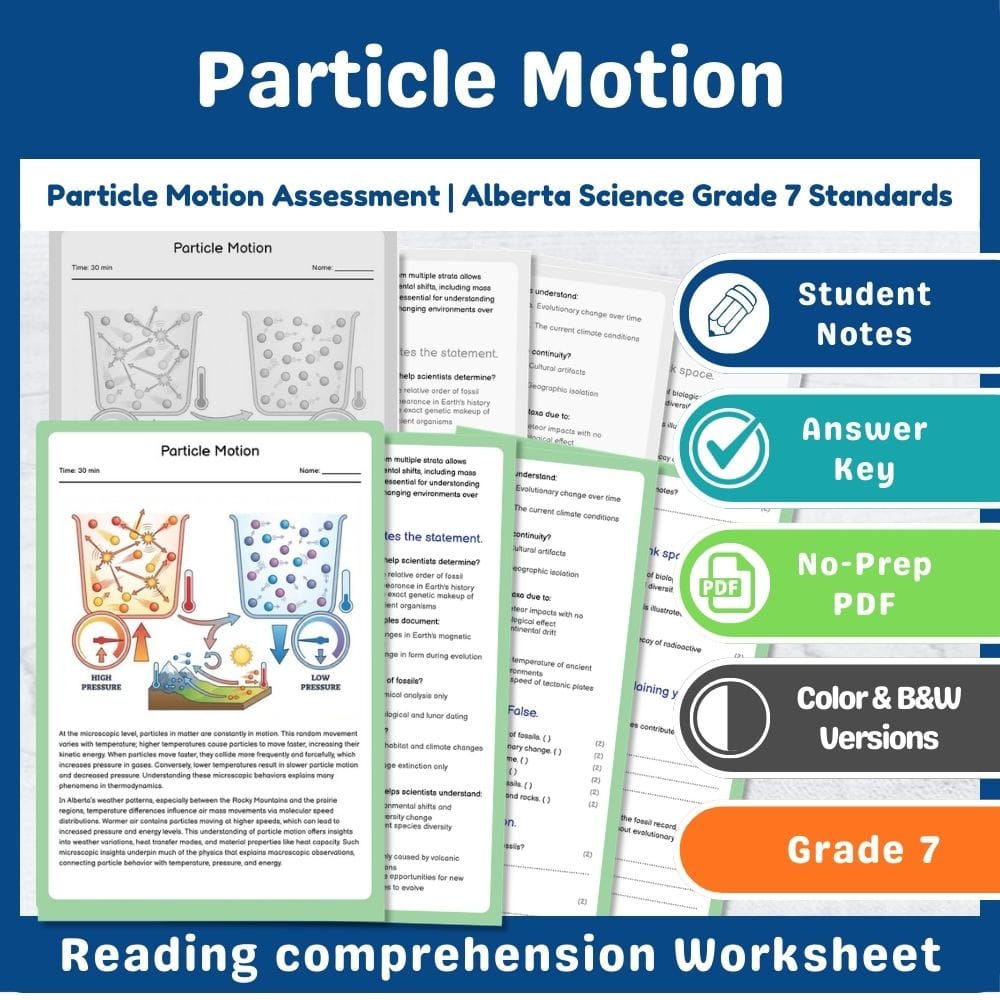
Particle Motion Assessment | Alberta Science Grade 7 Standards
Created byPrism Point LearningLearning Objectives
- Understand how microscopic particle motion relates to temperature, thermal energy, and pressure.
- Explain how molecular speed distributions vary with temperature and phase.
- Apply kinetic theory concepts to interpret temperature differences in different environments.

Meiosis and Diversity Assessment | Florida NGSSS Standard Grade 12 Science
Created byPrism Point LearningLearning Objectives
- Explain how meiosis preserves chromosome number while producing haploid gametes.
- Describe how crossing over and independent assortment increase genetic diversity.
- Connect meiotic mechanisms to allele combinations in offspring and the role of genetic variation in evolution.

Reaction Particles Assessment | NGSS-aligned Grade 10 Science Worksheet
Created byPrism Point LearningLearning Objectives
- Explain how particle collisions influence reaction rates.
- Describe energy barriers and how they affect chemical reactions.
- Analyze how temperature, concentration, and catalysts alter reaction behavior.

Fermentation Pathways Assessment for Grade 11 Science TEKS Standards
Created byPrism Point LearningLearning Objectives
- Explain the process of anaerobic fermentation pathways and their role in ATP regeneration.
- Differentiate between lactic acid and alcoholic fermentation in terms of products and energy yield.
- Describe how cells adapt biochemical pathways to maintain energy production without oxygen.

Body Temperature Assessment for Grade 10 Science TEKS Standards
Created byPrism Point LearningLearning Objectives
- Understand how the body's temperature is regulated through organ system responses.
- Describe the role of the hypothalamus in maintaining thermal balance.
- Identify mechanisms such as vasodilation, vasoconstriction, sweating, and shivering in temperature regulation.

Human Impact Evidence Grade 10 Science Assessment | General
Created byPrism Point LearningLearning Objectives
- Understand how human activities influence Earth's systems through measurable evidence.
- Identify sources and transport processes that link human actions to environmental changes.
- Analyze data from climate records, satellite observations, and chemical measurements to support claims.

Cell Organization Assessment | TEKS Grade 11 Science Worksheet
Created byPrism Point LearningLearning Objectives
- Describe the hierarchical levels of cell organization in multicellular organisms.
- Explain how cellular differentiation leads to specialized functions.
- Identify mechanisms that regulate cellular specialization and coordination.

Human Impacts Assessment | Florida NGSSS Grade 8 Science
Created byPrism Point LearningLearning Objectives
- Explain how human activities can change Earth systems by altering the balance of energy and matter.
- Describe how greenhouse gases influence temperature patterns and can affect precipitation and storms.
- Analyze how land-use change affects runoff, erosion, and water quality.
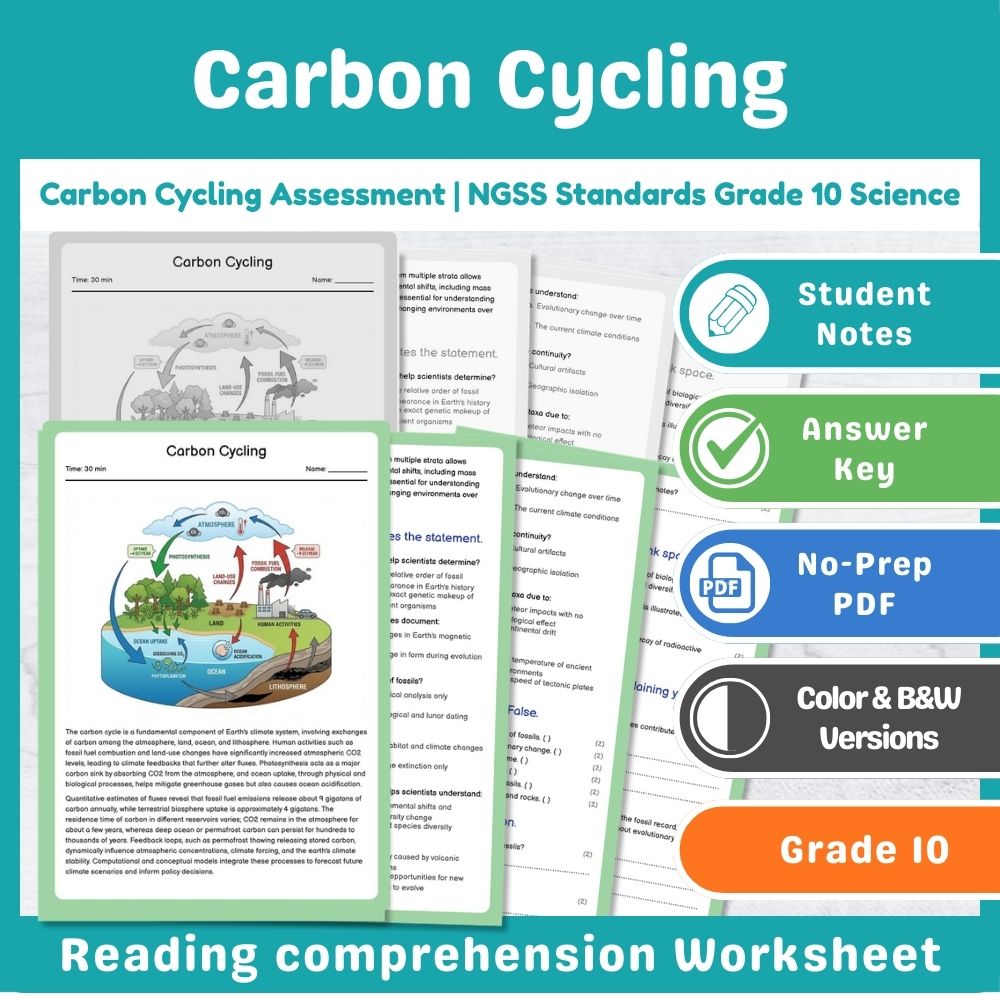
Carbon Cycling Assessment | NGSS Standards Grade 10 Science
Created byPrism Point LearningLearning Objectives
- Describe the components of the global carbon cycle, including sources and sinks.
- Explain feedback mechanisms influencing atmospheric CO2 concentrations.
- Quantify the flux magnitudes, residence times, and their impact on climate.

Variation and Heredity Assessment | TEKS Standards Grade 10 Science
Created byPrism Point LearningLearning Objectives
- Understand how genetic variation arises from mutation, recombination, and gene flow.
- Explain how heritable traits influence survival and reproduction in populations.
- Describe the process of natural selection and its role in changing allele frequencies.

Factors Affecting Reaction Rates Assessment | Alberta Grade 10 Science
Created byPrism Point LearningLearning Objectives
- Identify key factors that influence the rate of chemical reactions.
- Explain how temperature, concentration, surface area, and catalysts modify reaction speeds.
- Apply understanding of reaction rate factors to real-world industrial and environmental scenarios.
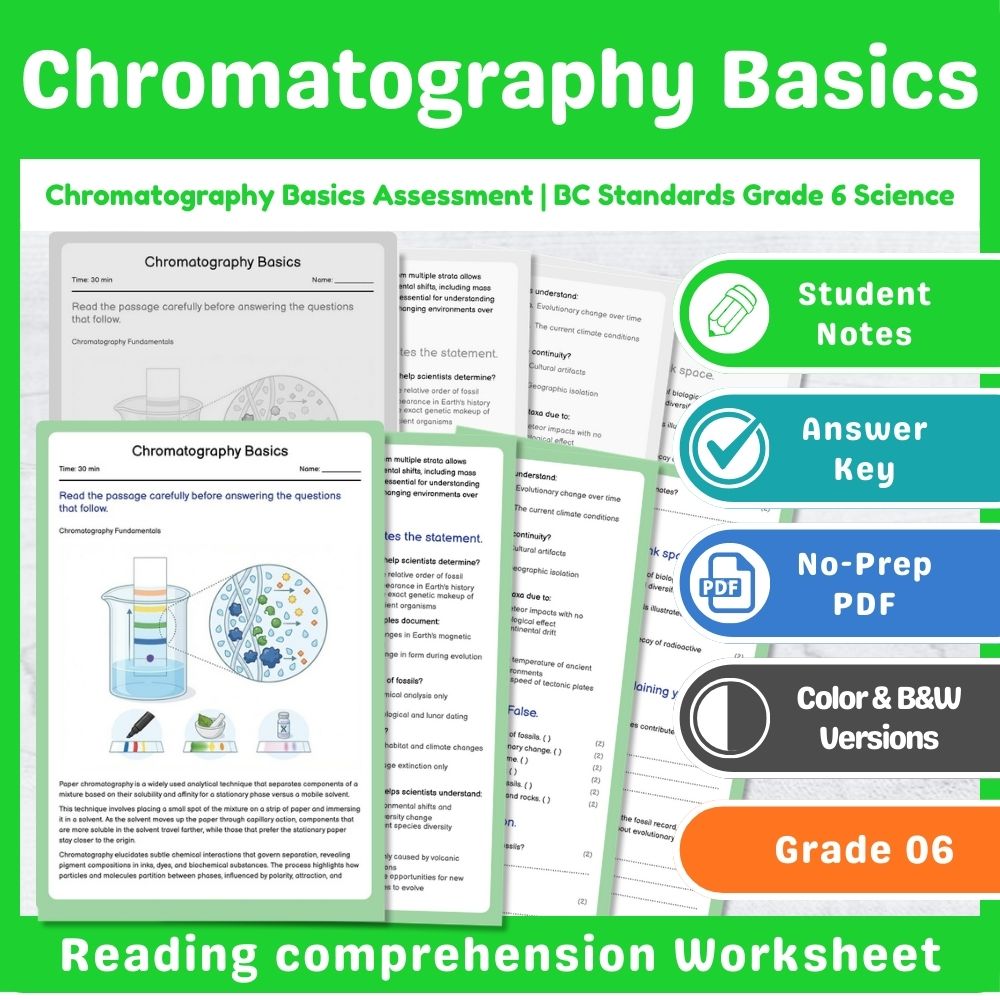
Chromatography Basics Assessment | BC Standards Grade 6 Science
Created byPrism Point LearningLearning Objectives
- Understand the fundamental principles of paper chromatography and how it separates mixture components.
- Identify factors influencing the mobility and separation of substances in chromatography.
- Describe practical applications of chromatography in analyzing complex mixtures such as ink pigments.
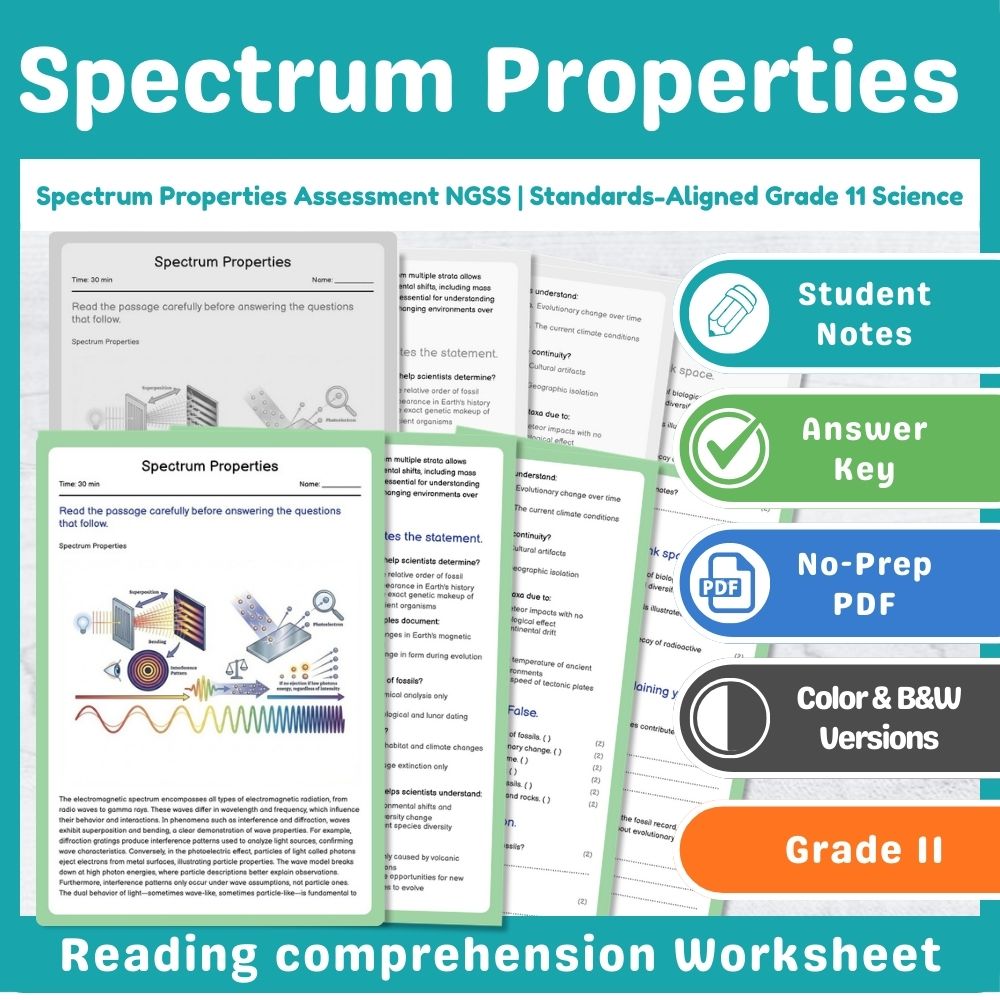
Spectrum Properties Assessment NGSS | Standards-Aligned Grade 11 Science
Created byPrism Point LearningLearning Objectives
- Evaluate evidence for wave and particle models of electromagnetic radiation using phenomena such as interference, diffraction gratings, and the photoelectric effect.
- Explain where each EM radiation model (wave or particle) works and where it breaks down.
- Describe phenomena demonstrating wave behavior and particle behavior of light.

Fossil Evidence Assessment | TEKS Standards-Aligned Grade 11 Science
Created byPrism Point LearningLearning Objectives
- Understand how fossil evidence records morphological changes over geological time.
- Identify methods used to establish relative and absolute ages of fossils.
- Explain the significance of transitional forms in evolutionary history.
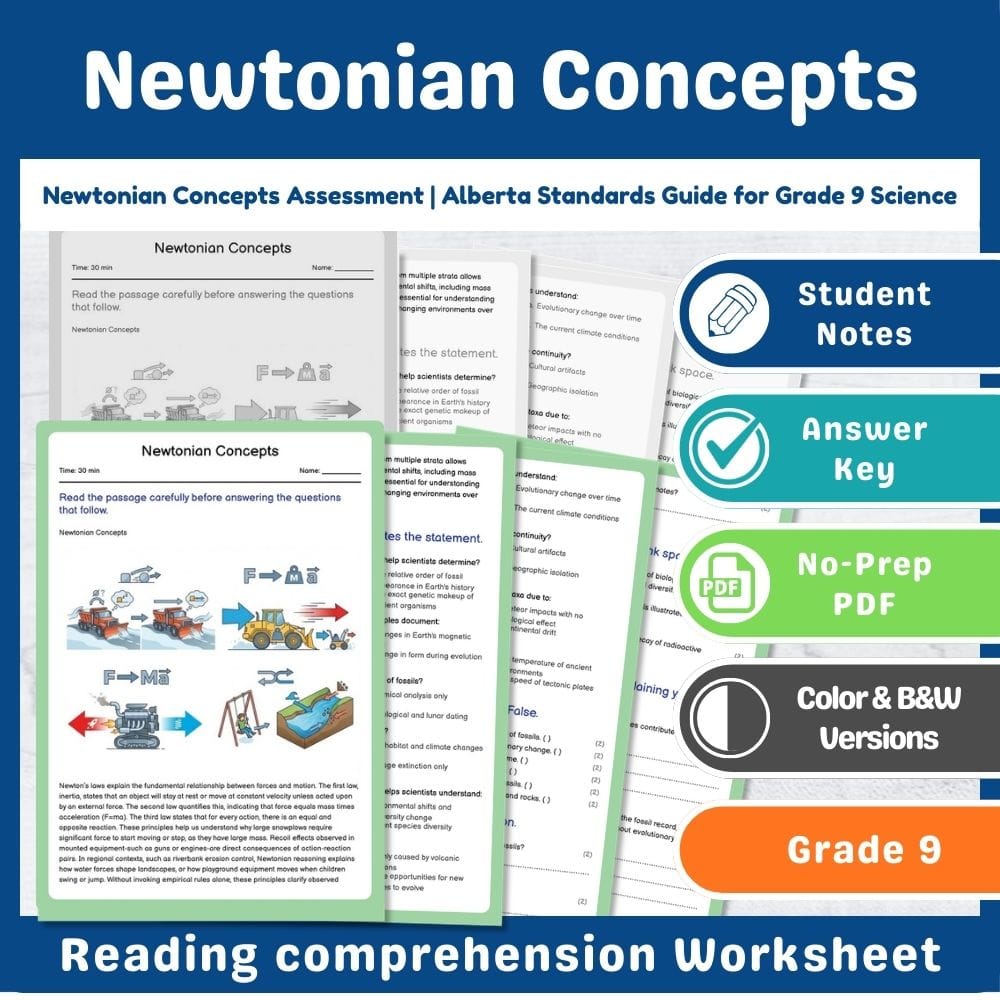
Newtonian Concepts Assessment | Alberta Standards Guide for Grade 9 Science
Created byPrism Point LearningLearning Objectives
- Understand Newton's three laws of motion and their practical implications.
- Identify real-world examples demonstrating Newtonian principles.
- Explain how forces influence motion in common regional contexts.
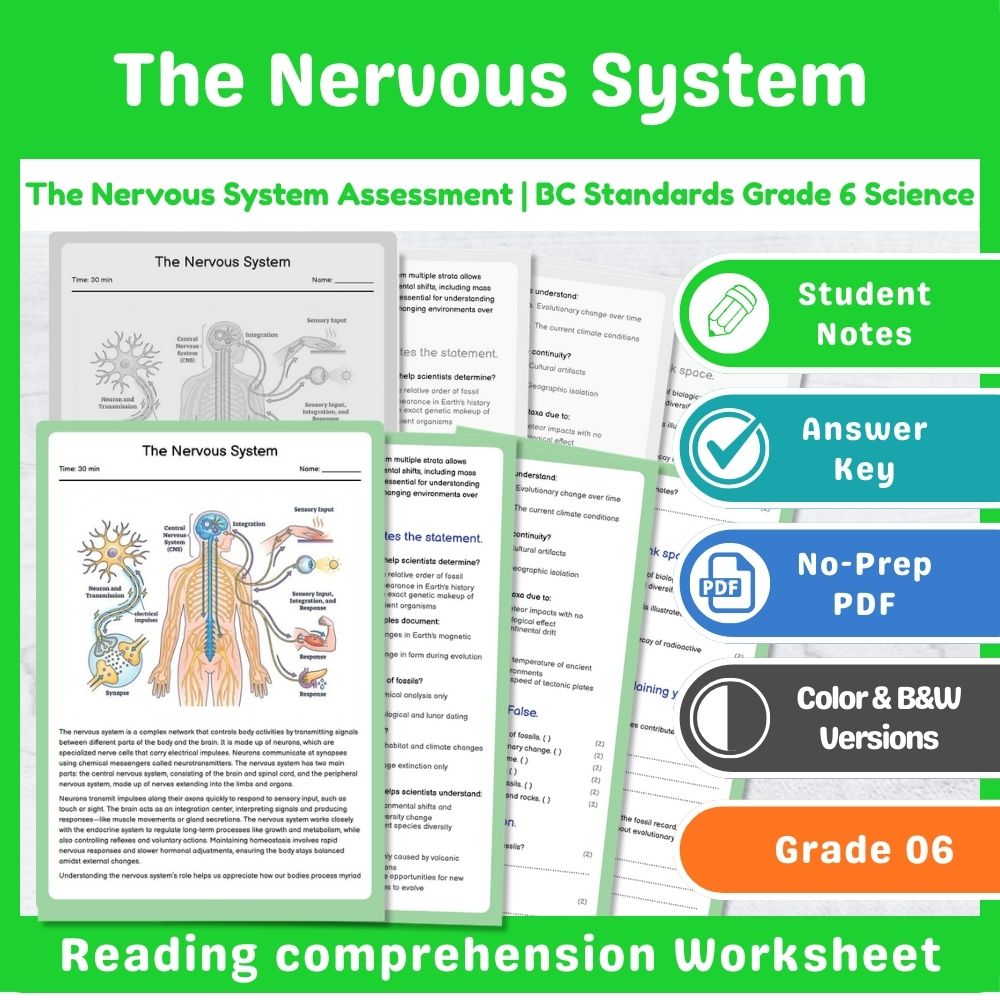
The Nervous System Assessment | BC Standards Grade 6 Science
Created byPrism Point LearningLearning Objectives
- Describe the basic structure and function of neurons.
- Explain how the nervous system collects, processes, and responds to sensory information.
- Identify the role of integration centers in coordinating responses.
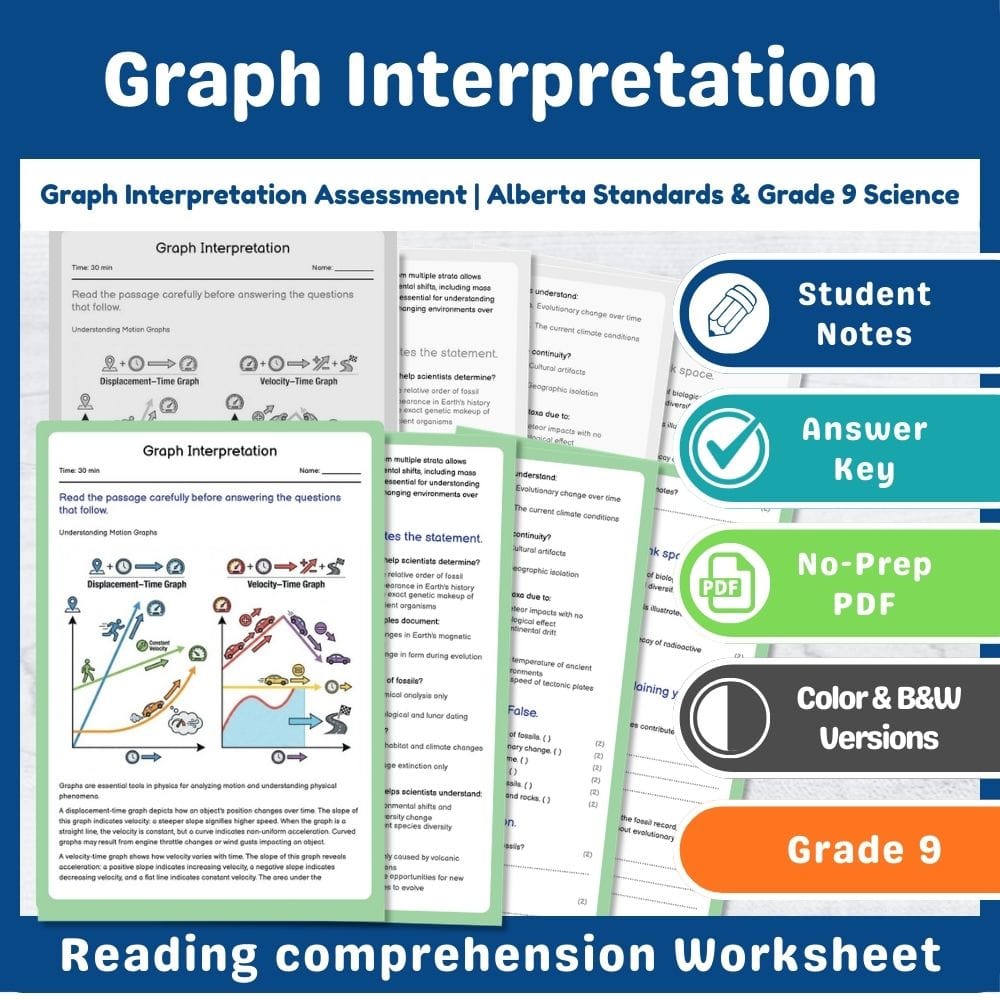
Graph Interpretation Assessment | Alberta Standards & Grade 9 Science
Created byPrism Point LearningLearning Objectives
- Understand how the slope of a displacement–time graph relates to velocity.
- Interpret the area under a velocity–time graph as displacement.
- Identify non-uniform acceleration patterns from curved graphs.

Food Chains Assessment for Grade 10 Science | TEKS Standards
Created byPrism Point LearningLearning Objectives
- Understand the flow of energy through food chains and food webs.
- Identify the roles of producers, consumers, and decomposers in ecosystems.
- Explain the concepts of interconnections and stability in complex food webs.
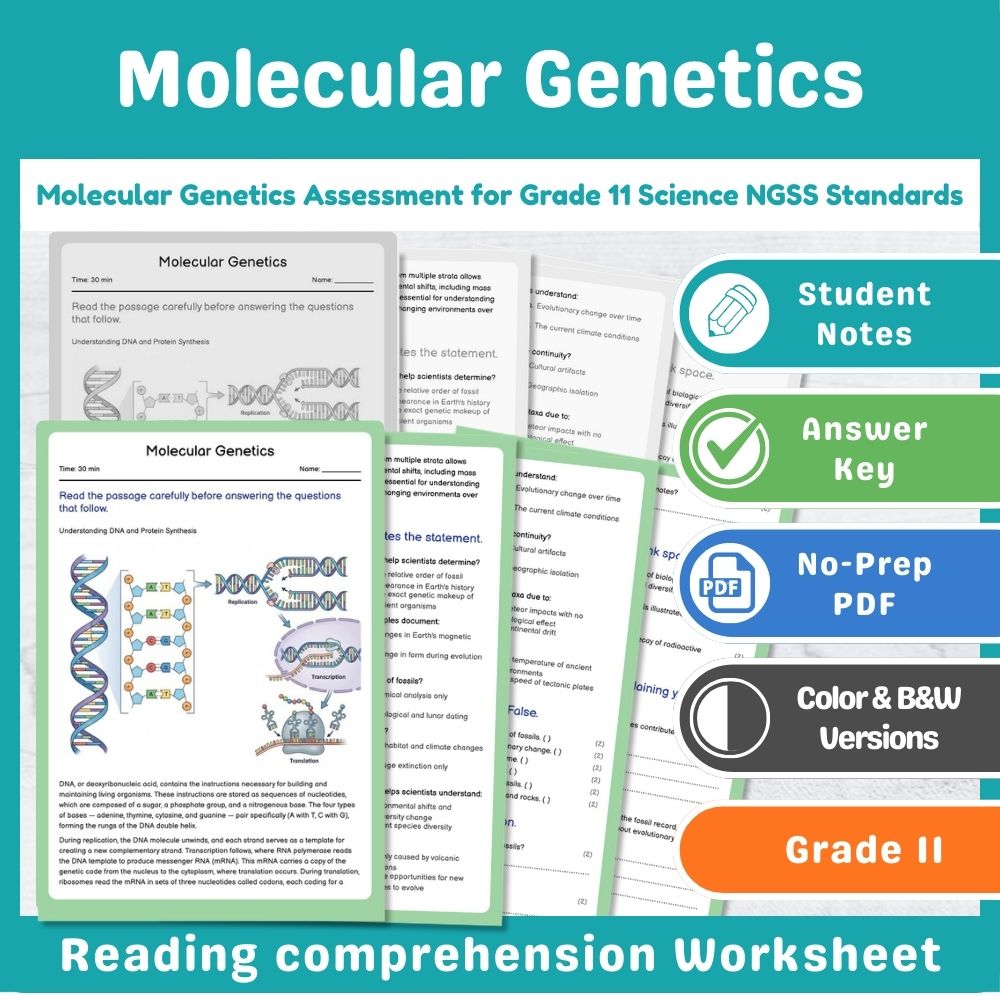
Molecular Genetics Assessment for Grade 11 Science NGSS Standards
Created byPrism Point LearningLearning Objectives
- Understand the relationship between DNA sequences and protein synthesis through replication, transcription, and translation.
- Describe the structure of DNA and the genetic code.
- Explain how chromosomal organization links molecular information to observable traits.

Enzymes and Transport Assessment for Grade 10 Science | Standards-Based
Created byPrism Point LearningLearning Objectives
- Understand how enzymes act as catalysts in biochemical reactions.
- Explain how membrane structure influences permeability and transport.
- Describe the role of cell signaling molecules and receptors in cellular responses.
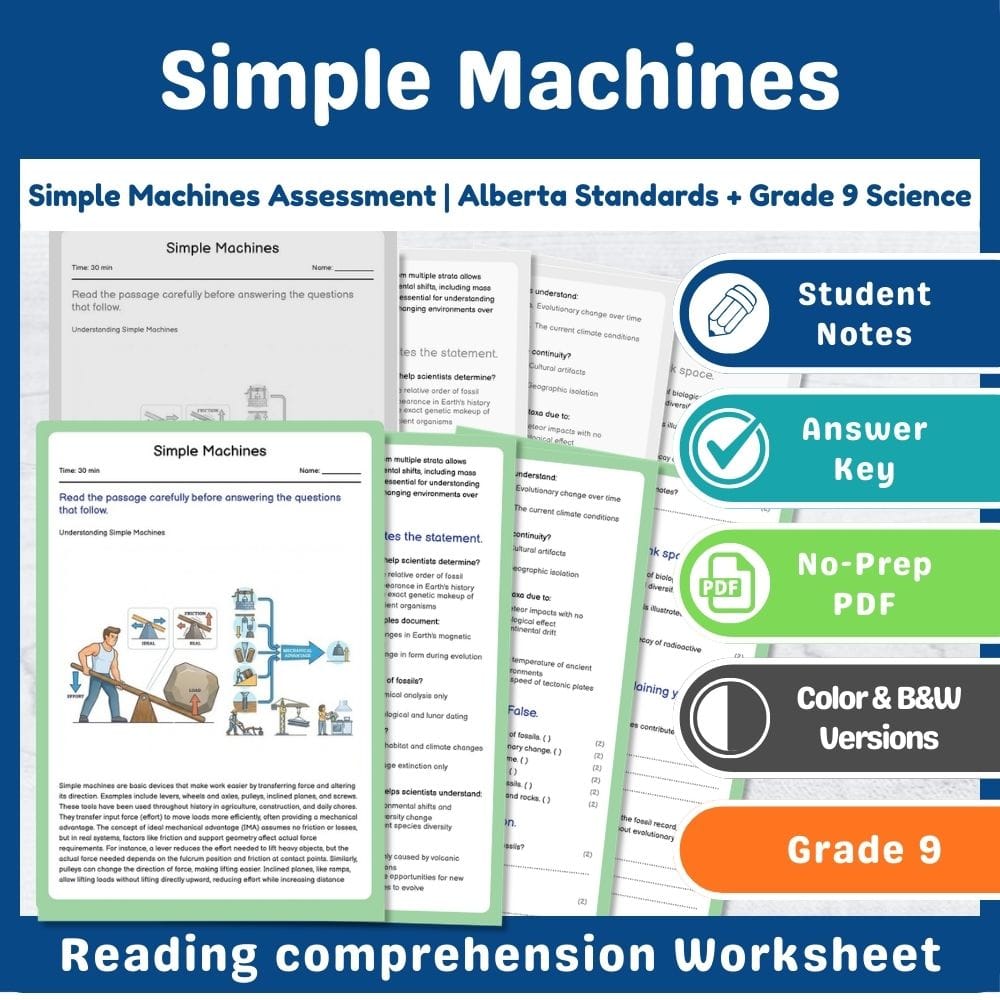
Simple Machines Assessment | Alberta Standards + Grade 9 Science
Created byPrism Point LearningLearning Objectives
- Describe the different types of simple machines and their functions.
- Explain how simple machines reduce effort and change the direction of force.
- Differentiate between ideal and actual mechanical advantage in systems involving simple machines.

Elements in Compounds Grade 6 Science Assessment | California Standards
Created byPrism Point LearningLearning Objectives
- Explain what compounds are and how they form from atoms of different elements.
- Describe how particle models show compounds with definite bonding arrangements.
- Use element ratios in compounds to predict properties and understand macroscopic differences.

Protein Synthesis Assessment | TEKS Standards Grade 10 Science Worksheet
Created byPrism Point LearningLearning Objectives
- Describe the process of transcription and translation in protein synthesis.
- Identify the roles of DNA, RNA, ribosomes, and tRNA during protein synthesis.
- Explain the stages of transcription and translation, including initiation, elongation, and termination.

Endothermic and Exothermic Reactions Assessment | General Grade 10 Science
Created byPrism Point LearningLearning Objectives
- Understand the energy flow in endothermic and exothermic reactions.
- Identify qualitative signs of energy absorption or release during chemical reactions.
- Explain how energy profiles relate to bond formation and breaking.
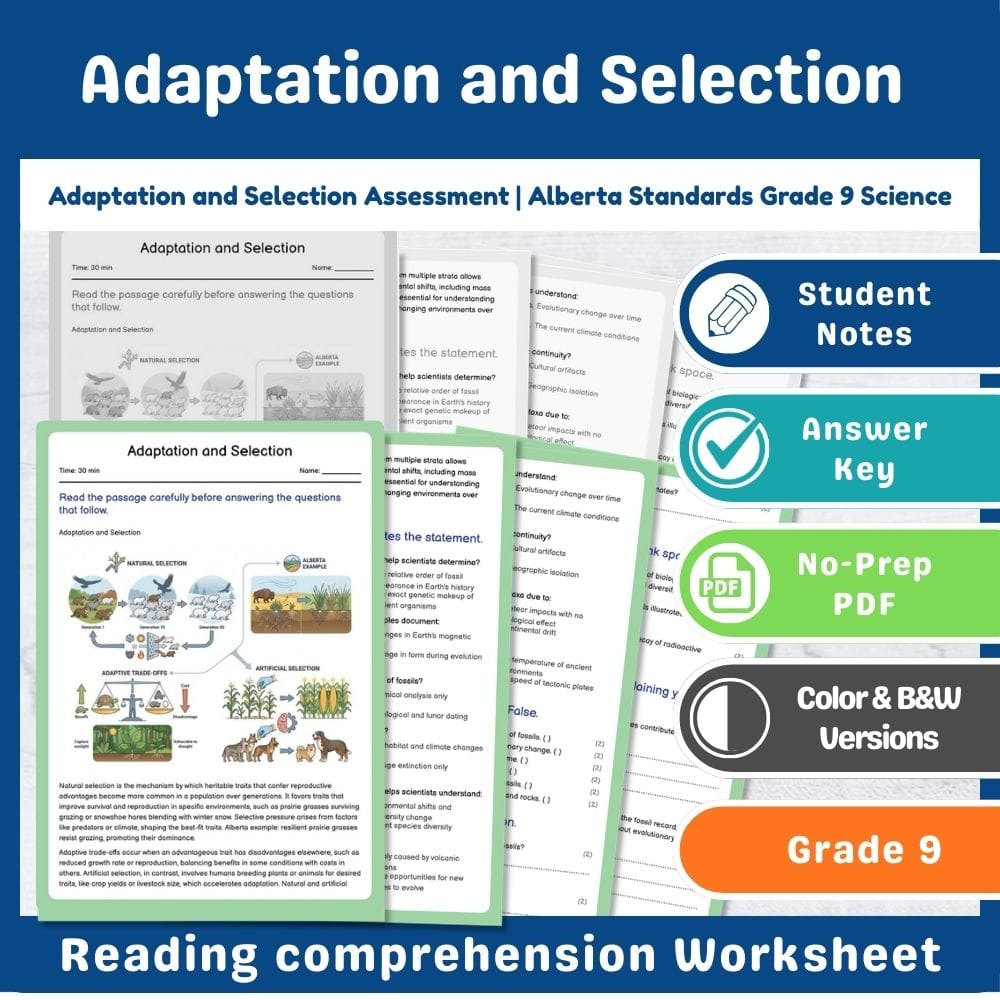
Adaptation and Selection Assessment | Alberta Standards Grade 9 Science
Created byPrism Point LearningLearning Objectives
- Understand the process of natural selection and how it influences adaptations in populations.
- Identify examples of adaptive traits and the role of selective pressures in different environments.
- Differentiate between natural selection and artificial selection in shaping species over generations.
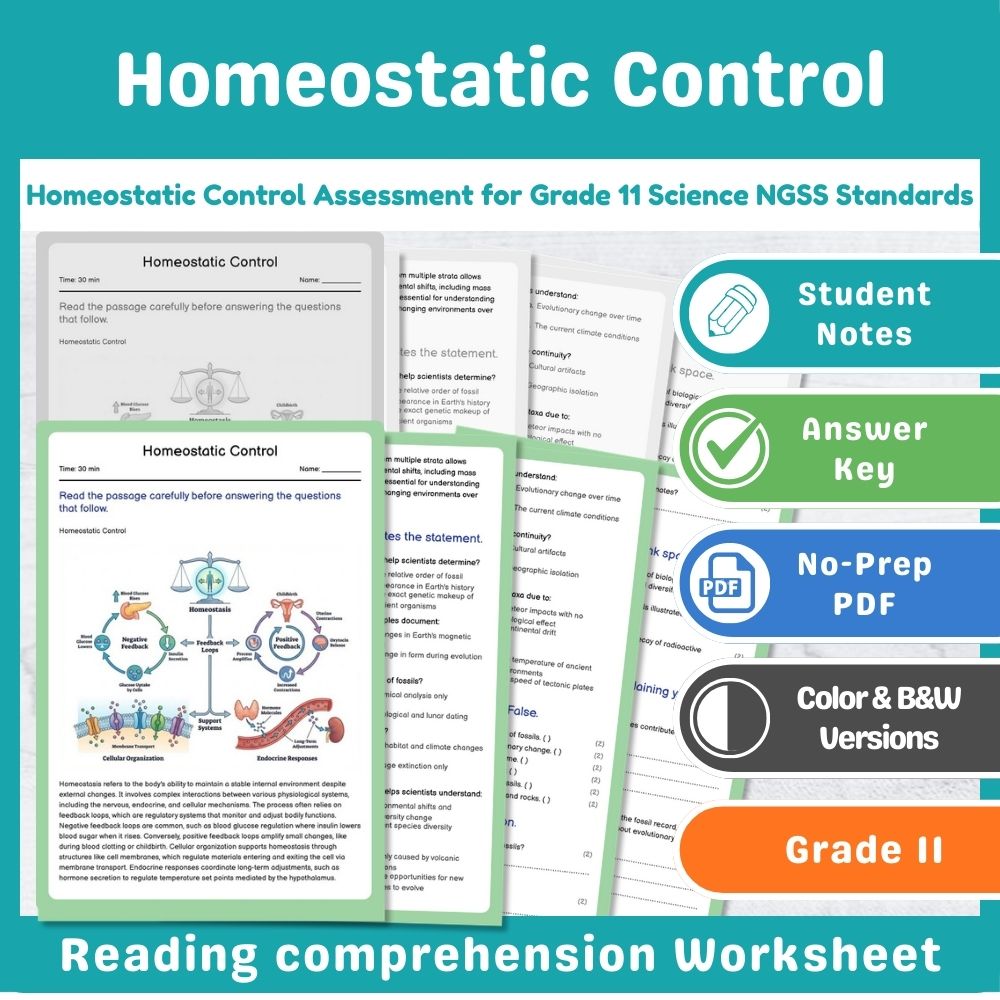
Homeostatic Control Assessment for Grade 11 Science NGSS Standards
Created byPrism Point LearningLearning Objectives
- Explain the concept of homeostasis and its importance in maintaining internal stability.
- Identify feedback mechanisms, including positive and negative feedback loops, involved in physiological regulation.
- Describe examples of homeostatic processes such as blood glucose regulation, thermoregulation, and ion gradient control.
Browse more categories
About Science Worksheets
Find Science worksheets spanning core skills, practice, and review. All 42,685 resources are instant PDF downloads for the classroom or home.
Every worksheet on MyTeachingSheets is created by independent teacher-authors and reviewed before publication. All resources download as printable PDFs for classroom, homework, or at-home practice, and many include answer keys. Preview any worksheet free before buying.