
Grade 6 Worksheets
8,582 grade resources
Grade 6 Health Worksheet | Physical Benefits & Fitness (PDF) – Ontario Standards
 Created bySunny Desk Resources
Learning Objectives
- Explain how regular physical activity improves cardiovascular endurance, muscle strength, and flexibility.
- Describe at least two mental health benefits of consistent movement (such as reduced stress and anxiety).
- Identify safe ways to start and maintain a physical activity routine.
Also included in: Grade 6 Active Living Health Lesson Bundle: Ontario Health Skills Framework +1 more
Instant download
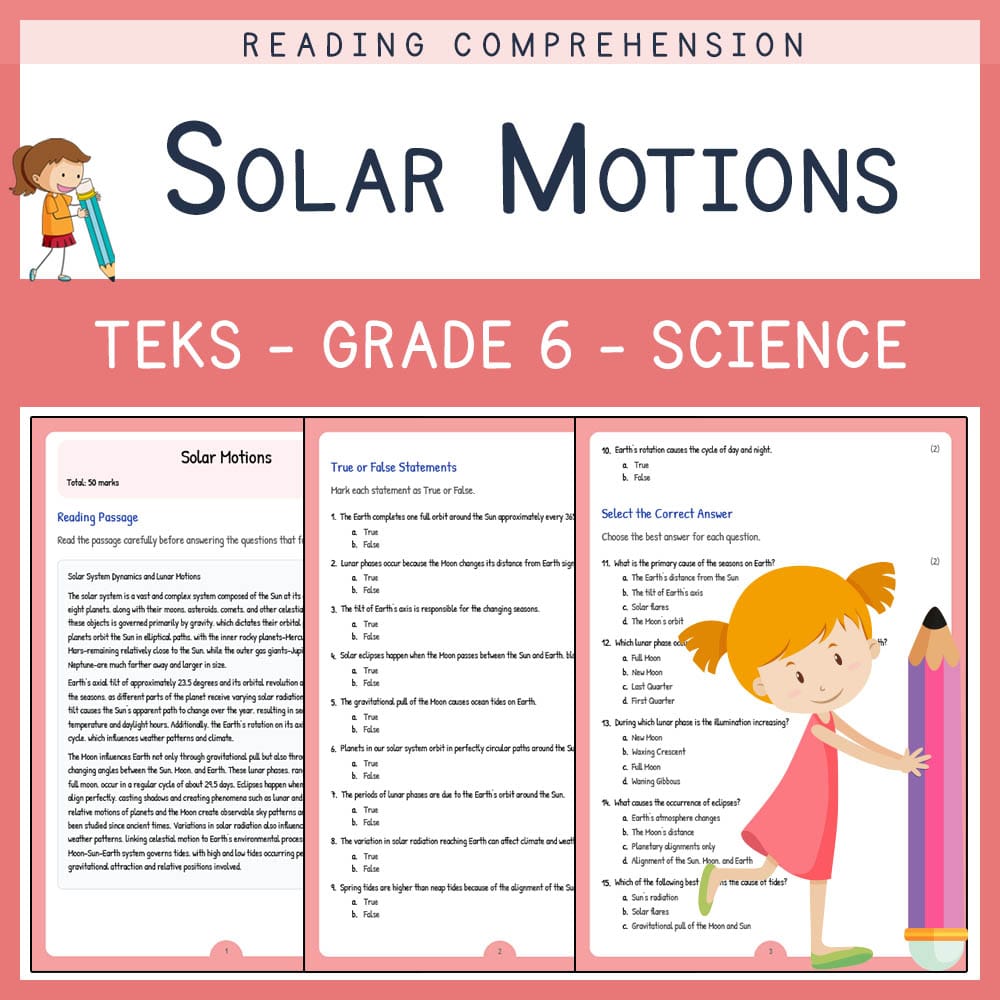
Grade 6 Science | Solar Motions Worksheet | TEKS-Aligned
 Created byLumora Learning
Learning Objectives
- Describe the orbital motions and gravitational interactions within the solar system.
- Explain how Earth's axial tilt and revolution cause seasonal changes.
- Identify the phases of the Moon and understand lunar cycles.
Also included in: Grade 6 Science | Earth and Space Science Unit Bundle | TEKS Standard
Instant download

Listening Strategies Worksheet | Standards-Aligned Grade 6 ELA Practice
JCreated byJ.S SheetsLearning Objectives
- Identify the main point and supporting details in a short audio or video presentation.
- Use listening and viewing transitions (such as first, because, however) to track how ideas connect.
- Interpret nonverbal cues like emphasis and pacing to understand the speaker’s purpose.
Instant download

Grade 6 Science – Understanding Combined Circuits | Daily Reading Worksheet
 Created byBright Mind Resources
Learning Objectives
- Identify and distinguish between series and parallel circuits.
- Understand how current and voltage distribute in combined circuits.
- Decompose complex circuits into simpler series and parallel parts for analysis.
Also included in: Grade 6 Electricity Science Daily Reading Lesson Bundle | Ontario +1 more
Instant download

Evaluating Arguments Worksheet Pack | Grade 6 ELA Practice
Created bySunny Desk ResourcesLearning Objectives
- Identify the claim, evidence, and reasoning in an informational argument.
- Evaluate whether evidence supports a claim and recognize when reasoning is weak or illogical.
- Detect common logical fallacies and explain how they affect the validity of an argument.
Also included in: Grade 6 Reading Comprehension Strategies Lesson Bundle | ELA | CCSS +1 more
Instant download

Grade 6 Science | Forms of Energy Worksheet | BC Standard
Created byLumora LearningLearning Objectives
- Identify and describe different forms of energy such as kinetic, potential, thermal, chemical, and electrical.
- Understand how energy can transform from one form to another in natural and engineered systems.
- Recognize common examples of energy transformations like sunlight to chemical in plants and combustion to thermal energy.
Also included in: Grade 6 Science | Energy, Waves & Circuits | Custom Bundle | BC Aligned
Instant download
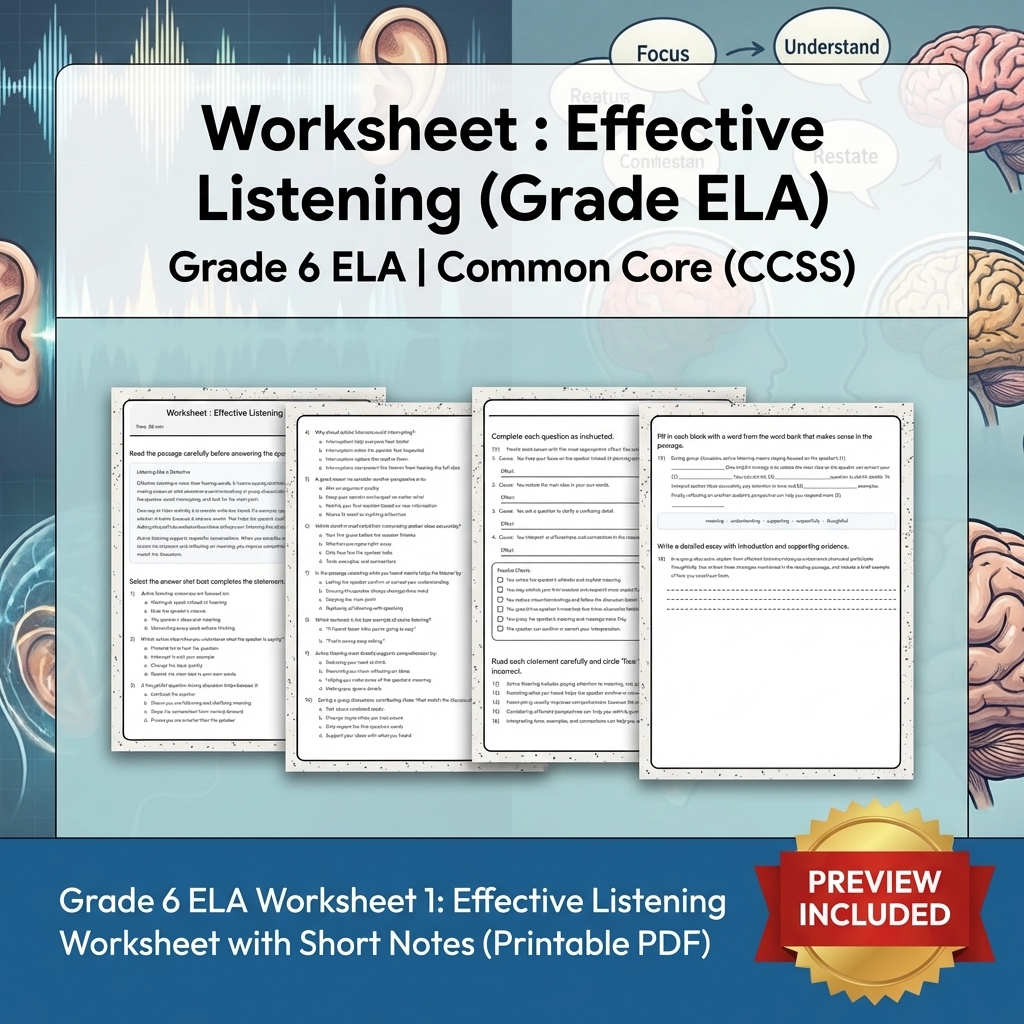
Grade 6 ELA Worksheet Effective Listening Worksheet with Short Notes (Printable PDF)
 Created byMeadowlark Worksheets
Learning Objectives
- Identify strategies of active listening during group discussions
- Explain how listening helps you understand others’ perspectives accurately
- Use evidence from a text and discussion ideas to respond appropriately
Also included in: Grade 6 Presenting Ideas & Listening ELA lesson bundle: CCSS +1 more
Instant download

Grade 6 Science | Iterative Improvement Worksheet | General Standard
Created byLumora LearningLearning Objectives
- Explain how evaluation results guide iterative improvement in science and engineering designs
- Identify how changes can target the cause of failure while respecting constraints and trade-offs
- Use evidence from testing to justify modifications to a prototype
Instant download
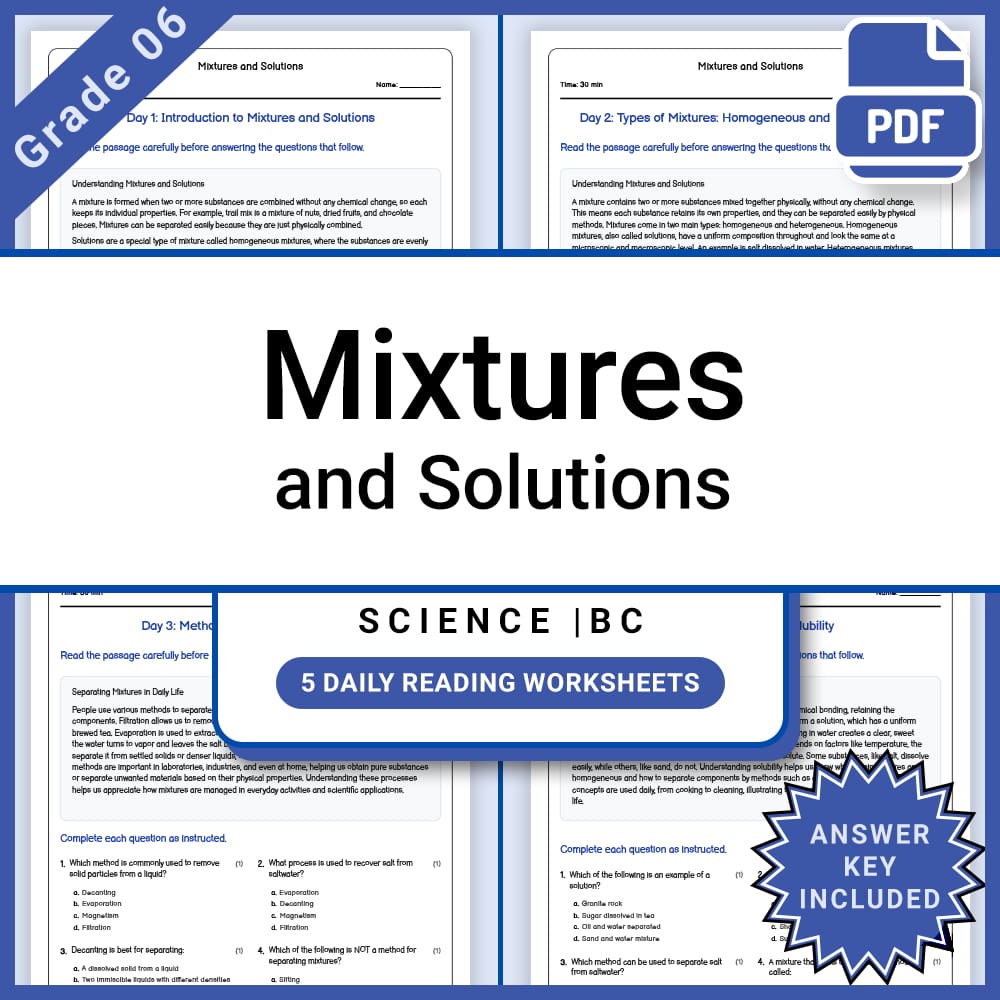
Grade 6 Science – Mixtures and Solutions Daily Reading Worksheet + Answer Key
JCreated byJ.S SheetsLearning Objectives
- Understand the difference between mixtures and solutions.
- Identify homogeneous and heterogeneous mixtures.
- Learn methods to separate components of mixtures.
Also included in: Grade 6 Science Lesson Group Bundle | Inquiry-Based Science Activities +1 more
Instant download

Grade 6 Historical Contact and Exploration Worksheet | BC Social Studies
 Created byQuiet Forest Education
Learning Objectives
- Understand the key motives and routes of early exploration
- Identify the cultural exchanges that resulted from exploration
- Analyze the impacts of contact between different societies during the Age of Exploration
Also included in: Cultures: Traditions, Contact & Change Lesson Bundle | Grade 6 Social Studies BC +1 more
Instant download
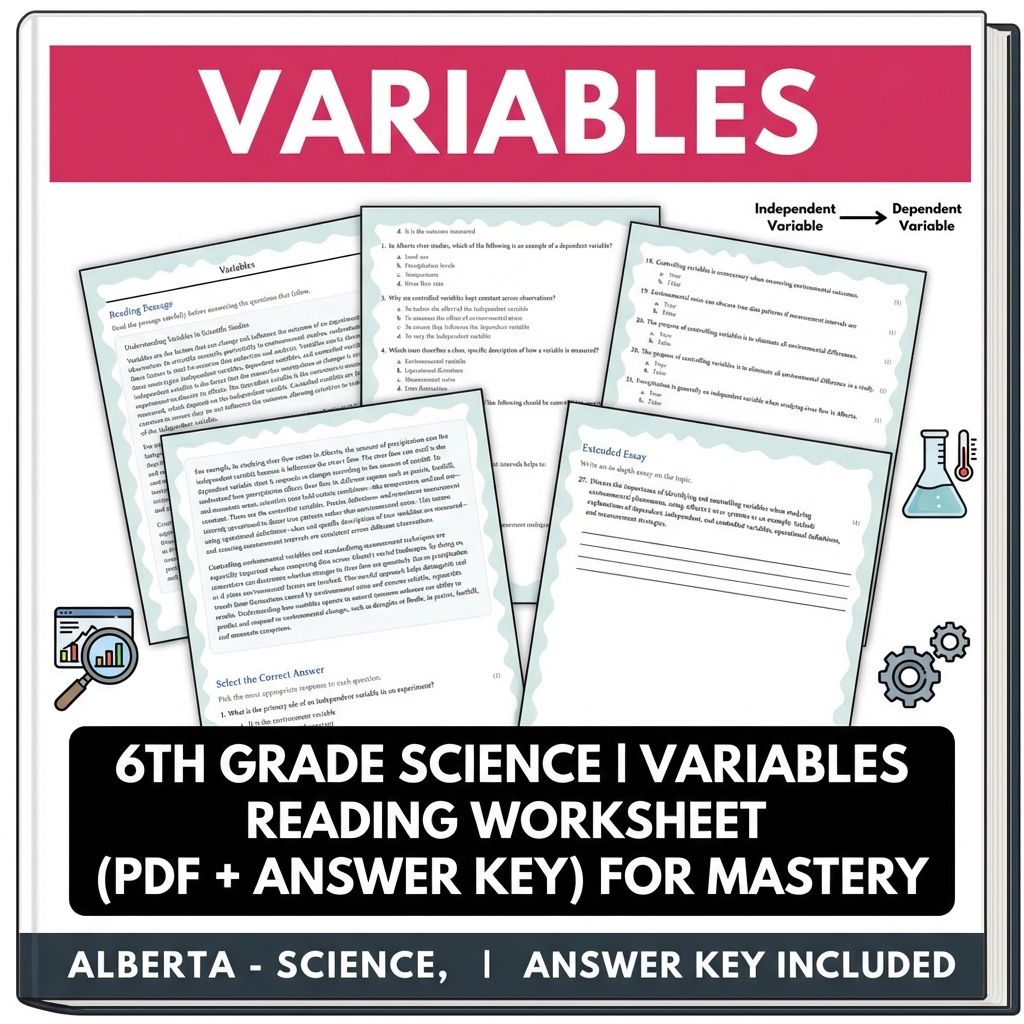
6th Grade Science | Variables Reading Worksheet (PDF + Answer Key) for Mastery
JCreated byJ.S SheetsLearning Objectives
- Define and distinguish between independent, dependent, and controlled variables.
- Explain the importance of operational definitions and measurement consistency in experiments.
- Describe how variables influence observable outcomes in natural contexts, such as Alberta ecosystems.
Also included in: Grade 6 Science Bundle – Data Analysis, Scientific Inquiry & Measurement Skills +1 more
Instant download

Conservation of Mass | MS-PS1-5 Phenomenon Lesson + CER | Grade 6
 Created byLearn Nest
Learning Objectives
- Calculate mass change from provided measurements
- Compare open and sealed trials to identify the mass pattern
- Decide whether matter entered or left the system using CER
Instant download

Grade 6 Holiday | Labor Day: Civic Pride & History | PDF + Answer Key
 Created byShaNova Worksheets
Learning Objectives
- Explain how Labor Day connects to civic pride and gratitude for workers.
- Identify ways communities and cultures celebrate labor through traditions and events.
- Compare examples of respect and social responsibility shown through Labor Day activities.
Instant download

Energy Flow and Matter Cycling in Food Webs Worksheets Grade 6
 Created byTeachers Club
Learning Objectives
- Explain how photosynthesis and cellular respiration contribute to energy flow in food webs.
- Describe how energy decreases at each trophic level using an energy pyramid.
- Identify producers, consumers, and decomposers and explain their roles in matter cycling.
Also included in: Ecosystems Worksheets Grade 6 Science | NGSS Unit Bundle +2 more
Instant download

6th Grade Science| Water Cycle and Resources Worksheet (PDF)
 Created byEvergreen Desk Education
Learning Objectives
- Explain how evaporation, precipitation, and runoff move water through the water cycle.
- Describe how infiltration and groundwater recharge help store freshwater over time.
- Analyze how land cover and temperature affect streamflow and local humidity.
Also included in: 6th Grade Earth & Climate Science Lesson Bundle – General Framework +1 more
Instant download

6th Grade Science Tools Safety Worksheet – Alberta Standards (Worksheet + Answer Key)
Created byEvergreen Desk EducationLearning Objectives
- Identify safe choices for using common field measurement tools (thermometers, pH probes, handheld anemometers, and electronic dataloggers).
- Describe proper handling, storage, cleaning, and battery management to prevent equipment damage and incorrect data.
- Explain how to reduce contamination of samples and protect people when working near wetlands or river edges.
Instant download

Grade 6 Social Studies — Global Interactions Worksheet MCQ Paper
 Created byThe Resource Hub
Learning Objectives
- Understand how intercultural contact influences societies and identities.
- Identify examples of global interactions such as festivals, trade, and digital communication.
- Analyze the impact of cultural exchanges on diversity and understanding.
Also included in: Grade 6 Social Studies Bundle: Cultures and Identities – BC Framework +1 more
Instant download
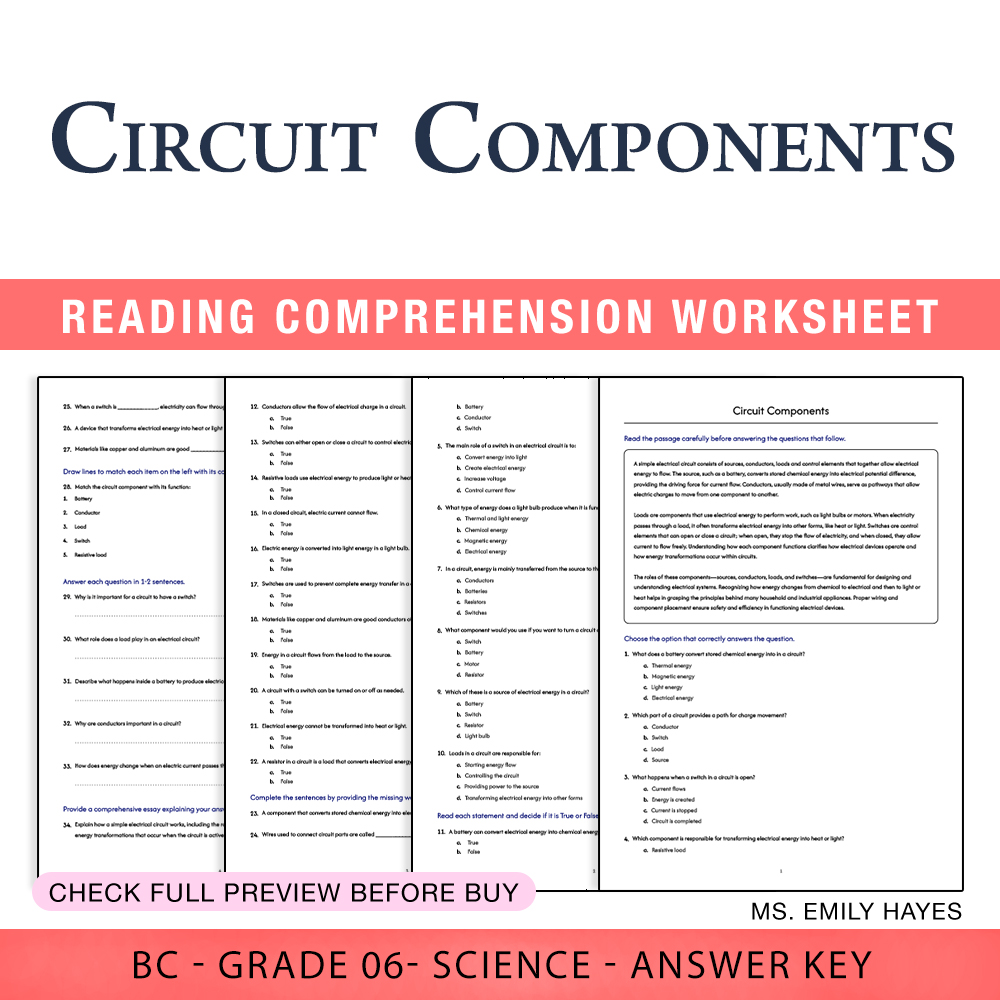
6th Grade Science | Circuit Components Worksheet (PDF+ Answer Key)
 Created byCopper Leaf Classroom
Learning Objectives
- Describe the roles of key components in a simple electrical circuit.
- Explain how energy is transformed within electrical devices and circuits.
- Identify different circuit components and their functions.
Also included in: Grade 6 Science BC | Waves, Sound, Light & Energy Worksheets (PDF + Answer Key) +1 more
Instant download

Main Idea Worksheet for Grade 6 ELA | Standards-Aligned Practice PDF
JCreated byJ.S SheetsLearning Objectives
- Identify the main idea of a paragraph or short selection by focusing on the central point that connects the details.
- Distinguish main idea from supporting details and explain how details work together to support a single focus.
- Use main idea to write accurate summaries that fit the whole text.
Instant download
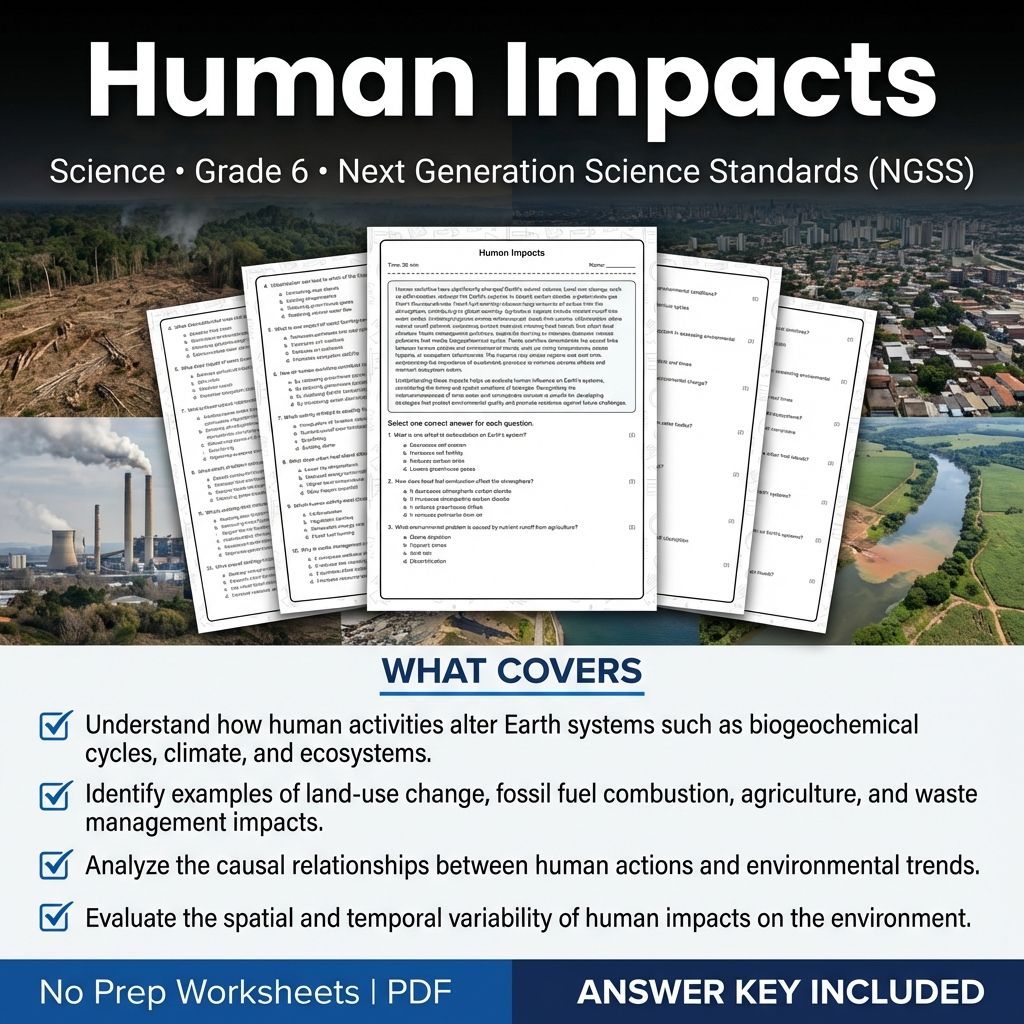
Grade 6 Science | Human Impacts Worksheet & PDF Answer Key (Printable)
 Created byCoral Reef Learning
Learning Objectives
- Understand how human activities alter Earth systems such as biogeochemical cycles, climate, and ecosystems.
- Identify examples of land-use change, fossil fuel combustion, agriculture, and waste management impacts.
- Analyze the causal relationships between human actions and environmental trends.
Instant download

Grade 6 Maths | Decision Evaluation Worksheet (Ontario Standards) (PDF)
 Created byClear Sky Classroom
Learning Objectives
- Develop skills to assess the reasonableness of financial decisions using estimation and comparison.
- Apply mathematical calculations to real-world financial scenarios.
- Enhance logical reasoning and problem-solving skills in financial contexts.
Also included in: Grade 6 Math Financial Literacy Bundle | Ontario Standards Practice +1 more
Instant download

Grade 6 Science Worksheet | Animals Matter Use | California Standards PDF
Created byEvergreen Desk EducationLearning Objectives
- Explain how animals need matter and energy to live, grow, and function.
- Describe how food provides both matter (for body parts) and energy (for life processes).
- Identify ways matter leaves an animal’s body, such as waste, breath, and energy-related releases.
Instant download
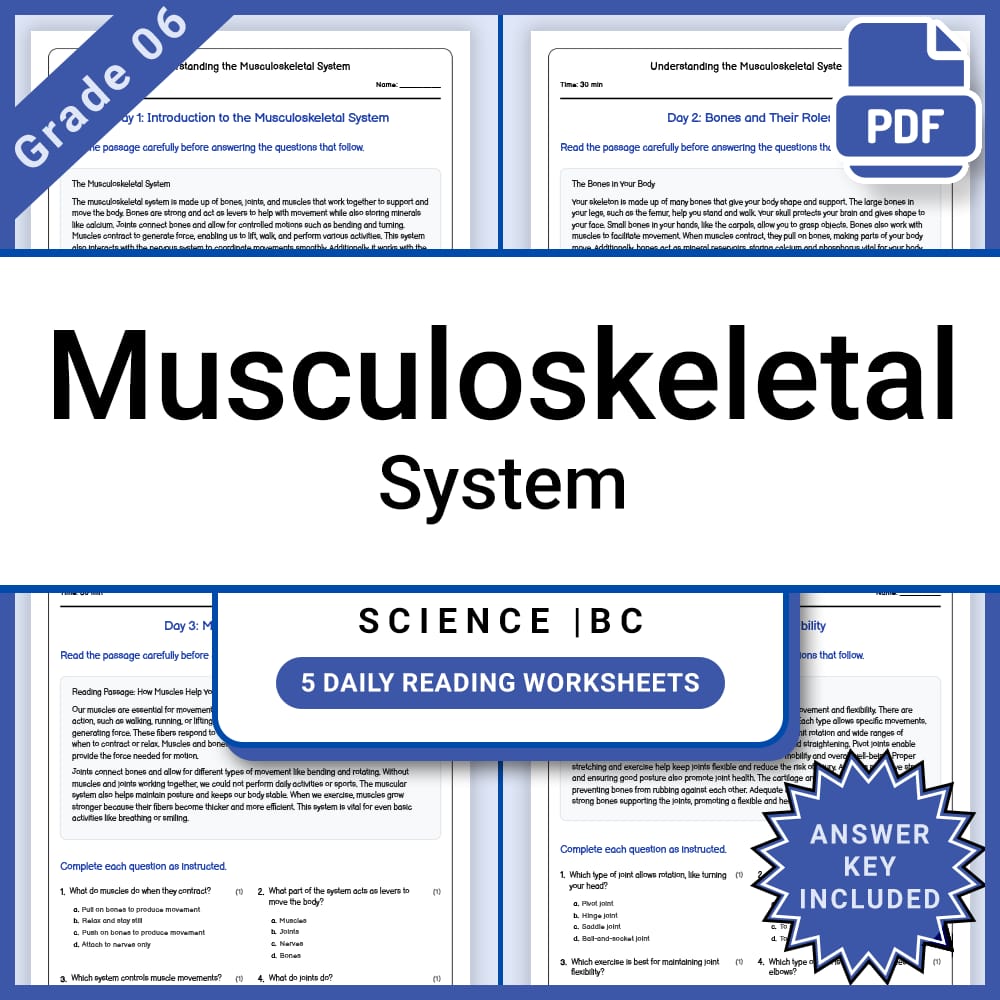
Grade 6 Science – Musculoskeletal System Daily Reading Worksheet + Answer Key
JCreated byJ.S SheetsLearning Objectives
- Identify the main components of the musculoskeletal system.
- Explain the functions of bones, joints, and muscles.
- Describe how the musculoskeletal system interacts with other body systems.
Also included in: Grade 6 Science Lesson Group | Body Systems and Adaptations Bundle +1 more
Instant download

Population Change in Ecosystems Worksheets | Grade 6 Science
Created byTeachers ClubLearning Objectives
- Explain how changes in ecosystem components can lead to population increases or declines
- Use empirical evidence such as birth/death rates, age structure, and population growth curves to support causal claims
- Describe how predator, invasive species, habitat fragmentation, and disease outbreaks can trigger trophic cascades
Also included in: Ecosystems Worksheets Grade 6 Science | NGSS Unit Bundle +2 more
Instant download

Grade 6 ELA - Purpose and Audience Worksheet (Alberta Standards) (PDF)
 Created byGolden Apple Studio
Learning Objectives
- Identify a writer’s purpose and the intended audience in a piece of writing
- Explain how purpose and audience affect word choice, details, tone, and organization
- Revise sentences to better fit a specific audience while maintaining the writer’s purpose
Also included in: Grade 6 ELA Sentence, Evidence & Revision Lesson Bundle – Alberta +1 more
Instant download

Grade 6 Science | Chromatography Basics Worksheet | BC Standards
Created byLumora LearningLearning Objectives
- Understand the principles of paper chromatography and how it separates mixture components.
- Identify factors that affect the movement of substances in chromatography.
- Recognize real-world applications of chromatography in analyzing complex mixtures.
Instant download

Grade 6 Ecosystem Components Worksheet with Answer Key | Florida NGSSS Science
Created byEvergreen Desk EducationLearning Objectives
- Explain how abiotic factors (nonliving conditions) affect where organisms can live in an ecosystem
- Identify biotic factors (producers, consumers, and decomposers) and describe how they interact
- Compare ecosystem components across different environments such as ponds, deserts, and tropical forests
Instant download

6th Grade Social Studies | Resource Management Worksheet (California Standard) (PDF)
Created bySunny Desk ResourcesLearning Objectives
- Explain how early communities stored and distributed food and other resources to manage scarcity.
- Describe how labor was organized to support larger populations and more stable settlements.
- Evaluate how infrastructure such as irrigation and communal work systems helped communities adapt to environmental limits.
Also included in: 6th Grade Water & Land Migration Social Studies Lesson Bundle: California +1 more
Instant download

Grade 6 ELA – Figurative Language & Similes Daily Reading Worksheet
Created byQuiet Forest EducationLearning Objectives
- Identify similes within a text
- Interpret the meaning of similes based on context
- Explain how similes enhance imagery and emotion in writing
Also included in: Reading Literature Grade 6 ELA Daily Reading Worksheets Lesson Bundle | Gen. ELA +2 more
Instant download

Angle Effects Science Worksheet Grade 6 | Lift, Airflow & Stall
 Created byChalk and Compass
Learning Objectives
- Explain how angle of attack affects airflow, lift, and stall onset
- Identify the linear lift region and what happens after the critical angle is passed
- Describe how wing incidence and control inputs change the effective angle of attack
Also included in: Grade 6 Science Aviation Unit Aerodynamics & Flight Testing Lesson Bundle +1 more
Instant download

6th Grade Social Studies | Political Institutions Worksheet (PDF)
Created bySunny Desk ResourcesLearning Objectives
- Explain how political institutions organize authority, create rules, and manage conflict
- Identify key functions of legislative, judicial, and executive institutions
- Describe how laws and institutions can evolve from cultural values and social needs
Also included in: 6th Grade Types of Governance Social Studies Lesson Bundle Worksheets TEKS +1 more
Instant download

Grade 6 Science | Heat Transfer Worksheet with Short Notes (Printable PDF)
Created byMeadowlark WorksheetsLearning Objectives
- Understand how heat transfer causes changes in the state of matter.
- Describe the processes of melting, boiling, and condensation.
- Connect everyday observations to the concept that energy affects matter's organization.
Also included in: Grade 6 Science Lesson Bundle – Teaching Transfer, Mixtures, Motion & More +1 more
Instant download
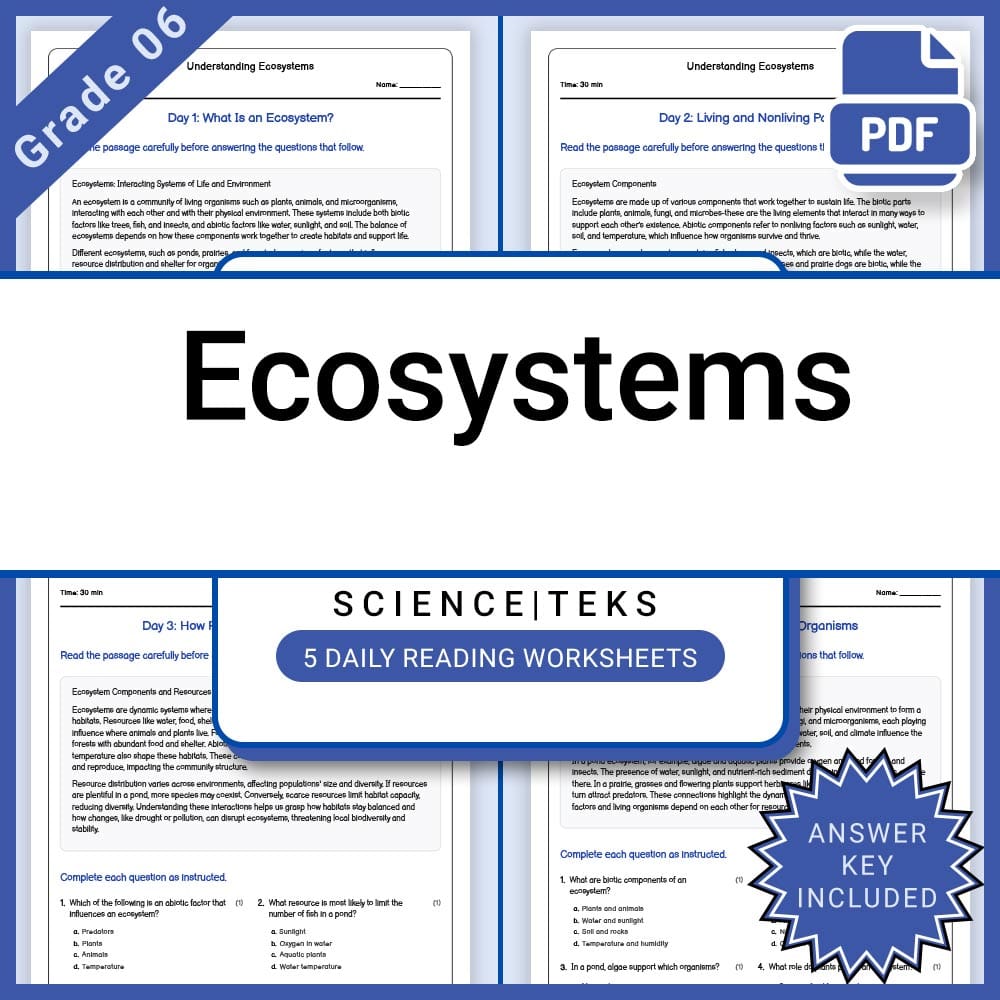
Grade 6 Science – Ecosystems Daily Reading Worksheet Answer Key
JCreated byJ.S SheetsLearning Objectives
- Define what an ecosystem is and identify its key components.
- Differentiate between biotic and abiotic factors in an environment.
- Understand how populations and communities interact within ecosystems.
Also included in: Grade 6 Science Lesson Bundle: Ecosystems, Food Chains & Environment +1 more
Instant download
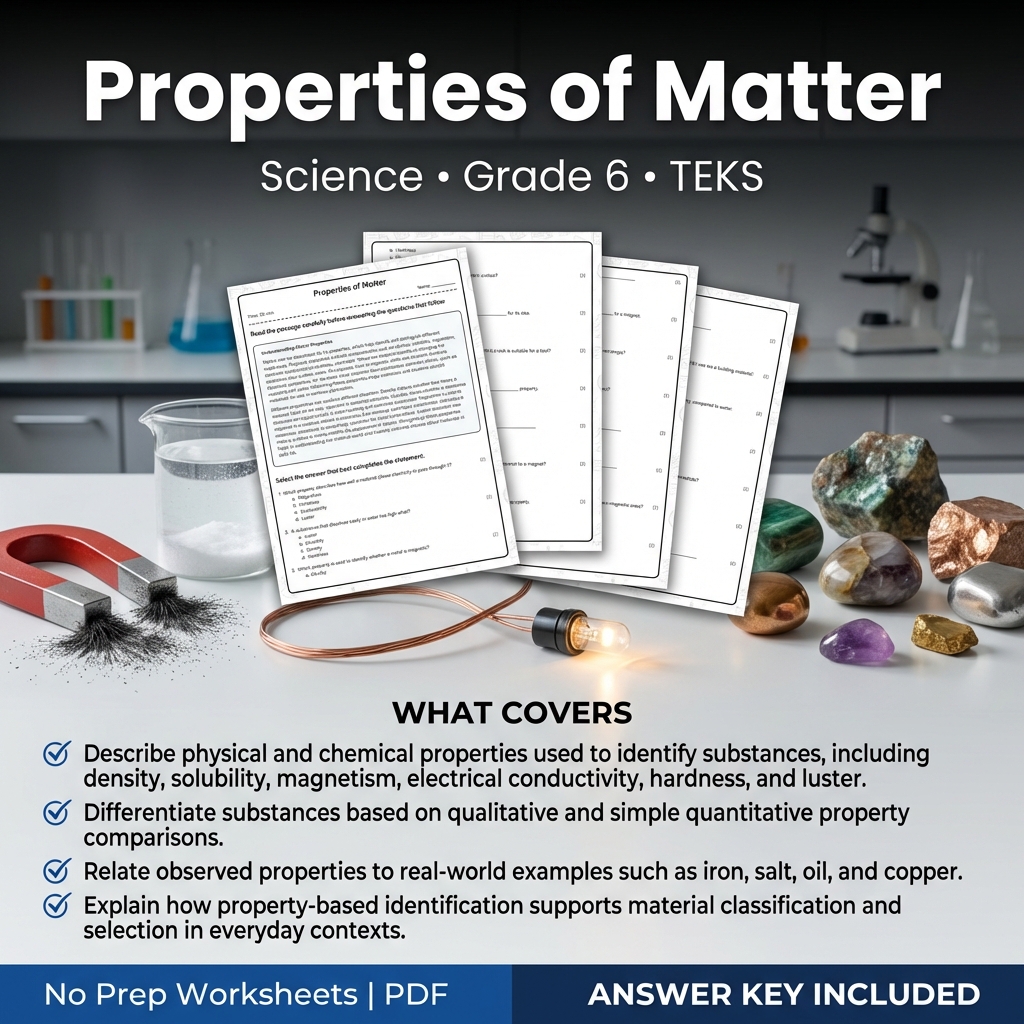
Grade 6 Science Worksheet on Properties of Matter | TEKS Practice
Created byCoral Reef LearningLearning Objectives
- Describe physical and chemical properties used to identify substances, including density, solubility, magnetism, electrical conductivity, hardness, and luster.
- Differentiate substances based on qualitative and simple quantitative property comparisons.
- Relate observed properties to real-world examples such as iron, salt, oil, and copper.
Instant download

Gravitational Attraction & Orbital Motion Worksheets | Grade 6 Science
Created byTeachers ClubLearning Objectives
- Explain how gravity provides the centripetal force that keeps planets and satellites in orbit.
- Describe how mutual gravity between a star and a planet can produce an elliptical orbit and changing orbital speed.
- Compare how mass and distance affect gravitational influence using Earth–Moon and Jupiter–satellite examples.
Also included in: Earth's Place in the Universe Grade 6 Science NGSS Bundle +2 more
Instant download
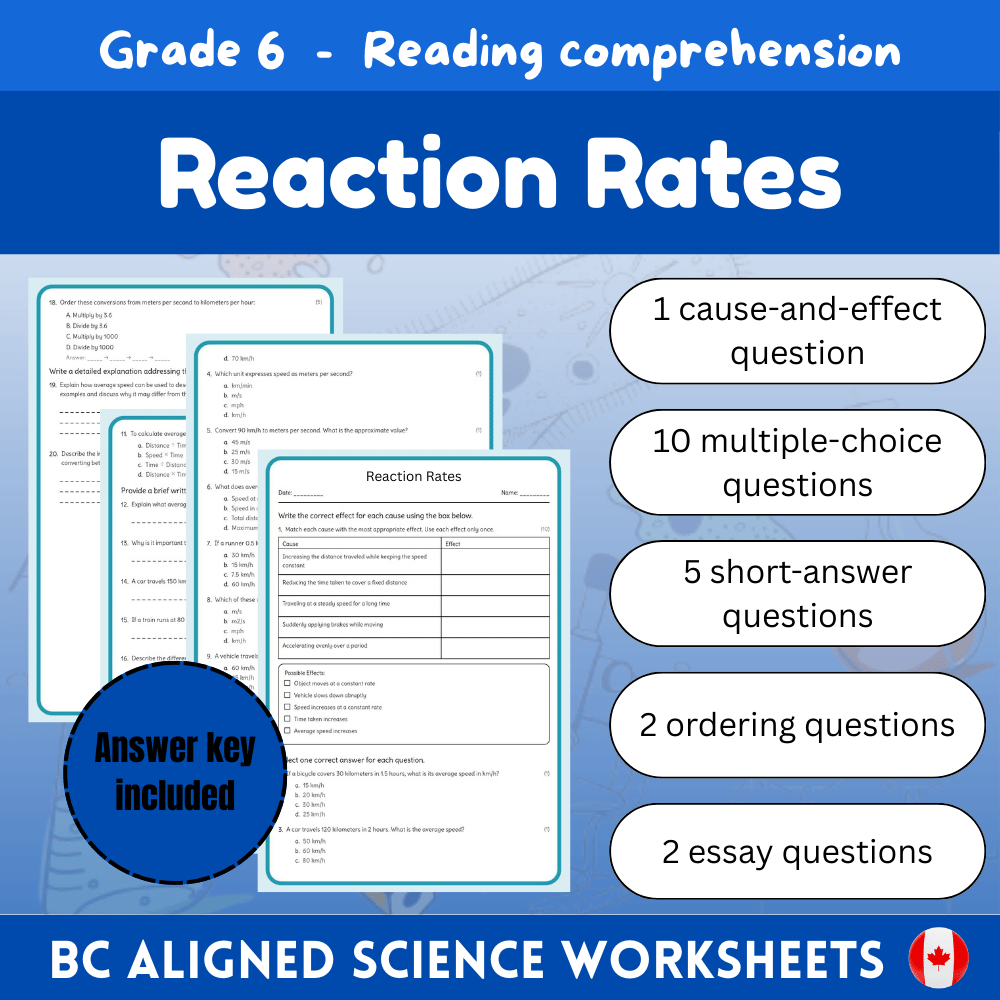
Grade 6 Science | Reaction Rates Worksheet + Answer Key (PDF) – BC Standards
Created byBright Mind ResourcesLearning Objectives
- Understand what determines the speed of a chemical reaction
- Identify factors that influence reaction rates such as concentration, temperature, surface area, and catalysts
- Explain how microscopic particle collisions relate to observable changes in reactions
Instant download

Listening Strategies Test Prep Printable | Grade 6 ELA
Created byMeadowlark WorksheetsLearning Objectives
- Identify the main idea and supporting details by actively listening or viewing.
- Use transition words and pacing to follow how ideas relate (cause, contrast, sequence).
- Interpret nonverbal cues such as emphasis and speed to understand a speaker’s purpose.
Also included in: Grade 6 Listening & Discussion Explanation ELA Lesson Bundle (Alberta) +1 more
Instant download

Jewish Beliefs and Laws Worksheet | Standards-Aligned Grade 6 Social Studies
JCreated byJ.S SheetsLearning Objectives
- Explain the idea of ethical monotheism and why it matters in Jewish life
- Describe how Jewish laws from the Torah influence daily choices and community behavior
- Identify examples of Jewish rituals and practices that support community continuity and social justice
Instant download

Multimedia Perspectives Test Prep Worksheet | Grade 6 ELA Alberta
Created byMeadowlark WorksheetsLearning Objectives
- Explain how narration, images, music, pacing, and camera angles shape the meaning of a multimedia text.
- Identify how tone and presentation can increase credibility, sympathy, or emphasis.
- Compare viewpoint in visuals with claims in accompanying text to support evidence-based interpretation.
Also included in: Grade 6 Text Evidence and Inference ELA Lesson Bundle for Alberta +1 more
Instant download

Inputs and Outputs Worksheet | How Programs Respond Grade 6 CS
 Created byPrism Point Learning
Learning Objectives
- Define input, output, response, and interaction in the context of a program.
- Identify examples of input and output in everyday computer activities.
- Explain how changing input can change what a program outputs.
Also included in: Interactive Coding Foundations Lesson Bundle | Grade 6 Computer Science | General +1 more
Instant download

Persuasive Techniques Practice Worksheet | Grade 6 ELA Review
Created byMeadowlark WorksheetsLearning Objectives
- Explain how media elements (visuals, audio, and wording) can influence attention and emotion
- Identify persuasive techniques such as repetition, testimonials, and slogans
- Evaluate whether persuasive messages fit an intended audience’s needs and values
Also included in: Grade 6 Media Literacy in ELA Lesson Bundle for Alberta Framework +1 more
Instant download

Grade 6 Science – Science Policy & Decision-Making Worksheet | TEKS Aligned
Created byBright Mind ResourcesLearning Objectives
- Understand how scientific evidence influences policy decisions
- Interpret data related to renewable energy options
- Evaluate different technological and societal factors in energy choices
Also included in: Grade 6 Science and Society Lesson Bundle Daily Reading Worksheets | TEKS +2 more
Instant download

Publishing Choices Test Prep Printable | Grade 6 ELA Assessment
Created byMeadowlark WorksheetsLearning Objectives
- Explain how layout elements (title, headings, spacing, and paragraphing) improve communication in a published text.
- Choose publishing formats that match the intended medium (print or digital) and the intended audience.
- Apply basic acknowledgment practices to maintain academic integrity when using information from sources.
Also included in: Grade 6 Evidence-Based Writing Skills in ELA Lesson Bundle | Alberta +1 more
Instant download

Inference From Clues Worksheet Pack | Grade 6 ELA Practice
Created bySunny Desk ResourcesLearning Objectives
- Use textual clues to make inferences instead of relying on outside knowledge.
- Connect explicit statements to implied meanings such as motives, unstated consequences, and likely outcomes.
- Explain how word choice and relationships between sentences support an inference.
Also included in: Reading and Viewing Lesson Bundle – Grade 6 ELA (BC Framework) +1 more
Instant download

Grade 6 Science – Variables & Experiments | Daily Reading Worksheet
Created byBright Mind ResourcesLearning Objectives
- Define independent and controlled variables
- Identify variables in a scientific experiment
- Explain why controlling variables is important for valid results
Also included in: Variables & Experiments Data Grade 6 Science Worksheets Lesson Bundle | General +1 more
Instant download
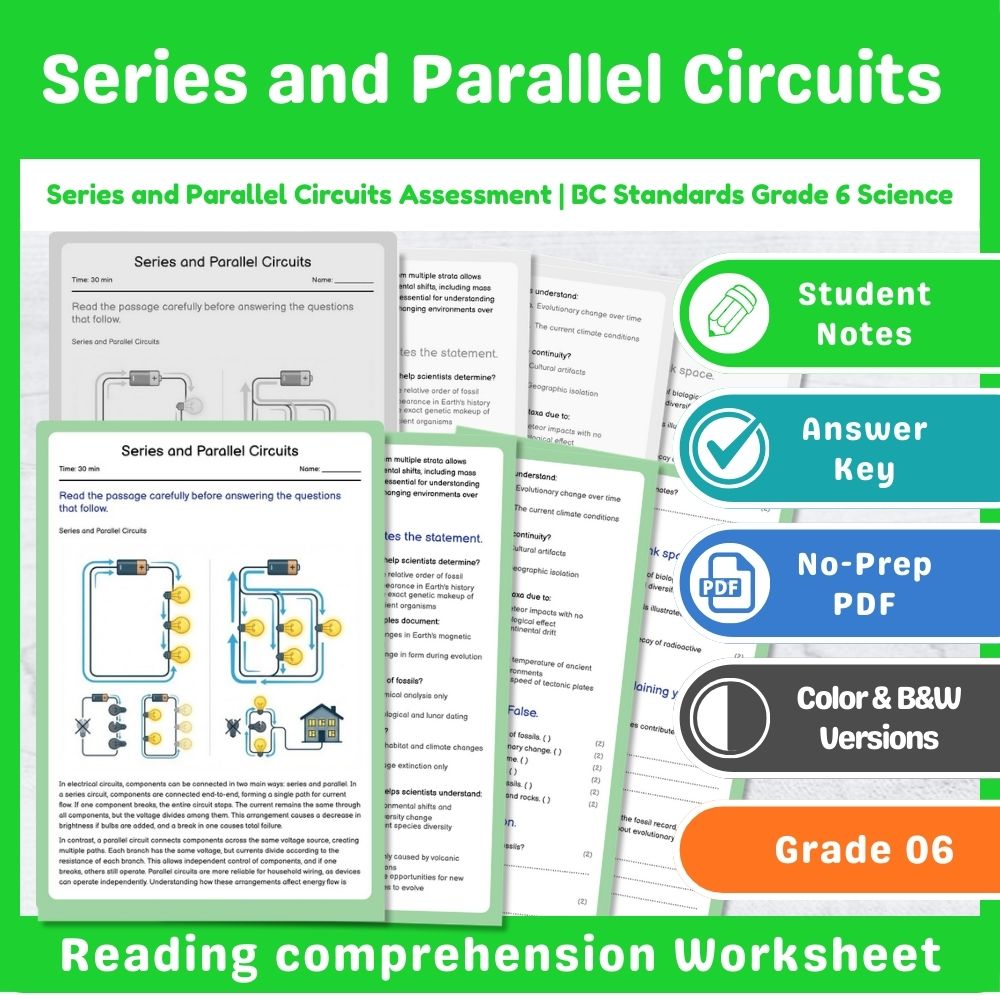
Series and Parallel Circuits Assessment | BC Standards Grade 6 Science
Created byPrism Point LearningLearning Objectives
- Understand the difference between series and parallel electrical circuits.
- Explain how current and voltage distribute in series and parallel arrangements.
- Identify the effects of circuit configuration on device brightness and reliability.
Instant download
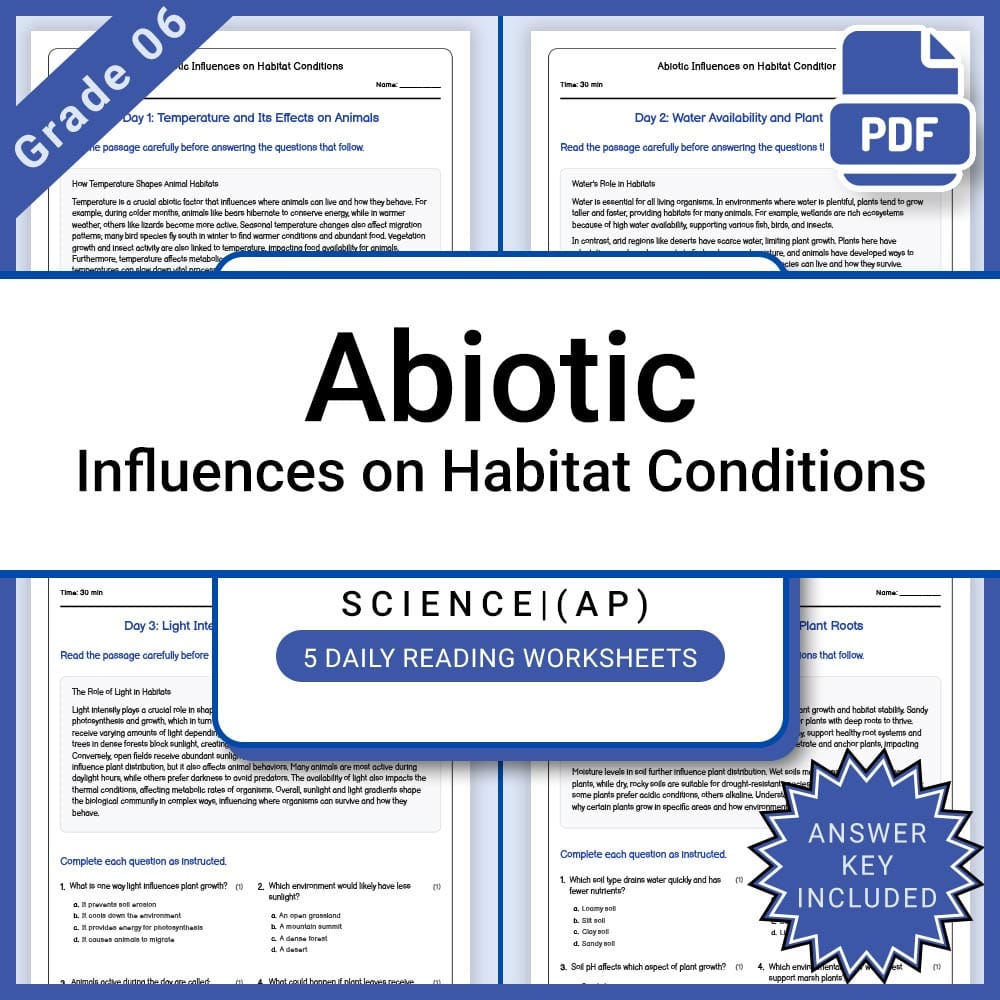
Grade 6 – Abiotic Influences on Habitat Conditions Worksheet + Answer Key
JCreated byJ.S SheetsLearning Objectives
- Understand how temperature affects organism behavior
- Identify abiotic factors influencing habitat
- Recognize interactions between physical environmental conditions and biological processes
Also included in: Grade 6 Science Lesson Bundle: Ecosystems, Food Chains & Environment +1 more
Instant download
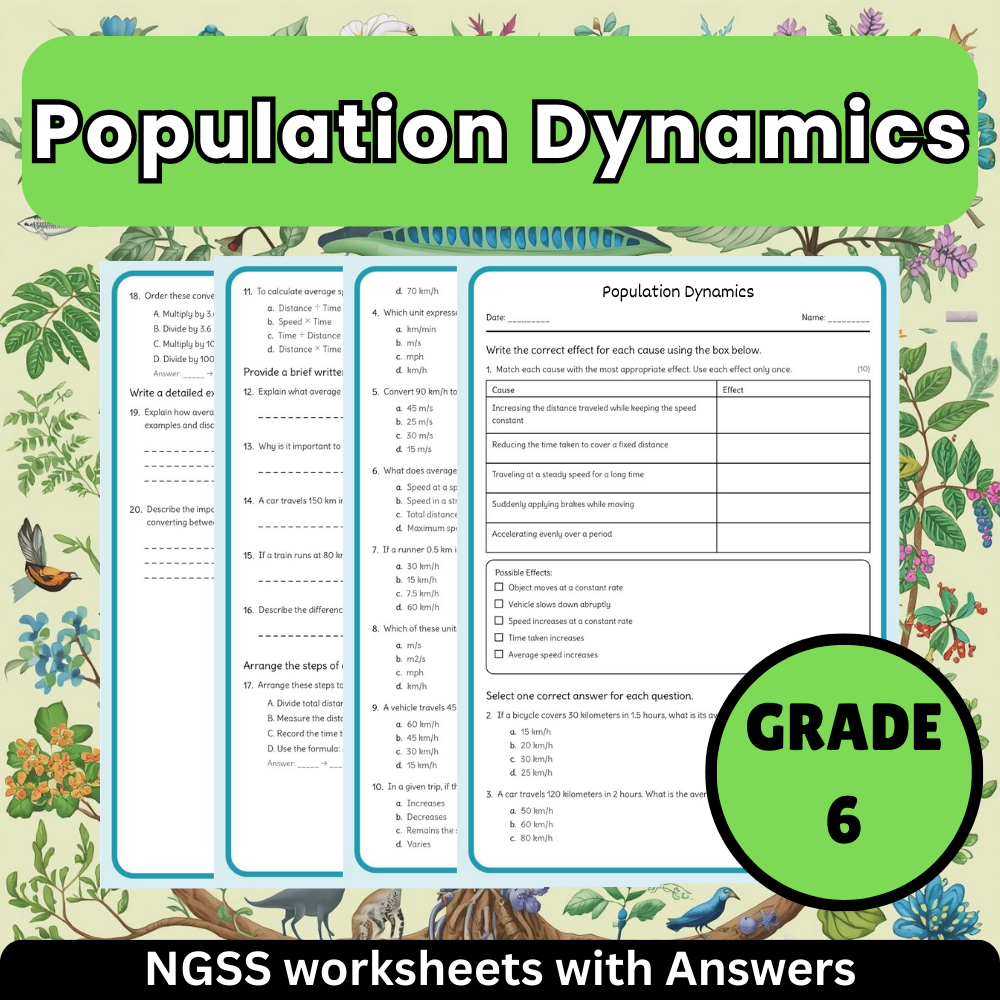
Grade 6 Science | Population Dynamics Worksheet (Answer Key) – NGSS Aligned
Created byBright Mind ResourcesLearning Objectives
- Understand how trait frequencies and population sizes change over generations due to environmental influences and demographic factors.
- Use proportional reasoning, frequency charts, and time-series graphs to analyze population data.
- Compare different population scenarios such as shifts, stabilization, and bottlenecks.
Also included in: Grade 6 Science Unit Bundle | Evolution, Genetics & Biodiversity NGSS Worksheets +2 more
Instant download
Browse more categories
About Grade 6 Worksheets
Browse 8,582 printable Grade 6 worksheets across math, ELA, science, and social studies — each a ready-to-print PDF with optional answer keys.
MyTeachingSheets worksheets are made by real teacher-authors and checked before they go live. Download any as a print-ready PDF for lessons, homework, or independent practice — most include answer keys, and previews are always free.