
Grade 6 Science Worksheets
5,969 worksheets
Filtration Method Worksheet | Grade 6 Science Practice
 Created byPrism Point Learning
Learning Objectives
- Explain how filtration separates mixtures using differences in particle size and permeability.
- Describe how the solid residue and the liquid that passes through relate to observable evidence (such as sediment thickness and liquid clarity).
- Predict what will remain on a filter and what will flow through for a water–sand mixture.
Instant download

6th Grade Science | Reaction Rates Worksheet (PDF) BC Standards
 Created byEvergreen Desk Education
Learning Objectives
- Explain what reaction rate means in terms of how quickly reactants become products
- Identify how concentration, temperature, surface area, and catalysts affect the frequency and energy of particle collisions
- Connect changes in reaction rate to observable evidence such as gas production, colour change, and heat release
Instant download

Grade 6 Classification Basics Worksheet | Science Assessment & Review
 Created byClear Sky Classroom
Learning Objectives
- Explain how observable characteristics are used to group organisms in science.
- Use a dichotomous key to identify organisms using step-by-step choices.
- Describe how hierarchical classification categories lead from kingdom to species.
Instant download

Grade 6 Science – Atmospheric Patterns & Weather Phenomena | Reading Worksheet
 Created byBright Mind Resources
Learning Objectives
- Understand the structure of Earth's atmosphere and the factors that influence weather patterns.
- Identify common atmospheric phenomena such as fronts, pressure systems, and winds.
- Explain how heat transfer and the greenhouse effect impact regional climates.
Also included in: Grade 6 Earth and Space Science Lesson Bundle Daily Reading | TEKS +2 more
Instant download
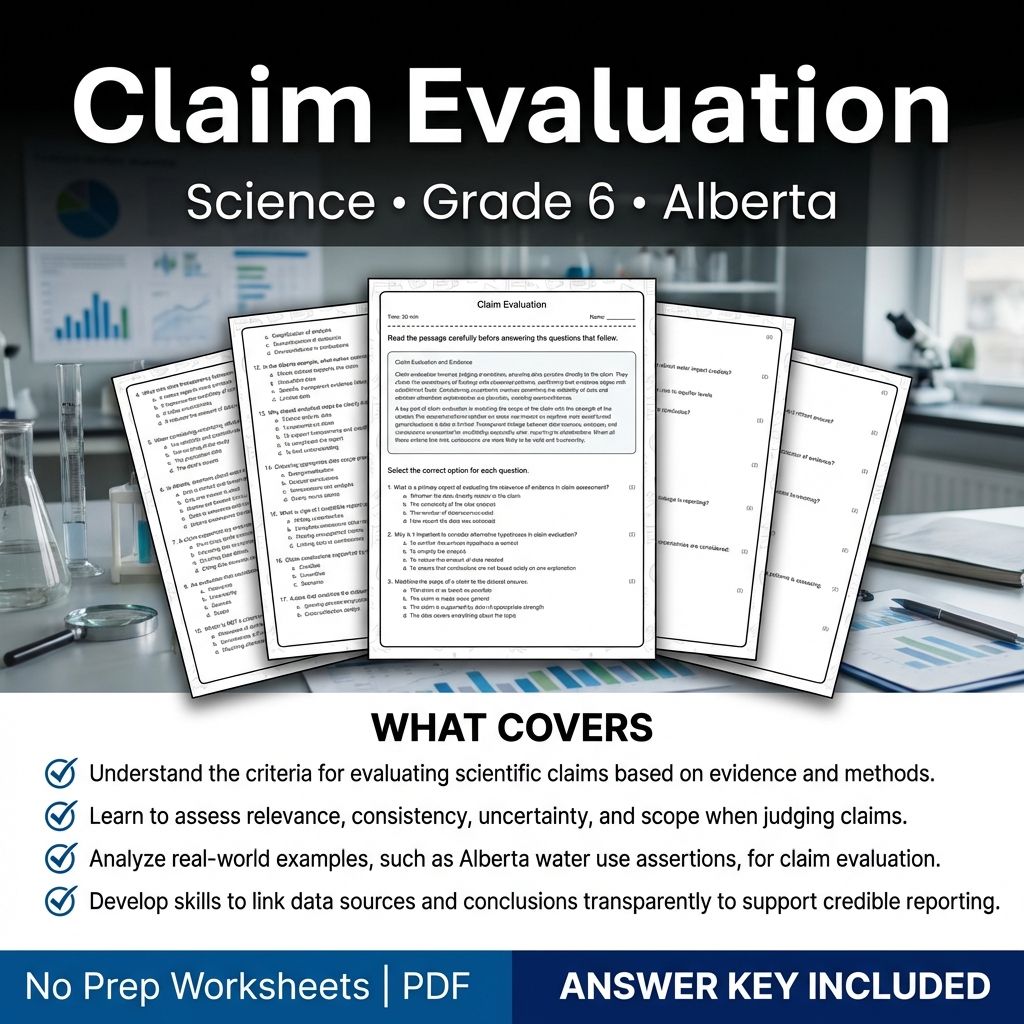
Grade 6 Science Worksheet | Claim Evaluation Practice & Assessment
 Created byCoral Reef Learning
Learning Objectives
- Understand the criteria for evaluating scientific claims based on evidence and methods.
- Learn to assess relevance, consistency, uncertainty, and scope when judging claims.
- Analyze real-world examples, such as Alberta water use assertions, for claim evaluation.
Instant download

Grade 6 Science | Understanding Balanced Forces - Daily Reading Comprehension
Created byCoral Reef LearningLearning Objectives
- Define and identify examples of forces acting on objects.
- Explain the concept of balanced forces and how they affect motion.
- Differentiate between balanced and unbalanced forces.
Instant download

Grade 6 Science | Understanding Wind Tunnels - Daily Reading Comprehension
Created byCoral Reef LearningLearning Objectives
- Learn what a wind tunnel is and how it is used in science.
- Understand the aerodynamic forces measured in wind tunnels, such as lift and drag.
- Identify the importance of similarity parameters like Reynolds and Mach numbers.
Instant download

Food Molecules Worksheet for Grade 6 Science | Standards-Aligned Practice
JCreated byJ.S SheetsLearning Objectives
- Identify the different types of food molecules and their functions in the body.
- Explain how digestion breaks down large food molecules into smaller ones that can be absorbed.
- Describe how food molecules support growth, structure, and energy needs in animals.
Also included in: Grade 6 Life Science Science Lesson Bundle – California Standards +1 more
Instant download

Grade 6 Science – Measurement Uncertainty & Variability | Reading Worksheet
Created byBright Mind ResourcesLearning Objectives
- Identify sources of variability in measurements
- Understand how environmental factors can cause measurement uncertainty
- Learn methods to estimate and express measurement uncertainty
Also included in: Grade 6 Science Data & Inquiry Daily Reading Worksheets Lesson Bundle | Alberta +2 more
Instant download

Inheritance Modeling Worksheet | NGSS Grade 6 Genetics Activity Pack
 Created byAmber Owl Education
Learning Objectives
- Model dominant and recessive inheritance patterns using Punnett squares and allele combinations.
- Use probability to predict offspring trait ratios from a discrete gene model.
- Explain how a family pedigree or exemplar (such as pea traits) reflects inheritance patterns.
Also included in: Grade 6 Science Variation Factors & Inheritance Modeling Lesson Bundle–NGSS +1 more
Instant download

Mixture Separation Assessment | Florida NGSSS Standards Grade 6 Science
Created byPrism Point LearningLearning Objectives
- Explain why mixtures can often be separated again without forming new substances.
- Identify physical separation methods (filtration, distillation, magnetism, crystallization) based on component properties.
- Differentiate between heterogeneous mixtures, homogeneous mixtures, and solutions using particle-level reasoning.
Also included in: Grade 6 Energy and Matter Science Lesson Bundle Unit: Florida NGSSS
Instant download

Grade 6 Science | Variation Factors in Genetics - Daily Reading Comprehension
Created byCoral Reef LearningLearning Objectives
- Understand how genetic differences influence observable traits.
- Identify environmental factors that affect phenotype.
- Recognize examples of genetic and environmental interplay in organisms.
Instant download

Grade 6 Science | Structural Traits Worksheet | NGSSS Standards
 Created byLumora Learning
Learning Objectives
- Explain how structural adaptations help organisms survive in specific habitats
- Identify examples of structural traits related to food gathering, movement, and avoiding predation
- Use structure–function reasoning to predict how a trait supports survival needs
Instant download

Grade 6 Life Processes In Cells Worksheet | Practice & PDF
Created byClear Sky ClassroomLearning Objectives
- Explain how photosynthesis and cellular respiration transform energy and exchange gases in cells.
- Describe how diffusion moves materials across cell membranes using concentration gradients.
- Compare diffusion with transport mechanisms and explain why both are needed for cell survival.
Instant download

Grade 6 Science | Circuit Diagrams Worksheet | BC Standards
Created byLumora LearningLearning Objectives
- Understand the purpose and components of circuit diagrams using standard symbols.
- Identify symbols for sources, conductors, loads, and measurement devices in circuit diagrams.
- Translate physical electrical systems into accurate diagrams for analysis and communication.
Also included in: Grade 6 Science | Energy, Waves & Circuits | Custom Bundle | BC Aligned
Instant download

Grade 6 Science | Competition and Resource Use Worksheet | General Standard
Created byLumora LearningLearning Objectives
- Explain how competition occurs when organisms need limited resources
- Describe how traits, timing of feeding, and tolerance affect access to resources
- Predict how competition can change population sizes and community composition over time
Instant download
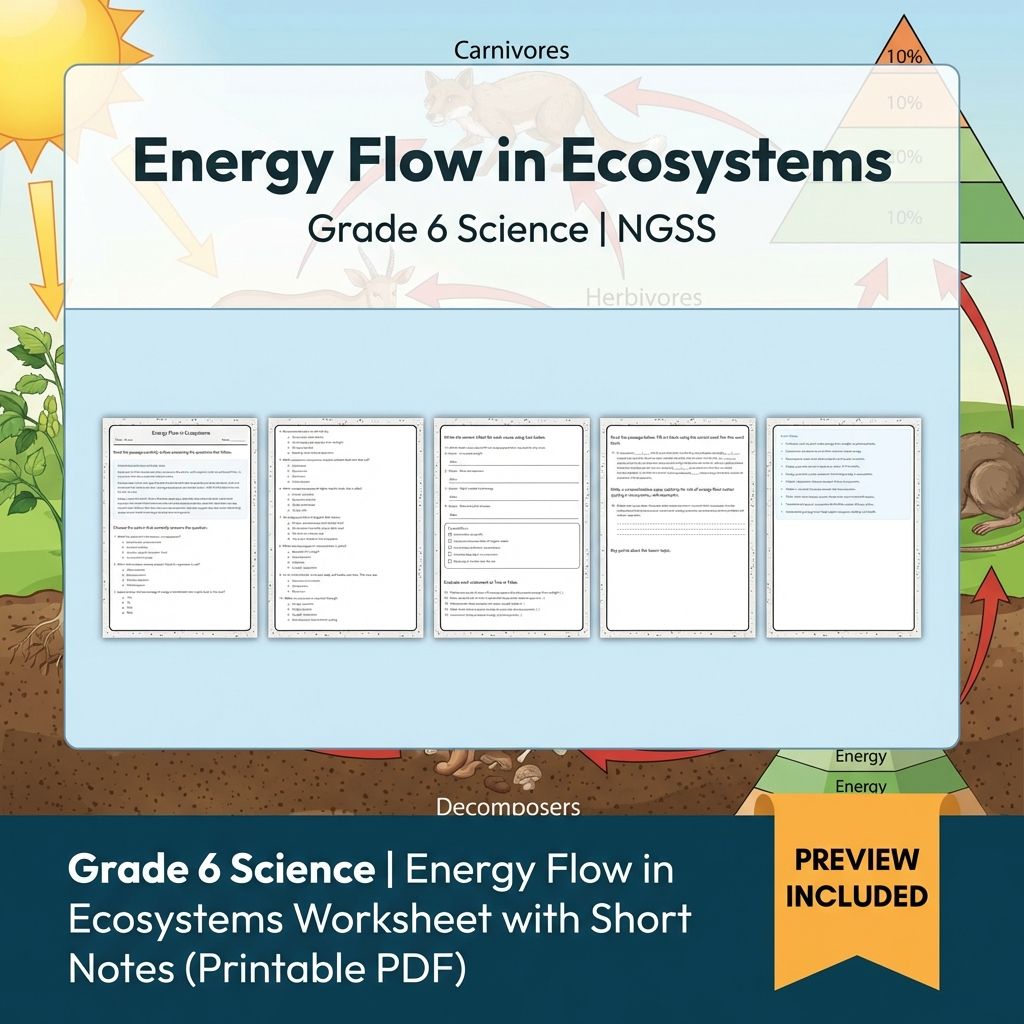
Grade 6 Science | Energy Flow in Ecosystems Worksheet with Short Notes (PDF)
 Created byMeadowlark Worksheets
Learning Objectives
- Understand the components and processes of energy flow within food webs.
- Identify producers, consumers, and decomposers as key roles in ecosystems.
- Interpret energy pyramids and calculate trophic transfer efficiency.
Also included in: Grade 6 Science | Ecosystems: Interactions, Energy & Dynamics NGSS Unit Bundle +1 more
Instant download
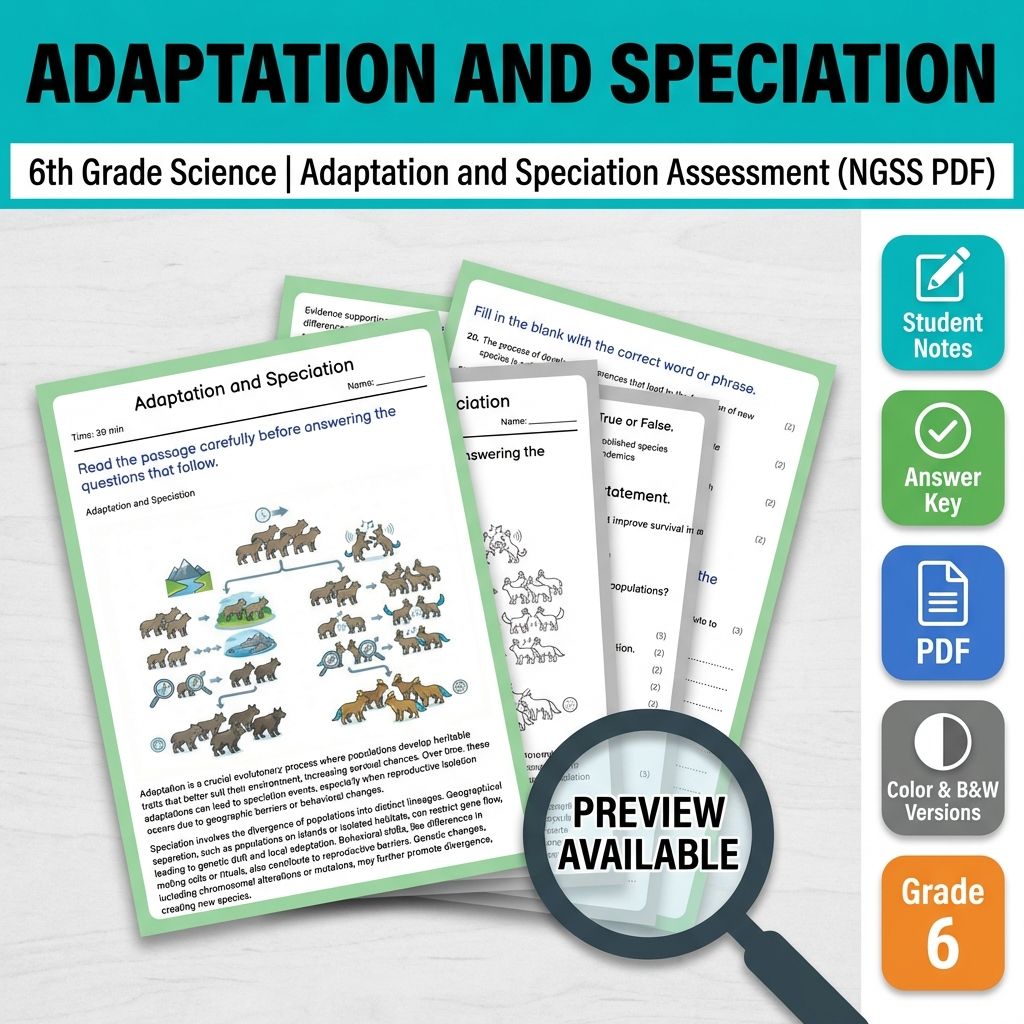
Adaptation and Speciation Assessment | NGSS Standards Grade 6 Science
Created byPrism Point LearningLearning Objectives
- Describe the processes of adaptation and how they lead to speciation.
- Identify factors contributing to reproductive isolation in populations.
- Use morphological, genetic, and biogeographical evidence to infer speciation events.
Also included in: Grade 6 Science Mini Bundle – Biological Evolution: Unity & Diversity +1 more
Instant download

Energy Efficiency Test Prep Worksheet | Grade 6 Science BC Standards
Created byPrism Point LearningLearning Objectives
- Explain energy efficiency using the idea of useful output compared to total energy input
- Identify common sources of energy loss in machines and heating or lighting systems
- Use efficiency reasoning to compare technologies and suggest improvements
Also included in: Energy, Waves & Circuits Lesson Bundle | Grade 6 Science | BC Framework +1 more
Instant download

Grade 6 Photosynthesis Energy Conversion Worksheet | Practice & PDF
Created byClear Sky ClassroomLearning Objectives
- Explain how photosynthesis converts light energy into chemical energy stored in glucose.
- Identify reactants (carbon dioxide and water) and products (glucose and oxygen) of photosynthesis.
- Describe the role of light-dependent reactions in forming energy-rich molecules used for building glucose.
Instant download

Grade 6 Science Worksheet | Respiration and Digestion Systems Support Life (PDF)
Created byEvergreen Desk EducationLearning Objectives
- Describe key structures of the respiratory and digestive systems and explain how each structure supports its function.
- Explain how gas exchange in the lungs happens through efficient diffusion driven by concentration differences.
- Model how digestion breaks food into smaller molecules that can enter circulation.
Also included in: Grade 6 Life Processes & Ecosystem Interactions Science Lesson Bundle: General +1 more
Instant download

Evidence-Based Explanations Worksheets | Claim, Evidence & Reasoning Practice
LCreated byLearnora ResourcesLearning Objectives
- Identify evidence and distinguish it from opinion
- Match relevant evidence to a scientific claim
- Interpret investigation results presented in data tables
Instant download

Grade 6 Science | Model to Explain Change Worksheet | California Standards
Created byLumora LearningLearning Objectives
- Explain how particle models describe physical changes versus chemical reactions
- Use the particle model to predict whether atoms are rearranging or only changing arrangement/state
- Connect evidence of new substances to conservation of atoms in chemical reactions
Instant download

Energy Transfer Test Prep Printables | Grade 6 Science
Created byPrism Point LearningLearning Objectives
- Explain how conduction, convection, and radiation move energy from one place to another
- Identify which energy-transfer process is occurring in everyday situations
- Use evidence from observations (temperature changes, fluid motion, electromagnetic waves) to support scientific explanations
Also included in: Energy, Waves & Circuits Lesson Bundle | Grade 6 Science | BC Framework +1 more
Instant download
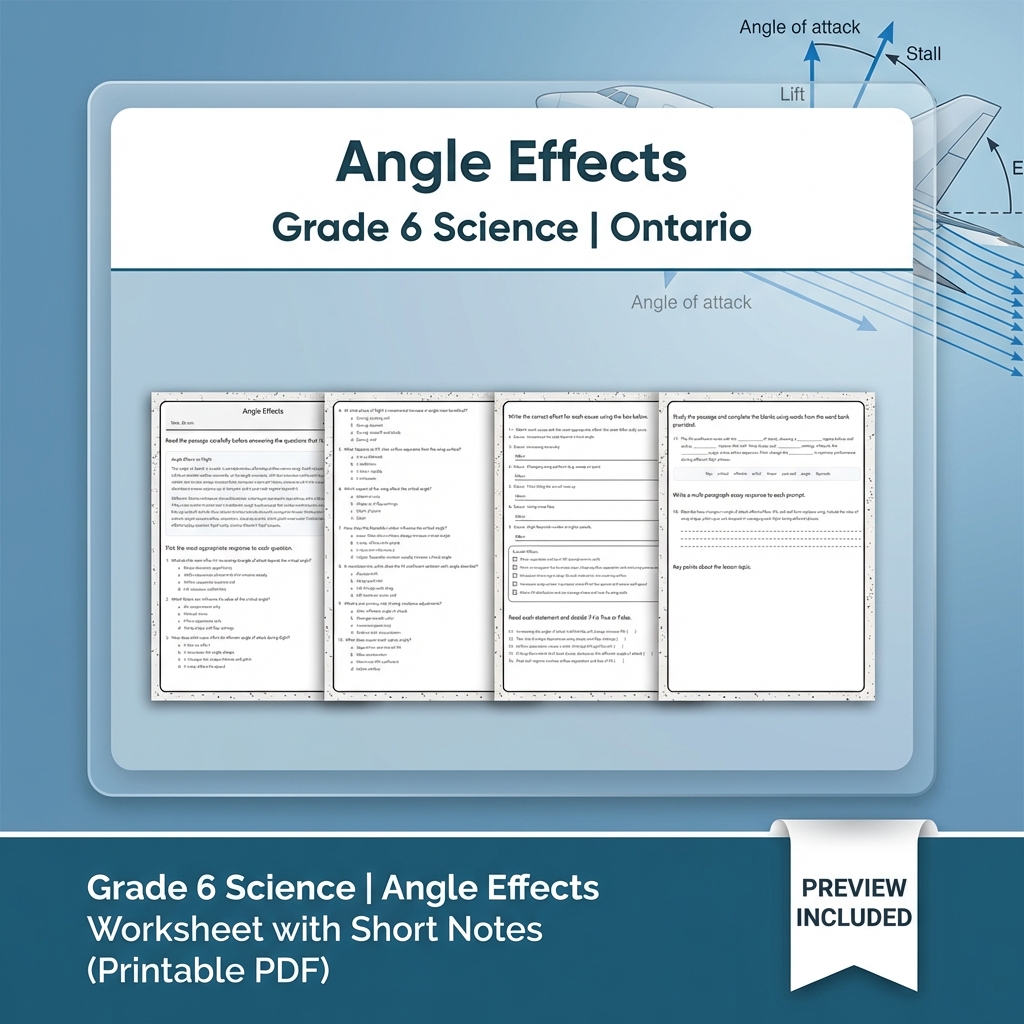
Grade 6 Science | Angle Effects Worksheet with Short Notes (Printable PDF)
Created byMeadowlark WorksheetsLearning Objectives
- Understand how the angle of attack influences airflow and lift production.
- Identify the relationship between stall onset and critical angle variations.
- Explain how wing incidence and pilot input change effective angle during flight.
Also included in: Grade 6 Science Lesson Group Bundle – Ontario Framework Worksheets +1 more
Instant download
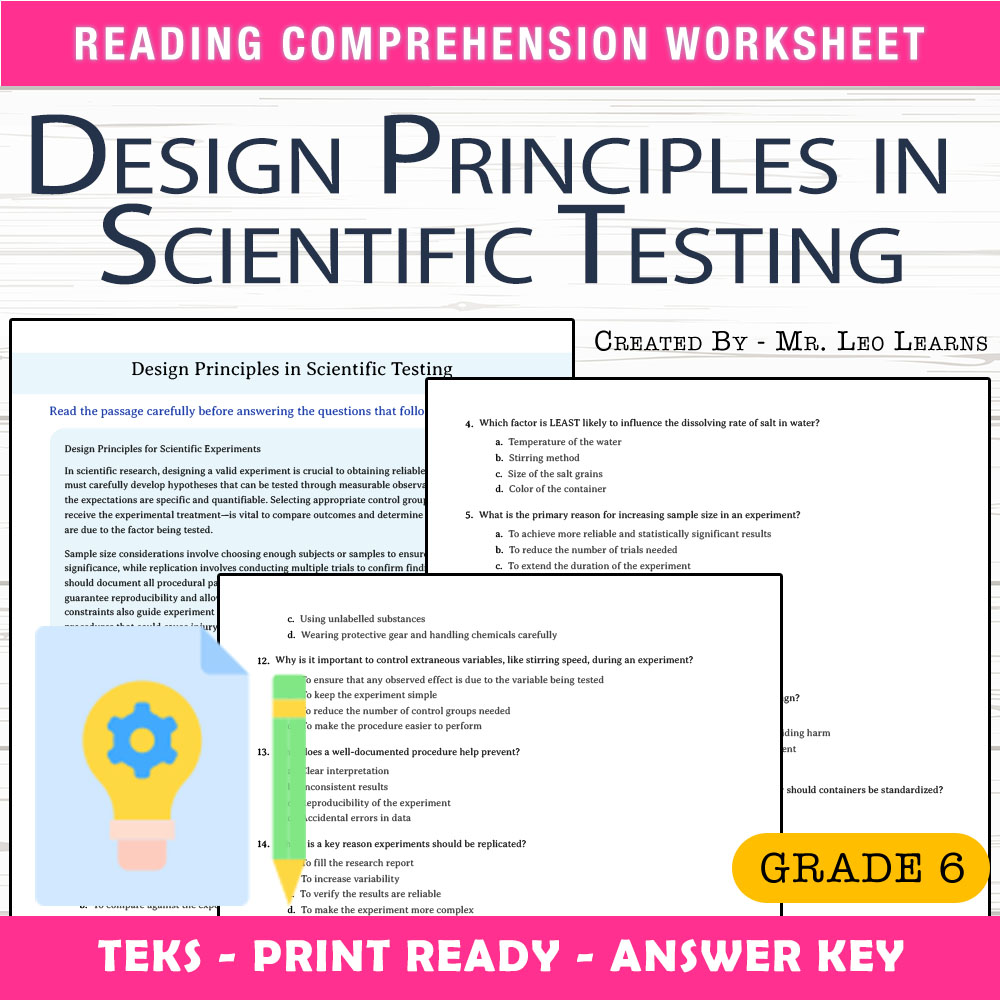
Grade 6 Science — Design Principles in Scientific Testing Worksheet for Mastery
 Created byThe Resource Hub
Learning Objectives
- Understand key principles for designing valid controlled tests in scientific experiments.
- Learn to articulate hypotheses in measurable terms and choose appropriate control groups.
- Recognize the importance of sample size, replication, and procedural documentation for reproducibility.
Instant download

Gravity and Friction Test Prep Printables | Grade 6 Science
Created byPrism Point LearningLearning Objectives
- Explain how gravitational attraction depends on mass and distance using Earth–Moon and falling-object examples
- Differentiate gravitational forces from contact forces like friction and how each affects motion
- Use evidence and reasoning to argue why changing mass or separation changes attraction
Also included in: Grade 6 Physical Science NGSS Lesson Bundle: Test Prep Worksheets
Instant download
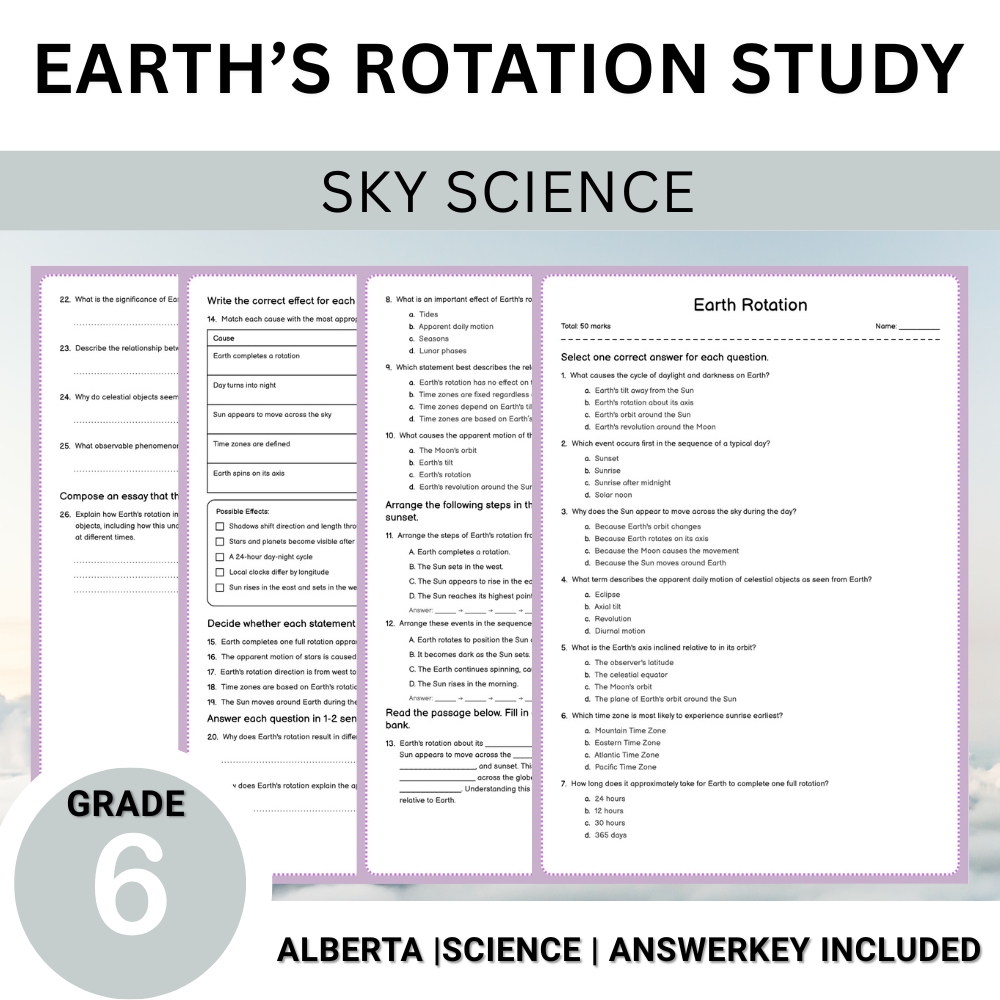
Grade 6 Science | Earth Rotation Worksheet (Printable PDF) for Classroom Assessment
Learning Objectives
- Explain how Earth's rotation causes day and night.
- Identify the sequence of sunrise, solar noon, and sunset.
- Describe how Earth's rotation affects the apparent motion of celestial objects.
Also included in: Grade 6 Science | Celestial & Space Phenomena UNIT Worksheet Bundle (Assessment & Practice) +1 more
Instant download

Signal Integration How Cells and Systems Communicate Worksheet Grade 6 Science
 Created bySkylark Worksheets
Learning Objectives
- Explain how cells coordinate using chemical and electrical signals
- Describe how receptors detect signals and trigger downstream responses
- Compare rapid nervous system signaling with longer-term endocrine hormone effects
Also included in: Grade 6 Cell Systems and Energy Pathways Science Lesson Bundle NGSS +1 more
Instant download

Predator Prey Population Changes Worksheets | Grade 6 Science
 Created byBRIGHT PATH RESOURCES
Learning Objectives
- Explain how predator and prey populations affect each other over time
- Identify predator-prey dynamics such as prey decline after predator increase and prey recovery after predator decline
- Use evidence from a passage to complete scientific statements about ecosystems
Also included in: Grade 6 Life Science Worksheets Bundle | Ecosystems & Body Systems +2 more
Instant download

Recrystallization Practice Worksheet | Grade 6 Science Review and Assessment
Created byPrism Point LearningLearning Objectives
- Explain how solubility changes with temperature and how that enables recrystallization
- Describe the steps of recrystallization to separate and purify a dissolved solid
- Use particle-level reasoning and basic solubility ideas to predict crystal formation
Also included in: Matter, Properties & Change Lesson Bundle — Grade 6 Science BC Framework +1 more
Instant download
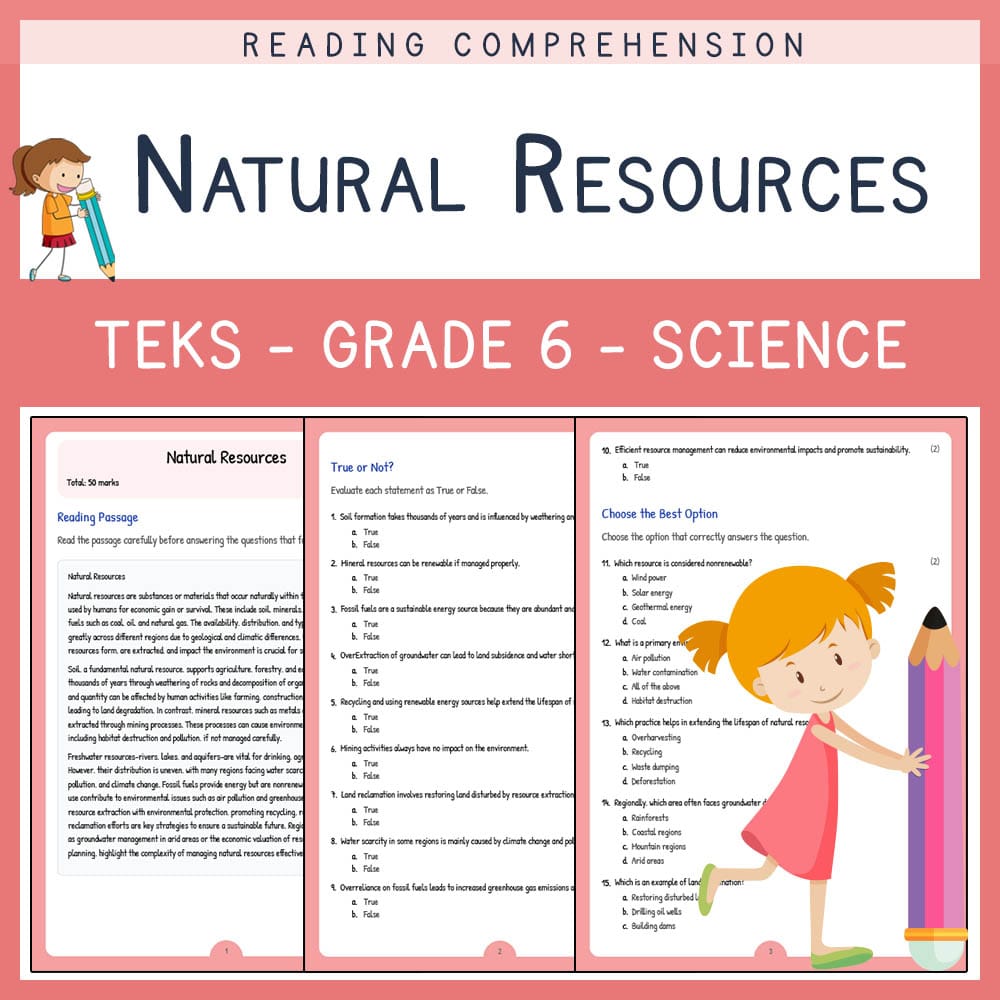
Grade 6 Science | Natural Resources Worksheet | TEKS Aligned
Created byLumora LearningLearning Objectives
- Identify different types of natural resources and their distribution around the world.
- Understand the environmental and economic impacts of renewable and nonrenewable resources.
- Explore methods used for resource assessment and sustainable use principles.
Also included in: Grade 6 Science | Earth and Space Science Unit Bundle | TEKS Standard
Instant download
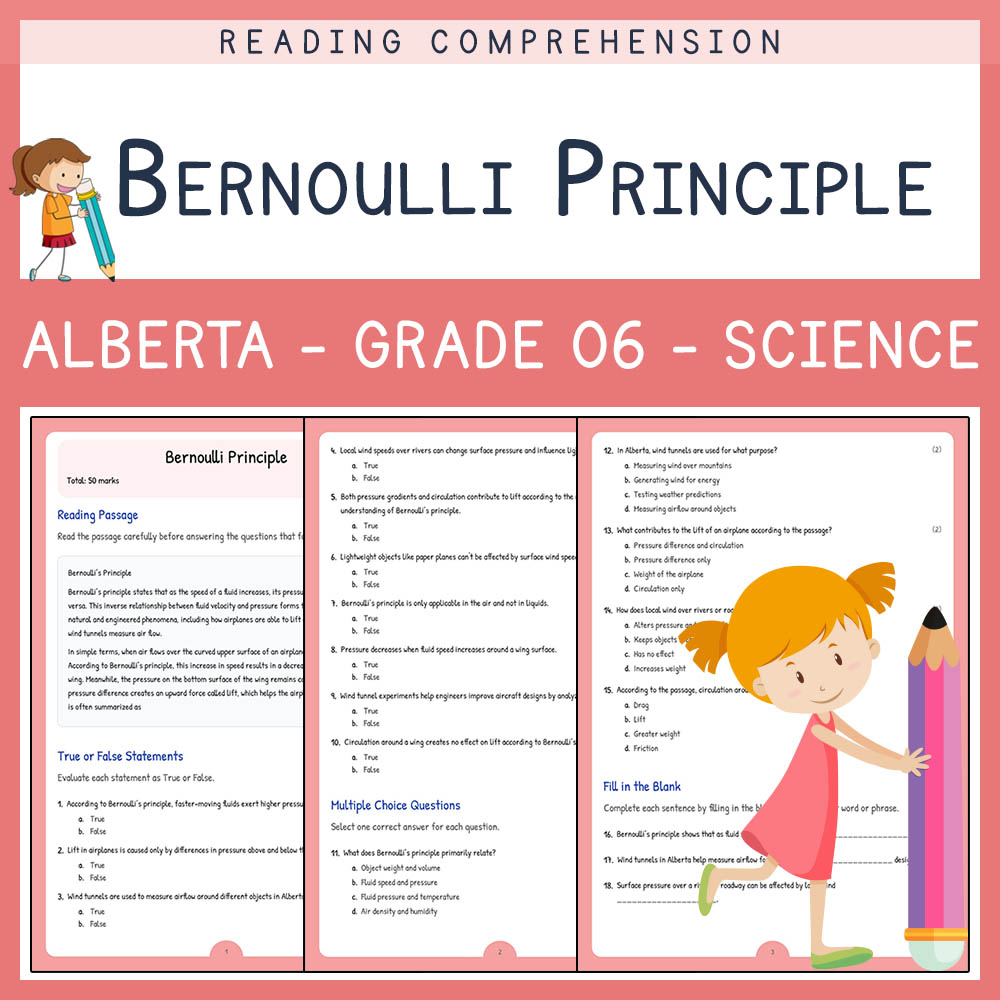
Grade 6 Science | Bernoulli Principle Worksheet Elena | Alberta Standard
Created byLumora LearningLearning Objectives
- Understand the connection between fluid speed and pressure as explained by Bernoulli's principle.
- Identify real-world examples of Bernoulli's principle, such as airflow over airplane wings and wind effects on rivers.
- Explain how pressure differences lead to lift in flying objects like gliders.
Also included in: Grade 6 Science | Air and Aerodynamics Science Lesson Bundle | Alberta
Instant download

Grade 6 Science | Life Processes in Cells Worksheet | General Standard
Created byLumora LearningLearning Objectives
- Explain how cells convert energy to support life processes.
- Describe how photosynthesis and cellular respiration are connected pathways.
- Compare diffusion and transport mechanisms in moving materials across membranes.
Instant download
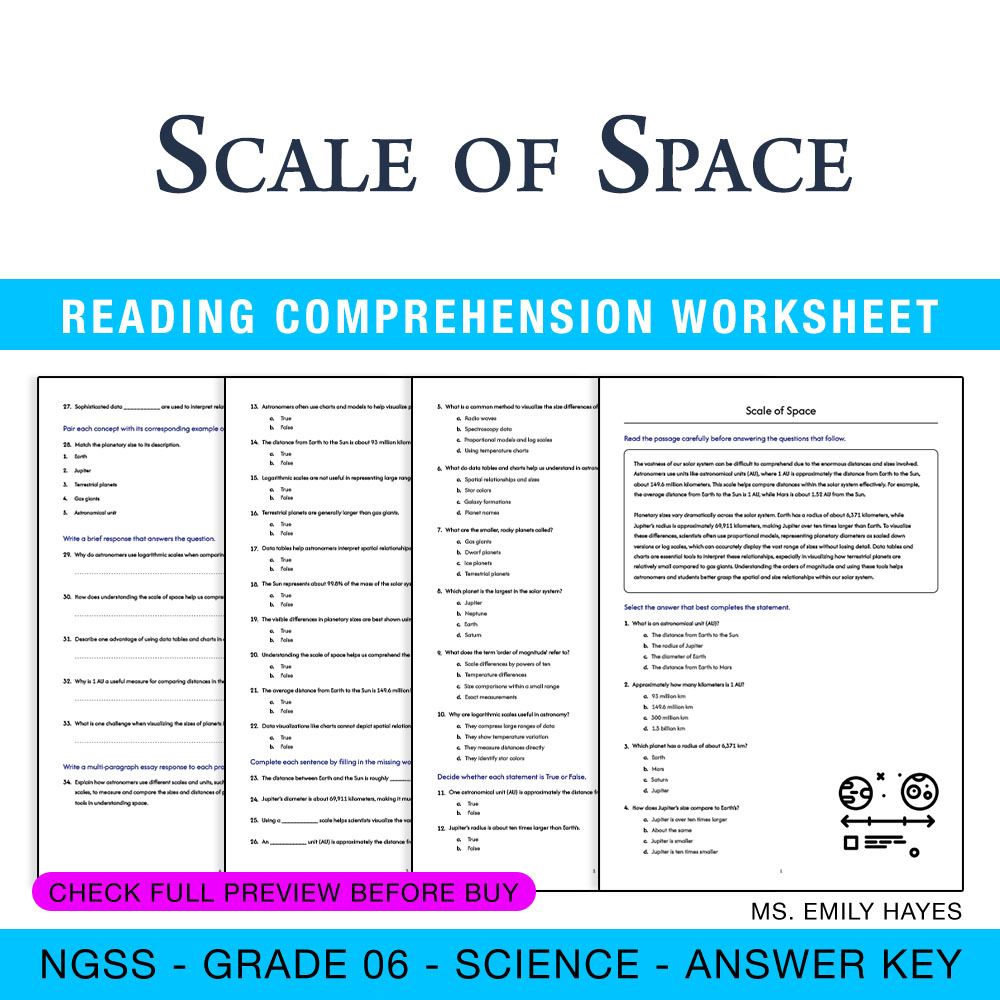
6th Grade Science | Scale of Space Worksheet (PDF + Answer Key)
 Created byCopper Leaf Classroom
Learning Objectives
- Understand the concept of astronomical units and how they are used to measure distances in space.
- Compare the sizes of planets within the solar system using proportional and logarithmic scales.
- Interpret data tables and charts that relate to planetary sizes, distances, and orbital periods.
Also included in: Grade 6 Science Unit Bundle | Space, Moon & Seasons (PDF + Answer Key)
Instant download

New Substance Properties Assessment | California Standards Grade 6 Science
Created byPrism Point LearningLearning Objectives
- Explain how and why new substances can form different properties after a chemical reaction.
- Use macroscopic observations (solubility, conductivity, melting behavior) to distinguish new substances from physical changes.
- Connect particle models to changes in composition caused by atomic rearrangement.
Also included in: Grade 6 Atoms and Chemical Change Science lesson bundle | California Standards +1 more
Instant download

Communicating Evidence Worksheet | Grade 6 Science Assessment Practice
Created byPrism Point LearningLearning Objectives
- Explain how scientific claims are supported by evidence and reasoning.
- Use graphs, diagrams, and models to communicate evidence clearly.
- Choose relevant data and cite sources when writing or speaking about scientific ideas.
Instant download
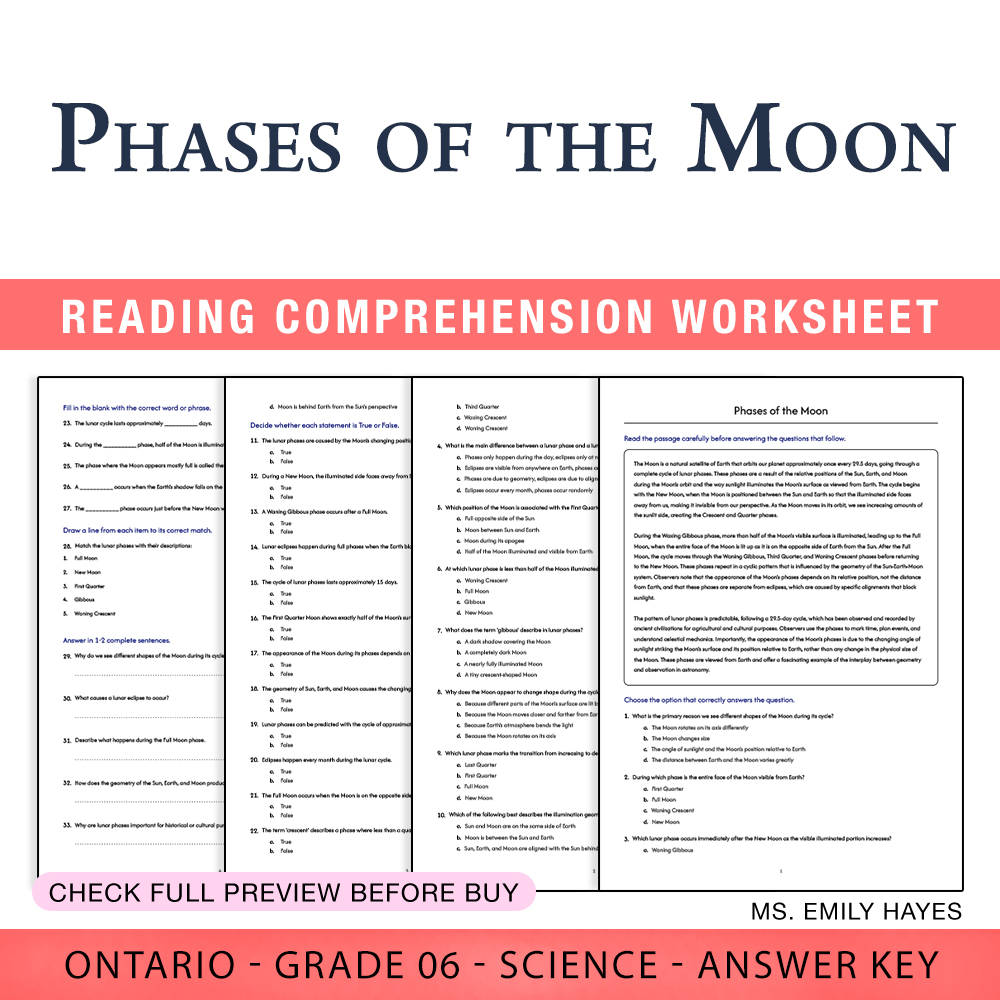
6th Grade Science | Phases of the Moon Worksheet (PDF + Answer Key)
Created byCopper Leaf ClassroomLearning Objectives
- Describe the sequence and geometry of lunar phases based on relative positions of the Sun, Earth, and Moon
- Identify and distinguish between different lunar phases such as new, crescent, quarter, gibbous, and full
- Explain how illumination geometry causes changes in the visible fraction of the Moon during its cycle
Instant download

Weather Elements Worksheet for Grade 6 Science | Standards-Aligned Practice
JCreated byJ.S SheetsLearning Objectives
- Understand the key weather elements such as temperature, precipitation, wind, cloud cover, and humidity.
- Learn how to observe and record weather conditions to analyze atmospheric patterns.
- Recognize how different weather elements interact and influence weather forecasts.
Also included in: Grade 6 Climate and Atmospheric Systems Science Lesson Bundle: Florida NGSSS +1 more
Instant download
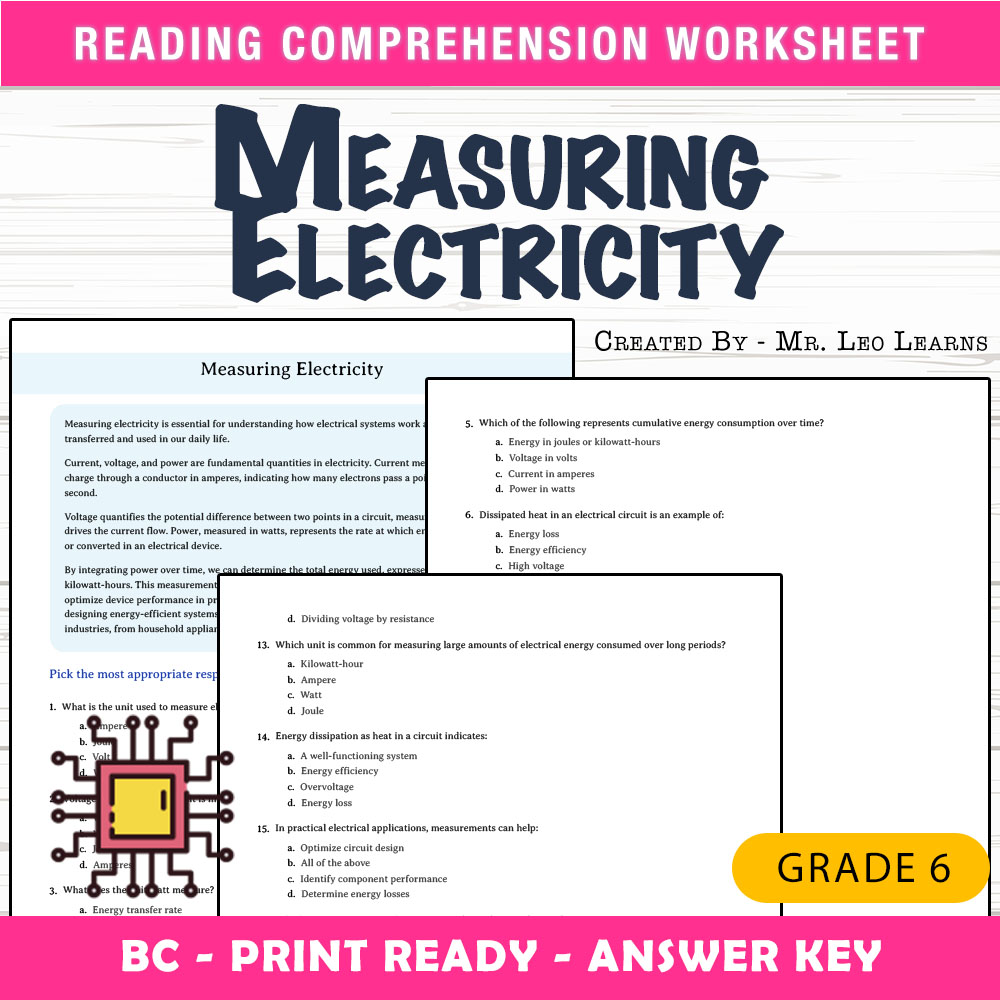
Grade 6 Science — Measuring Electricity Worksheet MCQ Paper for Mastery
Created byThe Resource HubLearning Objectives
- Understand how to measure electrical quantities such as current, voltage, and power.
- Identify the units used for different electrical measurements.
- Learn how energy transfer rate and total energy consumption relate to electrical systems.
Also included in: Grade 6 Science Energy, Waves & Circuits UNIT Bundle | BC Standards +1 more
Instant download

Grade 6 Science – Air Density & Weather | Daily Reading Worksheet
Created byBright Mind ResourcesLearning Objectives
- Understand what air density is and how it can change.
- Learn how temperature, humidity, and altitude affect air density.
- Recognize how differences in air density influence lift and flight.
Also included in: Aerodynamics Grade 6 Science Daily Reading Worksheets Lesson Bundle | Alberta +2 more
Instant download

Grade 6 Science | Predator Prey Dynamics Worksheet | General Standard
Created byLumora LearningLearning Objectives
- Explain how predator and prey populations affect each other in ecosystems
- Identify how prey adaptations can reduce predation and change population trends
- Use cause-and-effect reasoning to describe feedback loops in food webs
Instant download

Matter Properties Worksheet | Grade 6 Science Practice and Review
Created byPrism Point LearningLearning Objectives
- Describe how physical properties and chemical properties help identify and distinguish substances without changing them into new materials
- Compare substances using observations of density, solubility, magnetism, electrical conductivity, hardness, and luster
- Connect measured property differences to material selection in real-life situations
Also included in: Grade 6 Matter, Energy, and Change Science Lesson Bundle TEKS Worksheets +1 more
Instant download

6th Grade Science Worksheet – Wing Shapes & Aerodynamics (PDF) - Alberta Standard
 Created bySilver Birch Teaching
Learning Objectives
- Explain how wing shape features such as camber, thickness, taper, and aspect ratio affect lift, drag, and stall behavior.
- Compare high-aspect-ratio wings and low-aspect, robust wings using real-world aviation examples.
- Use scientific vocabulary (camber, thickness, induced drag, skin-friction drag, taper) to describe airflow and pressure changes.
Also included in: Grade 6 Aerodynamics & Flight Forces Science Lesson Bundle: Alberta +1 more
Instant download

Grade 6 Science | Scientific Models Worksheet | NGSSS Aligned
Created byLumora LearningLearning Objectives
- Explain what scientific models are and how they help us understand systems too large, too small, or too complex to study directly.
- Describe how evidence is used to compare with model outputs and to improve a model.
- Identify what a model can and cannot represent, including limits due to scaling or omitted variables.
Instant download
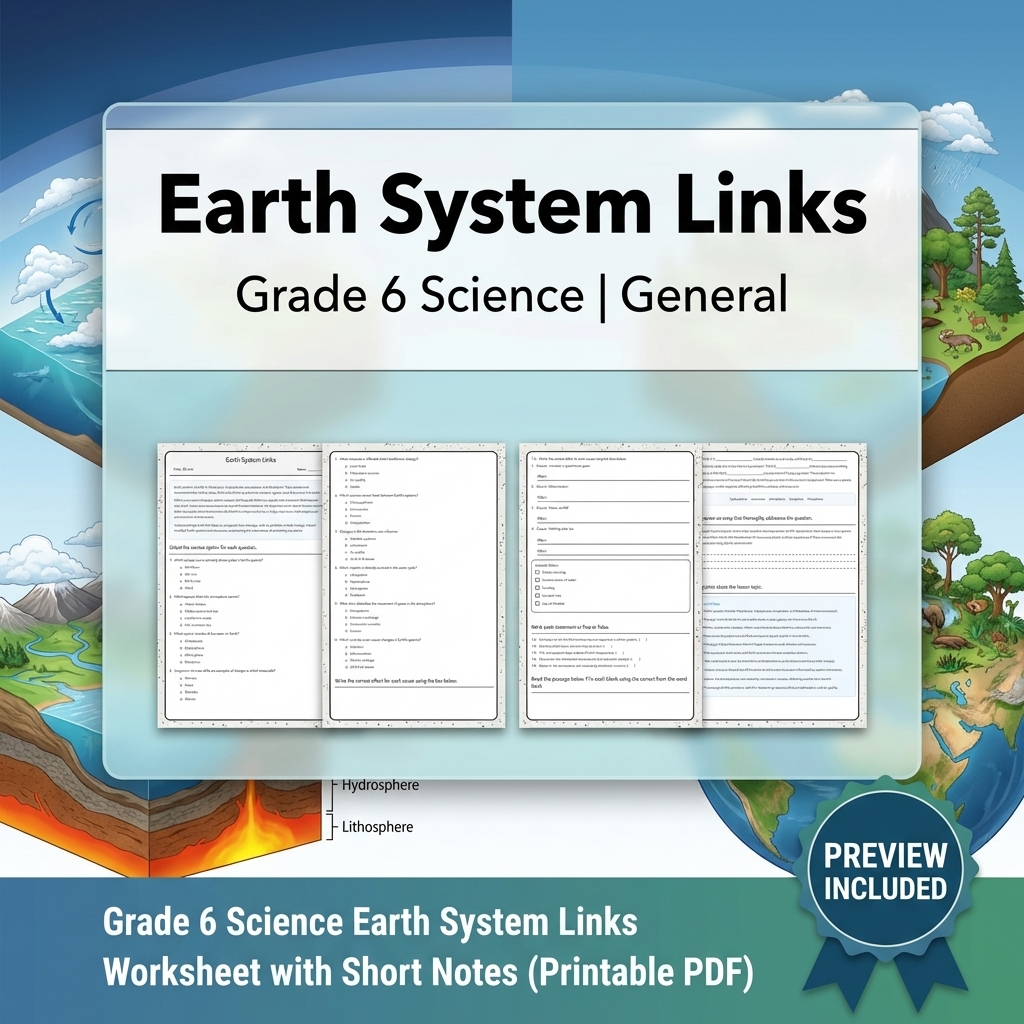
Grade 6 Science Earth System Links Worksheet with Short Notes (Printable PDF)
Created byMeadowlark WorksheetsLearning Objectives
- Understand how Earth's systems are interconnected and drive cycles involving water, gases, and heat.
- Identify cause-and-effect relationships among Earth's components.
- Recognize how changes in one Earth system affect others and influence landforms, air quality, and resources.
Also included in: Grade 6 Science Lesson Group Weather, Water, Space, Erosion & Climate +1 more
Instant download

Minerals And Rocks Worksheet | Grade 6 Science Practice
Created byPrism Point LearningLearning Objectives
- Identify minerals and rocks using physical properties such as streak, hardness, cleavage, and grain size.
- Distinguish among igneous, sedimentary, and metamorphic rocks using textural and compositional clues.
- Explain how the rock cycle connects mineral resources to past environmental conditions.
Also included in: Grade 6 Earth and Space Science Lesson Bundle TEKS (8 worksheets) +1 more
Instant download

Grade 6 Seasons Worksheet | Earth's Tilt & Sunlight Changes | Ontario Science
 Created byTeacher's Corner
Learning Objectives
- Explain how Earth’s axial tilt causes different sun angles in each hemisphere.
- Describe how Earth’s orbit changes Earth–Sun distance slightly and how this contributes to seasonal energy patterns.
- Compare solstice and equinox geometry using tilt and sunlight distribution.
Instant download
About Grade 6 Science Worksheets
Explore Grade 6 Science worksheets for classwork, homework, or review. Our 5,969 printables download instantly as PDFs.
MyTeachingSheets worksheets are made by real teacher-authors and checked before they go live. Download any as a print-ready PDF for lessons, homework, or independent practice — most include answer keys, and previews are always free.