
Grade 6 Science Worksheets
5,969 worksheets
Grade 6 Science | Food Webs - Daily Reading Comprehension Practice
 Created byCoral Reef Learning
Learning Objectives
- Understand what a food web is and how it depicts feeding relationships among species.
- Identify different species and their roles in a food web, such as producers, consumers, and decomposers.
- Recognize how energy flows through different pathways in an ecosystem.
Instant download

Grade 6 Science – Signs of Chemical Reactions & Evidence | Reading Worksheet
 Created byBright Mind Resources
Learning Objectives
- Identify observable signs of chemical changes
- Understand examples of chemical reactions like rusting and burning
- Differentiate between physical mixing and chemical transformations
Also included in: Grade 6 Matter Science Daily Reading Worksheets Lesson Bundle | CA Standards +1 more
Instant download

Circulatory Transport Assessment for Grade 6 Science | General Standards
 Created byPrism Point Learning
Learning Objectives
- Understand the structure and function of the circulatory system.
- Identify the roles of arteries, veins, and capillaries in blood transport.
- Explain how the heart's rhythmic pumping creates blood pressure.
Instant download
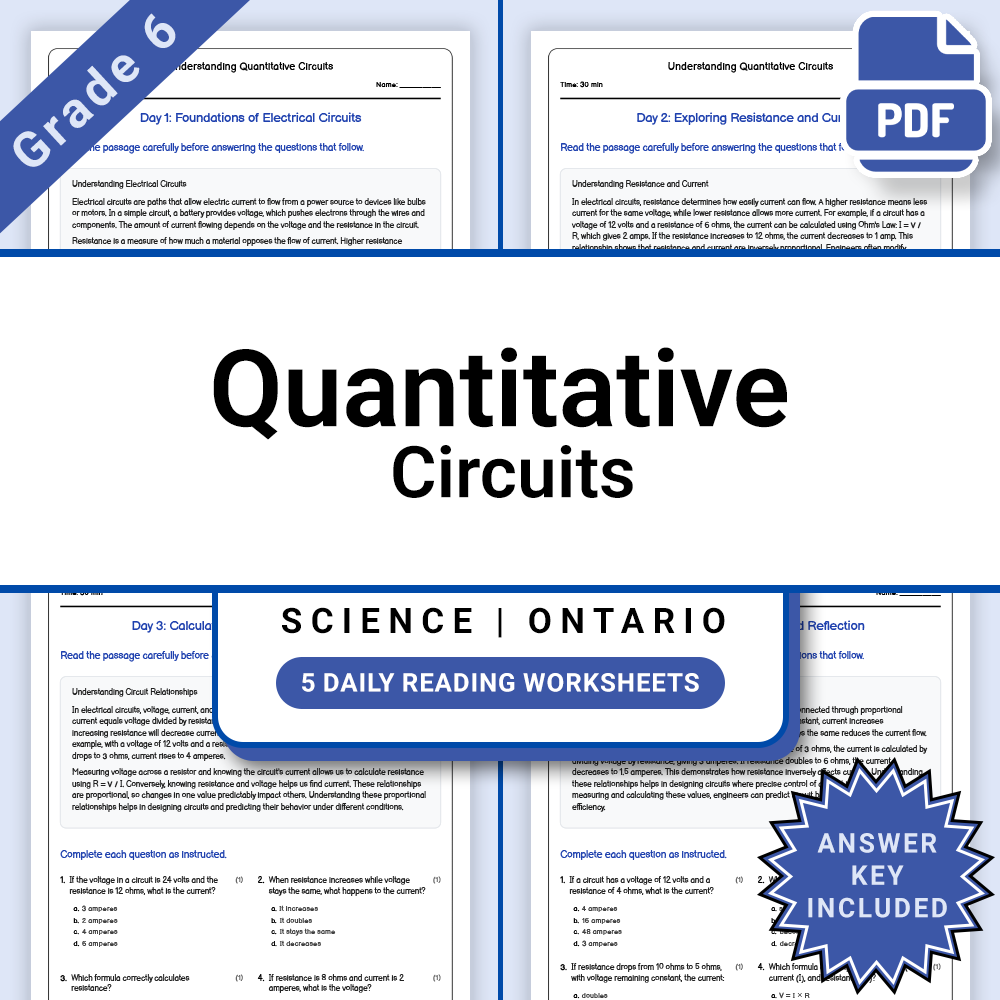
Grade 6 Science – Quantitative Circuits Daily Reading Worksheet + Answer Key
JCreated byJ.S SheetsLearning Objectives
- Identify basic electrical circuit components such as voltage sources, resistors, and current paths.
- Understand the proportional relationship between voltage, current, and resistance.
- Calculate current using measured voltage and resistance values.
Also included in: Grade 6 Science Lesson Group – Circuits and Energy Ontario Framework +1 more
Instant download
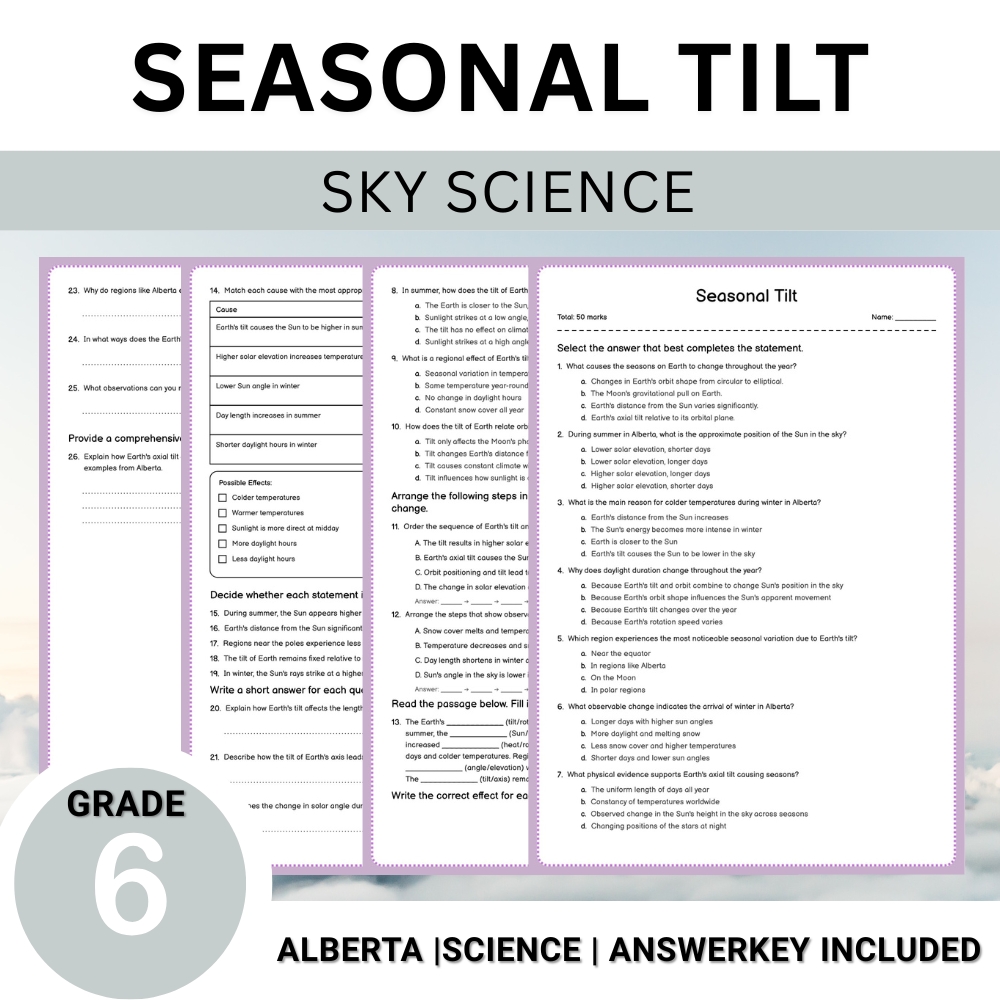
Grade 6 Science | Seasonal Tilt Worksheet (Printable PDF) for Assessment & Student Practice
Learning Objectives
- Explain how Earth's axial tilt causes seasonal changes in solar angle and daylight duration.
- Describe the effects of Earth's tilt on regional climate variations such as in Alberta.
- Identify the relationship between orbital geometry and seasonal climate patterns.
Also included in: Grade 6 Science | Celestial & Space Phenomena UNIT Worksheet Bundle (Assessment & Practice) +1 more
Instant download
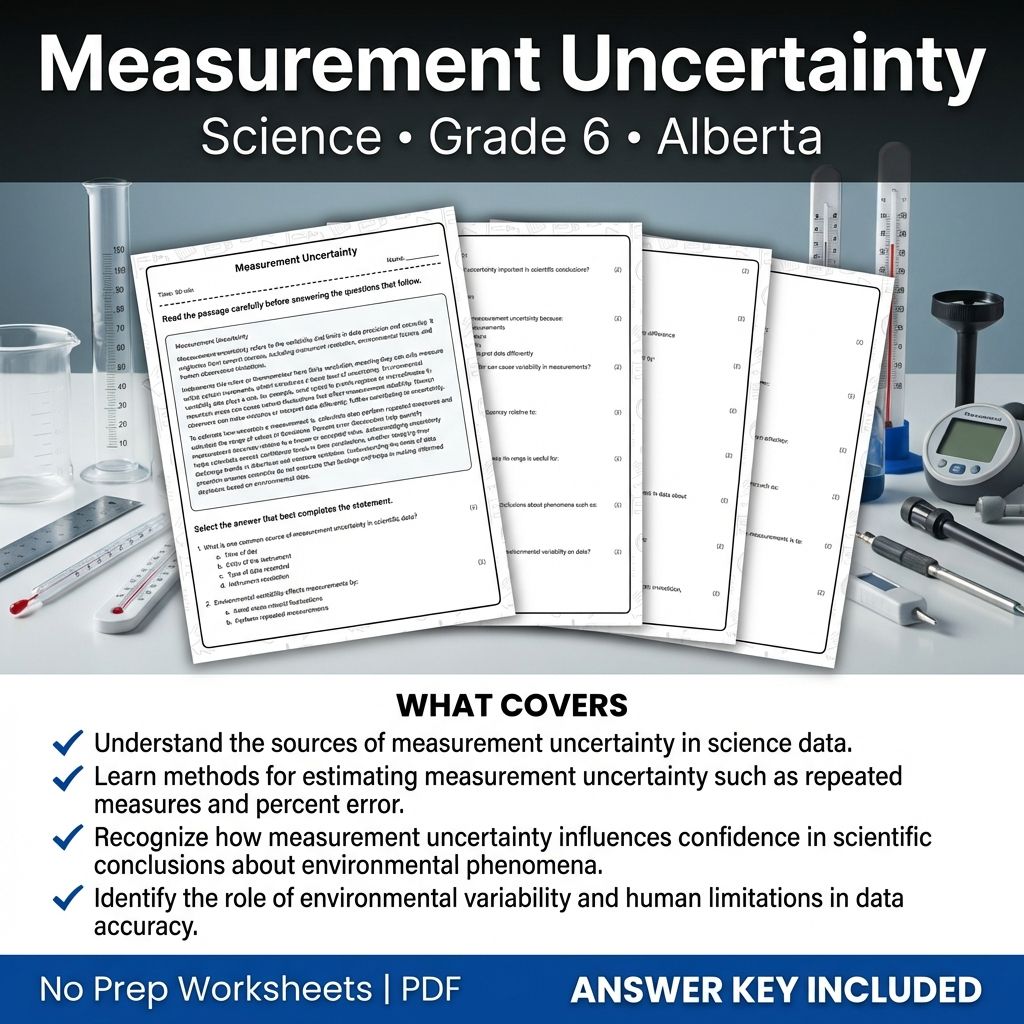
Grade 6 Science Worksheet on Measurement Uncertainty | Alberta Standards
Created byCoral Reef LearningLearning Objectives
- Understand the sources of measurement uncertainty in science data.
- Learn methods for estimating measurement uncertainty such as repeated measures and percent error.
- Recognize how measurement uncertainty influences confidence in scientific conclusions about environmental phenomena.
Instant download

6th Grade Science Worksheet | Heat and States of Matter (PDF)
 Created byEvergreen Desk Education
Learning Objectives
- Explain how heat transfer affects the energy and motion of particles in matter.
- Compare melting, freezing, evaporation, and boiling as changes in state.
- Use the particle model to predict how temperature and state changes are related.
Also included in: Grade 6 Heat and Matter Science Lesson Bundle for General Framework +1 more
Instant download

Grade 6 Eclipses and Alignments Worksheet | Alberta Practice PDF
 Created byClear Sky Classroom
Learning Objectives
- Explain how solar and lunar eclipses depend on the alignment of the Sun, Earth, and Moon
- Describe how orbital inclination and imperfect alignment affect whether an eclipse is partial or total/annular
- Interpret why eclipses are relatively rare for a given location using celestial geometry and timing
Also included in: Grade 6 Sky Science Sun–Earth–Moon Science Lesson Bundle for Alberta +1 more
Instant download

Grade 6 Science | Density Evidence - Daily Reading Comprehension
Created byCoral Reef LearningLearning Objectives
- Understand the concept of density and how it relates mass and volume.
- Learn how density affects whether objects float or sink in water.
- Recognize that density depends on how tightly matter is packed.
Instant download

New Substance Properties Worksheet Grade 6 Science Chemical Change
Created byPrism Point LearningLearning Objectives
- Explain how new substances form when atoms rearrange during a chemical change.
- Use macroscopic properties (such as solubility, conductivity, and melting behavior) to infer that composition has changed.
- Compare properties of reactants and products to distinguish chemical change from physical change.
Instant download

Resource Limits and Carrying Capacity Worksheets | Grade 6 Science
 Created byTeachers Club
Learning Objectives
- Interpret data about resource availability and explain how it affects population size
- Describe how limiting resources influence carrying capacity and population fluctuations over time
- Use measurements from different habitats to predict where species are most likely to be abundant
Also included in: Ecosystems Worksheets Grade 6 Science | NGSS Unit Bundle +2 more
Instant download
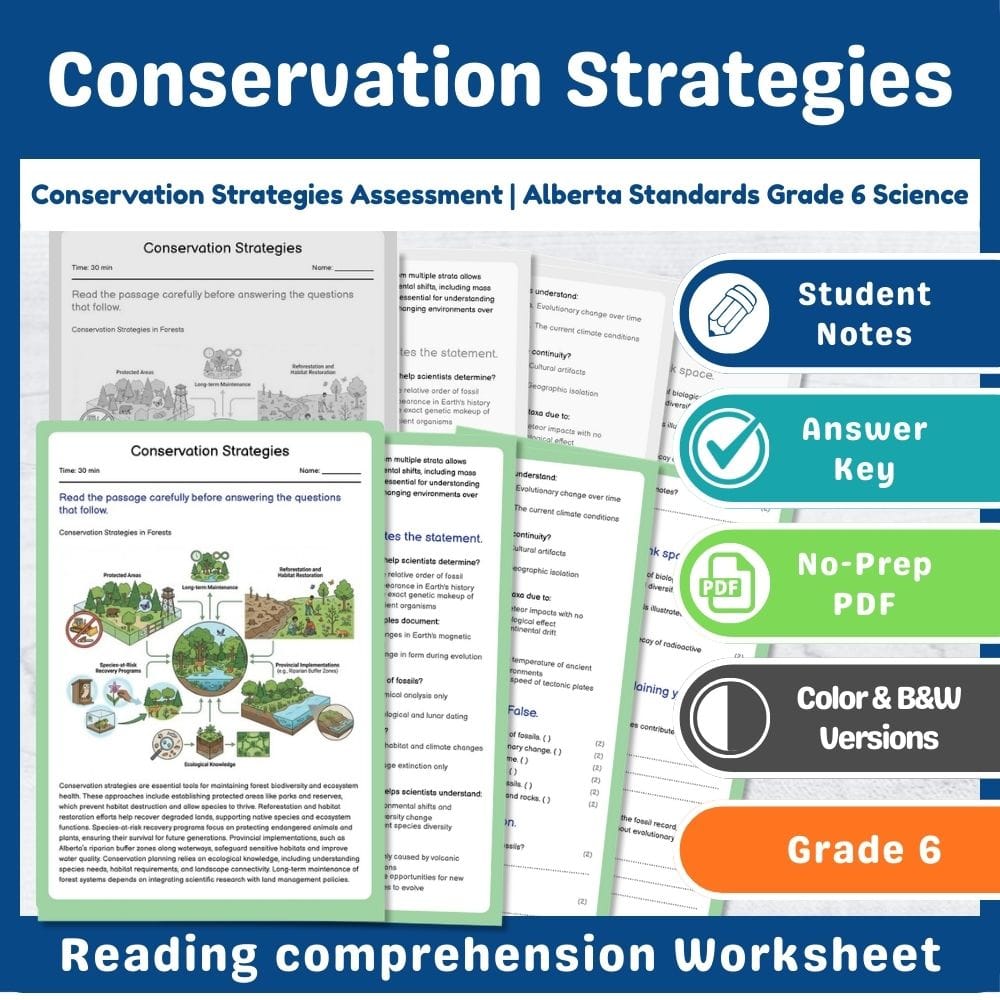
Conservation Strategies Assessment | Alberta Standards Grade 6 Science
Created byPrism Point LearningLearning Objectives
- Understand different conservation strategies used to protect forest biodiversity.
- Identify provincial examples of habitat protection and restoration.
- Explain how ecological knowledge informs conservation planning.
Also included in: Lesson Grade 6 Science Mini Bundle Trees and Forests Alberta Standards
Instant download

Grade 6 Science | Trade-off Decisions Worksheet | General Standard
 Created byLumora Learning
Learning Objectives
- Explain how design choices involve trade-offs between competing properties, needs, or constraints.
- Connect evidence (strength, flexibility, insulation, friction, weight, cost, transportability) to user needs and limitations.
- Use cause-and-effect reasoning to justify why one improvement can create new limitations.
Instant download

Grade 6 Science – Cell Structure Worksheet (PDF) – General Standards
 Created byMaple Path Learning
Learning Objectives
- Identify the main parts of a cell and their functions.
- Describe how cell parts work together to support life processes.
- Explain the differences between shared and distinct cell parts.
Instant download

Grade 6 Science | Forms Of Energy - Daily Reading Comprehension
Created byCoral Reef LearningLearning Objectives
- Understand the different forms of energy such as kinetic, potential, thermal, chemical, and electrical.
- Identify examples of kinetic energy in everyday objects.
- Recognize transformations between different energy forms.
Instant download

Energy Flow Worksheet & Doodle Notes | NGSS Grade 6 Ecosystems
 Created byAmber Owl Education
Learning Objectives
- Explain how energy moves through food webs from producers to consumers and decomposers.
- Use energy pyramids and trophic transfer efficiency to describe why energy decreases at higher trophic levels.
- Describe how photosynthesis and cellular respiration contribute to an organism’s energy budget.
Also included in: Grade 6 Science Ecology & Ecosystems Lesson Bundle | NGSS +1 more
Instant download

6th Grade Science | Apparent Sun Path Worksheet (Alberta Standards) (PDF)
Created byEvergreen Desk EducationLearning Objectives
- Describe how the Sun’s apparent motion across the sky changes with season and latitude.
- Explain why sunrise and sunset locations shift even though the Sun appears to move.
- Relate solar elevation at noon to day length and solar intensity.
Instant download

6th Grade Science Worksheet | Evaporation Separation (PDF) with Answer Key
Created byEvergreen Desk EducationLearning Objectives
- Describe how evaporation separates a soluble solid from a liquid by changing the liquid into a gas
- Use evidence (disappearance of liquid and recovered mass) to explain whether evaporation worked
- Distinguish evaporation from size-based separation methods
Also included in: Grade 6 Heat and Matter Science Lesson Bundle for General Framework +1 more
Instant download
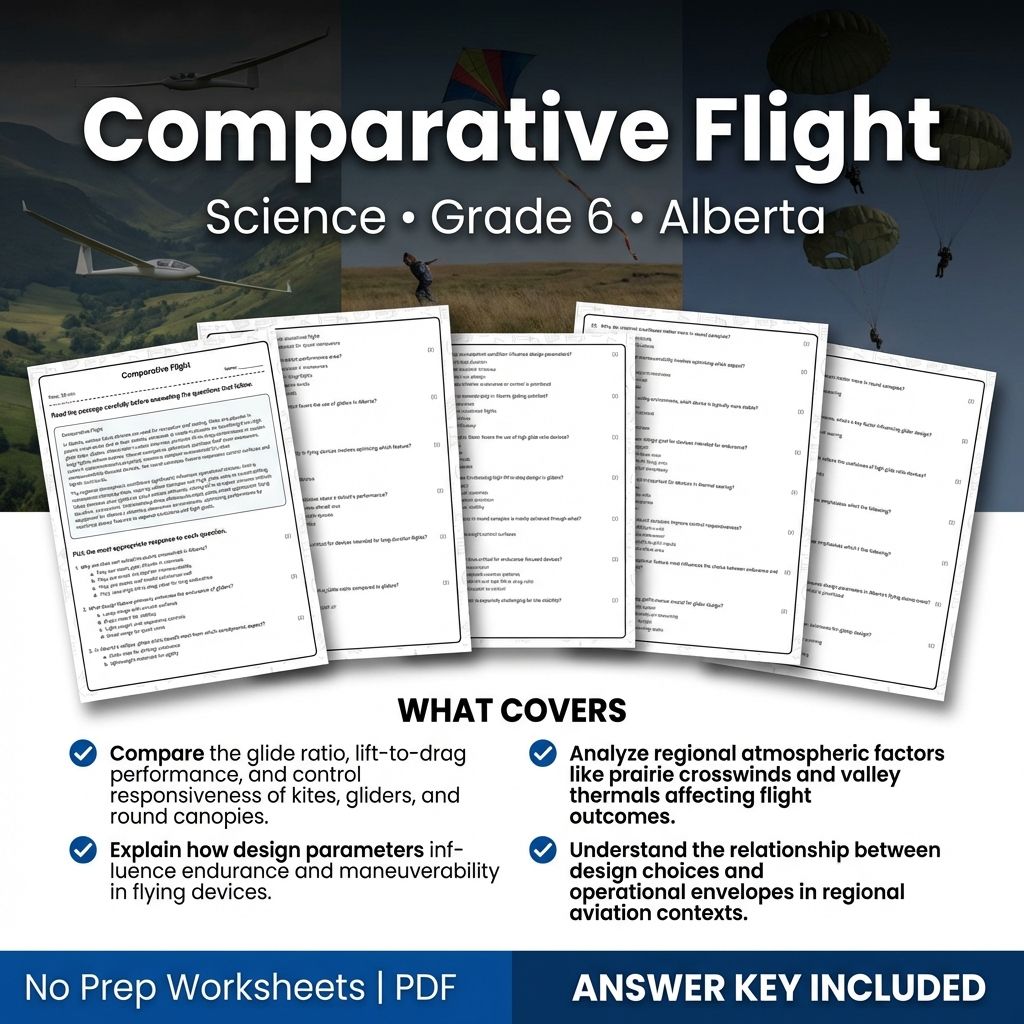
Grade 6 Science Worksheet on Comparative Flight | Alberta Standards
Created byCoral Reef LearningLearning Objectives
- Compare the glide ratio, lift-to-drag performance, and control responsiveness of kites, gliders, and round canopies.
- Explain how design parameters influence endurance and maneuverability in flying devices.
- Analyze regional atmospheric factors like prairie crosswinds and valley thermals affecting flight outcomes.
Instant download

Habitat Fragmentation Worksheet Grade 6 Science Ontario Standards
 Created byCedar Grove Learning
Learning Objectives
- Explain how habitat fragmentation changes habitat connectivity for organisms in forests and wetlands
- Describe how edge effects and isolation can reduce gene flow and movement between populations
- Identify how fragmentation can disrupt pollination, food webs, and long-term biodiversity persistence
Also included in: Grade 6 Biodiversity and Adaptations Science Lesson Bundle Ontario +1 more
Instant download

Tree Evidence Worksheet | NGSS Grade 6 Science Activity & Notes
Created byAmber Owl EducationLearning Objectives
- Explain how homologous anatomical traits and vestigial organs can provide evidence for common ancestry
- Describe how conserved DNA sequences support evolutionary relationships shown on phylogenetic trees
- Use patterns of similarity and difference to interpret branching relationships among taxa
Also included in: Grade 6 Science Natural Selection & Biodiversity Lesson Bundle | NGSS +1 more
Instant download

Circuit Diagnosis Worksheet | Grade 6 Science Ontario Standards
Created byCedar Grove LearningLearning Objectives
- Use circuit topology (series vs. parallel) to predict how brightness and current should behave
- Identify the most likely fault by comparing expected measurement patterns with observed symptoms
- Explain how continuity and resistance readings support reasoning about open circuits and faulty components
Also included in: Grade 6 Electricity and Circuits Science lesson bundle: Ontario framework +1 more
Instant download

Food Chains Assessment for Grade 6 Science | TEKS Standards-Aligned
Created byPrism Point LearningLearning Objectives
- Understand the different roles of producers, consumers, and decomposers in food chains
- Identify the trophic levels and how energy flows through an ecosystem
- Recognize examples of simple pond and grassland food chains
Instant download
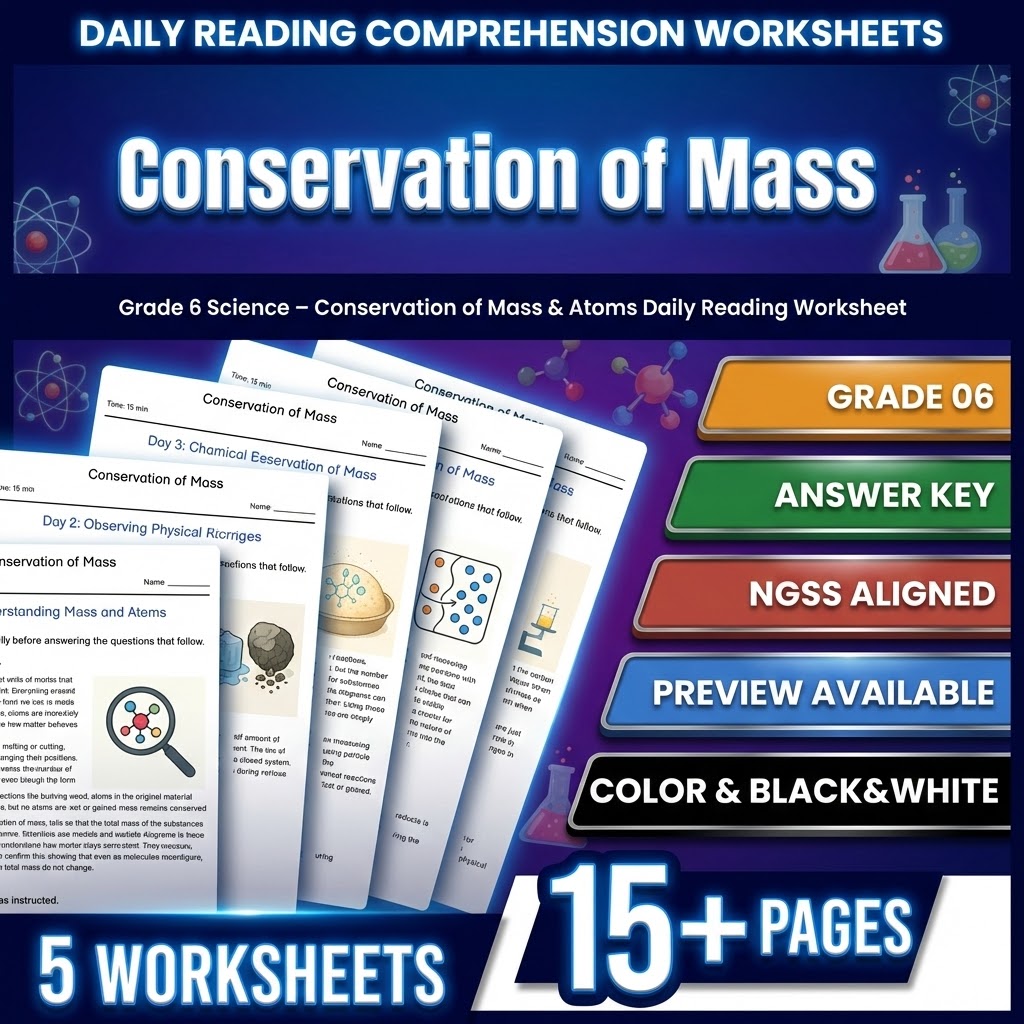
Grade 6 Science – Conservation of Mass & Atoms Daily Reading Worksheet
 Created byElena Brooks
Learning Objectives
- Understand that atoms are the basic building blocks of matter.
- Learn that atoms are conserved during physical and chemical changes.
- Identify how mass remains constant even when molecules rearrange.
Also included in: Grade 6 Science Matter and Its Interactions Lesson Bundle | NGSS +1 more
Instant download

Grade 6 Science | Variables in Nature - Daily Reading Comprehension
Created byCoral Reef LearningLearning Objectives
- Identify different types of variables: independent, dependent, and controlled.
- Explain how variables affect observable outcomes in experiments or natural phenomena.
- Understand the importance of operational definitions and measurement consistency.
Also included in: Evidence and Investigation Lesson Bundle | Grade 6 Science | Alberta +1 more
Instant download

6th Grade Science Worksheet | Digital Instrumentation & Data Collection (PDF)
Created byEvergreen Desk EducationLearning Objectives
- Explain how electronic sensors, digital probes, and data loggers work together to collect measurements
- Choose appropriate sampling rate and resolution to improve measurement accuracy and record usefulness
- Describe calibration steps and the importance of documenting units, settings, and measurement context
Also included in: Grade 6 Science Inquiry and Data Collection Lesson Bundle | Ontario +1 more
Instant download

Grade 6 Science – Trait Heritability & Inheritance | Daily Reading Worksheet
Created byBright Mind ResourcesLearning Objectives
- Understand the concept of heritable traits and recognize examples in nature.
- Distinguish between traits influenced by genetics and those influenced by the environment.
- Learn how traits are passed from one generation to the next through inheritance.
Also included in: Grade 6 Ecology & Biodiversity Science Lesson Bundle | Ontario Daily Reading +1 more
Instant download

Grade 6 Science | Thrust & Propulsion Systems - Daily Reading Practice
Created byCoral Reef LearningLearning Objectives
- Define thrust and explain how it is generated by different propulsion systems.
- Differentiate between propeller-driven and jet-driven thrust methods.
- Describe the principles of how propellers produce axial thrust.
Instant download

System Interactions Test Prep Printable | Grade 6 Science NGSS
Created byPrism Point LearningLearning Objectives
- Explain how matter and energy move among Earth’s geosphere, hydrosphere, atmosphere, and biosphere using models.
- Describe feedbacks (positive and negative) that change system behavior, such as ice-albedo effects.
- Use examples like sediment transport and nutrient cycling to predict observable patterns over time.
Also included in: Grade 6 Weather & Climate Systems Science Lesson Bundle NGSS
Instant download
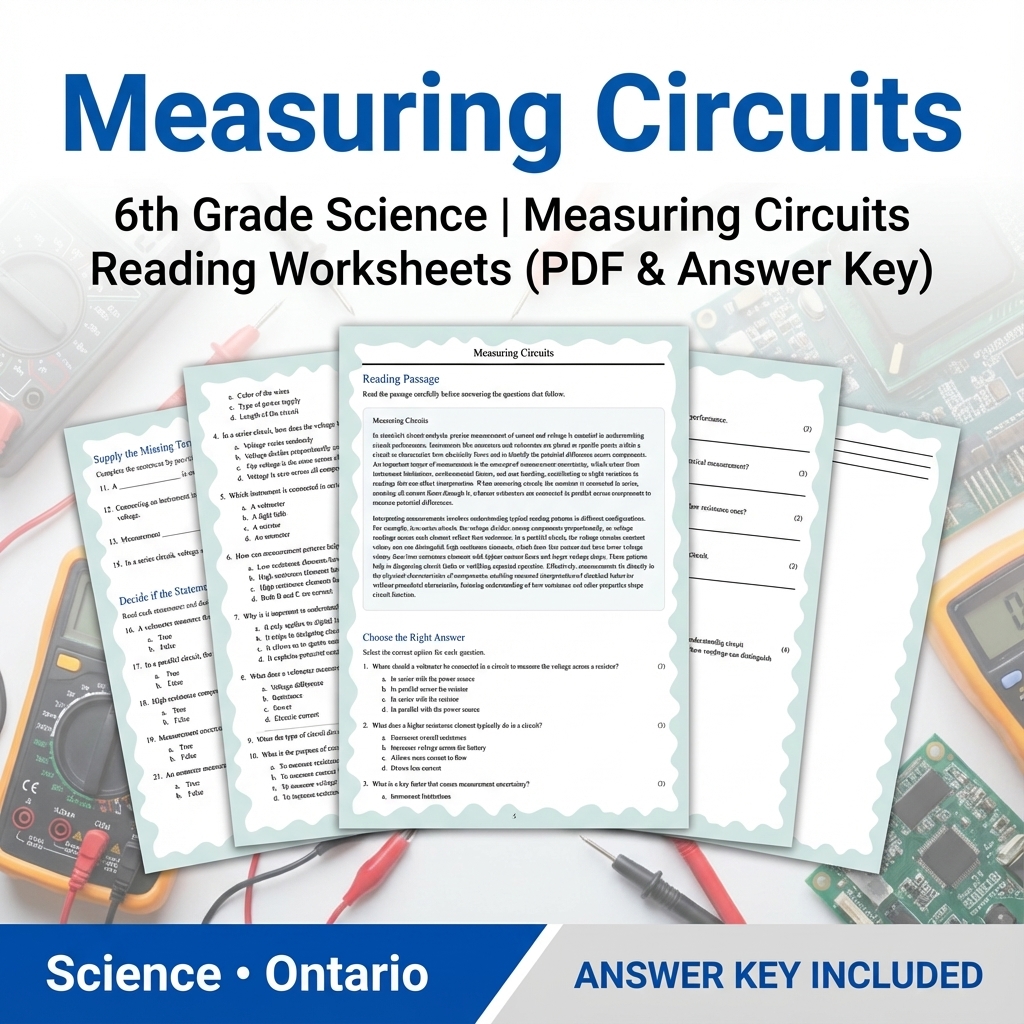
6th Grade Science | Measuring Circuits Reading Worksheets (PDF & Answer Key)
JCreated byJ.S SheetsLearning Objectives
- Understand the concepts of current and voltage measurement in electrical circuits
- Learn how to interpret readings and understand measurement uncertainty
- Recognize how different circuit configurations affect measurement patterns
Also included in: Grade 6 Science Circuit & Electricity Unit Bundle – Worksheets & Answer Keys +1 more
Instant download
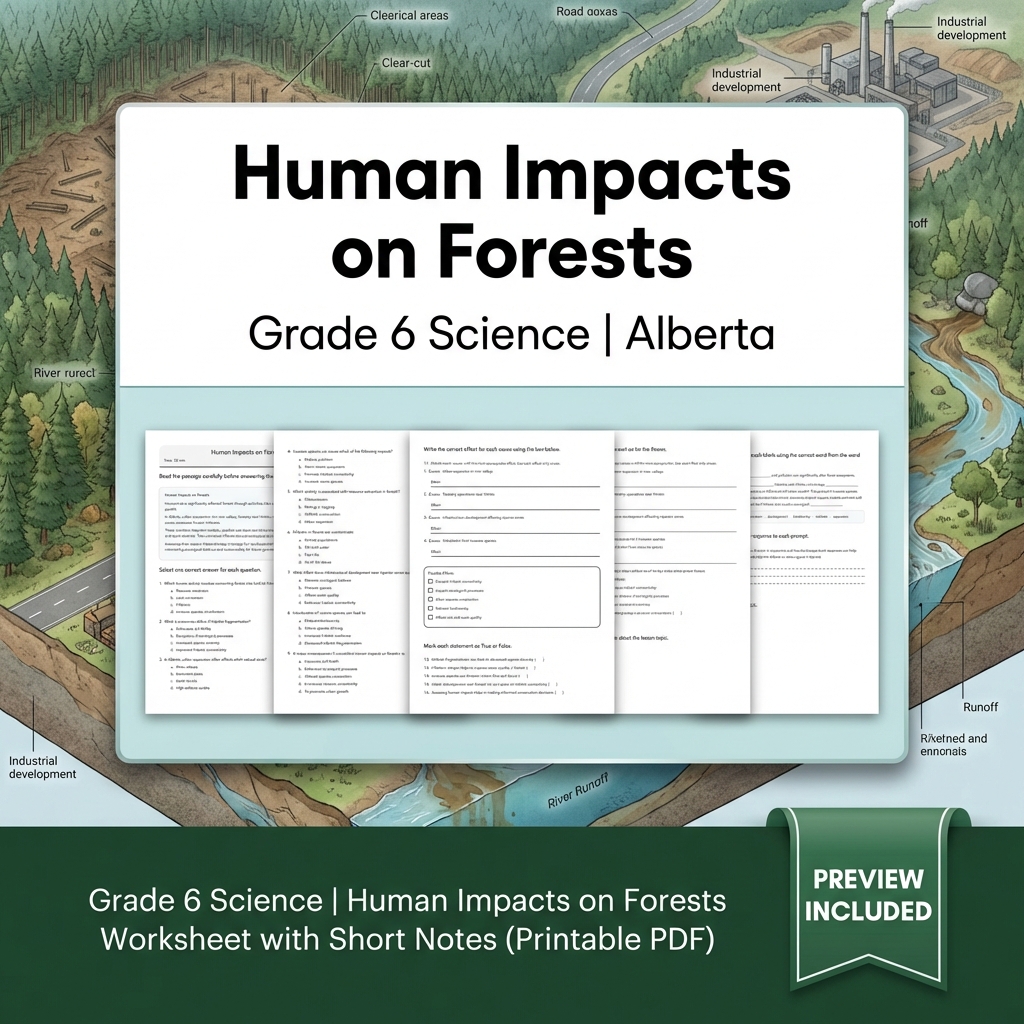
Grade 6 Science | Human Impacts on Forests Worksheet with Short Notes (PDF)
 Created byMeadowlark Worksheets
Learning Objectives
- Understand human activities that affect forest ecosystems.
- Identify specific impacts such as land conversion, pollution, and invasive species.
- Analyze the effects of human impacts on habitat connectivity and species diversity.
Also included in: Grade 6 Science | Trees and Forests Unit Worksheet Bundle – Alberta Curriculum +1 more
Instant download
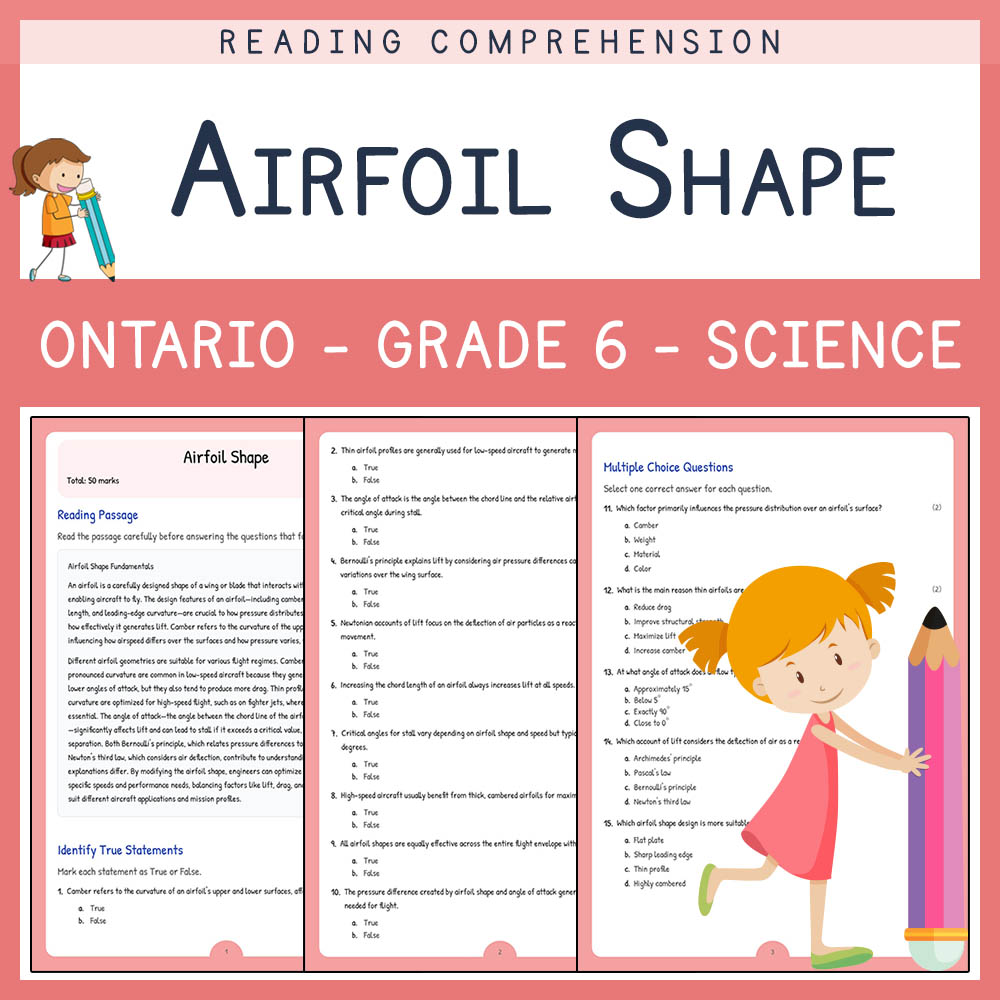
Grade 6 Science | Airfoil Shape Worksheet & Answer Key (Ontario Standard)
Created byLumora LearningLearning Objectives
- Understand how camber, thickness, chord length, and leading-edge curvature affect an airfoil's pressure distribution and lift.
- Compare Bernoulli and Newtonian explanations for lift and identify their limitations.
- Explain the significance of angle of attack, critical angles for stall, and how airfoil geometry influences lift coefficient at various speeds.
Also included in: Grade 6 Science | Flight Custom Bundle | Ontario Standards
Instant download

Grade 6 Science – Habitat Fragmentation Daily Reading Worksheet | BC Standards
Created byBright Mind ResourcesLearning Objectives
- Understand what habitat fragmentation is and its main causes.
- Identify effects of habitat fragmentation on ecosystems and species.
- Learn ways humans impact habitats through activities like road building and urban expansion.
Also included in: Grade 6 Ecosystem Relationships Science Daily Reading Lesson Bundle | BC +1 more
Instant download

Food Web Energy Paths Assessment Grade 6 Science | California Standards
Created byPrism Point LearningLearning Objectives
- Explain how energy moves through ecosystems using producers, consumers, and decomposers.
- Describe how a food web shows multiple energy pathways compared with a single food chain.
- Use trophic level vocabulary to trace energy transfer between organisms.
Also included in: Grade 6 Energy and Matter Cycles Science Lesson Bundle | California Standards +1 more
Instant download

6th Grade Science | Integrated Synthesis Worksheet (Alberta Standards) (PDF)
 Created bySilver Birch Teaching
Learning Objectives
- Explain how integrated synthesis coordinates question framing, fair design choices, measurement plans, data handling, and evidence-based reporting.
- Identify how documentation and data provenance support cross-site comparability in environmental investigations.
- Describe how to communicate limitations when combining data sets to form policy-relevant conclusions.
Also included in: Grade 6 Scientific Inquiry & Data Analysis Science Lesson Bundle: Alberta +1 more
Instant download

Apparent Motion Worksheet | Ontario Grade 6 Science Assessment
Created byCedar Grove LearningLearning Objectives
- Explain how Earth’s rotation causes the Sun and Moon to appear to rise and set each day
- Describe how Earth’s yearly orbit affects the Sun’s apparent changing position in the sky
- Identify the idea of diurnal motion, apparent stellar paths, and the celestial sphere from Earth’s perspective
Also included in: Grade 6 Earth and Space Systems Science Lesson Bundle: Ontario +1 more
Instant download
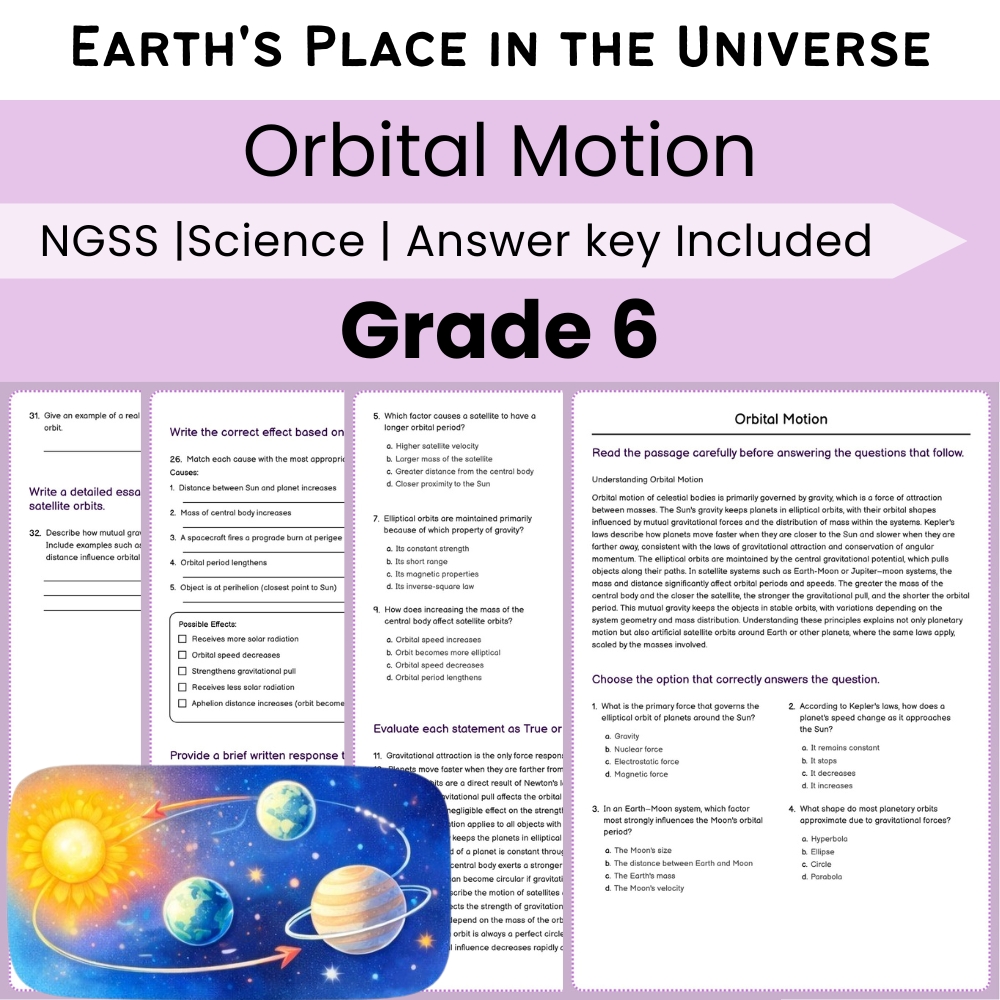
Orbital Motion Worksheet | NGSS Grade 6 Science printable PDF
Learning Objectives
- Understand gravitational attraction as the primary force governing planetary motion.
- Describe how mutual gravity produces elliptical orbits and influences orbital periods.
- Explain the role of central gravitational potential in satellite and planetary orbits.
Also included in: Grade 6 Science | Earth's Place in the Universe Unit Bundle (NGSS Aligned Worksheets) +1 more
Instant download

Grade 6 Science | Human Impacts - Daily Reading Comprehension
Created byCoral Reef LearningLearning Objectives
- Understand the effects of deforestation on ecosystems.
- Identify the causes of environmental changes caused by human activities.
- Analyze how human impacts influence biodiversity and ecosystem services.
Instant download

6th Grade Science – Stability Balance Worksheet (Alberta Standards) (PDF)
Created byEvergreen Desk EducationLearning Objectives
- Explain how the center of mass and center of pressure affect longitudinal and lateral static stability.
- Describe how design features such as dihedral angles and tail volume influence an object’s tendency to return to a steady attitude after a disturbance.
- Apply balance ideas to real contexts such as aircraft payload placement and small glider flight in changing wind.
Instant download

Chemical Reactions Assessment Worksheet | Grade 6 Science NGSS
Created byPrism Point LearningLearning Objectives
- Identify evidence of chemical reactions using qualitative indicators such as color change, gas formation, and precipitate formation
- Use quantitative data (mass, temperature, and composition) to decide whether new substances formed
- Explain how pre-interaction and post-interaction measurements support the claim that a chemical reaction occurred
Instant download

Grade 6 Science | Forces & Motion - Daily Reading Comprehension
Created byCoral Reef LearningLearning Objectives
- Understand the concept of force and how it affects objects in motion.
- Identify different types of forces acting on objects.
- Learn the relationship between net force, mass, and acceleration.
Instant download

Grade 6 Science | Human Impacts on Forests - Daily Reading Comprehension
Created byCoral Reef LearningLearning Objectives
- Identify human activities that affect forest ecosystems
- Understand how urban expansion impacts habitat connectivity
- Recognize examples of resource extraction and pollution in forests
Also included in: Trees and Forests Lesson Bundle | Grade 6 Science | Alberta +1 more
Instant download

Grade 6 Xylem and Phloem Stem Transport Worksheet | Alberta Science
 Created byBRIGHT PATH RESOURCES
Learning Objectives
- Identify how xylem and phloem transport different resources in a tree stem.
- Use details from a text to explain the purpose of vascular tissues.
- Connect plant transport to how trees survive and respond to environmental changes.
Also included in: Forest Ecosystem Adaptations Grade 6 Science Worksheets Lesson Bundle | Alberta +1 more
Instant download

Communication Quality Worksheet | Grade 6 Science Practice
Created byPrism Point LearningLearning Objectives
- Write clear scientific claims supported by evidence and scientific reasoning
- Use standardized visual summaries (like graphs) to explain patterns and relationships
- Document observational records and methods clearly, including uncertainties
Also included in: Grade 6 Scientific Investigation Practices Science Lesson Bundle TEKS +1 more
Instant download

Human Impacts on Earth Systems & Biogeochemical Cycles Worksheets
Created byTeachers ClubLearning Objectives
- Explain how human activities alter Earth systems over time
- Describe how human activities change biogeochemical cycles
- Identify human actions that influence climate drivers
Also included in: Earth and Human Activity Grade 6 Science NGSS Worksheets Bundle +2 more
Instant download

Conservation of Mass Worksheets | Grade 6 Matter & Interactions
Created byTeachers ClubLearning Objectives
- Model how total mass is conserved in physical and chemical changes by tracking atoms and particle counts in a closed system
- Use mass measurements before and after a process to support claims about conservation of matter
- Explain why atoms can rearrange while the total number of atoms of each element stays the same
Also included in: Matter and Its Interactions Grade 6 Science NGSS Worksheets Bundle +2 more
Instant download

Earth's Cycles Day, Night & Seasons Worksheets | Grade 6 Science
Created byTeachers ClubLearning Objectives
- Explain how Earth’s rotation causes day and night.
- Describe how Earth’s orbital motion plus its 23.5° axial tilt creates seasons.
- Use solstices and equinoxes to predict observable changes in sunlight and day length.
Also included in: Earth's Place in the Universe Grade 6 Science NGSS Bundle +2 more
Instant download

Engineering Design Worksheets: Criteria and Trade-Offs | Grade 6
Created byTeachers ClubLearning Objectives
- Compare design prototypes using quantitative and qualitative criteria
- Apply a scoring matrix to rank design solutions
- Justify a prototype ranking with relevant evidence
Also included in: Grade 6 Science Full Year Bundle | NGSS Worksheets & Printables +1 more
Instant download
About Grade 6 Science Worksheets
Explore Grade 6 Science worksheets for classwork, homework, or review. Our 5,969 printables download instantly as PDFs.
MyTeachingSheets worksheets are made by real teacher-authors and checked before they go live. Download any as a print-ready PDF for lessons, homework, or independent practice — most include answer keys, and previews are always free.