
Grade 7 Science Worksheets
6,039 worksheets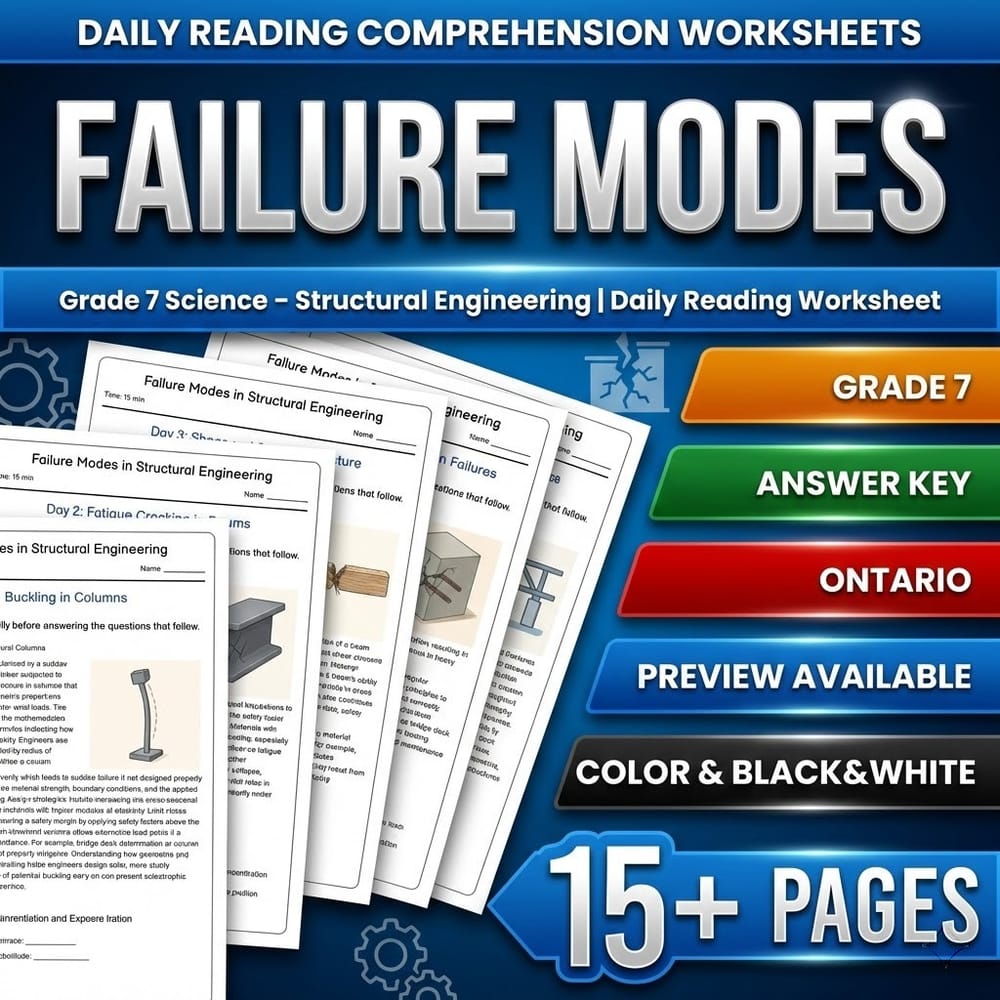
Grade 7 Science – Failure Modes & Structural Engineering | Daily Reading Worksheet
 Created byQuiet Forest Education
Learning Objectives
- Understand the concept of buckling in slender compression members.
- Identify different failure modes such as buckling, fatigue cracking, shear and bending fractures.
- Learn about limit states design philosophy, safety factors, and redundancy.
Also included in: Structural Engineering Grade 7 Science Daily Reading Worksheets Bundle | Ontario +1 more
Instant download

Grade 7 Conservation of Mass Science Daily Reading Worksheet | TEKS
 Created byBRIGHT PATH RESOURCES
Learning Objectives
- Summarize the law of conservation of mass for closed systems.
- Explain how mass is tracked during physical and chemical changes.
- Use simple mass accounting ideas to relate reactants and products.
Also included in: Matter-Energy Grade 7 Science Daily Reading Worksheets Lesson Bundle | TEKS +1 more
Instant download
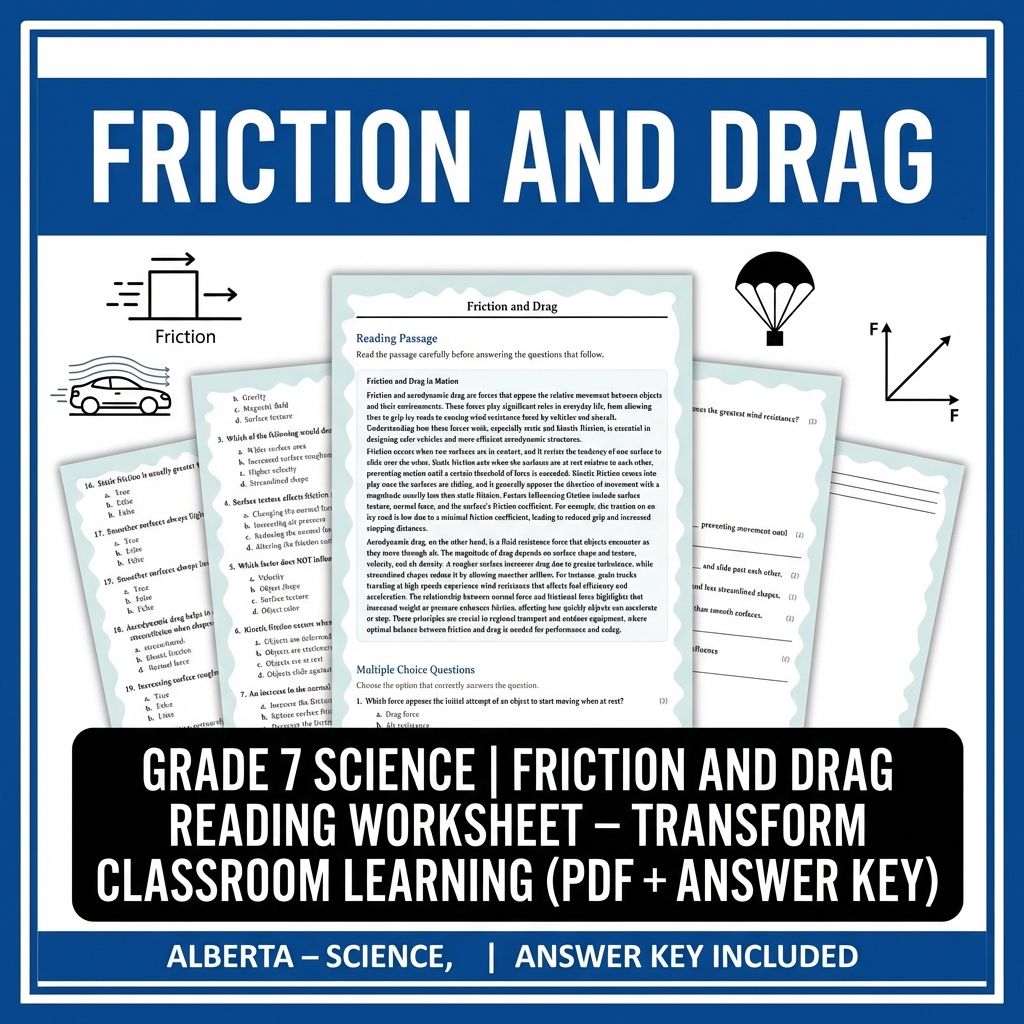
Grade 7 Science | Friction and Drag Worksheet (PDF + Answer Key)
JCreated byJ.S SheetsLearning Objectives
- Explain the concepts of static and kinetic friction and how they oppose motion.
- Describe how aerodynamic drag affects objects moving through air.
- Illustrate the relationship between surface texture, normal force, and frictional force.
Also included in: Grade 7 Science | Forces, Motion & Structural Concepts (Answer Keys Included) +1 more
Instant download

Thermal Design Solutions for Alberta Climates Grade 7 Science Worksheets
 Created bySunny Desk Resources
Learning Objectives
- Explain how building orientation affects heating and cooling needs across Alberta seasons
- Describe how the building envelope and thermal bridges influence heat loss or heat gain
- Compare ventilation with heat recovery to reduce energy use while maintaining indoor comfort
Also included in: Energy, Heat & Thermal Processes Grade 7 Science Alberta Bundle +1 more
Instant download

Weather Data Patterns Assessment | General Grade 7 Science Standards
 Created byPrism Point Learning
Learning Objectives
- Understand how weather data patterns are identified and compared over time and location.
- Explain the factors that influence climate variability and long-term weather trends.
- Analyze pressure changes and air mass movements to interpret weather patterns.
Also included in: Grade 7 Earth & Space Science Lesson Bundle: General Science Framework
Instant download

Grade 7 Science | Technology Impacts and Ethics Worksheet | General Standards
 Created byLumora Learning
Learning Objectives
- Explain how technologies can create both benefits and costs for society and the environment
- Identify ethical considerations such as fairness, privacy, and responsibility across a product’s life cycle
- Connect engineering design choices to real-world consequences for people and ecosystems
Instant download

Grade 7 Phase Energy Worksheet | Practice & Assessment PDF
 Created byClear Sky Classroom
Learning Objectives
- Explain how particle motion and arrangement relate to phase changes and energy transfer
- Describe melting, freezing, evaporation, and condensation as energy-absorbing or energy-releasing processes
- Use particle-level phase reasoning to interpret macroscopic energy changes (including latent heat)
Instant download

Grade 7 Science – Variables & Experimental Design | Daily Reading Worksheet
 Created byBright Mind Resources
Learning Objectives
- Define what a variable is in a scientific context.
- Identify different types of variables (independent, dependent, controlled).
- Understand the importance of controlling variables to ensure valid experiment results.
Also included in: Grade 7 Variables & Exp Design Science Lesson Bundle Daily Reading | TEKS +2 more
Instant download
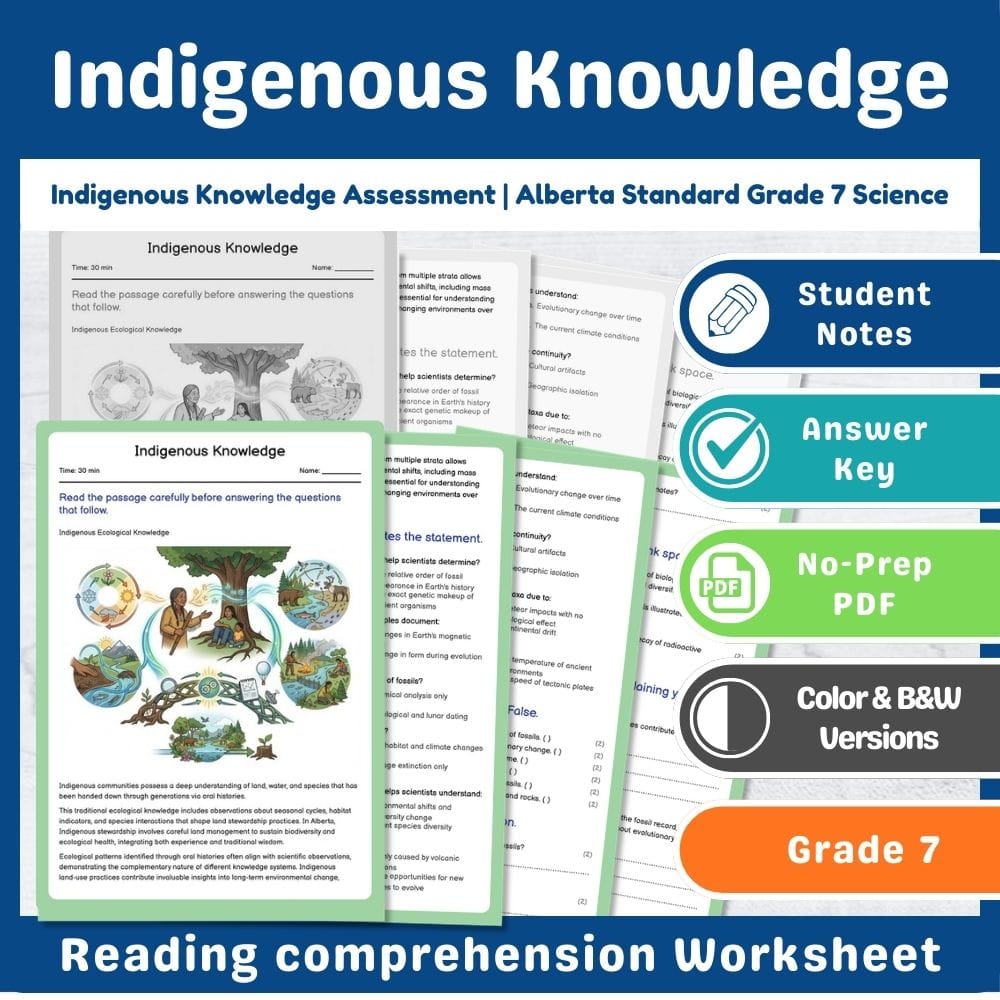
Indigenous Knowledge Assessment | Alberta Standard Grade 7 Science
Created byPrism Point LearningLearning Objectives
- Understand the role of oral histories and land-use practices in traditional ecological knowledge.
- Identify examples of species interactions and habitat indicators used by Indigenous communities.
- Recognize the importance of integrating different knowledge systems to interpret environmental patterns.
Also included in: Lesson Bundle Grade 7 Science - Interactions and Ecosystems +1 more
Instant download

Grade 7 Science | Balanced Forces in Structures - Daily Reading Comprehension
 Created byCoral Reef Learning
Learning Objectives
- Understand the concept of balanced forces and static equilibrium.
- Identify examples of static and dynamic equilibrium in real-life structures.
- Interpret force diagrams and graphical representations of force pairs.
Also included in: Forces, Structures and Motion Lesson Bundle | Grade 7 Science Alberta +1 more
Instant download

Grade 7 Species Adaptations Worksheet | Ontario Science Practice PDF
Created byClear Sky ClassroomLearning Objectives
- Explain how structural, physiological, and behavioral adaptations help organisms survive in specific habitats.
- Describe how selective pressures (temperature, moisture, predation, and resource availability) can shape adaptive traits over generations.
- Identify adaptive trade-offs and predict how traits may differ across environments such as wetlands, forests, and open meadows.
Instant download
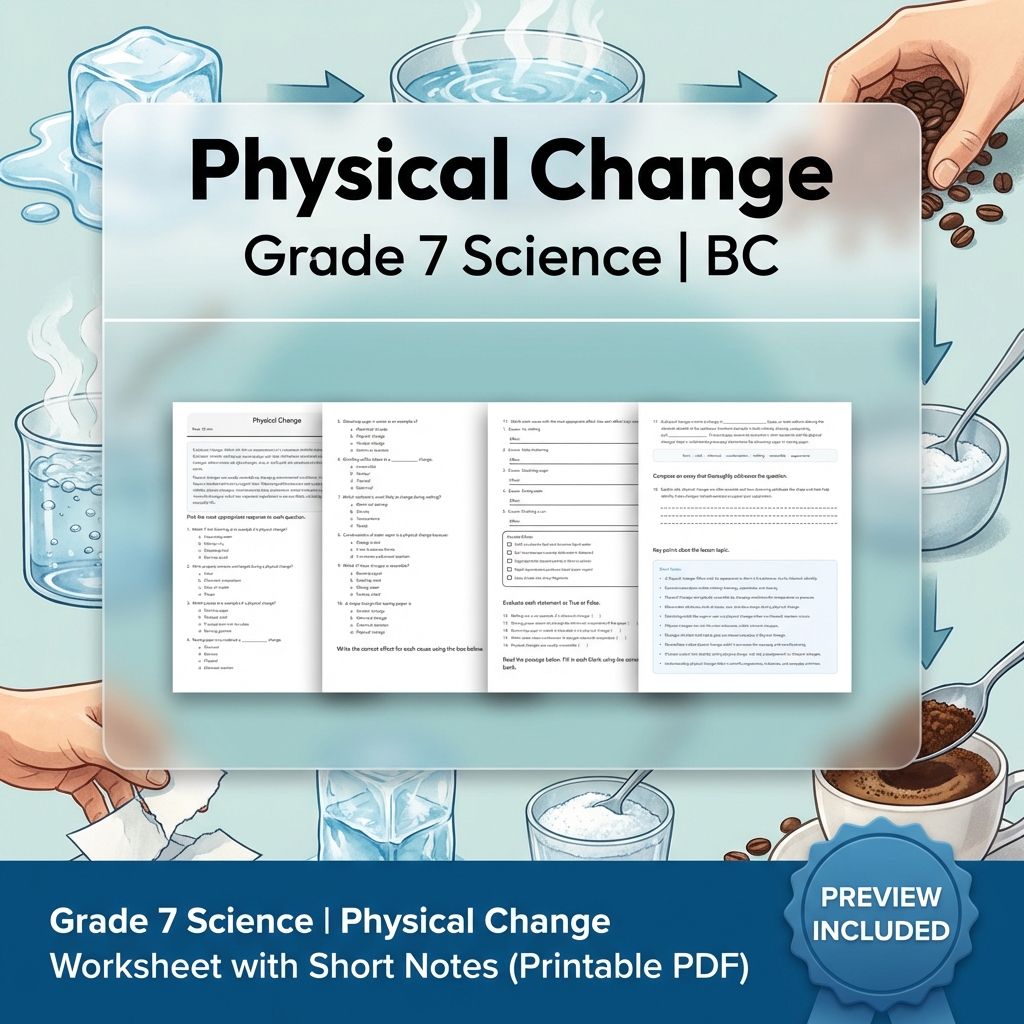
Grade 7 Science | Physical Change Worksheet with Short Notes (Printable PDF)
 Created byMeadowlark Worksheets
Learning Objectives
- Define physical change and distinguish it from chemical change.
- Identify common examples of physical changes in daily life.
- Explain why physical changes are often reversible.
Also included in: Grade 7 Science Lesson Bundle | BC Framework on Matter & Reactions Worksheets +1 more
Instant download

Grade 7 Science | Rock Types - Daily Reading Comprehension
Created byCoral Reef LearningLearning Objectives
- Identify and differentiate between igneous, sedimentary, and metamorphic rocks.
- Understand the origins and formation processes of each rock type.
- Recognize key mineral content, textures, and structures associated with each rock.
Instant download

Grade 7 Science – Empirical Knowledge & Scientific Processes | Reading Worksheet
Created byBright Mind ResourcesLearning Objectives
- Define empirical knowledge and explain its role in scientific investigations.
- Identify evidence through observation and measurement.
- Understand how scientific explanations are supported or revised based on evidence.
Also included in: Grade 7 Variables Science lesson-bundle daily reading worksheets | Florida NGSSS +1 more
Instant download

Earth–Sun Cycles Worksheet | Science Practice for Grade 7 | Standard Aligned
JCreated byJ.S SheetsLearning Objectives
- Explain how Earth’s axial tilt and orbital motion cause seasonal changes in sunlight and day length.
- Describe how Earth’s daily rotation creates predictable patterns in the apparent movement of the Sun.
- Connect seasonal and daily sunlight patterns to calendar conventions and time measurement.
Also included in: Grade 7 Earth Systems, Cycles & Feedbacks Science lesson bundle – General +1 more
Instant download

Data Reliability and Measurement Error Worksheet | Grade 7 Science
Created byBRIGHT PATH RESOURCESLearning Objectives
- Explain how reliability affects confidence in conclusions from test data.
- Identify sources of error that increase uncertainty in measurements.
- Use patterns, variability, and measurement quality to justify design changes.
Also included in: Grade 7 Science Engineering Worksheets Bundle | Design & Data +2 more
Instant download

Energy Accounting Worksheet | Grade 7 NGSS Energy Transfer Activity
 Created byNorthstar Worksheets
Learning Objectives
- Use energy bookkeeping to track how motion energy changes when energy is transferred into or out of an object.
- Explain qualitatively how braking, collisions, and bouncing involve redistribution of energy, including transfers to thermal and sound energy.
- Calculate and interpret simple quantitative energy changes related to speed and energy transfer.
Also included in: Grade 7 Energy Transfer & Transformations Lesson Bundle | NGSS Science +1 more
Instant download

Grade 7 Science – Trophic Energy & Ecosystems | Daily Reading Worksheet
Created byBright Mind ResourcesLearning Objectives
- Identify and describe different trophic levels in a food web
- Explain how energy is transferred between trophic levels
- Understand why energy decreases as it moves through the food chain
Also included in: Trophic Energy Grade 7 Science Daily Reading Worksheets Lesson Bundle | General +1 more
Instant download

Structural Optimization Worksheets: Quantitative Criteria Grade 7 Science
Created byPrism Point LearningLearning Objectives
- Explain how iterative refinement improves structural design decisions
- Compare strength, stiffness, durability, and cost as optimization criteria
- Describe how codes and safety margins constrain feasible designs
Also included in: Grade 7 Structural Performance Lesson Bundle | Ontario Science +1 more
Instant download

Durability Factors Worksheets: Bridge Decks & Exterior Roofing Grade 7
Created byPrism Point LearningLearning Objectives
- Explain how environmental conditions cause corrosion, rot, cracking, and UV degradation
- Compare durability factors affecting steel, timber, concrete, and polymers
- Explain how coatings and cathodic protection reduce steel corrosion
Also included in: Grade 7 Structural Performance Lesson Bundle | Ontario Science +1 more
Instant download

Beam and Column Internal Forces Worksheets: Grade 7 Science
Created byPrism Point LearningLearning Objectives
- Describe how beams respond to bending, shear, axial force, and torsion
- Relate support type and load placement to internal forces
- Explain how bending moment and shear affect beam deflection
Also included in: Grade 7 Structural Performance Lesson Bundle | Ontario Science +1 more
Instant download

Grade 7 Science | Synthetic Materials - Daily Reading Comprehension
Created byCoral Reef LearningLearning Objectives
- Understand the process of converting natural resources into synthetic materials.
- Identify key steps such as feedstock selection, polymerization, and refining.
- Describe examples like polyethylene, PET, and nylon synthesis.
Instant download

Inheritance Probability Worksheet | Grade 7 NGSS Genetics Activity
Created byNorthstar WorksheetsLearning Objectives
- Use probability to predict genotype and phenotype proportions from monohybrid crosses.
- Interpret Punnett square outcomes as equally likely events and connect them to expected ratios.
- Explain how larger populations tend to match predicted ratios more closely than small populations.
Also included in: NGSS Genetics & Inheritance Lesson Bundle – Grade 7 Science (NGSS) +1 more
Instant download
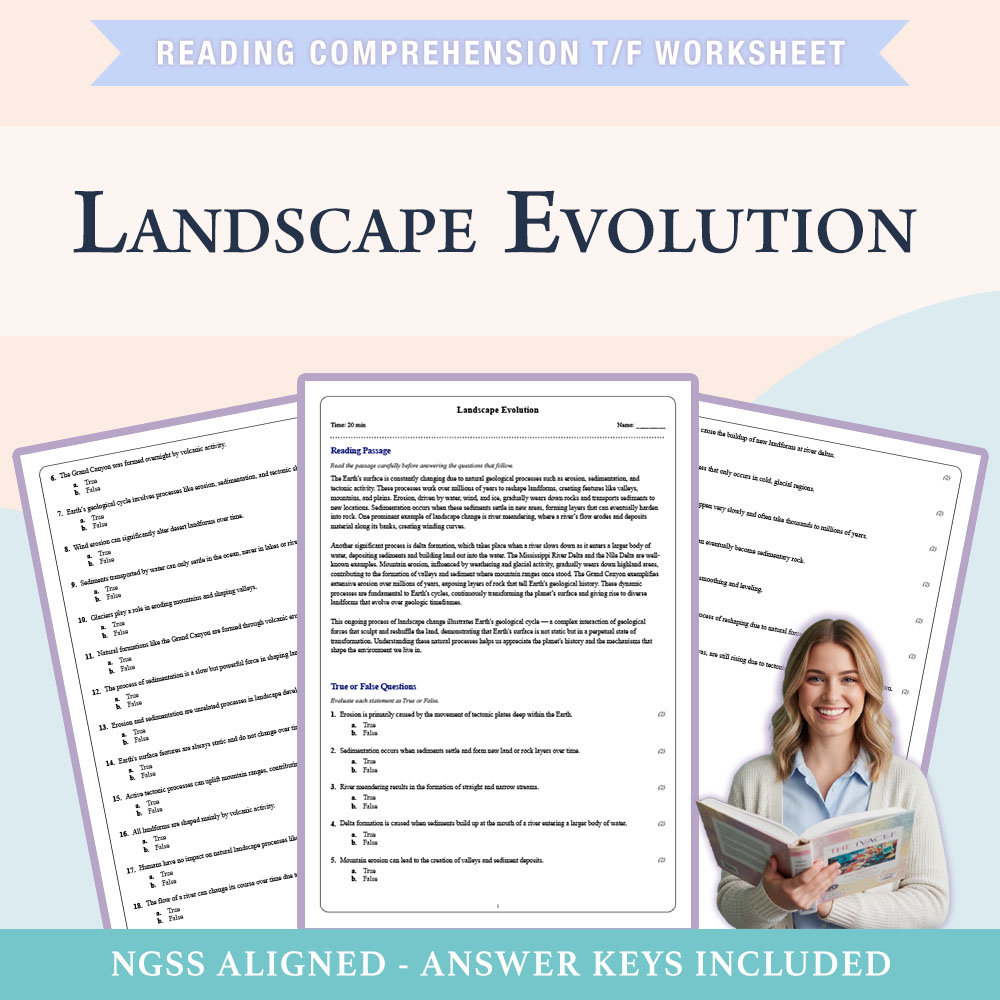
Grade 7 Science | Landscape Evolution Worksheet (PDF +Answer Key)
 Created byCopper Leaf Classroom
Learning Objectives
- Understand how erosion and sedimentation shape Earth's landscapes over time
- Identify processes such as river meandering, delta formation, and mountain erosion
- Connect landscape changes to Earth's geological cycle
Instant download

Saturation Concepts Worksheet Pack | Grade 7 Science Activities
Created byPrism Point LearningLearning Objectives
- Explain what it means for a solution to be saturated at a specific temperature and pressure
- Describe how solubility limits determine whether solute stays dissolved or forms a solid
- Differentiate saturated and supersaturated conditions and predict what happens when conditions change
Instant download
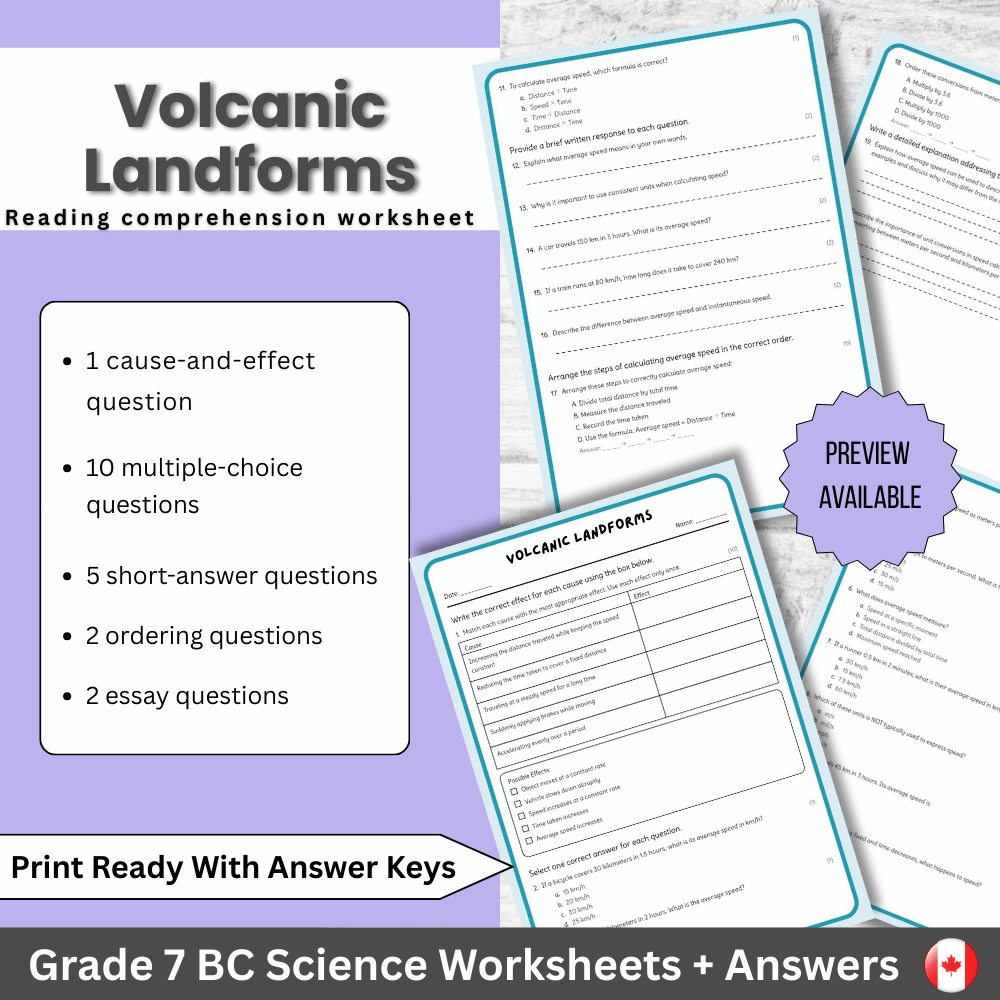
Grade 7 Science | Volcanic Landforms Worksheet (Answer Key) – BC Standards
Created byBright Mind ResourcesLearning Objectives
- Describe how different magma compositions influence the types of volcanic landforms.
- Identify various volcanic landforms and their formation processes.
- Explain the tectonic settings where volcanic activity occurs, such as subduction zones and hotspots.
Instant download
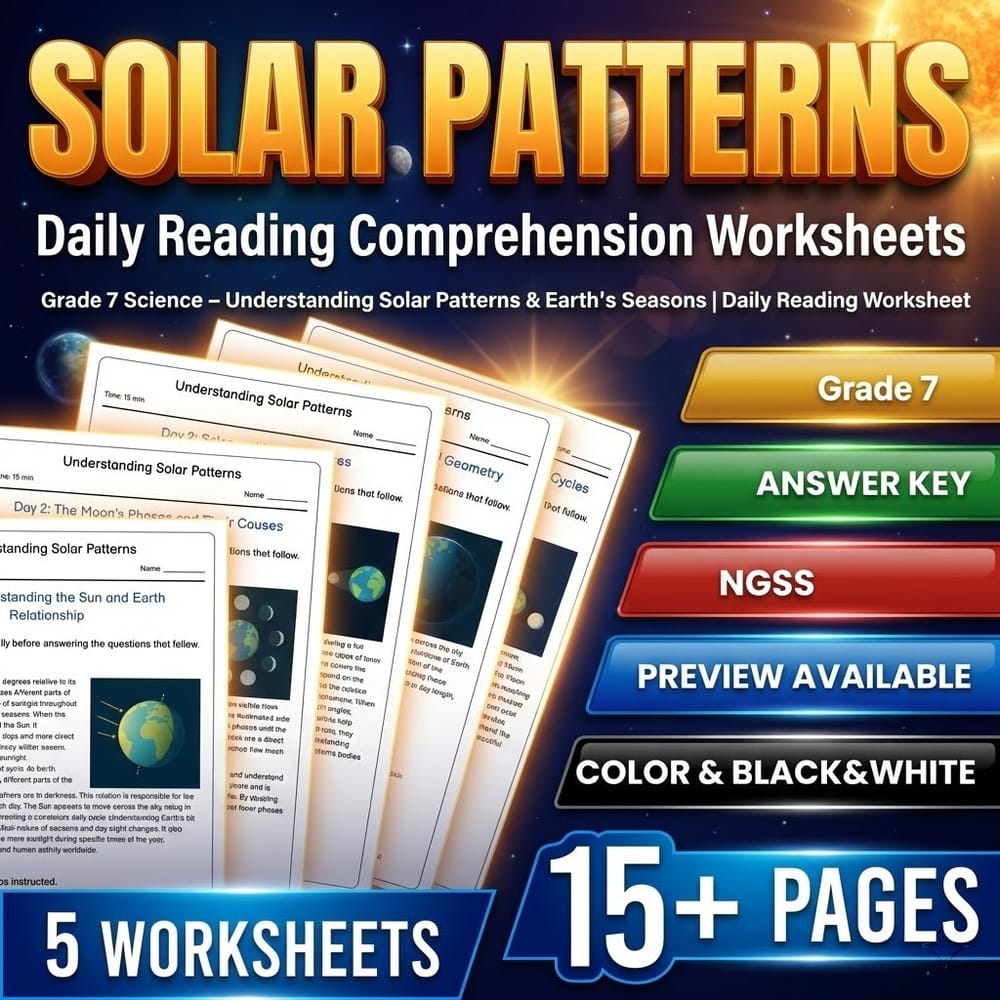
Grade 7 Science – Solar Patterns & Earth's Seasons | Daily Reading Worksheet
 Created byElena Brooks
Learning Objectives
- Identify how Earth's axial tilt influences sunlight distribution and seasons.
- Describe the relationship between Earth's rotation and day-night cycles.
- Explain the cyclic patterns of lunar phases and their connection to the Sun-Earth-Moon system.
Also included in: Earth's Place in the Universe Grade 7 Science Worksheets Bundle | NGSS +1 more
Instant download
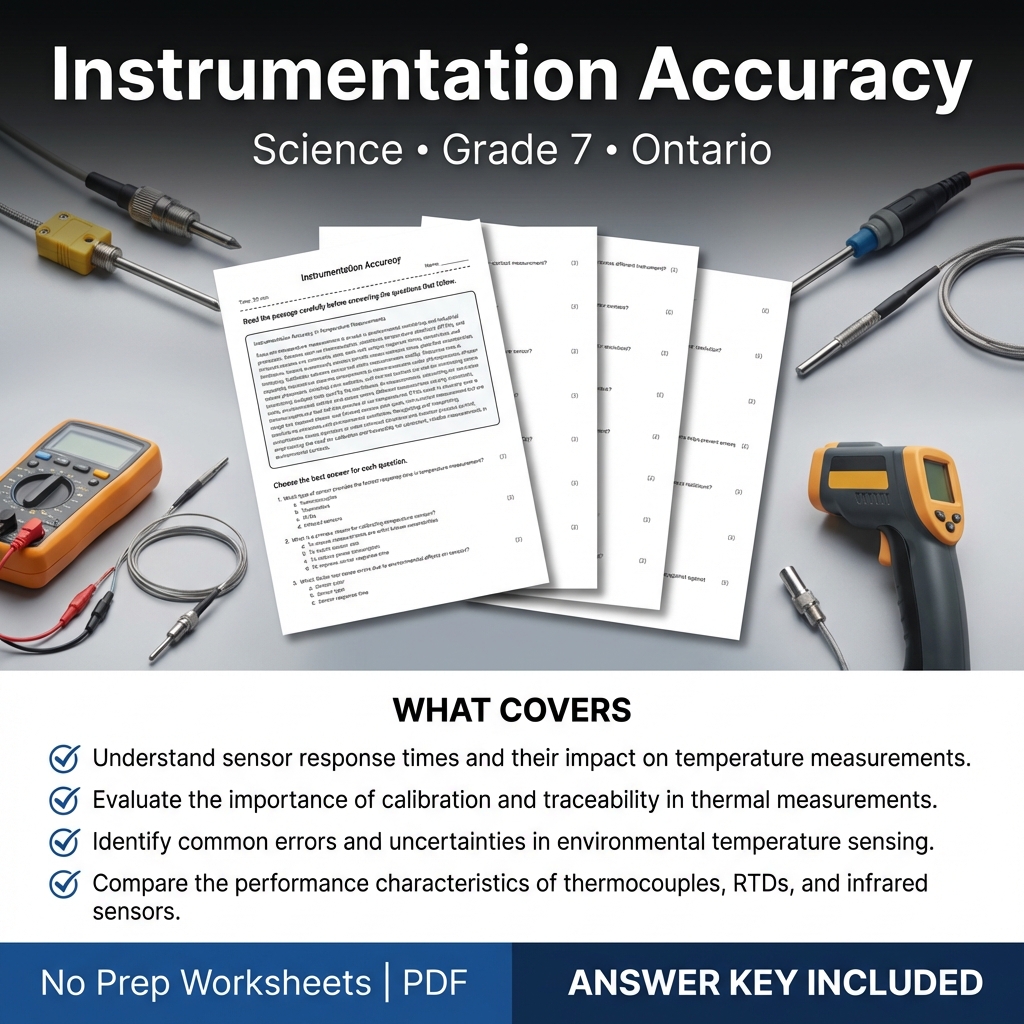
Instrumentation Accuracy Worksheet | Grade 7 Science | Ontario Standards
Created byCoral Reef LearningLearning Objectives
- Understand sensor response times and their impact on temperature measurements.
- Evaluate the importance of calibration and traceability in thermal measurements.
- Identify common errors and uncertainties in environmental temperature sensing.
Instant download

Measurement Uncertainty & Significant Figures Worksheets Grade 7
Created byPrism Point LearningLearning Objectives
- Identify standard units and appropriate measuring instruments
- Read instrument scales using correct significant figures
- Distinguish random error from systematic error
Also included in: Scientific Inquiry & Data Practices Lesson Bundle | Grade 7 Science | Ontario +1 more
Instant download

Grade 7 Science | Argumentation Models Worksheet (TEKS) PDF
 Created byEvergreen Desk Education
Learning Objectives
- Construct evidence-based arguments using a clear structure of claim, evidence, and reasoning (CER).
- Critique arguments by checking whether evidence matches the claim and whether reasoning is logically supported by science principles.
- Use quantitative results and graphical information to compare models and evaluate hypotheses.
Instant download

Properties & Classification Worksheet Pack | Grade 7 Science Activities
Created byPrism Point LearningLearning Objectives
- Define physical and chemical properties and explain how they help classify substances.
- Identify elements, compounds, and mixtures using measurable properties such as density, solubility, hardness, conductivity, magnetism, and flammability.
- Use observable evidence from property tests to justify classifications.
Also included in: Grade 7 Matter, States, and Reactions in Science Lesson Bundle TEKS
Instant download

Connection Design Worksheet | Ontario Grade 7 Science Assessment
 Created byCedar Grove Learning
Learning Objectives
- Explain how connections and joints help maintain continuous load paths in structures.
- Compare bolted, welded, and bearing connections in terms of load transfer and redundancy.
- Describe shear, bearing, and slip at connections and how detailing can affect structural capacity.
Also included in: Grade 7 Materials Testing & Prototyping Science Lesson Bundle – Ontario +1 more
Instant download

Grade 7 Science Design Thinking Fundamentals Worksheet | Ontario Standards
JCreated byJ.S SheetsLearning Objectives
- Explain how engineering design thinking begins with problem definition and the use of criteria and constraints.
- Write measurable specifications and use trade-off matrices to compare conceptual solutions.
- Evaluate feasibility using materials, cost, and environmental factors, then justify iterative selection of a solution.
Instant download

Variable Control Assessment | TEKS Grade 7 Science Standards
Created byPrism Point LearningLearning Objectives
- Understand the importance of controlling variables in scientific experiments
- Identify different types of variables and methods to manage them
- Explain the concepts of control groups, replication, and randomization in experiments
Also included in: Scientific Inquiry Reasoning Grade 7 Science Lesson Bundle TEKS Unit
Instant download

Balanced Forces Worksheet for Grade 7 Science | Standards-Aligned Practice
JCreated byJ.S SheetsLearning Objectives
- Understand the concept of equilibrium and static balance in structures.
- Identify how forces act in pairs to produce balanced configurations.
- Differentiate between static and dynamic equilibrium through graphical and qualitative representations.
Instant download

Grade 7 Science | Rock Cycle - Daily Reading Comprehension
Created byCoral Reef LearningLearning Objectives
- Understand how igneous rocks form from cooled magma.
- Identify the processes involved in the formation of igneous rocks.
- Recognize the appearance and characteristics of igneous rocks.
Instant download

Grade 7 Statistical Reasoning Worksheet | Data Analysis & Science Skills
 Created byChalk and Compass
Learning Objectives
- Explain how mean, median, and mode describe the center of a data set
- Use interquartile range and variance to describe spread and consistency
- Interpret outliers and small-sample limitations in comparative contexts
Also included in: Grade 7 Science Scientific Inquiry & Data Analysis Lesson Bundle | Ontario +1 more
Instant download
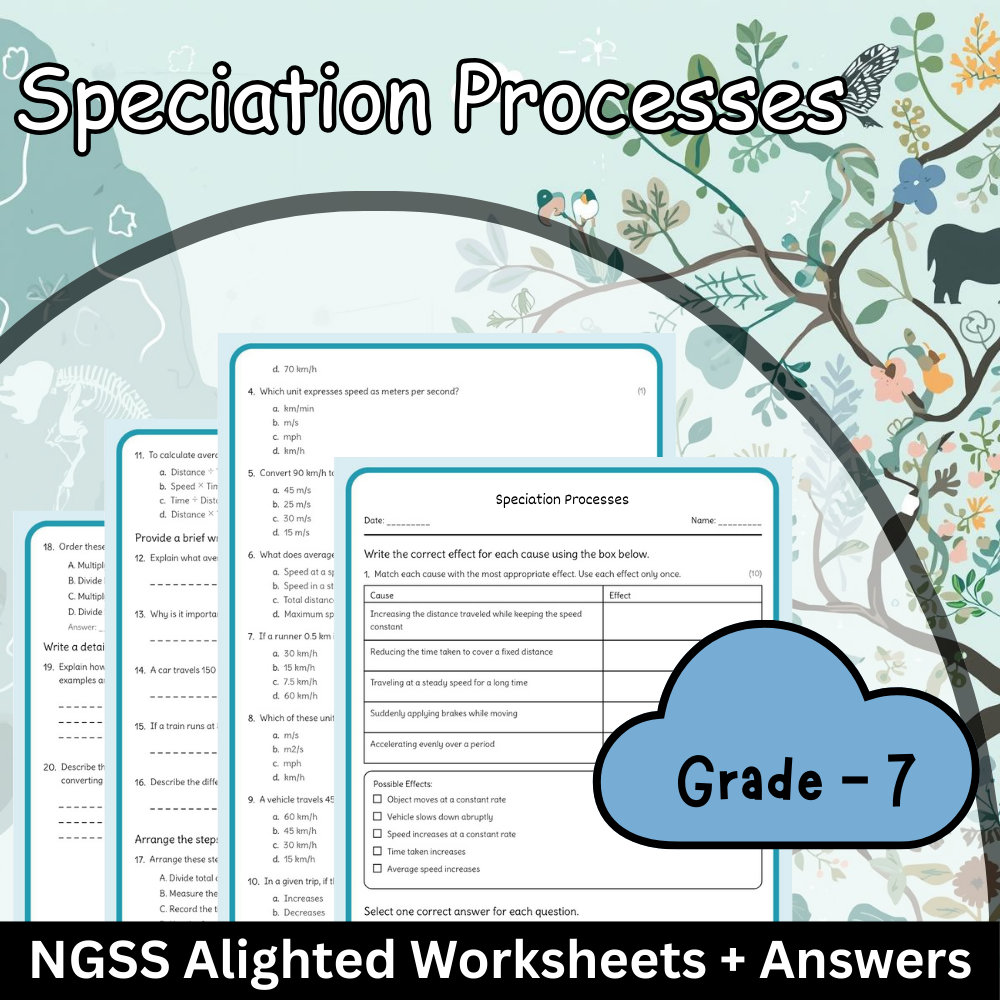
Grade 7 Science | Speciation Processes Worksheet (Answer Key) NGSS Aligned
Created byBright Mind ResourcesLearning Objectives
- Understand the main mechanisms that lead to speciation and biodiversity.
- Identify examples of reproductive barriers, geographic separation, and adaptive radiation.
- Explain how various factors influence the formation of new species over time.
Instant download

Grade 7 Science – Adaptation Functions Worksheet (PDF)
Created byEvergreen Desk EducationLearning Objectives
- Explain how structural, behavioral, and functional adaptations support specific life processes in organisms.
- Describe trade-offs and how improving one function can reduce performance in another.
- Connect adaptations (form) to their roles in survival, feeding, protection, and reproduction.
Also included in: Grade 7 Ecosystem Energy Flows Science Lesson Bundle - General Framework +1 more
Instant download

Grade 7 Science | Climate Drivers Over Time - Daily Reading Comprehension
Created byCoral Reef LearningLearning Objectives
- Understand how natural records like ice cores provide evidence of past climate conditions.
- Identify different natural indicators used to assess historical climate changes.
- Learn about the impact of long-term climate drivers on Earth's energy balance and circulation.
Instant download

Grade 7 Science: Chemical Properties Worksheet (Ontario Standards, PDF)
Created byEvergreen Desk EducationLearning Objectives
- Explain how chemical properties describe what happens to substances during chemical changes
- Identify chemical property evidence such as gas production, color change, and precipitate formation
- Relate reactivity with acids/bases, combustion/oxidation, corrosion tendencies, and pH changes to material suitability and separation choices
Also included in: Grade 7 Substances and Mixtures Science Lesson Bundle Worksheet (Ontario) +1 more
Instant download
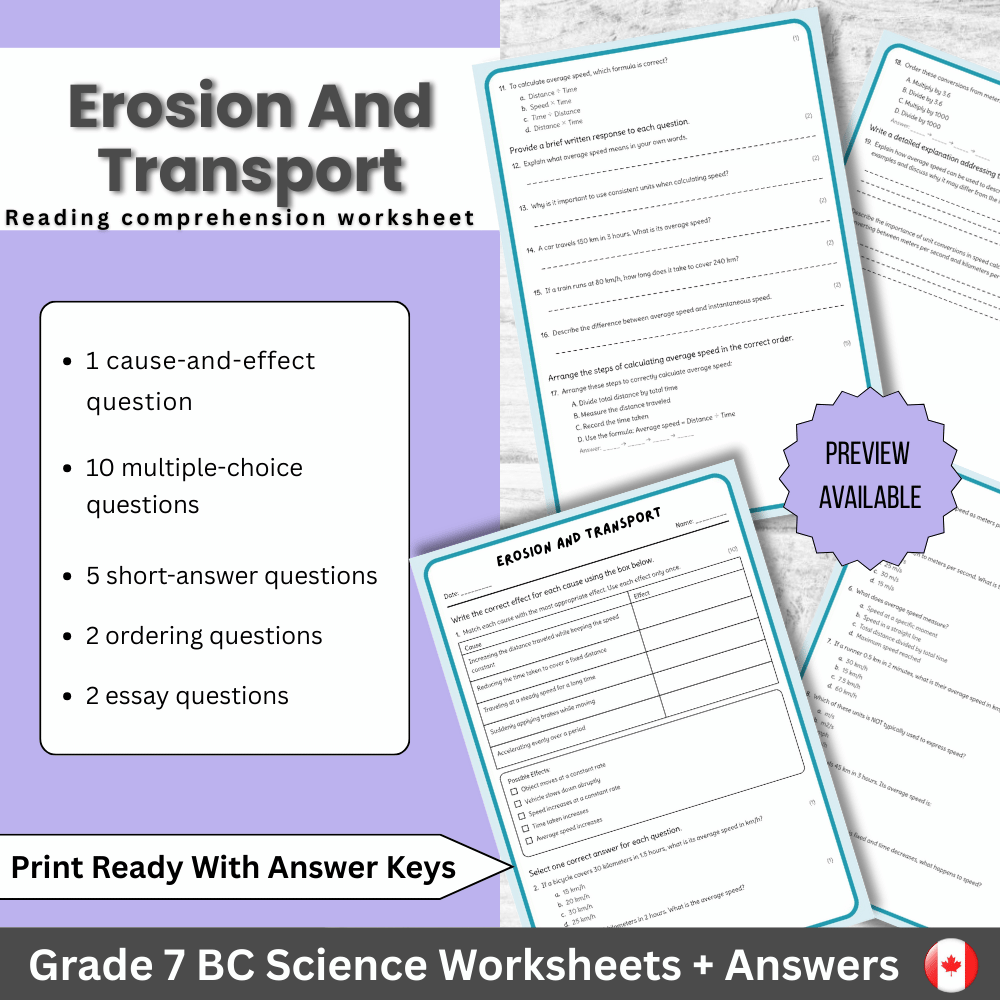
7th Grade Science | Erosion and Transport Worksheet (Answer Key) - BC Standards
Created byBright Mind ResourcesLearning Objectives
- Understand how agents like water, glaciers, wind, and gravity erode and transport sediment.
- Identify the distinctive signatures produced by different erosion and transport agents.
- Analyze landscape features formed by erosion and sediment transport processes.
Instant download

Freshwater Stratification Worksheets: Seasonal Turnover Grade 7 Science
Created byPrism Point LearningLearning Objectives
- Describe how light and dissolved oxygen change with freshwater depth
- Explain how seasonal thermal turnover affects nutrient mixing
- Predict vertical zonation from abiotic gradients in standing freshwater
Also included in: Interactions in the Environment Lesson Bundle | Grade 7 Science | Ontario +1 more
Instant download
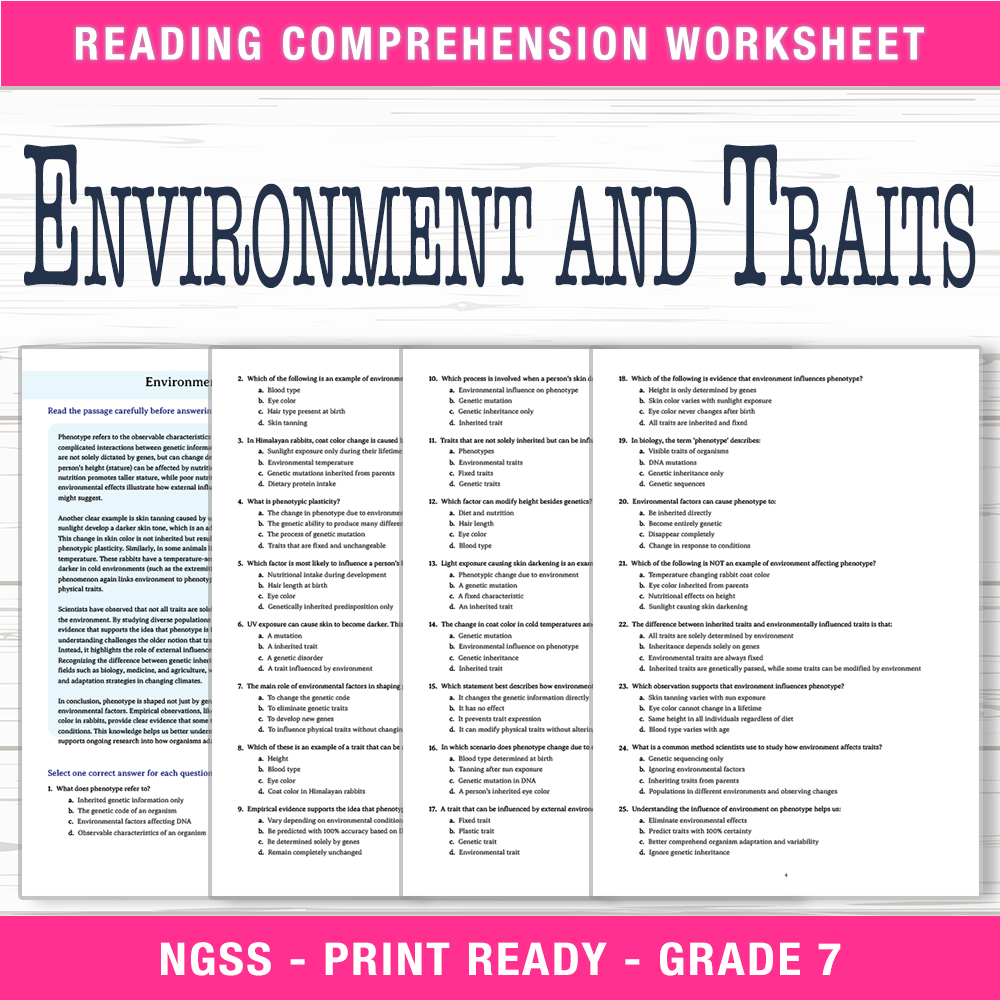
Grade 7 Science | Environment and Traits Worksheet (PDF + Answer Key)
 Created byRiverstone Classroom
Learning Objectives
- Explain how phenotype results from interactions between genetic makeup and environmental factors.
- Identify examples of traits influenced by external environmental conditions.
- Distinguish between inherited genetic traits and environmentally modulated traits.
Instant download
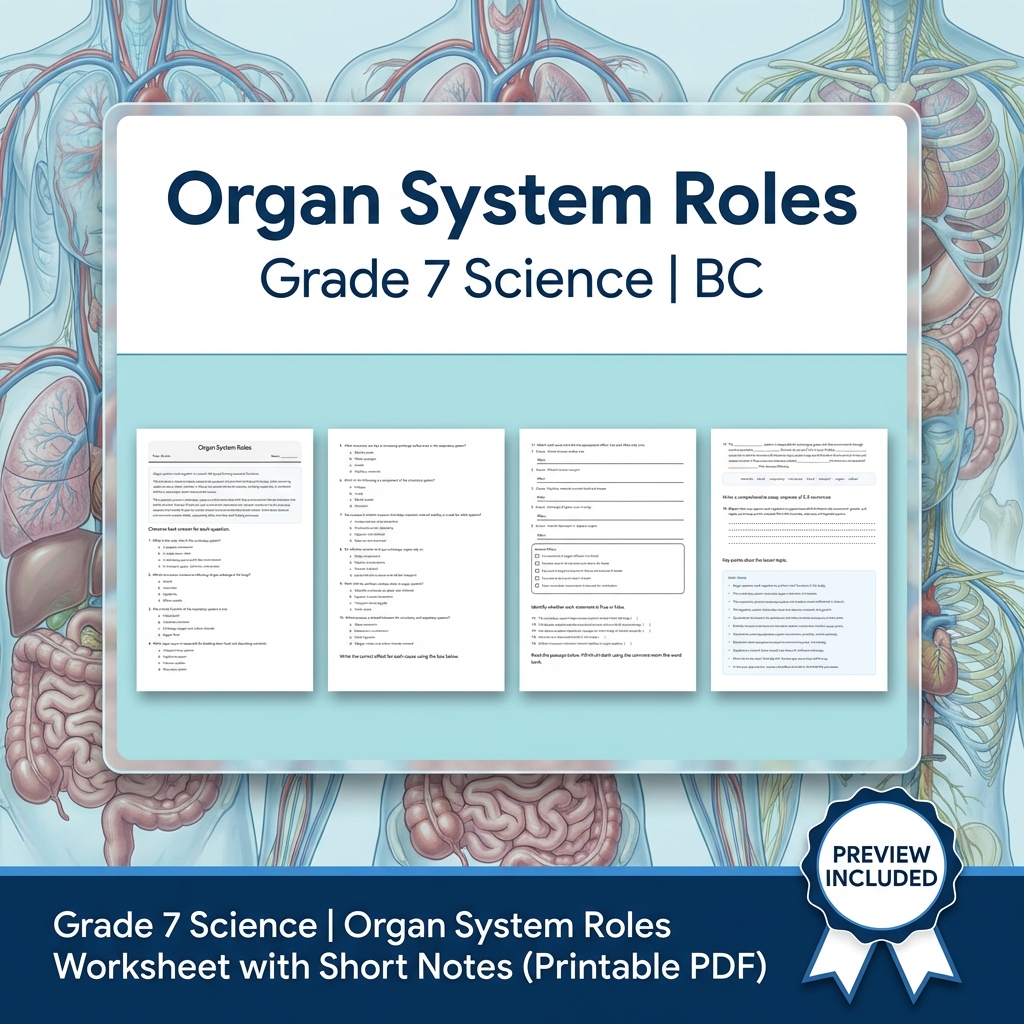
Grade 7 Science | Organ System Roles Worksheet with Short Notes (Printable PDF)
Created byMeadowlark WorksheetsLearning Objectives
- Describe the functions of major organ systems involved in circulation, respiration, and digestion.
- Explain how tissues and organs coordinate within organ systems to maintain life processes.
- Identify specialized structures like capillaries and alveoli that increase exchange efficiency.
Also included in: Grade 7 Science Lesson Bundle | Cell Structures & Functions Worksheets +1 more
Instant download
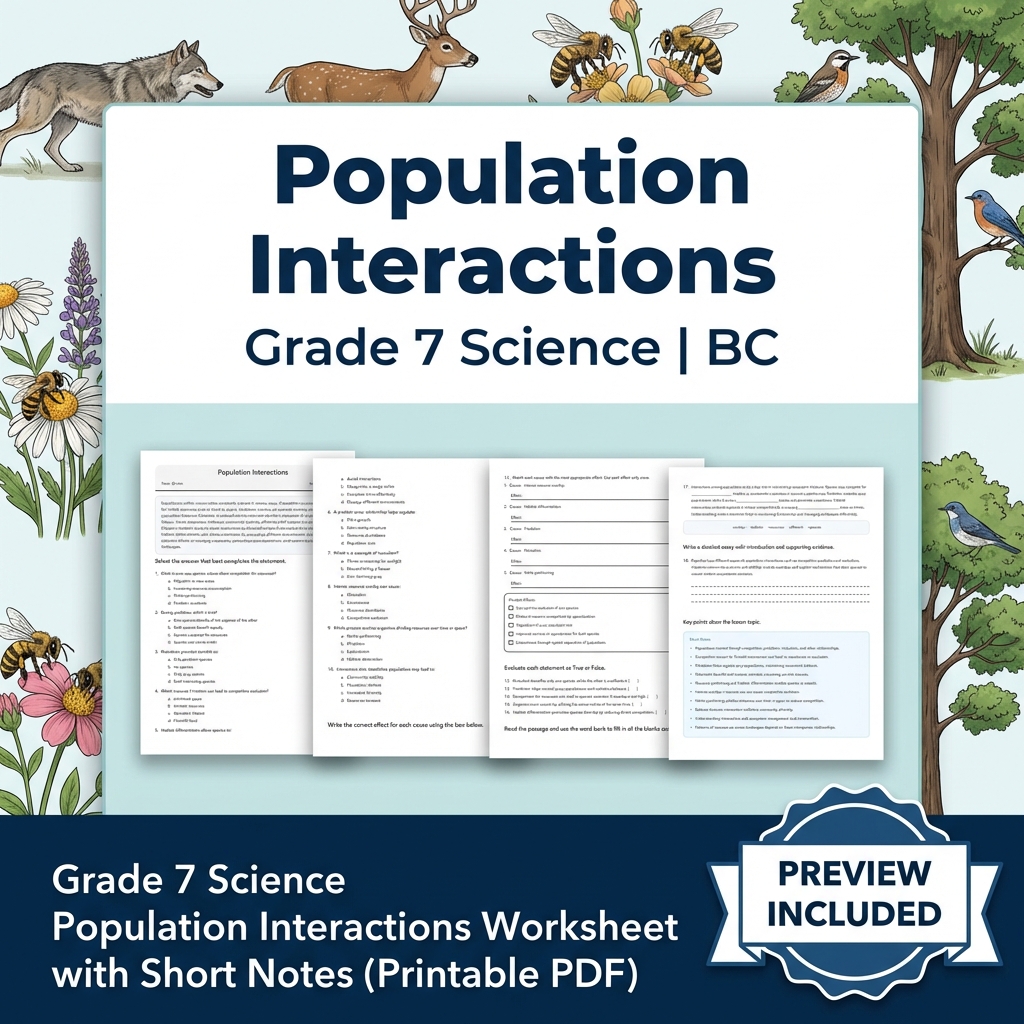
Grade 7 Science Population Interactions Worksheet with Short Notes (PDF)
Created byMeadowlark WorksheetsLearning Objectives
- Describe the different types of population interactions such as competition, predation, and mutualism.
- Explain how resource competition affects community composition and population dynamics.
- Identify mechanisms like niche partitioning and habitat differentiation that allow species to coexist.
Also included in: Grade 7 Science Lesson Bundle: Ecosystems and Population Dynamics Worksheets +1 more
Instant download

Grade 7 Science – Biodiversity Measures & Indices | Daily Reading Worksheet
Created byBright Mind ResourcesLearning Objectives
- Understand the concept of biodiversity and its different types
- Identify methods used to measure biodiversity such as richness, evenness, and habitat heterogeneity
- Explain the significance of biodiversity indices in assessing ecosystem health
Also included in: Grade 7 Ecosystems Science Lesson Bundle for Daily Reading Worksheets | Alberta +2 more
Instant download

Landscape Evolution Practice Worksheet | Grade 7 Science Assessment
Created byPrism Point LearningLearning Objectives
- Explain how tectonic uplift and volcanic construction contribute to changes in Earth’s landscapes over time.
- Describe how surface processes such as weathering, erosion, and deposition redistribute materials.
- Compare how changes in uplift versus erosion affect whether topography increases or decreases.
Also included in: Earth's Systems & Processes Lesson Bundle | Grade 7 Science | BC +1 more
Instant download
About Grade 7 Science Worksheets
Browse 6,039 printable Grade 7 Science worksheets — ready-to-print PDFs with answer keys where available.
Every worksheet on MyTeachingSheets is created by independent teacher-authors and reviewed before publication. All resources download as printable PDFs for classroom, homework, or at-home practice, and many include answer keys. Preview any worksheet free before buying.