
Science Worksheets
44,773 subject resources
Grade 10 Science – Energy Currency in Cells | Daily Reading Worksheet
 Created byBright Mind Resources
Learning Objectives
- Understand the role of ATP as the main energy carrier in cells.
- Describe how ATP stores and releases energy.
- Explain the processes of oxidative phosphorylation and photophosphorylation.
Also included in: Grade 10 Energy in Biological Systems Science Daily Reading Lesson Bundle | TEKS +2 more
Instant download

Grade 10 Science – Energy Currency Daily Reading Worksheet with Answer Key
JCreated byJ.S SheetsLearning Objectives
- Understand the role of ATP in energy transfer within cells.
- Identify how ATP couples various cellular reactions.
- Describe how ATP is regenerated in cells.
Also included in: Grade 10 Science Lesson Bundle: Photosynthesis & Cellular Respiration TEKS +1 more
Instant download
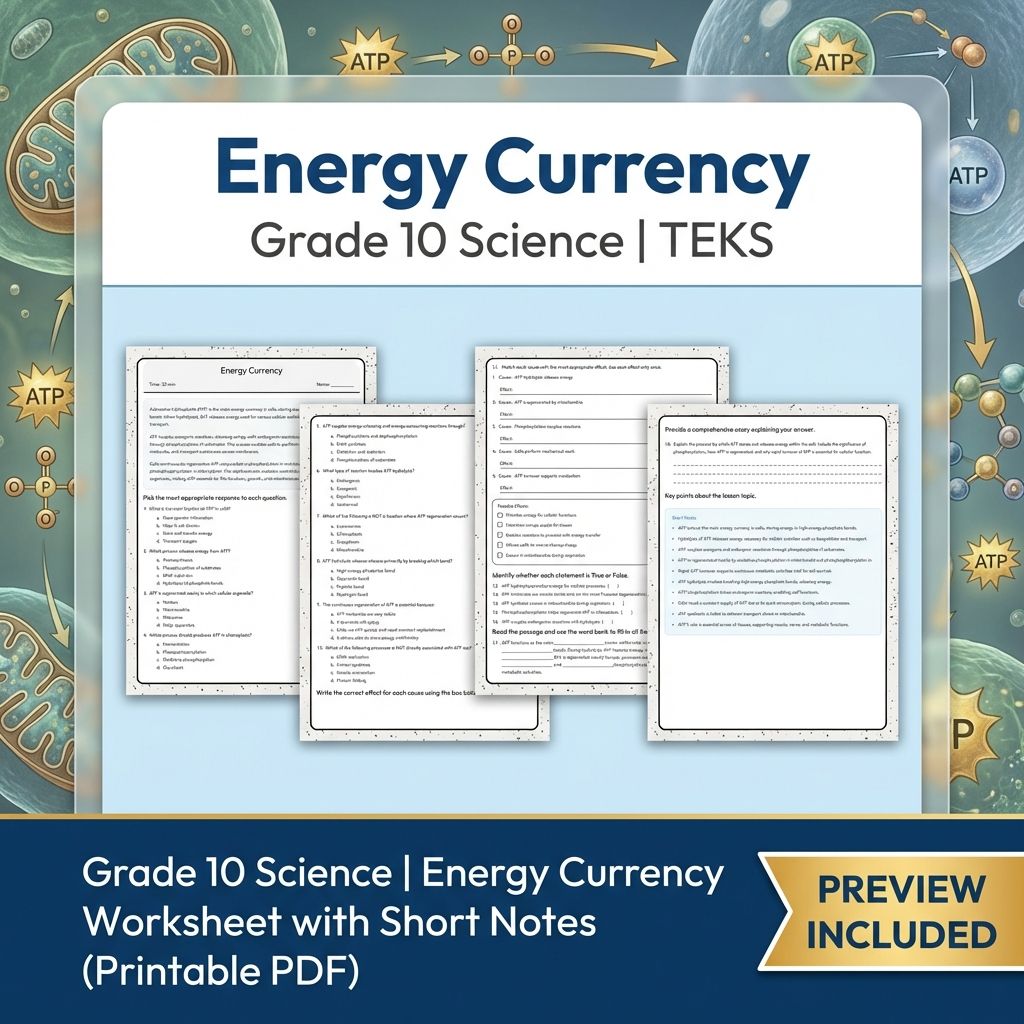
Grade 10 Science | Energy Currency Worksheet with Short Notes (Printable PDF)
 Created byMeadowlark Worksheets
Learning Objectives
- Understand the role of ATP as the primary energy carrier in cells.
- Describe how ATP couples exergonic and endergonic reactions through phosphorylation.
- Explain the processes of ATP synthesis via oxidative phosphorylation and photophosphorylation.
Instant download

Grade 10 Science | Energy Currency Worksheet (PDF) TEKS Aligned
 Created byEvergreen Desk Education
Learning Objectives
- Explain how ATP stores and releases usable energy through high-energy phosphate bonds and hydrolysis
- Describe how ATP couples exergonic and endergonic reactions during phosphorylation of substrates
- Compare how ATP is regenerated through oxidative phosphorylation and photophosphorylation
Instant download
Grade 10 Science | Energy Currency Worksheet (Answer Key) – TEKS Aligned
Created byBright Mind ResourcesLearning Objectives
- Understand the role of ATP as the primary energy carrier in cells.
- Identify processes involved in ATP regeneration such as phosphorylation.
- Explain how ATP couples exergonic and endergonic reactions to support cellular functions.
Also included in: Grade 10 Science Unit Bundle – Photosynthesis, Respiration & Energy TEKS +5 more
Instant download

ATP as the Cellular Energy Currency Worksheet | Grade 10 TEKS Science
 Created byBRIGHT PATH RESOURCES
Learning Objectives
- Describe what adenosine triphosphate (ATP) is and what it does in cells
- Explain why ATP is considered an energy currency
- Summarize how ATP can release energy to power cellular processes
Also included in: Grade 10 Metabolism & Energy Processes Science Worksheets Bundle | TEKS +1 more
Instant download
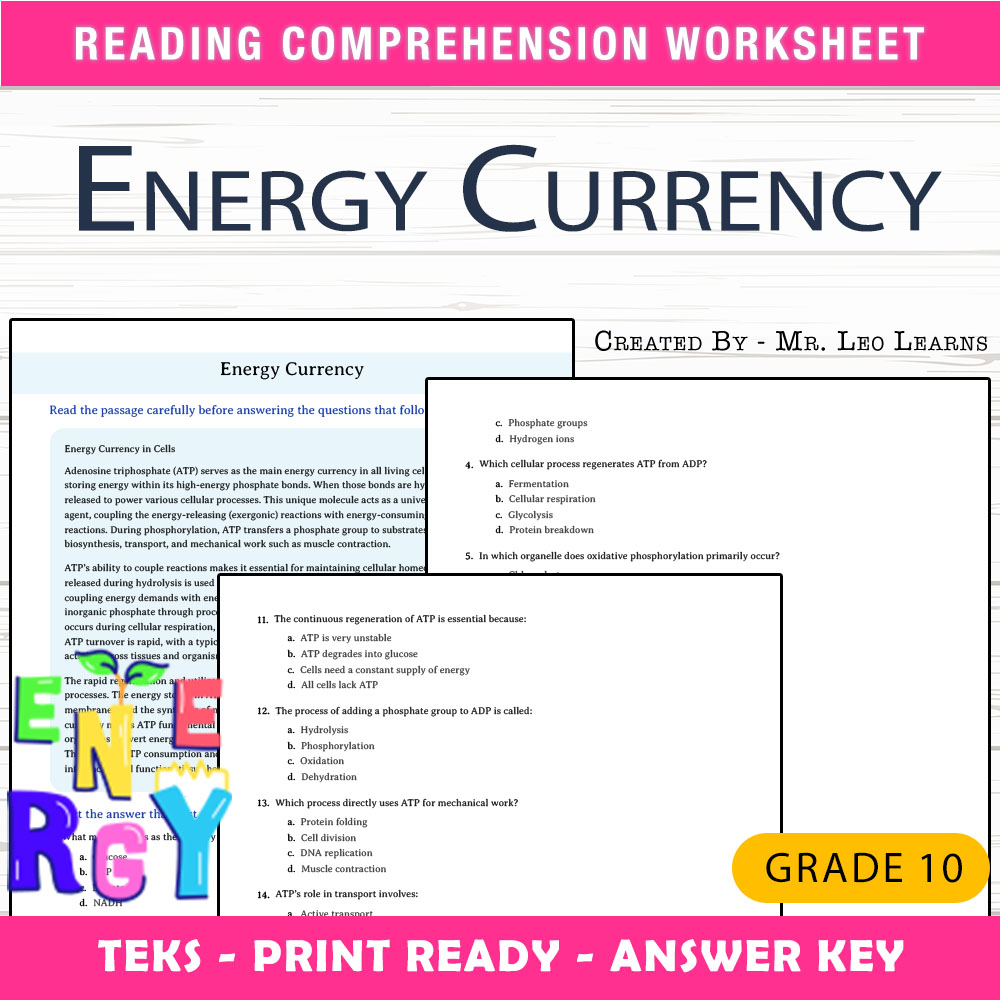
Grade 10 Science – Energy Currency Worksheet for Mastering ATP
 Created byThe Resource Hub
Learning Objectives
- Understand the role of ATP as the primary energy carrier in cells.
- Describe how ATP couples exergonic and endergonic reactions through phosphorylation.
- Explain the processes of ATP regeneration via cellular respiration.
Also included in: Grade 10 Science Unit Bundle | Energy, Photosynthesis & Cellular Respiration +1 more
Instant download

Energy Currency Worksheet | Grade 10 Science Activities
 Created byPrism Point Learning
Learning Objectives
- Explain how ATP stores and releases usable energy through phosphate bond hydrolysis.
- Describe how ATP couples exergonic and endergonic reactions via phosphorylation.
- Summarize how ATP is regenerated by cellular processes such as oxidative phosphorylation and photophosphorylation.
Also included in: Metabolism & Energy Processes Lesson Bundle — Grade 10 Science TEKS
Instant download
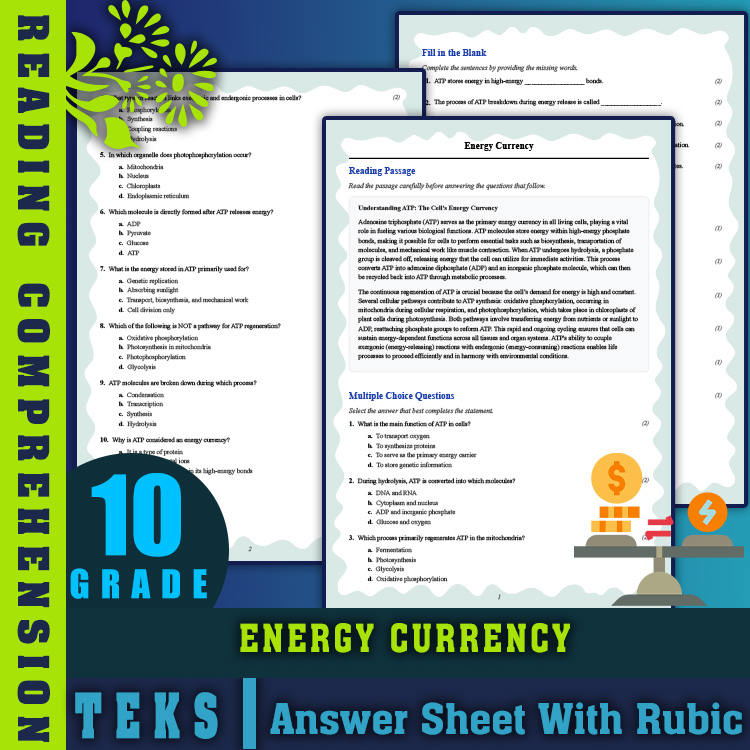
Grade 10 Science | Energy Currency Reading Worksheets (PDF + Answer Key)
JCreated byJ.S SheetsLearning Objectives
- Understand the role of ATP as the primary energy carrier in cells.
- Describe how ATP stores and releases energy during cellular processes.
- Explain how ATP is regenerated in cells through metabolic pathways.
Instant download
Grade 10 Science | Energy Currency Worksheet (PDF+ Answer Key)
 Created byCopper Leaf Classroom
Learning Objectives
- Describe the role of ATP as the primary energy carrier in cells.
- Explain how ATP couples exergonic and endergonic reactions via phosphorylation.
- Identify cellular processes that regenerate ATP, such as oxidative phosphorylation and photophosphorylation.
Instant download

Grade 10 Science | Energy Transfer in Cells - Daily Reading Comprehension
 Created byCoral Reef Learning
Learning Objectives
- Explain how ATP functions as the primary energy carrier in cells.
- Describe the process of ATP hydrolysis and energy release.
- Identify how ATP couples with cellular reactions to support life's processes.
Instant download

Grade 10 Science | Energy Currency Worksheet | TEKS-Aligned
 Created byLumora Learning
Learning Objectives
- Understand how ATP functions as the primary energy carrier within cells.
- Describe the processes of ATP hydrolysis and regeneration.
- Identify the roles of ATP in biosynthesis, transport, and mechanical work.
Also included in: Grade 10 Science | Metabolism & Energy Processes Lesson Bundle | TEKS Aligned +1 more
Instant download
Grade 10 Science Worksheet on Energy Currency | TEKS Aligned
Created byCoral Reef LearningLearning Objectives
- Understand the role of ATP as the primary energy carrier in cells.
- Describe how ATP couples energy release and usage in cellular processes.
- Identify the pathways responsible for ATP regeneration, such as oxidative and photophosphorylation.
Instant download

Energy Currency Assessment | TEKS Grade 10 Science Standards-Aligned
Created byPrism Point LearningLearning Objectives
- Understand how ATP functions as the primary energy carrier in cells.
- Describe the processes of ATP synthesis, including oxidative phosphorylation and photophosphorylation.
- Explain the role of ATP in coupling exergonic and endergonic reactions for cellular activities.
Instant download

Energy Currency Worksheet | TEKS-Aligned 10th Grade Science Practice
JCreated byJ.S SheetsLearning Objectives
- Explain how ATP stores and releases energy through hydrolysis of high-energy phosphate bonds
- Describe how ATP couples exergonic and endergonic reactions using phosphorylation
- Compare how ATP is regenerated through oxidative phosphorylation and photophosphorylation
Instant download
6th Grade Science | Energy Flow in Food Webs Worksheet (PDF+ Answer Key)
Created byCopper Leaf ClassroomLearning Objectives
- Understand the components and functions of food webs in ecosystems.
- Describe how energy flows through producers, consumers, and decomposers.
- Explain the concept of energy pyramids and trophic transfer efficiency.
Instant download

Energy Flow Worksheet | NGSS Grade 6 Science Practice for Mastery
JCreated byJ.S SheetsLearning Objectives
- Describe the components and structure of food webs, including producers, consumers, and decomposers.
- Explain how energy diminishes across trophic levels and the concept of energy pyramids.
- Understand the roles of photosynthesis and cellular respiration in energy transfer.
Also included in: Grade 6 Ecosystem Interactions Science Lesson Bundle Worksheet Set – NGSS +1 more
Instant download
6th Grade Science | Energy Flow Worksheet (PDF +Answer Key)
Created byCopper Leaf ClassroomLearning Objectives
- Describe how energy flows through and matter cycles within terrestrial and aquatic food webs.
- Identify the roles of producers, consumers, and decomposers in energy transfer and nutrient cycling.
- Interpret energy pyramids and understand trophic transfer efficiency.
Instant download

Grade 6 NGSS Energy Flow and Food Webs Science Worksheet with Notes
Created byBRIGHT PATH RESOURCESLearning Objectives
- Identify producers, herbivores, and carnivores within food webs.
- Understand the flow of energy from producers to consumers.
- Recognize roles of decomposers in nutrient recycling.
Also included in: Ecosystems Interactions Energy Dynamics Lesson Bundle | Grade 6 Science | NGSS +2 more
Instant download
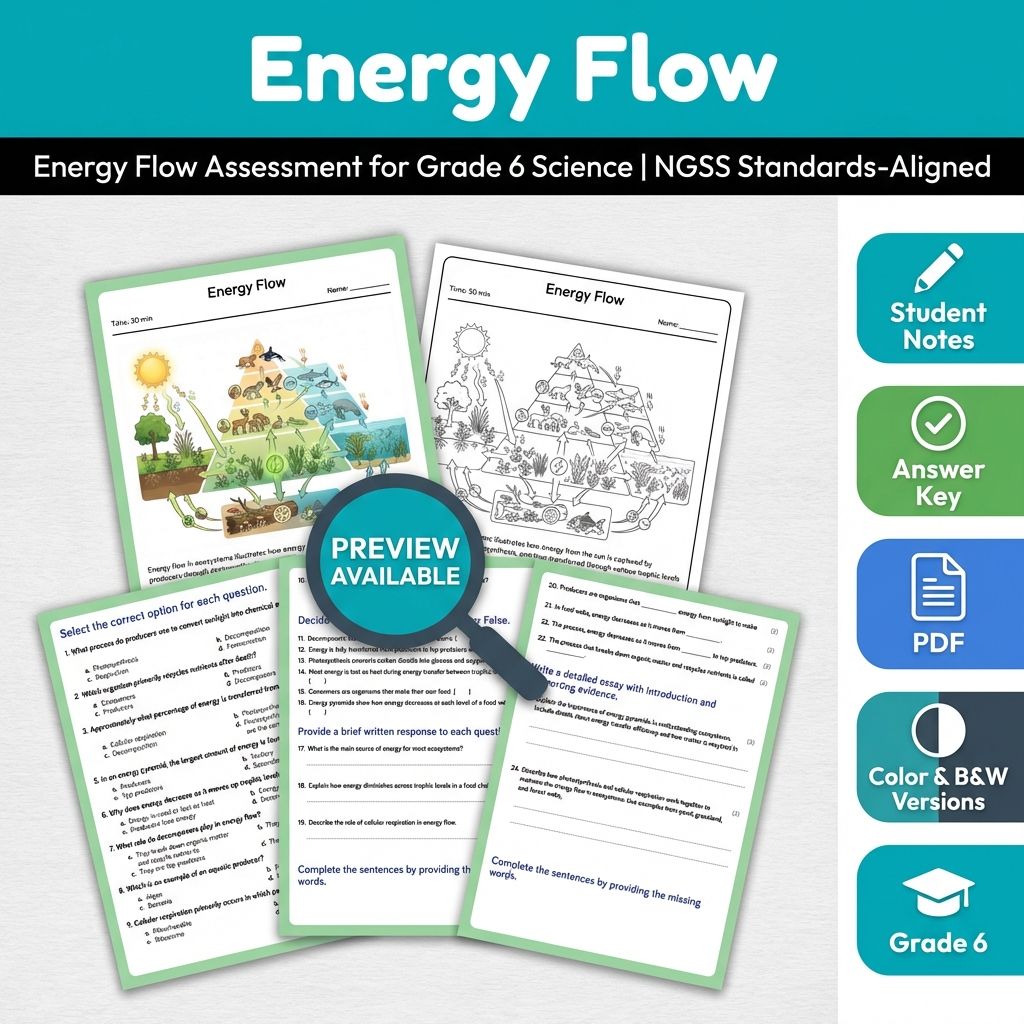
Energy Flow Assessment for Grade 6 Science | NGSS Standards-Aligned
Created byPrism Point LearningLearning Objectives
- Describe the components of food webs including producers, consumers, and decomposers.
- Explain the concept of energy pyramids and trophic transfer efficiency.
- Understand how photosynthesis and cellular respiration contribute to energy budgets.
Also included in: Grade 6 Science Mini Bundle | Ecosystems: Interactions, Energy, and Dynamics +1 more
Instant download

Energy Flow Worksheet | Grade 6 Science NGSS Practice & Assessment
Created byPrism Point LearningLearning Objectives
- Explain how energy moves through food webs from producers to consumers and finally to decomposers.
- Describe how matter cycles in ecosystems and how photosynthesis and cellular respiration support energy budgets.
- Use energy pyramids to predict how energy decreases at higher trophic levels.
Also included in: Grade 6 Species Interactions Science Lesson Bundle | NGSS
Instant download
Grade 6 Science – Energy Flow & Ecosystems | Daily Reading Worksheet
 Created byElena Brooks
Learning Objectives
- Understand the concept of energy transfer within food webs
- Identify the roles of producers, consumers, and decomposers
- Describe how energy diminishes across trophic levels
Also included in: Grade 6 Science Ecosystems Lesson Bundle | NGSS Interactions & Energy +1 more
Instant download

Energy Flow in Food Webs Worksheet | NGSS Grade 6 Science Assessment
 Created bySkylark Worksheets
Learning Objectives
- Explain how energy flows through trophic levels in pond, grassland, and forest food webs.
- Describe how photosynthesis and cellular respiration contribute to an energy budget in ecosystems.
- Compare how energy transfer efficiency changes from one trophic level to the next using energy pyramids.
Also included in: Grade 6 Ecosystems Lesson Bundle: NGSS Science Worksheets & Food Webs +1 more
Instant download

Grade 6 Energy Flow Worksheet | NGSS Practice PDF
 Created byClear Sky Classroom
Learning Objectives
- Understand the components of food webs, including producers, consumers, and decomposers.
- Explain how energy diminishes across trophic levels in an ecosystem.
- Describe the roles of photosynthesis and cellular respiration in energy transfer.
Also included in: Grade 6 Ecosystems Science Lesson Bundle for NGSS: Species, Energy, Biodiversity +1 more
Instant download
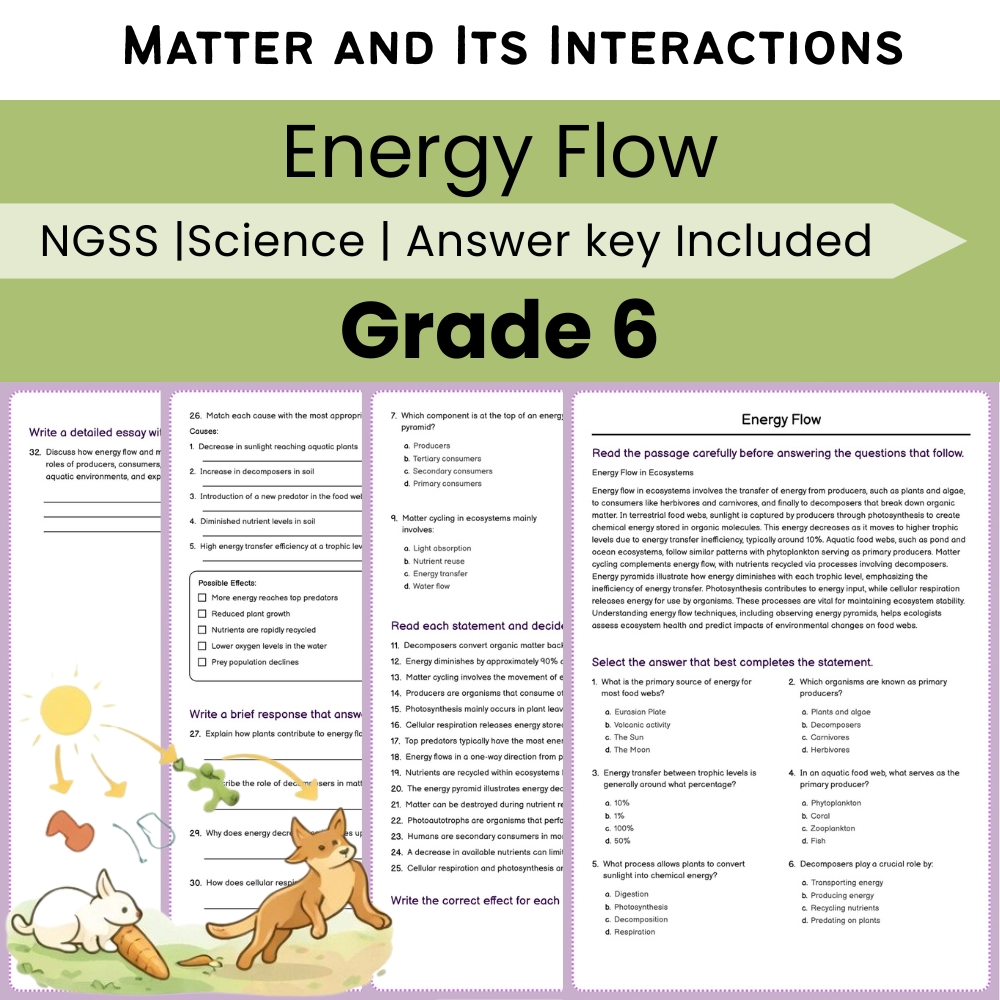
6th Grade Science | Energy Flow Worksheet (Printable PDF + Answer Key)
Learning Objectives
- Explain the components and flow of energy within terrestrial and aquatic food webs.
- Identify producers, consumers, and decomposers and their roles in ecosystems.
- Analyze energy pyramids and understand trophic transfer efficiency.
Also included in: Grade 6 Science | Ecosystems: Interactions, Energy & Dynamics NGSS Unit Bundle +1 more
Instant download
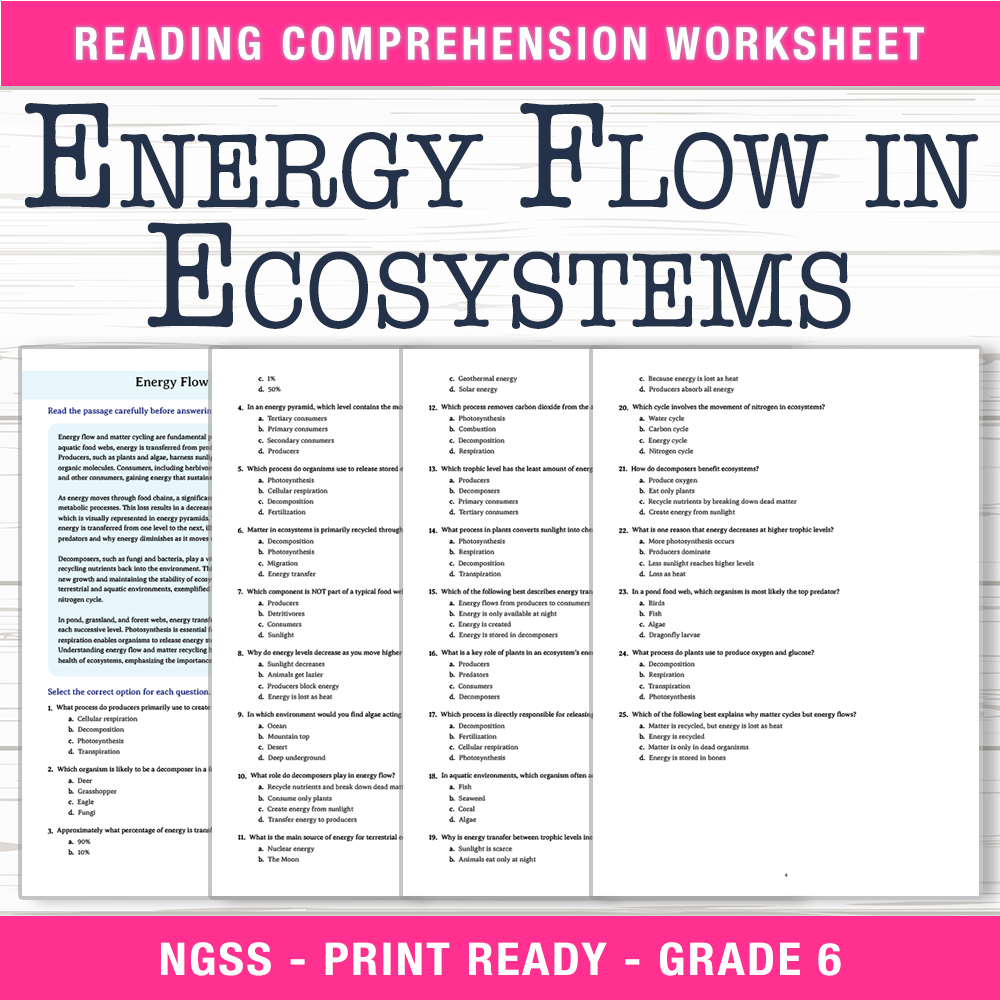
6th Grade Science | Energy Flow in Ecosystems Worksheet (PDF + Answer Key)
 Created byRiverstone Classroom
Learning Objectives
- Explain the concept of energy flow and matter cycling within food webs.
- Identify producers, consumers, and decomposers in terrestrial and aquatic ecosystems.
- Describe how energy diminishes across trophic levels in energy pyramids.
Also included in: Grade 6 Science Unit Bundle | Ecosystems & Biodiversity Worksheets
Instant download

Energy Flow Worksheet Grade 6 Science NGSS Food Webs Answer Key
 Created byNorthstar Worksheets
Learning Objectives
- Explain how energy moves through producers, consumers, and decomposers in food webs
- Describe how photosynthesis and cellular respiration help determine an ecosystem’s energy budget
- Use an energy pyramid idea and trophic transfer efficiency to predict how much energy remains at each trophic level
Also included in: Grade 6 Ecosystems Lesson Bundle | NGSS Science: Species, Energy & Biodiversity +1 more
Instant download
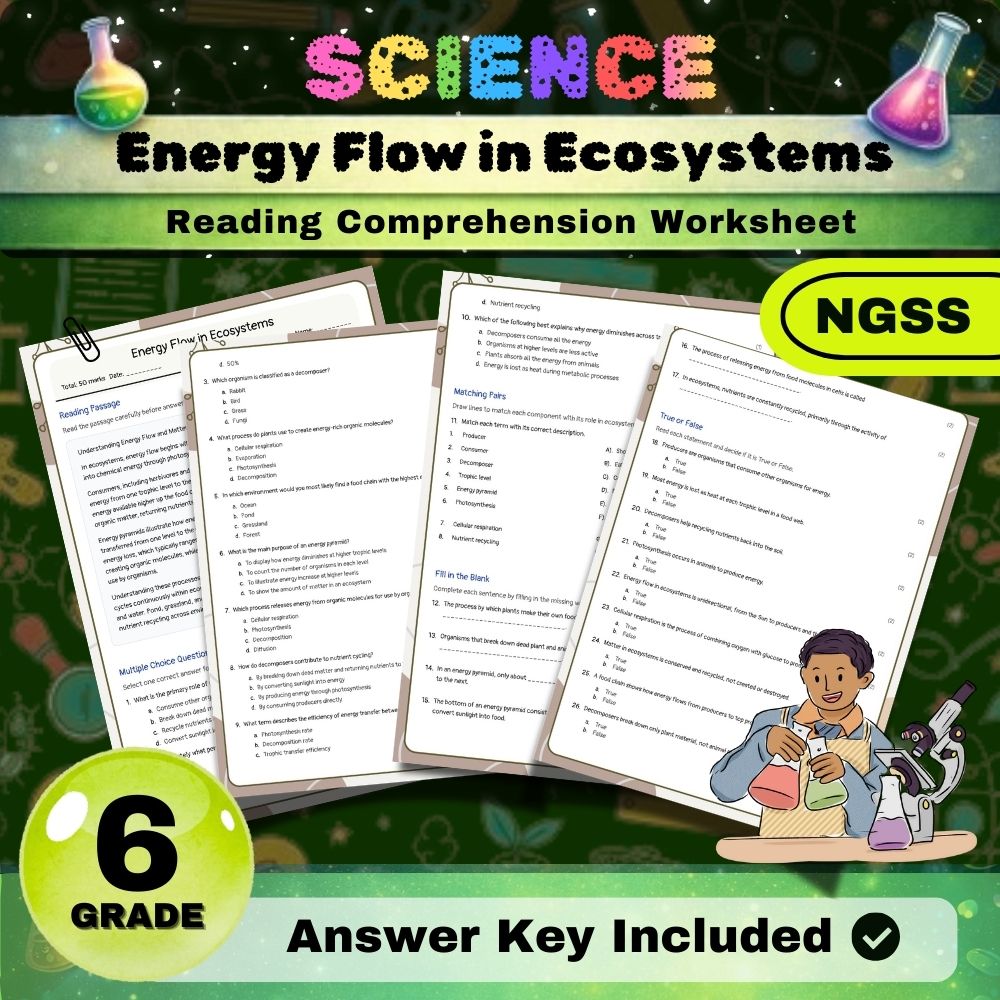
6th Grade Science | Energy Flow in Ecosystems Worksheet ( PDF ) NGSS
 Created byMaple Path Learning
Learning Objectives
- Explain how energy flows through food webs and food chains in terrestrial and aquatic ecosystems.
- Identify the roles of producers, consumers, and decomposers in energy and matter cycling.
- Interpret energy pyramids and understand trophic transfer efficiency.
Also included in: Grade 6 Science | Ecosystems & Biodiversity NGSS Worksheet Unit Pack +1 more
Instant download
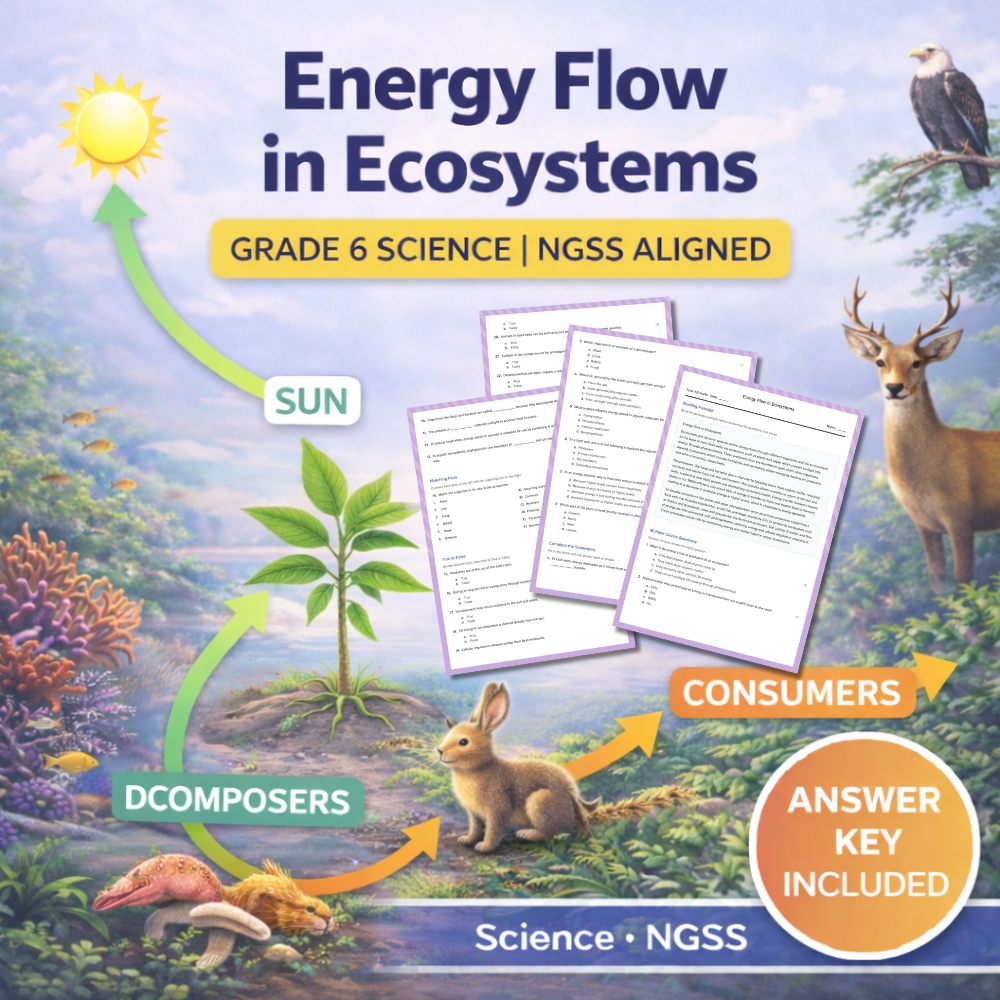
Grade 6 Science | Energy Flow in Ecosystems | NGSS (Worksheet + Answer Key)
 Created byCedar Grove Learning
Learning Objectives
- Describe the components of food webs and energy flow within terrestrial and aquatic ecosystems.
- Explain how energy diminishes across trophic levels in food pyramids.
- Identify the roles of producers, consumers, and decomposers in energy and matter cycling.
Also included in: Grade 6 Science | Ecosystem Interactions & Population Dynamics Worksheet Bundle +1 more
Instant download
Grade 6 Science | Energy Flow Worksheet – NGSS Standards (PDF)
Created byBright Mind ResourcesLearning Objectives
- Describe the components and structure of food webs in terrestrial and aquatic environments.
- Explain the role of producers, consumers, and decomposers in energy transfer and matter cycling.
- Interpret energy pyramids and understand trophic transfer efficiency.
Also included in: Grade 6 Science Unit Bundle | Ecosystems & Biodiversity NGSS Worksheets (PDF) +2 more
Instant download
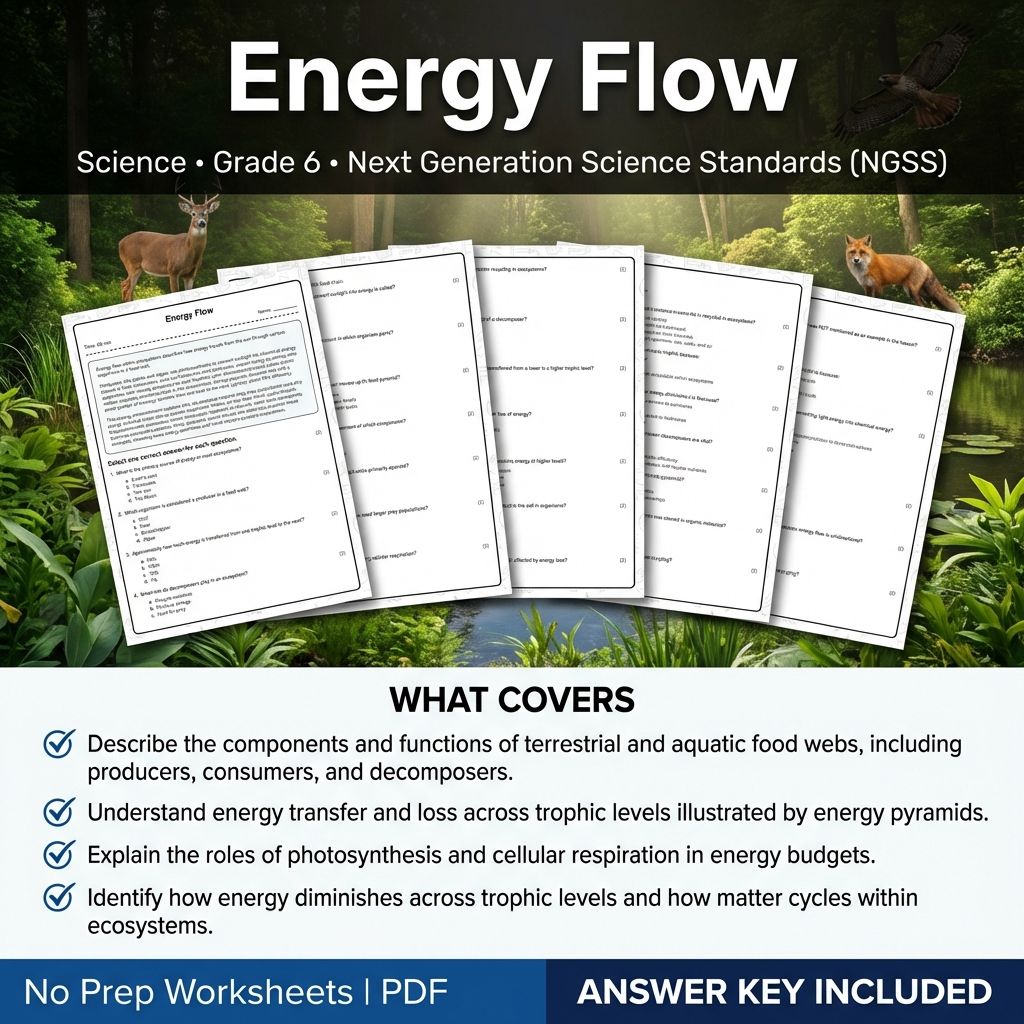
Grade 6 Science | Energy Flow Worksheet & Answer Key (Printable PDF)
Created byCoral Reef LearningLearning Objectives
- Describe the components and functions of terrestrial and aquatic food webs, including producers, consumers, and decomposers.
- Understand energy transfer and loss across trophic levels illustrated by energy pyramids.
- Explain the roles of photosynthesis and cellular respiration in energy budgets.
Instant download
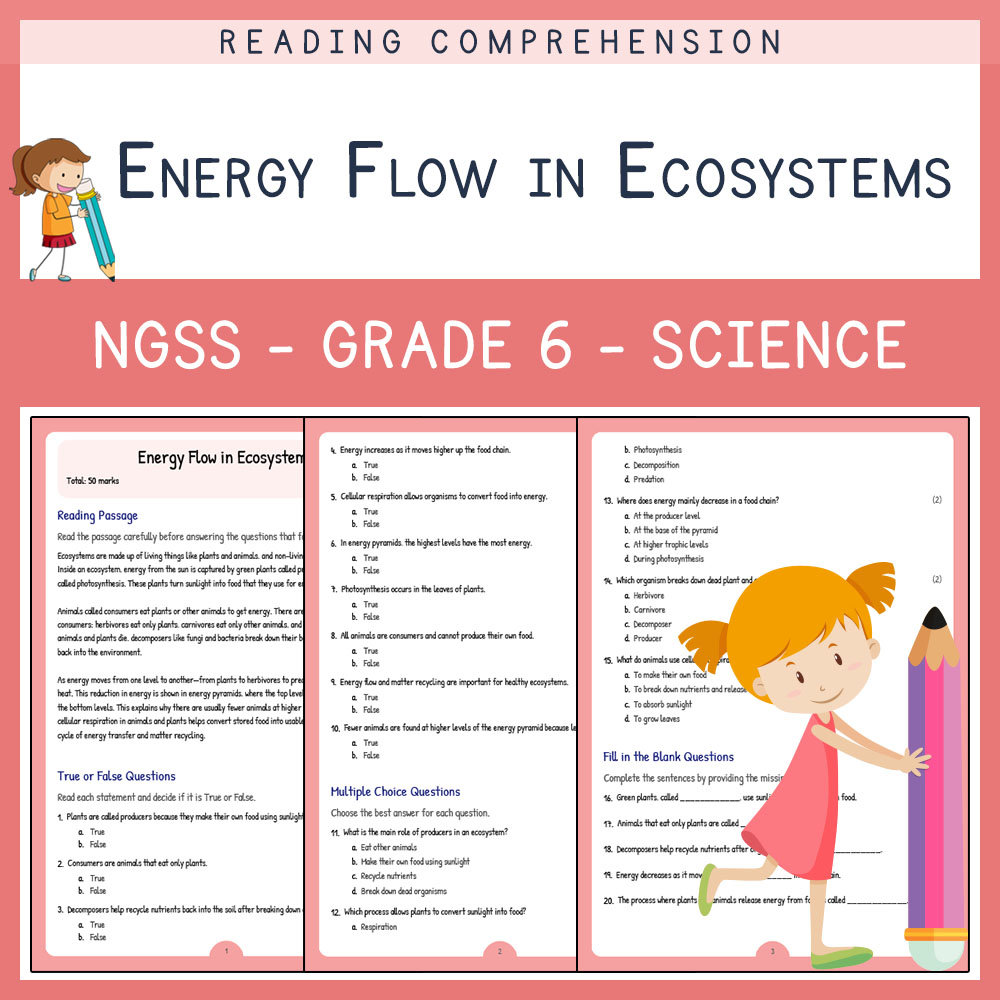
Grade 6 Science | Energy Flow in Ecosystems Worksheet (PDF) | NGSS Aligned
Created byLumora LearningLearning Objectives
- Understand the flow of energy through food webs in different ecosystems.
- Identify producers, consumers, and decomposers in food chains.
- Explain how energy diminishes at higher trophic levels.
Instant download

Energy Flow and Matter Cycling in Food Webs Worksheets Grade 6
 Created byTeachers Club
Learning Objectives
- Explain how photosynthesis and cellular respiration contribute to energy flow in food webs.
- Describe how energy decreases at each trophic level using an energy pyramid.
- Identify producers, consumers, and decomposers and explain their roles in matter cycling.
Also included in: Ecosystems Worksheets Grade 6 Science | NGSS Unit Bundle +2 more
Instant download

Energy Flow Worksheet & Doodle Notes | NGSS Grade 6 Ecosystems
 Created byAmber Owl Education
Learning Objectives
- Explain how energy moves through food webs from producers to consumers and decomposers.
- Use energy pyramids and trophic transfer efficiency to describe why energy decreases at higher trophic levels.
- Describe how photosynthesis and cellular respiration contribute to an organism’s energy budget.
Also included in: Grade 6 Science Ecology & Ecosystems Lesson Bundle | NGSS +1 more
Instant download

Energy Flow in Food Webs Grade 6 Science Worksheets
 Created bythe curious pencil
Learning Objectives
- Identify producers, consumers, and decomposers in food webs
- Explain how energy moves and decreases across trophic levels
- Describe how photosynthesis relates to energy flow
Also included in: Ecosystems Worksheets Grade 6 Science | NGSS Unit Bundle +2 more
Instant download
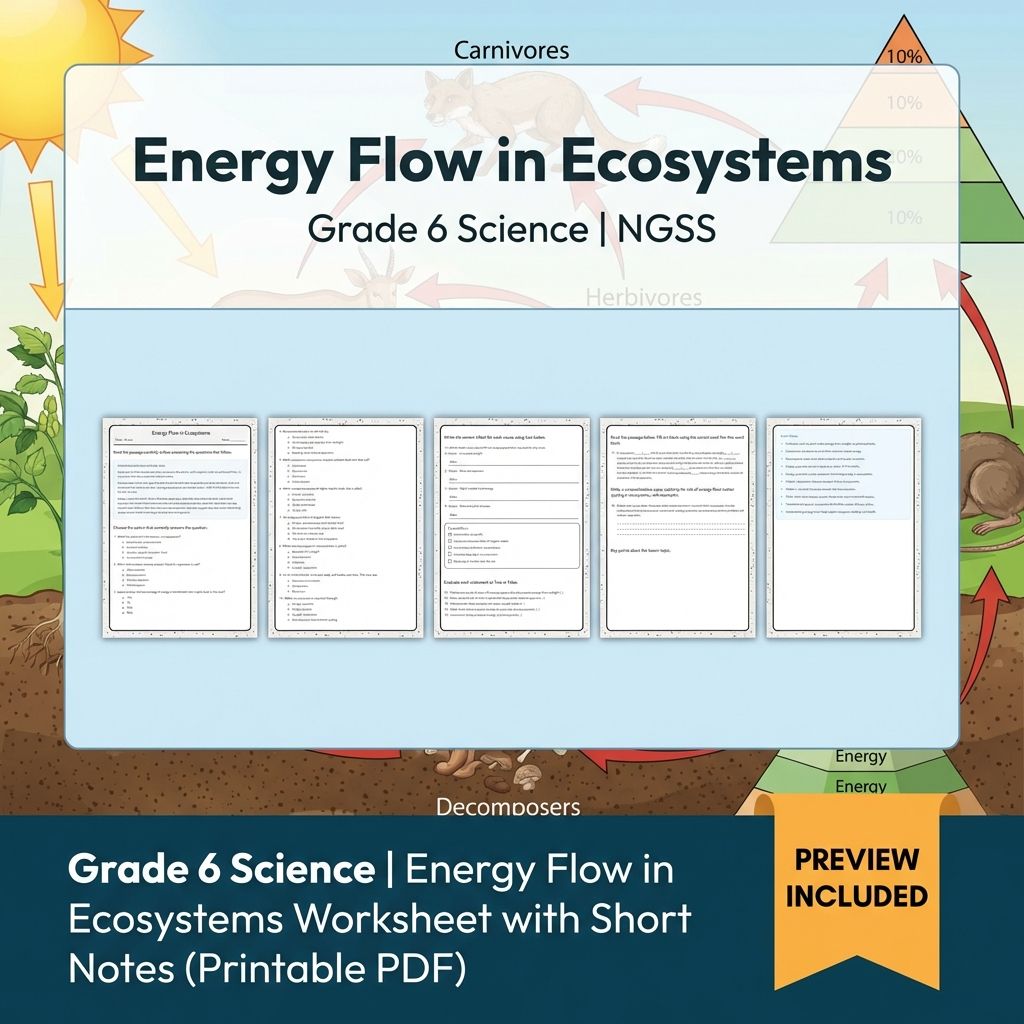
Grade 6 Science | Energy Flow in Ecosystems Worksheet with Short Notes (PDF)
Created byMeadowlark WorksheetsLearning Objectives
- Understand the components and processes of energy flow within food webs.
- Identify producers, consumers, and decomposers as key roles in ecosystems.
- Interpret energy pyramids and calculate trophic transfer efficiency.
Also included in: Grade 6 Science | Ecosystems: Interactions, Energy & Dynamics NGSS Unit Bundle +1 more
Instant download

Grade 6 Science | Energy Flow in Ecosystems - Daily Reading Comprehension
Created byCoral Reef LearningLearning Objectives
- Identify producers in different ecosystems.
- Explain the role of producers in energy flow.
- Understand how producers contribute to food webs.
Instant download
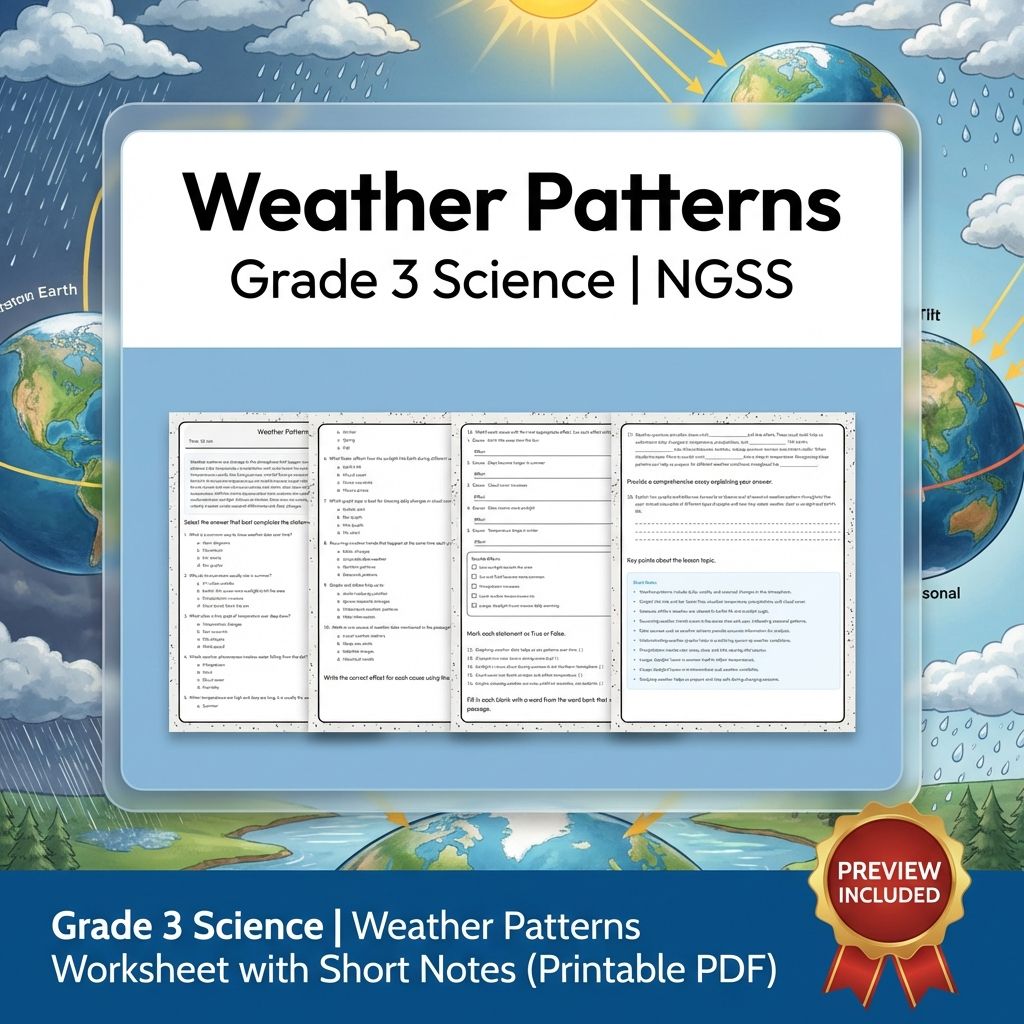
Grade 3 Science | Weather Patterns Worksheet with Short Notes (Printable PDF)
Created byMeadowlark WorksheetsLearning Objectives
- Understand how daily and seasonal weather patterns can be represented using graphs and tables.
- Interpret graphical data to identify patterns in temperature, precipitation, and cloud cover.
- Relate observed weather trends to phenomena such as Earth's tilt and sunlight angle.
Also included in: Grade 3 Science | Earth's Systems Unit Bundle (NGSS-Aligned Worksheets) +1 more
Instant download

Interpreting Weather Data Patterns Worksheets | Grade 3 Science
Created byTeachers ClubLearning Objectives
- Represent daily weather observations using line and bar graphs and simple tables.
- Describe how temperature and precipitation patterns can change across weeks and seasons.
- Interpret how sunlight angle and Earth's tilt relate to seasonal temperature changes.
Also included in: Earth's Systems Grade 3 Science Worksheets | NGSS Weather Bundle +1 more
Instant download

Grade 3 Weather Patterns Worksheet | Practice & Assessment PDF
Created byClear Sky ClassroomLearning Objectives
- Represent local weather observations (temperature, precipitation, and cloud cover) using simple graphs and tables
- Identify daily and seasonal patterns in weather data across weeks and months
- Interpret graphical information to describe changes in weather variability and precipitation trends
Instant download

Grade 3 Weather Patterns Science Daily Reading Worksheet | NGSS Activity
Created byBRIGHT PATH RESOURCESLearning Objectives
- Identify the main idea and key details from a short weather-data description.
- Use notes and simple data to describe daily weather changes.
- Explain how clouds and temperature can vary from day to day.
Also included in: Weather Patterns & Landform Processes Grade 3 Science Daily Bundle | NGSS +2 more
Instant download

Grade 6 Science – Structural Traits in Marine Animals | Daily Reading Worksheet
Created byBright Mind ResourcesLearning Objectives
- Identify different structural traits of marine animals
- Understand how body parts help animals survive in aquatic environments
- Analyze the relationship between anatomical features and habitat
Also included in: Ecosystems Grade 6 Science Daily Reading Worksheets Lesson Bundle |Florida NGSSS +1 more
Instant download

Structural Traits Worksheet Grade 6 Science Florida NGSSS Adaptations
Created byPrism Point LearningLearning Objectives
- Explain how structural adaptations help organisms survive in their environments.
- Describe how body structures can support feeding, movement, protection, and camouflage.
- Use evidence from examples to connect traits to habitat and survival needs.
Instant download

Grade 6 Science | Structural Traits Worksheet | NGSSS Standards
Created byLumora LearningLearning Objectives
- Explain how structural adaptations help organisms survive in specific habitats
- Identify examples of structural traits related to food gathering, movement, and avoiding predation
- Use structure–function reasoning to predict how a trait supports survival needs
Instant download

Grade 6 Structural Traits Worksheet | NGSSS Life Science Adaptations Resource
Created byEvergreen Desk EducationLearning Objectives
- Describe how structural adaptations help organisms obtain food, move efficiently, and survive predators.
- Explain how physical features relate to an organism’s habitat and survival needs.
- Use evidence from examples (shells, webbed feet, roots, camouflage) to identify the function of a trait.
Instant download

Structural Traits Grade 6 Science Worksheet | Standards-Aligned Practice PDF
JCreated byJ.S SheetsLearning Objectives
- Understand how structural adaptations help organisms survive in different habitats.
- Identify examples of physical features that support survival, movement, and camouflage.
- Analyze how structure correlates with environmental needs and predation avoidance.
Also included in: Grade 6 Ecosystem Adaptations and Energy Flow Science Lesson Bundle | Florida NGSSS +1 more
Instant download

Grade 6 Structural Traits Worksheet | NGSS Practice PDF
Created byClear Sky ClassroomLearning Objectives
- Explain how structural adaptations help organisms survive in different habitats.
- Identify examples of structural traits that support feeding, movement, protection, and camouflage.
- Use evidence from a text to determine main ideas and make accurate claims about adaptations.
Instant download

Structural Traits Assessment | Florida NGSSS Grade 6 Science Worksheet
Created byPrism Point LearningLearning Objectives
- Explain how structural traits help organisms obtain food, move efficiently, and avoid predation
- Identify examples of structural adaptations (e.g., shells, webbed feet, long roots, camouflage) and match them to functions
- Use evidence from observations to describe how traits relate to specific habitats
Also included in: Grade 6 Ecosystems Science Lesson Bundle | Florida NGSSS Assessment
Instant download
Browse more categories
About Science Worksheets
Find Science worksheets spanning core skills, practice, and review. All 44,773 resources are instant PDF downloads for the classroom or home.
Every worksheet on MyTeachingSheets is created by independent teacher-authors and reviewed before publication. All resources download as printable PDFs for classroom, homework, or at-home practice, and many include answer keys. Preview any worksheet free before buying.