
Science Worksheets
42,859 subject resources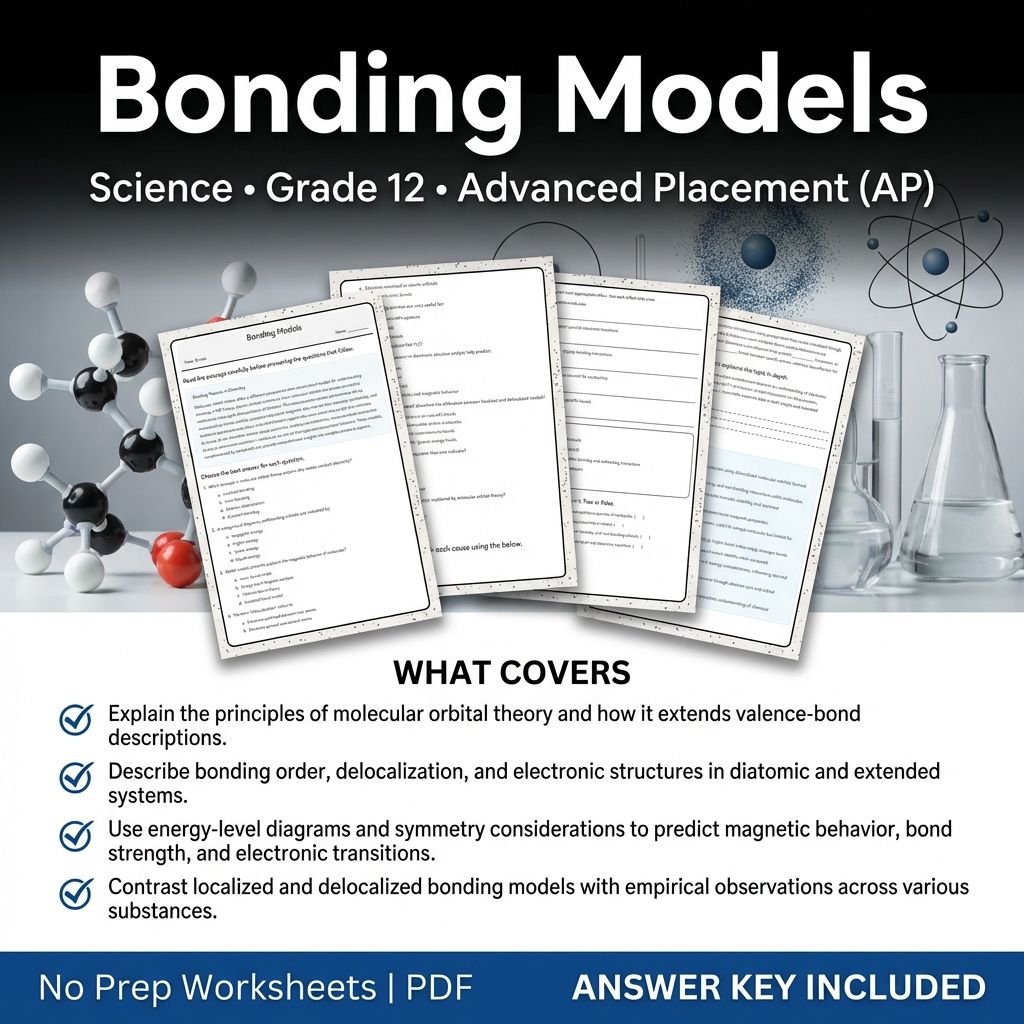
12th Grade Science | Bonding Models Worksheet & Answer Key (Printable PDF)
 Created byCoral Reef Learning
Learning Objectives
- Explain the principles of molecular orbital theory and how it extends valence-bond descriptions.
- Describe bonding order, delocalization, and electronic structures in diatomic and extended systems.
- Use energy-level diagrams and symmetry considerations to predict magnetic behavior, bond strength, and electronic transitions.
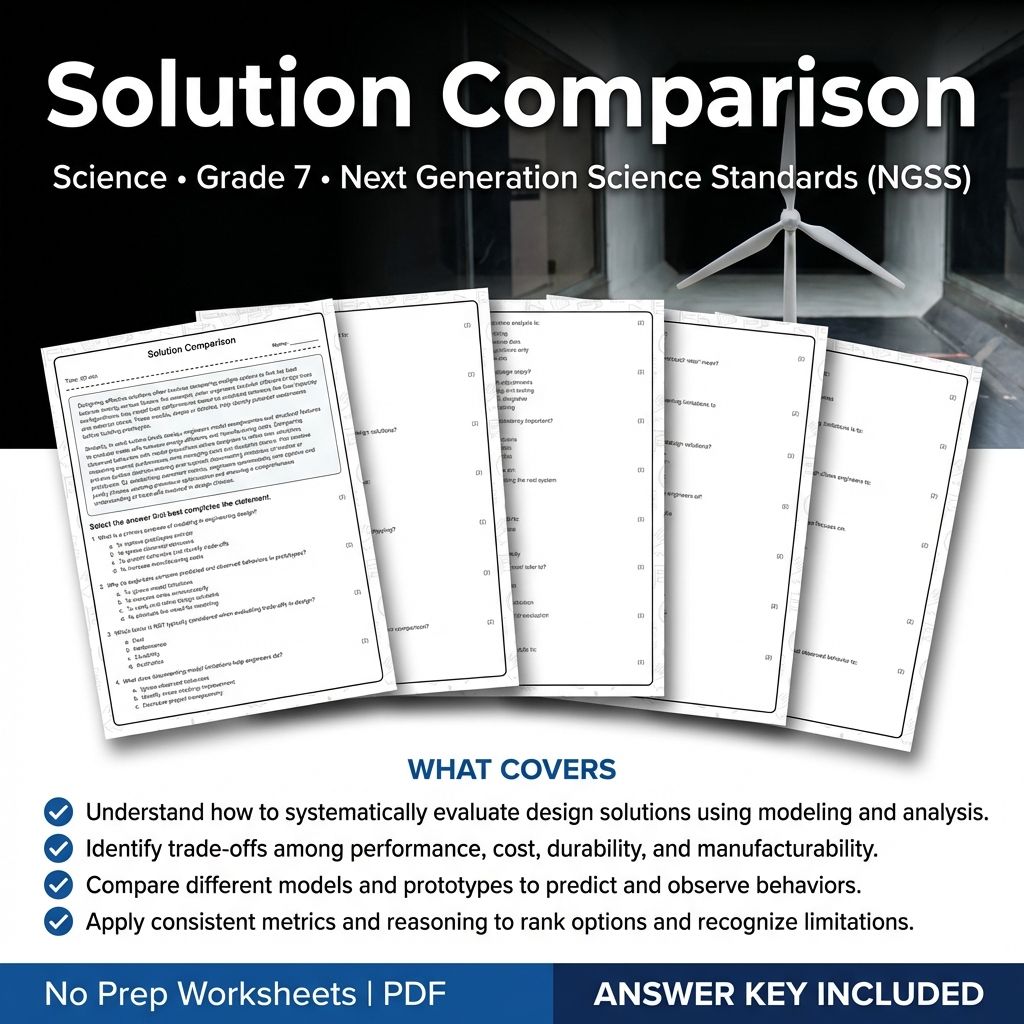
7th Grade Science | Solution Comparison Worksheet & Answer Key (Printable PDF)
Created byCoral Reef LearningLearning Objectives
- Understand how to systematically evaluate design solutions using modeling and analysis.
- Identify trade-offs among performance, cost, durability, and manufacturability.
- Compare different models and prototypes to predict and observe behaviors.
Phase Behaviour Worksheet for Grade 11 Science | Alberta Standards
Created byCoral Reef LearningLearning Objectives
- Understand how intermolecular forces influence phase transitions and vapor pressure.
- Explain the relationship between molecular strength of attraction and boiling points.
- Analyze how temperature, molecular size, and polarity affect phase diagrams in different environments.

Grade 8 Science | Gravitational Interactions Worksheet (Answer Key & Rubric)
 Created byLumora Learning
Learning Objectives
- Understand the universal attractive nature of gravity and its dependence on mass and distance.
- Explain how gravitational force influences planetary orbits, satellite motion, and tidal effects.
- Utilize the inverse-square law to predict orbital characteristics and fall rates of objects.
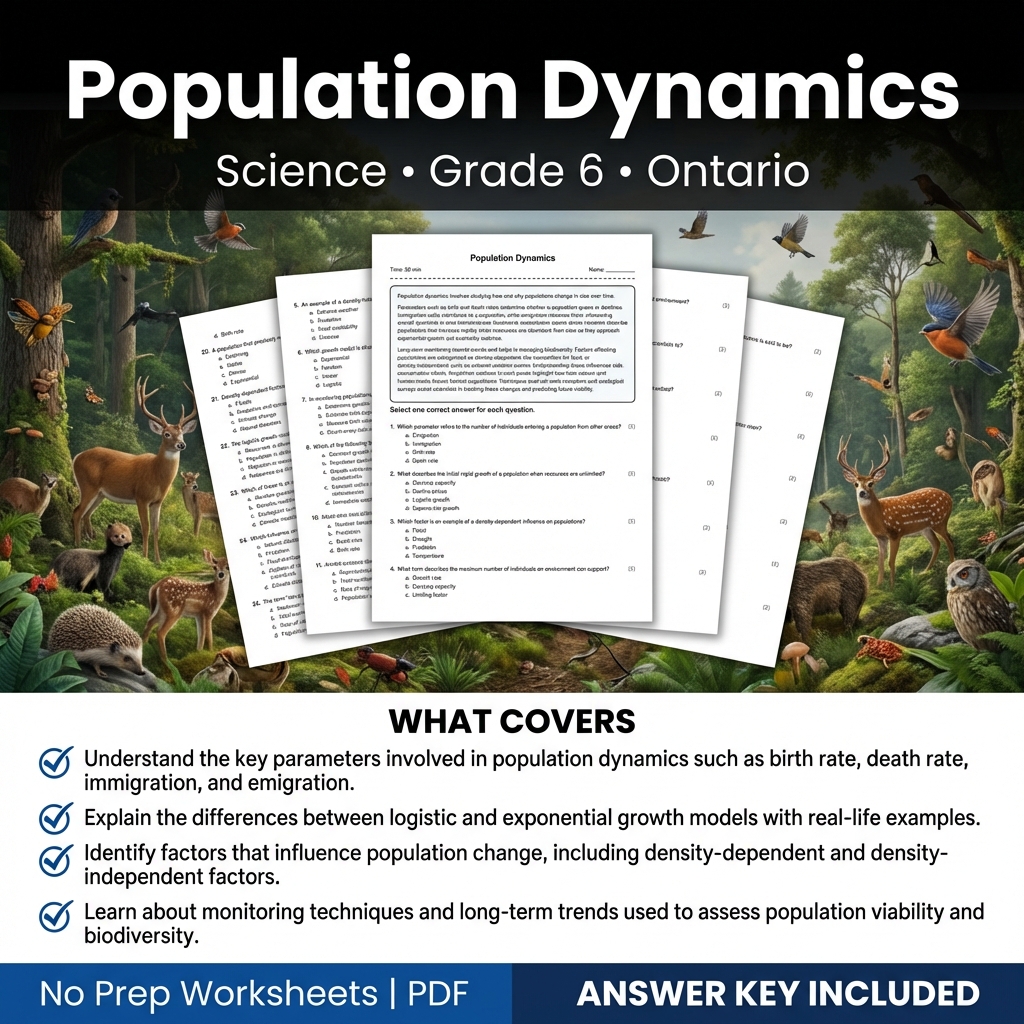
Population Dynamics Worksheet for Grade 6 Science | Ontario Standards
Created byCoral Reef LearningLearning Objectives
- Understand the key parameters involved in population dynamics such as birth rate, death rate, immigration, and emigration.
- Explain the differences between logistic and exponential growth models with real-life examples.
- Identify factors that influence population change, including density-dependent and density-independent factors.
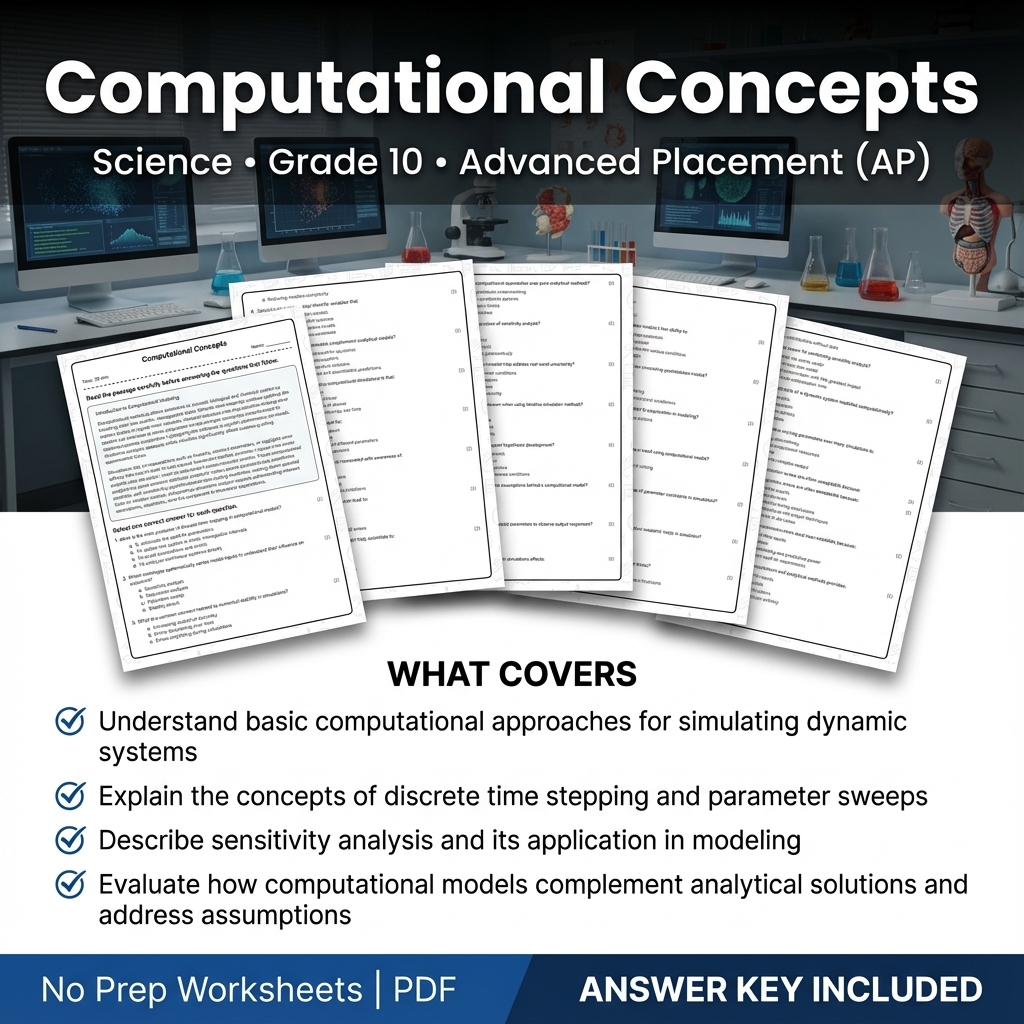
10th Grade Science | Computational Concepts Worksheet (Printable PDF + Answer Key)
Created byCoral Reef LearningLearning Objectives
- Understand basic computational approaches for simulating dynamic systems
- Explain the concepts of discrete time stepping and parameter sweeps
- Describe sensitivity analysis and its application in modeling

6th Grade Science | Forces and Motion Worksheet with Answer Key (Printable PDF)
Created byCoral Reef LearningLearning Objectives
- Describe the relationship between net force, mass, and acceleration based on Newton's Second Law.
- Explain how vector addition influences the motion of objects under multiple forces.
- Identify real-world scenarios involving net force and calculate resulting motion changes.
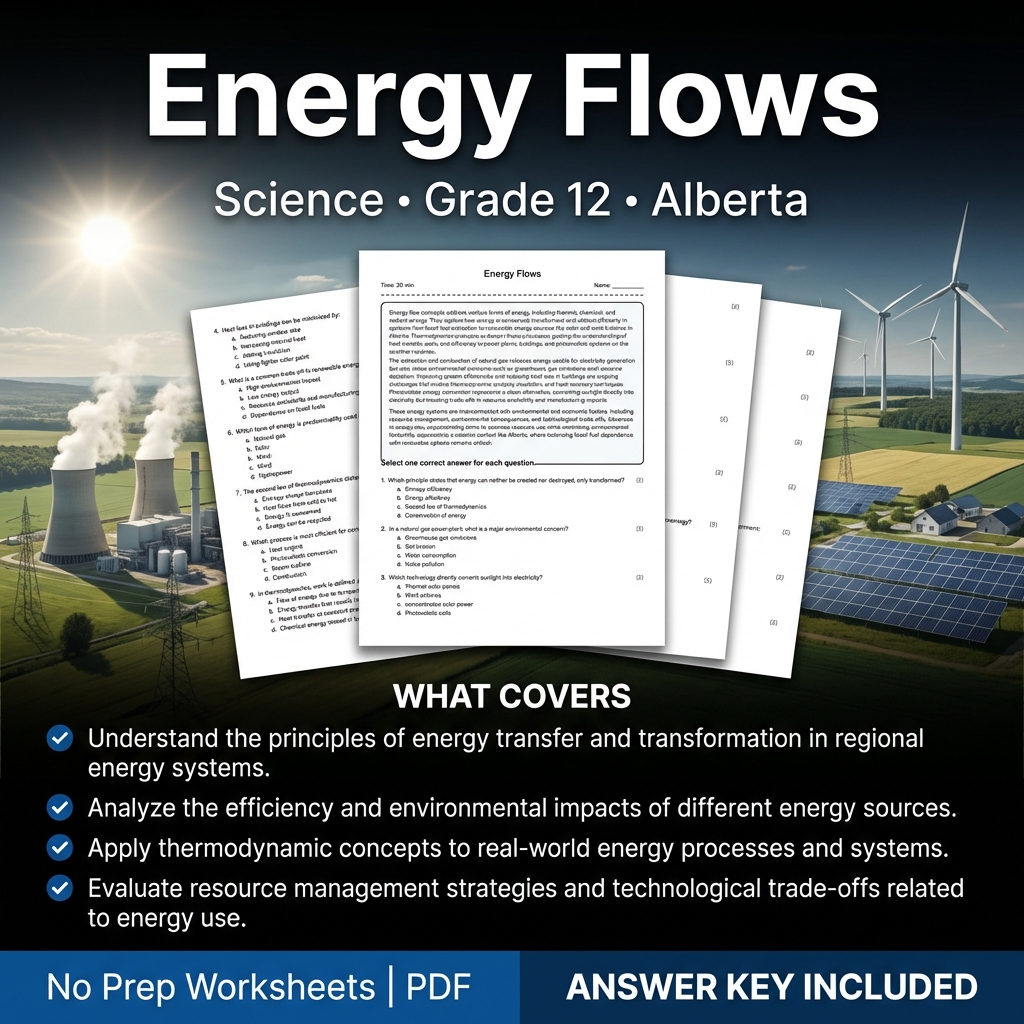
Energy Flows Worksheet for Grade 12 Science | Alberta Standards
Created byCoral Reef LearningLearning Objectives
- Understand the principles of energy transfer and transformation in regional energy systems.
- Analyze the efficiency and environmental impacts of different energy sources.
- Apply thermodynamic concepts to real-world energy processes and systems.
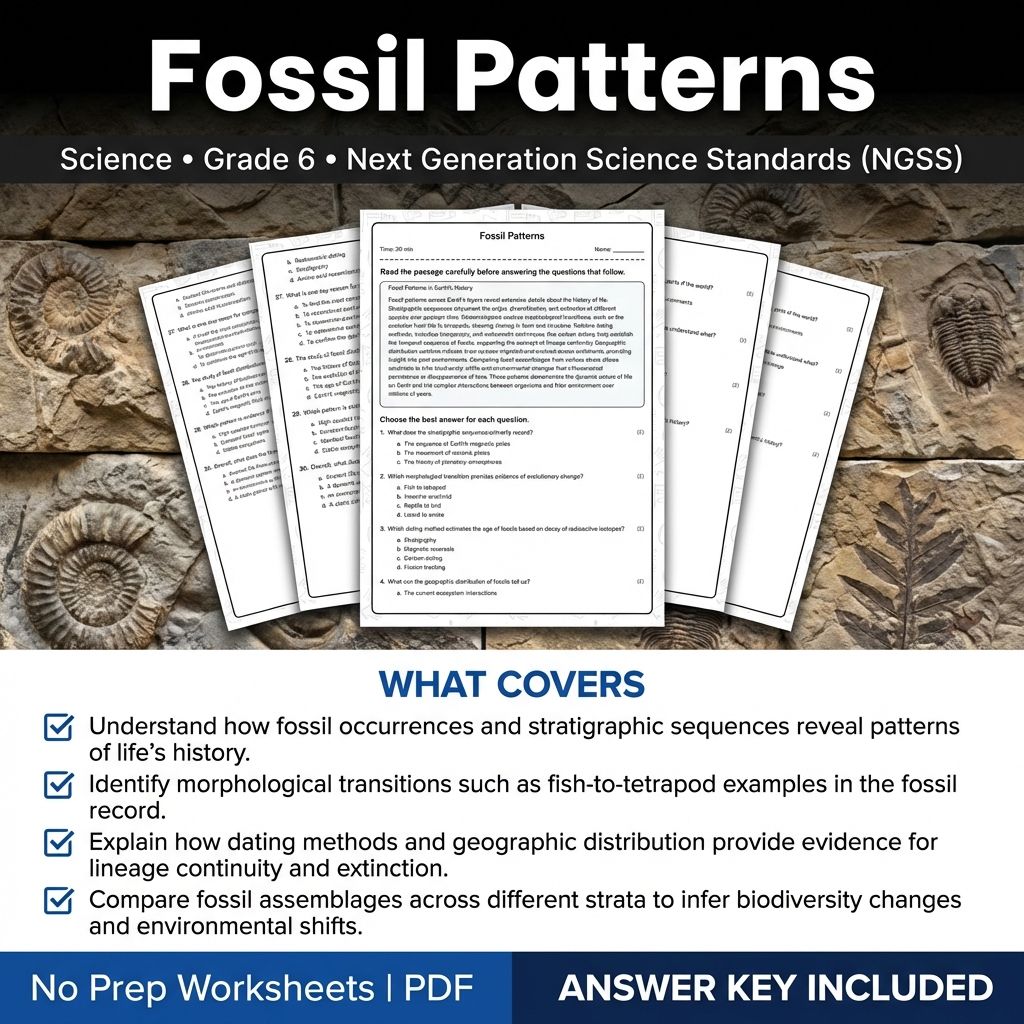
6th Grade Science | Fossil Patterns Worksheet & Answer Key (Printable PDF)
Created byCoral Reef LearningLearning Objectives
- Understand how fossil occurrences and stratigraphic sequences reveal patterns of life's history.
- Identify morphological transitions such as fish-to-tetrapod examples in the fossil record.
- Explain how dating methods and geographic distribution provide evidence for lineage continuity and extinction.
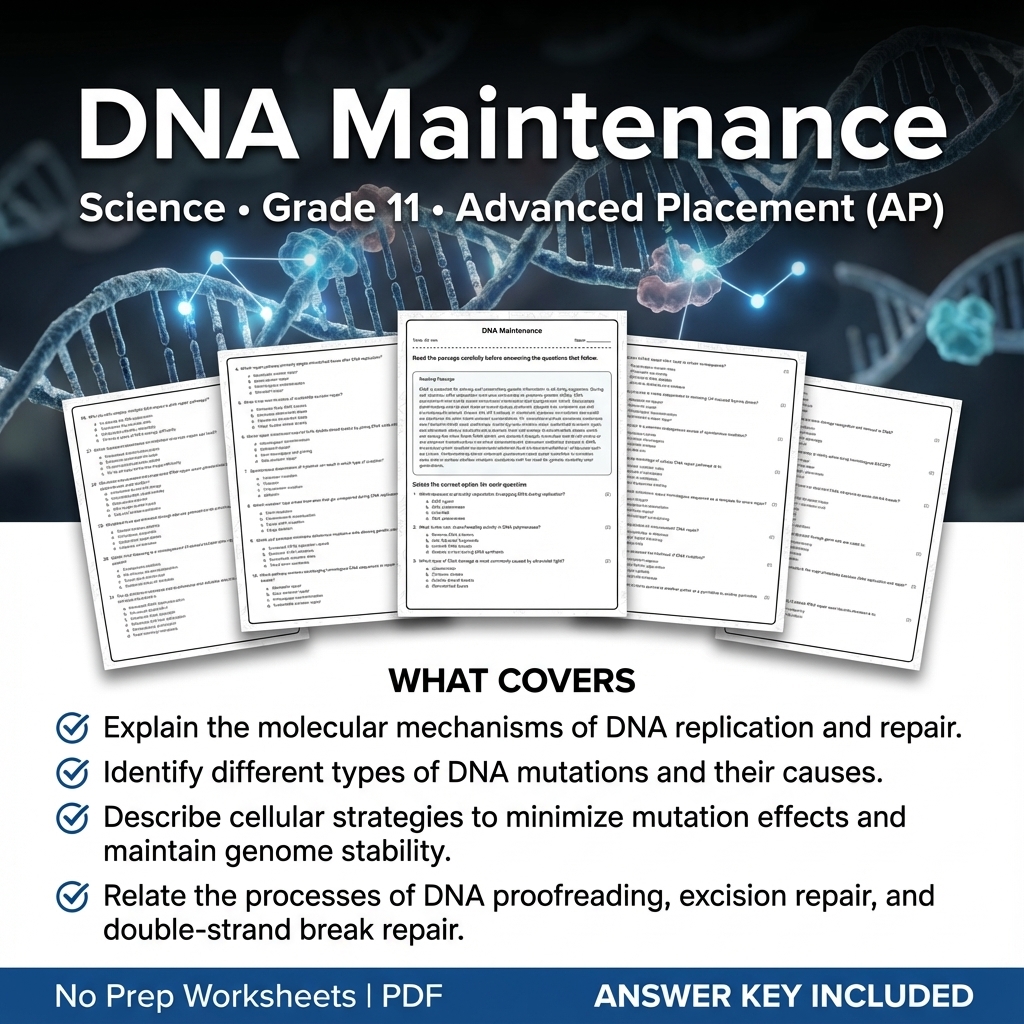
11th Grade Science | DNA Maintenance Worksheet (Printable PDF + Answer Key)
Created byCoral Reef LearningLearning Objectives
- Explain the molecular mechanisms of DNA replication and repair.
- Identify different types of DNA mutations and their causes.
- Describe cellular strategies to minimize mutation effects and maintain genome stability.
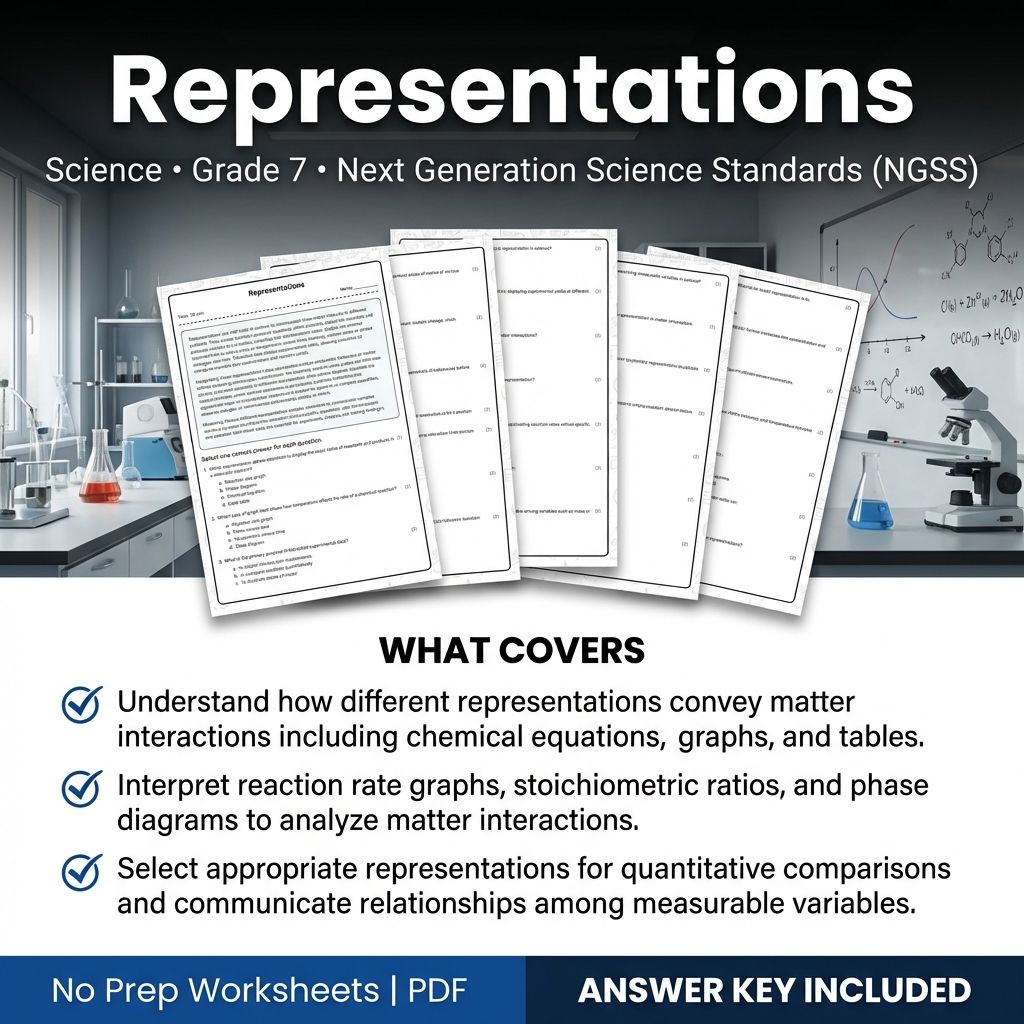
7th Grade Science Worksheet | Representations of Matter & Reactants (Printable PDF + Answer Key)
Created byCoral Reef LearningLearning Objectives
- Understand how different representations convey matter interactions including chemical equations, graphs, and tables.
- Interpret reaction rate graphs, stoichiometric ratios, and phase diagrams to analyze matter interactions.
- Select appropriate representations for quantitative comparisons and communicate relationships among measurable variables.
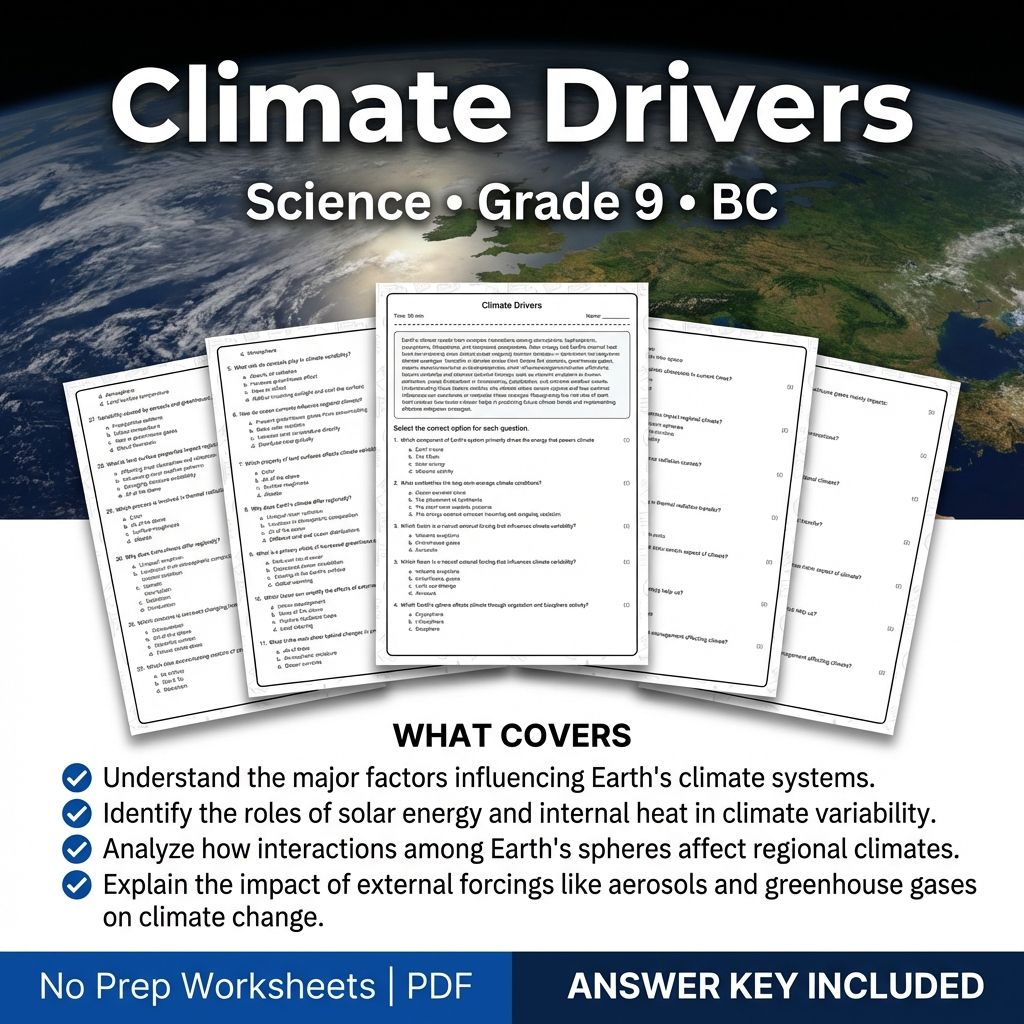
Grade 9 Science | Climate Drivers Worksheet & Answer Key (Printable PDF)
Created byCoral Reef LearningLearning Objectives
- Understand the major factors influencing Earth's climate systems.
- Identify the roles of solar energy and internal heat in climate variability.
- Analyze how interactions among Earth's spheres affect regional climates.
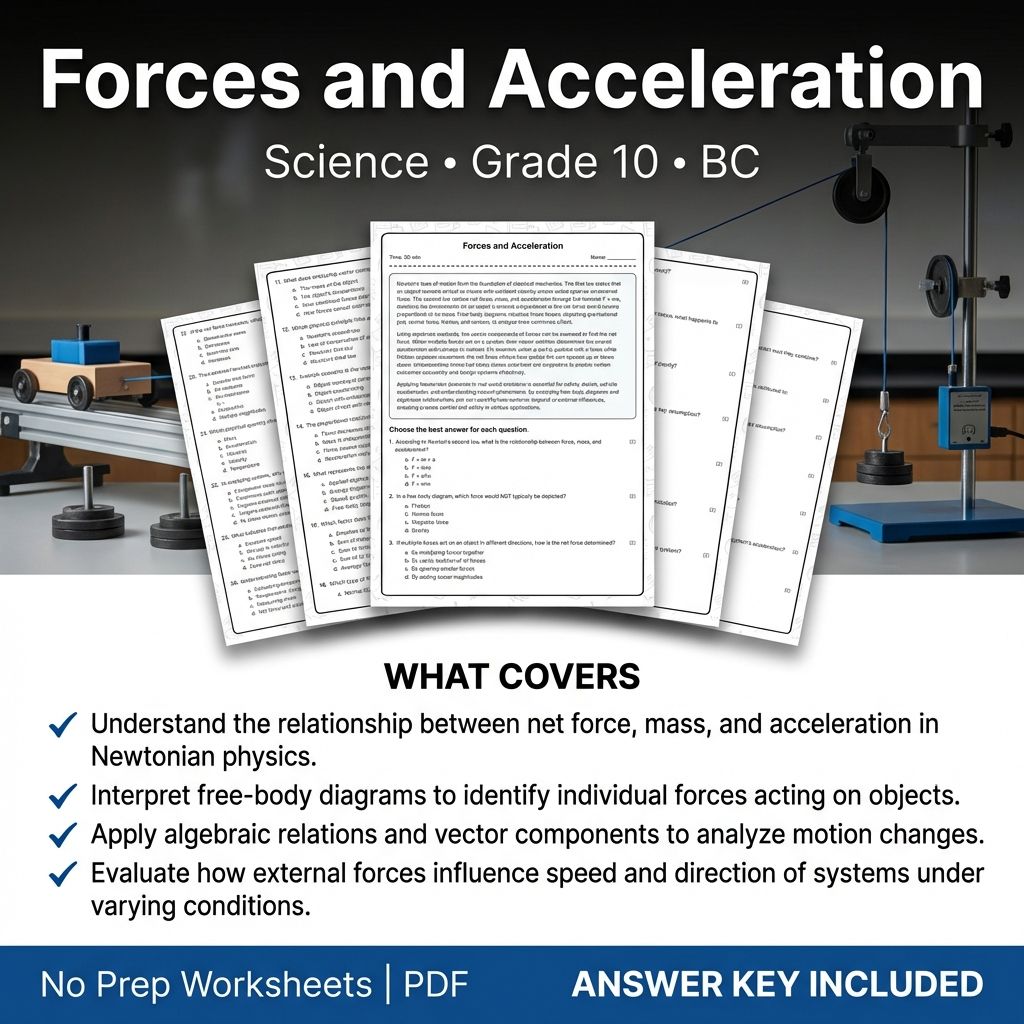
10th Grade Science | Forces and Acceleration Worksheet with Answer Key (PDF)
Created byCoral Reef LearningLearning Objectives
- Understand the relationship between net force, mass, and acceleration in Newtonian physics.
- Interpret free-body diagrams to identify individual forces acting on objects.
- Apply algebraic relations and vector components to analyze motion changes.
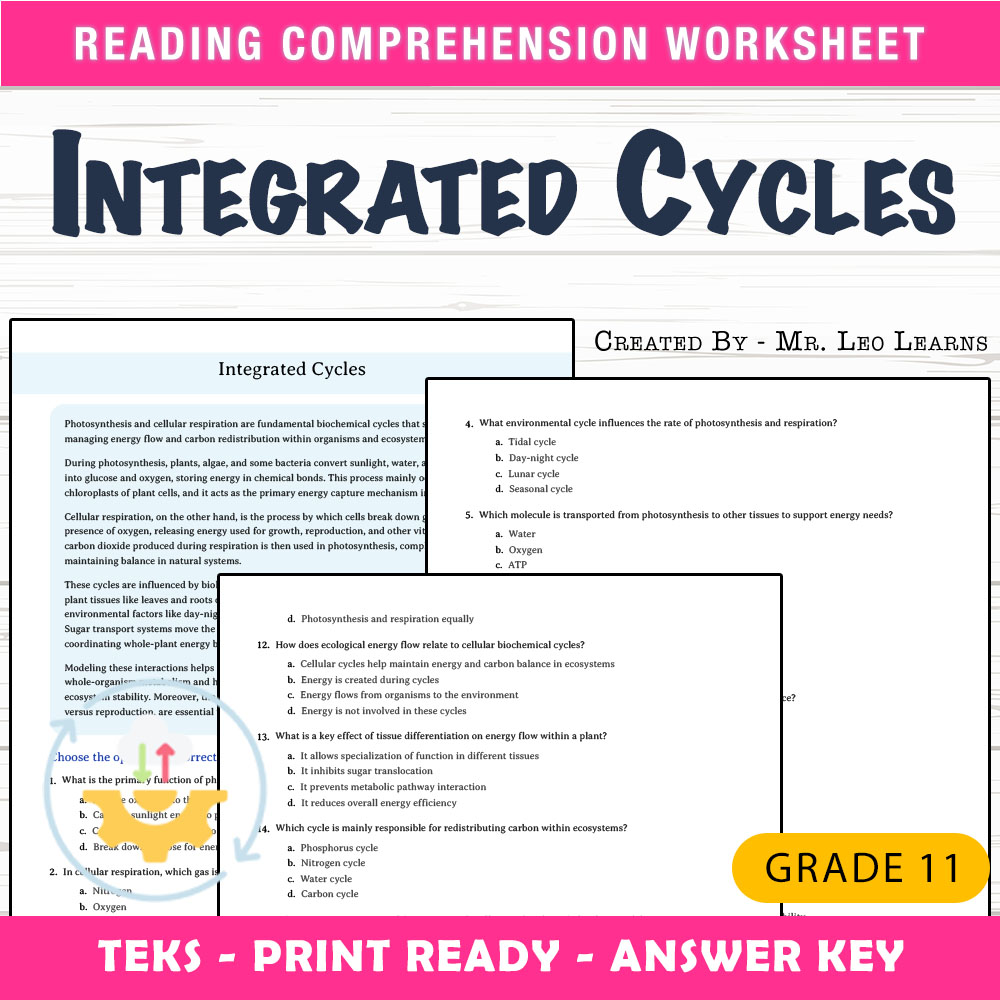
Grade 11 Science — Integrated Cycles Worksheet for Mastery
 Created byThe Resource Hub
Learning Objectives
- Describe how photosynthesis and cellular respiration are interconnected in energy and carbon cycles.
- Explain the biochemical processes involved in photosynthesis and respiration within organisms and ecosystems.
- Identify the roles of day-night cycles, tissue specialization, and sugar transport in energy distribution.
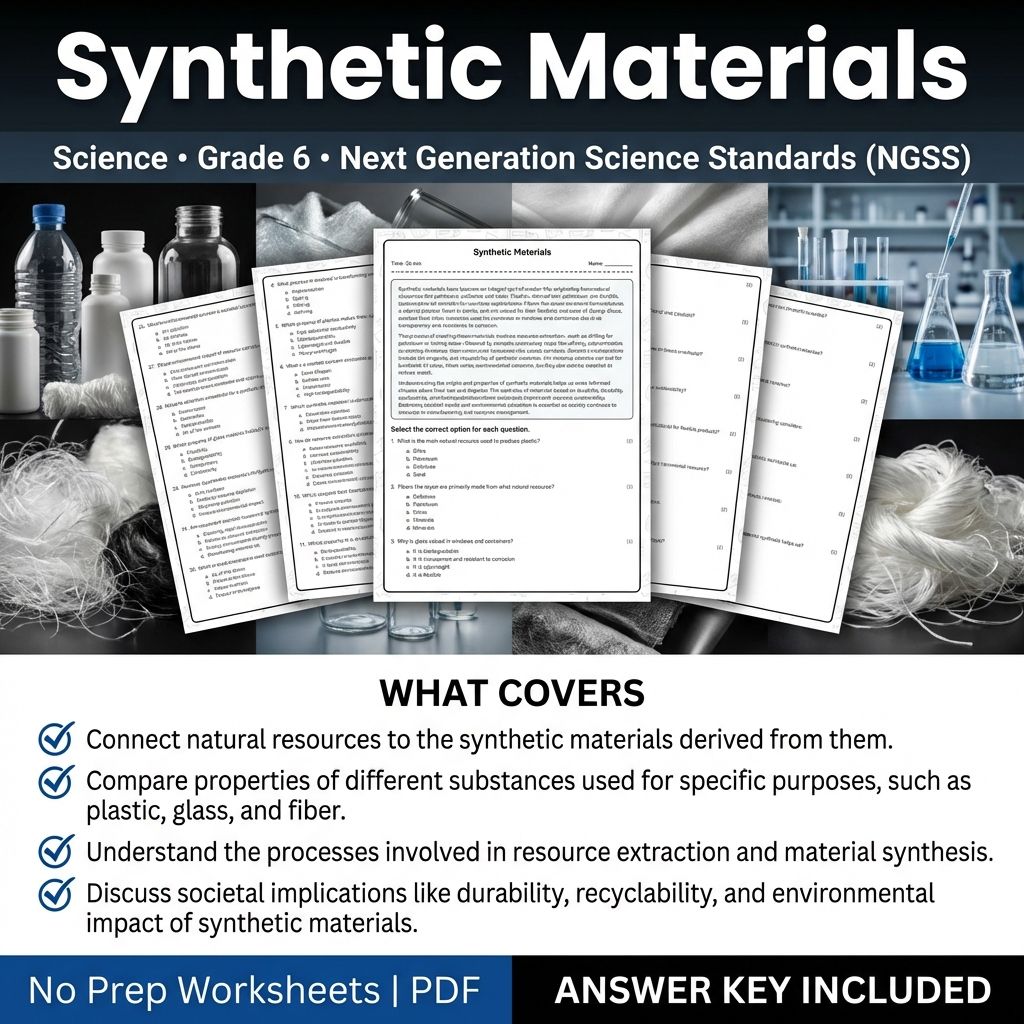
6th Grade Science | Synthetic Materials Worksheet & Answer Key (Printable PDF)
Created byCoral Reef LearningLearning Objectives
- Connect natural resources to the synthetic materials derived from them.
- Compare properties of different substances used for specific purposes, such as plastic, glass, and fiber.
- Understand the processes involved in resource extraction and material synthesis.
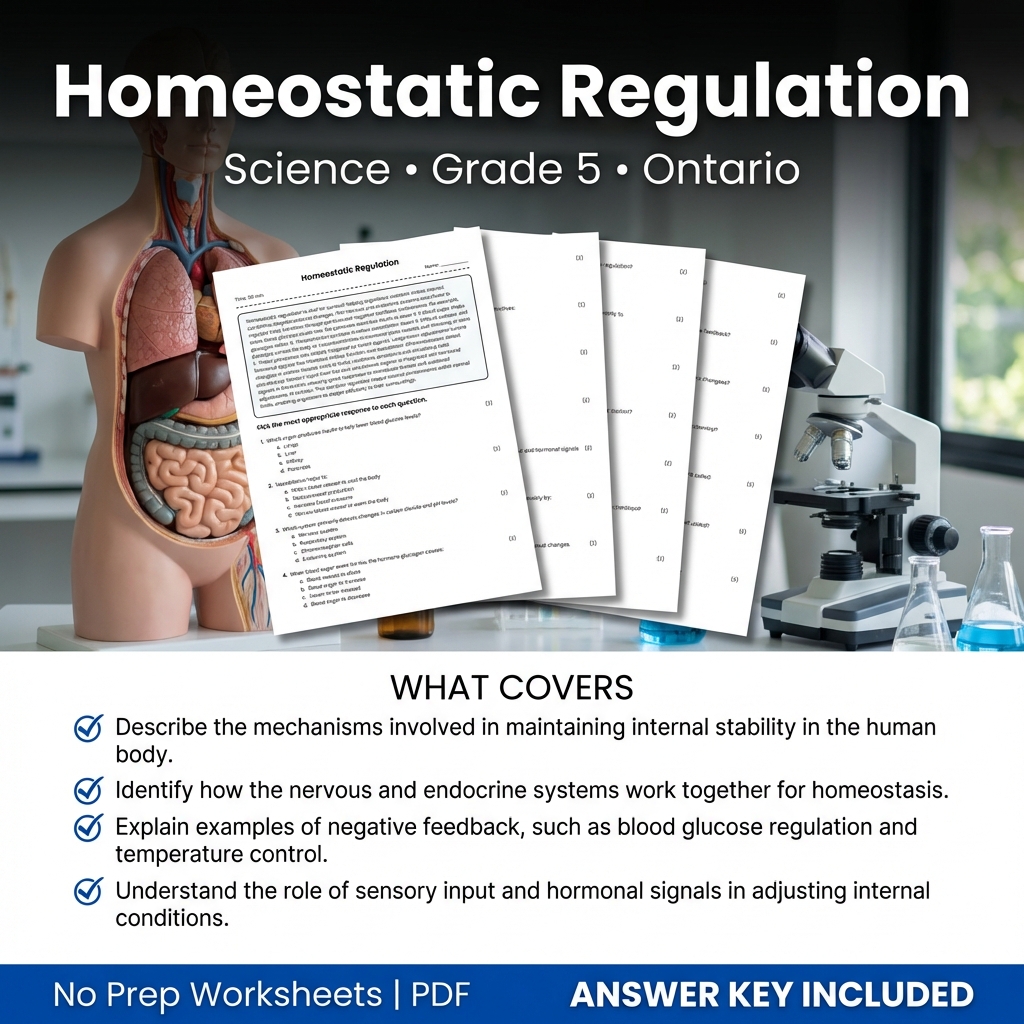
Homeostatic Regulation Science Worksheet Grade 5 | Ontario Standards
Created byCoral Reef LearningLearning Objectives
- Describe the mechanisms involved in maintaining internal stability in the human body.
- Identify how the nervous and endocrine systems work together for homeostasis.
- Explain examples of negative feedback, such as blood glucose regulation and temperature control.
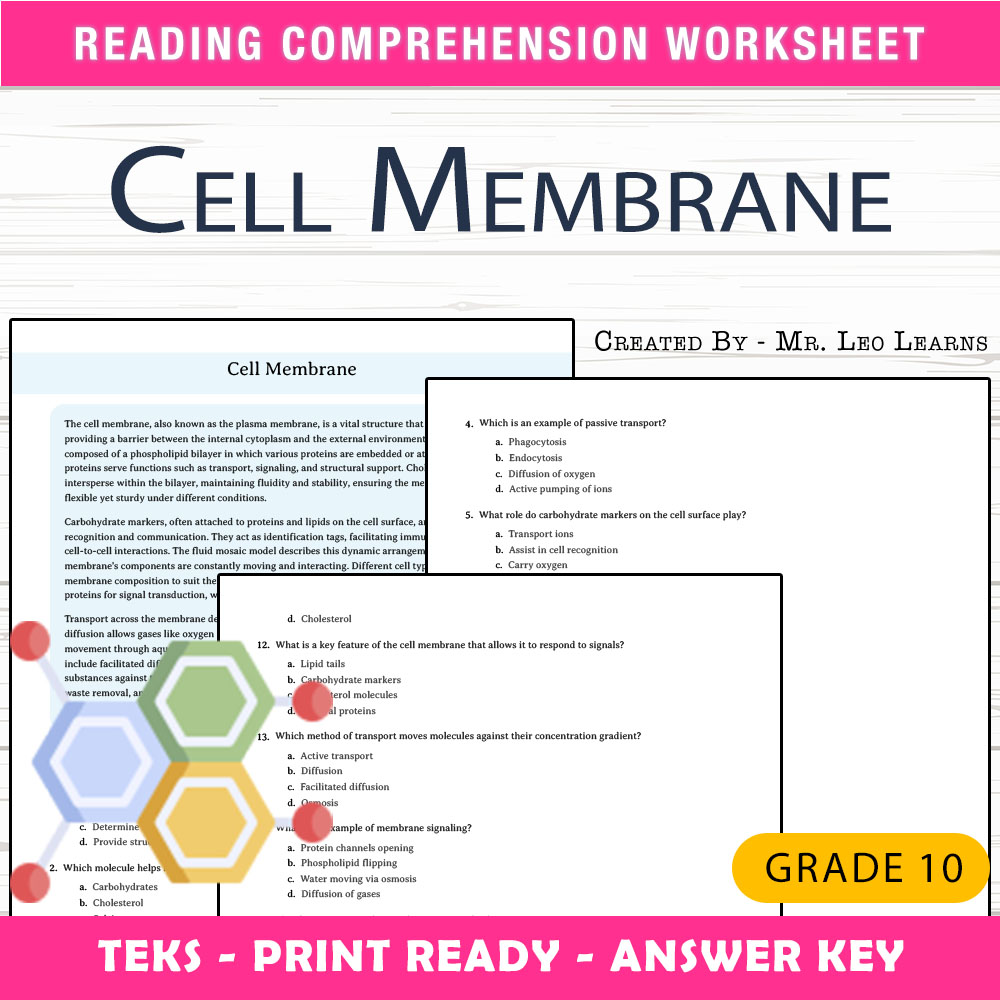
Grade 10 Science – Cell Membrane Worksheet for Mastery
Created byThe Resource HubLearning Objectives
- Describe the composition of the cell membrane, including phospholipids, proteins, cholesterol, and carbohydrates.
- Explain how membrane components influence membrane fluidity and recognition functions.
- Identify examples of membrane transport mechanisms such as diffusion, osmosis, and active transport.
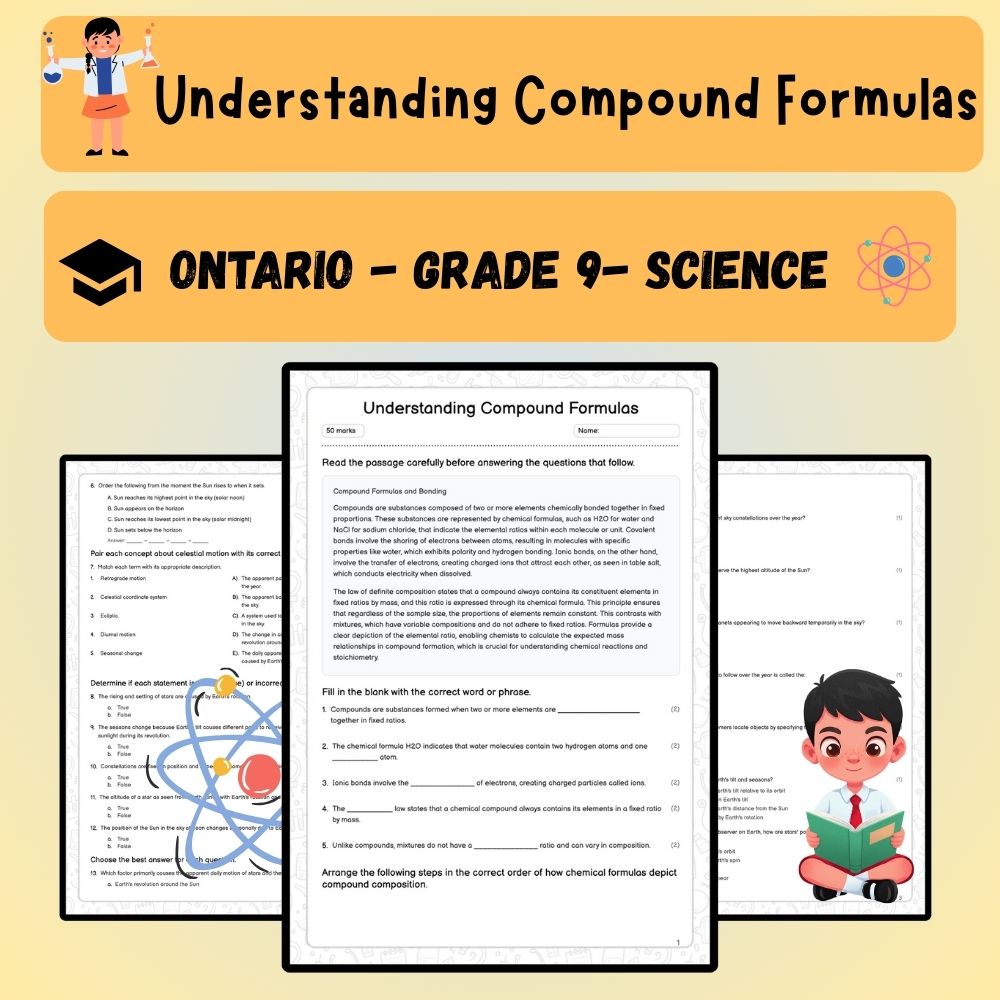
Grade 9 Science | Understanding Compound Formulas Worksheet (Answer Key) - Ontario Standards
 Created byPrism Point Learning
Learning Objectives
- Explain what compounds are and how they are represented by chemical formulas.
- Differentiate between covalent and ionic bonds and their effects on properties.
- Describe the law of definite composition and how formulas show elemental ratios.

Grade 4 Science Worksheet on Simple Machines | Ontario Standards
Created byCoral Reef LearningLearning Objectives
- Identify and describe common simple machines and their mechanical functions.
- Explain how simple machines change the magnitude, direction, or distance of force.
- Recognize examples of simple machines in daily life and classify their function.
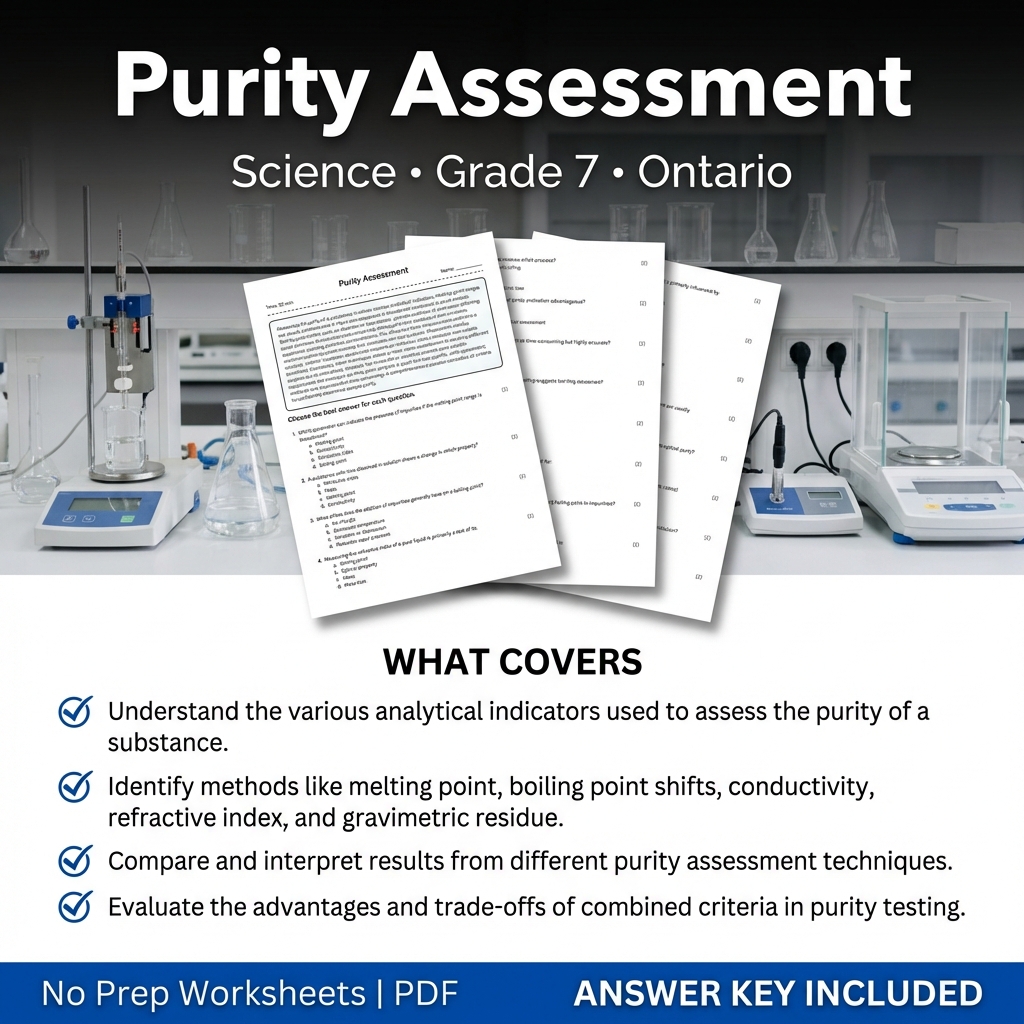
Grade 7 Science Worksheet on Purity Assessment | Ontario Standards
Created byCoral Reef LearningLearning Objectives
- Understand the various analytical indicators used to assess the purity of a substance.
- Identify methods like melting point, boiling point shifts, conductivity, refractive index, and gravimetric residue.
- Compare and interpret results from different purity assessment techniques.

6th Grade Science | Tree Evidence Worksheet & Answer Key (Printable PDF)
Created byCoral Reef LearningLearning Objectives
- Understand the role of homologous structures, vestigial organs, and DNA sequences in tracing common ancestry.
- Interpret phylogenetic trees and morphological patterns to analyze lineage splitting.
- Evaluate different types of evidence supporting evolutionary relationships among taxa.
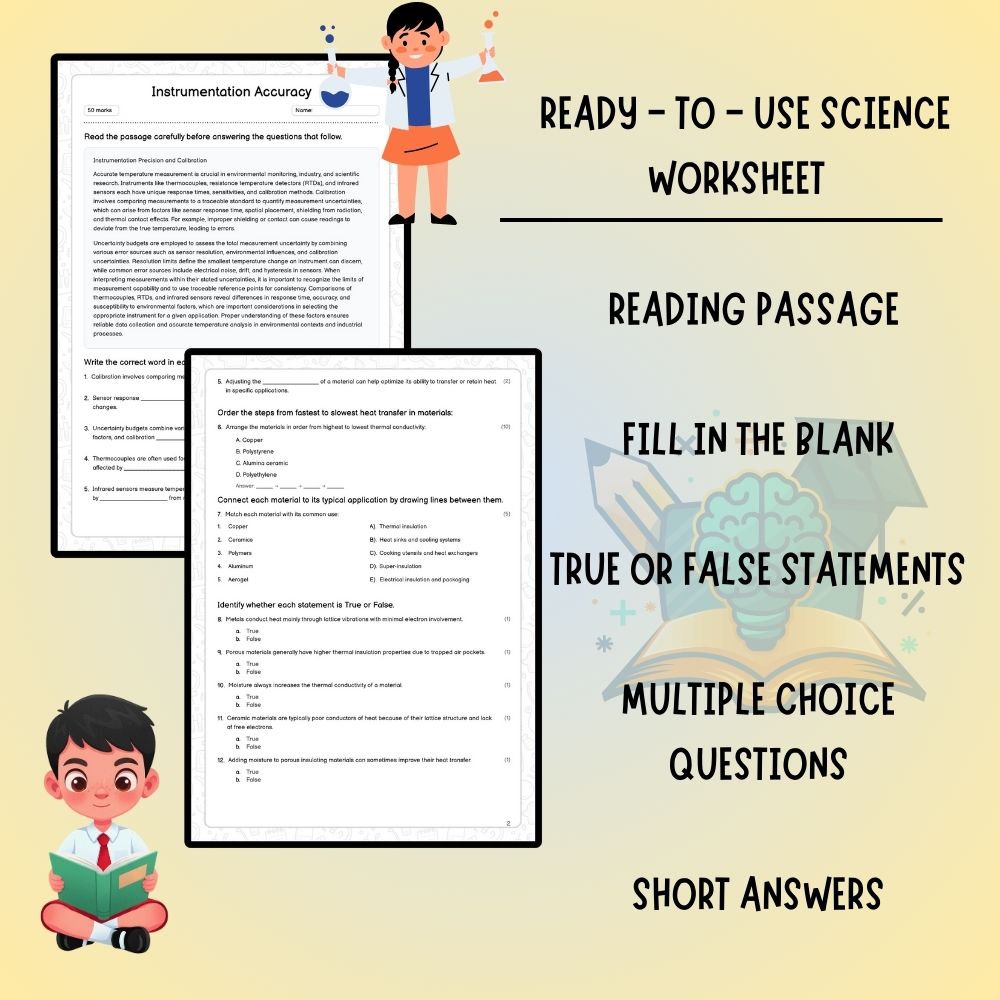
Grade 7 Science – Conductive Materials Worksheet (PDF ) | Ontario Standards
Created byPrism Point LearningLearning Objectives
- Understand the factors influencing thermal conductivity in different materials
- Compare heat-transfer efficiency among metals, ceramics, polymers, and composites
- Explain how electrons and lattice vibrations contribute to thermal conduction
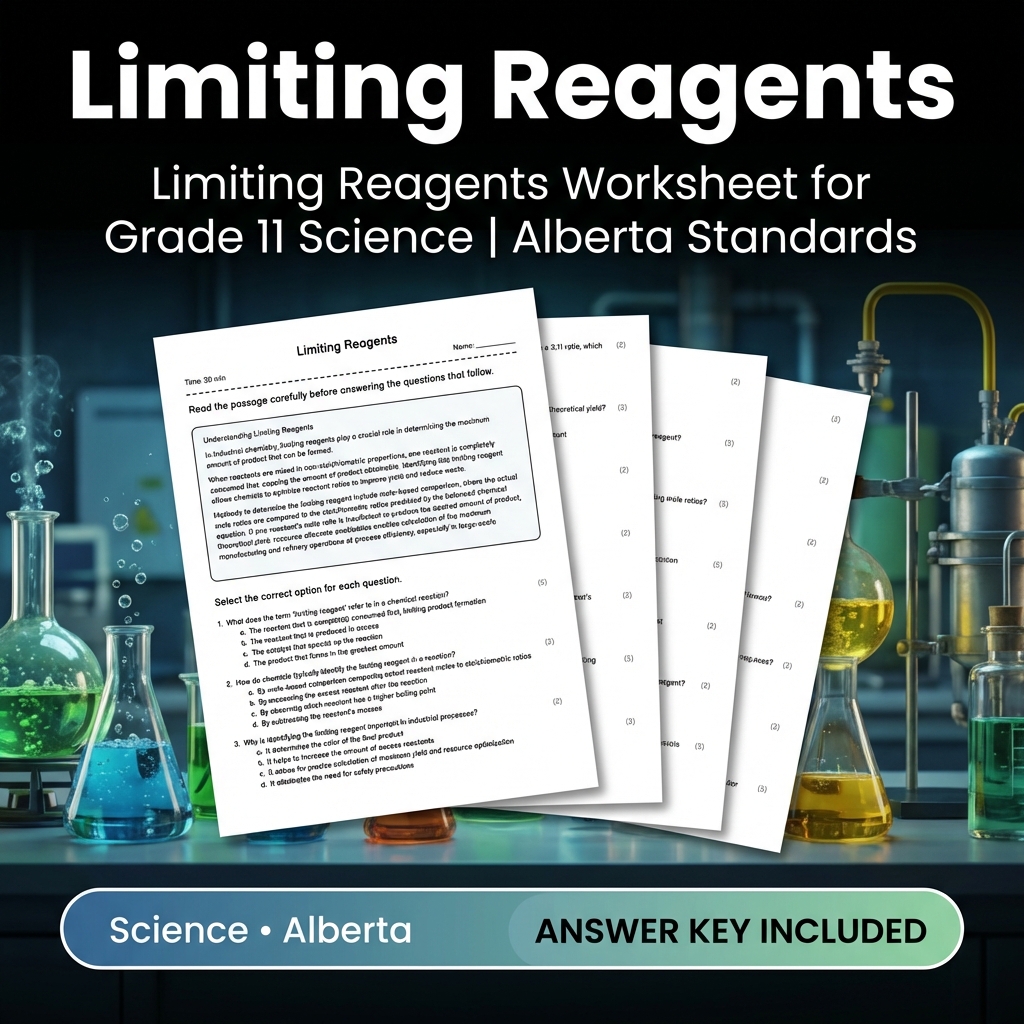
Limiting Reagents Worksheet for Grade 11 Science | Alberta Standards
Created byCoral Reef LearningLearning Objectives
- Understand the concept of limiting and excess reagents in chemical reactions.
- Learn how to compare reactant amounts mole-for-mole to identify the limiting reagent.
- Calculate maximum theoretical yield based on limiting reagent amounts.
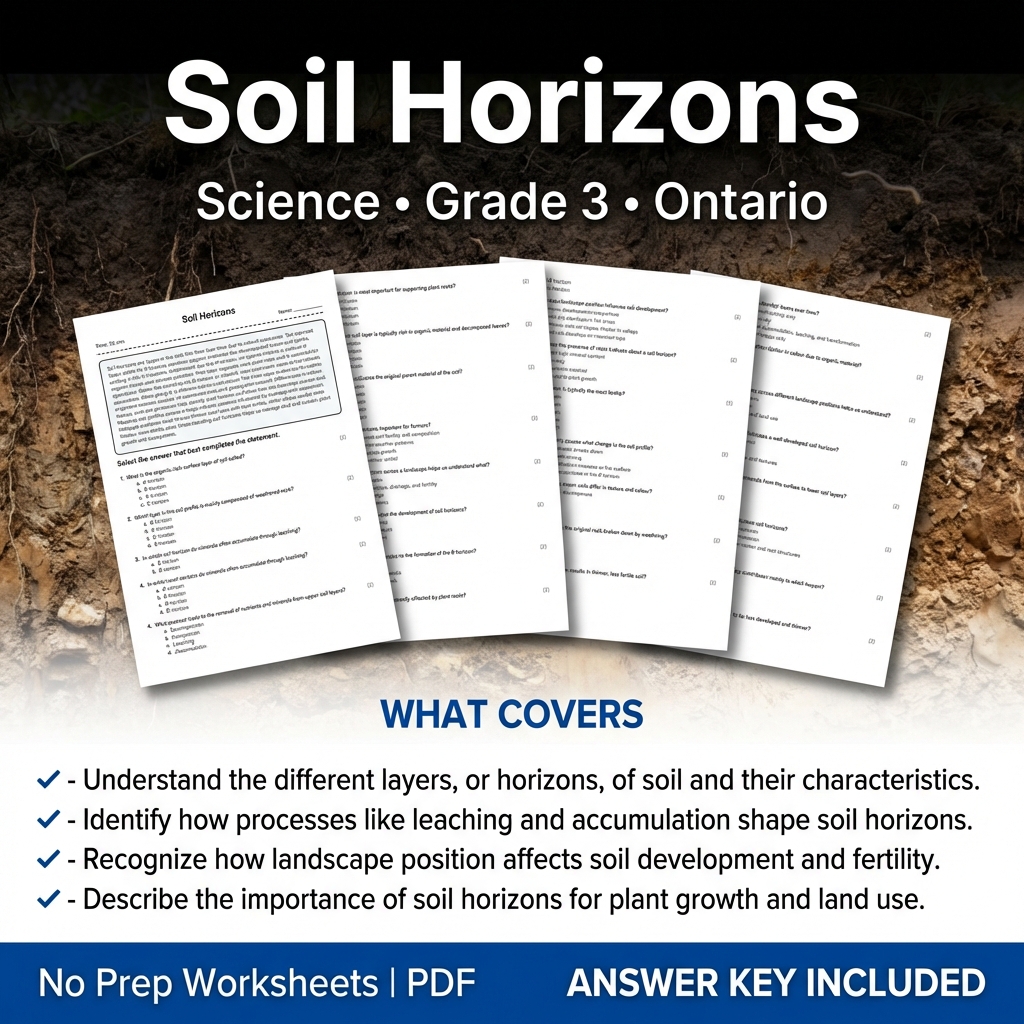
Soil Horizons Science Worksheet | Grade 3 | Ontario Standards
Created byCoral Reef LearningLearning Objectives
- Understand the different layers, or horizons, of soil and their characteristics.
- Identify how processes like leaching and accumulation shape soil horizons.
- Recognize how landscape position affects soil development and fertility.

Grade 9 Science | Reaction Rates Worksheet & Answer Key (Printable PDF)
Created byCoral Reef LearningLearning Objectives
- Understand the kinetic factors affecting reaction rates such as temperature, concentration, and catalysts.
- Explain the relationship between rate laws, reaction order, and molecular collision theory.
- Analyze energy profiles and transition states to connect molecular events with macroscopic reaction speed.
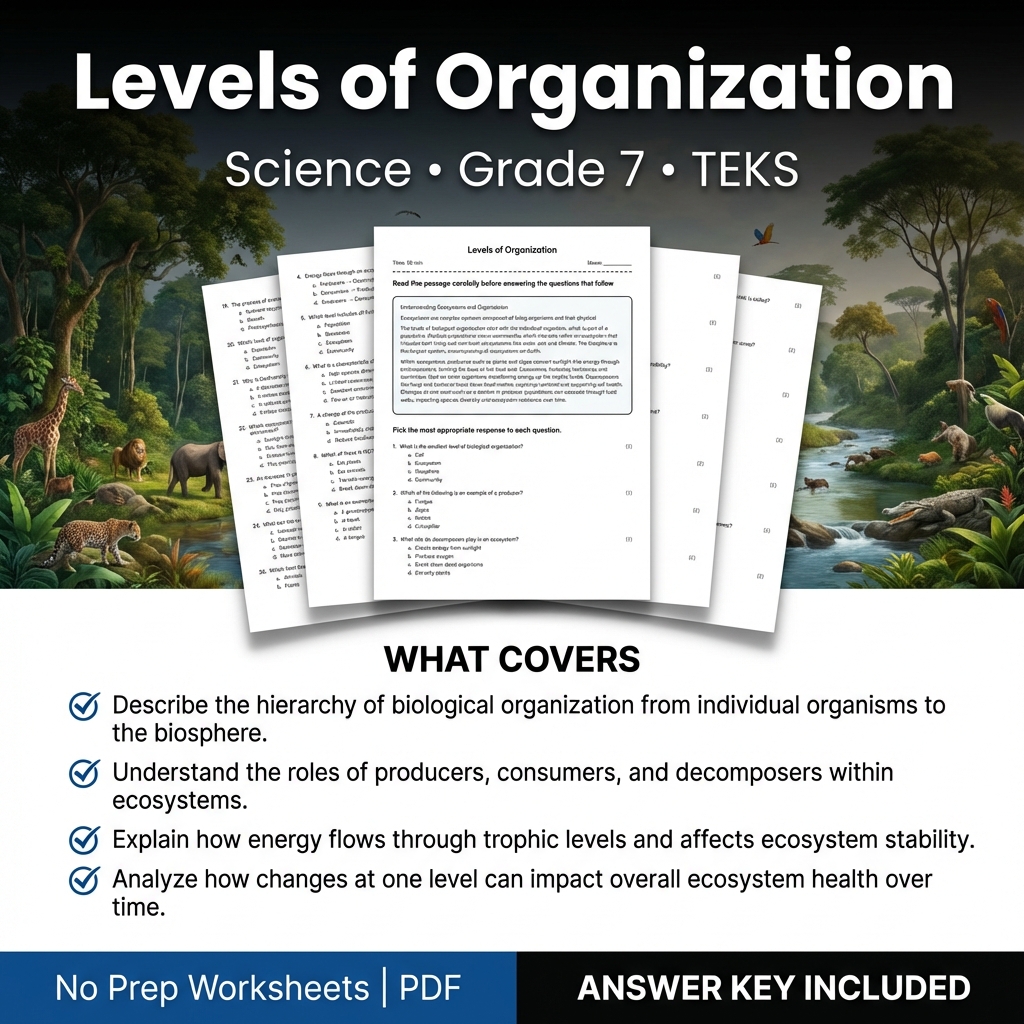
Levels of Organization Worksheet | TEKS Grade 7 Science Practice PDF
Created byCoral Reef LearningLearning Objectives
- Describe the hierarchy of biological organization from individual organisms to the biosphere.
- Understand the roles of producers, consumers, and decomposers within ecosystems.
- Explain how energy flows through trophic levels and affects ecosystem stability.
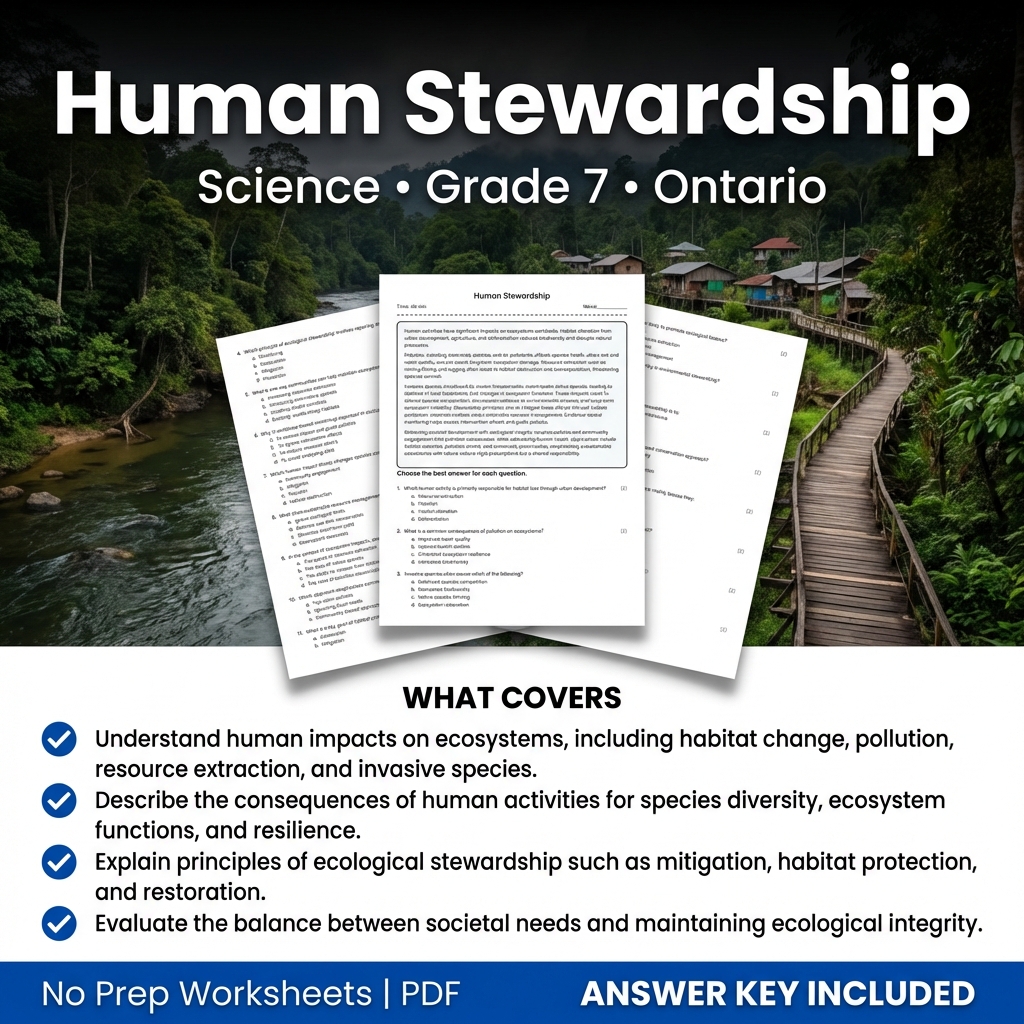
Human Stewardship Worksheet for Grade 7 Science | Ontario Standards
Created byCoral Reef LearningLearning Objectives
- Understand human impacts on ecosystems, including habitat change, pollution, resource extraction, and invasive species.
- Describe the consequences of human activities for species diversity, ecosystem functions, and resilience.
- Explain principles of ecological stewardship such as mitigation, habitat protection, and restoration.
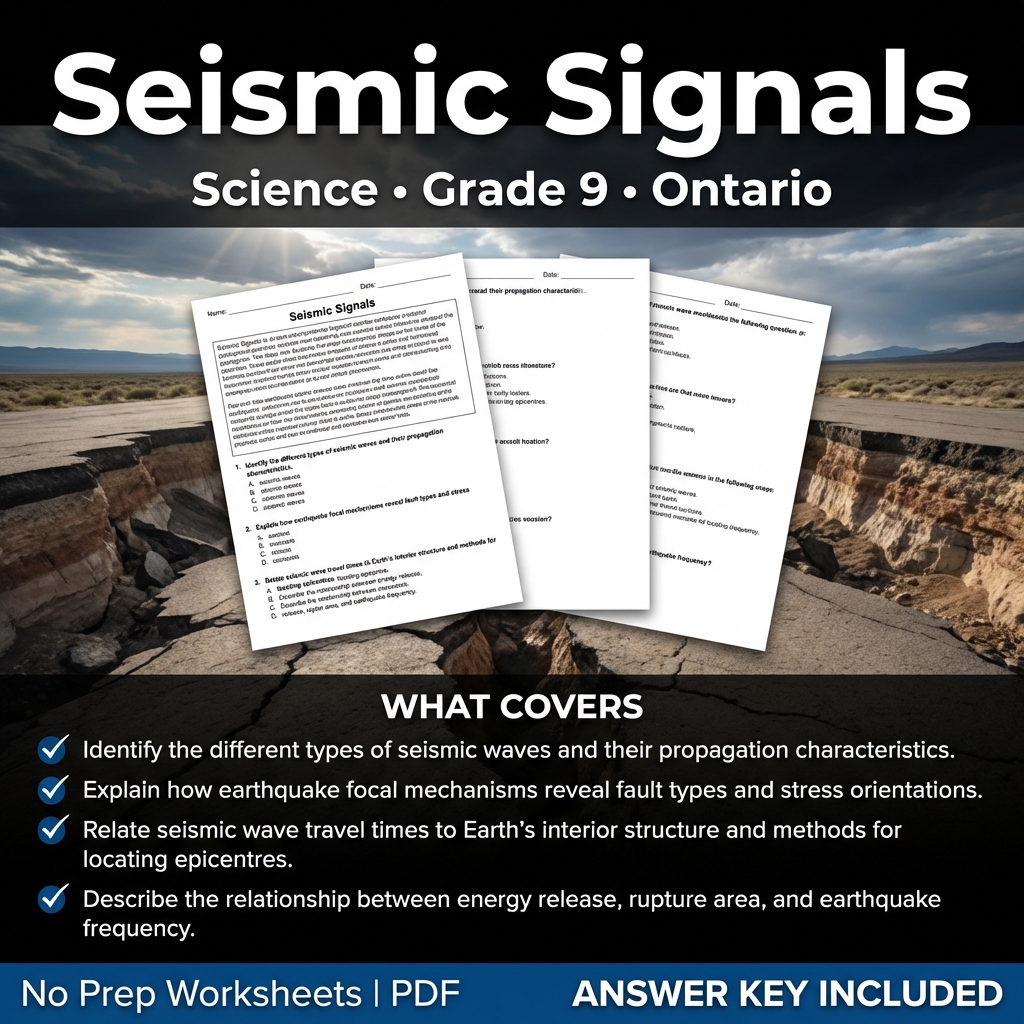
Seismic Signals Science Worksheet | Grade 9 Ontario Standard Practice
Created byCoral Reef LearningLearning Objectives
- Identify the different types of seismic waves and their propagation characteristics.
- Explain how earthquake focal mechanisms reveal fault types and stress orientations.
- Relate seismic wave travel times to Earth's interior structure and methods for locating epicentres.
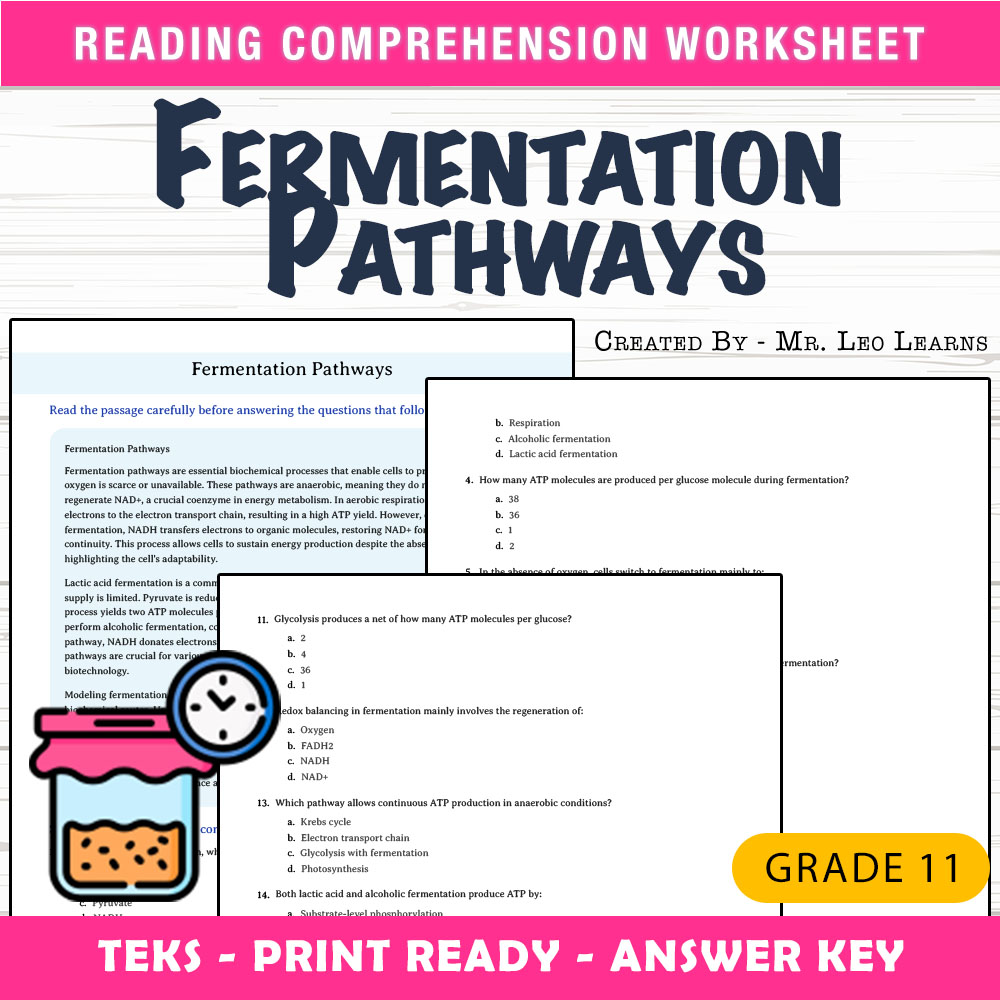
Grade 11 Science | Fermentation Pathways Worksheet for Mastery
Created byThe Resource HubLearning Objectives
- Understand the processes and differences between lactic acid and alcoholic fermentation.
- Identify the role of NAD+ regeneration in anaerobic conditions.
- Explain how fermentation pathways continue ATP production without oxygen.
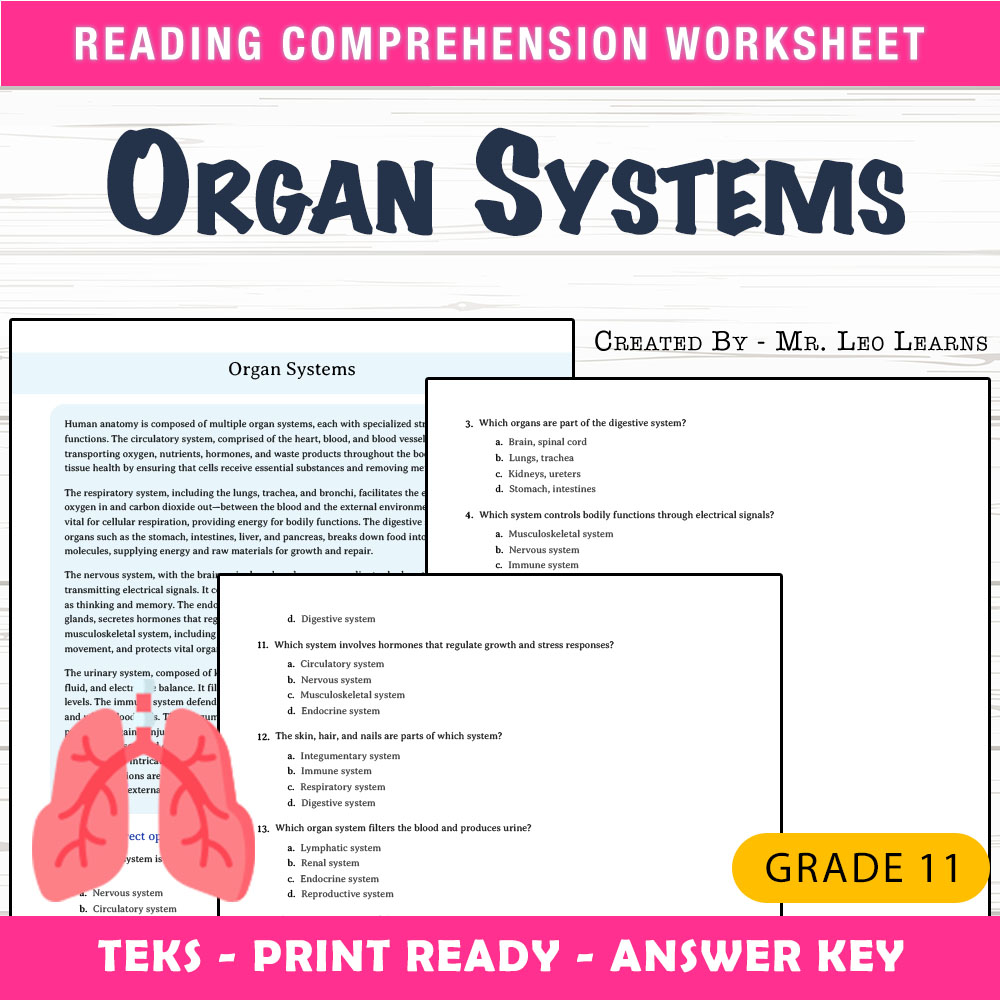
Grade 11 Science – Organ Systems Worksheet for Mastering Human Anatomy
Created byThe Resource HubLearning Objectives
- Understand the primary structures and functions of human organ systems.
- Identify the interactions among different organ systems in maintaining homeostasis.
- Describe the components of key organ systems such as circulatory, respiratory, digestive, and nervous systems.
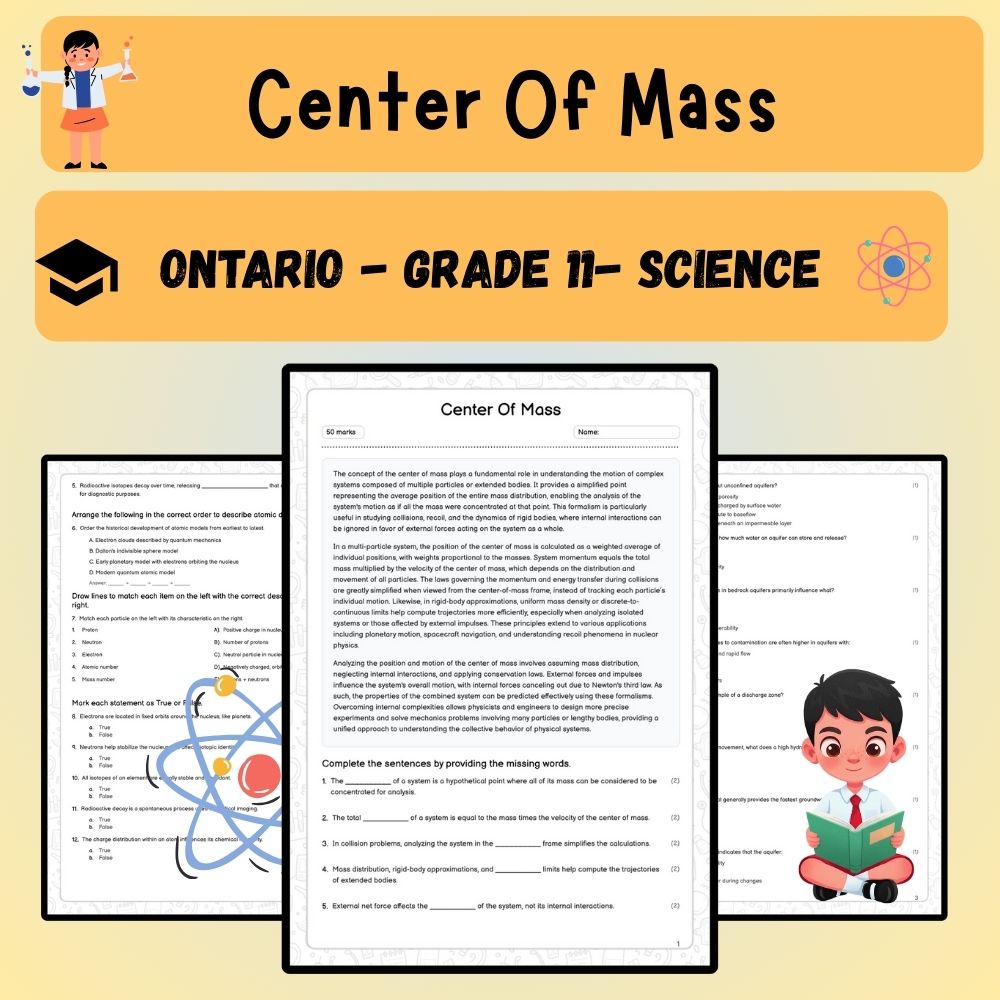
Grade 11 Science | Center Of Mass Worksheet (Worksheet + Answer Key) – Ontario Standards
Created byPrism Point LearningLearning Objectives
- Understand the concept of center of mass and its role in the collective motion of multi-particle systems.
- Apply the formalism of center-of-mass to analyze collision and recoil problems.
- Relate system momentum to the total mass and center-of-mass velocity.
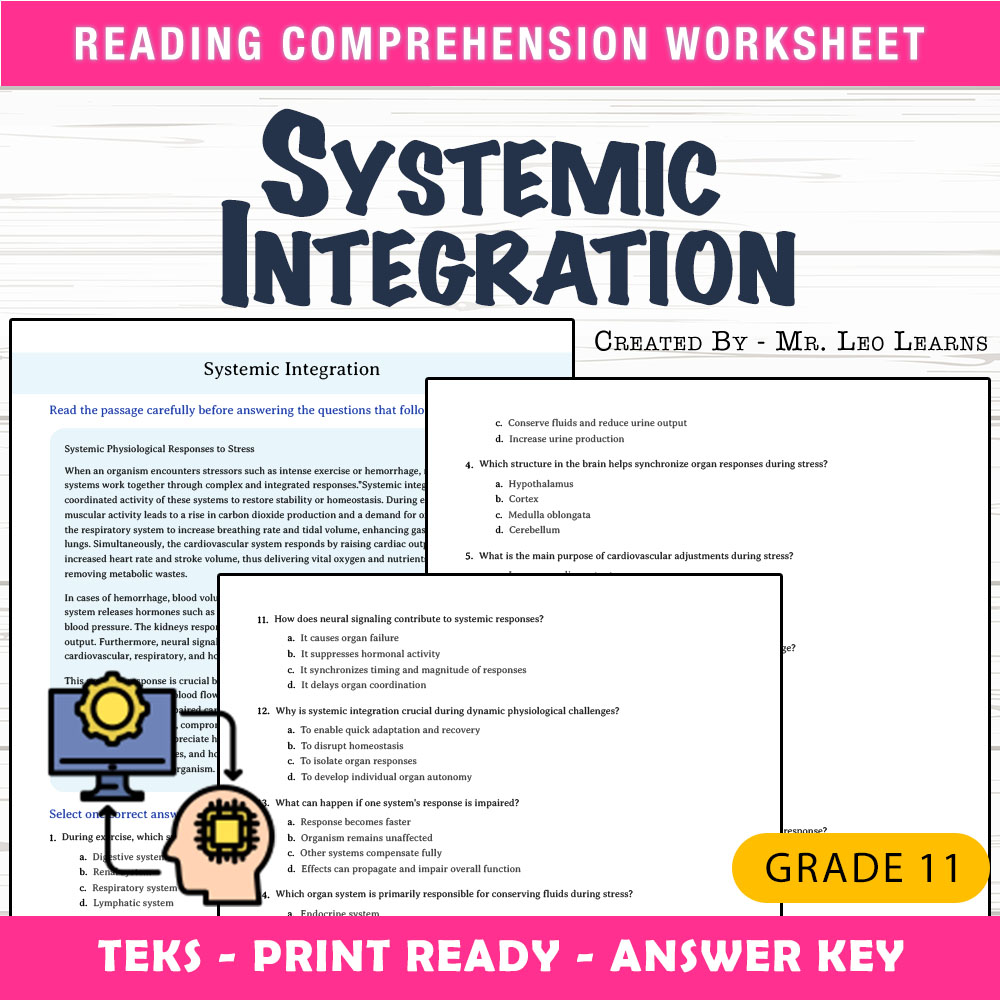
Grade 11 Science – Systemic Integration Worksheet for Mastery
Created byThe Resource HubLearning Objectives
- Understand the coordinated responses of organ systems during stressors such as exercise or hemorrhage.
- Identify the physiological mechanisms involved in cardiovascular, respiratory, endocrine, and renal adjustments.
- Explain how neural and hormonal signals regulate systemic responses to maintain homeostasis.
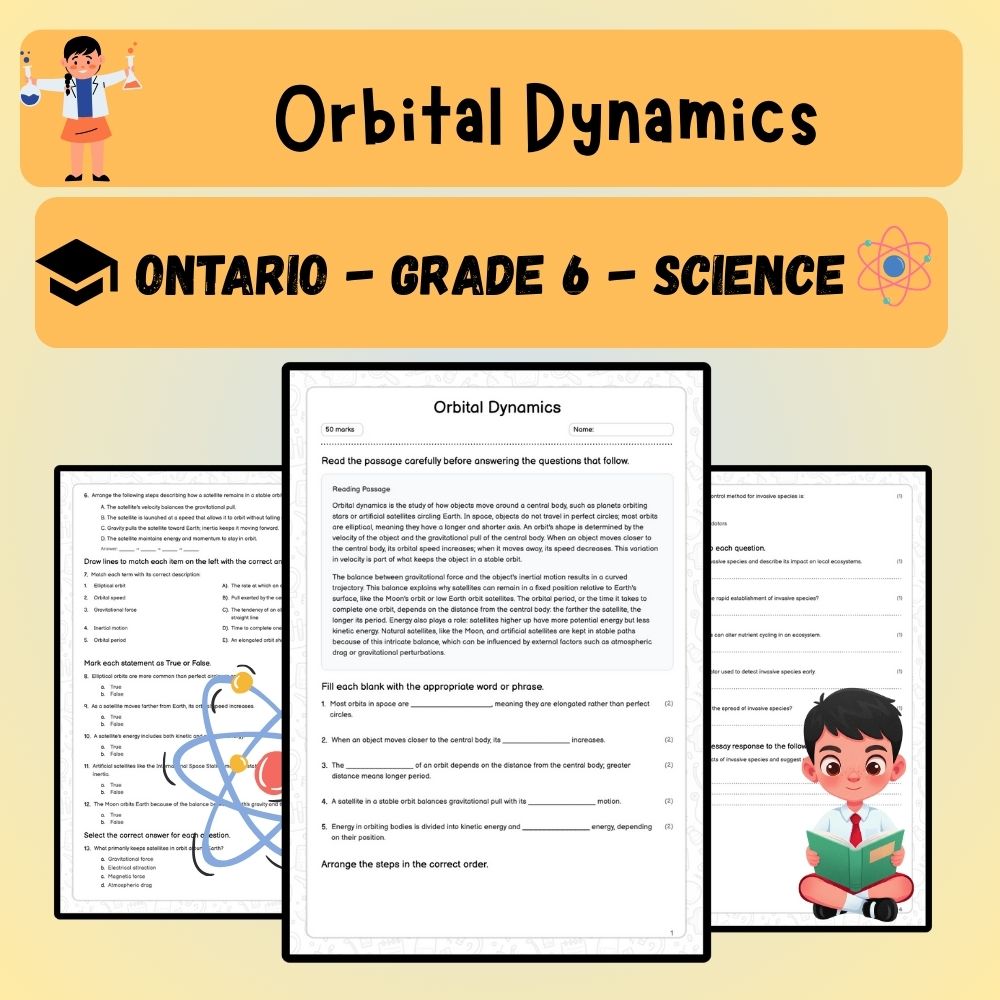
6th Grade Science | Orbital Dynamics Worksheet (PDF )
Created byPrism Point LearningLearning Objectives
- Understand the difference between elliptical and near-circular orbits and their characteristics.
- Explain how the orbital speed varies with distance from the central body.
- Describe the balance of gravitational force and inertial motion that produces stable orbits.
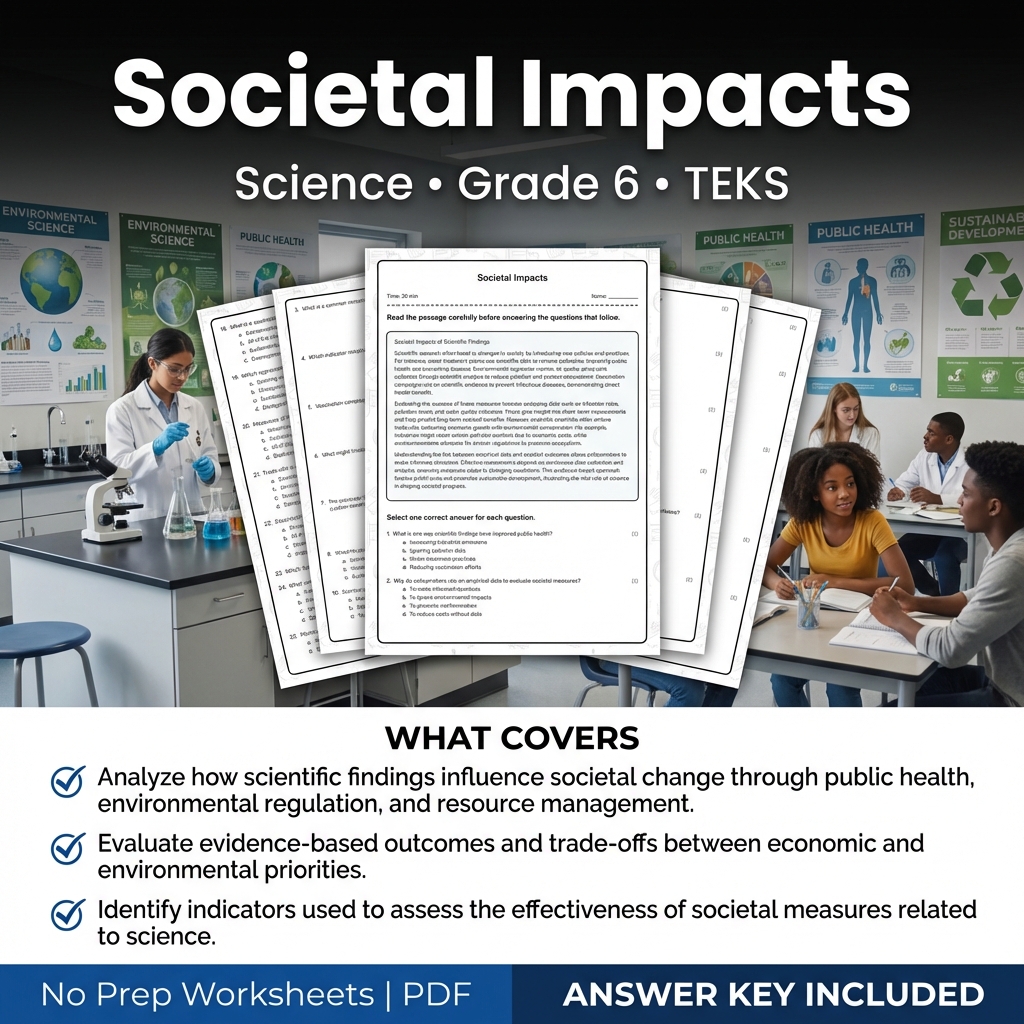
Grade 6 Science Worksheet on Societal Impacts with Answer Key
Created byCoral Reef LearningLearning Objectives
- Analyze how scientific findings influence societal change through public health, environmental regulation, and resource management.
- Evaluate evidence-based outcomes and trade-offs between economic and environmental priorities.
- Identify indicators used to assess the effectiveness of societal measures related to science.
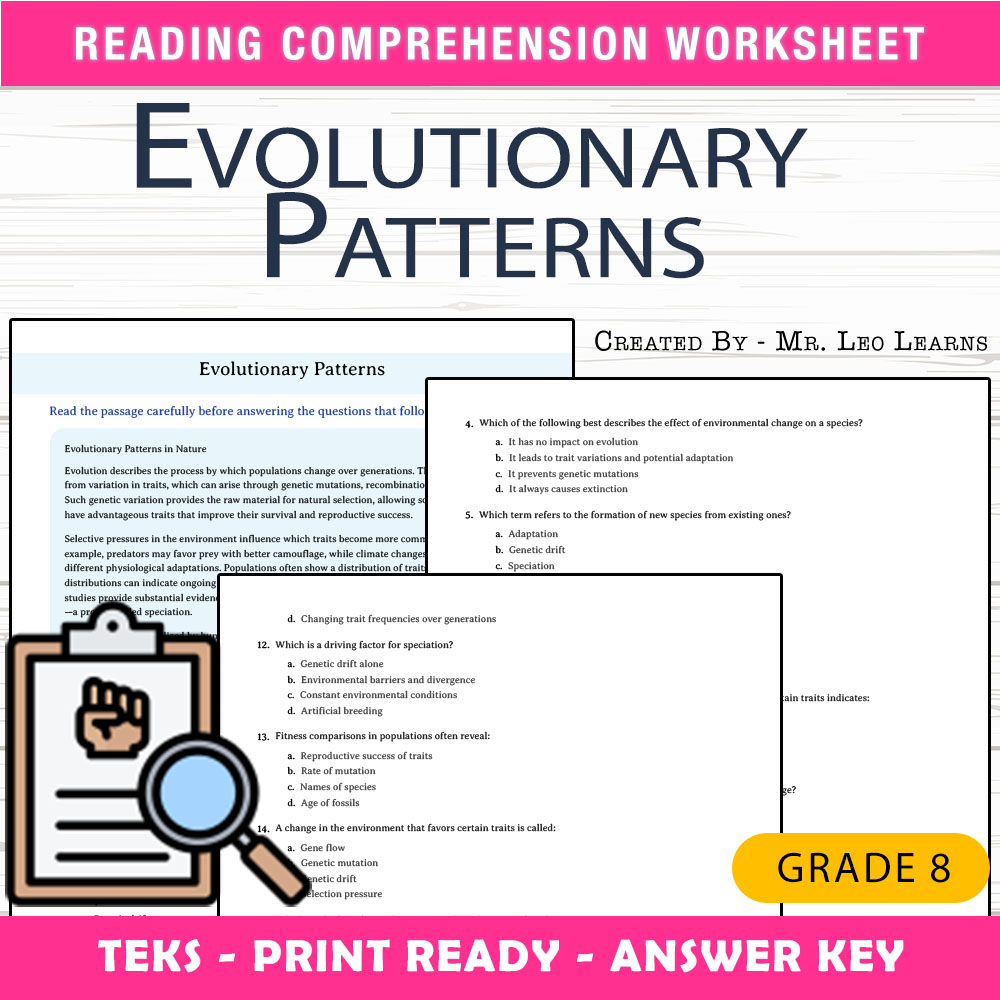
Grade 8 Science — Evolutionary Patterns Worksheet for Mastery | PDF + Answer Key
Created byThe Resource HubLearning Objectives
- Understand the sources of genetic variation and their role in evolution.
- Identify the effects of selective pressures on traits within populations.
- Interpret data from trait distributions, fitness comparisons, and lineage divergence.
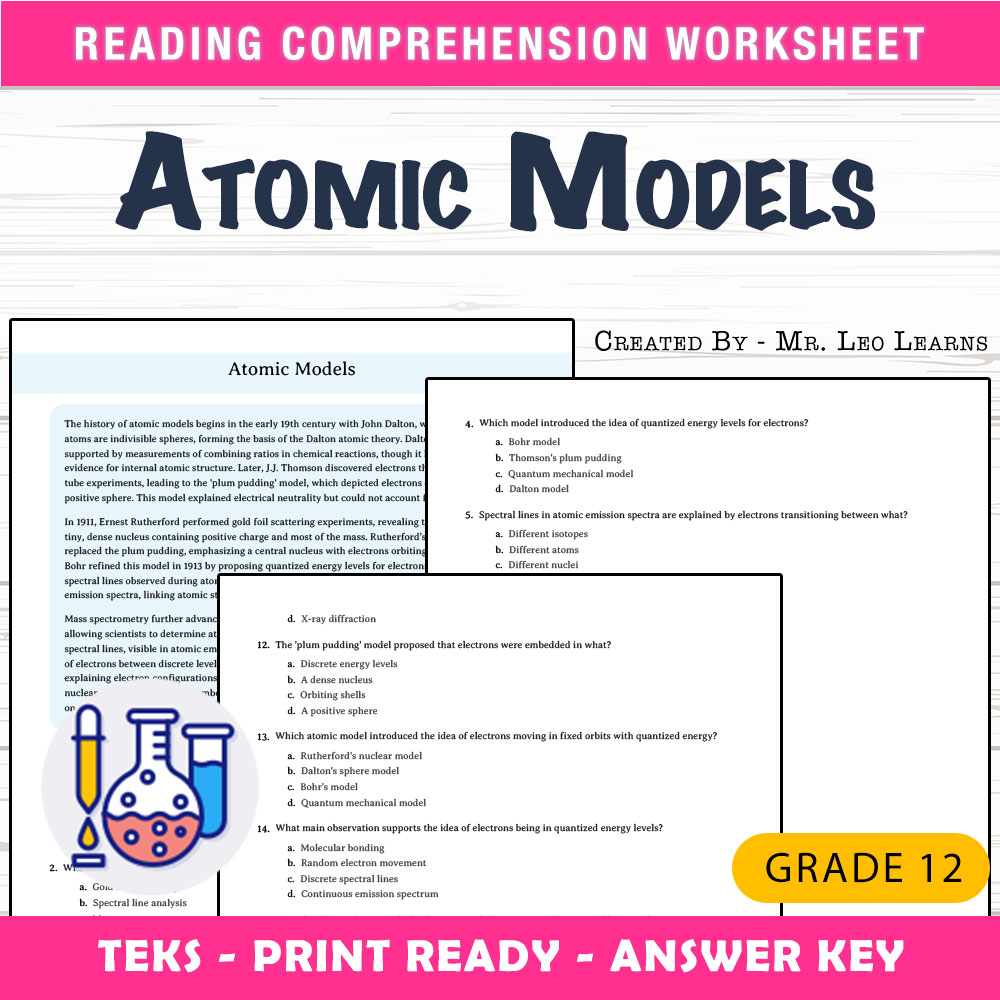
Grade 12 Science | Atomic Models Worksheet for Mastery
Created byThe Resource HubLearning Objectives
- Understand the development and evolution of atomic models from Dalton to Rutherford and Bohr.
- Identify the empirical evidence supporting each atomic model, such as cathode ray experiments and gold foil scattering.
- Explain the concepts of nuclear charge, mass number, and isotopic abundance using mass spectrometry as an example.
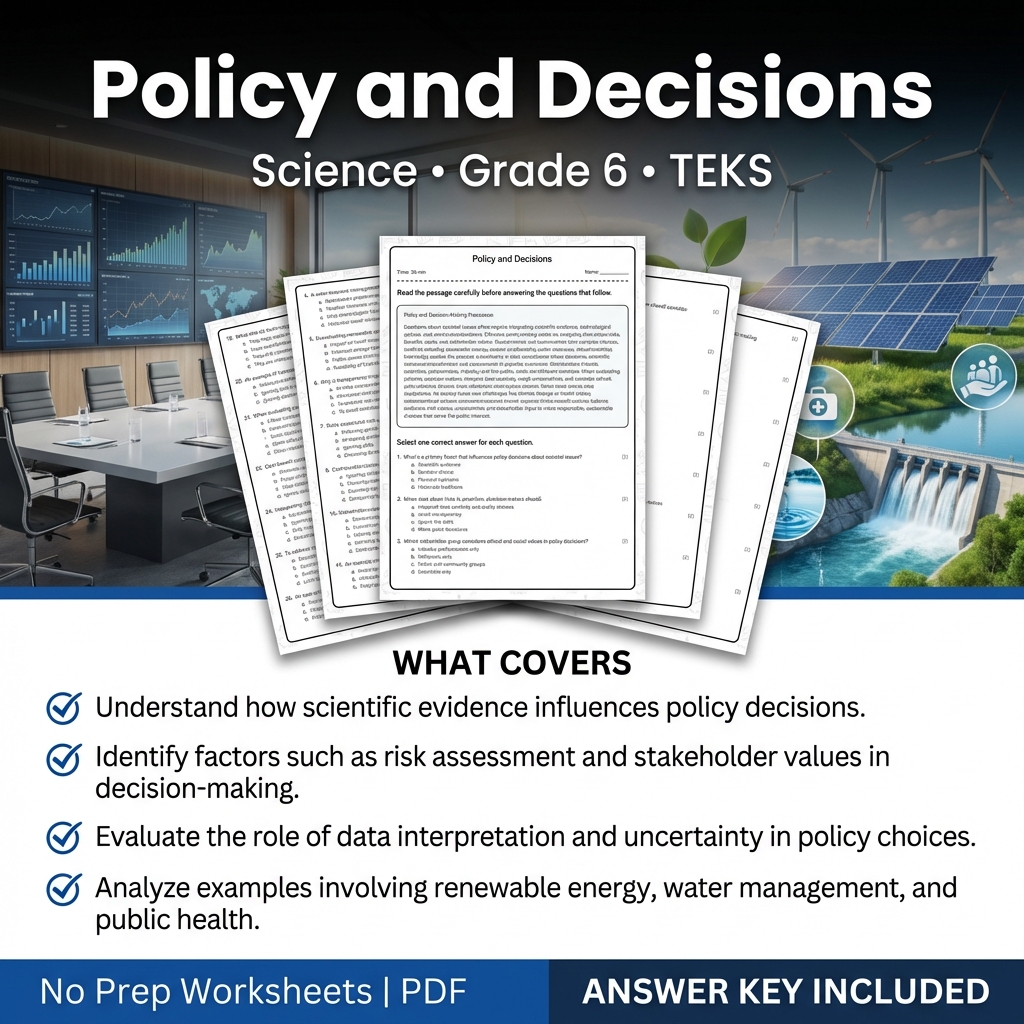
Grade 6 Science Worksheet on Policy and Decisions | TEKS aligned
Created byCoral Reef LearningLearning Objectives
- Understand how scientific evidence influences policy decisions.
- Identify factors such as risk assessment and stakeholder values in decision-making.
- Evaluate the role of data interpretation and uncertainty in policy choices.
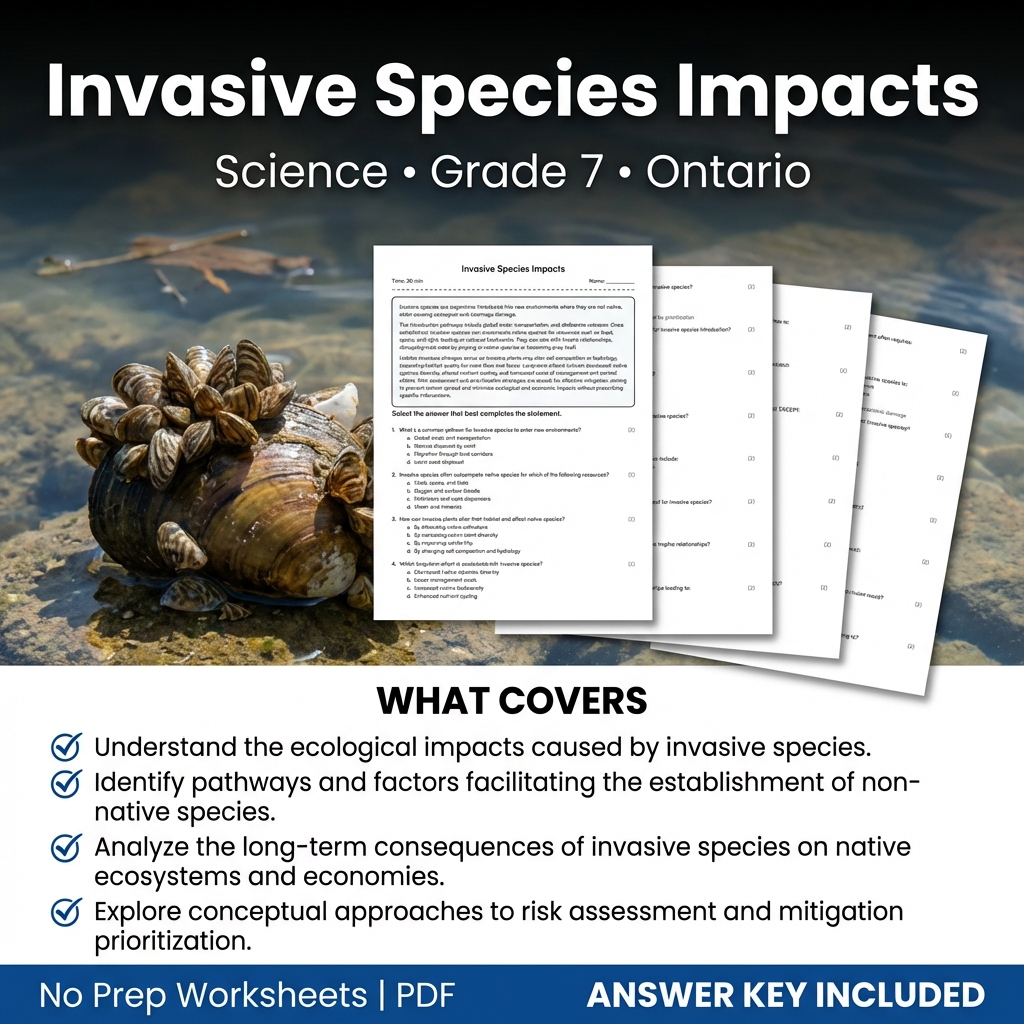
Grade 7 Science Worksheet on Invasive Species Impacts for Classroom
Created byCoral Reef LearningLearning Objectives
- Understand the ecological impacts caused by invasive species.
- Identify pathways and factors facilitating the establishment of non-native species.
- Analyze the long-term consequences of invasive species on native ecosystems and economies.

Grade 12 Science Worksheet on Equilibrium Quantification | BC Standards
Created byCoral Reef LearningLearning Objectives
- Understand the concepts of equilibrium constant (Kc and Kp) and their applications.
- Calculate reaction quotients and predict reaction direction.
- Explain how temperature influences equilibrium constants through thermodynamics.
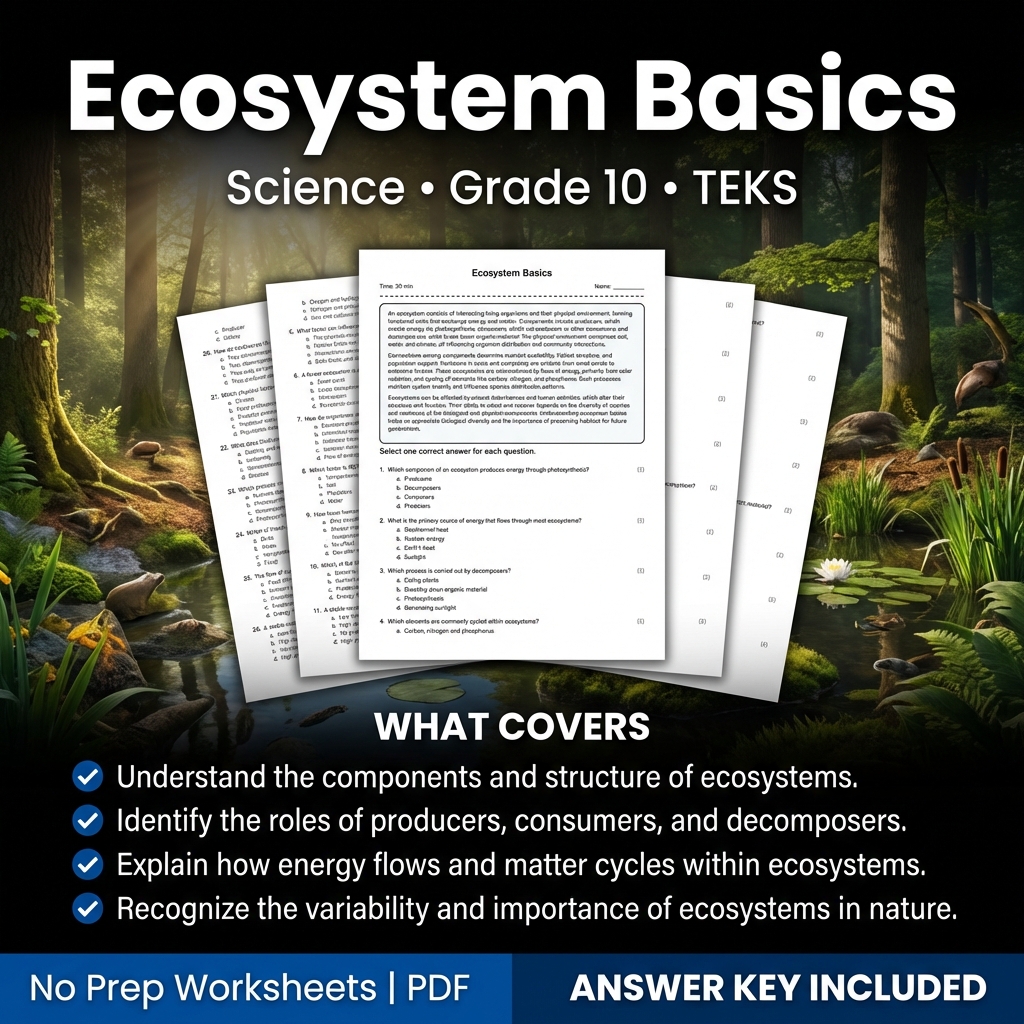
Ecosystem Basics Grade 10 Science Worksheet & Answer Key TEKS
Created byCoral Reef LearningLearning Objectives
- Understand the components and structure of ecosystems.
- Identify the roles of producers, consumers, and decomposers.
- Explain how energy flows and matter cycles within ecosystems.
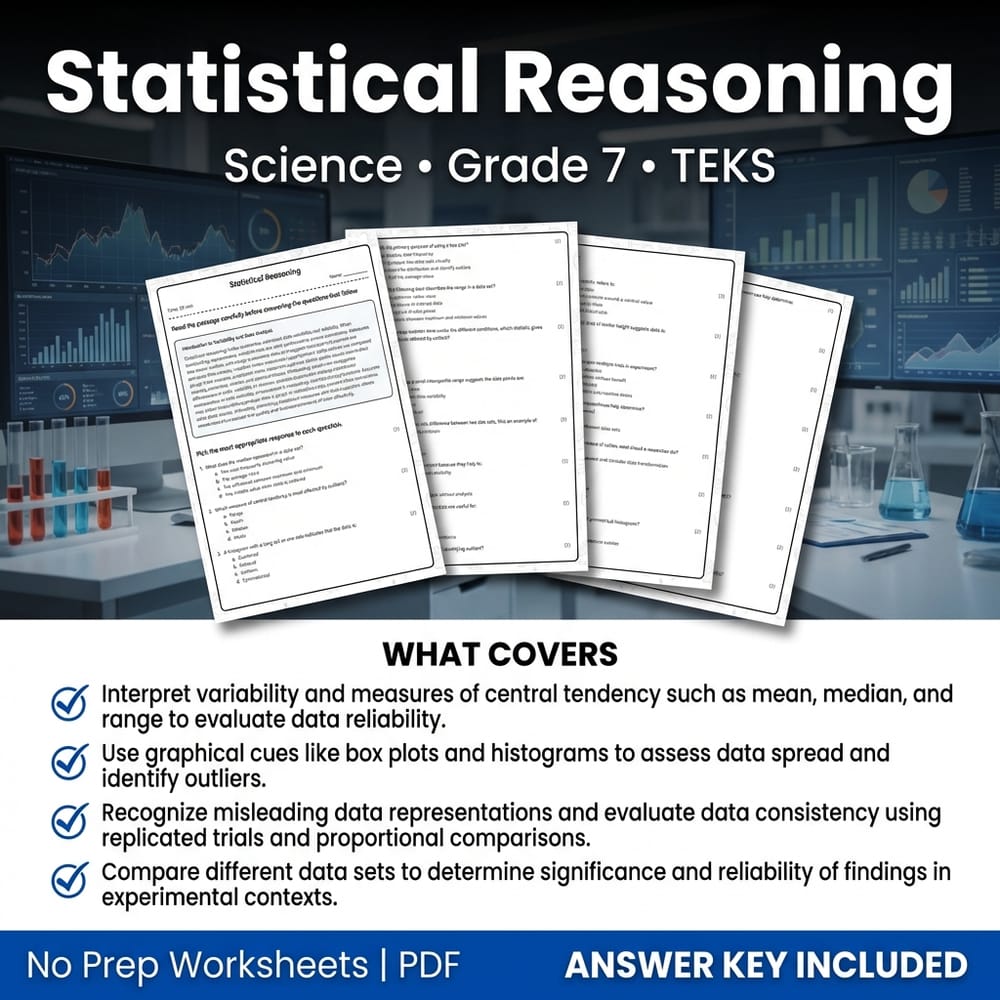
Grade 7 Science Worksheet on Statistical Reasoning | TEKS Aligned
Created byCoral Reef LearningLearning Objectives
- Interpret variability and measures of central tendency such as mean, median, and range to evaluate data reliability.
- Use graphical cues like box plots and histograms to assess data spread and identify outliers.
- Recognize misleading data representations and evaluate data consistency using replicated trials and proportional comparisons.
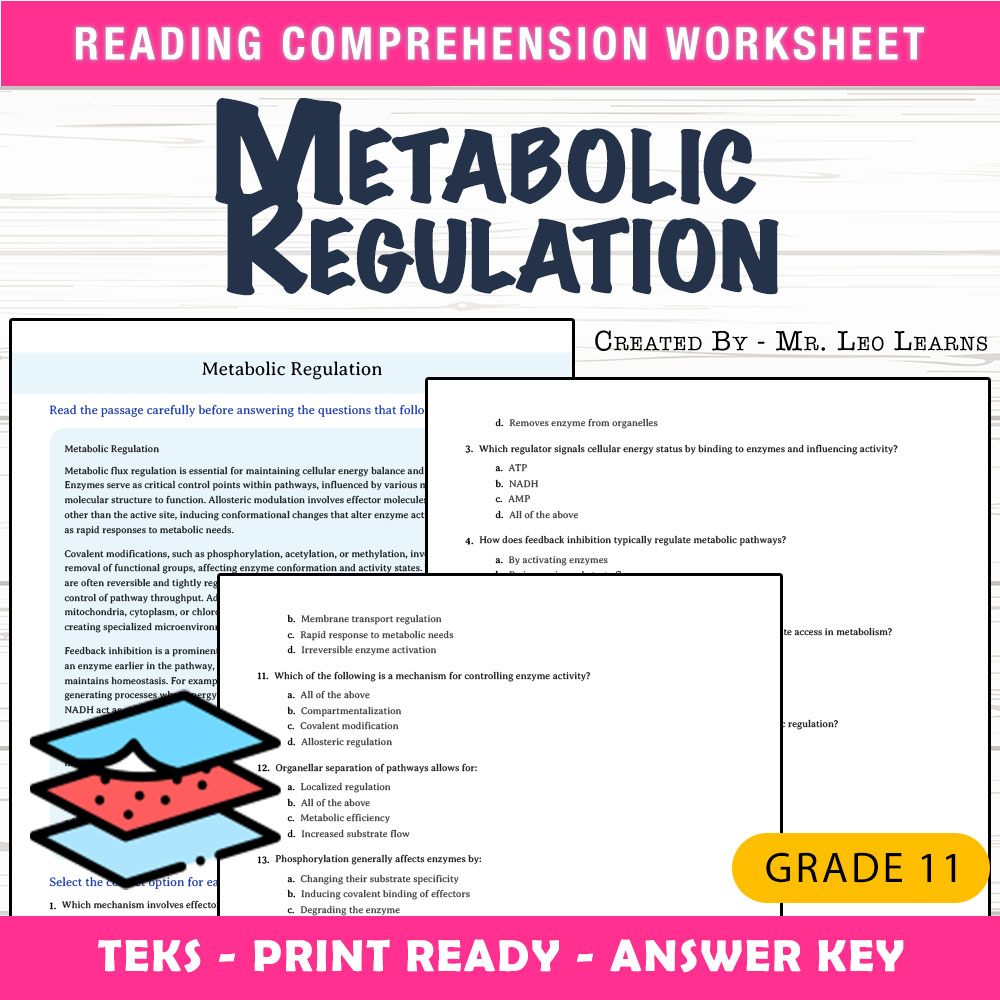
Grade 11 Science | Metabolic Regulation Worksheet for Mastery
Created byThe Resource HubLearning Objectives
- Explain how enzyme regulation mechanisms control metabolic flux.
- Describe the roles of allosteric modulation, covalent modification, and compartmentalization in metabolism.
- Identify how feedback inhibition and phosphorylation influence enzyme activity and pathway function.
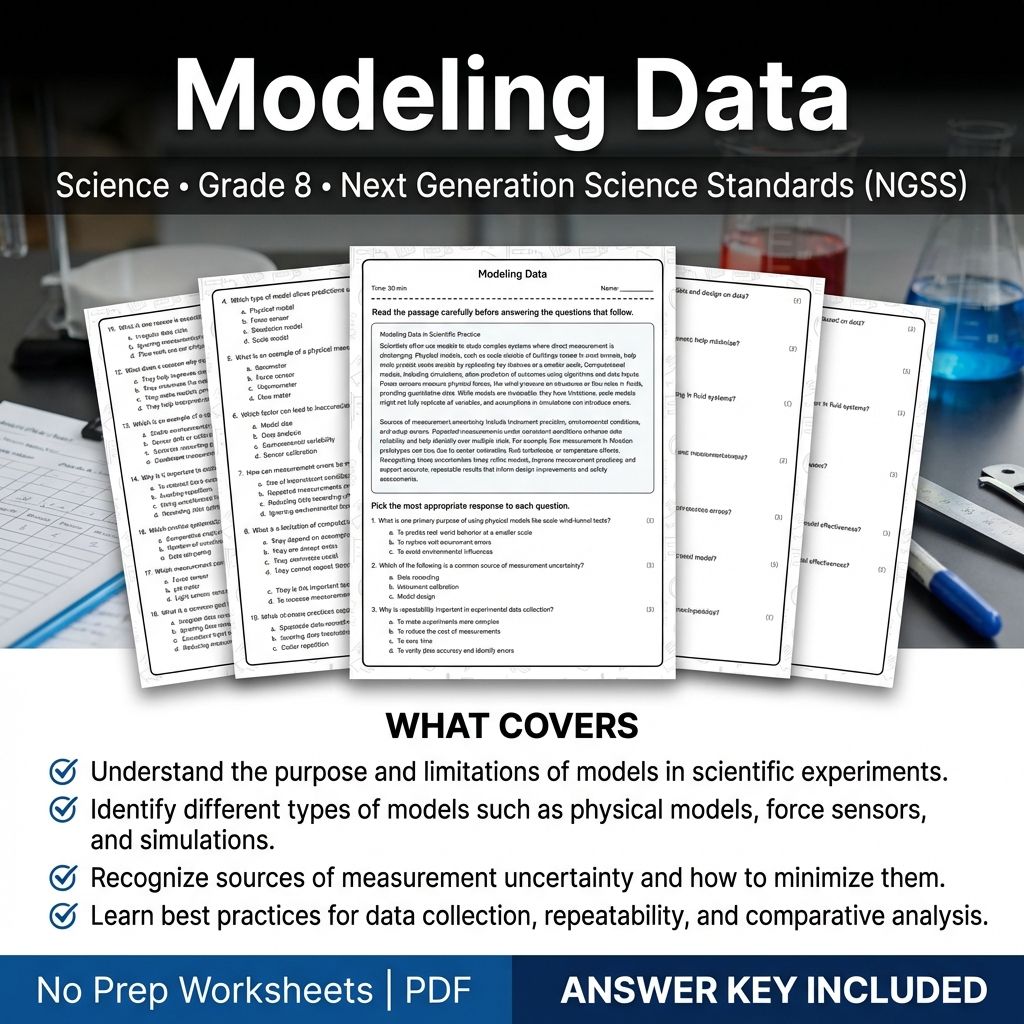
8th Grade Science | Modeling Data Worksheet + Answer Key (Printable PDF)
Created byCoral Reef LearningLearning Objectives
- Understand the purpose and limitations of models in scientific experiments.
- Identify different types of models such as physical models, force sensors, and simulations.
- Recognize sources of measurement uncertainty and how to minimize them.
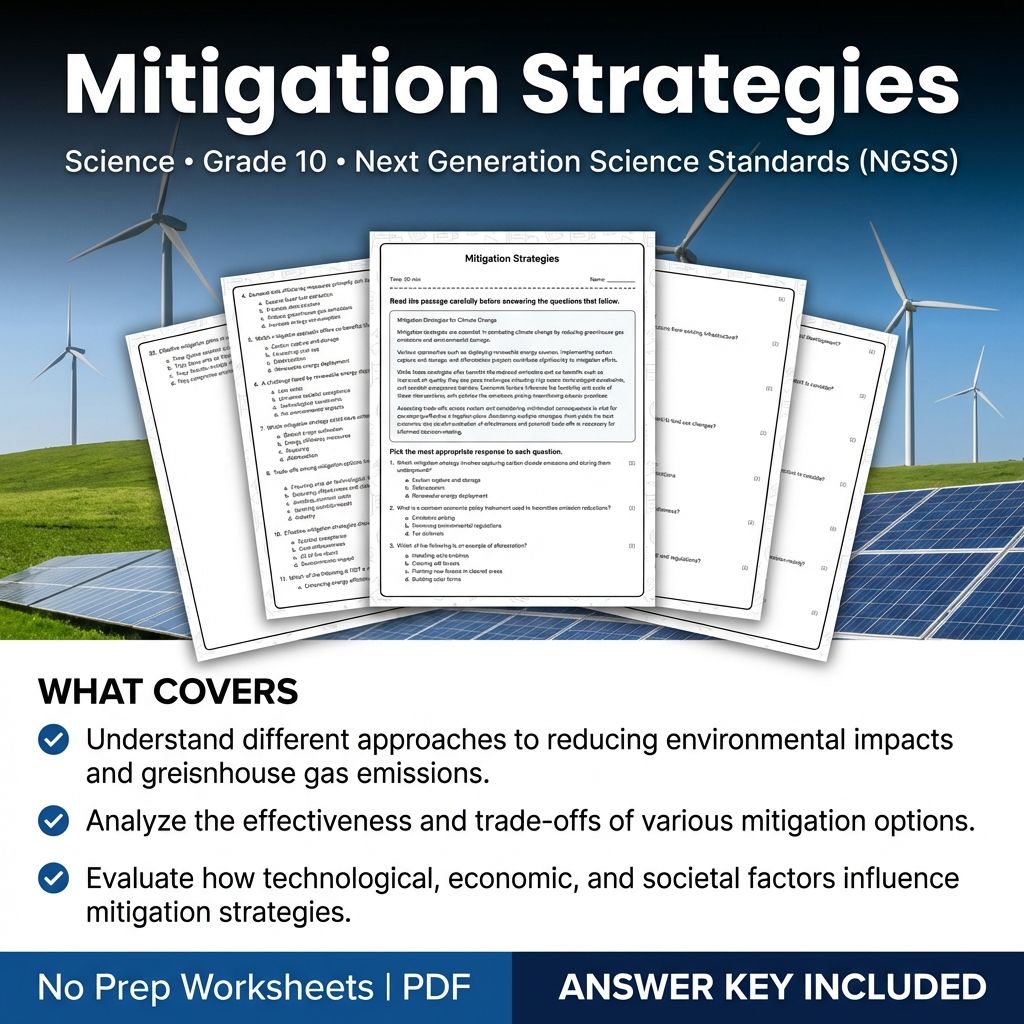
Grade 10 Science | Mitigation Strategies Worksheet & Answer Key (Printable PDF)
Created byCoral Reef LearningLearning Objectives
- Understand different approaches to reducing environmental impacts and greenhouse gas emissions.
- Analyze the effectiveness and trade-offs of various mitigation options.
- Evaluate how technological, economic, and societal factors influence mitigation strategies.
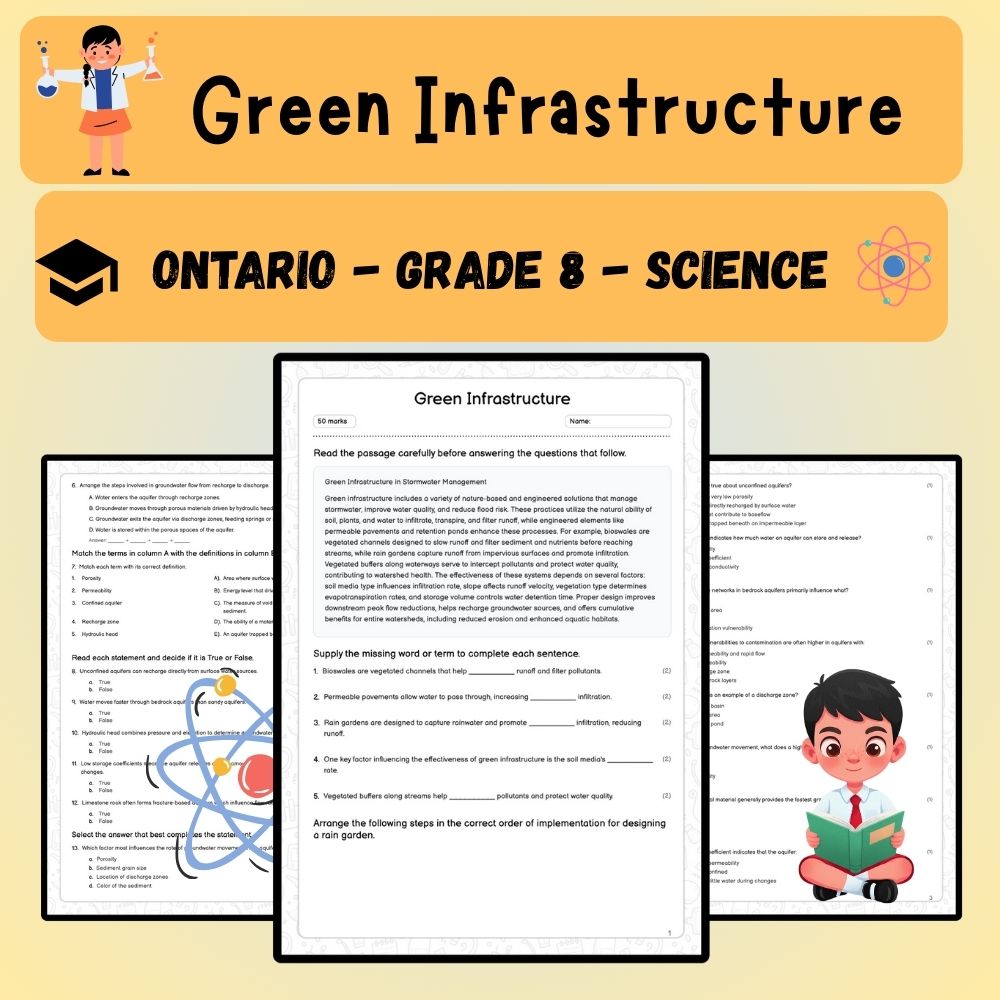
Grade 8 Science | Green Infrastructure Worksheet (PDF )
Created byPrism Point LearningLearning Objectives
- Understand the concept of green infrastructure and its role in stormwater management.
- Identify different types of green infrastructure practices and their functions.
- Explain the design parameters affecting green infrastructure effectiveness.
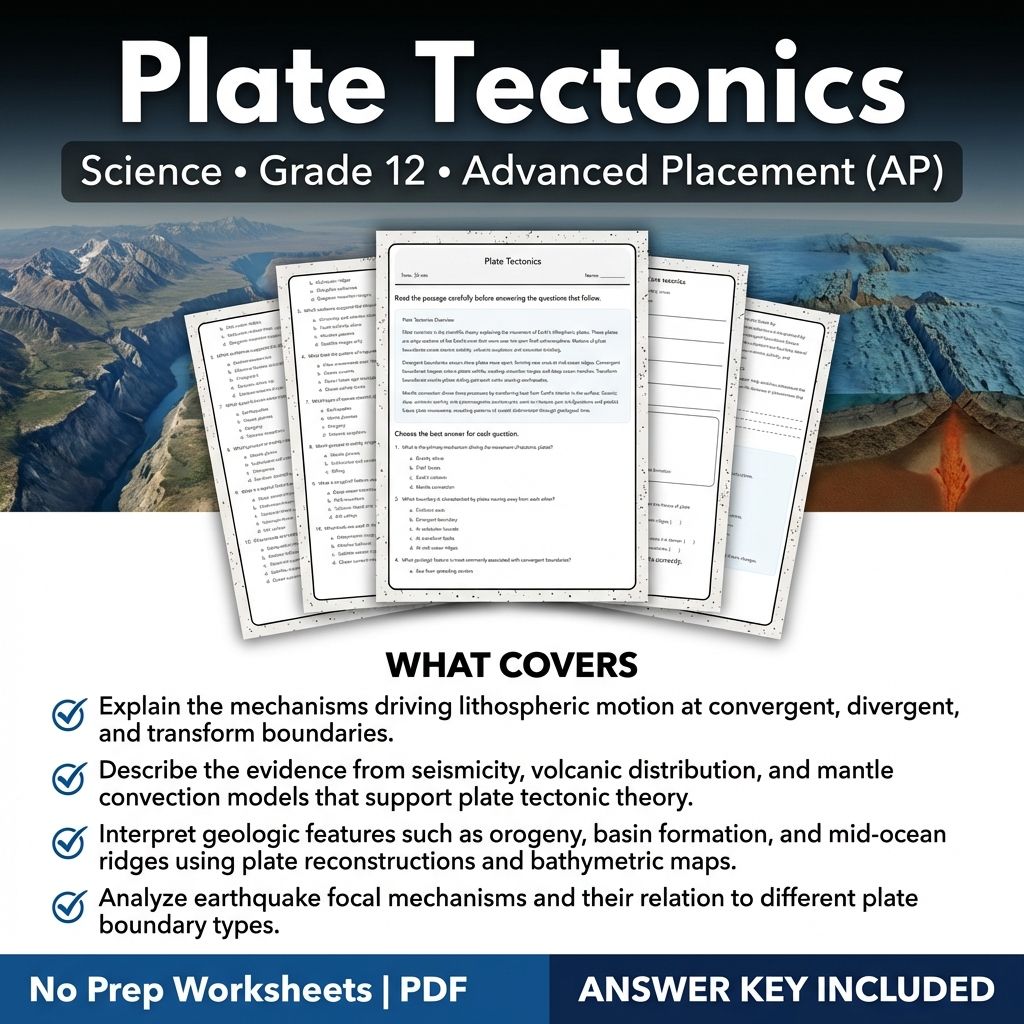
12th Grade Science | Plate Tectonics Worksheet & Answer Key (Printable PDF)
Created byCoral Reef LearningLearning Objectives
- Explain the mechanisms driving lithospheric motion at convergent, divergent, and transform boundaries.
- Describe the evidence from seismicity, volcanic distribution, and mantle convection models that support plate tectonic theory.
- Interpret geologic features such as orogeny, basin formation, and mid-ocean ridges using plate reconstructions and bathymetric maps.
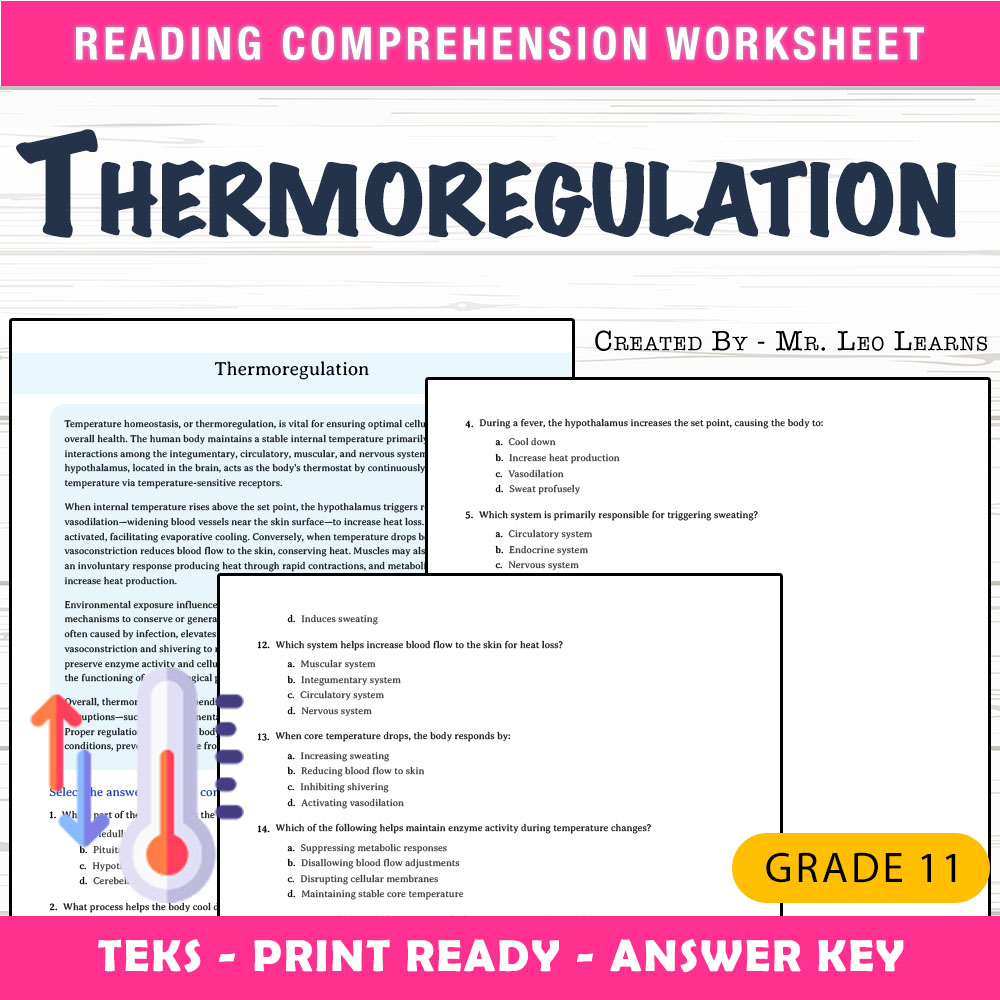
Grade 11 Science – Thermoregulation Worksheet for Mastery
Created byThe Resource HubLearning Objectives
- Explain the role of the hypothalamus in temperature regulation.
- Identify mechanisms of heat production, conservation, and dissipation.
- Understand how the integumentary, circulatory, muscular, and nervous systems interact in thermoregulation.

Grade 11 Science | Force and Acceleration Worksheet (PDF + Answer )
Created byLumora LearningLearning Objectives
- Understand Newton's second law and its mathematical expression, F = ma.
- Analyze free-fall motion and uniform circular motion using graphical and algebraic methods.
- Interpret force vectors, acceleration, and motion trajectories for various rigid body scenarios.
Browse more categories
About Science Worksheets
Find Science worksheets spanning core skills, practice, and review. All 42,859 resources are instant PDF downloads for the classroom or home.
Every worksheet on MyTeachingSheets is created by independent teacher-authors and reviewed before publication. All resources download as printable PDFs for classroom, homework, or at-home practice, and many include answer keys. Preview any worksheet free before buying.