
Science Worksheets
42,859 subject resources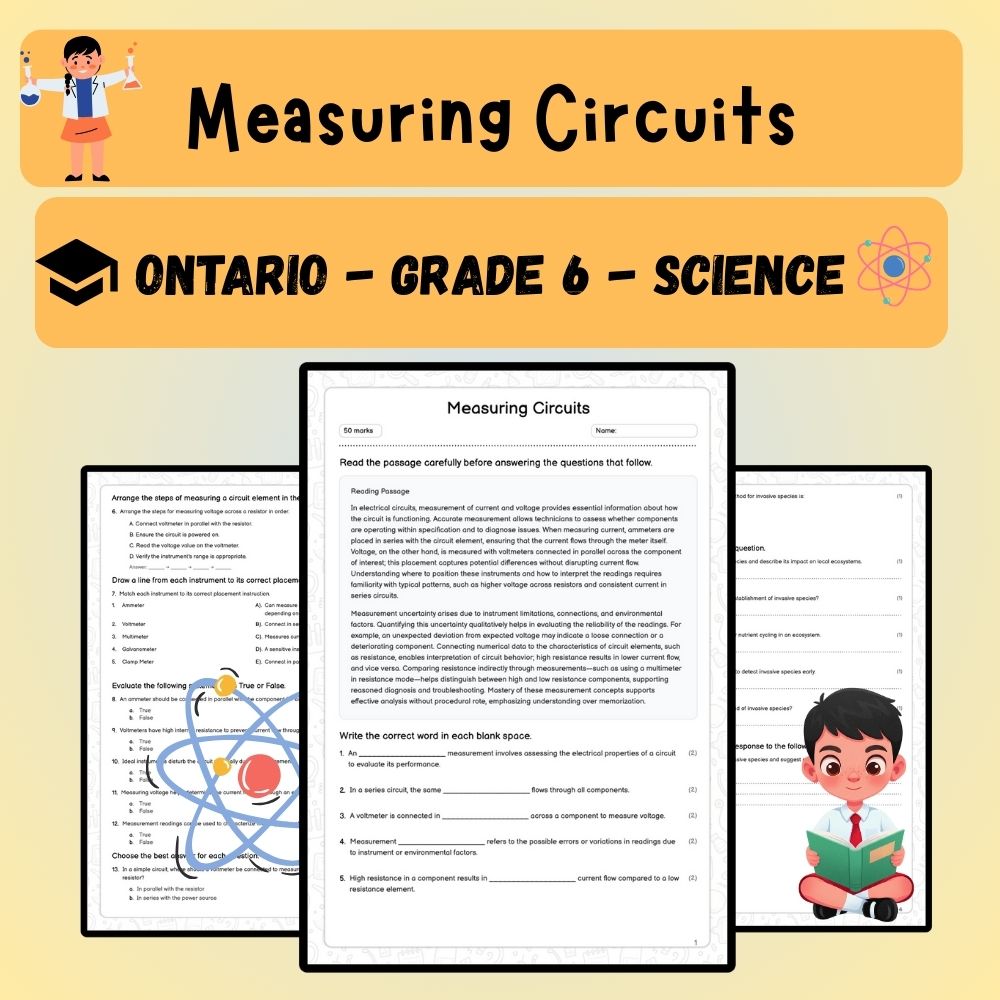
Grade 6 Science – Measuring Circuits Worksheet (PDF) | Ontario Standards
 Created byPrism Point Learning
Learning Objectives
- Understand how current and voltage measurements characterize circuit performance.
- Identify proper instrument placement and interpret typical reading patterns in different configurations.
- Recognize measurement uncertainty and connect readings to component characteristics.
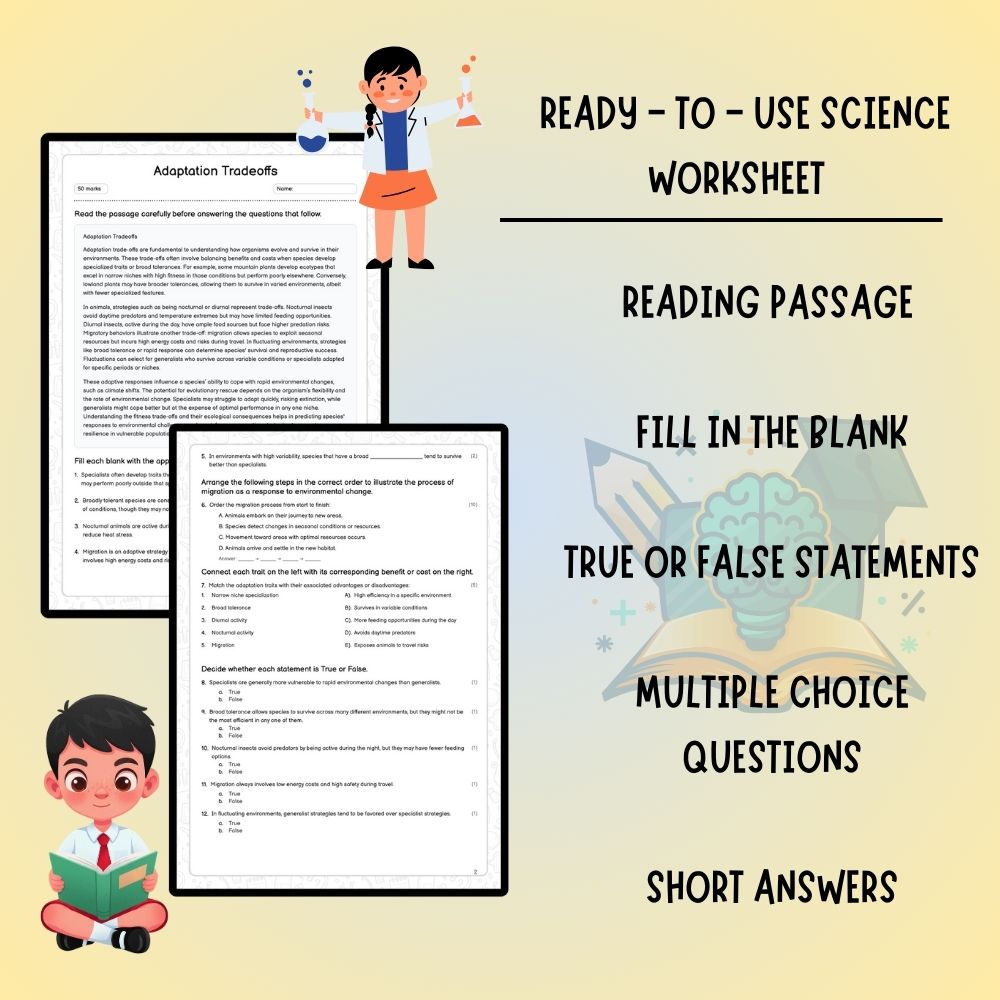
6th Grade Science | Adaptation Tradeoffs Worksheet (PDF )
Created byPrism Point LearningLearning Objectives
- Understand the concept of fitness trade-offs and how they influence adaptation strategies.
- Differentiate between specialists and generalists based on benefits and costs.
- Analyze real-world examples illustrating adaptation trade-offs, such as plant ecotypes and animal behaviors.
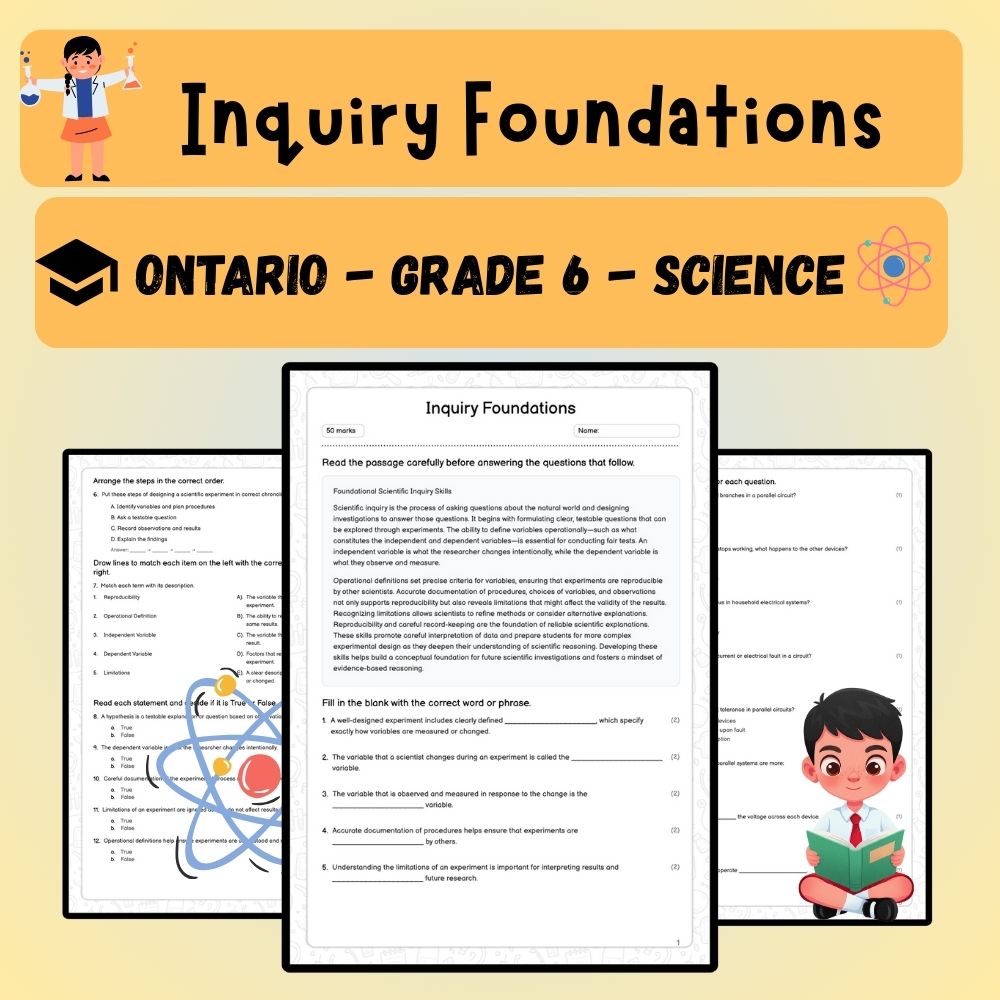
6th Grade Science | Inquiry Foundations Worksheet (PDF ) – Ontario Standard
Created byPrism Point LearningLearning Objectives
- Understand the key concepts of scientific inquiry, including posing testable questions and defining variables.
- Learn to distinguish between independent and dependent variables and establish fair tests through operational definitions.
- Practice documenting procedures for reproducibility and recognizing limitations of experiments.
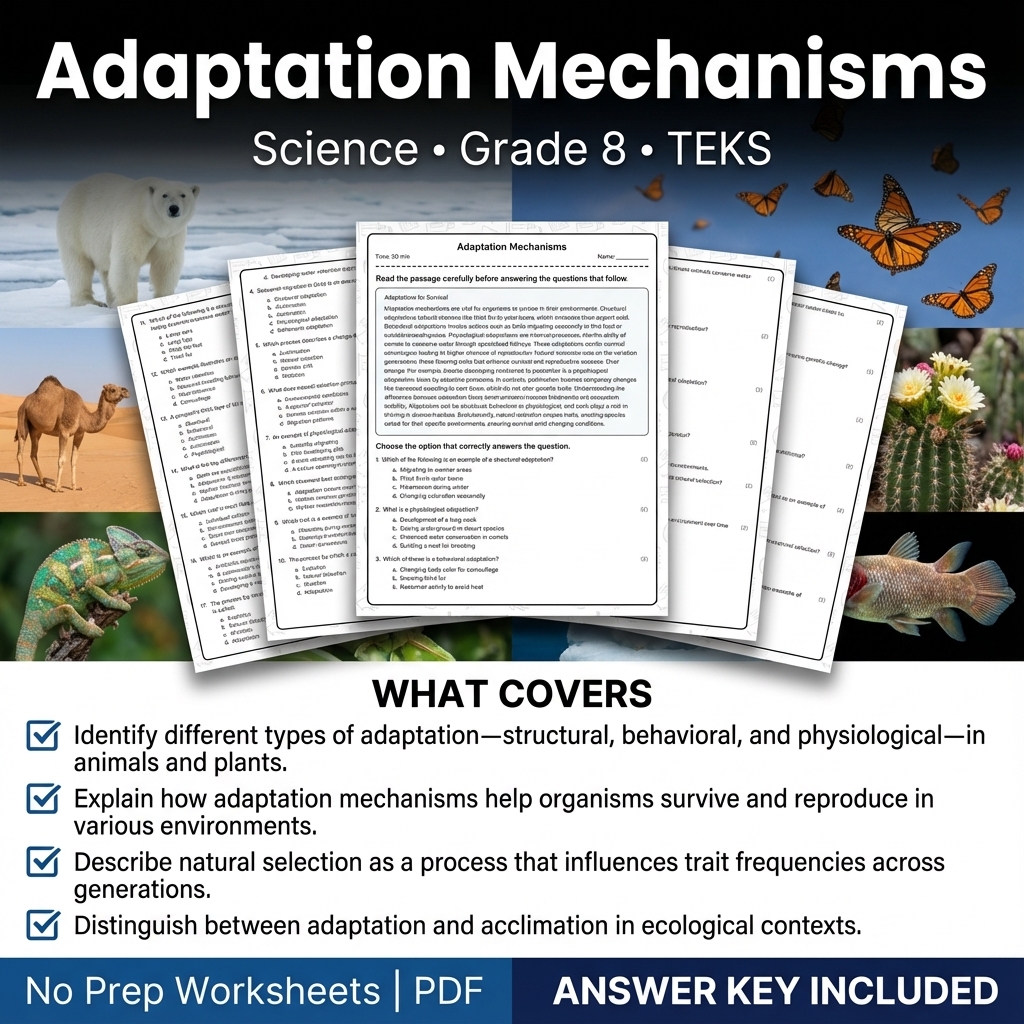
Grade 8 Science | Adaptation Mechanisms Worksheet (Printable PDF + Answer Key)
 Created byCoral Reef Learning
Learning Objectives
- Identify different types of adaptation—structural, behavioral, and physiological—in animals and plants.
- Explain how adaptation mechanisms help organisms survive and reproduce in various environments.
- Describe natural selection as a process that influences trait frequencies across generations.
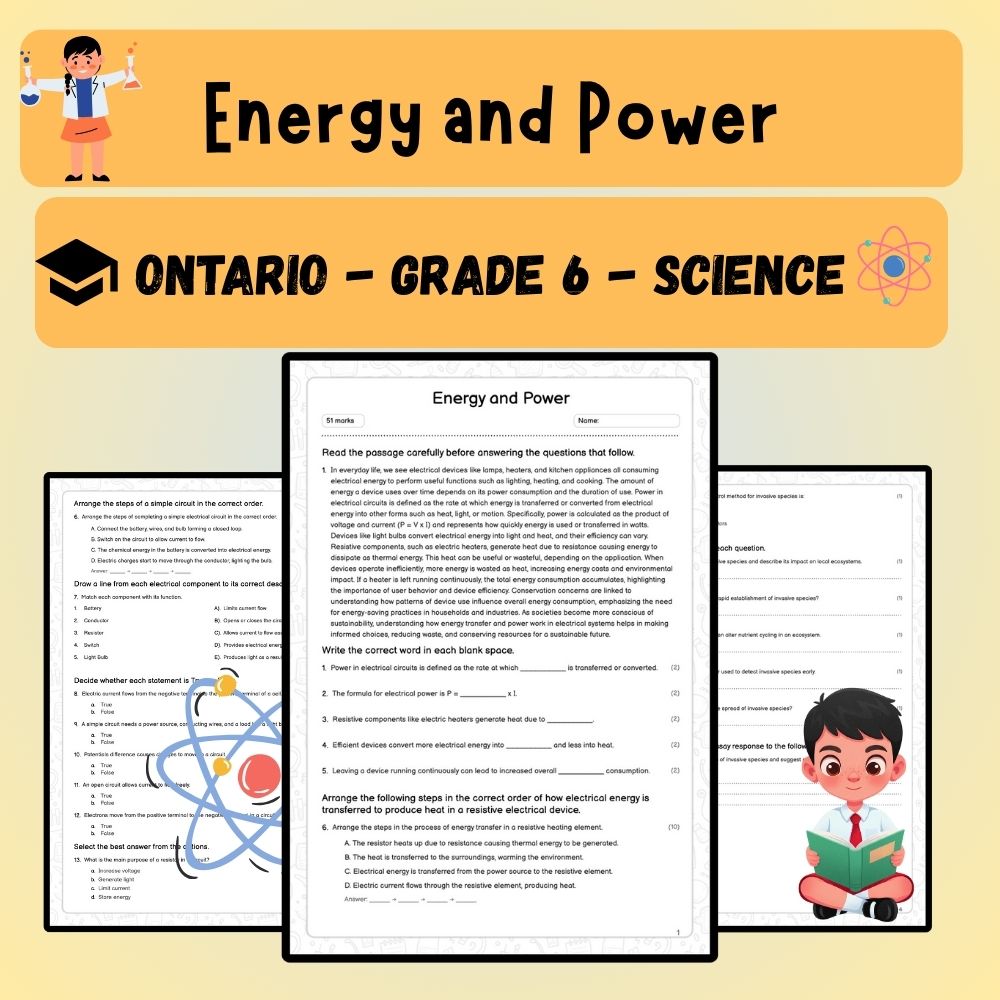
6th Grade Science | Energy and Power Worksheet (PDF ) – Ontario Standards
Created byPrism Point LearningLearning Objectives
- Explain the relationship between electrical energy transfer and power dissipation in circuit elements.
- Describe how power relates to current and voltage in electrical devices.
- Identify everyday examples of power usage and discuss efficiency considerations.
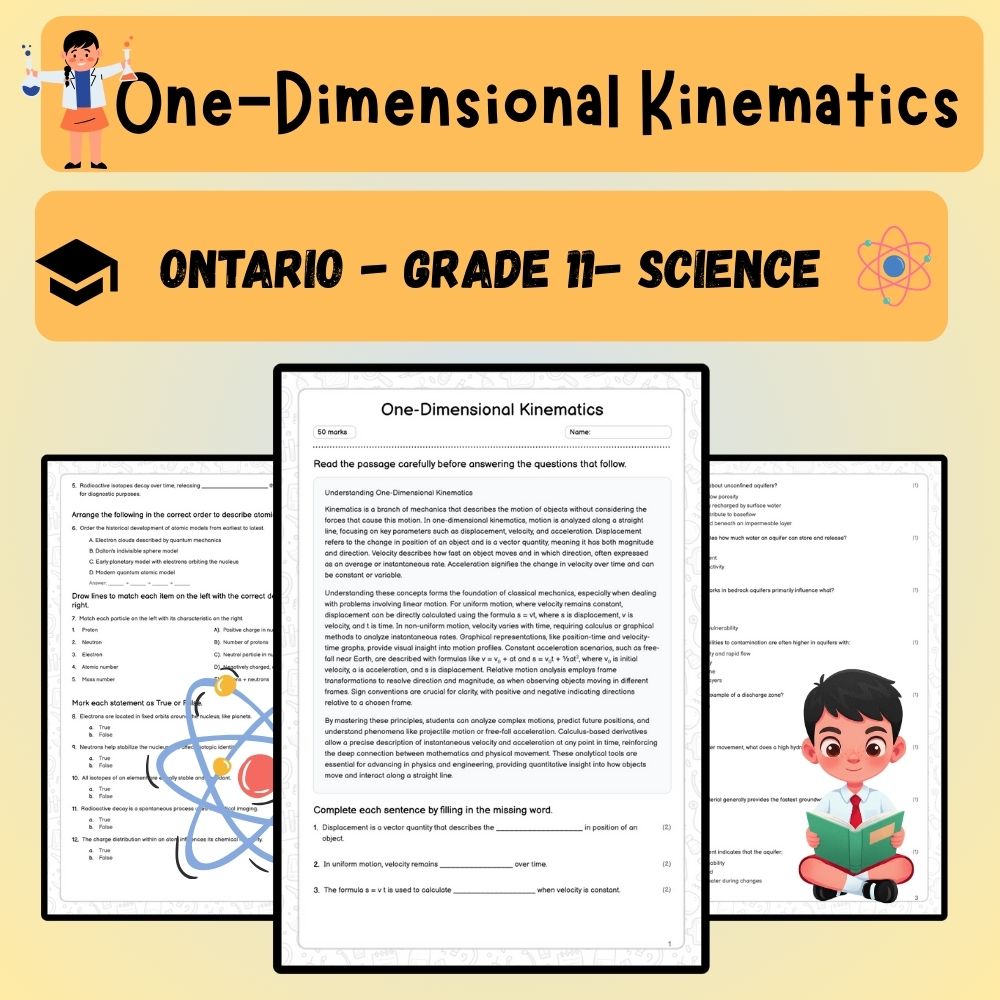
Grade 11 Science – One-Dimensional Kinematics | Ontario Standards
Created byPrism Point LearningLearning Objectives
- Understand the concepts of displacement, velocity, and acceleration as functions of time.
- Differentiate between uniform and non-uniform motion using algebraic and graphical methods.
- Apply constant-acceleration formulas to real-world scenarios like free-fall and relative motion.
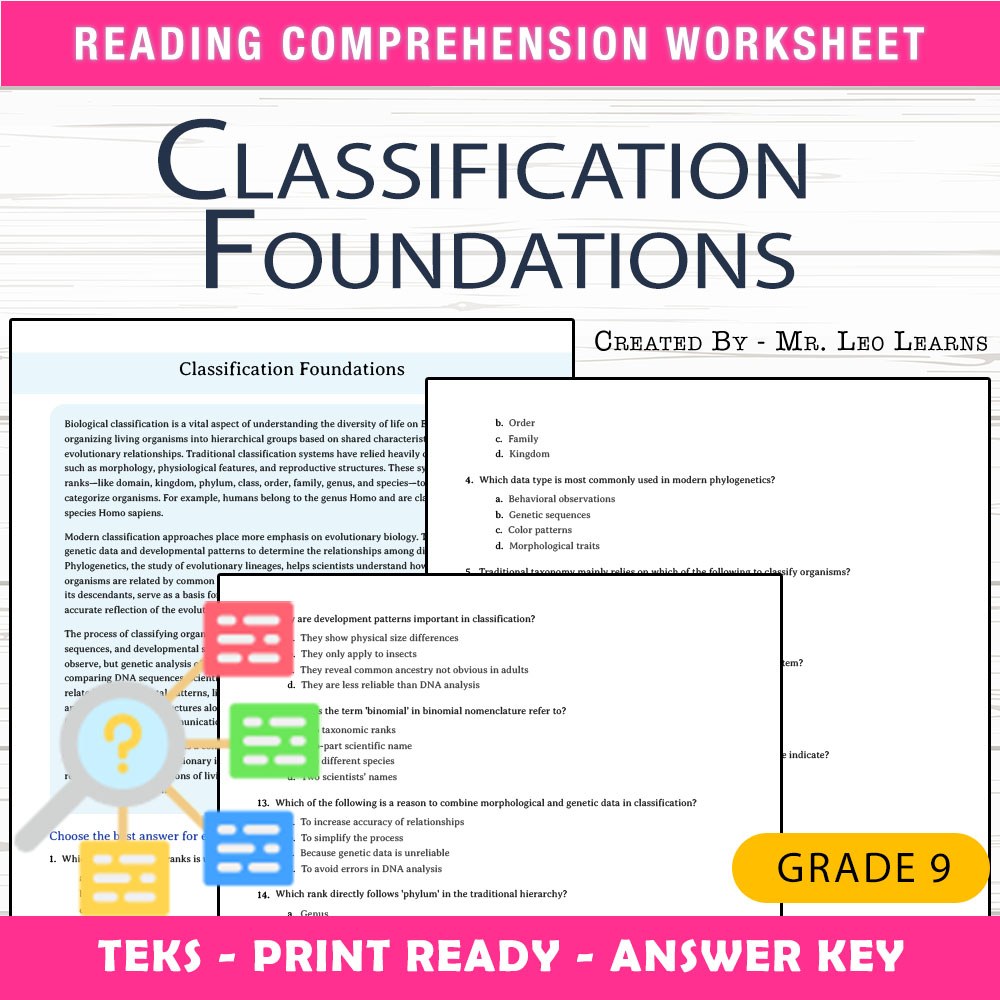
Grade 9 Science | Classification Foundations Worksheet for Mastery
 Created byThe Resource Hub
Learning Objectives
- Understand the hierarchical structure of biological classification systems.
- Identify key taxa such as domain, kingdom, phylum, class, order, family, genus, and species.
- Explain the differences between traditional and modern classification approaches.
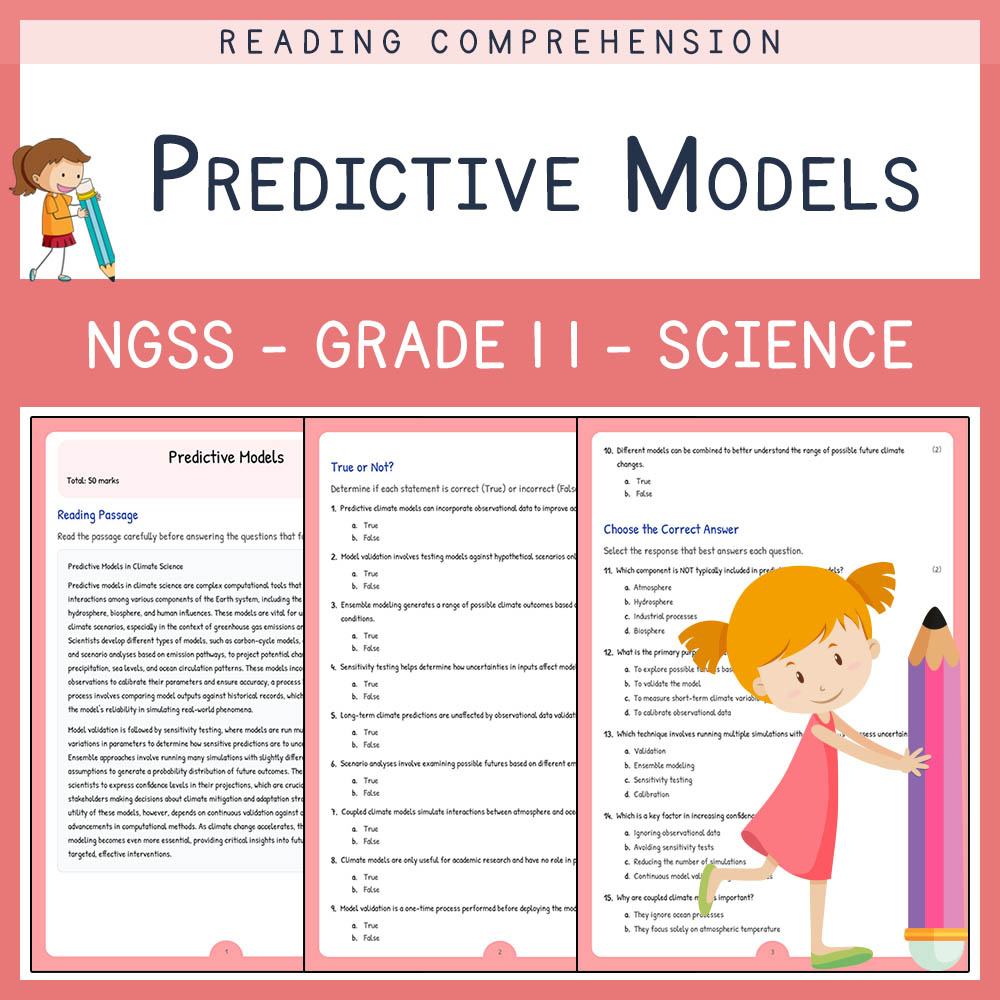
Grade 11 Science | Predictive Models Worksheet & Answer Key – NGSS-Aligned
 Created byLumora Learning
Learning Objectives
- Understand the application of modeling in climate science and environmental projections.
- Identify different types of climate models and their uses.
- Evaluate the importance of model validation and uncertainty testing in predictive science.
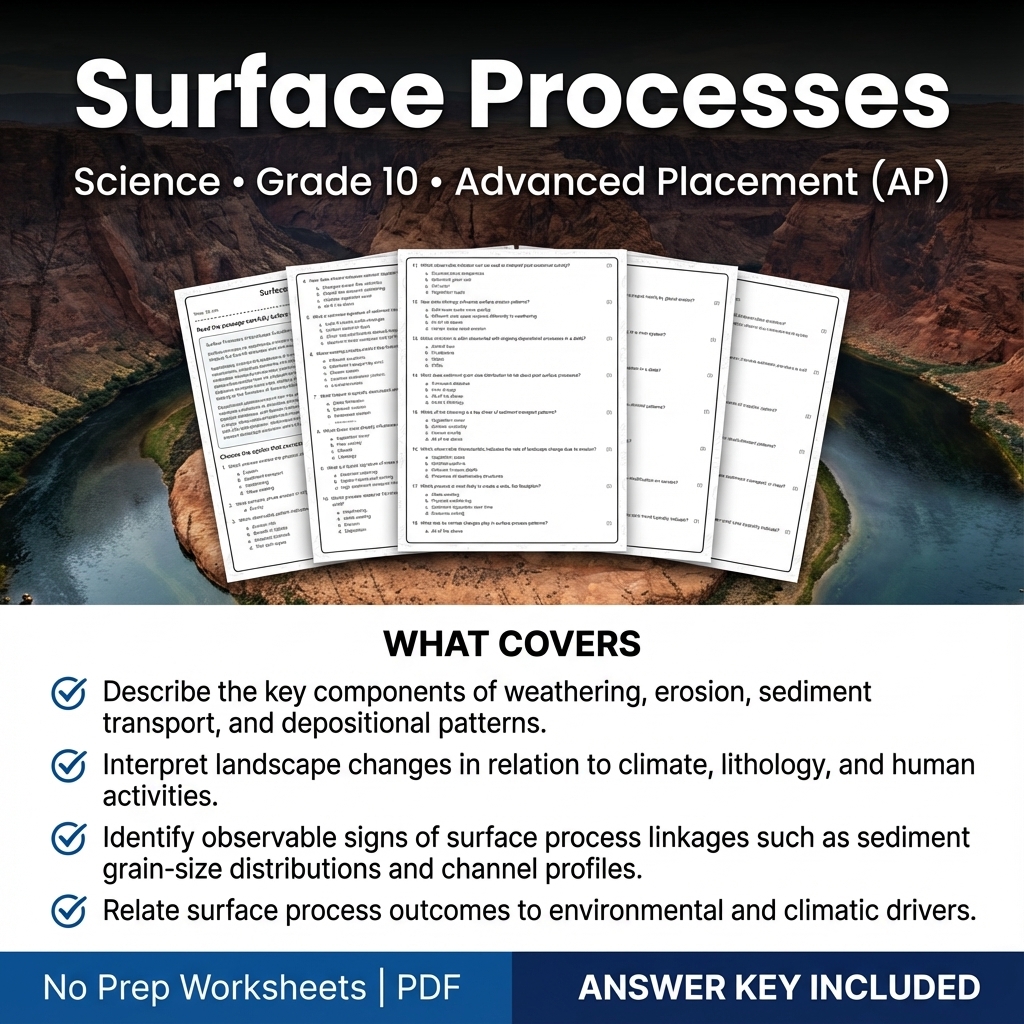
Grade 10 Science | Surface Processes Worksheet (Printable PDF + Answer Key)
Created byCoral Reef LearningLearning Objectives
- Describe the key components of weathering, erosion, sediment transport, and depositional patterns.
- Interpret landscape changes in relation to climate, lithology, and human activities.
- Identify observable signs of surface process linkages such as sediment grain-size distributions and channel profiles.
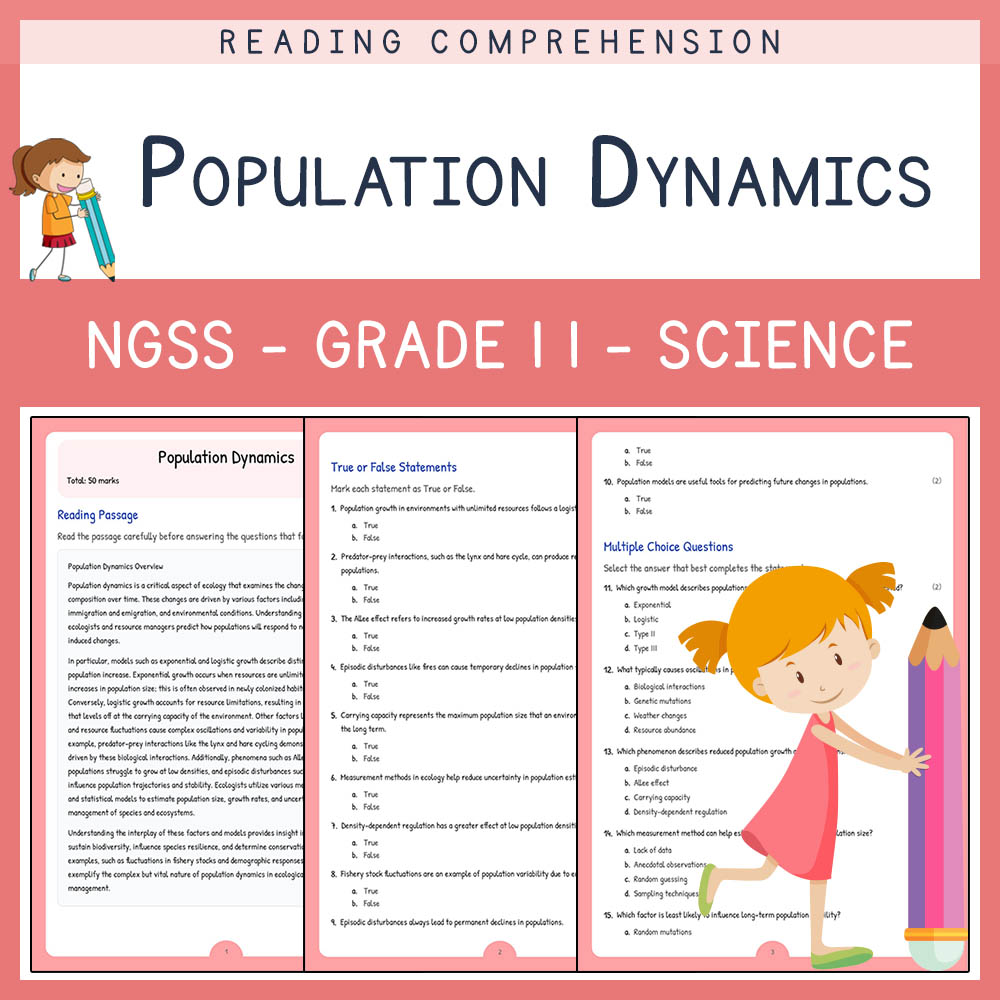
Grade 11 Science | Population Dynamics Worksheet & Answer Key (PDF)
Created byLumora LearningLearning Objectives
- Understand the key processes that influence population size and growth.
- Describe various growth models such as exponential and logistic trajectories.
- Analyze predator-prey interactions and their effects on population oscillations.
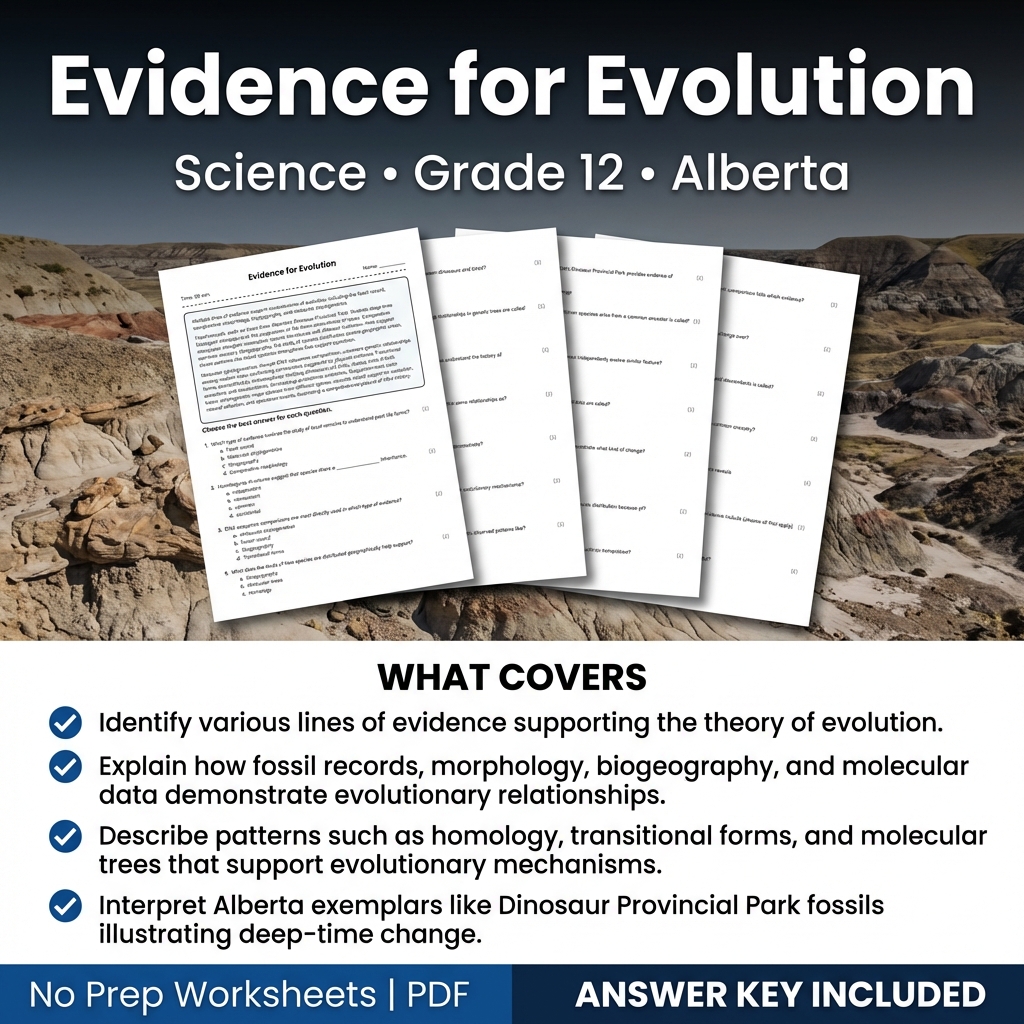
Evidence for Evolution Worksheet for Grade 12 Science | Alberta Standards
Created byCoral Reef LearningLearning Objectives
- Identify various lines of evidence supporting the theory of evolution.
- Explain how fossil records, morphology, biogeography, and molecular data demonstrate evolutionary relationships.
- Describe patterns such as homology, transitional forms, and molecular trees that support evolutionary mechanisms.
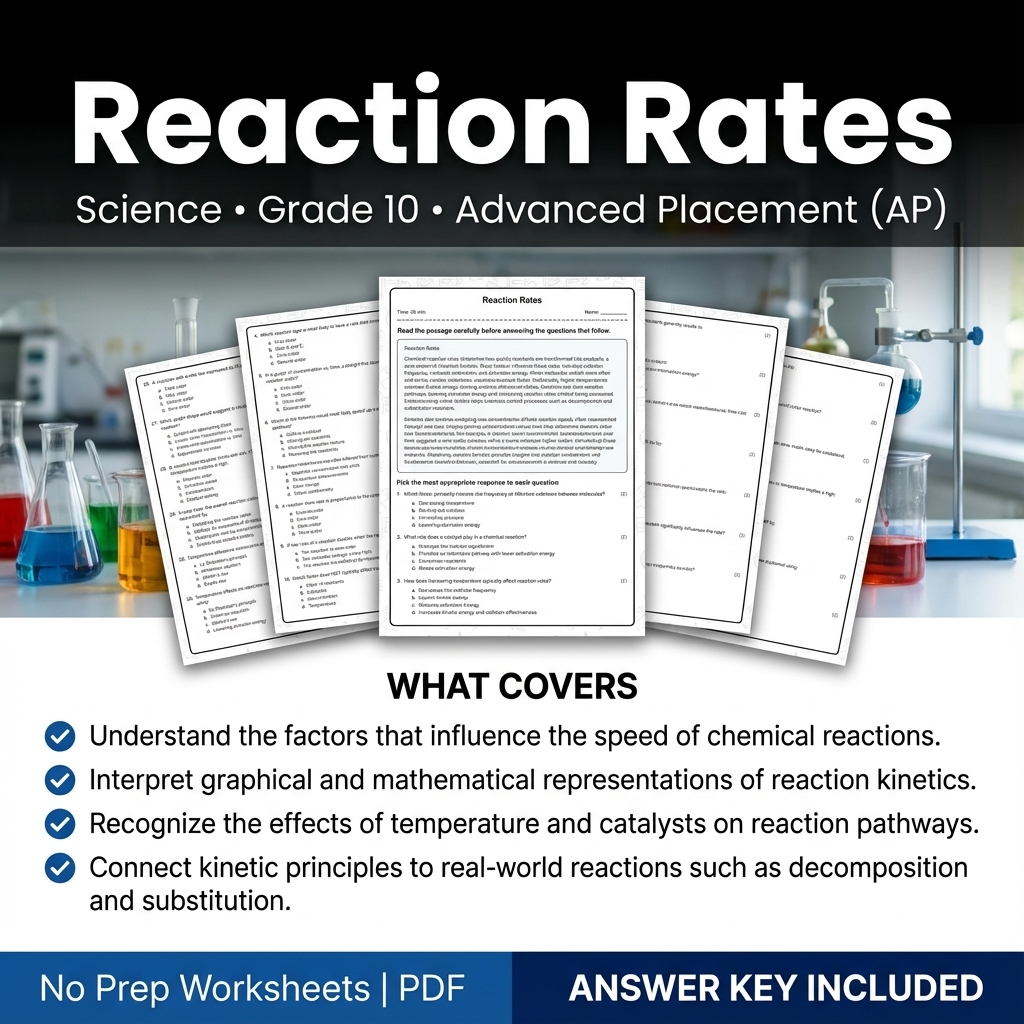
10th Grade Science | Reaction Rates Worksheet (Printable PDF + Answer Key)
Created byCoral Reef LearningLearning Objectives
- Understand the factors that influence the speed of chemical reactions.
- Interpret graphical and mathematical representations of reaction kinetics.
- Recognize the effects of temperature and catalysts on reaction pathways.
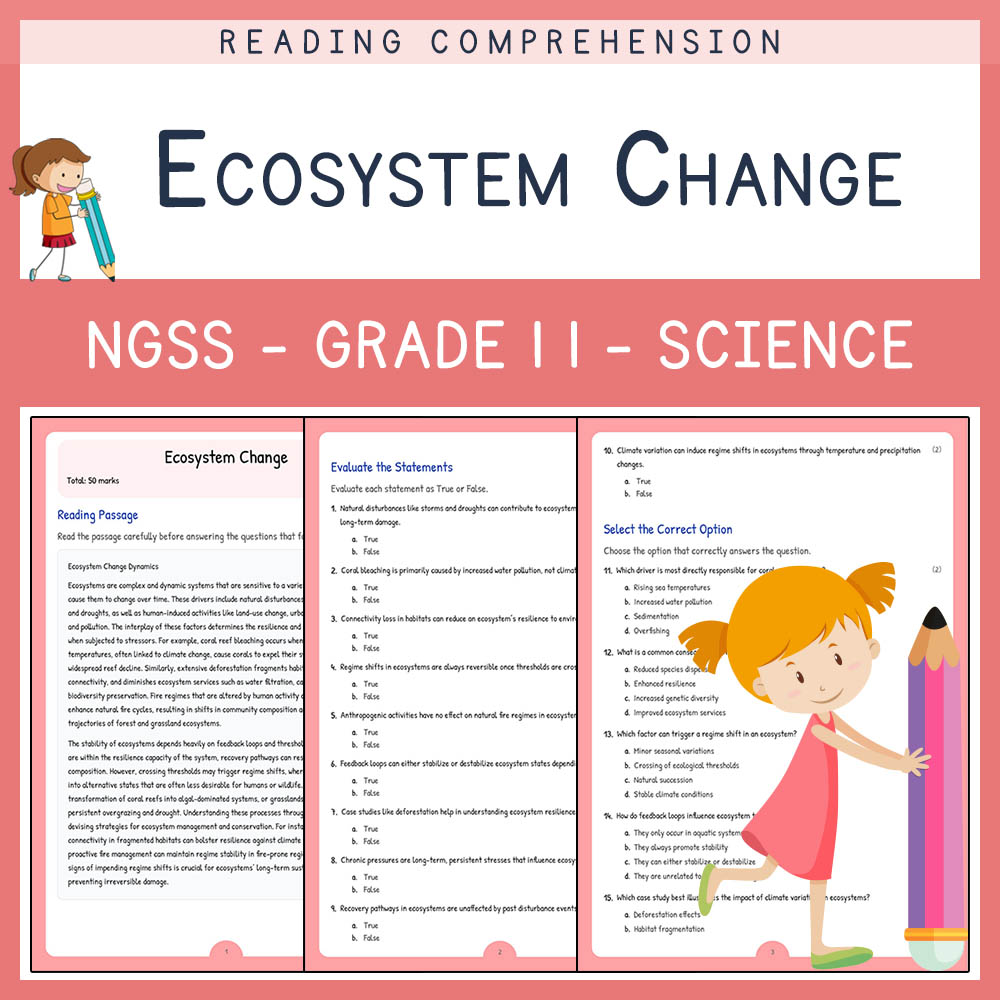
Grade 11 Science | Ecosystem Change Worksheet & Answer Key (NGSS Aligned)
Created byLumora LearningLearning Objectives
- Analyze the drivers influencing ecosystem stability and change.
- Assess the impact of disturbance regimes, land-use change, connectivity loss, and climate variation on ecosystems.
- Understand feedback loops, thresholds, and recovery pathways in ecosystem dynamics.
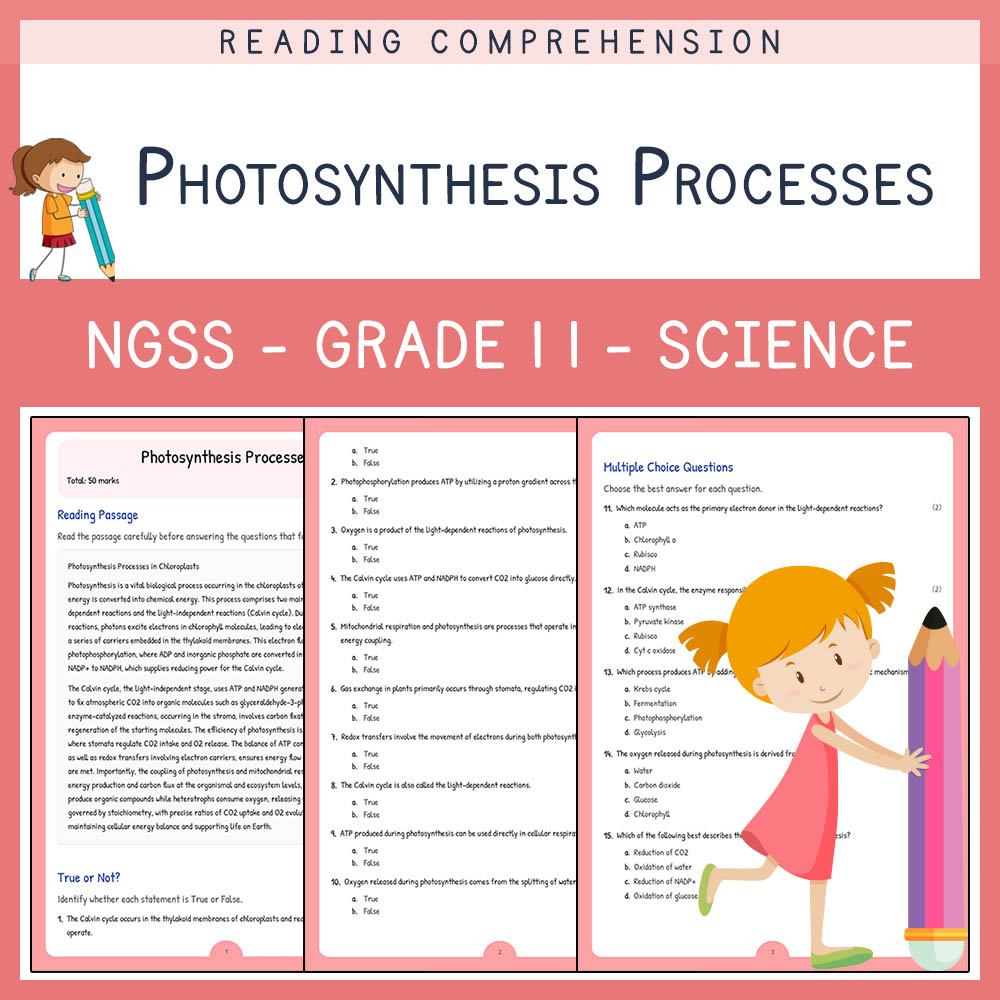
Grade 11 Science | Photosynthesis Processes Worksheet & Answer Key (PDF)
Created byLumora LearningLearning Objectives
- Describe the light-driven and biochemical stages of photosynthesis, including electron transport, photophosphorylation, and the Calvin cycle.
- Explain gas exchange processes, ATP balance, and carbon flux between autotrophs and heterotrophs.
- Understand the stoichiometry of CO2 uptake and O2 release, as well as redox transfers and their role in energy transfer.
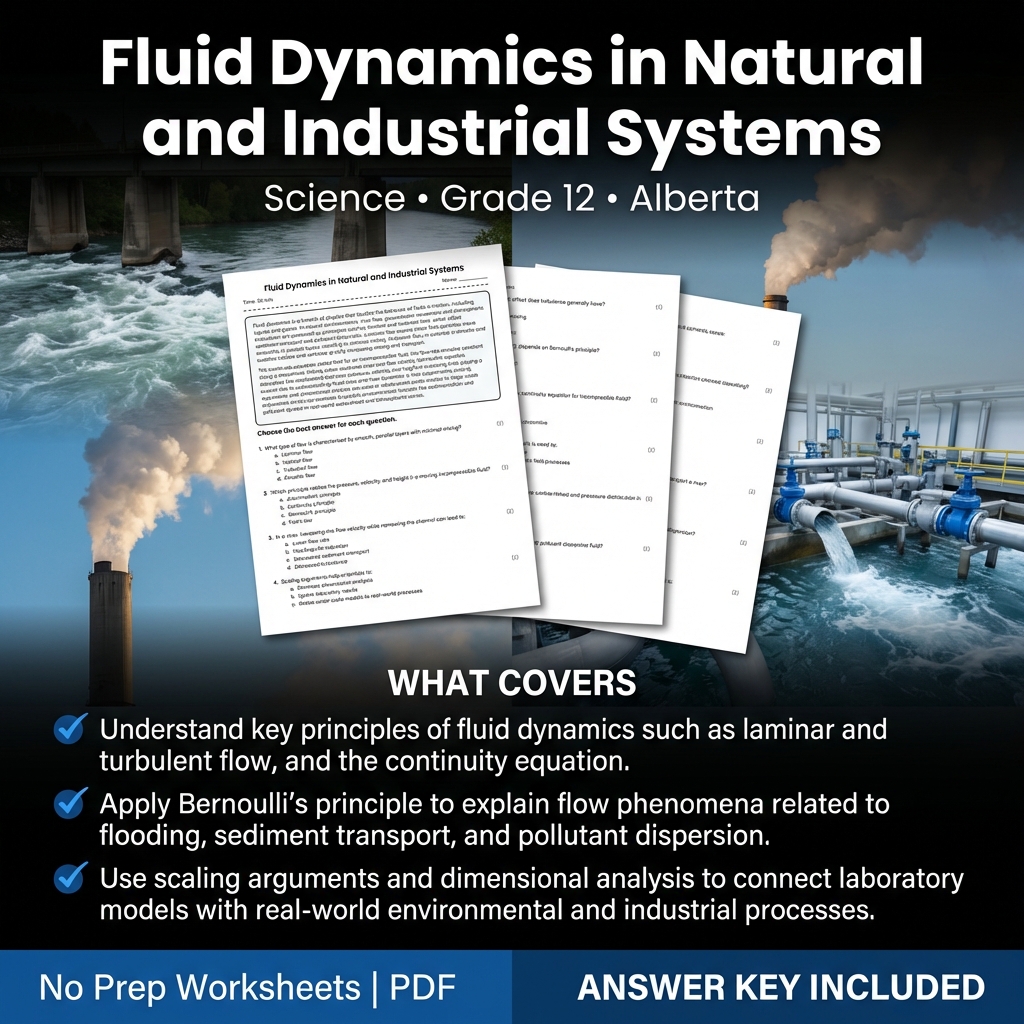
Fluid Dynamics in Natural and Industrial Systems Worksheet Grade 12 Science
Created byCoral Reef LearningLearning Objectives
- Understand key principles of fluid dynamics such as laminar and turbulent flow, and the continuity equation.
- Apply Bernoulli’s principle to explain flow phenomena related to flooding, sediment transport, and pollutant dispersion.
- Use scaling arguments and dimensional analysis to connect laboratory models with real-world environmental and industrial processes.
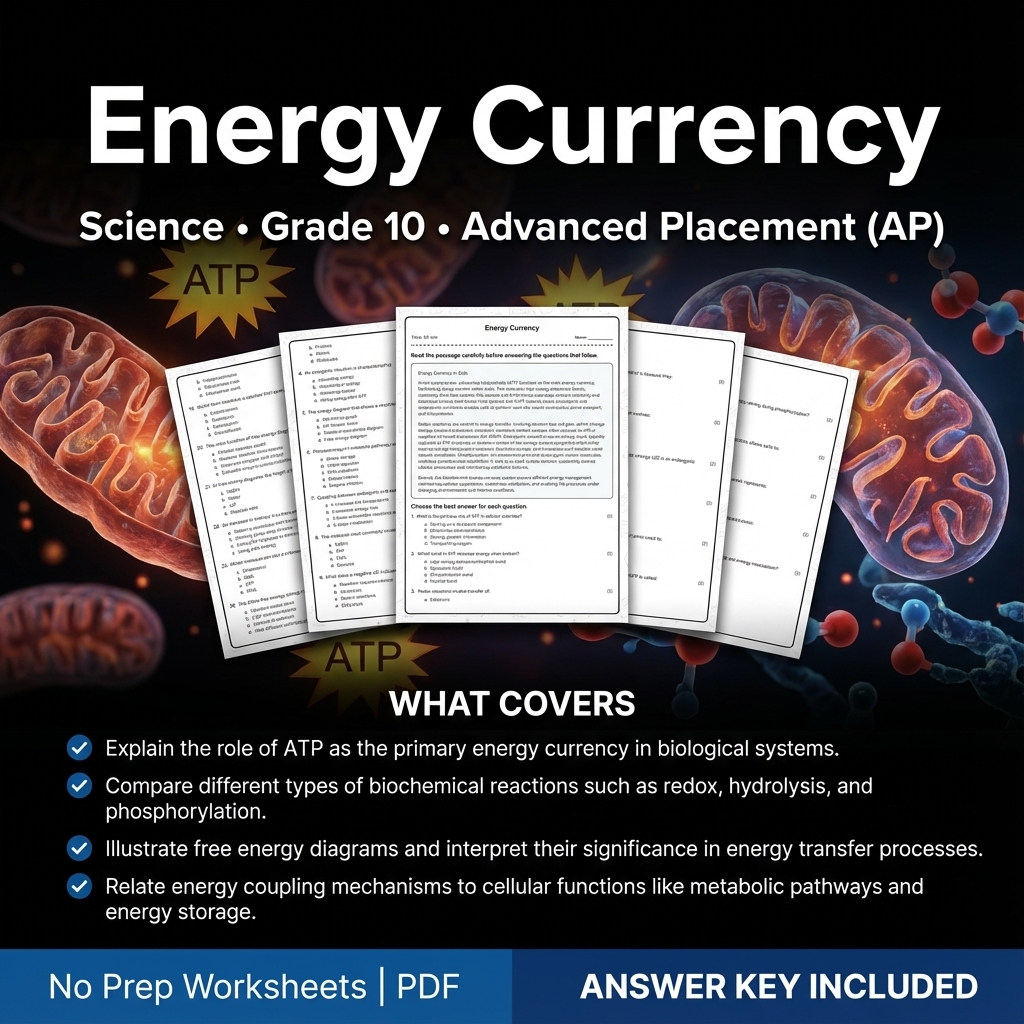
Grade 10 Science | Energy Currency Worksheet (Printable PDF + Answer Key)
Created byCoral Reef LearningLearning Objectives
- Explain the role of ATP as the primary energy currency in biological systems.
- Compare different types of biochemical reactions such as redox, hydrolysis, and phosphorylation.
- Illustrate free energy diagrams and interpret their significance in energy transfer processes.

Grade 12 Science Worksheet on Renewable Systems for Alberta Standards
Created byCoral Reef LearningLearning Objectives
- Understand the assessment and technological aspects of renewable energy systems in Alberta.
- Evaluate resource variability, conversion technologies, lifecycle impacts, and trade-offs of wind, solar, and bioenergy.
- Interpret economic, environmental, and societal metrics used for comparative analysis of renewable energy options.
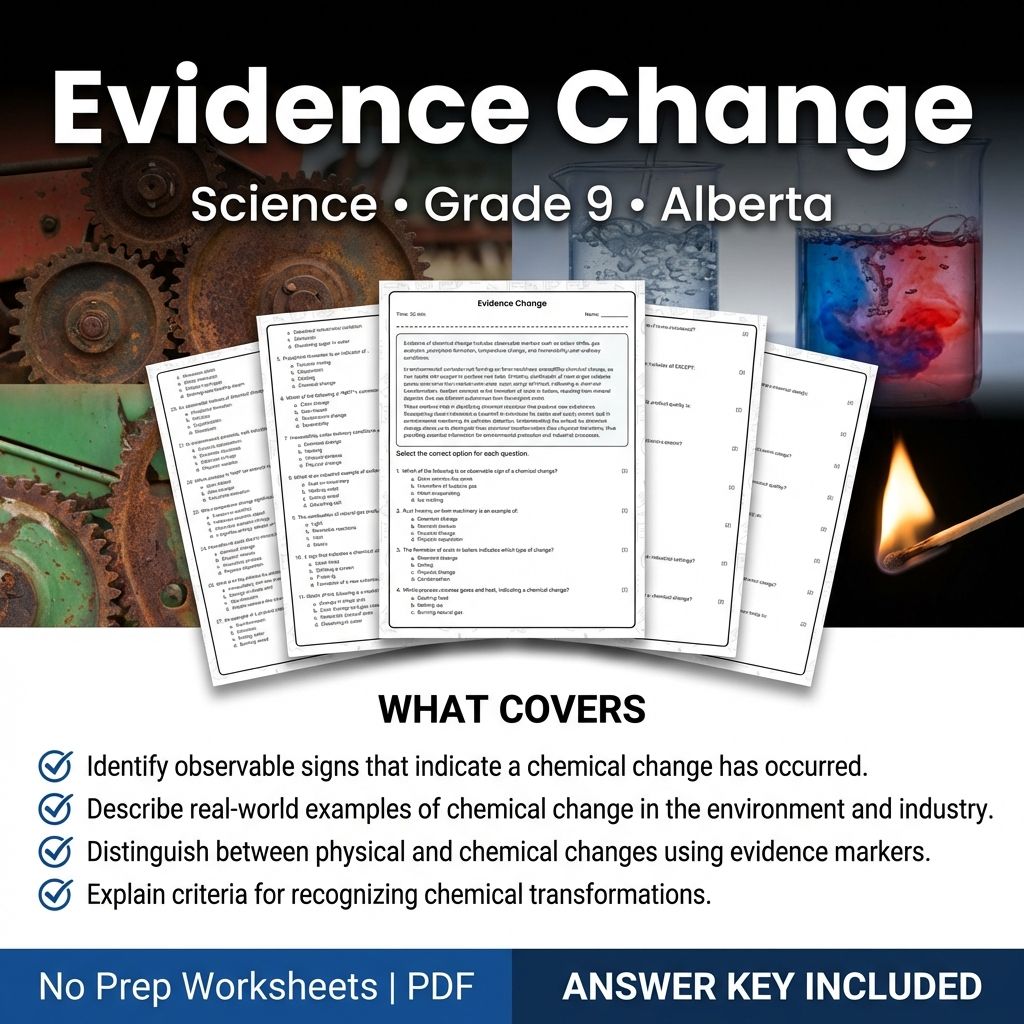
Evidence Change Science Worksheet Grade 9 | Alberta Standard Practice
Created byCoral Reef LearningLearning Objectives
- Identify observable signs that indicate a chemical change has occurred.
- Describe real-world examples of chemical change in the environment and industry.
- Distinguish between physical and chemical changes using evidence markers.
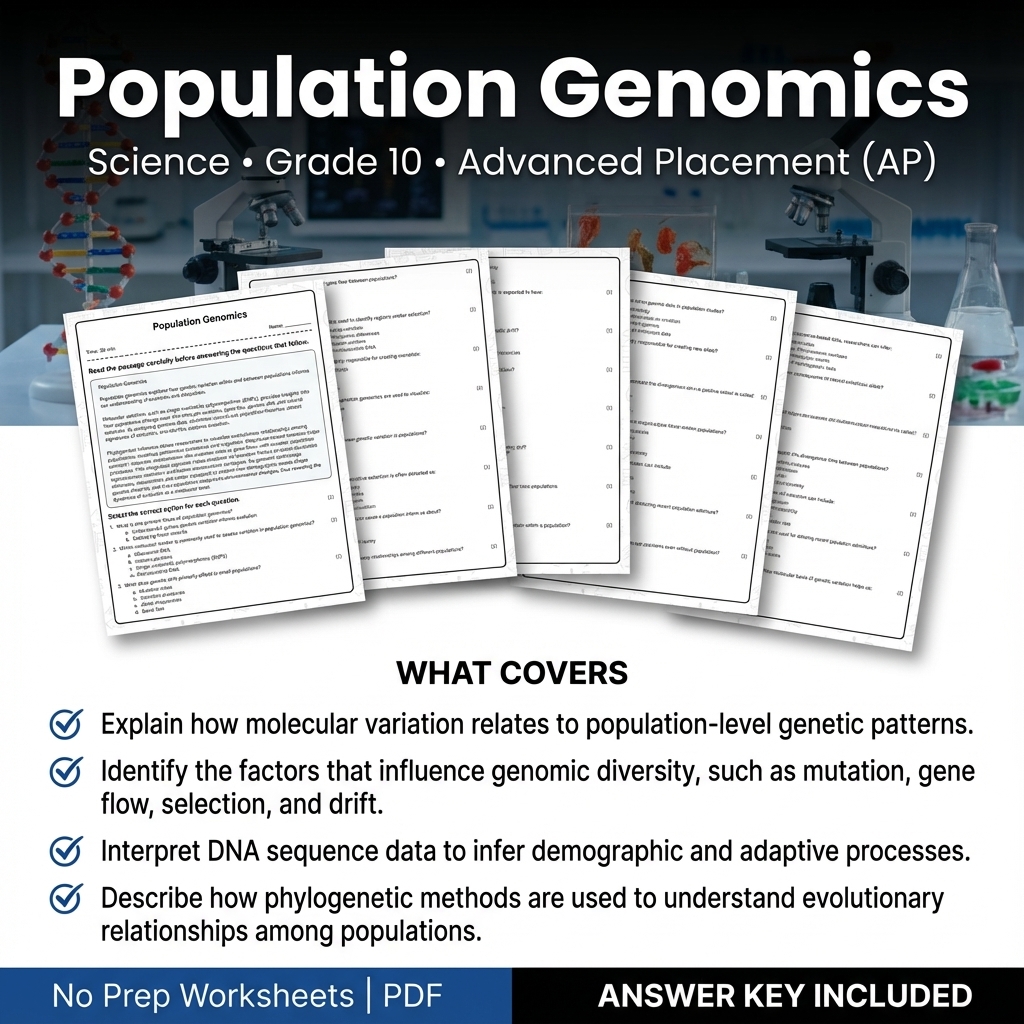
10th Grade Science | Population Genomics Worksheet (Printable PDF + Answer Key)
Created byCoral Reef LearningLearning Objectives
- Explain how molecular variation relates to population-level genetic patterns.
- Identify the factors that influence genomic diversity, such as mutation, gene flow, selection, and drift.
- Interpret DNA sequence data to infer demographic and adaptive processes.
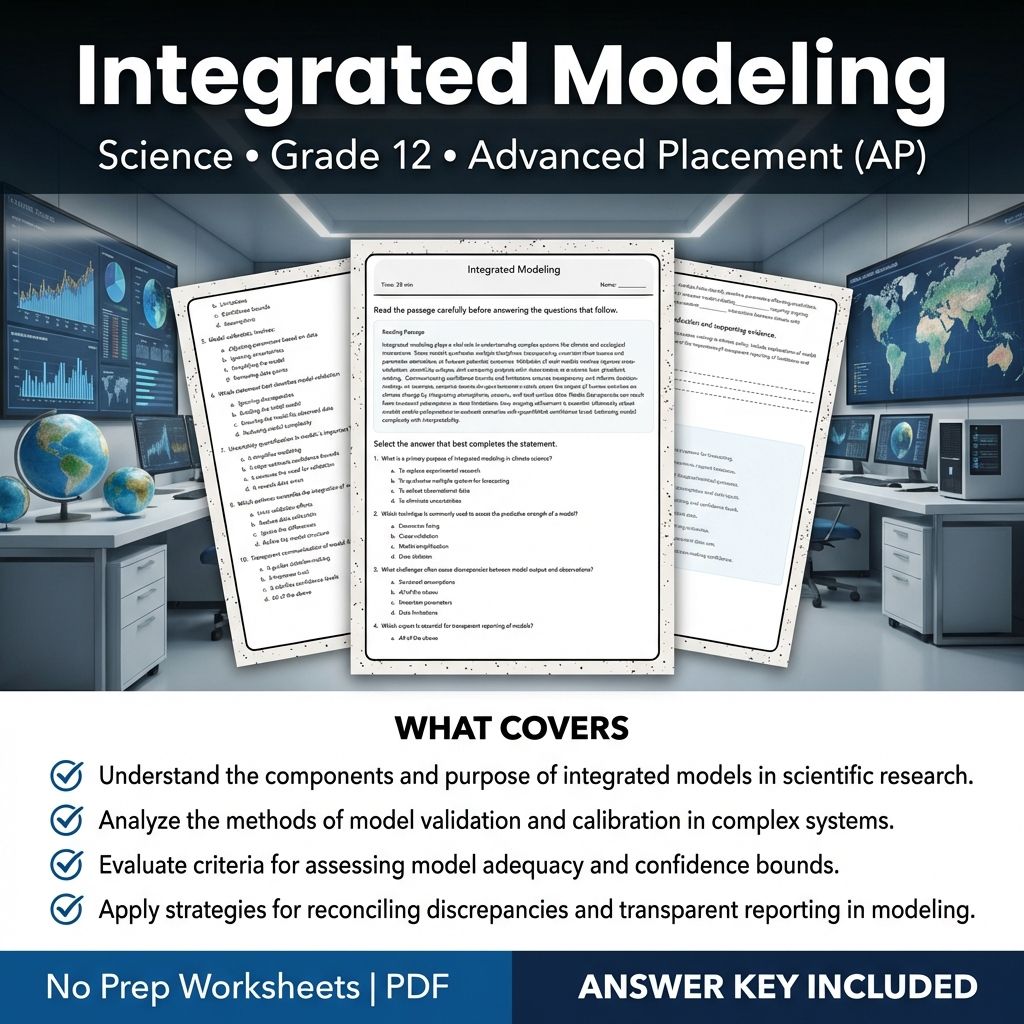
12th Grade Science | Integrated Modeling Worksheet & Answer Key (Printable PDF)
Created byCoral Reef LearningLearning Objectives
- Understand the components and purpose of integrated models in scientific research.
- Analyze the methods of model validation and calibration in complex systems.
- Evaluate criteria for assessing model adequacy and confidence bounds.
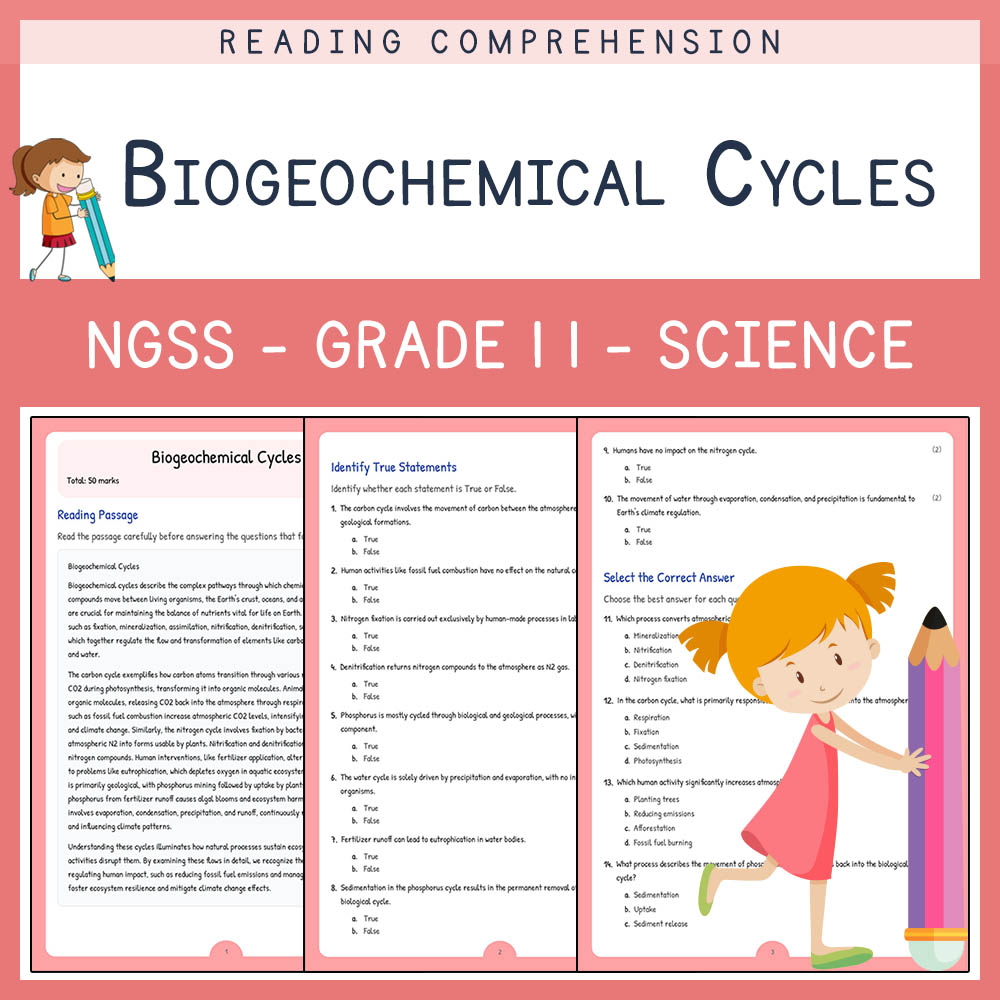
Grade 11 Science | Biogeochemical Cycles Worksheet with Answer Key (PDF)
Created byLumora LearningLearning Objectives
- Understand the main types of biogeochemical cycles and their processes.
- Identify the roles of biological, geological, and atmospheric reservoirs in element cycling.
- Explain human impacts on the carbon, nitrogen, phosphorus, and water cycles.
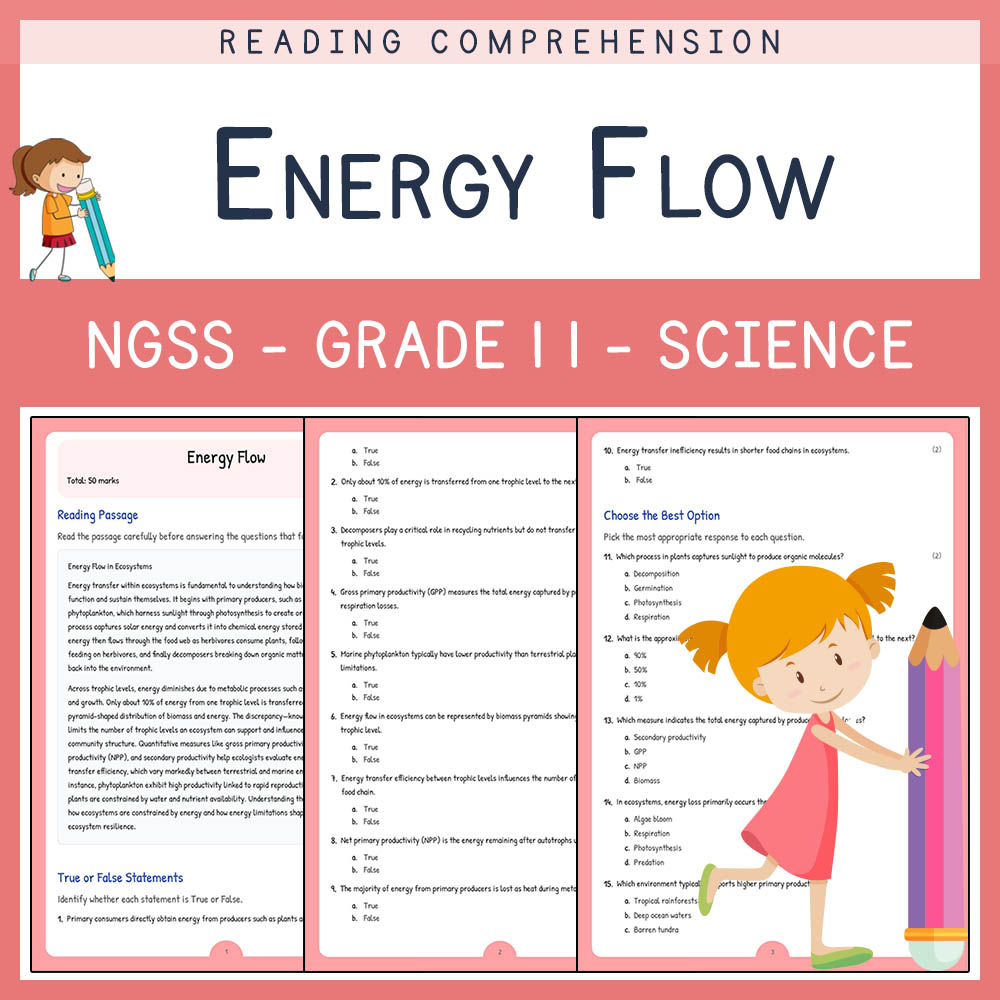
Grade 11 Science | Energy Flow Worksheet (NGSS-Aligned) with Answer Key
Created byLumora LearningLearning Objectives
- Understand the flow of energy through different levels of food webs, including producers, consumers, and decomposers.
- Analyze concepts of trophic levels, biomass pyramids, and energy transfer efficiency.
- Interpret quantitative data on primary productivity, gross and net production, and their implications for ecological communities.
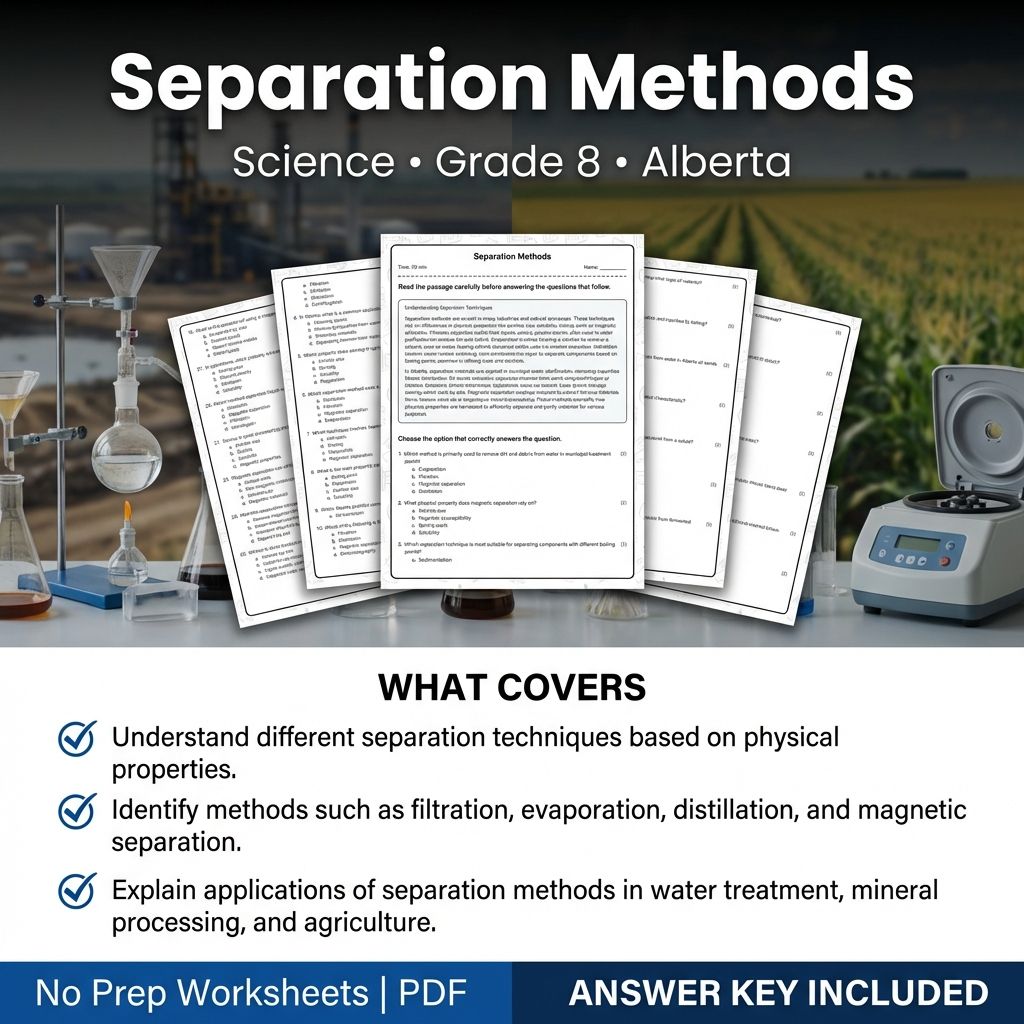
Separation Methods Worksheet for Grade 8 Science | Alberta Standards
Created byCoral Reef LearningLearning Objectives
- Understand different separation techniques based on physical properties.
- Identify methods such as filtration, evaporation, distillation, and magnetic separation.
- Explain applications of separation methods in water treatment, mineral processing, and agriculture.
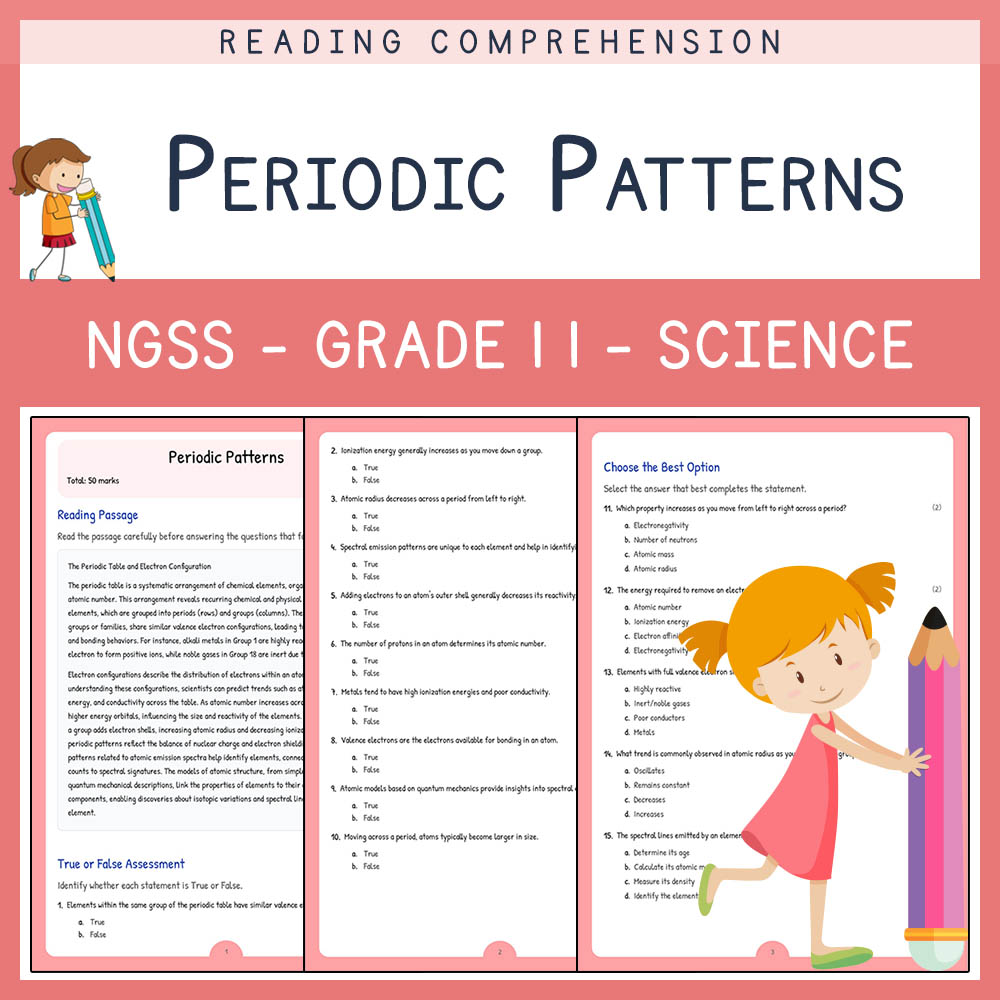
Grade 11 Science | Periodic Patterns Worksheet & Answer Key - NGSS Aligned (PDF)
Created byLumora LearningLearning Objectives
- Describe how the periodic table organizes elements by atomic structure and properties.
- Explain trends in reactivity, ionization energy, and atomic radius across periods and groups.
- Relate electron configurations to element behavior, bonding, and spectral patterns.
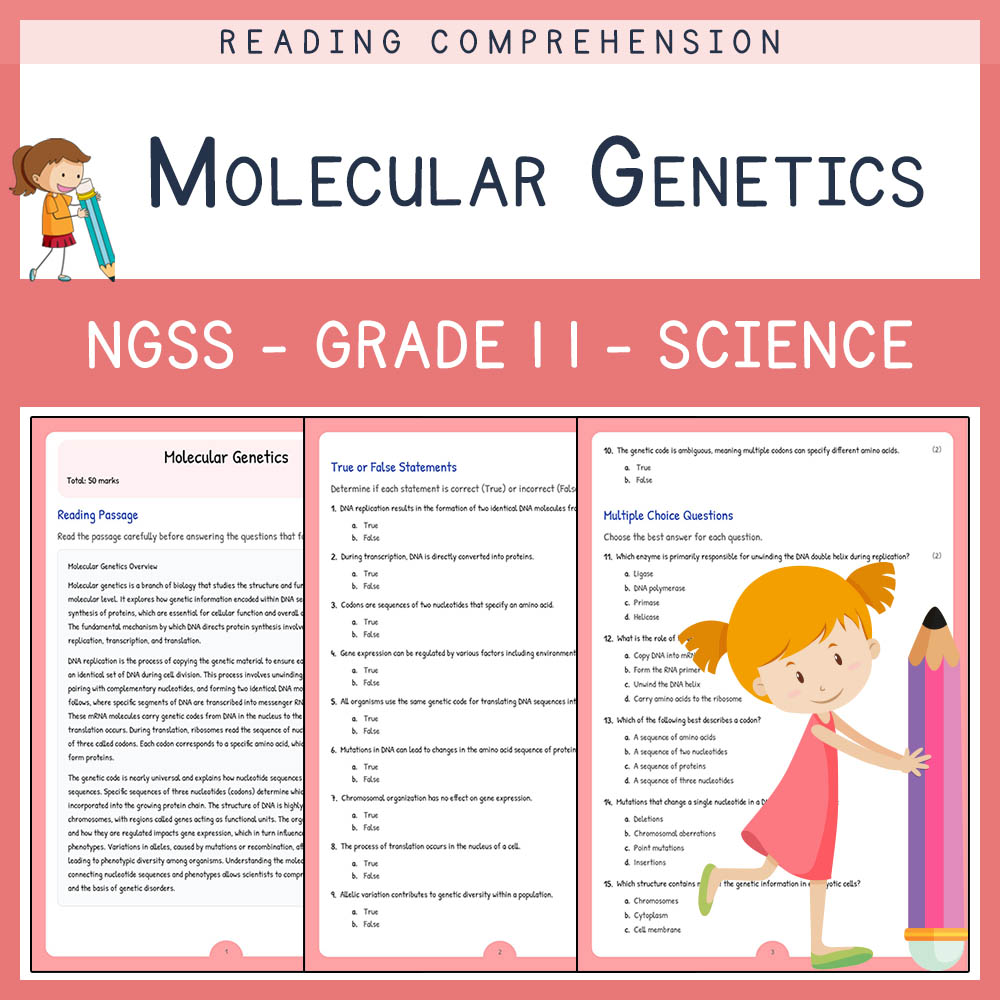
Grade 11 Science | Molecular Genetics Worksheet (Answer Key) - NGSS-Aligned
Created byLumora LearningLearning Objectives
- Understand the relationship between DNA sequences and protein synthesis through replication, transcription, and translation.
- Explain the structure of DNA and the genetic code.
- Describe the process of gene expression regulation and how nucleotide sequences influence phenotypic traits.
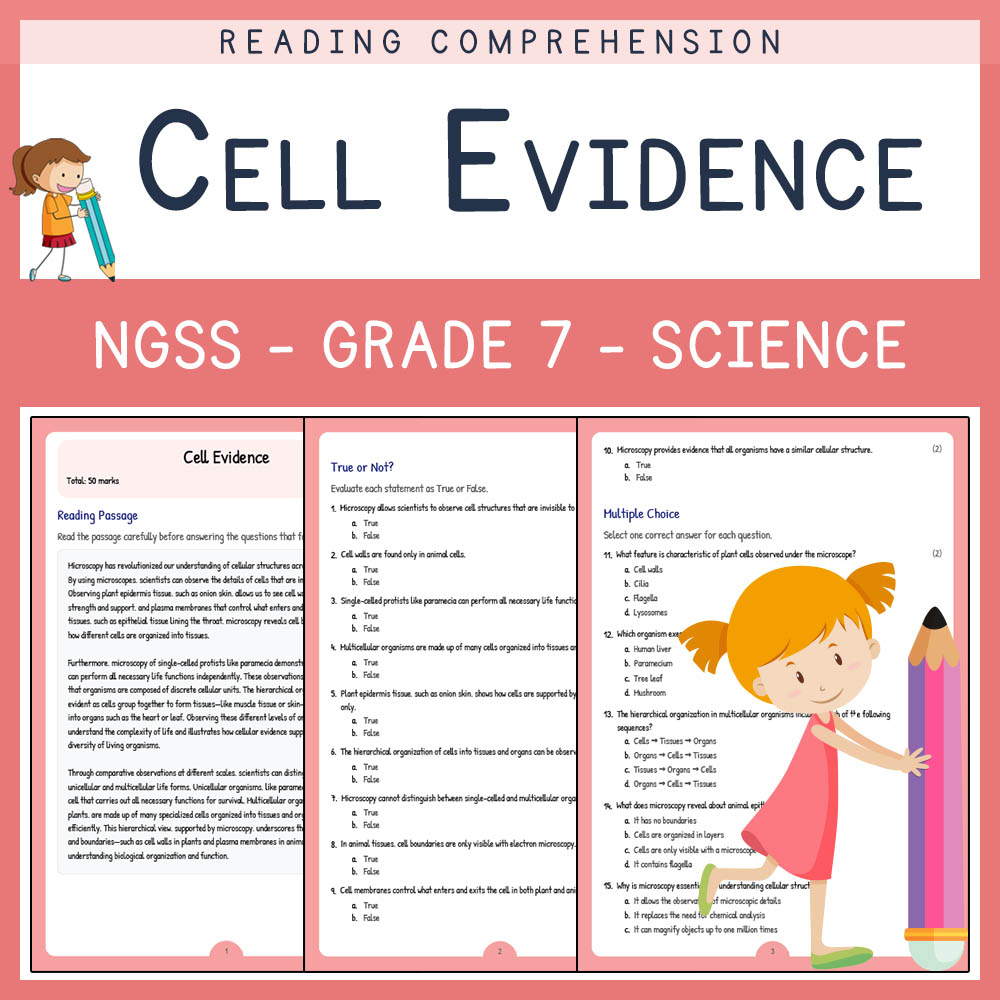
Grade 7 Science | Cell Evidence Worksheet & Answer Key NGSS Aligned (PDF)
Created byLumora LearningLearning Objectives
- Describe the role of microscopy in analyzing cellular structures.
- Differentiate between unicellular and multicellular organisms.
- Identify key features of plant and animal cells based on microscopy observations.

Grade 7 Science | Restoration Strategies Worksheet & Answer Key (PDF)
Created byLumora LearningLearning Objectives
- Explain the principles of ecological restoration, including reference conditions and long-term monitoring.
- Differentiate between active and passive restoration approaches.
- Identify factors influencing species selection and habitat connectivity in restoration projects.
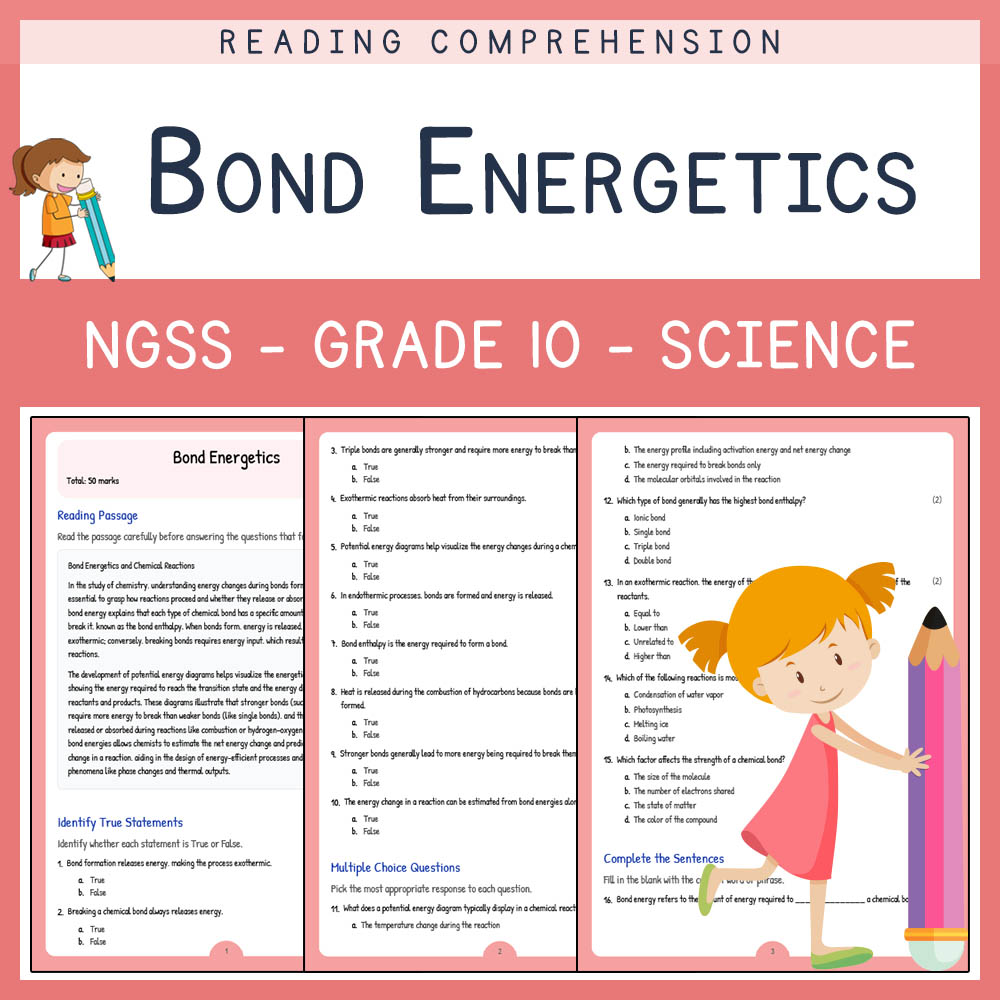
Grade 10 Science | Bond Energetics Worksheet & Answer Key (NGSS-Aligned)
Created byLumora LearningLearning Objectives
- Describe how bond formation and breaking relate to energy changes in chemical reactions.
- Distinguish between exothermic and endothermic processes using bond energy models.
- Interpret potential energy diagrams and bond enthalpy values in chemical reactions.
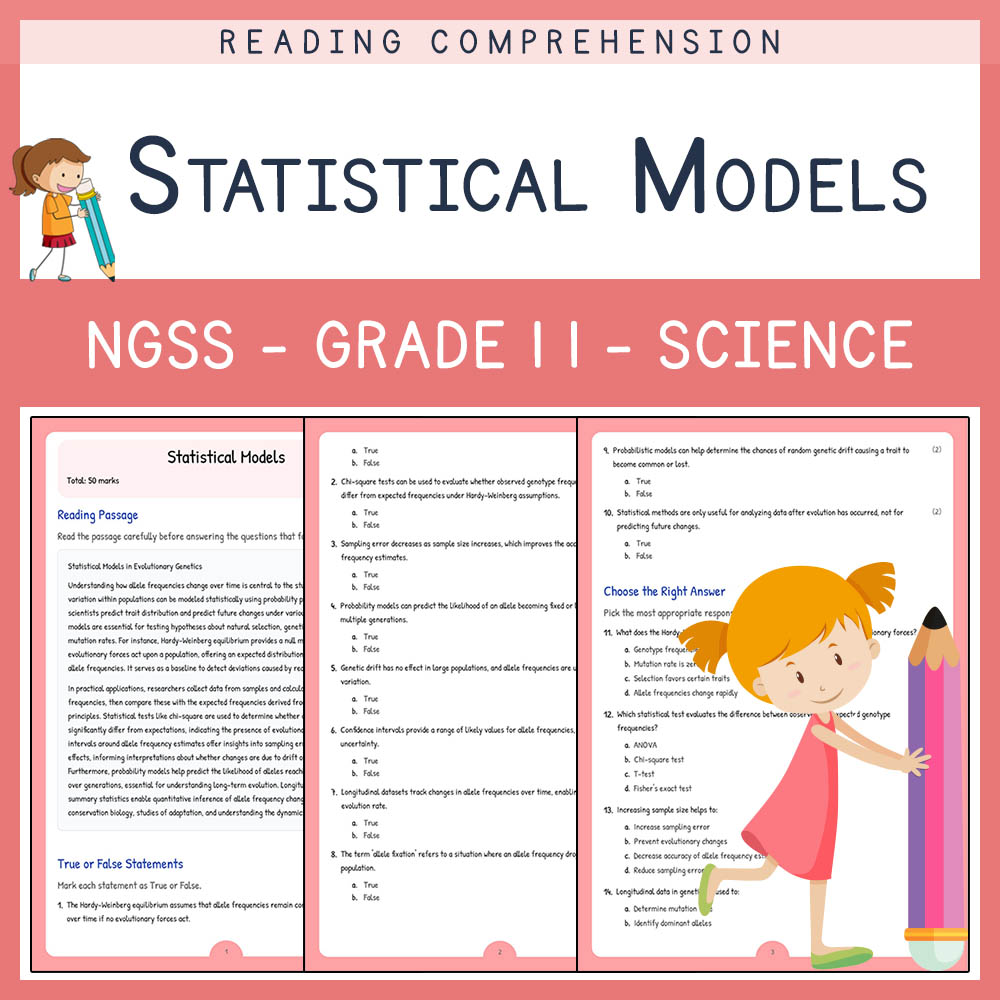
Grade 11 Science | Statistical Models Worksheet & Answer Key (PDF)
Created byLumora LearningLearning Objectives
- Apply Hardy–Weinberg principles to calculate expected genotype frequencies.
- Use chi-square tests and confidence intervals to assess deviations from expected genetic distributions.
- Understand the impact of sampling error and population size on allele frequency estimation.
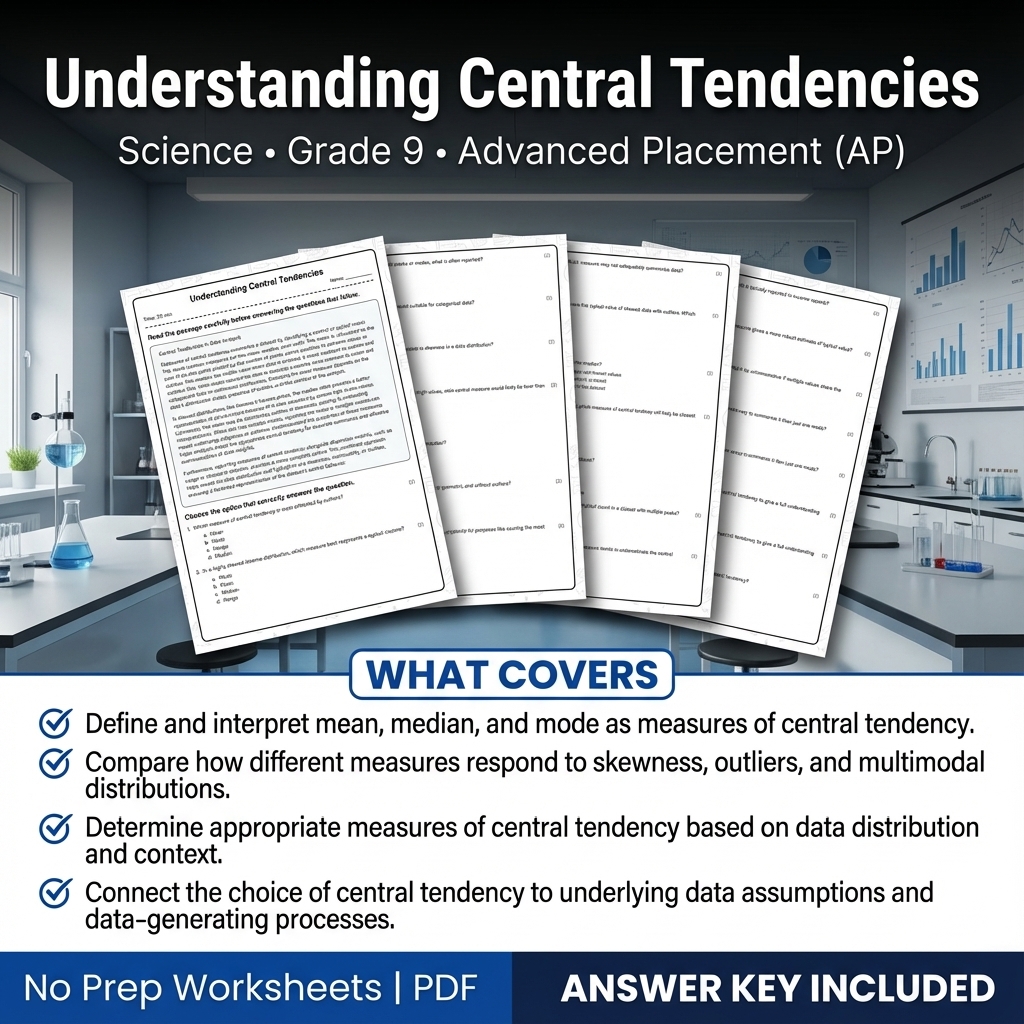
Grade 9 Science | Understanding Central Tendencies Worksheet (Printable PDF + Answer Key)
Created byCoral Reef LearningLearning Objectives
- Define and interpret mean, median, and mode as measures of central tendency.
- Compare how different measures respond to skewness, outliers, and multimodal distributions.
- Determine appropriate measures of central tendency based on data distribution and context.
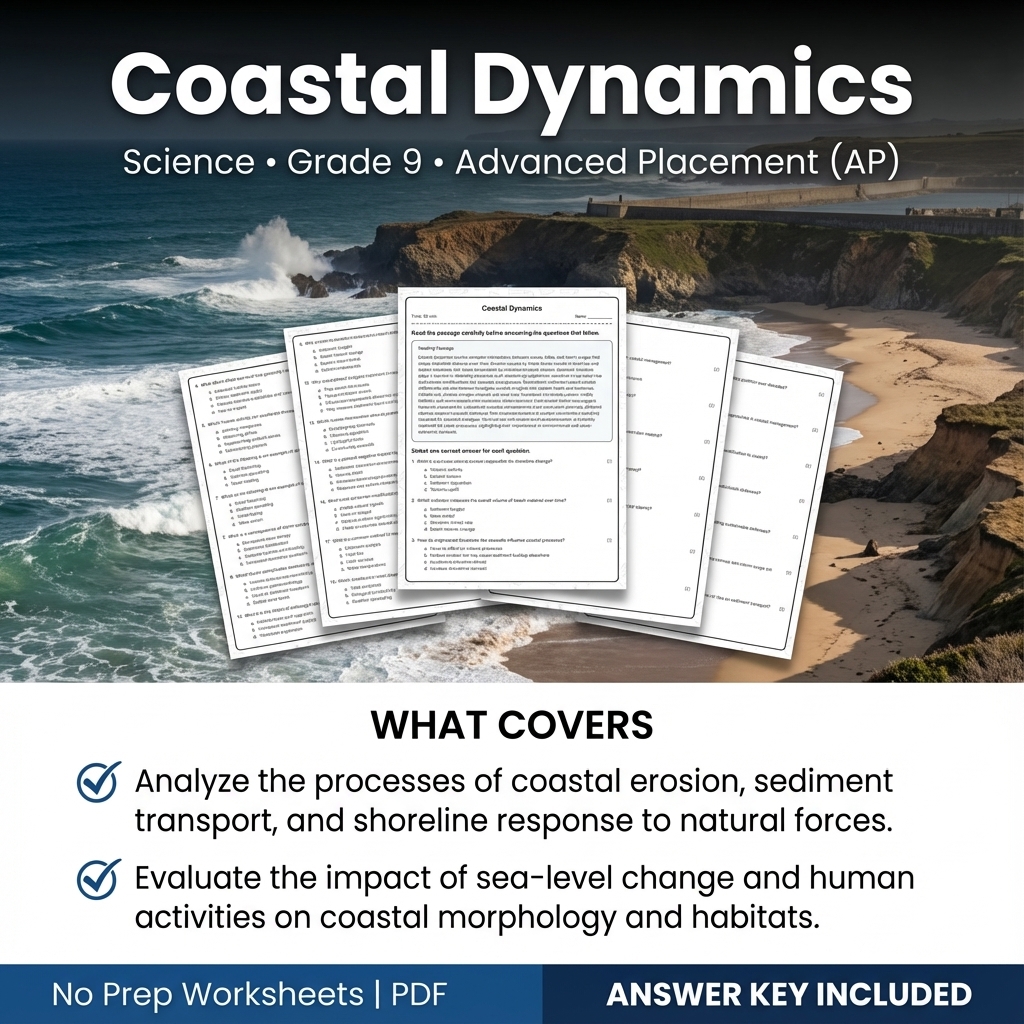
Grade 9 Science | Coastal Dynamics Worksheet (Printable PDF + Answer Key)
Created byCoral Reef LearningLearning Objectives
- Analyze the processes of coastal erosion, sediment transport, and shoreline response to natural forces.
- Evaluate the impact of sea-level change and human activities on coastal morphology and habitats.
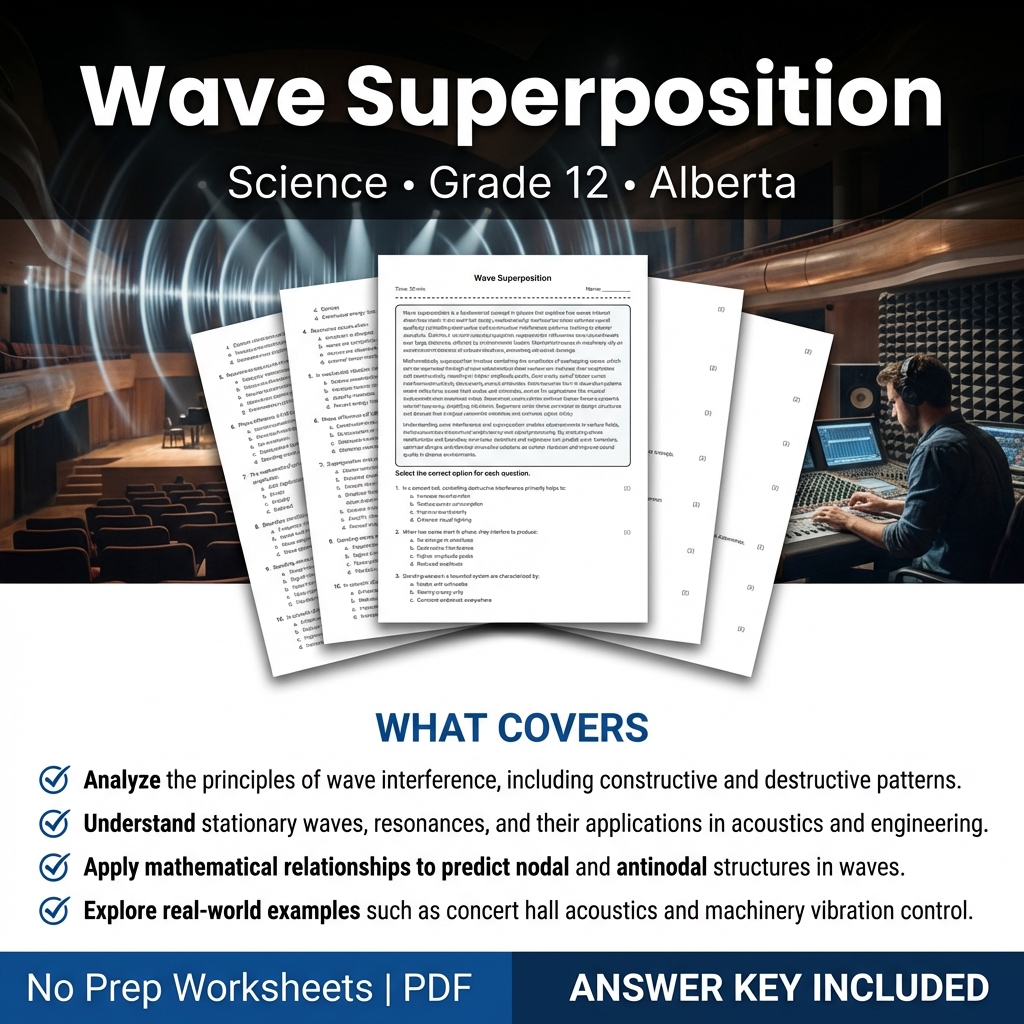
Wave Superposition Worksheet for Grade 12 Science Alberta Standards
Created byCoral Reef LearningLearning Objectives
- Analyze the principles of wave interference, including constructive and destructive patterns.
- Understand stationary waves, resonances, and their applications in acoustics and engineering.
- Apply mathematical relationships to predict nodal and antinodal structures in waves.
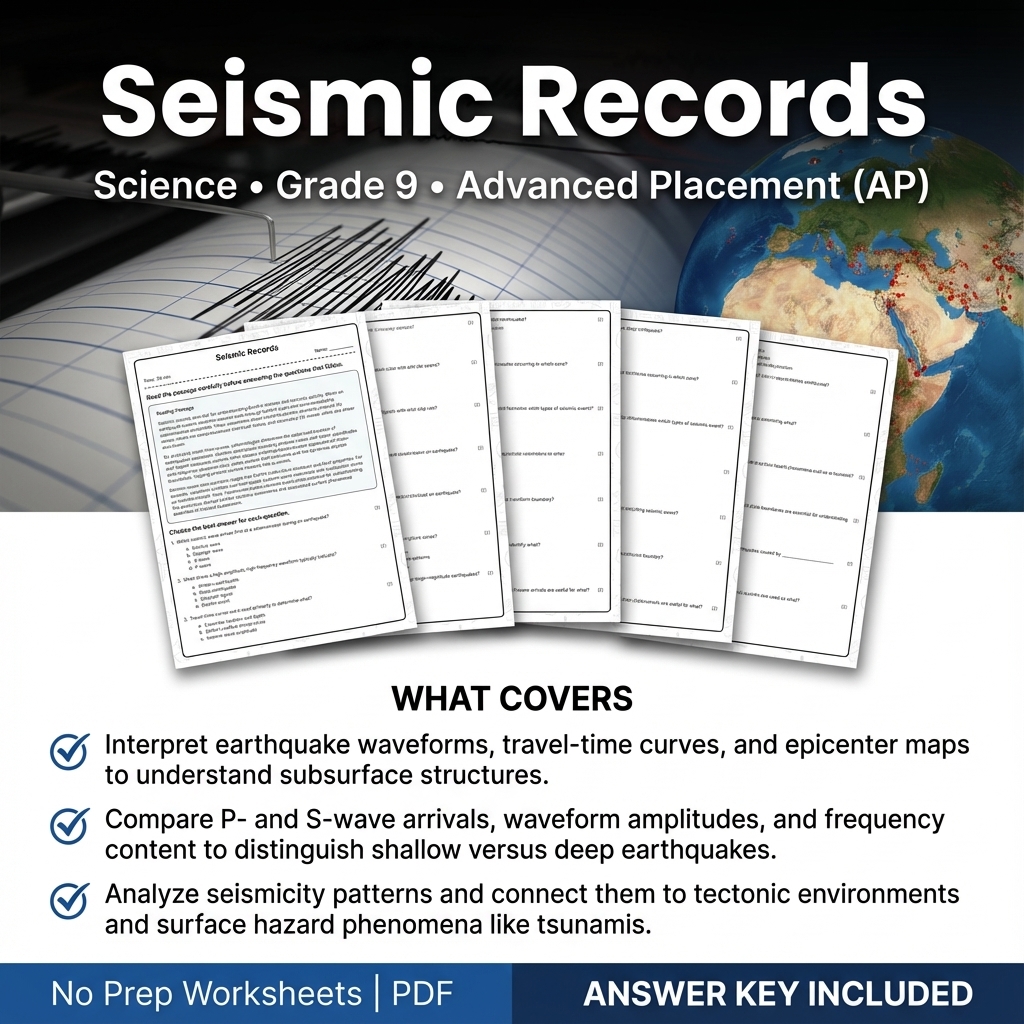
9th Grade Science | Seismic Records Worksheet (Printable PDF + Answer Key)
Created byCoral Reef LearningLearning Objectives
- Interpret earthquake waveforms, travel-time curves, and epicenter maps to understand subsurface structures.
- Compare P- and S-wave arrivals, waveform amplitudes, and frequency content to distinguish shallow versus deep earthquakes.
- Analyze seismicity patterns and connect them to tectonic environments and surface hazard phenomena like tsunamis.
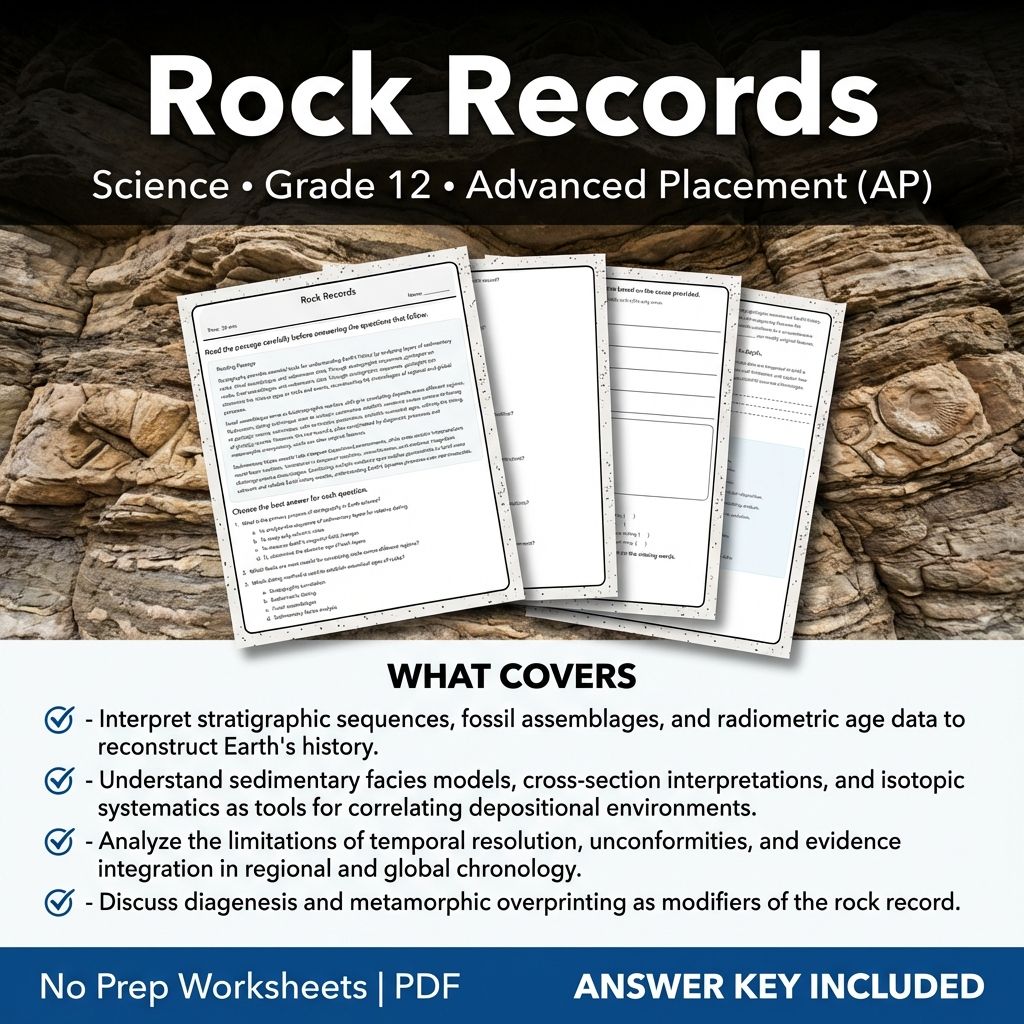
12th Grade Science | Rock Records Worksheet & Answer Key for Classroom Practice
Created byCoral Reef LearningLearning Objectives
- Interpret stratigraphic sequences, fossil assemblages, and radiometric age data to reconstruct Earth's history.
- Understand sedimentary facies models, cross-section interpretations, and isotopic systematics as tools for correlating depositional environments.
- Analyze the limitations of temporal resolution, unconformities, and evidence integration in regional and global chronology.
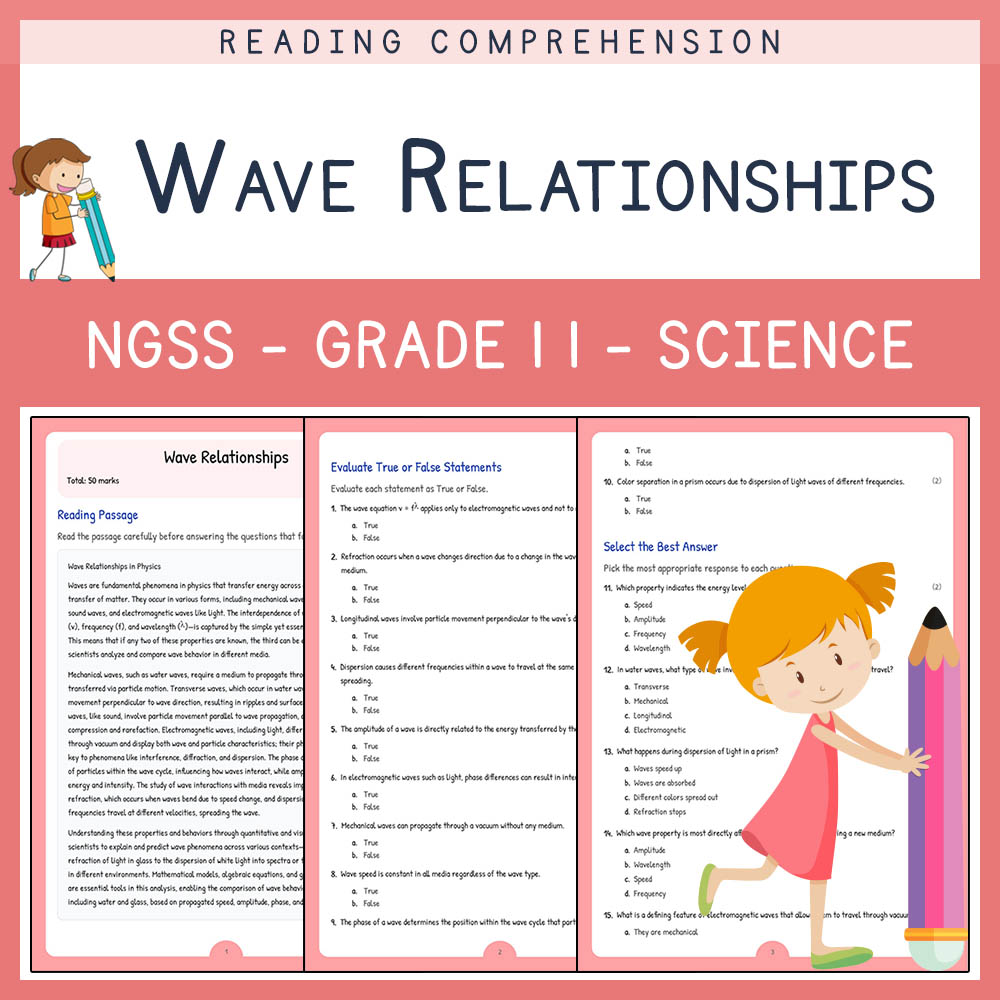
Grade 11 Science | Wave Relationships Worksheet (PDF + Answer Key) – NGSS Alignment
Created byLumora LearningLearning Objectives
- Understand the mathematical relationship among wave speed, frequency, and wavelength and perform related calculations.
- Describe the differences between transverse and longitudinal waves, including examples and their properties.
- Analyze wave behaviors such as refraction and dispersion using graphs and algebraic representations.
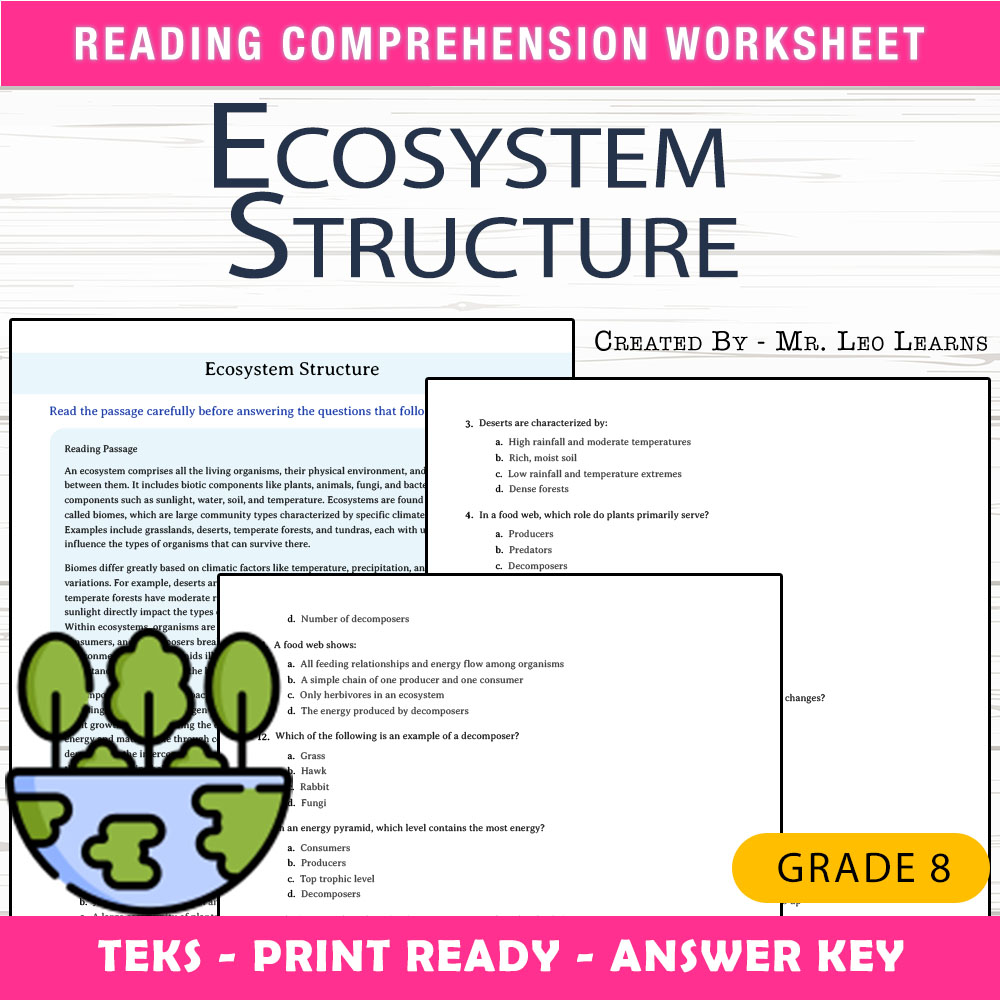
8th Grade Science – Ecosystem Structure Worksheet for Mastery | PDF + Answer Key
Created byThe Resource HubLearning Objectives
- Describe the components and types of ecosystems and biomes.
- Identify abiotic factors influencing ecosystems.
- Explain the roles of producers, consumers, and decomposers in energy flow and nutrient cycling.
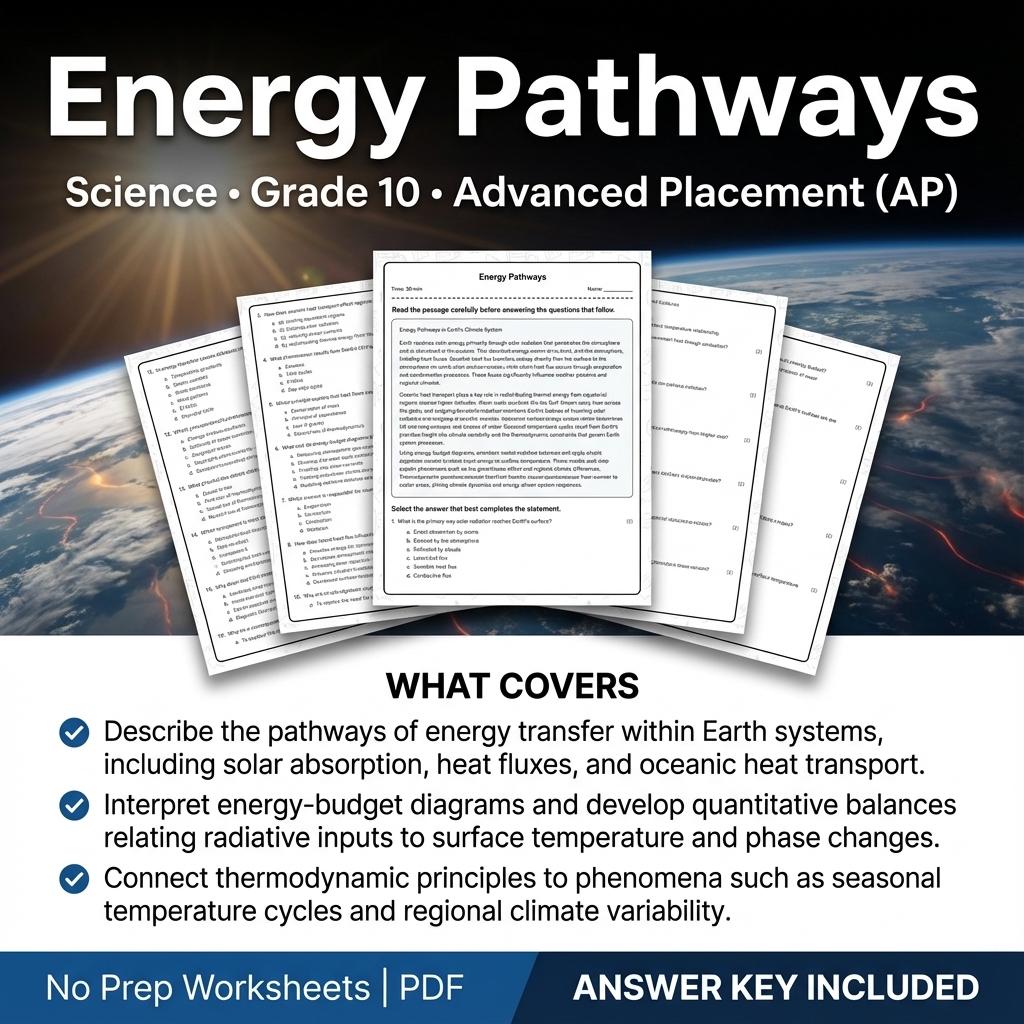
Grade 10 Science | Energy Pathways Worksheet (Printable PDF + Answer Key)
Created byCoral Reef LearningLearning Objectives
- Describe the pathways of energy transfer within Earth systems, including solar absorption, heat fluxes, and oceanic heat transport.
- Interpret energy-budget diagrams and develop quantitative balances relating radiative inputs to surface temperature and phase changes.
- Connect thermodynamic principles to phenomena such as seasonal temperature cycles and regional climate variability.
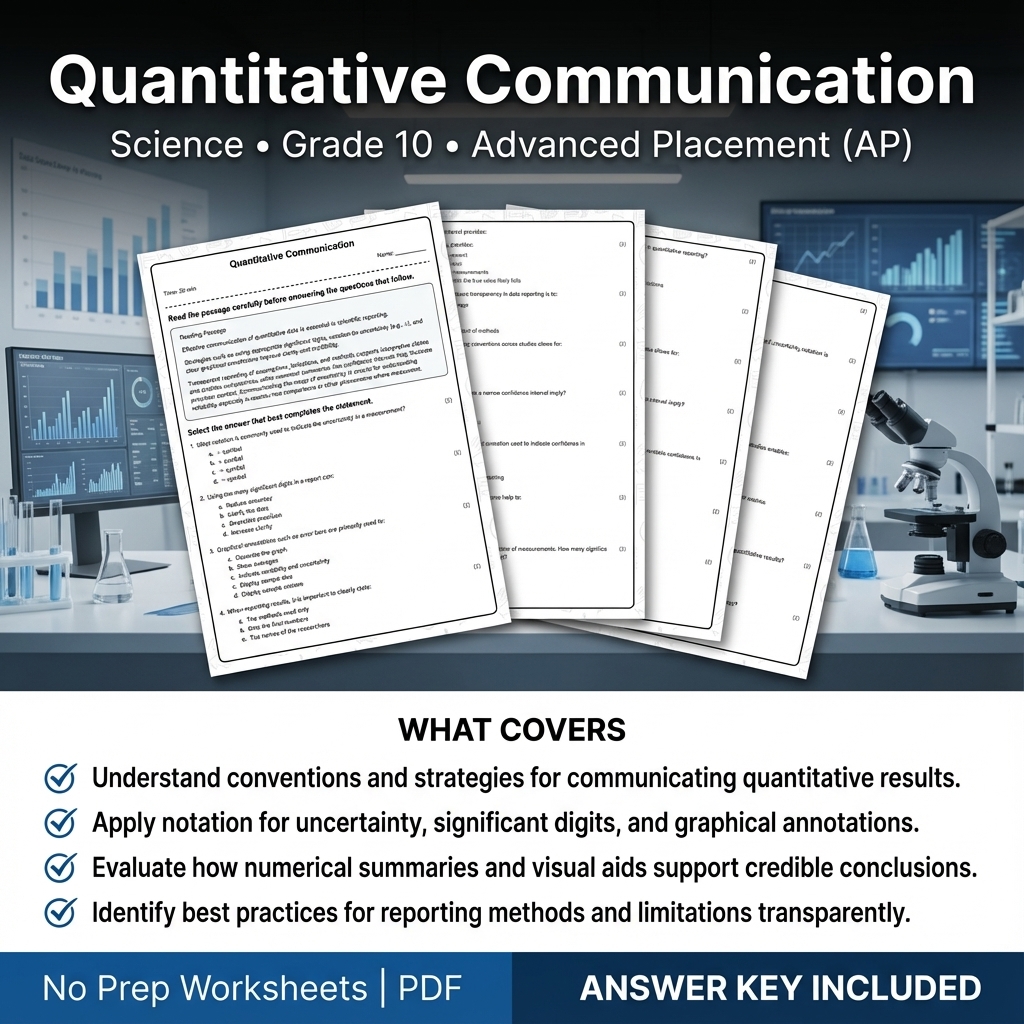
Grade 10 Science | Quantitative Communication Worksheet (Printable PDF + Answer Key)
Created byCoral Reef LearningLearning Objectives
- Understand conventions and strategies for communicating quantitative results.
- Apply notation for uncertainty, significant digits, and graphical annotations.
- Evaluate how numerical summaries and visual aids support credible conclusions.
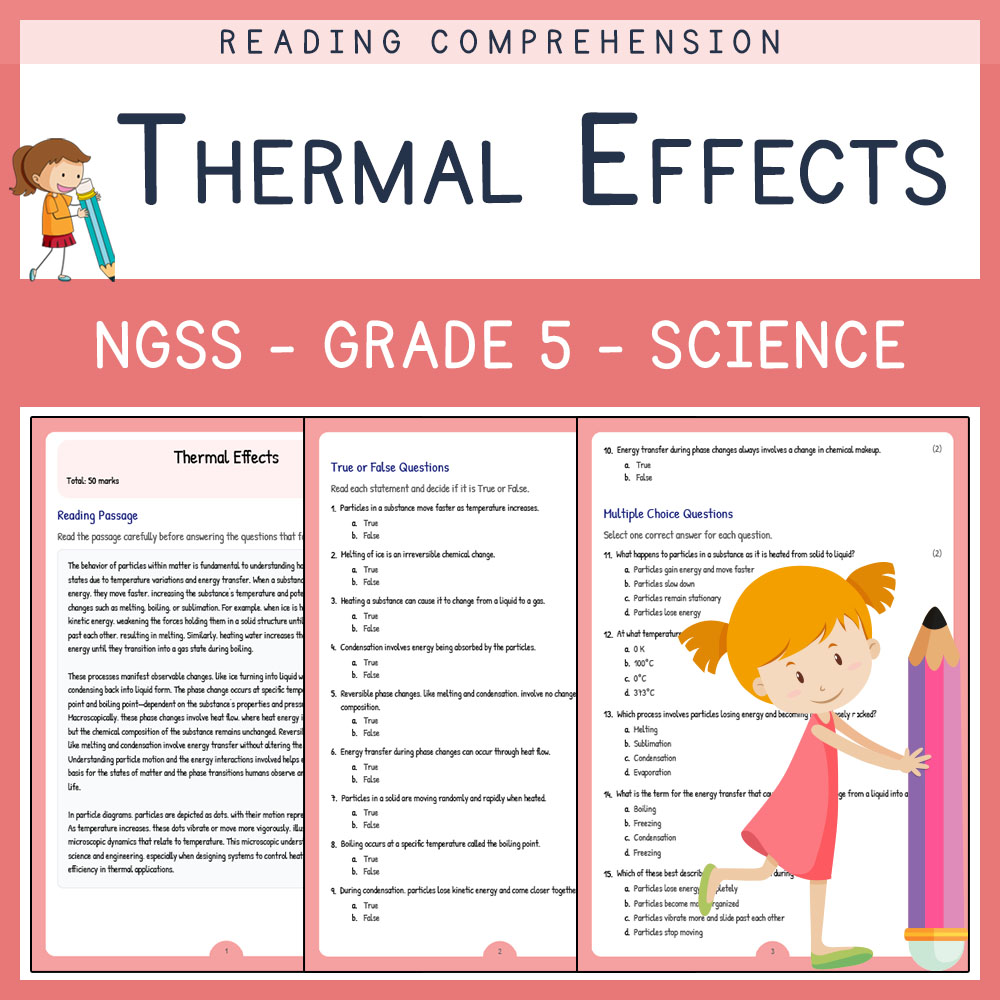
Grade 8 Science | Thermal Effects Worksheet & Answer Key (NGSS Aligned)
Created byLumora LearningLearning Objectives
- Explain how particle motion relates to states of matter and phase changes.
- Describe how temperature and energy transfer influence phase changes such as melting, boiling, and condensation.
- Relate macroscopic measurements of temperature and heat flow to microscopic particle behavior.
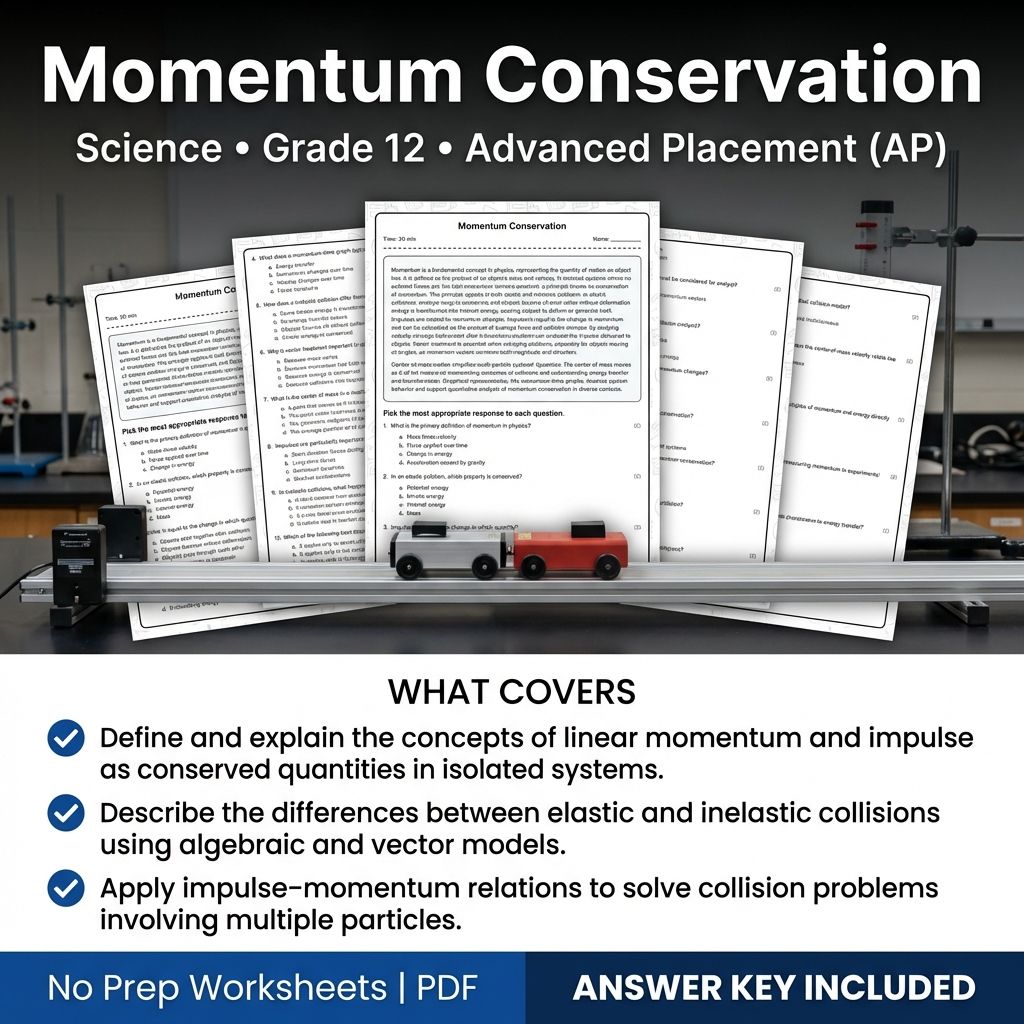
Grade 12 Science | Momentum Conservation Worksheet & Answer Key (Printable PDF)
Created byCoral Reef LearningLearning Objectives
- Define and explain the concepts of linear momentum and impulse as conserved quantities in isolated systems.
- Describe the differences between elastic and inelastic collisions using algebraic and vector models.
- Apply impulse–momentum relations to solve collision problems involving multiple particles.
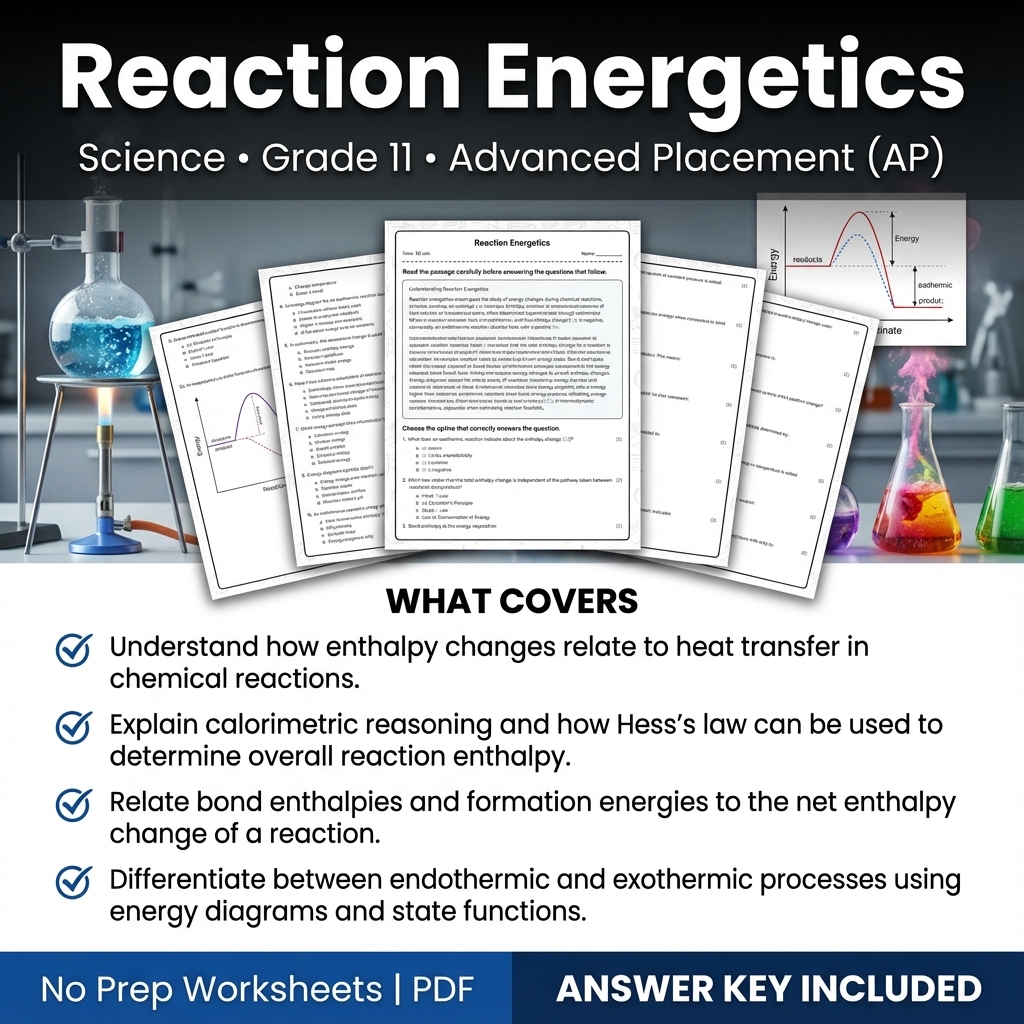
11th Grade Science | Reaction Energetics Worksheet (Printable PDF + Answer Key)
Created byCoral Reef LearningLearning Objectives
- Understand how enthalpy changes relate to heat transfer in chemical reactions.
- Explain calorimetric reasoning and how Hess’s law can be used to determine overall reaction enthalpy.
- Relate bond enthalpies and formation energies to the net enthalpy change of a reaction.
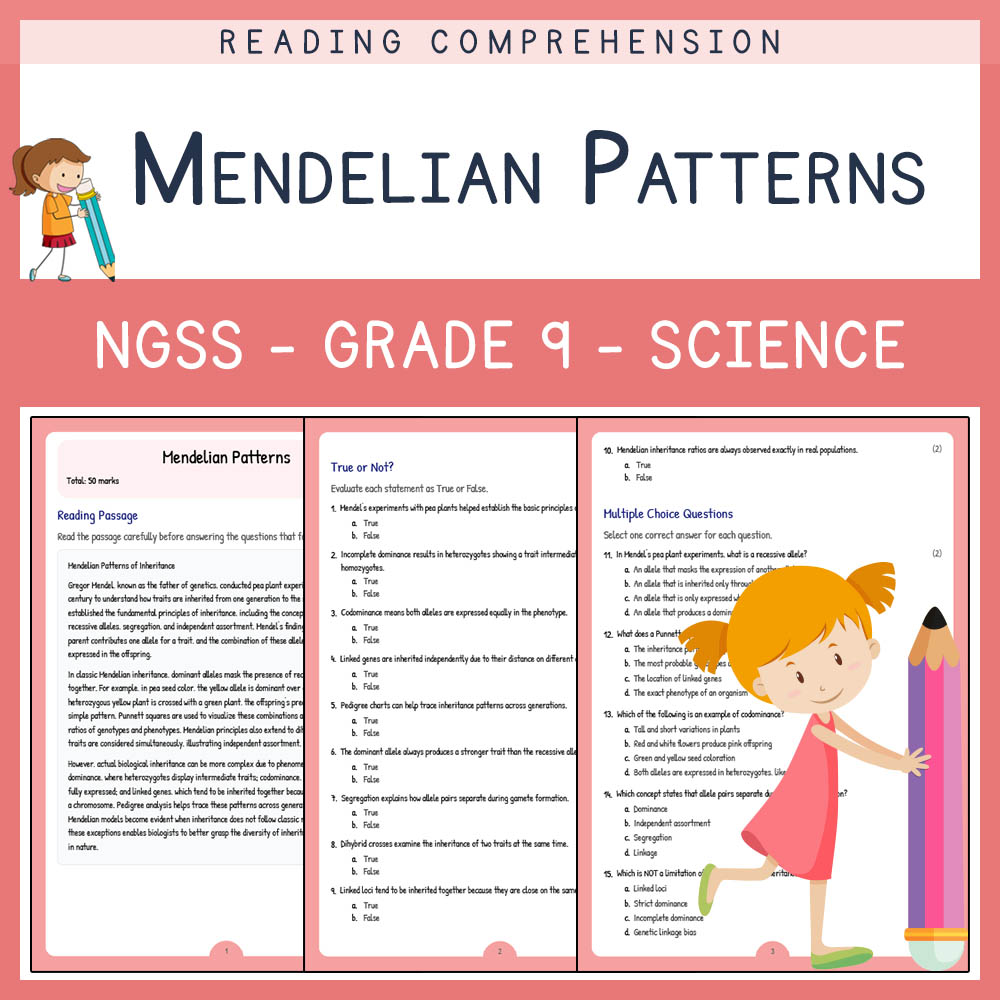
Grade 9 Science | Mendelian Patterns Worksheet with Answer Key (PDF)
Created byLumora LearningLearning Objectives
- Understand the principles of Mendelian inheritance including dominance, segregation, and independent assortment.
- Analyze Punnett squares to predict genotype and phenotype ratios in monohybrid and dihybrid crosses.
- Interpret pedigree charts to determine inheritance patterns.
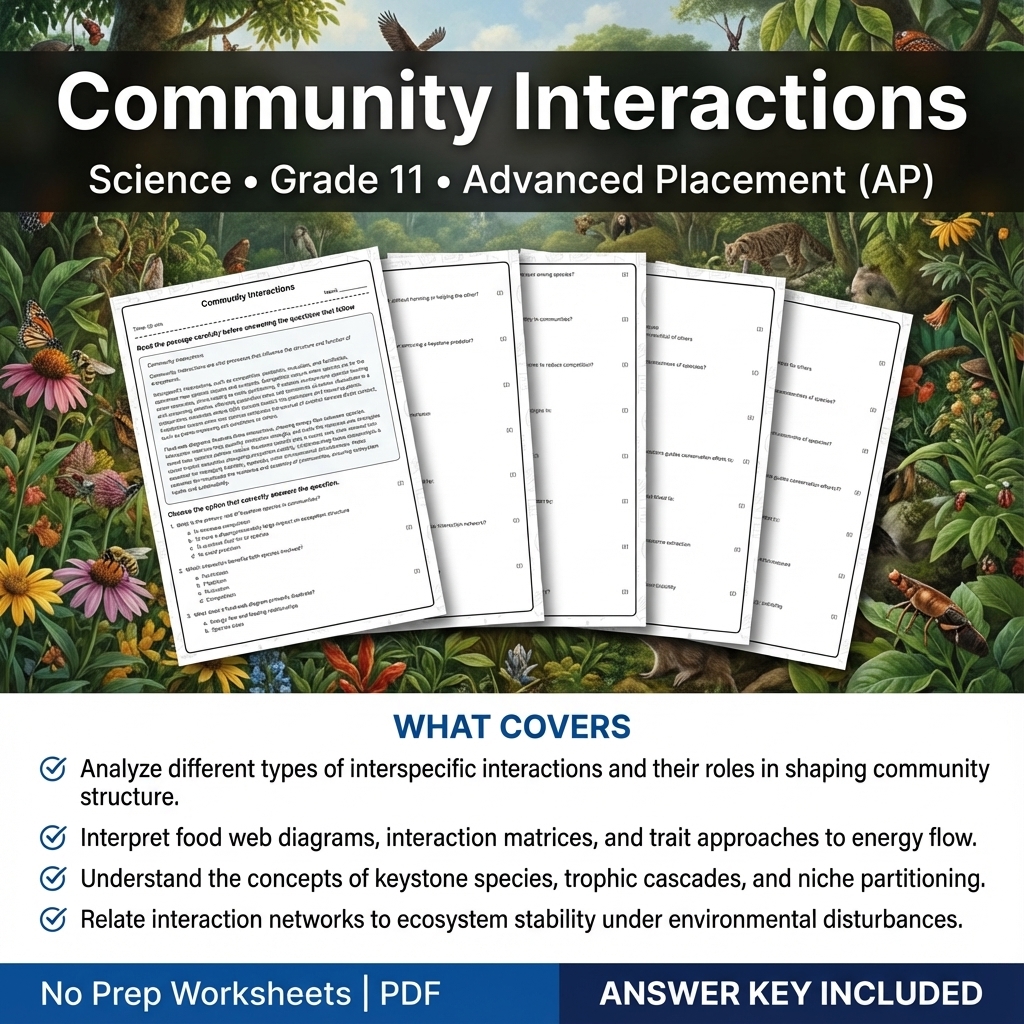
Grade 11 Science | Community Interactions Worksheet (Printable PDF + Answer Key)
Created byCoral Reef LearningLearning Objectives
- Analyze different types of interspecific interactions and their roles in shaping community structure.
- Interpret food web diagrams, interaction matrices, and trait approaches to energy flow.
- Understand the concepts of keystone species, trophic cascades, and niche partitioning.
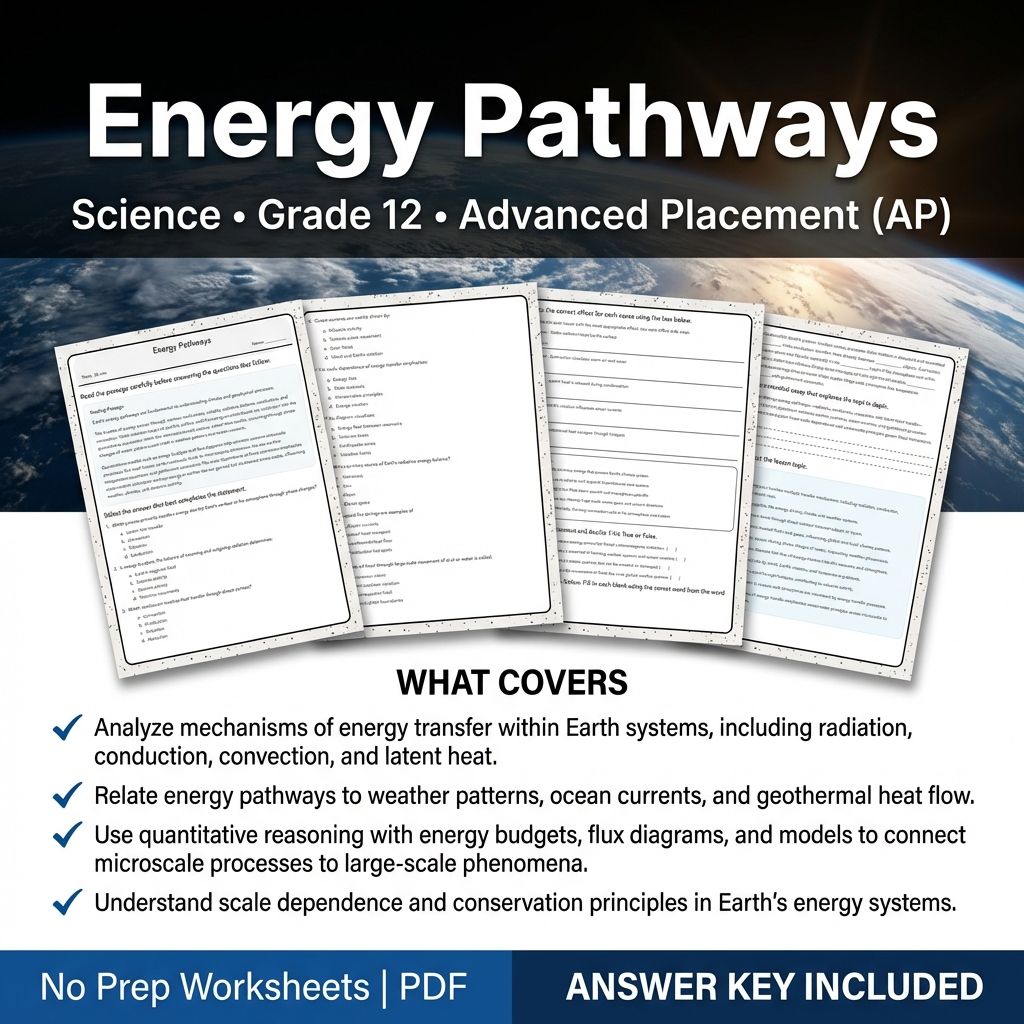
Grade 12 Science | Energy Pathways Worksheet & Answer Key for AP Standards
Created byCoral Reef LearningLearning Objectives
- Analyze mechanisms of energy transfer within Earth systems, including radiation, conduction, convection, and latent heat.
- Relate energy pathways to weather patterns, ocean currents, and geothermal heat flow.
- Use quantitative reasoning with energy budgets, flux diagrams, and models to connect microscale processes to large-scale phenomena.
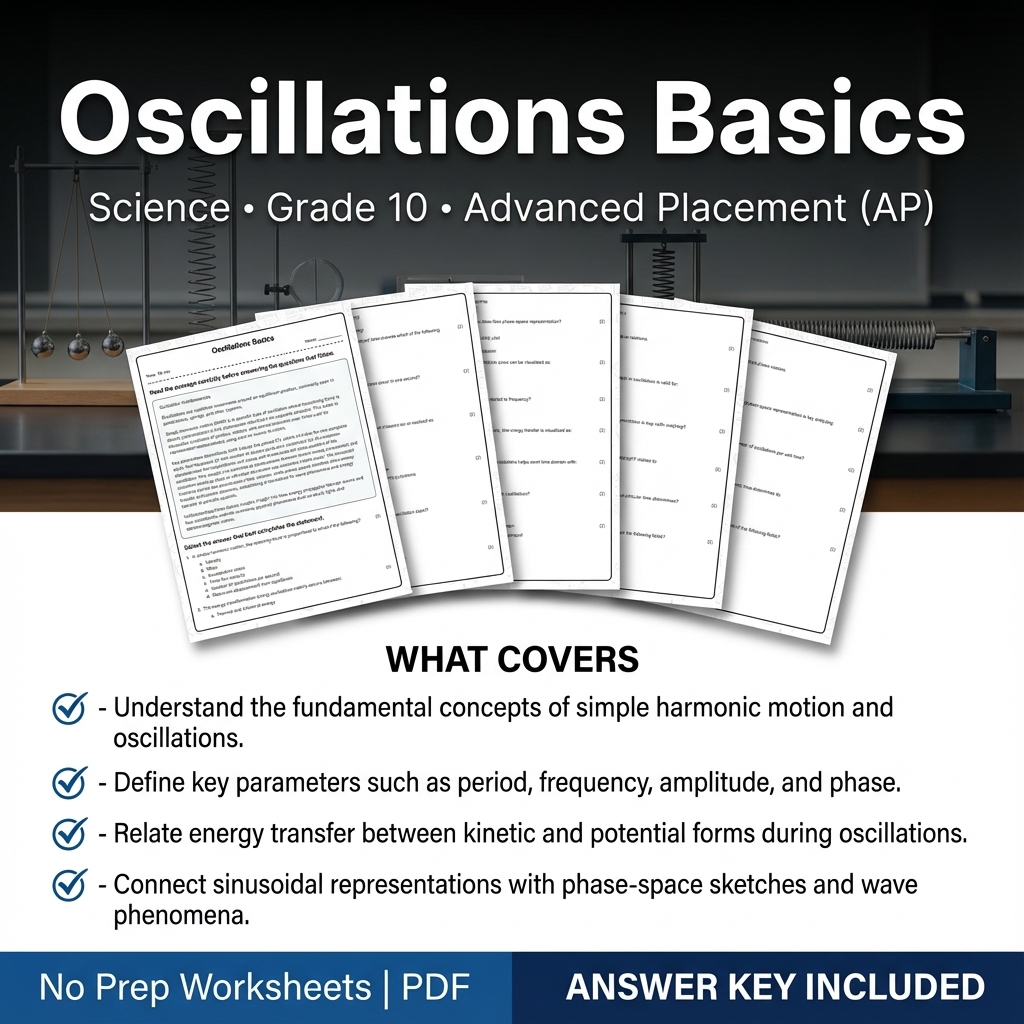
Grade 10 Science | Oscillations Worksheet (Printable PDF + Answer Key)
Created byCoral Reef LearningLearning Objectives
- Understand the fundamental concepts of simple harmonic motion and oscillations.
- Define key parameters such as period, frequency, amplitude, and phase.
- Relate energy transfer between kinetic and potential forms during oscillations.
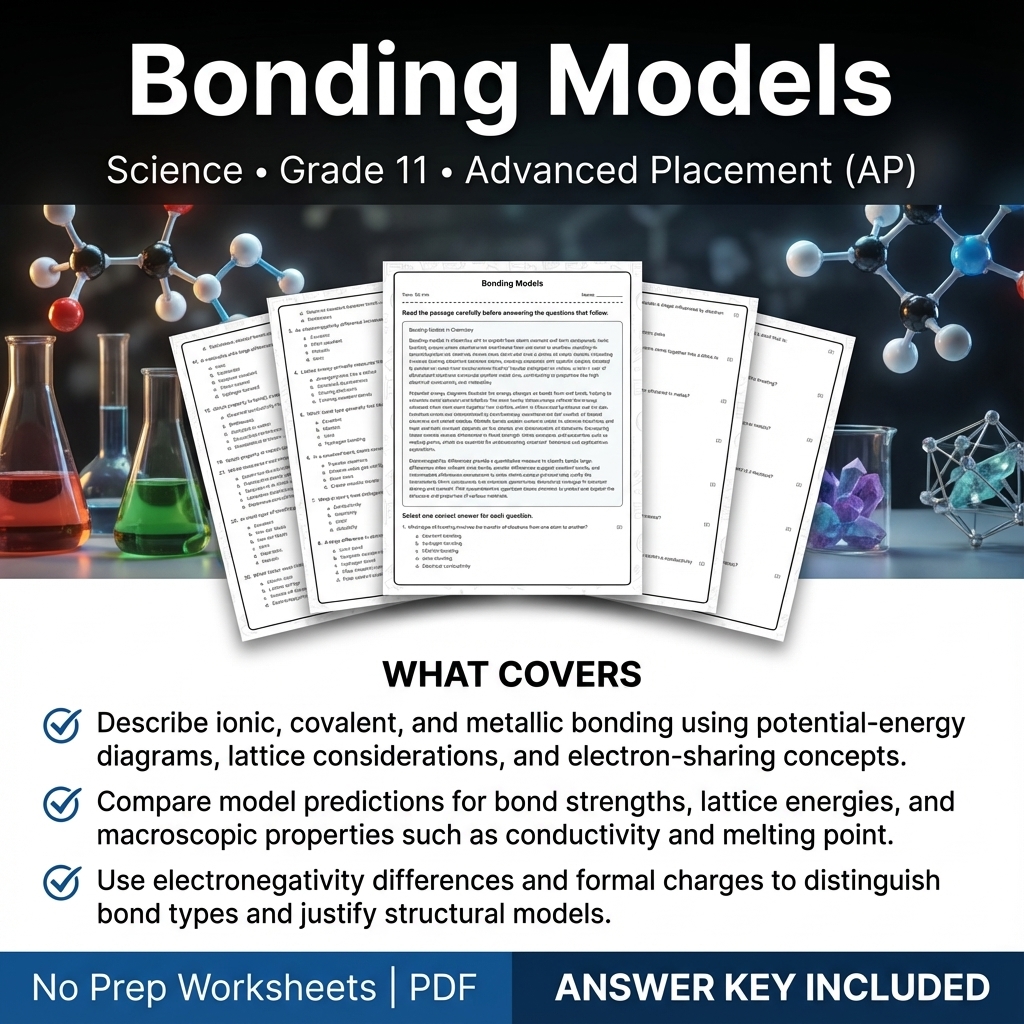
Grade 11 Science | Bonding Models Worksheet (Printable PDF + Answer Key)
Created byCoral Reef LearningLearning Objectives
- Describe ionic, covalent, and metallic bonding using potential-energy diagrams, lattice considerations, and electron-sharing concepts.
- Compare model predictions for bond strengths, lattice energies, and macroscopic properties such as conductivity and melting point.
- Use electronegativity differences and formal charges to distinguish bond types and justify structural models.
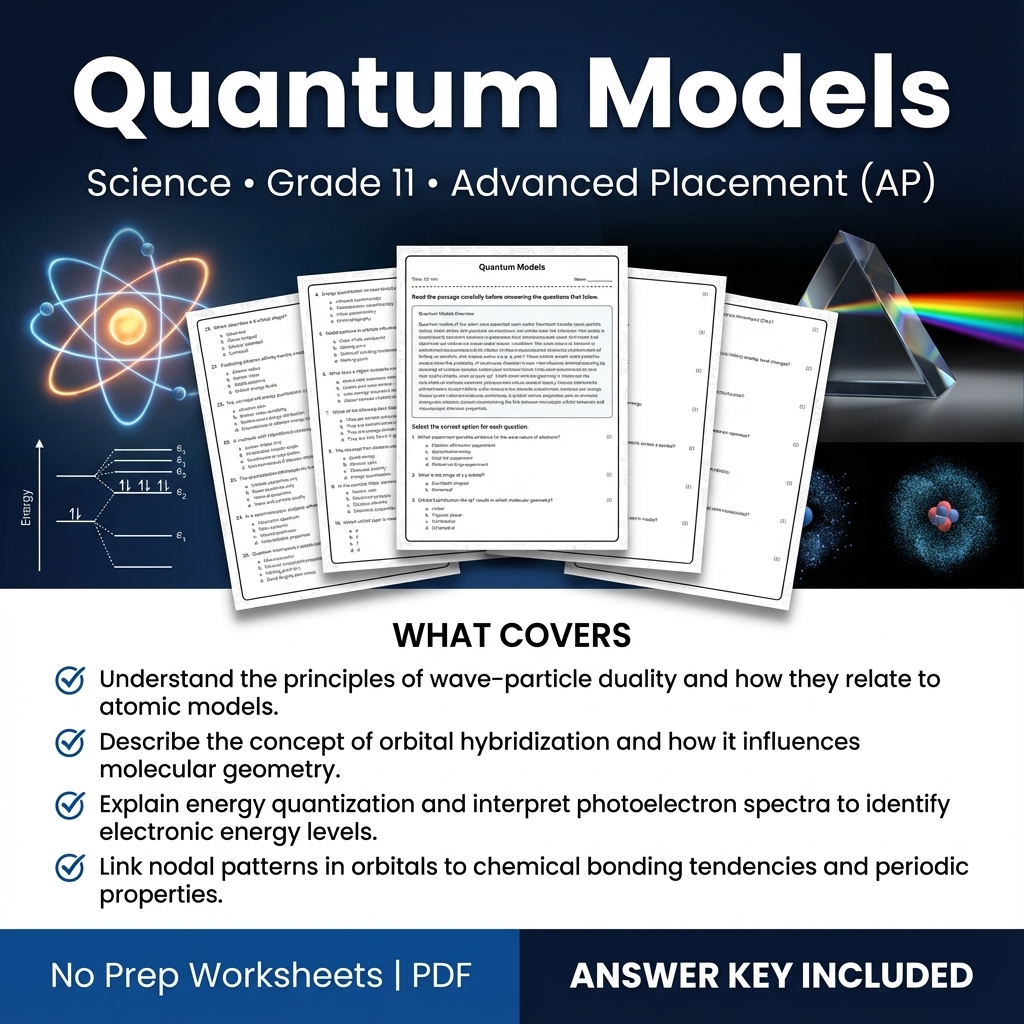
11th Grade Science | Quantum Models Worksheet (Printable PDF + Answer Key)
Created byCoral Reef LearningLearning Objectives
- Understand the principles of wave–particle duality and how they relate to atomic models.
- Describe the concept of orbital hybridization and how it influences molecular geometry.
- Explain energy quantization and interpret photoelectron spectra to identify electronic energy levels.
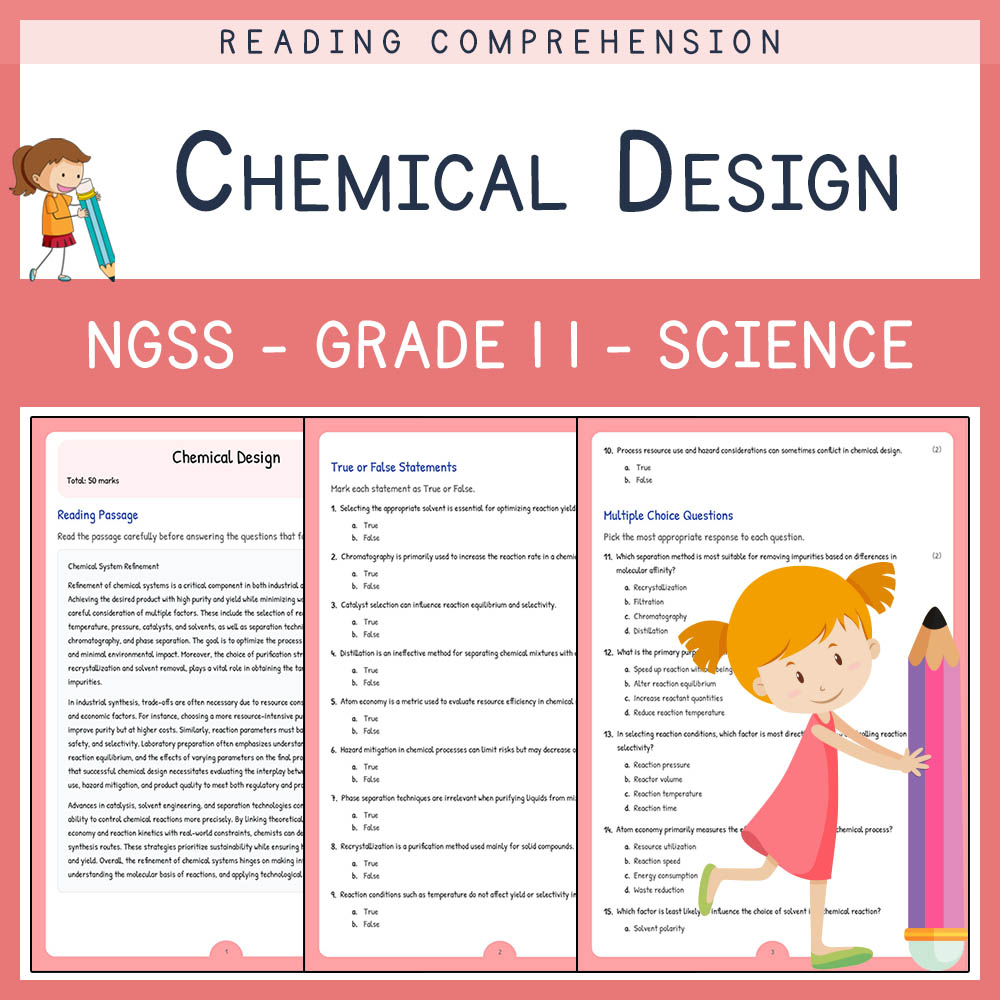
Grade 11 Science | Chemical Design Worksheet (PDF + Answer Key) NGSS-Aligned
Created byLumora LearningLearning Objectives
- Understand reaction conditions and separation techniques in chemical systems.
- Identify and evaluate purification strategies for target compounds.
- Analyze factors influencing efficiency, purity, resource use, and hazards in chemical processes.
Browse more categories
About Science Worksheets
Find Science worksheets spanning core skills, practice, and review. All 42,859 resources are instant PDF downloads for the classroom or home.
Every worksheet on MyTeachingSheets is created by independent teacher-authors and reviewed before publication. All resources download as printable PDFs for classroom, homework, or at-home practice, and many include answer keys. Preview any worksheet free before buying.