
Grade 6 Science Worksheets
5,997 worksheets
Grade 6 Science Worksheet Learn Iterative Improvement Easily | PDF
 Created byMeadowlark Worksheets
Learning Objectives
- Understand the concept of iterative improvement and its role in design.
- Identify how evaluation results influence design changes.
- Explain the importance of balancing properties, needs, and limitations during refinement.
Also included in: Grade 6 Science Lesson Bundle | Critical Thinking & Problem Solving +1 more
Instant download

Grade 6 Science | Community Stewardship in Science - Daily Reading Comprehension
 Created byCoral Reef Learning
Learning Objectives
- Understand the importance of scientific methods in community issues.
- Recognize the role of respectful engagement and cultural sensitivity.
- Learn protocols for obtaining consent and validating community data.
Instant download

Grade 6 Cloud And Precipitation Worksheet | NGSS Practice PDF
 Created byClear Sky Classroom
Learning Objectives
- Explain how clouds form when water vapor cools and condenses onto tiny particles in the atmosphere
- Describe how precipitation forms when droplets or ice crystals become heavy enough to fall
- Distinguish between types of precipitation (rain, snow, sleet, hail) based on temperature changes
Instant download

Science Careers Worksheet | Grade 6 Science Activities
 Created byPrism Point Learning
Learning Objectives
- Describe how scientific inquiry and technology work together in different science careers.
- Match common workplace tasks to specific roles in science and engineering.
- Explain how data collection and instrument use support interpreting measurement results.
Also included in: Grade 6 Science Ethics and Societal Impacts Lesson Bundle for TEKS +1 more
Instant download

Parallel Circuits Characteristics Worksheet Grade 6 Science Ontario
 Created byChalk and Compass
Learning Objectives
- Explain how parallel circuits split current into multiple branching pathways.
- Describe why each parallel branch has the same potential difference (voltage).
- Use current relationships to predict how overall current relates to branch currents.
Also included in: Grade 6 Science Circuits & Electricity Lesson Bundle | Ontario +1 more
Instant download

6th Grade Science | Lunar Phases Model Worksheet (Alberta Standards) (PDF)
 Created byEvergreen Desk Education
Learning Objectives
- Explain how a geometric model of the Sun, Earth, and Moon can represent lunar phases.
- Use the model to predict which phase is visible and when it occurs over the lunar cycle.
- Describe how the Moon’s apparent illumination changes as it orbits Earth.
Instant download

Grade 6 Science | Minerals & Rocks - Daily Reading Comprehension
Created byCoral Reef LearningLearning Objectives
- Identify various minerals and rocks based on physical properties.
- Understand the differences between igneous, sedimentary, and metamorphic rocks.
- Recognize how rocks form and the environments in which they form.
Instant download

Collisions and Momentum Worksheet for Grade 6 Science | NGSS-Aligned Practice
JCreated byJ.S SheetsLearning Objectives
- Understand the principle of conservation of momentum in two-body collisions.
- Differentiate between elastic and inelastic collisions through examples and calculations.
- Identify the forces involved during collisions and analyze action-reaction pairs.
Also included in: Grade 6 Forces, Motion, and Interactions Science Lesson Bundle: NGSS +1 more
Instant download

Grade 6 Science | Mixtures & Compounds - Daily Reading Comprehension
Created byCoral Reef LearningLearning Objectives
- Understand the difference between mixtures and compounds
- Describe particle models of mixtures and compounds
- Identify mixtures based on their properties and particle arrangements
Instant download
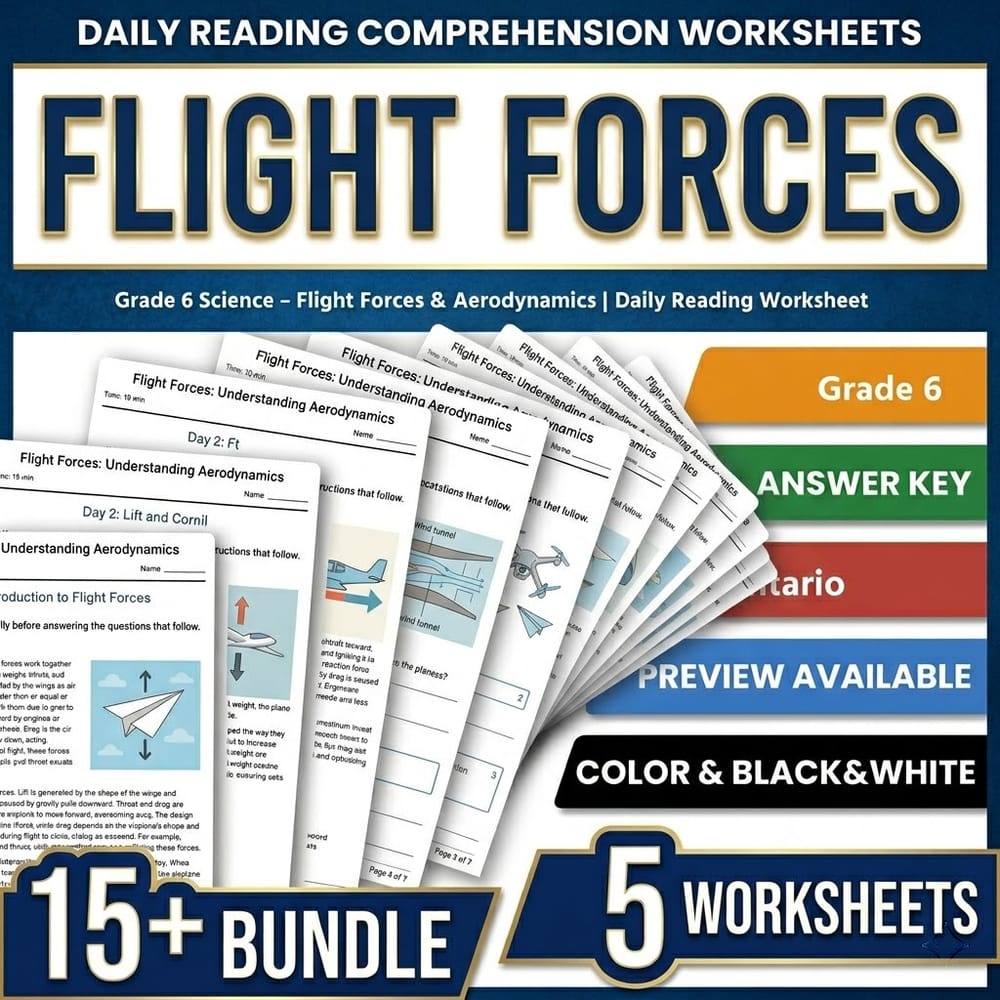
Grade 6 Science – Flight Forces & Aerodynamics | Daily Reading Worksheet
 Created byQuiet Forest Education
Learning Objectives
- Understand key concepts related to Science
- Apply knowledge through practice questions
- Demonstrate comprehension of the material
Also included in: Flight Science Grade 6 Daily Reading Worksheets Bundle | Ontario +1 more
Instant download
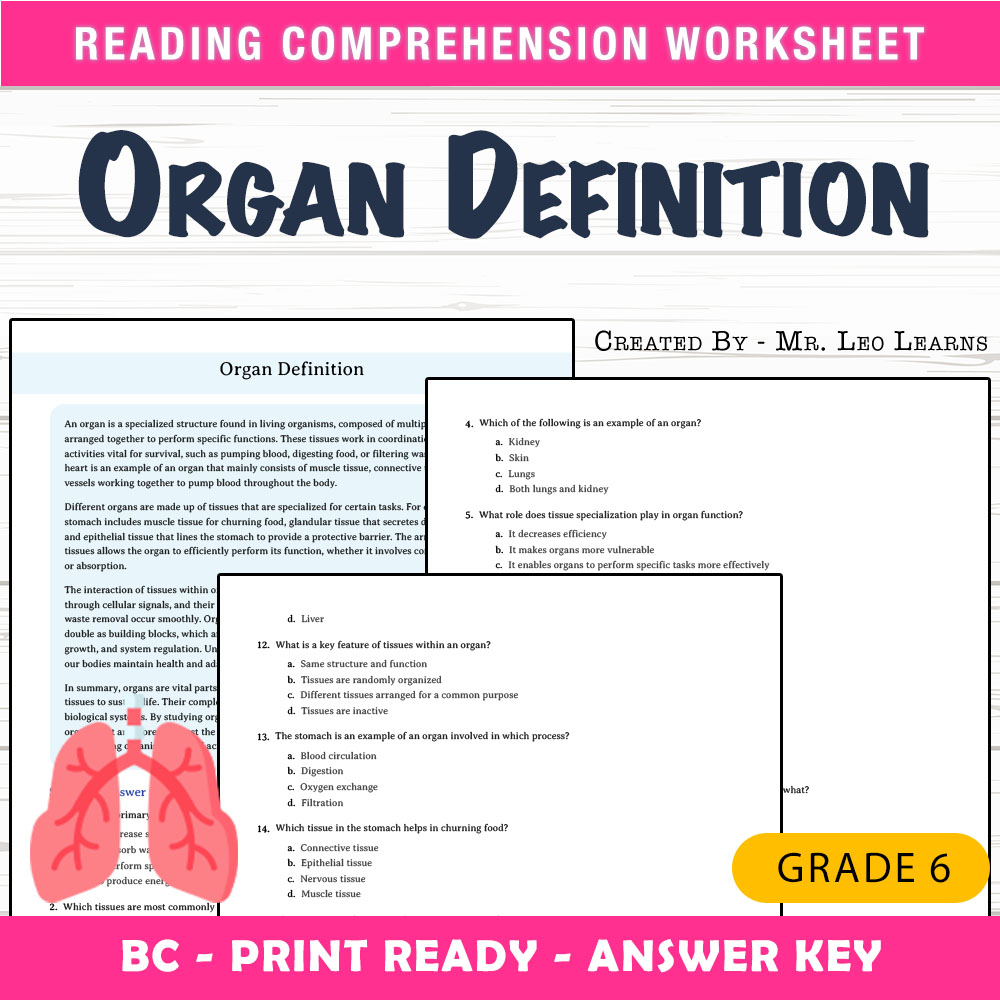
Grade 6 Science – Organ Definition Worksheet MCQ Paper for Mastery
 Created byThe Resource Hub
Learning Objectives
- Understand what constitutes an organ and its role in the organism.
- Identify the tissues that make up different organs.
- Explain how tissues interact within organs to perform specific functions.
Also included in: Grade 6 Science Unit | Multicellular Systems & Functions Worksheet Bundle +1 more
Instant download

Growth and Stored Energy Worksheet | Grade 6 Life Science Practice
Created byPrism Point LearningLearning Objectives
- Explain how photosynthesis provides energy for plant growth, repair, and reproduction
- Describe how plants store chemical energy in molecules to use later
- Connect matter changes in plant parts (leaves, stems, roots, and reproductive parts) to energy transformations
Also included in: Animals Matter Lesson Bundle | Grade 6 Science | California Standards
Instant download
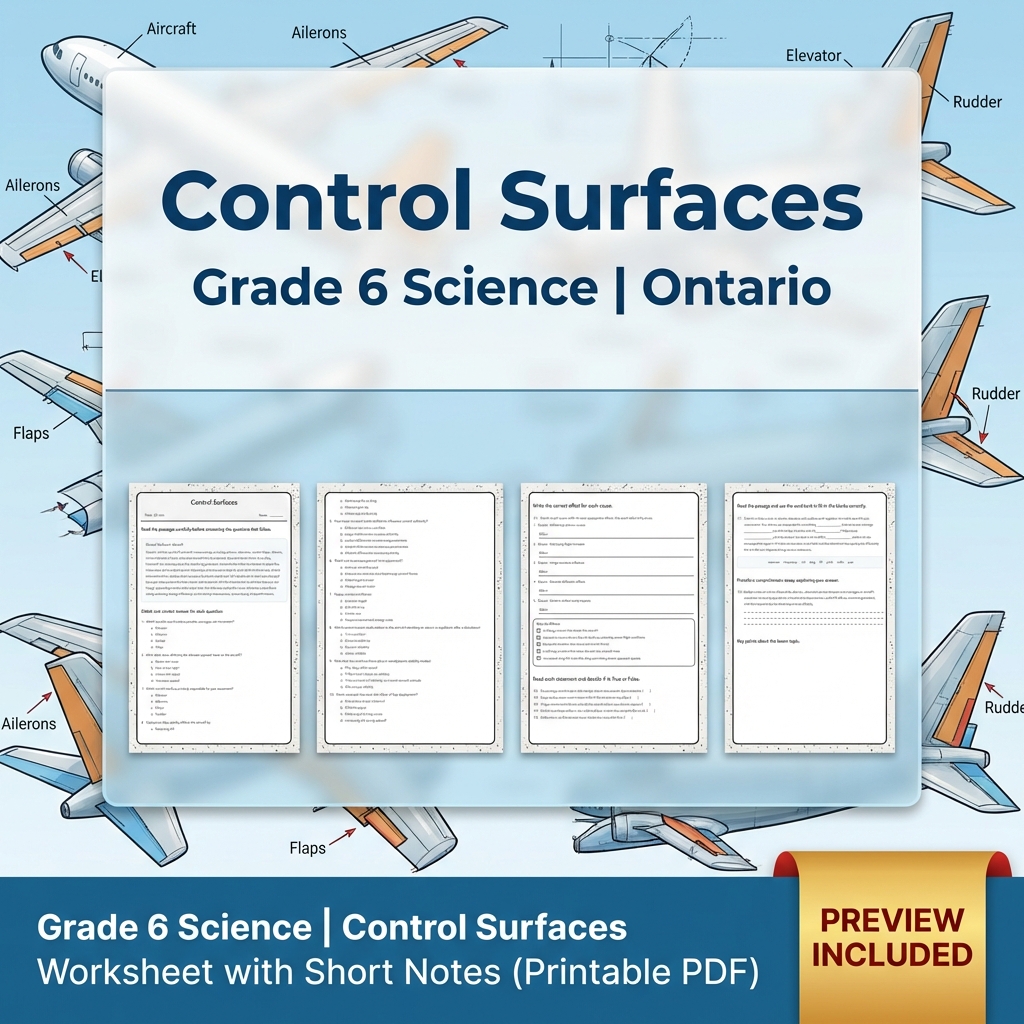
Grade 6 Science | Control Surfaces Worksheet with Short Notes (Printable PDF)
Created byMeadowlark WorksheetsLearning Objectives
- Describe the primary and secondary control surfaces and their roles in aircraft maneuvering.
- Explain how deflections of control surfaces affect lift, moments, and aircraft attitude.
- Understand the concept of control authority and aerodynamic stability modes.
Also included in: Grade 6 Science Lesson Group Bundle – Ontario Framework Worksheets +1 more
Instant download

Grade 6 Science | Ecosystem Components - Daily Reading Comprehension
Created byCoral Reef LearningLearning Objectives
- Identify different biotic components in an ecosystem.
- Understand the role of abiotic factors in ecosystems.
- Explain how living and nonliving elements interact within habitats.
Instant download

Biodiversity Roles Worksheet | Grade 6 Science Activities
Created byPrism Point LearningLearning Objectives
- Explain how different organisms (trees, understory plants, fungi, and animals) contribute to key ecosystem functions such as nutrient cycling, pollination, and seed dispersal.
- Describe how keystone and indicator species help ecosystems function and how changes to their roles can affect food webs and resilience.
- Use examples from Alberta to connect species interdependence to biodiversity and ecosystem stability.
Also included in: Trees and Forests Lesson Bundle | Grade 6 Science | Alberta Framework
Instant download

Science Worksheet Quantitative Circuits Voltage Current Resistance Grade 6
JCreated byJ.S SheetsLearning Objectives
- Explain how voltage, current, and resistance are quantitatively related in simple circuits using proportional reasoning.
- Use Ohm’s relationship to predict current when voltage or resistance changes (without complicated procedures).
- Compare expected current and resistance behavior in series versus parallel circuits using ratios.
Instant download

Decomposers And Nutrient Return Worksheet | Grade 6 Science Practice
Created byPrism Point LearningLearning Objectives
- Explain how decomposers break down dead organisms and waste to return materials to the ecosystem.
- Describe the roles of fungi and bacteria in nutrient cycling within soil and water.
- Connect nutrient availability to ecosystem growth patterns over time.
Instant download

Grade 6 Science | Energy Pathways in Life - Daily Reading Comprehension
Created byCoral Reef LearningLearning Objectives
- Understand the process of photosynthesis in plants
- Identify the reactants and products of photosynthesis
- Explain how light energy is converted into chemical energy in plants
Instant download

Grade 6 Science | Water Cycle Exploration - Daily Reading Comprehension
Created byCoral Reef LearningLearning Objectives
- Understand the process of evaporation and how it contributes to the water cycle.
- Identify the key steps in the water cycle, including evaporation, condensation, and precipitation.
- Explore the role of solar energy in driving evaporation.
Instant download
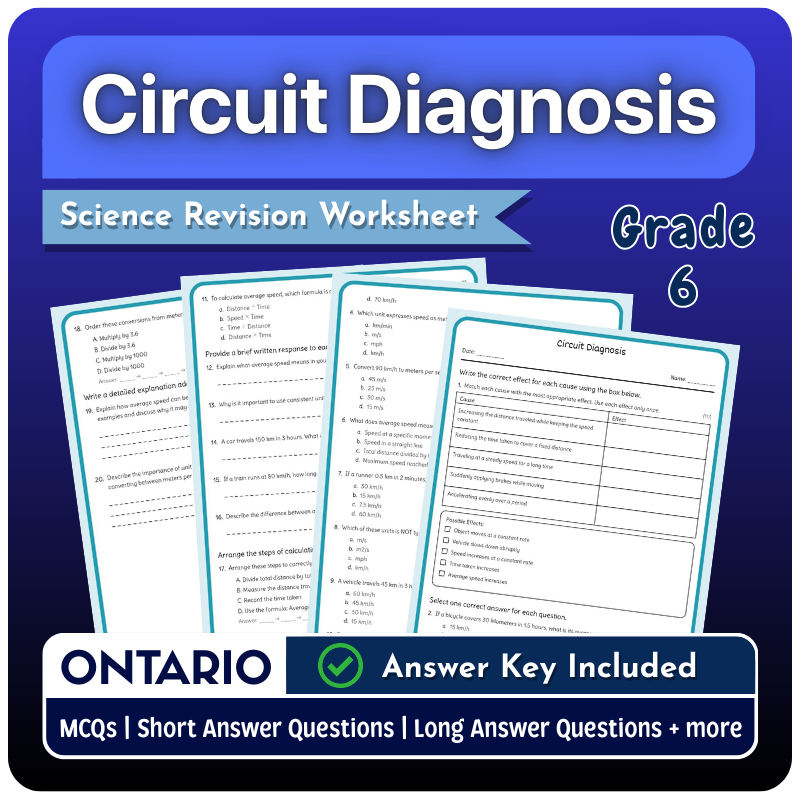
6th Grade Science | Circuit Diagnosis Worksheet (Ontario) (PDF)
 Created byBright Mind Resources
Learning Objectives
- Understand the principles of troubleshooting electrical circuits through observation and inference.
- Identify common symptoms of circuit faults such as unequal brightness or interrupted continuity.
- Apply diagnostic reasoning based on circuit topology and measurement patterns.
Instant download

Digital Instrumentation Science Worksheet Grade 6 Ontario Measurement Activity
 Created byTeacher's Corner
Learning Objectives
- Explain how electronic sensors, data loggers, and digital probes work together to collect numeric data.
- Choose an appropriate sampling rate and resolution for a measurement and identify common sources of systematic error.
- Describe calibration steps and the importance of recording measurement metadata.
Instant download

Grade 6 Triboelectric Charge & Electrostatic Discharge Worksheet | Ontario
Created byTeacher's CornerLearning Objectives
- Explain how charge transfer happens during triboelectric effects between different materials.
- Use the triboelectric series to predict which materials tend to become positively or negatively charged.
- Describe how attraction and repulsion result from electrostatic charges.
Instant download

Grade 6 Science Worksheet Mixtures and Compounds | Standards-Aligned Practice
JCreated byJ.S SheetsLearning Objectives
- Understand the difference between mixtures and compounds based on atomic arrangement and properties.
- Identify examples of mixtures and compounds in everyday life.
- Explain how particle models distinguish between mixtures and compounds.
Also included in: Grade 6 Physical Science Lesson Bundle for Science – California Standards +1 more
Instant download

Grade 6 Bernoulli Principle and Airfoil Lift Science Worksheet Alberta
 Created byBRIGHT PATH RESOURCES
Learning Objectives
- Explain Bernoulli’s idea using the relationship between fluid speed and pressure.
- Use vocabulary (pressure, speed, gradient, lift, circulation) in context.
- Describe how pressure differences around an airfoil can contribute to lift.
Also included in: Aerodynamics & Flight Physics Grade 6 Science Worksheets Bundle | Alberta +1 more
Instant download
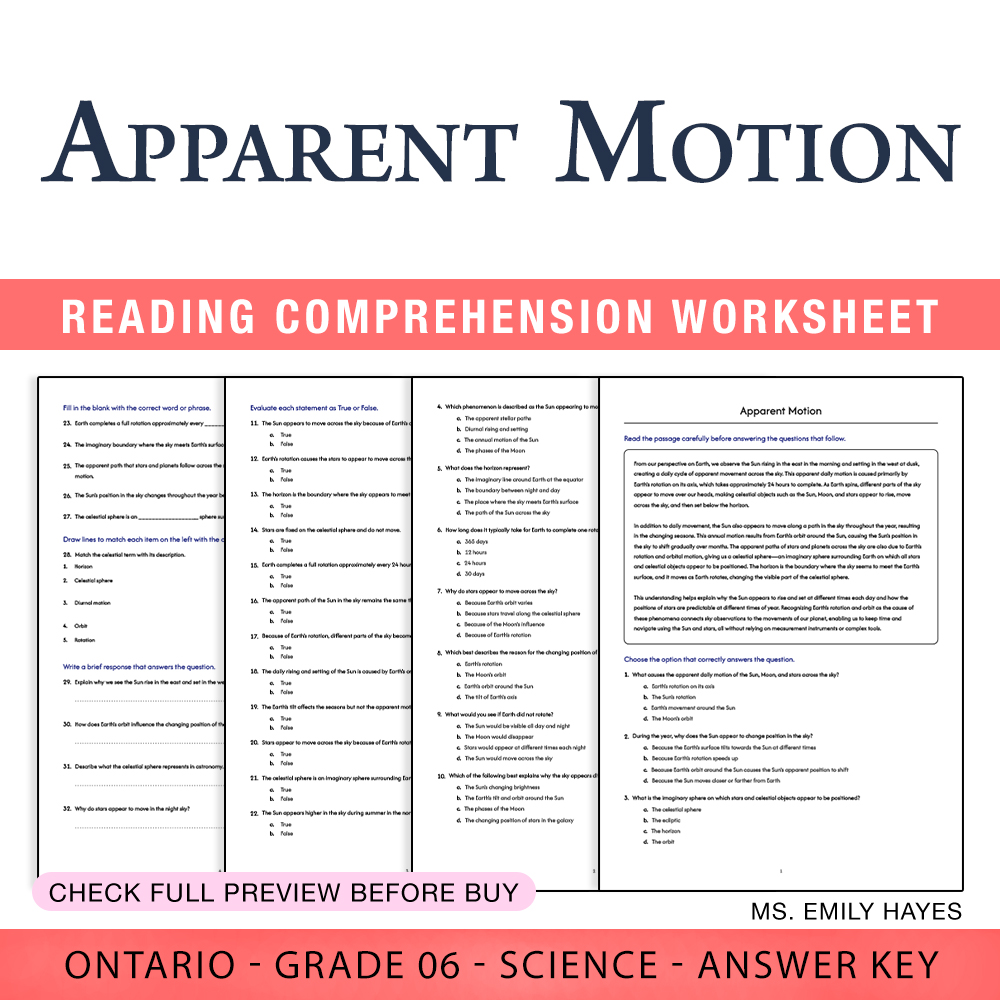
6th Grade Science | Apparent Motion Worksheet (PDF + Answer Key)
 Created byCopper Leaf Classroom
Learning Objectives
- Describe the apparent daily motion of the Sun, Moon, and stars from an Earth-based perspective.
- Explain how Earth's rotation and orbital motion cause phenomena such as rising, setting, and apparent stellar paths.
- Understand the concept of the celestial sphere and horizon in relation to sky observations.
Instant download

Population Change Assessment | California Standards Grade 6 Science
Created byPrism Point LearningLearning Objectives
- Explain how birth rates and death rates affect population size over time
- Describe how resource availability can increase or decrease populations
- Use population data patterns to infer changes in environmental conditions
Also included in: Grade 6 Energy and Matter Cycles Science Lesson Bundle | California Standards +1 more
Instant download

Grade 6 Science Worksheet – Understanding Streamlining (Alberta Standards) (PDF)
 Created bySilver Birch Teaching
Learning Objectives
- Explain how streamlining reduces aerodynamic drag by shaping objects to support smooth airflow.
- Identify key design features of streamlined shapes (rounded nose, tapered tail, smooth surface).
- Describe how changes in shape can delay airflow separation and affect energy needs.
Also included in: Grade 6 Aerodynamics & Flight Forces Science Lesson Bundle: Alberta +1 more
Instant download
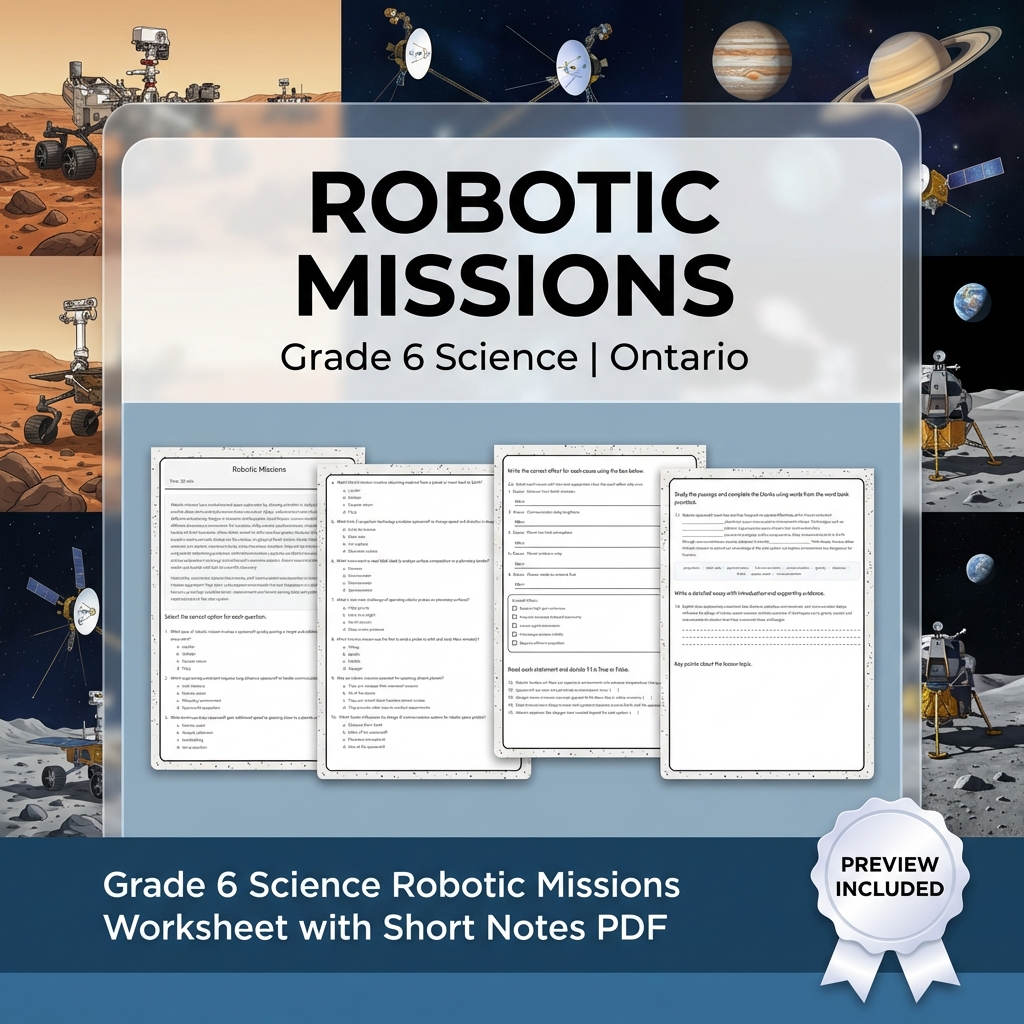
Grade 6 Science Robotic Missions Worksheet with Short Notes PDF
Created byMeadowlark WorksheetsLearning Objectives
- Describe different types of robotic missions to the solar system, including flyby, orbiter, lander, and sample-return.
- Understand the engineering constraints like distance, communication delays, and planetary environments that influence mission design.
- Explain how mission design addresses propulsion, instruments, and data return to extend observational capabilities.
Also included in: Grade 6 Science Lesson Group Bundle – Ontario Curriculum Worksheets +1 more
Instant download

Magnetic and Electric Forces Worksheets | Grade 6 Science Practice
LCreated byLearnora ResourcesLearning Objectives
- Classify examples as contact or non-contact forces
- Identify magnetic, electric, or neither force in everyday situations
- Predict attraction or repulsion between magnets and charged objects
Instant download

Tools Safety Worksheet | Standards-Aligned Grade 6 Science Assessment
JCreated byJ.S SheetsLearning Objectives
- Identify safe handling practices for measurement tools such as thermometers, pH probes, and dataloggers.
- Understand proper storage, cleaning, and calibration procedures for field instruments.
- Recognize safety precautions and contamination prevention protocols when working near wetlands and rivers.
Instant download
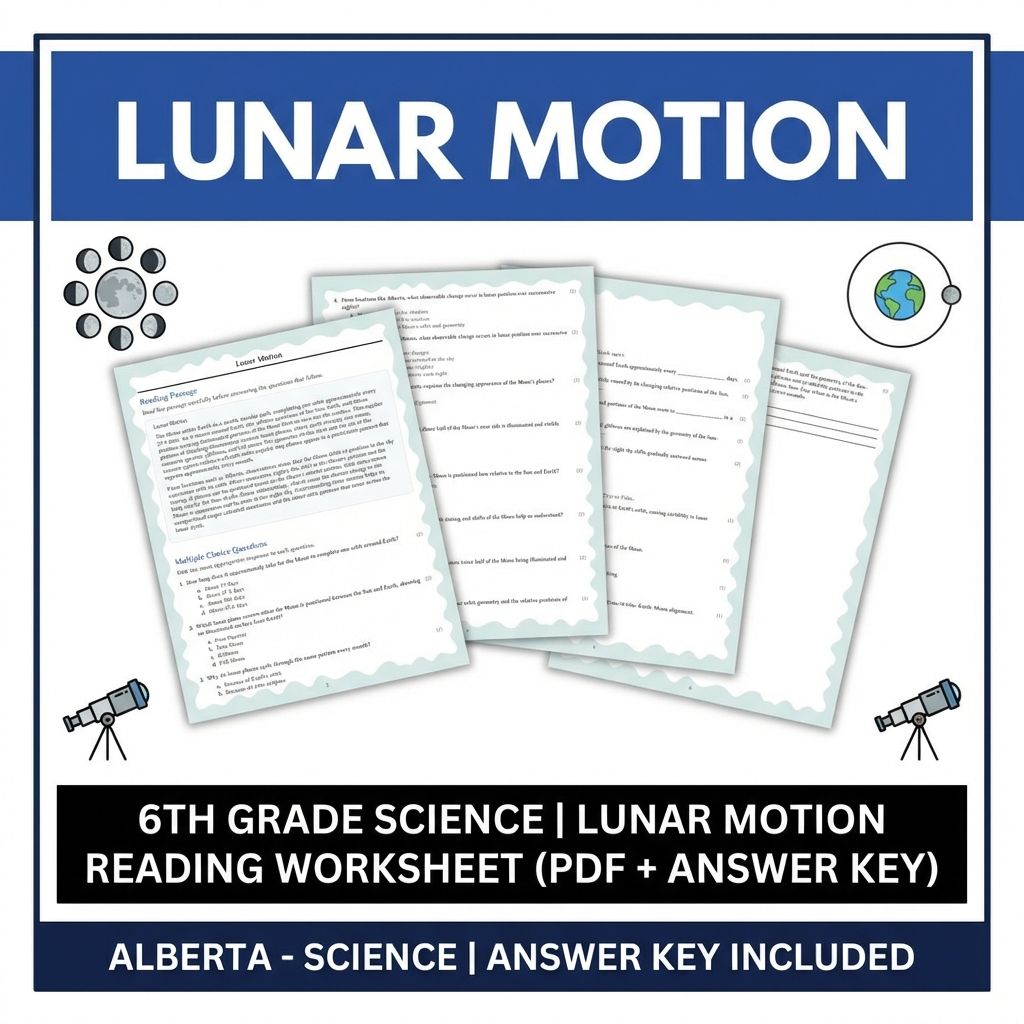
6th Grade Science | Lunar Motion Reading Worksheet (PDF + Answer Key)
JCreated byJ.S SheetsLearning Objectives
- Describe how the Moon orbits Earth and causes lunar phases.
- Explain the geometric relationship between the Sun, Earth, and Moon during lunar phases.
- Identify observable patterns of lunar motion from different locations.
Also included in: Grade 6 Science | Celestial Motion & Sky Observation Worksheets Bundle +1 more
Instant download

Grade 6 Science | Niche Dynamics in Ecology - Daily Reading Comprehension
Created byCoral Reef LearningLearning Objectives
- Understand what ecological niches are and their importance
- Differentiate between fundamental and realized niches
- Identify abiotic factors affecting resource use
Instant download

Reaction Rates Worksheet | Standards-Aligned PDF Practice for Grade 6 Science
JCreated byJ.S SheetsLearning Objectives
- Understand the factors that influence reaction rates, including concentration, temperature, surface area, and catalysts.
- Describe how microscopic particle collisions relate to observable signs of chemical reactions.
- Identify real-world examples of factors affecting reaction speed and signs of chemical change.
Instant download

Grade 6 Science | Food Chains Worksheet Elena | Florida NGSSS Aligned
 Created byLumora Learning
Learning Objectives
- Explain how energy moves through a food chain from producers to higher-level consumers
- Identify trophic levels (producer, primary consumer, secondary consumer) in a given food chain
- Describe how changes in one population can affect other populations in a food chain
Instant download

Grade 6 Feedback Control in the Human Body Worksheet | NGSS Science
Created byBRIGHT PATH RESOURCESLearning Objectives
- Understand how negative feedback maintains body temperature.
- Identify the key components involved in thermoregulation.
- Explain the process of how body temperature is regulated through feedback mechanisms.
Also included in: From Molecules to Organisms Lesson Bundle | Grade 6 Science | NGSS +2 more
Instant download

Identifying Forces on an Object Worksheets | Grade 6 Science
Created byPrism Point LearningLearning Objectives
- Identify gravitational, frictional, magnetic, applied, and normal forces
- Classify forces as contact or noncontact interactions
- Interpret force arrows to determine force direction
Instant download

Testable Predictions Worksheet | NGSS Science Grade 6 Standards
JCreated byJ.S SheetsLearning Objectives
- Understand how testable predictions connect evidence and models to observable outcomes.
- Learn the process of making predictions based on scientific explanations and models.
- Recognize how discrepancies between predictions and observations lead to model refinement.
Also included in: Grade 6 Scientific Inquiry Evidence Reasoning Science Lesson Bundle +1 more
Instant download

Grade 6 Mixtures And Solutions Worksheet | BC Practice PDF
Created byClear Sky ClassroomLearning Objectives
- Differentiate heterogeneous mixtures from homogeneous mixtures (solutions) based on particle distribution
- Identify methods used to separate mixture components using physical properties
- Explain how solubility, density, and particle size affect separation and solution formation
Instant download

Grade 6 Respiratory System Worksheet | Practice & PDF Assessment
Created byClear Sky ClassroomLearning Objectives
- Explain how gas exchange occurs between respiratory surfaces and blood using diffusion
- Describe how adaptations such as moist surfaces, large surface area, and airflow/ventilation improve respiratory efficiency
- Connect respiratory function to circulation and cellular respiration (oxygen delivery and carbon dioxide removal)
Instant download

Grade 6 Science | Mass & Density - Daily Reading Comprehension
Created byCoral Reef LearningLearning Objectives
- Understand the definitions of mass and volume.
- Learn how to measure mass and volume using simple tools.
- Understand the concept of density as mass per unit volume.
Instant download

Hydrologic Cycle Worksheet | Grade 6 Science Practice | TEKS
Created byPrism Point LearningLearning Objectives
- Describe the main processes of the hydrologic (water) cycle, including evaporation, condensation, precipitation, runoff, infiltration, and groundwater discharge.
- Explain how watersheds and aquifers influence where water flows and how water availability varies by region.
- Use basic measurements such as streamflow and recharge estimates to discuss water sustainability and water-quality concerns.
Also included in: Grade 6 Earth and Space Science Lesson Bundle TEKS (8 worksheets) +1 more
Instant download
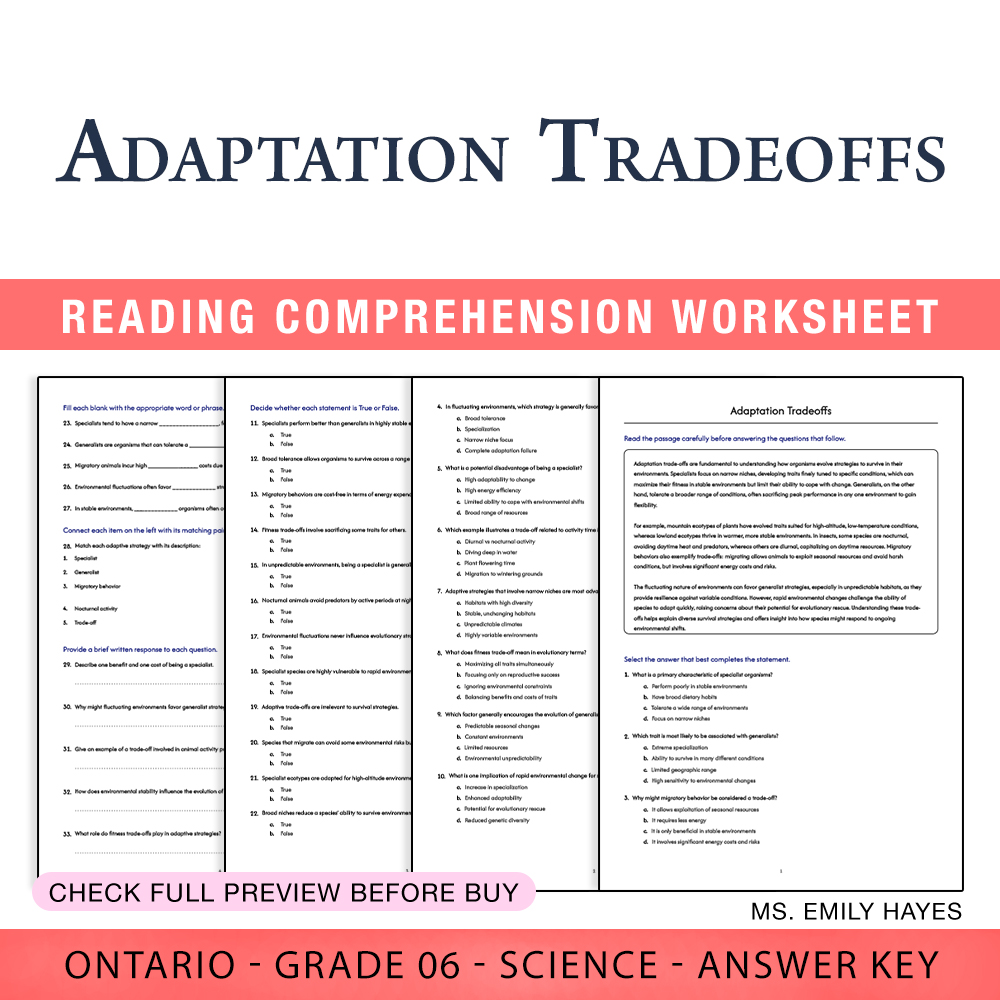
6th Grade Science | Adaptation Tradeoffs Worksheet (PDF+ Answer Key)
Created byCopper Leaf ClassroomLearning Objectives
- Explain the concept of adaptation trade-offs and how they influence species strategies.
- Compare the benefits and costs of specialization versus generalization in organisms.
- Analyze examples such as mountain versus lowland ecotypes, nocturnal versus diurnal activity, and migratory behaviors.
Instant download

Grade 6 Forces and Motion Worksheet | NGSS Practice PDF
Created byClear Sky ClassroomLearning Objectives
- Understand the relationship between net force, mass, and acceleration.
- Identify scenarios where forces act on objects and analyze their effects.
- Apply the formula net force equals mass times acceleration to solve problems.
Also included in: Grade 6 Motion and Stability: Forces and Interactions Science Lesson Bundle NGSS +1 more
Instant download

Grade 6 TEKS Earth Structure Daily Science Reading Worksheet with Notes
Created byBRIGHT PATH RESOURCESLearning Objectives
- Identify Earth’s main internal layers and their general properties.
- Explain how heat and solid materials in Earth can move over long periods.
- Use key vocabulary (crust, mantle, core) to describe Earth’s structure.
Also included in: Earth & Space Grade 6 Science Daily Reading Worksheets Lesson Bundle | TEKS +1 more
Instant download

Science Worksheet Cycles of Matter Model Grade 6 | Assessment & Practice
JCreated byJ.S SheetsLearning Objectives
- Explain how matter cycles through living and non-living parts of an ecosystem
- Identify reservoirs and flows in a cycles of matter model
- Describe how carbon and water move between air, soil, water, and organisms
Also included in: Grade 6 Life Processes & Ecosystems Science lesson bundle: General Framework +1 more
Instant download

Forest Succession and Disturbance Regimes Worksheets Grade 6
 Created bySunny Desk Resources
Learning Objectives
- Explain how different disturbances (fire, insects, wind, flooding, and human activity) can shape forest structure over time
- Describe how disturbance frequency, intensity, and spatial extent influence regeneration and habitat mosaics
- Interpret how disturbance regimes affect long-term ecosystem trajectories in boreal and mountain forests
Also included in: Trees and Forests Grade 6 Alberta Science Worksheets Bundle +1 more
Instant download

Grade 6 Science | Wave Interactions - Daily Reading Comprehension
Created byCoral Reef LearningLearning Objectives
- Understand the basic concepts of wave interactions such as interference, superposition, and resonance.
- Identify the differences between constructive and destructive interference.
- Explain how standing waves and resonance occur in musical instruments and other devices.
Instant download

Grade 6 Science | Decomposer Matter Return Worksheet | California Standards
Created byLumora LearningLearning Objectives
- Explain how decomposers break down dead organisms and waste to recycle matter in ecosystems.
- Describe how atoms and nutrients return to the environment in forms producers can use again.
- Connect decomposition to nutrient availability in soil and water and to ecosystem stability.
Instant download
About Grade 6 Science Worksheets
Explore Grade 6 Science worksheets for classwork, homework, or review. Our 5,997 printables download instantly as PDFs.
MyTeachingSheets worksheets are made by real teacher-authors and checked before they go live. Download any as a print-ready PDF for lessons, homework, or independent practice — most include answer keys, and previews are always free.