
Grade 6 Science Worksheets
5,997 worksheets
Cell Structure and Organelles Worksheets | Grade 6 Science
 Created byBRIGHT PATH RESOURCES
Learning Objectives
- Identify major parts of a cell and describe their basic functions.
- Explain how the cell membrane controls what enters and leaves the cell.
- Use evidence from a passage to fill in missing cell-structure terms.
Also included in: Grade 6 Life Science Worksheets Bundle | Ecosystems & Body Systems +2 more
Instant download

6th Grade Science | Forces and Motion Worksheet with Answer Key (Printable PDF)
 Created byCoral Reef Learning
Learning Objectives
- Describe the relationship between net force, mass, and acceleration based on Newton's Second Law.
- Explain how vector addition influences the motion of objects under multiple forces.
- Identify real-world scenarios involving net force and calculate resulting motion changes.
Instant download

Earth's Spheres and Interior Worksheets | Grade 6 TEKS Science
 Created byPrism Point Learning
Learning Objectives
- Identify examples of the biosphere, hydrosphere, atmosphere, and geosphere
- Identify the crust, mantle, outer core, and inner core
- Compare Earth's spheres with its interior layers
Instant download

Density Evidence Worksheet | Grade 6 Science Practice
Created byPrism Point LearningLearning Objectives
- Explain how density links mass and volume to predict whether an object will float or sink
- Use density evidence to compare substances and interpret layers in mixtures
- Make claims supported by measurements or estimates of density
Instant download

Food Molecules Worksheet | Grade 6 Digestion & Energy Science
Created byPrism Point LearningLearning Objectives
- Explain how food provides chemical building materials and stored energy to the body.
- Describe how digestion breaks large food molecules into smaller molecules that can be absorbed.
- Connect specific food molecules with different body needs (like proteins for structure and carbohydrates for quick energy).
Also included in: Animals Matter Lesson Bundle | Grade 6 Science | California Standards
Instant download

Chemical Evidence Worksheet Grade 6 Science Chemical Change Activities
Created byPrism Point LearningLearning Objectives
- Identify chemical evidence by observing changes such as color change, gas formation, and precipitates.
- Explain why chemical evidence shows a change in composition, not just temporary mixing.
- Use examples like iron rusting and burning paper to connect observations to particle-level changes.
Instant download

Tides Worksheets: Daily, Spring and Neap Tides Grade 6 TEKS
Created byPrism Point LearningLearning Objectives
- Explain how Moon and Sun gravity contributes to tidal patterns
- Compare daily tides with spring and neap tide conditions
- Interpret Earth-Moon-Sun positions to explain tidal range
Instant download

Food Chains Worksheet | Grade 6 Science TEKS Practice
Created byPrism Point LearningLearning Objectives
- Define producers, consumers, and decomposers and describe how each role supports a food chain.
- Identify trophic levels in simple pond and grassland examples and explain energy transfer between levels.
- Explain why energy decreases at each step and how matter (nutrients) is recycled through detrital processing.
Also included in: Grade 6 Ecosystem Interactions Science Lesson Bundle Worksheets | TEKS +1 more
Instant download
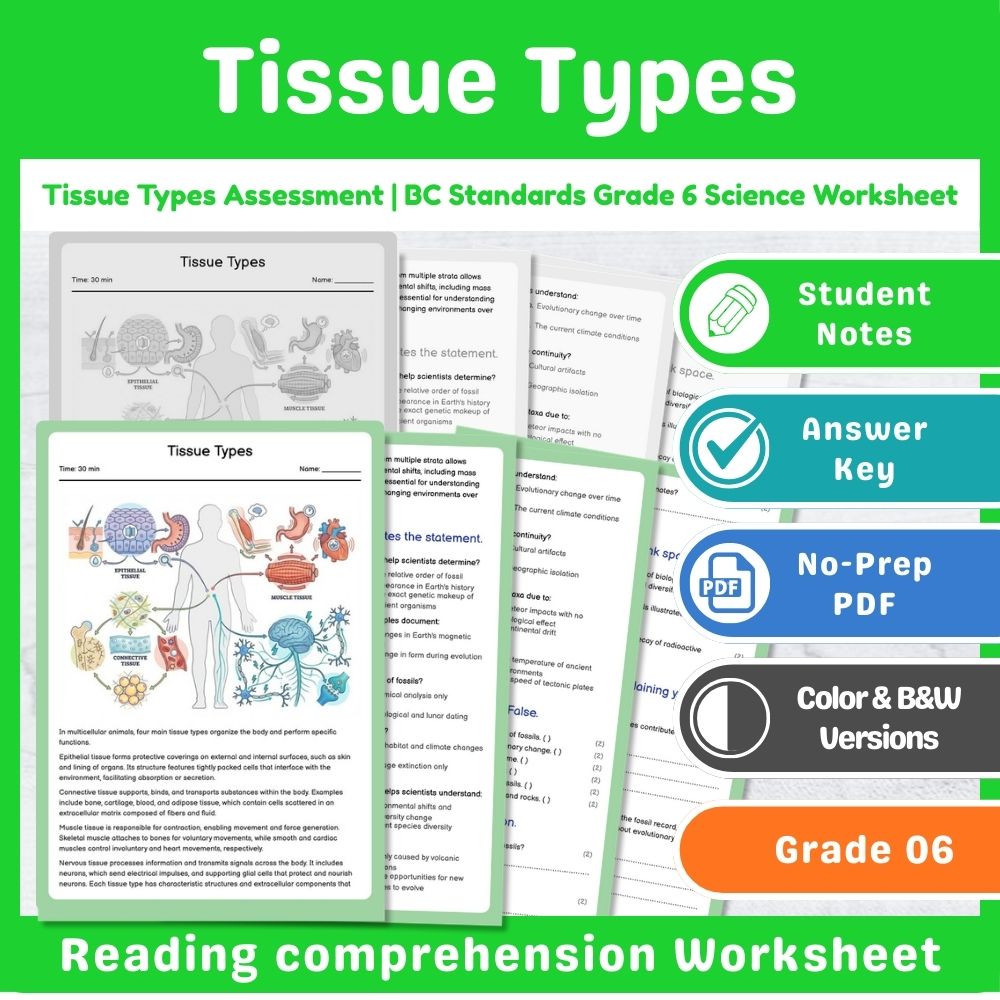
Tissue Types Assessment | BC Standards Grade 6 Science Worksheet
Created byPrism Point LearningLearning Objectives
- Identify the four main tissue types in animals: epithelial, connective, muscle, and nervous.
- Describe the functions and structures of each tissue type.
- Explain how tissue types organize to form organs and contribute to animal body functions.
Instant download

Grade 6 Tissue Types Worksheet | BC Practice & Assessment PDF
 Created byClear Sky Classroom
Learning Objectives
- Identify the four main tissue types in multicellular animals and describe what each tissue type mainly does
- Match tissue types to their key functions and characteristic structures
- Explain how epithelial, connective, muscle, and nervous tissues work together in organs
Instant download

Grade 6 Science – Musculoskeletal System & Daily Reading Worksheet
 Created byBright Mind Resources
Learning Objectives
- Identify the main components of the musculoskeletal system (bones, muscles, joints).
- Describe the functions of bones, muscles, and joints in supporting the body.
- Explain how the system interacts with other body systems for movement and support.
Also included in: Grade 6 Science: Organ Systems & Adaptations Daily Reading Lesson Bundle | BC +1 more
Instant download

Grade 6 Solar Timekeeping Worksheet | Alberta Practice PDF
Created byClear Sky ClassroomLearning Objectives
- Explain how apparent solar motion produces local solar noon and a solar-based clock.
- Describe why solar time and civil clock time can differ due to longitude, time zones, and the equation of time.
- Connect observed solar position to how communities schedule activities using civil time.
Also included in: Grade 6 Sky Science Sun–Earth–Moon Science Lesson Bundle for Alberta +1 more
Instant download

Grade 6 Optimizing Designs in Science Worksheet | NGSS Engineering Activity
Created byBRIGHT PATH RESOURCESLearning Objectives
- Understand how to analyze data from prototype tests
- Learn to interpret graphs, averages, and discuss errors
- Evaluate trade-offs in design choices such as strength vs. weight
Also included in: Engineering Design Grade 6 Science Daily Reading Worksheets Lesson Bundle | Ngss +2 more
Instant download

Circuit Components Worksheets: Functions of Circuits Grade 6 Science
Created byPrism Point LearningLearning Objectives
- Identify functions of power sources, switches, loads, and connectors
- Match physical circuit components with their schematic symbols
- Explain how resistance changes qualitatively affect circuit current
Also included in: Grade 6 Electricity Lesson Bundle | Ontario Science Framework
Instant download
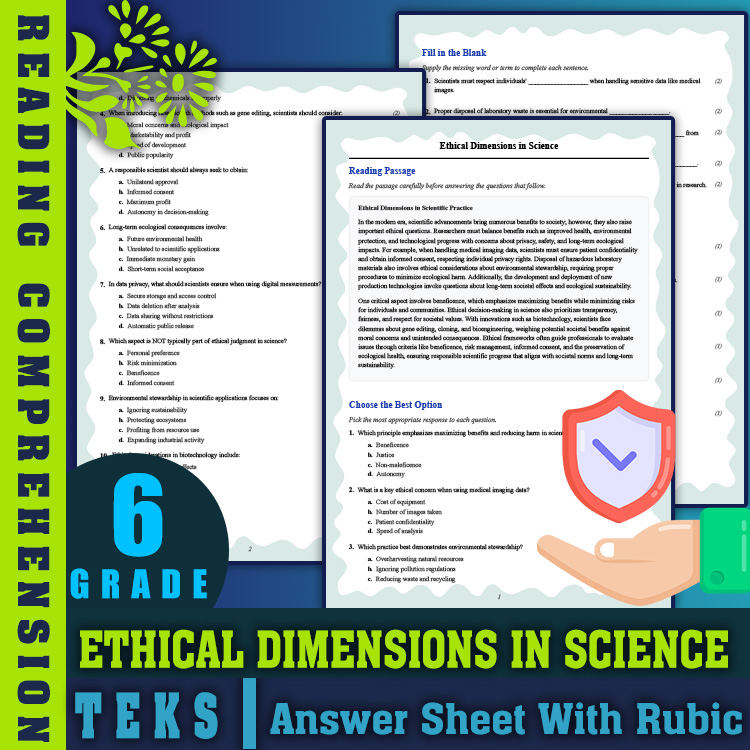
6th Grade Science | Ethical Dimensions in Science Reading Worksheet
JCreated byJ.S SheetsLearning Objectives
- Understand the key ethical considerations in scientific applications.
- Evaluate scenarios based on ethical principles such as beneficence, informed consent, and risk minimization.
- Identify appropriate ethical responses to issues like data privacy, environmental stewardship, and biotechnology decisions.
Instant download

Grade 6 Science | Energy Drives Change Worksheet Elena | California Standards
 Created byLumora Learning
Learning Objectives
- Explain how energy from the Sun and gravity drive Earth system processes.
- Describe how heating affects water state changes, evaporation, and cloud formation.
- Model how gravity influences the movement and accumulation of sediments on slopes.
Instant download
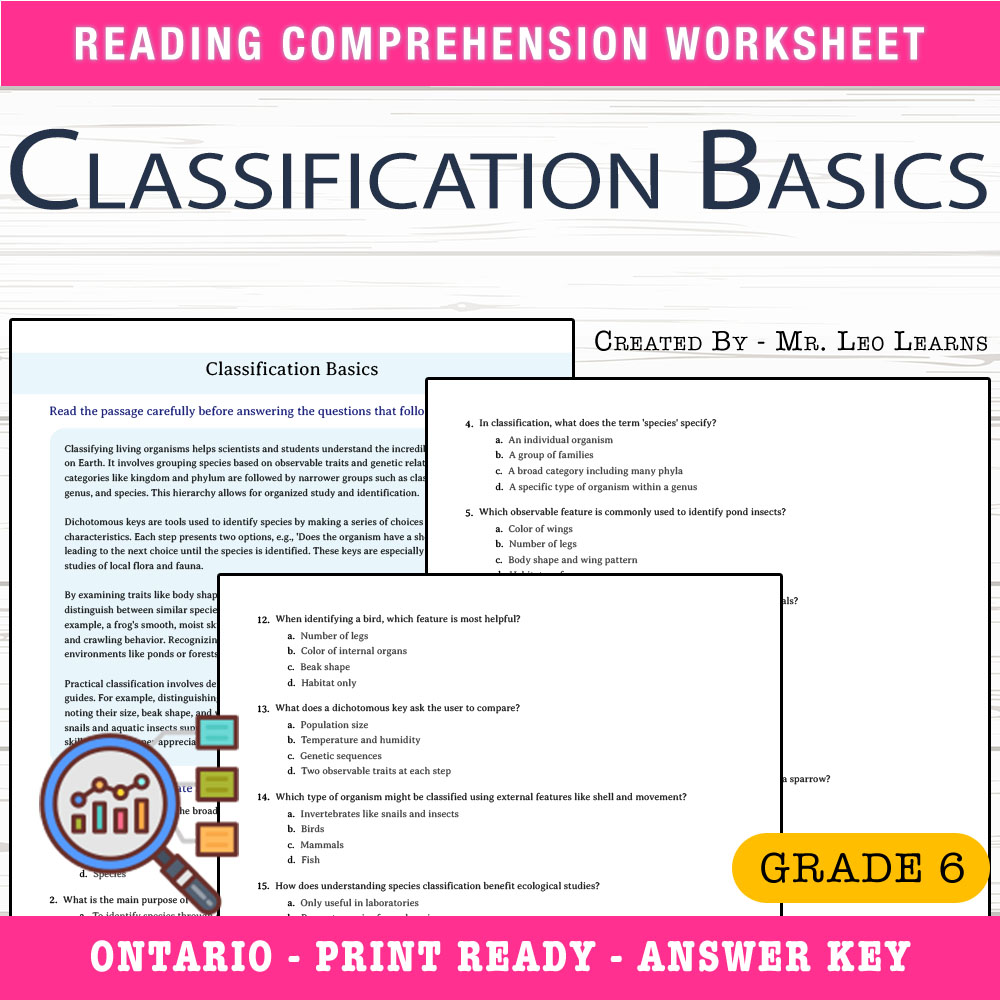
Grade 6 Science — Classification Basics Worksheet for Mastery
 Created byThe Resource Hub
Learning Objectives
- Understand the hierarchy of biological classification from kingdom to species.
- Learn how to use observable characteristics to classify local species.
- Understand the purpose and construction of dichotomous keys for identifying organisms.
Also included in: Grade 6 Science Unit Bundle | Ecosystems, Genetic Traits & Environmental Impact +1 more
Instant download

Energy Transformations Assessment for Grade 6 Science | NGSSS Standards
Created byPrism Point LearningLearning Objectives
- Explain how energy can change forms (potential, kinetic, thermal, electrical, and light) while total energy is conserved.
- Identify observable evidence of energy transformations such as motion, temperature change, and brightness.
- Use cause-and-effect reasoning to describe how one energy form transfers to another in real-world situations.
Also included in: Grade 6 Energy and Matter Science Lesson Bundle Unit: Florida NGSSS
Instant download

Science Worksheet: Variation Effects Assessment | NGSS Grade 6
 Created bySkylark Worksheets
Learning Objectives
- Explain how phenotypic variation can result from interactions between genes and environmental factors.
- Describe how environmental conditions can influence gene expression and traits during development.
- Use examples (nutrition, temperature, inherited traits) to predict how traits may differ within a population.
Also included in: Grade 6 Cell Systems and Energy Pathways Science Lesson Bundle NGSS +1 more
Instant download

Grade 6 Science Worksheet Learn Iterative Improvement Easily | PDF
 Created byMeadowlark Worksheets
Learning Objectives
- Understand the concept of iterative improvement and its role in design.
- Identify how evaluation results influence design changes.
- Explain the importance of balancing properties, needs, and limitations during refinement.
Also included in: Grade 6 Science Lesson Bundle | Critical Thinking & Problem Solving +1 more
Instant download

Grade 6 Science | Community Stewardship in Science - Daily Reading Comprehension
Created byCoral Reef LearningLearning Objectives
- Understand the importance of scientific methods in community issues.
- Recognize the role of respectful engagement and cultural sensitivity.
- Learn protocols for obtaining consent and validating community data.
Instant download

Grade 6 Cloud And Precipitation Worksheet | NGSS Practice PDF
Created byClear Sky ClassroomLearning Objectives
- Explain how clouds form when water vapor cools and condenses onto tiny particles in the atmosphere
- Describe how precipitation forms when droplets or ice crystals become heavy enough to fall
- Distinguish between types of precipitation (rain, snow, sleet, hail) based on temperature changes
Instant download

Science Careers Worksheet | Grade 6 Science Activities
Created byPrism Point LearningLearning Objectives
- Describe how scientific inquiry and technology work together in different science careers.
- Match common workplace tasks to specific roles in science and engineering.
- Explain how data collection and instrument use support interpreting measurement results.
Also included in: Grade 6 Science Ethics and Societal Impacts Lesson Bundle for TEKS +1 more
Instant download

Parallel Circuits Characteristics Worksheet Grade 6 Science Ontario
 Created byChalk and Compass
Learning Objectives
- Explain how parallel circuits split current into multiple branching pathways.
- Describe why each parallel branch has the same potential difference (voltage).
- Use current relationships to predict how overall current relates to branch currents.
Also included in: Grade 6 Science Circuits & Electricity Lesson Bundle | Ontario +1 more
Instant download

6th Grade Science | Lunar Phases Model Worksheet (Alberta Standards) (PDF)
 Created byEvergreen Desk Education
Learning Objectives
- Explain how a geometric model of the Sun, Earth, and Moon can represent lunar phases.
- Use the model to predict which phase is visible and when it occurs over the lunar cycle.
- Describe how the Moon’s apparent illumination changes as it orbits Earth.
Instant download

Grade 6 Science | Minerals & Rocks - Daily Reading Comprehension
Created byCoral Reef LearningLearning Objectives
- Identify various minerals and rocks based on physical properties.
- Understand the differences between igneous, sedimentary, and metamorphic rocks.
- Recognize how rocks form and the environments in which they form.
Instant download

Collisions and Momentum Worksheet for Grade 6 Science | NGSS-Aligned Practice
JCreated byJ.S SheetsLearning Objectives
- Understand the principle of conservation of momentum in two-body collisions.
- Differentiate between elastic and inelastic collisions through examples and calculations.
- Identify the forces involved during collisions and analyze action-reaction pairs.
Also included in: Grade 6 Forces, Motion, and Interactions Science Lesson Bundle: NGSS +1 more
Instant download

Grade 6 Science | Mixtures & Compounds - Daily Reading Comprehension
Created byCoral Reef LearningLearning Objectives
- Understand the difference between mixtures and compounds
- Describe particle models of mixtures and compounds
- Identify mixtures based on their properties and particle arrangements
Instant download
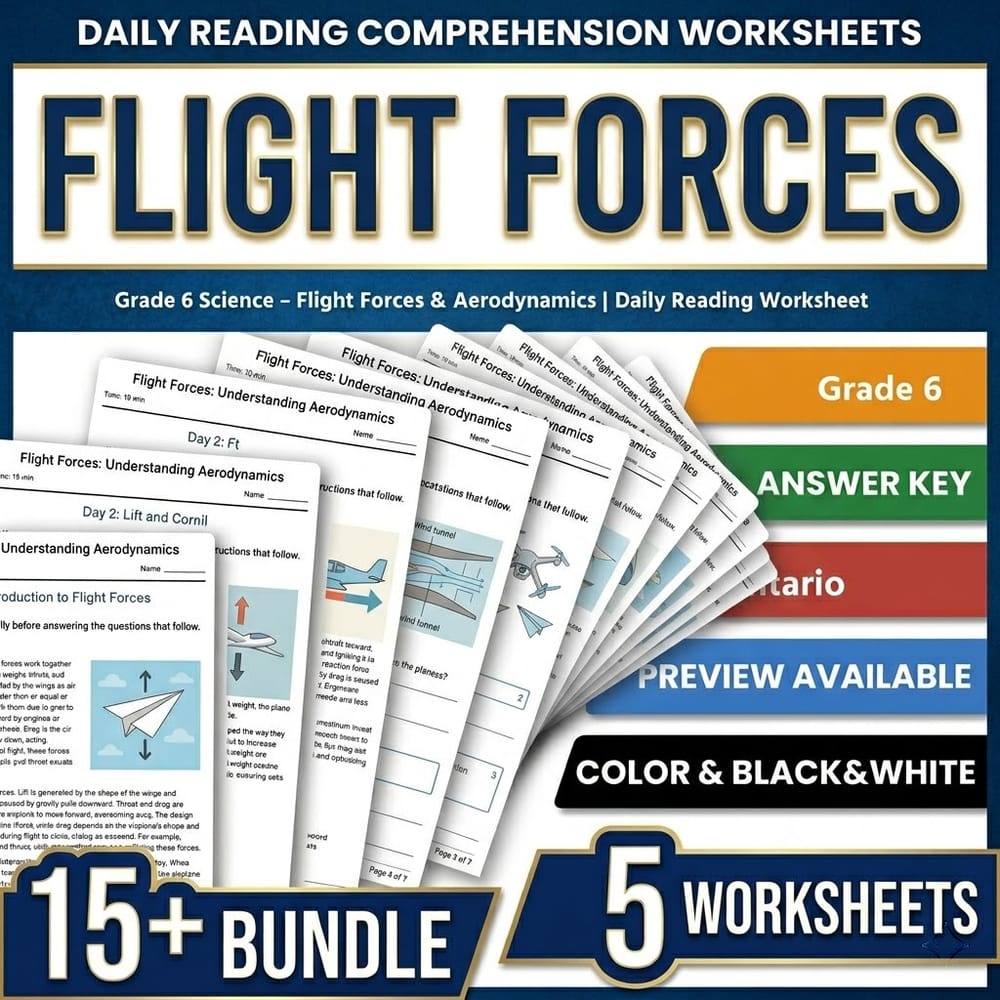
Grade 6 Science – Flight Forces & Aerodynamics | Daily Reading Worksheet
 Created byQuiet Forest Education
Learning Objectives
- Understand key concepts related to Science
- Apply knowledge through practice questions
- Demonstrate comprehension of the material
Also included in: Flight Science Grade 6 Daily Reading Worksheets Bundle | Ontario +1 more
Instant download
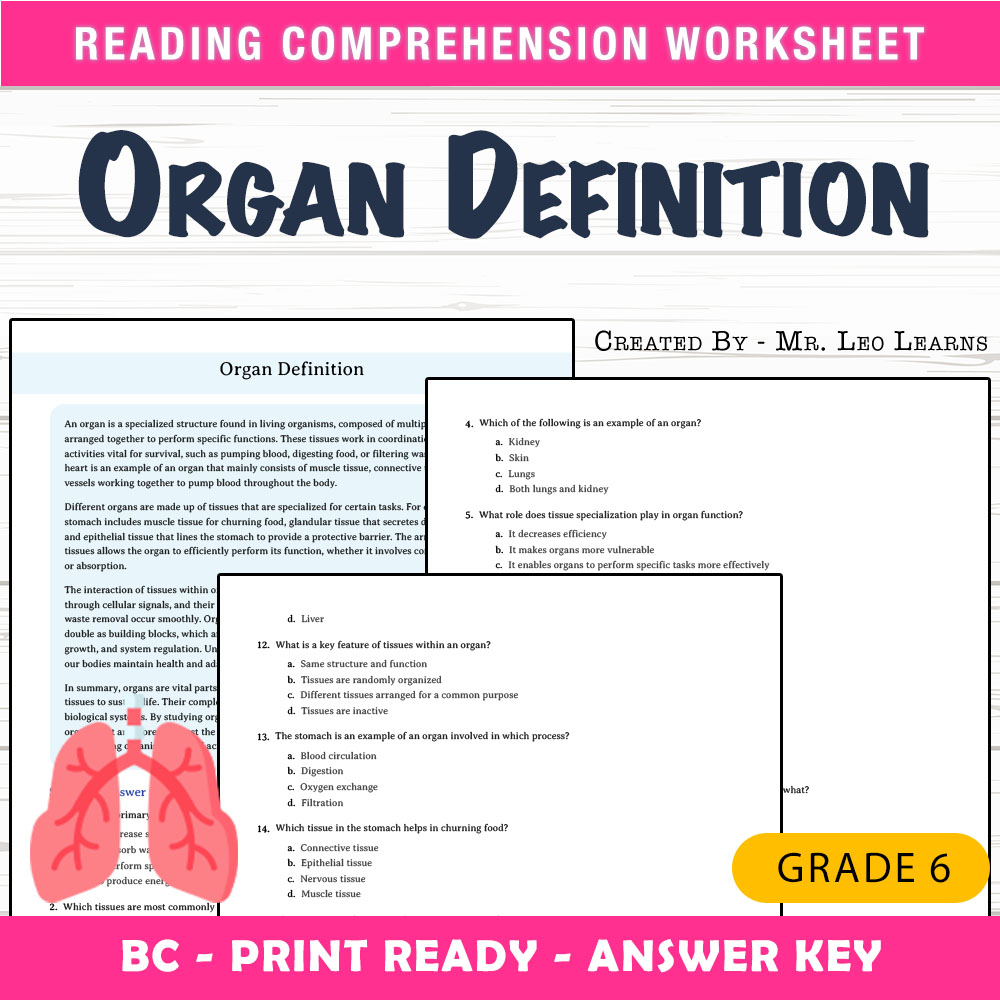
Grade 6 Science – Organ Definition Worksheet MCQ Paper for Mastery
Created byThe Resource HubLearning Objectives
- Understand what constitutes an organ and its role in the organism.
- Identify the tissues that make up different organs.
- Explain how tissues interact within organs to perform specific functions.
Also included in: Grade 6 Science Unit | Multicellular Systems & Functions Worksheet Bundle +1 more
Instant download

Growth and Stored Energy Worksheet | Grade 6 Life Science Practice
Created byPrism Point LearningLearning Objectives
- Explain how photosynthesis provides energy for plant growth, repair, and reproduction
- Describe how plants store chemical energy in molecules to use later
- Connect matter changes in plant parts (leaves, stems, roots, and reproductive parts) to energy transformations
Also included in: Animals Matter Lesson Bundle | Grade 6 Science | California Standards
Instant download
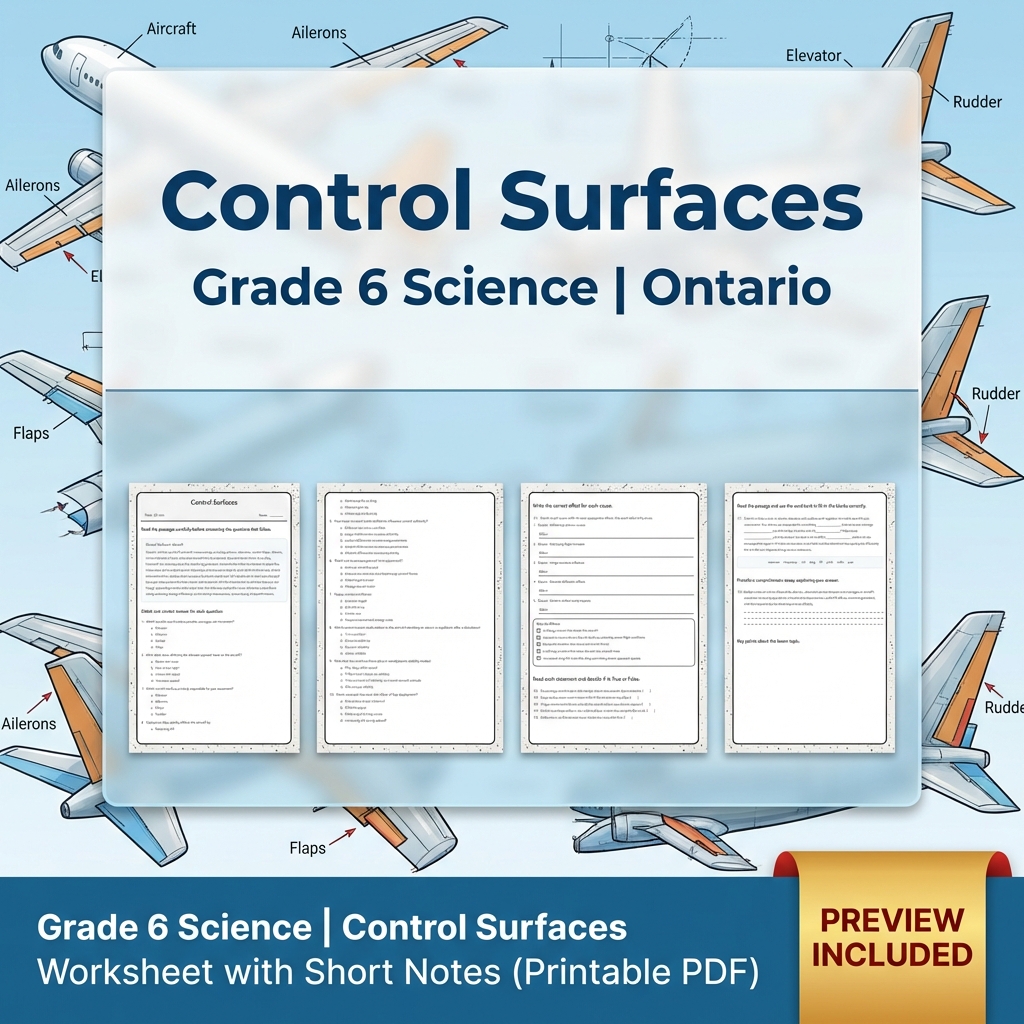
Grade 6 Science | Control Surfaces Worksheet with Short Notes (Printable PDF)
Created byMeadowlark WorksheetsLearning Objectives
- Describe the primary and secondary control surfaces and their roles in aircraft maneuvering.
- Explain how deflections of control surfaces affect lift, moments, and aircraft attitude.
- Understand the concept of control authority and aerodynamic stability modes.
Also included in: Grade 6 Science Lesson Group Bundle – Ontario Framework Worksheets +1 more
Instant download

Grade 6 Science | Ecosystem Components - Daily Reading Comprehension
Created byCoral Reef LearningLearning Objectives
- Identify different biotic components in an ecosystem.
- Understand the role of abiotic factors in ecosystems.
- Explain how living and nonliving elements interact within habitats.
Instant download

Biodiversity Roles Worksheet | Grade 6 Science Activities
Created byPrism Point LearningLearning Objectives
- Explain how different organisms (trees, understory plants, fungi, and animals) contribute to key ecosystem functions such as nutrient cycling, pollination, and seed dispersal.
- Describe how keystone and indicator species help ecosystems function and how changes to their roles can affect food webs and resilience.
- Use examples from Alberta to connect species interdependence to biodiversity and ecosystem stability.
Also included in: Trees and Forests Lesson Bundle | Grade 6 Science | Alberta Framework
Instant download

Science Worksheet Quantitative Circuits Voltage Current Resistance Grade 6
JCreated byJ.S SheetsLearning Objectives
- Explain how voltage, current, and resistance are quantitatively related in simple circuits using proportional reasoning.
- Use Ohm’s relationship to predict current when voltage or resistance changes (without complicated procedures).
- Compare expected current and resistance behavior in series versus parallel circuits using ratios.
Instant download

Decomposers And Nutrient Return Worksheet | Grade 6 Science Practice
Created byPrism Point LearningLearning Objectives
- Explain how decomposers break down dead organisms and waste to return materials to the ecosystem.
- Describe the roles of fungi and bacteria in nutrient cycling within soil and water.
- Connect nutrient availability to ecosystem growth patterns over time.
Instant download

Grade 6 Science | Energy Pathways in Life - Daily Reading Comprehension
Created byCoral Reef LearningLearning Objectives
- Understand the process of photosynthesis in plants
- Identify the reactants and products of photosynthesis
- Explain how light energy is converted into chemical energy in plants
Instant download

Grade 6 Science | Water Cycle Exploration - Daily Reading Comprehension
Created byCoral Reef LearningLearning Objectives
- Understand the process of evaporation and how it contributes to the water cycle.
- Identify the key steps in the water cycle, including evaporation, condensation, and precipitation.
- Explore the role of solar energy in driving evaporation.
Instant download
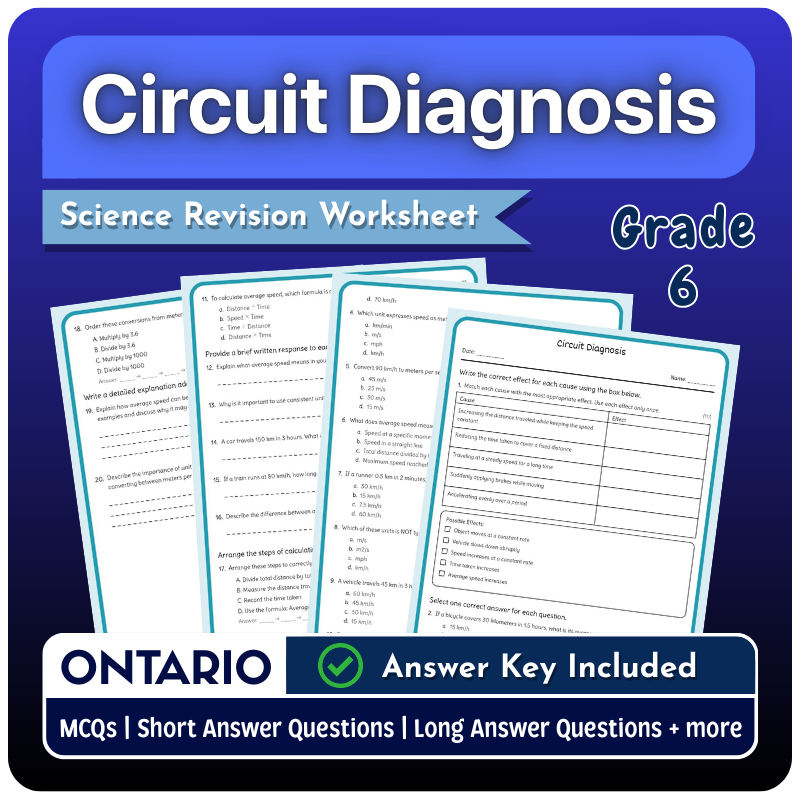
6th Grade Science | Circuit Diagnosis Worksheet (Ontario) (PDF)
Created byBright Mind ResourcesLearning Objectives
- Understand the principles of troubleshooting electrical circuits through observation and inference.
- Identify common symptoms of circuit faults such as unequal brightness or interrupted continuity.
- Apply diagnostic reasoning based on circuit topology and measurement patterns.
Instant download

Digital Instrumentation Science Worksheet Grade 6 Ontario Measurement Activity
 Created byTeacher's Corner
Learning Objectives
- Explain how electronic sensors, data loggers, and digital probes work together to collect numeric data.
- Choose an appropriate sampling rate and resolution for a measurement and identify common sources of systematic error.
- Describe calibration steps and the importance of recording measurement metadata.
Instant download

Grade 6 Triboelectric Charge & Electrostatic Discharge Worksheet | Ontario
Created byTeacher's CornerLearning Objectives
- Explain how charge transfer happens during triboelectric effects between different materials.
- Use the triboelectric series to predict which materials tend to become positively or negatively charged.
- Describe how attraction and repulsion result from electrostatic charges.
Instant download

Grade 6 Science Worksheet Mixtures and Compounds | Standards-Aligned Practice
JCreated byJ.S SheetsLearning Objectives
- Understand the difference between mixtures and compounds based on atomic arrangement and properties.
- Identify examples of mixtures and compounds in everyday life.
- Explain how particle models distinguish between mixtures and compounds.
Also included in: Grade 6 Physical Science Lesson Bundle for Science – California Standards +1 more
Instant download

Grade 6 Bernoulli Principle and Airfoil Lift Science Worksheet Alberta
Created byBRIGHT PATH RESOURCESLearning Objectives
- Explain Bernoulli’s idea using the relationship between fluid speed and pressure.
- Use vocabulary (pressure, speed, gradient, lift, circulation) in context.
- Describe how pressure differences around an airfoil can contribute to lift.
Also included in: Aerodynamics & Flight Physics Grade 6 Science Worksheets Bundle | Alberta +1 more
Instant download
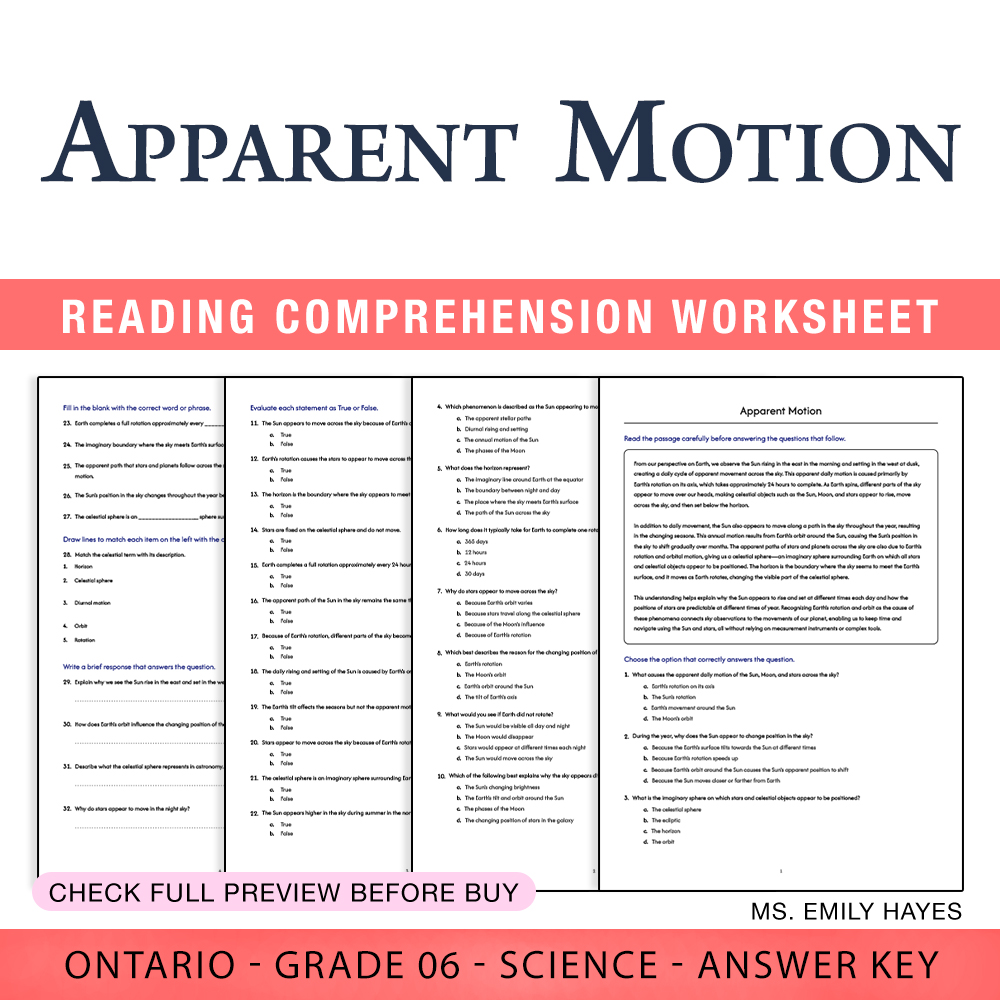
6th Grade Science | Apparent Motion Worksheet (PDF + Answer Key)
 Created byCopper Leaf Classroom
Learning Objectives
- Describe the apparent daily motion of the Sun, Moon, and stars from an Earth-based perspective.
- Explain how Earth's rotation and orbital motion cause phenomena such as rising, setting, and apparent stellar paths.
- Understand the concept of the celestial sphere and horizon in relation to sky observations.
Instant download

Population Change Assessment | California Standards Grade 6 Science
Created byPrism Point LearningLearning Objectives
- Explain how birth rates and death rates affect population size over time
- Describe how resource availability can increase or decrease populations
- Use population data patterns to infer changes in environmental conditions
Also included in: Grade 6 Energy and Matter Cycles Science Lesson Bundle | California Standards +1 more
Instant download

Grade 6 Science Worksheet – Understanding Streamlining (Alberta Standards) (PDF)
 Created bySilver Birch Teaching
Learning Objectives
- Explain how streamlining reduces aerodynamic drag by shaping objects to support smooth airflow.
- Identify key design features of streamlined shapes (rounded nose, tapered tail, smooth surface).
- Describe how changes in shape can delay airflow separation and affect energy needs.
Also included in: Grade 6 Aerodynamics & Flight Forces Science Lesson Bundle: Alberta +1 more
Instant download
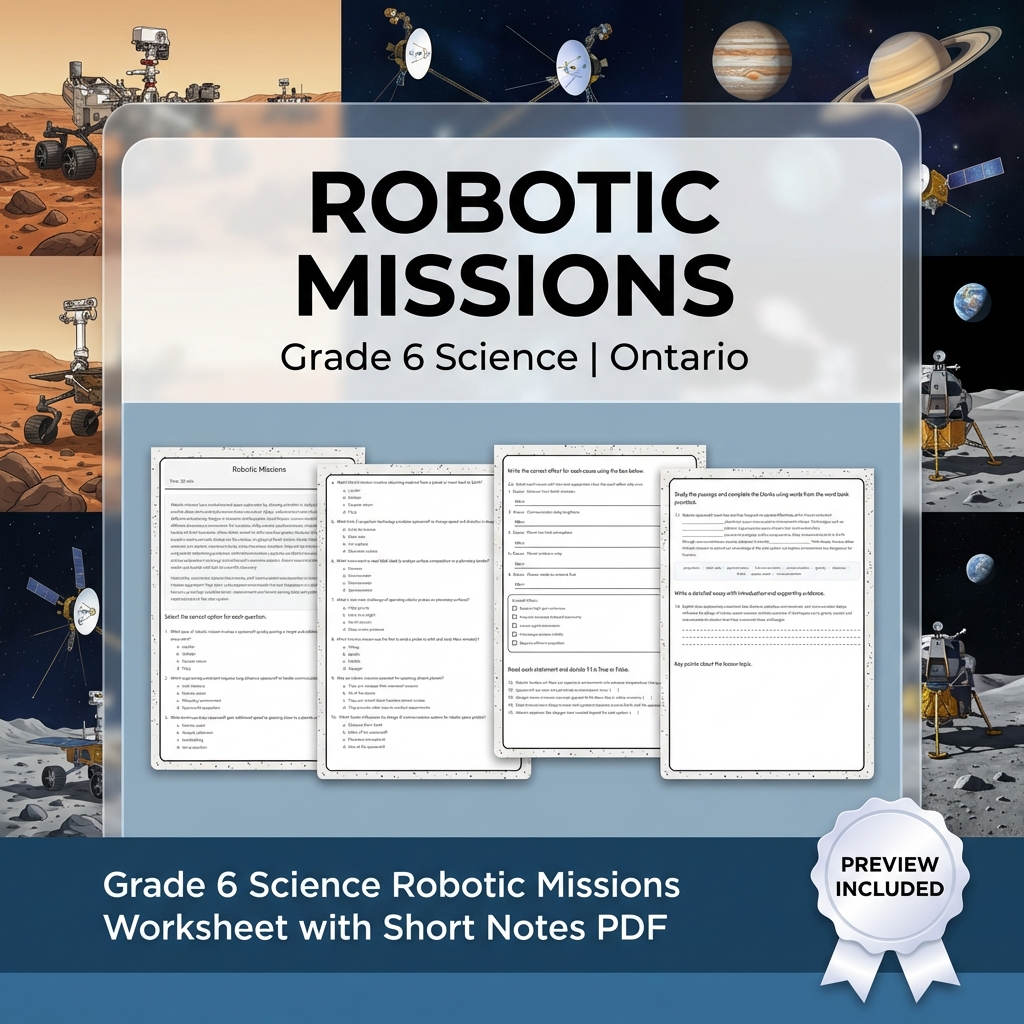
Grade 6 Science Robotic Missions Worksheet with Short Notes PDF
Created byMeadowlark WorksheetsLearning Objectives
- Describe different types of robotic missions to the solar system, including flyby, orbiter, lander, and sample-return.
- Understand the engineering constraints like distance, communication delays, and planetary environments that influence mission design.
- Explain how mission design addresses propulsion, instruments, and data return to extend observational capabilities.
Also included in: Grade 6 Science Lesson Group Bundle – Ontario Curriculum Worksheets +1 more
Instant download

Magnetic and Electric Forces Worksheets | Grade 6 Science Practice
LCreated byLearnora ResourcesLearning Objectives
- Classify examples as contact or non-contact forces
- Identify magnetic, electric, or neither force in everyday situations
- Predict attraction or repulsion between magnets and charged objects
Instant download
About Grade 6 Science Worksheets
Explore Grade 6 Science worksheets for classwork, homework, or review. Our 5,997 printables download instantly as PDFs.
MyTeachingSheets worksheets are made by real teacher-authors and checked before they go live. Download any as a print-ready PDF for lessons, homework, or independent practice — most include answer keys, and previews are always free.