
Grade 7 Science Worksheets
6,039 worksheets
Grade 7 Resource Availability Worksheet | NCSS Practice PDF
 Created byClear Sky Classroom
Learning Objectives
- Explain how limited resources (food, water, space, and shelter) affect population survival and reproduction.
- Describe relationships between environmental conditions and changes in ecosystem population sizes.
- Use evidence from a text or scenario to identify main ideas and apply resource-availability concepts.
Instant download

Ecological Succession Worksheets: Disturbed Habitats Grade 7 Science
 Created byPrism Point Learning
Learning Objectives
- Describe ecological succession as directional community change after disturbance
- Distinguish primary and secondary succession using starting soil conditions
- Explain how soil development shapes later successional stages
Also included in: Interactions in the Environment Lesson Bundle | Grade 7 Science | Ontario +1 more
Instant download

Evidence Based Evaluation Assessment | California Standards Grade 7 Science
Created byPrism Point LearningLearning Objectives
- Explain how evidence from tests and validated models supports evaluation of design solutions.
- Interpret evaluation results by connecting performance to stated criteria and realistic conditions.
- Identify common failure modes and describe how evidence can reveal them.
Also included in: Grade 7 Science Engineering Assessment Lesson Bundle: California Standards +1 more
Instant download

Grade 7 Synthetic Materials Worksheet | NGSS Physical Science Activity
 Created byBRIGHT PATH RESOURCES
Learning Objectives
- Understand the production pathways from natural resources to synthetic materials
- Identify common synthetic materials like polyethylene, PET, and nylon
- Describe processes such as polymerization and refining
Also included in: Chemical Reactions Grade 7 Science Daily Reading Worksheets Lesson Bundle | NGSS +2 more
Instant download

Active Transport Worksheet | Standards-Aligned Grade 7 Science Practice
JCreated byJ.S SheetsLearning Objectives
- Explain the process of active transport and how it moves molecules against concentration gradients.
- Describe the function of the sodium-potassium pump in maintaining cell electrochemical gradients.
- Identify different types of vesicular transport such as endocytosis and exocytosis.
Instant download
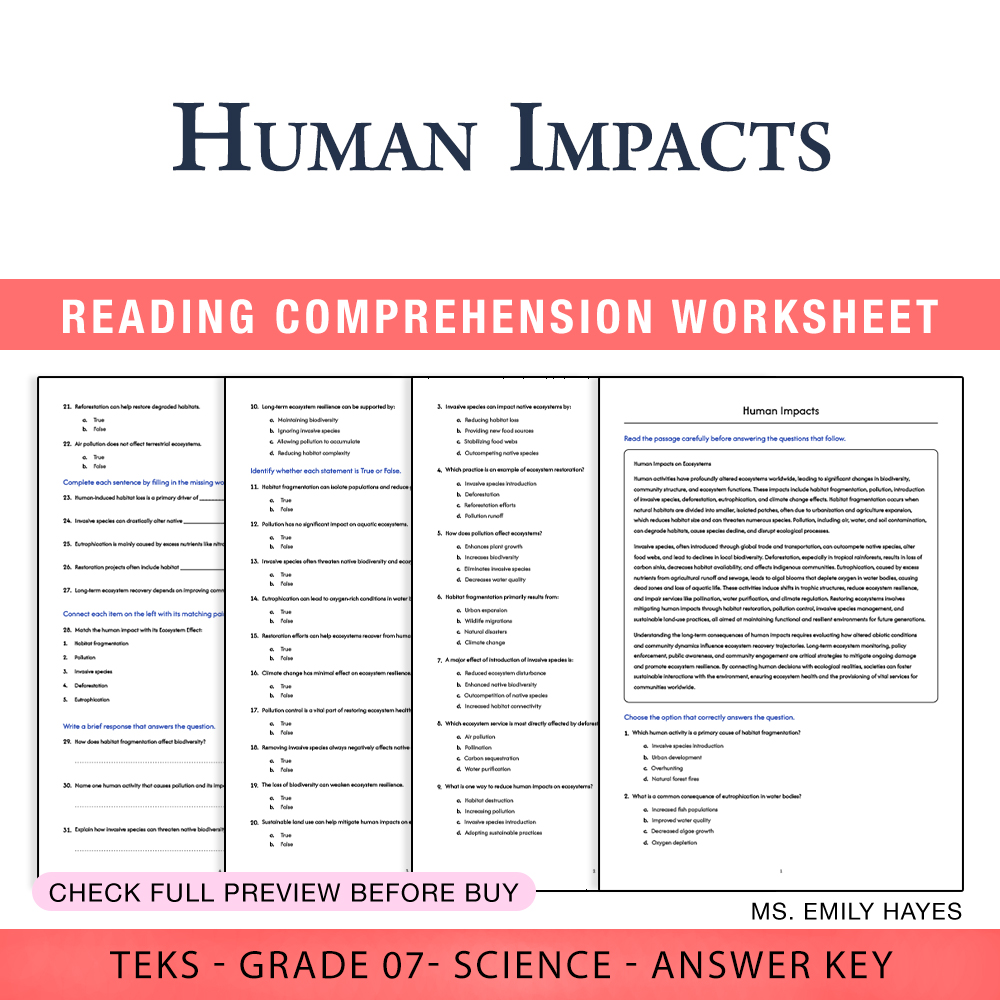
Grade 7 Science | Human Impacts Worksheet (PDF+ Answer Key)
 Created byCopper Leaf Classroom
Learning Objectives
- Describe major human-induced alterations to ecosystems and their effects on biodiversity and ecosystem services.
- Identify examples of habitat fragmentation, pollution, and invasive species introductions.
- Explain how human activities lead to long-term community and ecosystem changes.
Instant download

Evaluation Methods Assessment | TEKS Grade 7 Science Standards-Aligned
Created byPrism Point LearningLearning Objectives
- Understand how to critically evaluate scientific explanations and evidence.
- Identify logical fallacies, correlations, and limitations in data and models.
- Distinguish between causation and correlation in explanations.
Also included in: Scientific Inquiry Reasoning Grade 7 Science Lesson Bundle TEKS Unit
Instant download

Grade 7 Science – Design Solutions Worksheet (Alberta Standards) (PDF)
 Created bySilver Birch Teaching
Learning Objectives
- Explain how building orientation affects seasonal thermal performance in Alberta’s climate zones.
- Describe how envelope assembly choices influence thermal bridging and heat loss.
- Use evidence from design strategies (e.g., south-facing glazing and heat-recovery ventilation) to predict impacts on energy demand and comfort.
Also included in: Grade 7 Thermal Systems Models and Heat Transfer Science Lesson Bundle – Alberta +1 more
Instant download
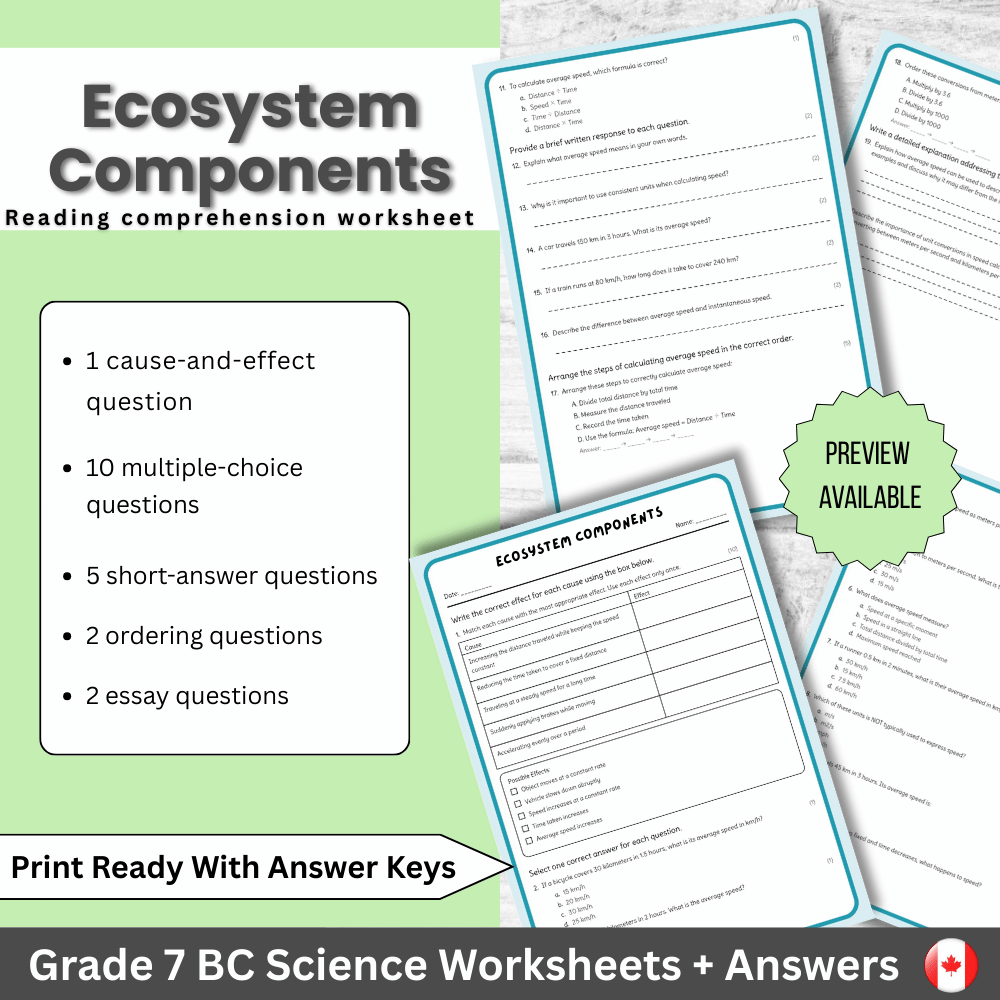
Grade 7 Science | Ecosystem Components Worksheet (PDF) - BC Standards
 Created byBright Mind Resources
Learning Objectives
- Identify the biotic and abiotic components of an ecosystem.
- Explain how energy flows through an ecosystem.
- Describe the interactions between living organisms and their environment.
Instant download
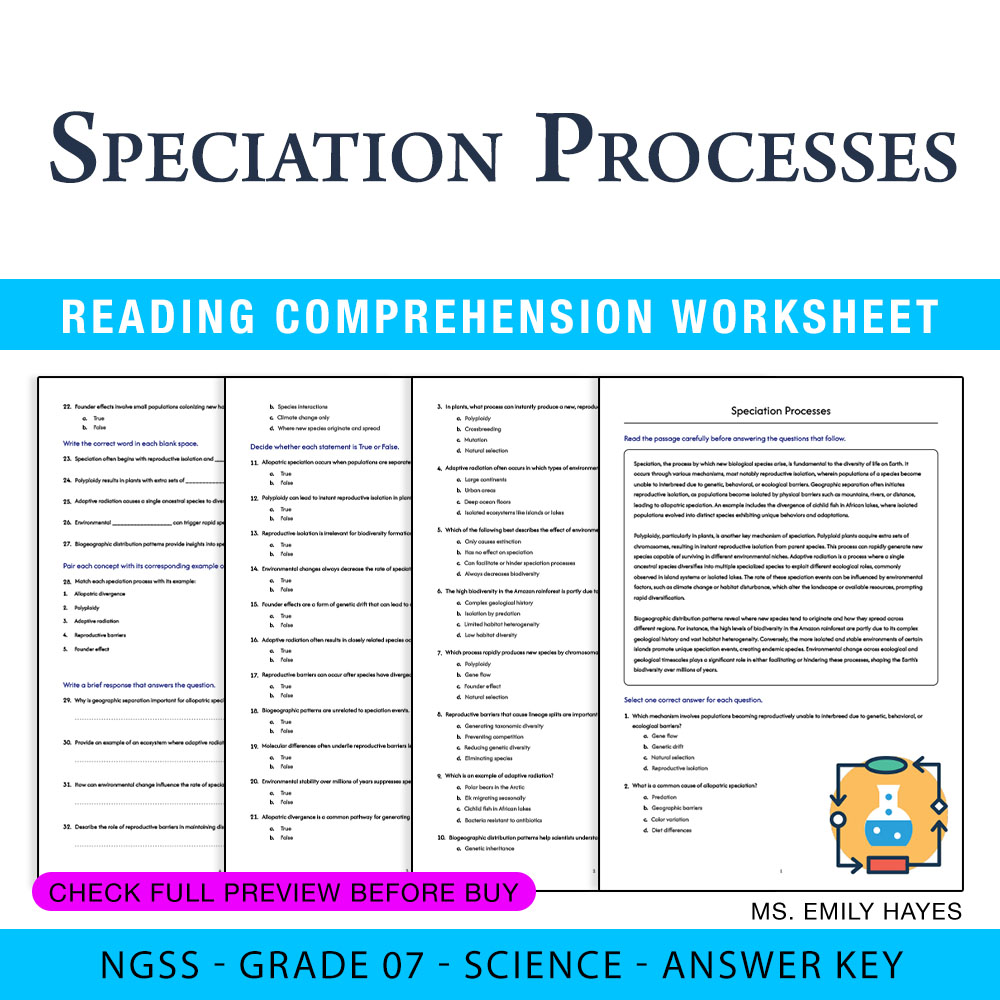
7th Grade Science | Speciation Processes Worksheet (PDF + Answer Key)
Created byCopper Leaf ClassroomLearning Objectives
- Explain the mechanisms driving speciation, including reproductive isolation and geographic separation.
- Describe examples of biodiversity resulting from speciation, such as cichlid radiations and plant polyploidization.
- Analyze how environmental changes influence rates of speciation and biodiversity over ecological and geological timescales.
Instant download

Grade 7 Science Worksheet | Friction and Drag (PDF) – Alberta Standards
 Created byEvergreen Desk Education
Learning Objectives
- Explain how static and kinetic friction oppose motion and relate to surface contact and normal force.
- Describe aerodynamic drag and how it affects objects moving through air, including speed-related effects.
- Predict qualitatively how changing friction or drag impacts acceleration and stopping distance in real-world situations.
Instant download
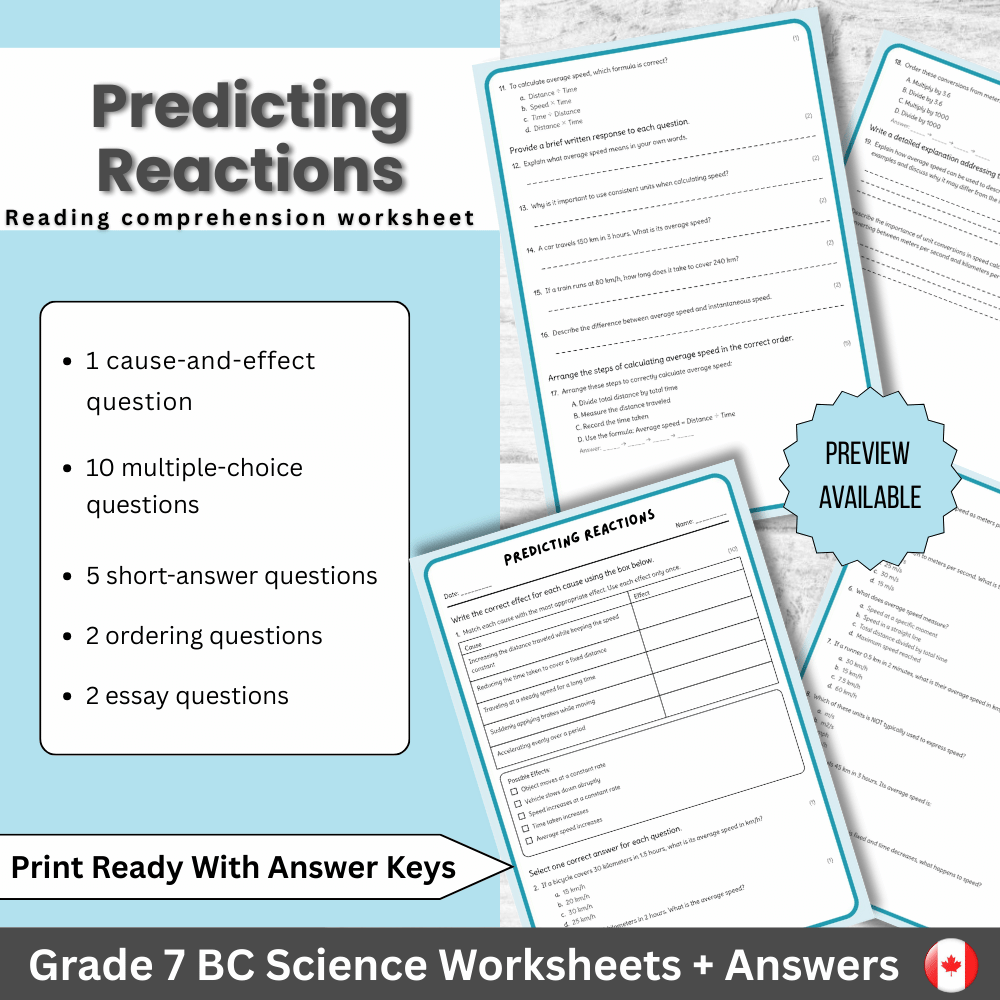
Grade 7 Science | Predicting Reactions Worksheet (PDF) – Standards-Aligned
Created byBright Mind ResourcesLearning Objectives
- Understand physical and chemical properties that influence reactions.
- Identify patterns that predict whether substances will undergo chemical changes.
- Use property trends to anticipate reaction products and energy changes.
Instant download

Grade 7 Friction And Stability Worksheet | NGSS Practice PDF
Created byClear Sky ClassroomLearning Objectives
- Explain how friction opposes relative motion and how that affects net force
- Predict motion outcomes when applied force is less than, equal to, or greater than friction
- Describe how surface texture changes the magnitude of friction
Instant download

Science Grade 7 Quantitative Models Worksheet | NGSS Science Assessment
 Created bySkylark Worksheets
Learning Objectives
- Use quantitative models to describe how allele frequencies change over time under selection and drift.
- Interpret probability-based inheritance and translate trait/frequency information into predictions.
- Use Hardy-Weinberg ideas and simple rate calculations to support scientific explanations.
Also included in: Grade 7 Speciation and Evolution Evidence Science Lesson Bundle NGSS +1 more
Instant download

Empirical Knowledge Grade 7 Science Assessment | NGSSS Standards-Aligned
Created byPrism Point LearningLearning Objectives
- Explain how empirical investigations produce evidence to support scientific claims
- Identify how uncertainty and alternative interpretations are handled in scientific reasoning
- Describe how new data can refine, adjust, or replace scientific models over time
Instant download

Grade 7 Weather vs Climate Worksheet | NGSS Practice PDF
Created byClear Sky ClassroomLearning Objectives
- Differentiate between weather and climate using temperature, precipitation, humidity, and wind.
- Explain how averages and variability over years or decades define climate.
- Use evidence from data or scenarios to decide whether an observation is weather or climate.
Instant download

Data Representations Worksheet Pack | Grade 7 Science Activities
Created byPrism Point LearningLearning Objectives
- Explain how data tables use consistent units and meaningful labels to organize measurements.
- Use the direction and shape of a graph to interpret trends and relationships.
- Compare groups by reading graphs accurately, including axis labels and scale.
Instant download

Grade 7 Evolutionary Change Worksheet | NGSS Practice & PDF
Created byClear Sky ClassroomLearning Objectives
- Explain how evolutionary change happens at the population level through heritable variation.
- Differentiate between changes within an individual’s lifetime and changes across generations.
- Identify evidence and mechanisms that can cause shifts in allele frequencies over time.
Instant download
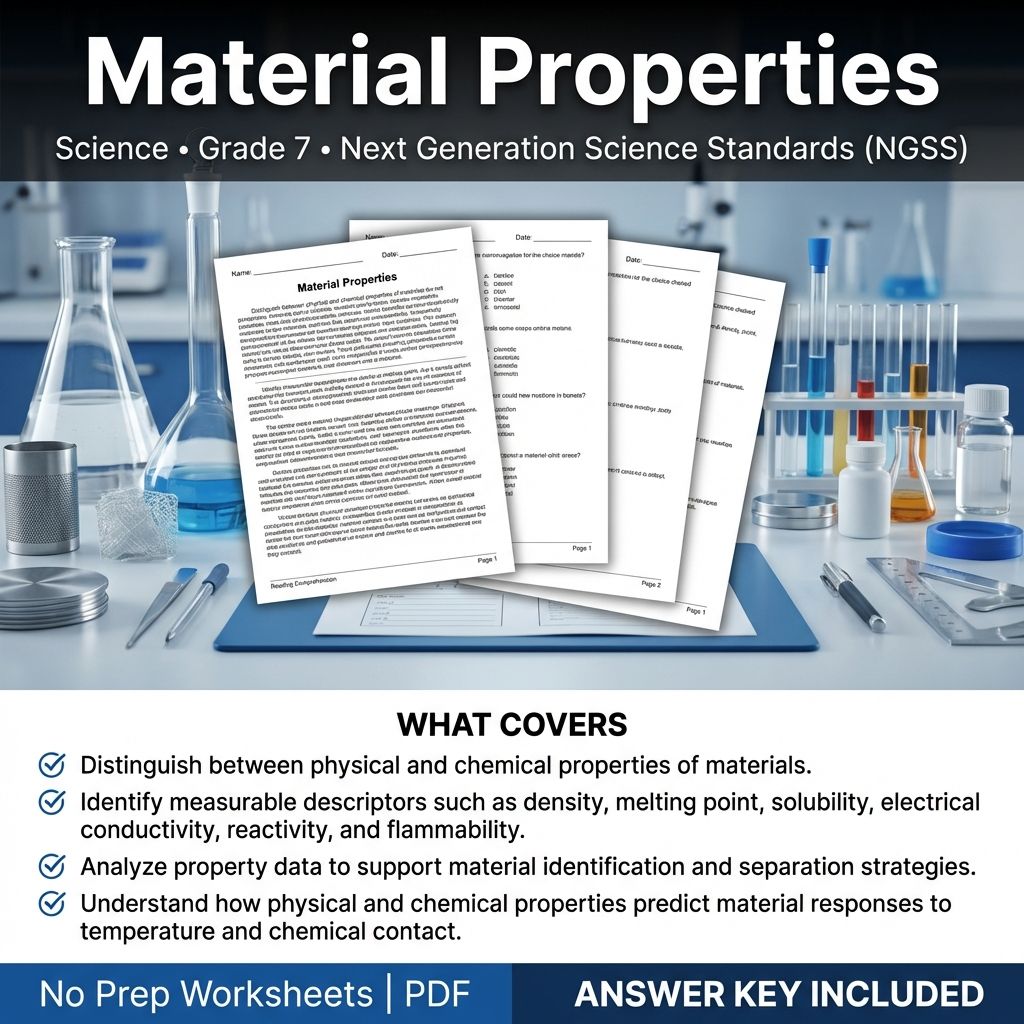
7th Grade Science | Material Properties Worksheet & Answer Key (PDF)
 Created byCoral Reef Learning
Learning Objectives
- Distinguish between physical and chemical properties of materials.
- Identify measurable descriptors such as density, melting point, solubility, electrical conductivity, reactivity, and flammability.
- Analyze property data to support material identification and separation strategies.
Instant download

Evidence Based Evaluation Worksheet | Standards-Aligned Grade 7 Science
JCreated byJ.S SheetsLearning Objectives
- Understand how to interpret results from tests and models to evaluate design solutions.
- Identify criteria and tradeoffs involved in assessing the performance of design options.
- Learn to compare different solutions based on evidence related to their effectiveness and potential failures.
Also included in: Grade 7 Engineering, Technology, and Applications of Science Lesson Bundle +1 more
Instant download

Separation of Mixtures Worksheets: Physical Properties Grade 7 Science
 Created bySunny Desk Resources
Learning Objectives
- Identify separation methods that match a mixture’s physical properties (particle size, solubility, magnetism, or boiling point).
- Explain how filtration, decanting, evaporation, and magnetic separation separate substances without changing their chemical identity.
- Use observable results to infer what physical properties were used in a separation.
Also included in: Matter and Chemical Change Grade 7 Alberta Science Worksheets Bundle +1 more
Instant download
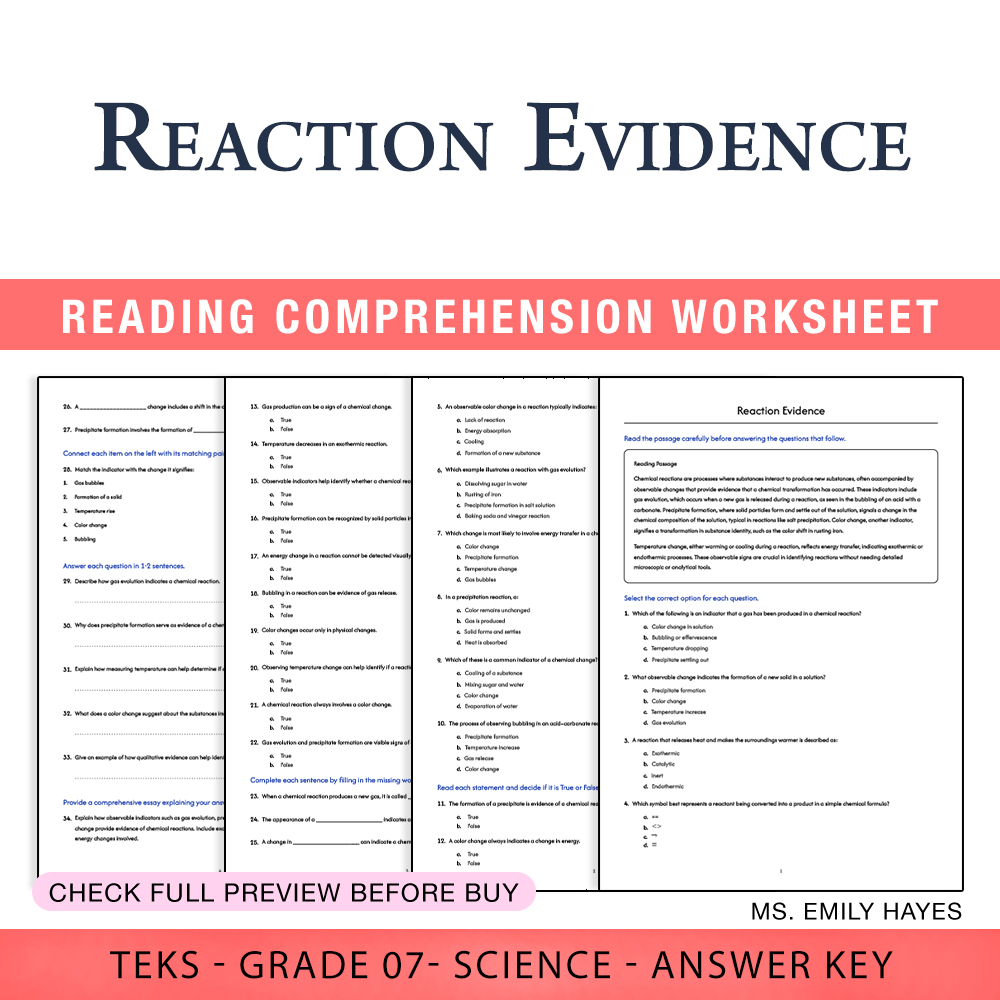
7th Grade Science | Reaction Evidence Worksheet (PDF+ Answer Key)
Created byCopper Leaf ClassroomLearning Objectives
- Describe various observable indicators of chemical reactions such as gas evolution, precipitate formation, color change, and temperature change.
- Connect observable signs of reactions to underlying mass and energy changes.
- Use simple symbolic formulas to represent reactant–product transformations.
Instant download

Grade 7 Science | Cell Organization Worksheet (PDF) BC Standards
Created byEvergreen Desk EducationLearning Objectives
- Explain how cells become tissues, tissues become organs, and organs work together in multicellular organisms.
- Identify how different tissue types (epithelial, muscle, nervous) support specific body functions.
- Describe how division of labor and cell specialization improve coordinated responses in the body.
Instant download

Grade 7 Science – Model-Based Predictions Worksheet (PDF) | General Standards
Created byEvergreen Desk EducationLearning Objectives
- Explain how models translate observations into representations that support predictions.
- Differentiate physical, diagrammatic, and computational models and describe how each helps predict outcomes.
- Use model assumptions to justify expected results under new conditions.
Also included in: Grade 7 Model-Based Scientific Reasoning Science Lesson Bundle (General) +1 more
Instant download
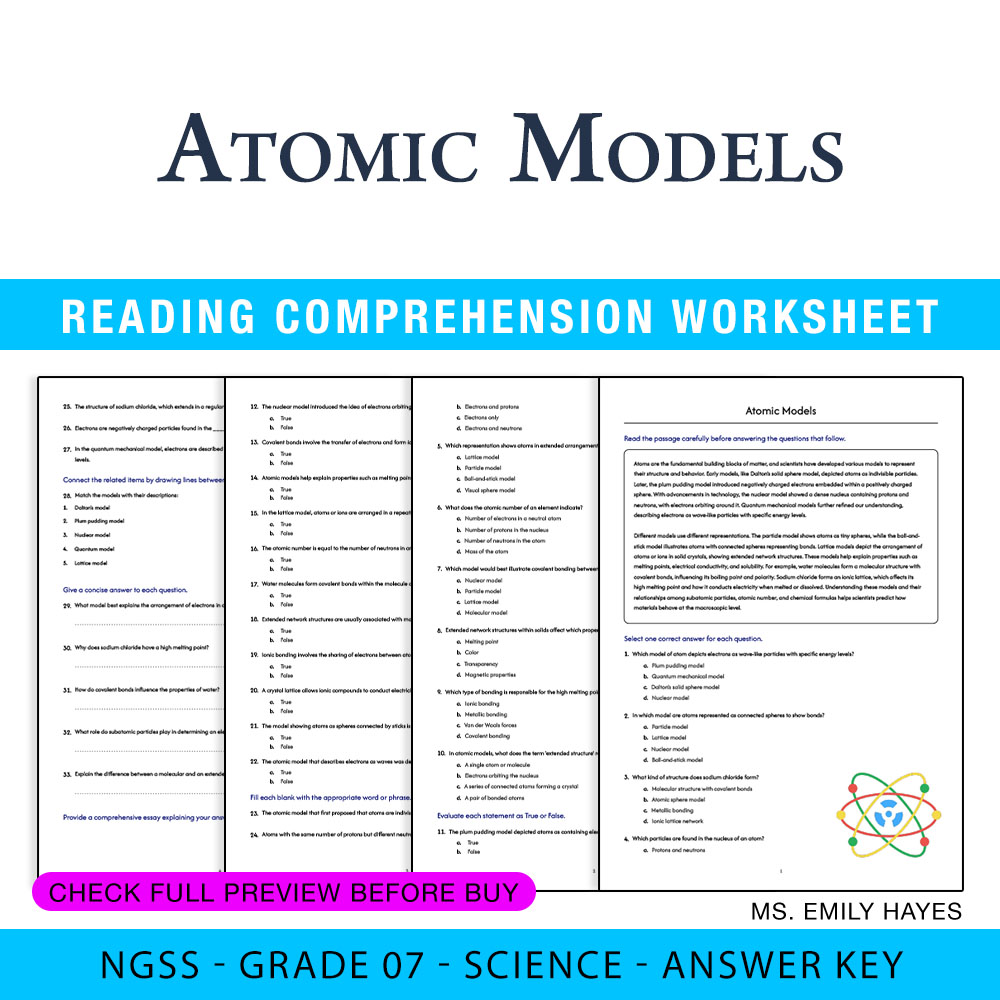
Grade 7 Science | Atomic Models Worksheet (PDF +Answer Key)
Created byCopper Leaf ClassroomLearning Objectives
- Understand different models of atoms and their representations.
- Identify the relationships among subatomic particles, atomic number, and chemical formulas.
- Differentiate between molecular structures and extended network structures in materials.
Instant download

Grade 7 Environment and Traits Worksheet | NGSS Science Activity & Notes
Created byBRIGHT PATH RESOURCESLearning Objectives
- Understand how environmental factors influence physical traits in humans
- Identify examples of traits affected by environment and genetics
- Distinguish between inherited traits and environmentally modulated traits
Also included in: Grade 7 Genetics Science Lesson Bundle Daily Reading Worksheets | NGSS +2 more
Instant download

Mechanical Energy Worksheet for Grade 7 Science | TEKS Aligned Practice
JCreated byJ.S SheetsLearning Objectives
- Explain how mechanical energy transfers between kinetic energy and potential energy in pendulums and springs.
- Distinguish closed systems from open systems when tracking mechanical energy and its losses to nonmechanical forms.
- Use qualitative “energy bookkeeping” to predict how motion outcomes change when energy is transferred to the surroundings.
Instant download

Evidence-Based Evaluation Worksheet Grade 7 Science | California Standards
Created byPrism Point LearningLearning Objectives
- Use test results or validated models as evidence to judge how well a design meets criteria.
- Interpret evaluation results by considering real-world conditions and possible failure modes.
- Compare competing design options by weighing tradeoffs between different criteria.
Instant download
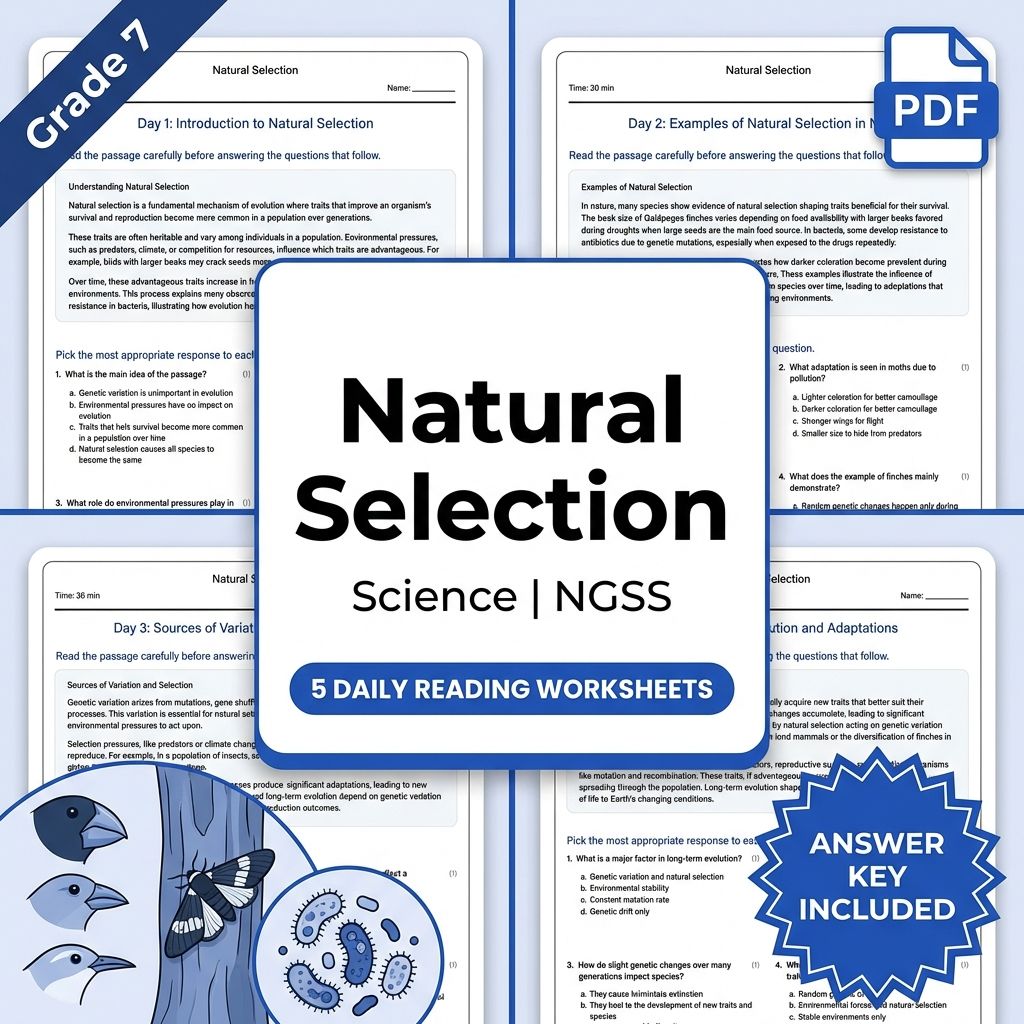
7th Grade Science | Natural Selection Daily Reading Worksheet (PDF + Answer Key)
Created byCopper Leaf ClassroomLearning Objectives
- Understand the mechanisms of natural selection and how traits are favored or suppressed in populations.
- Identify examples of adaptation and reproductive success in different species.
- Explain the sources of genetic variation and how environmental pressure influences evolution.
Instant download

Data Representation Worksheet for Grade 7 Science TEKS Standards
JCreated byJ.S SheetsLearning Objectives
- Organize quantitative and qualitative observations into tables and graphs to show patterns.
- Select appropriate graph types and interpret axis scaling, labels, and trend lines.
- Calculate and compare summary statistics such as mean or median and evaluate outliers.
Instant download
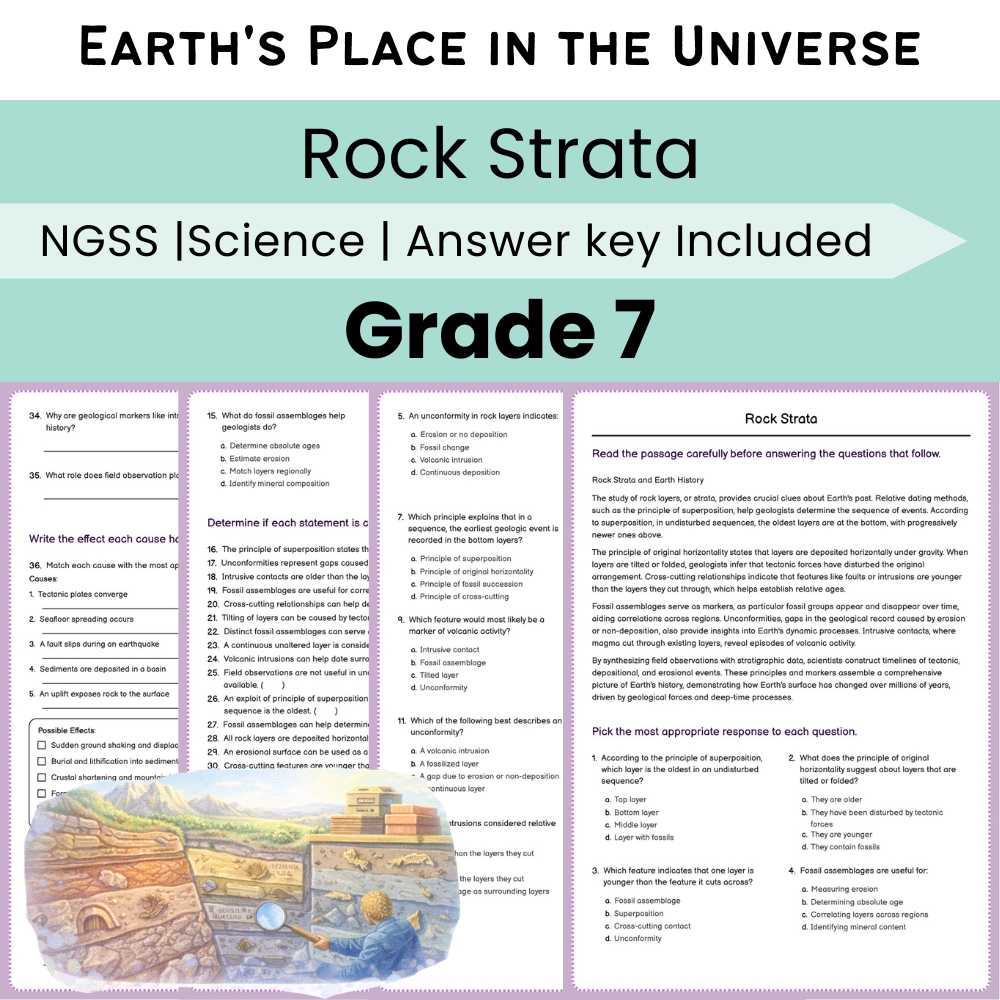
Rock Strata Worksheet | Grade 7 Science Printable PDF | Assessment & Student Practice
Learning Objectives
- Understand the principles of relative dating such as superposition, original horizontality, and cross-cutting relationships.
- Identify and interpret stratigraphic markers like fossils, unconformities, and intrusions for age correlation.
- Apply stratigraphic principles to construct sequences of Earth’s geological events.
Also included in: Grade 7 Science NGSS Lesson Bundle – Earth's Place in the Universe Worksheets +1 more
Instant download
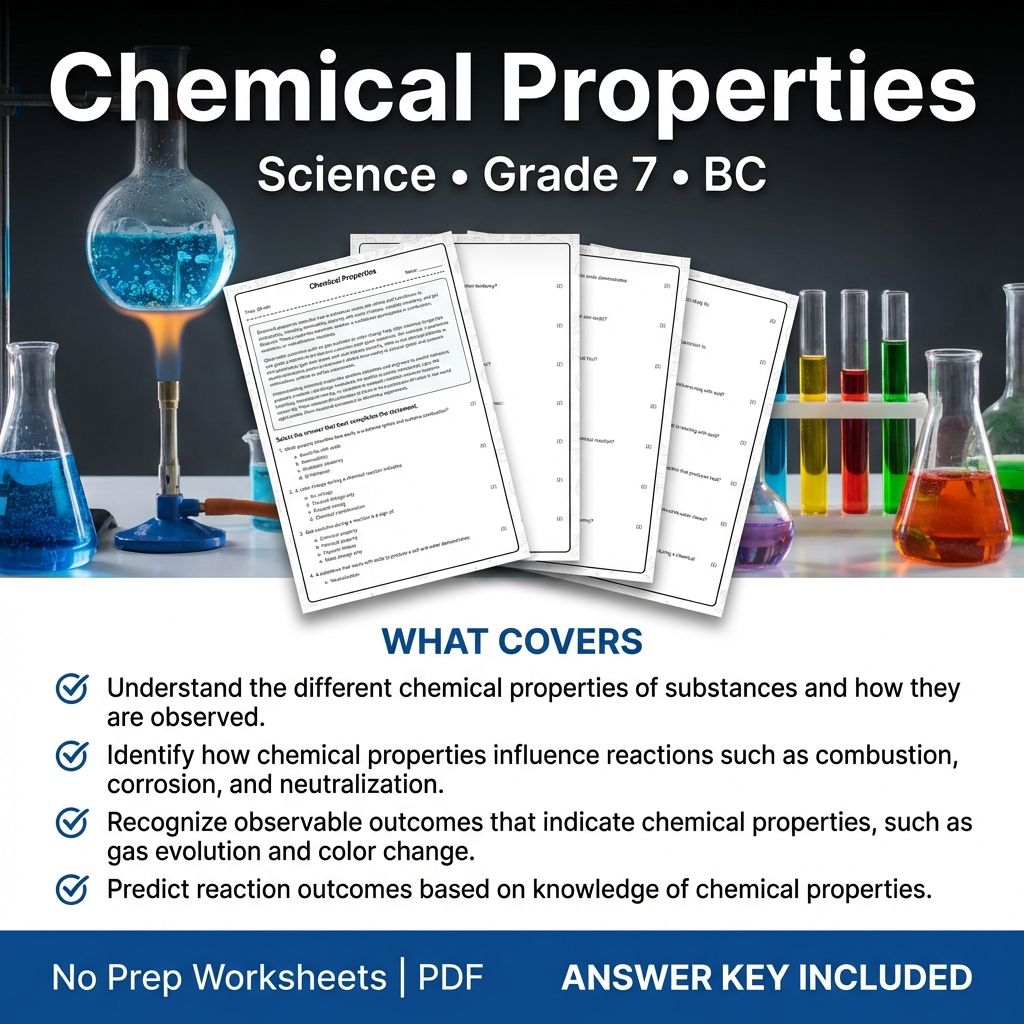
Grade 7 Science | Chemical Properties Worksheet & Answer Key (Printables)
Created byCoral Reef LearningLearning Objectives
- Understand the different chemical properties of substances and how they are observed.
- Identify how chemical properties influence reactions such as combustion, corrosion, and neutralization.
- Recognize observable outcomes that indicate chemical properties, such as gas evolution and color change.
Instant download

Grade 7 Population Variation Science Worksheet | Florida NGSSS with Answer Key
Created byEvergreen Desk EducationLearning Objectives
- Explain how inherited differences and reproduction can create variation in traits within a population
- Describe how trait frequency changes across generations when environmental pressures affect survival and reproduction
- Use examples of measurable traits (such as size, coloration, or disease resistance) to interpret patterns in populations
Instant download

Grade 7 Science: Global Circulation Worksheet | NGSS Aligned Science
Created bySkylark WorksheetsLearning Objectives
- Explain how unequal solar heating drives global atmospheric circulation (Hadley, Ferrel, and polar cells).
- Describe how Earth’s rotation and the Coriolis effect shape prevailing winds and jet streams.
- Connect ocean gyres and major currents (such as the Gulf Stream) to regional temperature and precipitation patterns.
Also included in: Grade 7 Earth Systems Science Worksheet Lesson Bundle for NGSS Assessment +1 more
Instant download

Modes Of Transfer Worksheet | Ontario Grade 7 Science Assessment
 Created byCedar Grove Learning
Learning Objectives
- Identify and describe three primary modes of thermal energy transfer: conduction, convection, and radiation
- Explain the molecular/mechanism basis for each mode and typical media (solids, fluids, and space)
- Compare relative rates of heat transfer in everyday contexts and predict how heat moves
Also included in: Grade 7 Thermal Energy & Heat Transfer Science Lesson Bundle: Ontario +1 more
Instant download

Climate Interactions Worksheet | NGSS Grade 7 Climate Change Activity
 Created byAmber Owl Education
Learning Objectives
- Analyze evidence for climate change drivers, including greenhouse gas concentrations, land-use change, and natural variability.
- Explain how climate variables such as temperature and precipitation influence sea level, agriculture, and coastal communities.
- Use data-based reasoning to describe interactions within the climate system, including carbon-cycle exchanges and natural feedbacks.
Also included in: Grade 7 Science Human Impacts and Climate Interactions Lesson Bundle – NGSS +1 more
Instant download
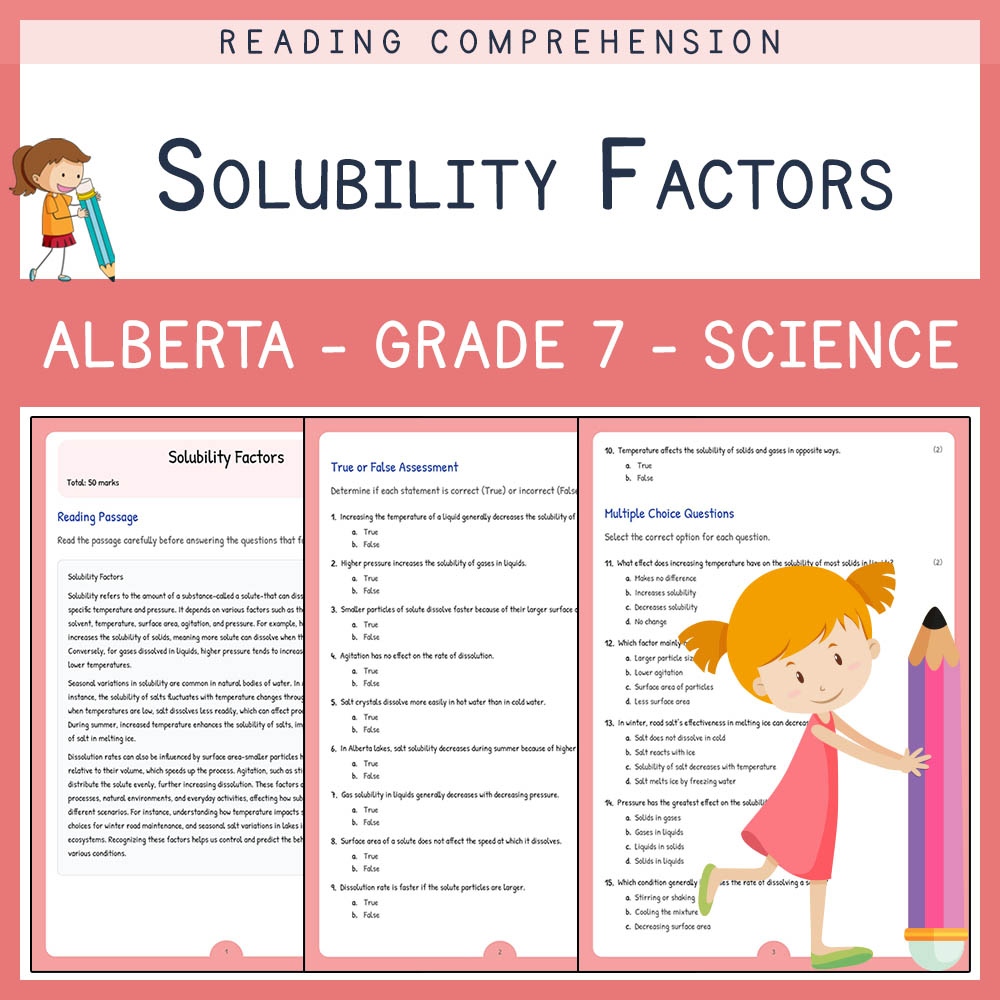
Grade 7 Science Worksheet | Solubility Factors | Alberta Curriculum
 Created byLumora Learning
Learning Objectives
- Understand the key factors affecting solubility such as temperature, surface area, pressure, and agitation.
- Identify examples of how solubility varies in natural and practical contexts.
- Analyze how changes in different conditions influence the amount of solute dissolved in a solvent.
Instant download

Load Path Basics Worksheet Grade 7 Science Structures & Forces
 Created byChalk and Compass
Learning Objectives
- Identify the main structural components in a load path (slabs/decks, beams, columns, trusses, and foundations).
- Distinguish dead loads and live loads and predict how they transfer through a simple structure.
- Recognize where tension, compression, and shear typically occur in common structural members and at connections.
Also included in: Grade 7 Science Structural Engineering Design & Materials Lesson Bundle |Ontario +1 more
Instant download

Member Behaviour Test Practice Worksheet | Grade 7 Science Ontario
Created byPrism Point LearningLearning Objectives
- Explain how beams and cantilevers respond to loads through bending and shear and how these affect deflection and serviceability.
- Describe how axial force and torsion act in structural members like columns and truss bars, and compare dominant internal-force types.
- Relate geometry (span/shape) and support/load placement to internal force distribution in roof trusses and cantilevered balconies.
Instant download

Truss Analysis Worksheet | Grade 7 Science Activities
Created byPrism Point LearningLearning Objectives
- Explain how truss members form internal force paths of tension and compression
- Use the method of joints concept to reason about forces in individual truss members
- Compare common truss forms (e.g., king post, queen post, and Pratt) by their structural efficiency and redundancy
Instant download

Mixtures Separation Worksheet | Grade 7 Science Activities
Created byPrism Point LearningLearning Objectives
- Distinguish homogeneous and heterogeneous mixtures based on observable properties.
- Select an appropriate separation technique (filtration, distillation, chromatography, magnetic separation) by using differences in solubility, particle size, or boiling point.
- Explain how physical separation methods produce distinct fractions without changing chemical identities.
Also included in: Grade 7 Matter, States, and Reactions in Science Lesson Bundle TEKS
Instant download

Newton's Laws Worksheet | Grade 7 Science Practice and Assessment
JCreated byJ.S SheetsLearning Objectives
- Explain inertia using Newton’s First Law and relate it to everyday motion
- Use Newton’s Second Law qualitatively to predict how net force and mass affect acceleration
- Identify action–reaction force pairs and distinguish them from net force
Instant download

DNA And Chromosomes Practice Worksheet | Grade 7 Science Review
Created byPrism Point LearningLearning Objectives
- Explain how DNA is organized into chromosomes and how genes influence observable traits.
- Describe how gametes form through chromosome segregation and how fertilization combines genetic material.
- Use molecular examples (like eye pigmentation genes and structural proteins) to connect DNA sequence variation to trait differences.
Also included in: Grade 7 Genetics Science Lesson Bundle NGSS: Inheritance, Traits, DNA
Instant download

Grade 7 Science | Structural Basics in Civil Engineering - Reading Comprehension
Created byCoral Reef LearningLearning Objectives
- Understand the importance of foundations in supporting structures
- Identify different types of structural loads such as compression, tension, and shear
- Recognize the roles of supports in ensuring stability of buildings
Also included in: Forces, Structures and Motion Lesson Bundle | Grade 7 Science Alberta +1 more
Instant download

Grade 7 Science Worksheet – Understanding Acceleration (PDF)
Created byEvergreen Desk EducationLearning Objectives
- Explain what acceleration means in terms of how velocity changes over time
- Distinguish between positive and negative acceleration using the direction (sign) of velocity change
- Identify constant versus changing acceleration from patterns in velocity over time
Also included in: Grade 7 Energy Transfer & Motion Science Lesson Bundle Worksheets (General) +1 more
Instant download

Biodiversity Solutions Trade-Offs and Evidence Worksheet | NGSS Grade 7 Science
Created bySkylark WorksheetsLearning Objectives
- Compare management strategies (protected areas, habitat corridors, restoration, invasive species control, and sustainable harvest) using evidence-based reasoning.
- Explain how biodiversity supports ecosystem services such as pollination, water purification, and food provisioning.
- Evaluate ecological, economic, and social constraints and predict likely outcomes for species persistence.
Also included in: Grade 7 Ecosystem Dynamics Science Lesson Bundle (NGSS) Worksheets +1 more
Instant download

Earth Sun Cycles Worksheet | Grade 7 Science Practice
Created byPrism Point LearningLearning Objectives
- Explain how Earth’s orbit and axial tilt affect seasons and the amount of solar energy received
- Describe how changes in day length connect to patterns in the calendar and timekeeping
- Use vocabulary such as axial tilt, hemisphere, and day length to interpret Earth–sun diagrams
Instant download

Invasive Species Impacts Worksheet Grade 7 Science Ontario Activity
Created byChalk and CompassLearning Objectives
- Explain how non-native species can harm native ecosystems through competition, altered food webs, and habitat changes.
- Describe common pathways for how invasive species are introduced and why some become established.
- Evaluate how long-term ecological and economic effects increase management needs.
Also included in: Grade 7 Science Ecosystems & Sustainability Lesson Bundle | Ontario +1 more
Instant download
About Grade 7 Science Worksheets
Browse 6,039 printable Grade 7 Science worksheets — ready-to-print PDFs with answer keys where available.
Every worksheet on MyTeachingSheets is created by independent teacher-authors and reviewed before publication. All resources download as printable PDFs for classroom, homework, or at-home practice, and many include answer keys. Preview any worksheet free before buying.