
Grade 6 Science Worksheets
5,997 worksheets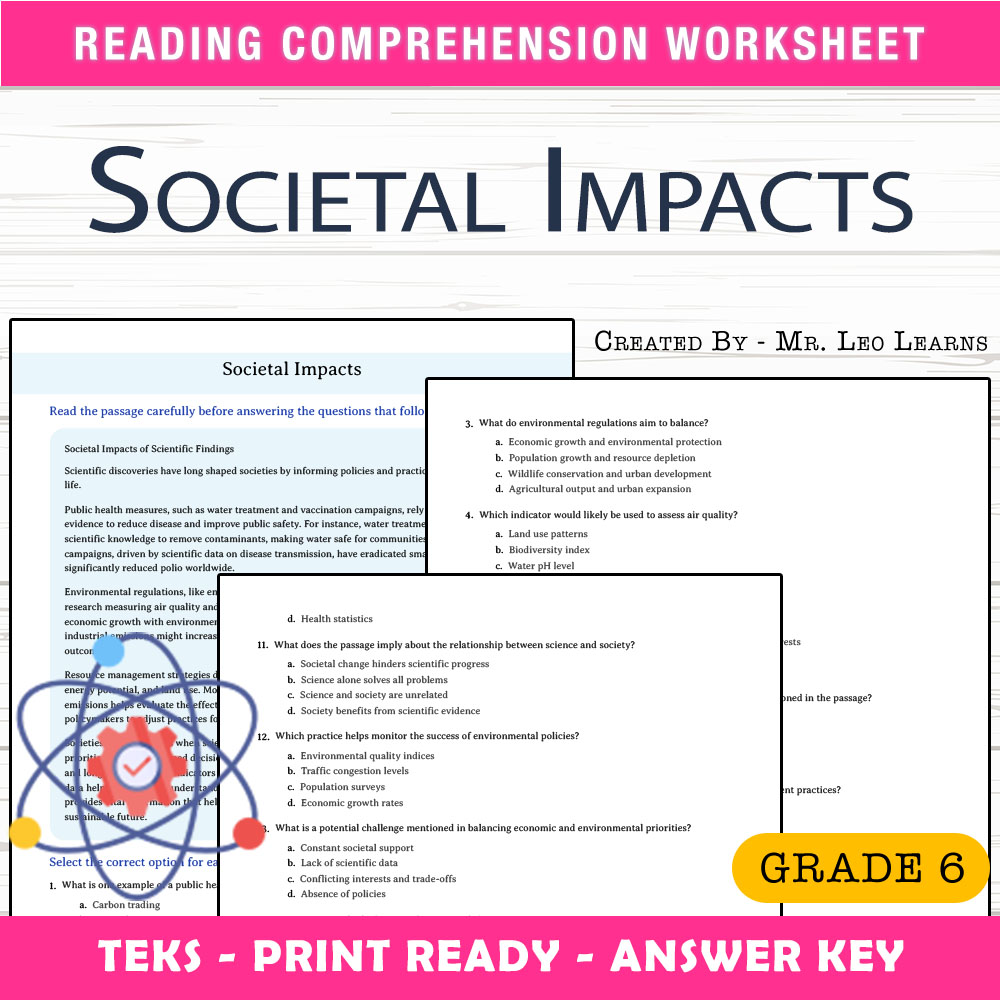
Grade 6 Science – Societal Impacts Worksheet for Mastery
 Created byThe Resource Hub
Learning Objectives
- Analyze how scientific findings influence societal change through public health, environment, and resource management.
- Evaluate evidence and trade-offs in societal decision-making based on scientific data.
- Identify indicators used to assess the effectiveness of societal measures related to science.
Instant download
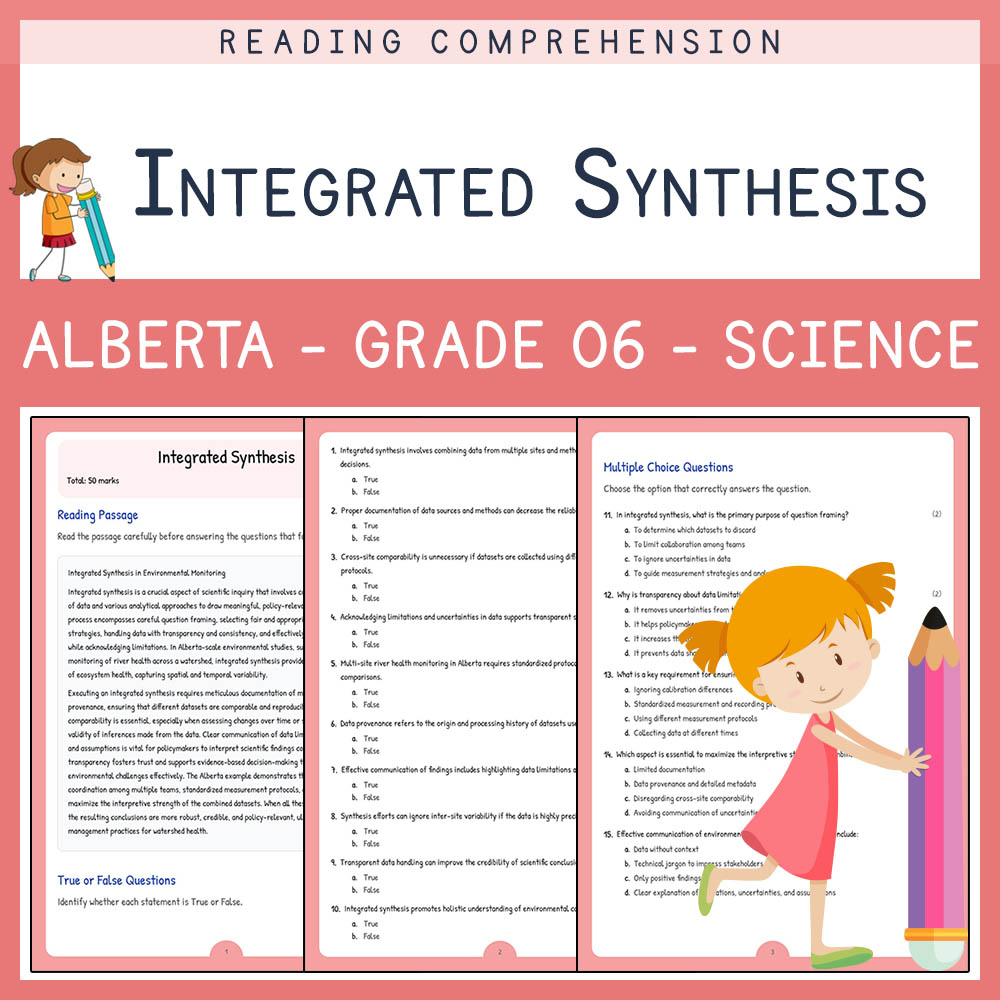
Grade 6 Science Worksheet Elena | Integrated Synthesis | Alberta Standards
 Created byLumora Learning
Learning Objectives
- Understand the components and importance of integrated synthesis in scientific inquiry.
- Identify key considerations such as measurement strategies, data handling, and communication.
- Analyze examples like multi-site river monitoring to illustrate synthesis concepts.
Also included in: Grade 6 Science | Evidence and Investigation Custom Bundle | Alberta
Instant download
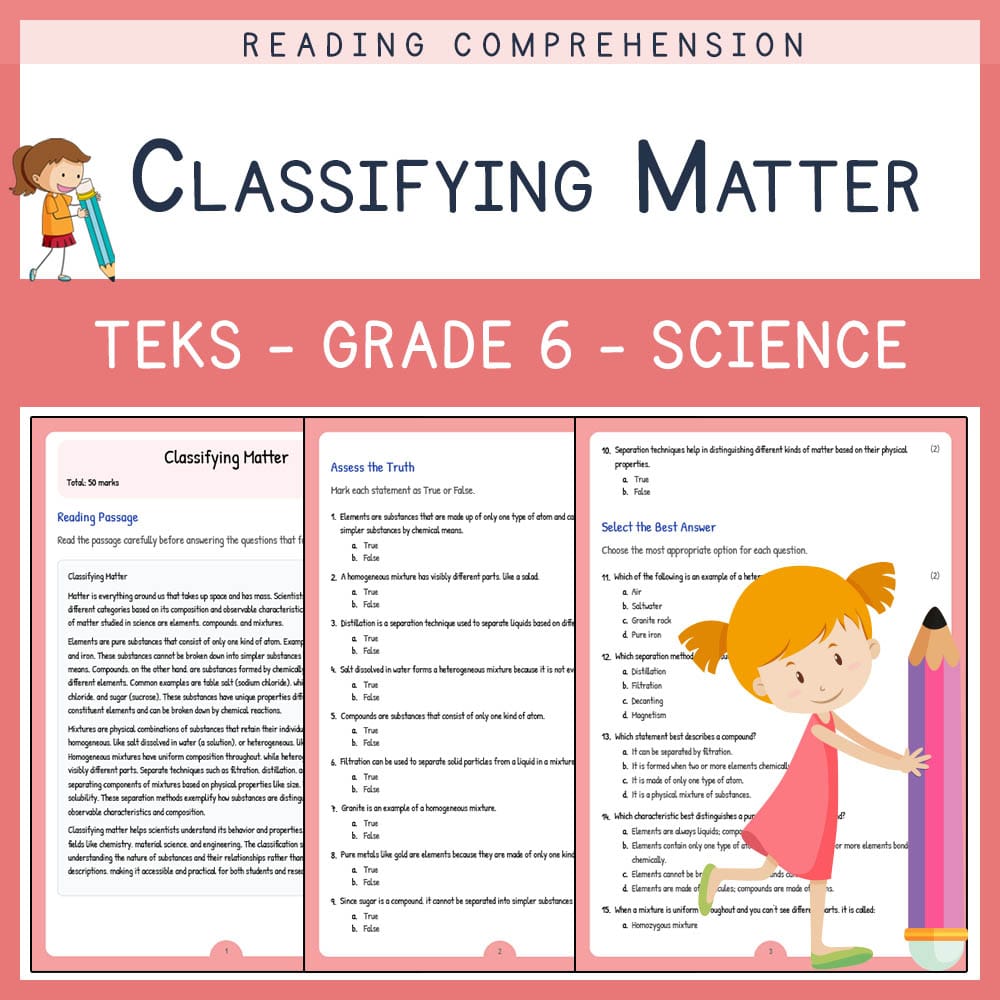
Grade 6 Science | Classifying Matter Worksheet | TEKS Alligned
Created byLumora LearningLearning Objectives
- Understand the different categories of matter: elements, compounds, and mixtures.
- Identify examples and distinguishing features of each category.
- Learn common separation techniques and how they relate to matter classification.
Also included in: Grade 6 Science | Matter and Energy Lesson Bundle | TEKS Aligned
Instant download
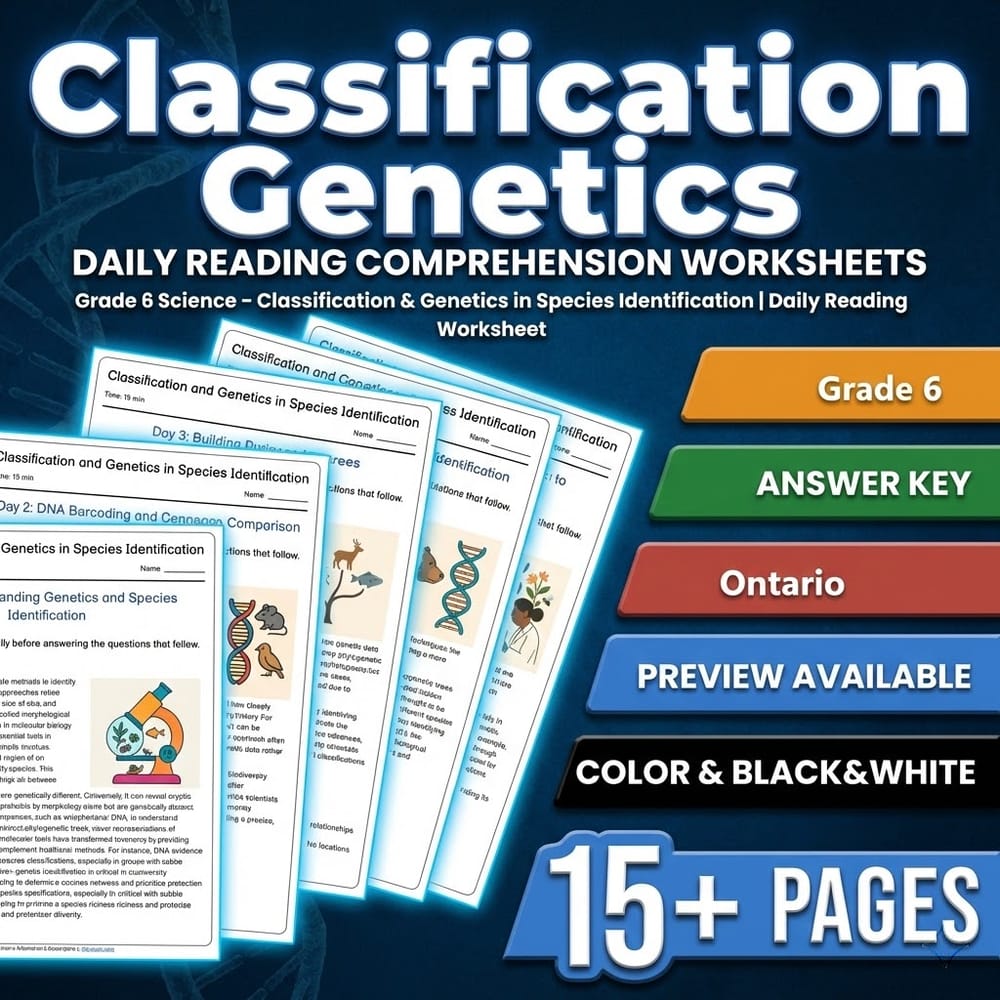
Grade 6 Science – Classification & Genetics in Species | Daily Worksheet
 Created byQuiet Forest Education
Learning Objectives
- Understand the concept of genetic markers used in species classification
- Learn how DNA barcoding helps identify species
- Compare morphological keys with genetic markers for taxonomy
Also included in: Ecosystems and Environment Grade 6 Science Daily Worksheets Bundle | Ontario +1 more
Instant download
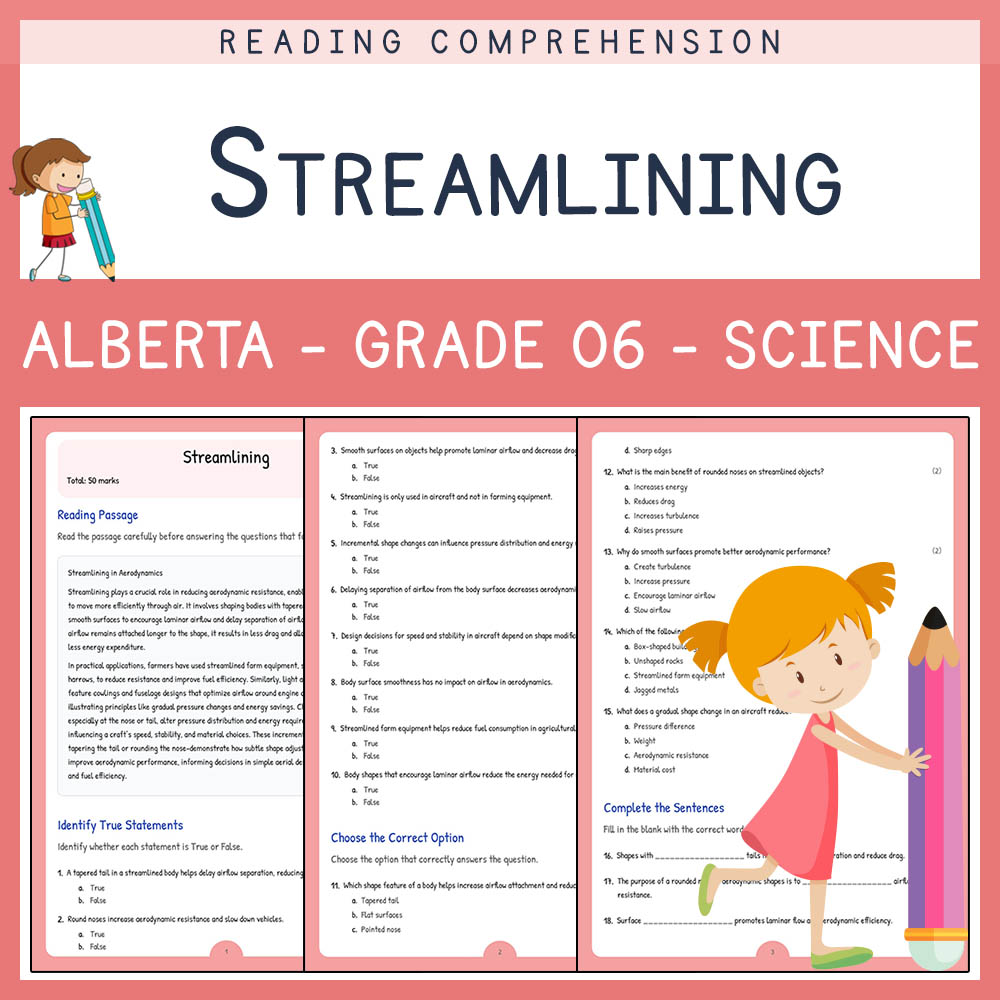
Grade 6 Science Assessment | Streamlining Worksheet Elena | Alberta
Created byLumora LearningLearning Objectives
- Understand the principles of streamlining and how body shape affects airflow.
- Identify practical examples of streamlined designs in agriculture and aircraft.
- Explain how shape changes influence pressure distribution and energy use.
Also included in: Grade 6 Science | Air and Aerodynamics Science Lesson Bundle | Alberta
Instant download

Physiological Traits Worksheet for Grade 6 Science | Standards-Aligned Practice
JCreated byJ.S SheetsLearning Objectives
- Understand the concept of physiological adaptations and their importance for survival.
- Identify examples of internal processes that help organisms adapt to their environments.
- Analyze how internal traits influence an organism's habitat and stress tolerance.
Also included in: Grade 6 Ecosystem Adaptations and Energy Flow Science Lesson Bundle | Florida NGSSS +1 more
Instant download
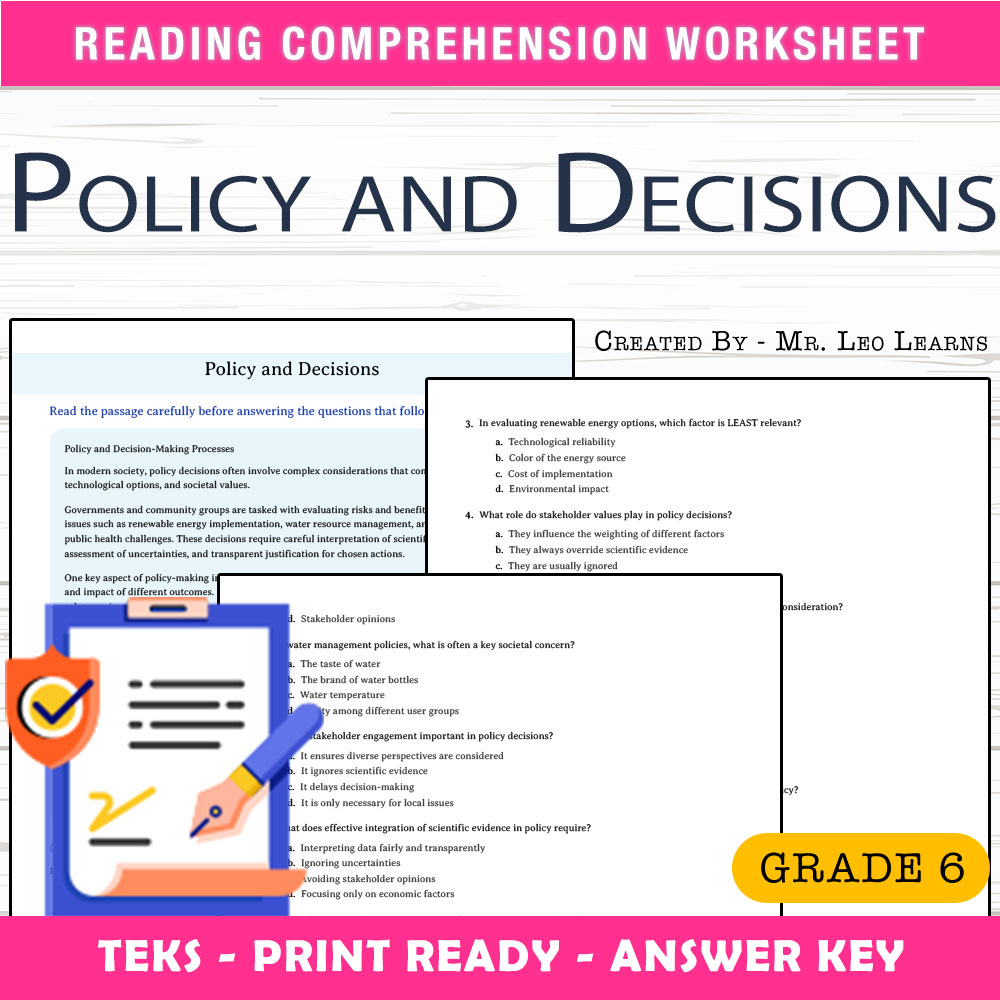
Grade 6 Science — Policy and Decisions Worksheet for Mastery
Created byThe Resource HubLearning Objectives
- Analyze how scientific evidence influences policy decisions.
- Evaluate the criteria used by governance bodies for risk assessment.
- Understand stakeholder values in societal decision-making.
Instant download

Grade 6 Science – Parachute Physics & Surface Area | Daily Reading Worksheet
 Created byBright Mind Resources
Learning Objectives
- Understand how surface area affects drag and descent speed in parachutes.
- Identify the factors that influence parachute stability and terminal velocity.
- Relate real-world examples of parachute design to physics concepts.
Also included in: Aerodynamics Grade 6 Science Daily Reading Worksheets Lesson Bundle | Alberta +2 more
Instant download
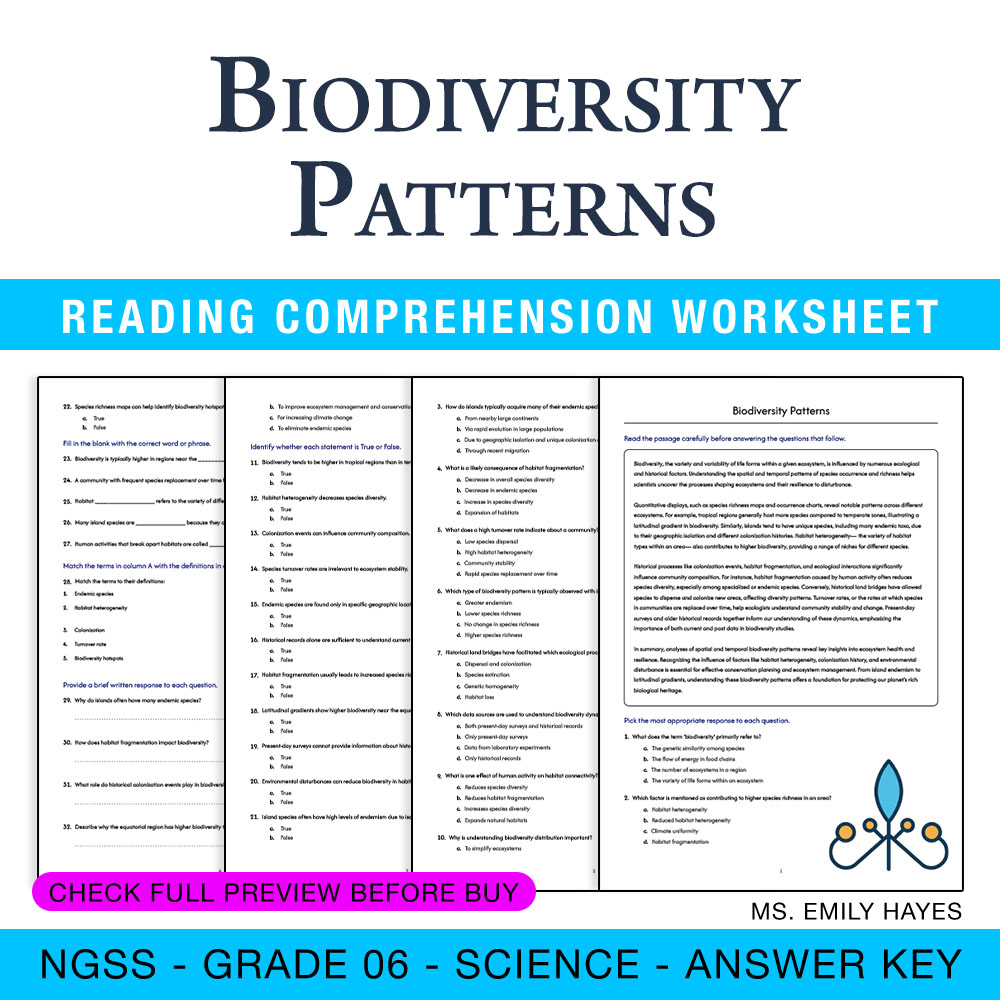
6th Grade Science | Biodiversity Patterns Worksheet (PDF + Answer Key)
 Created byCopper Leaf Classroom
Learning Objectives
- Understand how species occurrence and richness reveal spatial and temporal biodiversity patterns across ecosystems.
- Interpret data displays such as charts and maps related to biodiversity in different habitats.
- Analyze ecological and historical factors influencing biodiversity distribution, including habitat fragmentation and colonization.
Instant download
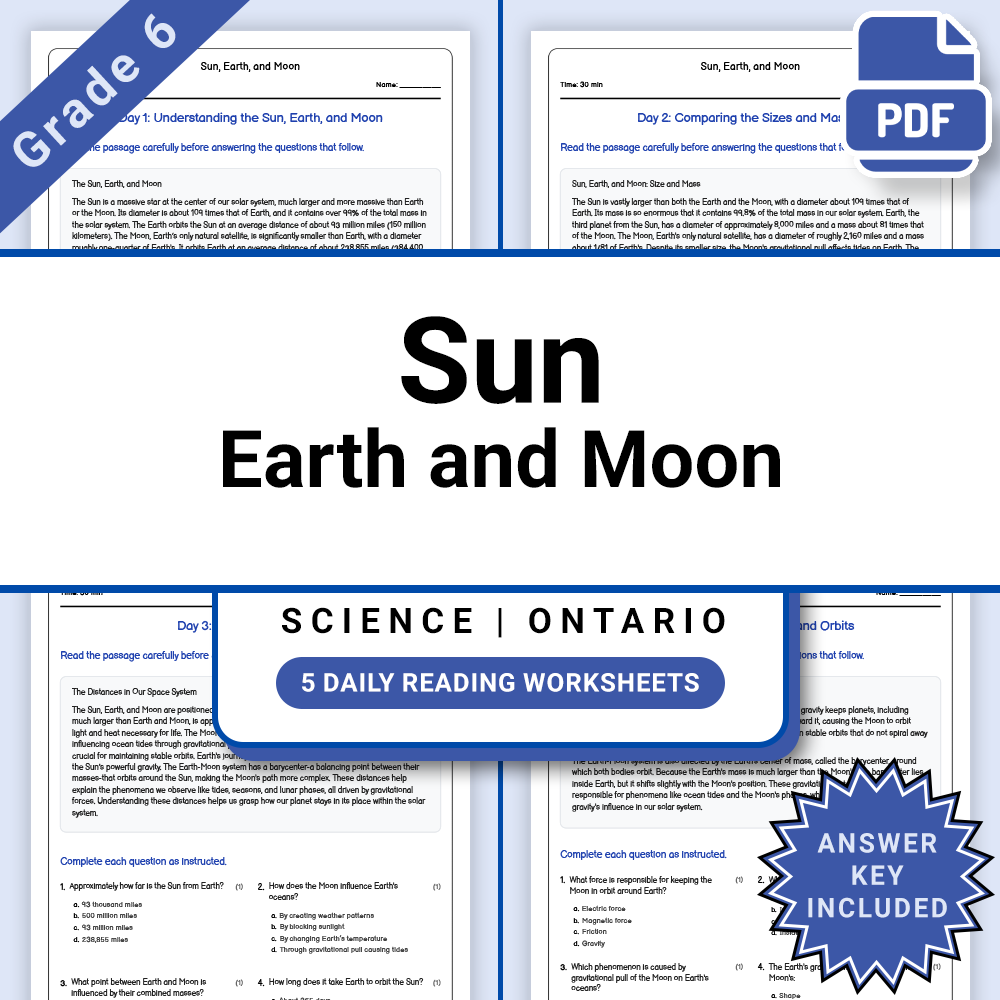
Grade 6 Science - Sun, Earth, and Moon Daily Reading Worksheet + Answer Key
JCreated byJ.S SheetsLearning Objectives
- Understand the relative sizes of the Sun, Earth, and Moon.
- Learn about the distances among the Sun, Earth, and Moon.
- Explore how gravitational forces influence their orbits.
Also included in: Grade 6 Science Lesson Bundle | Sun, Earth, Moon & Space Concepts +1 more
Instant download

Aircraft Control Surfaces and Flight Axes Worksheets | Grade 6 Science
 Created byPrism Point Learning
Learning Objectives
- Identify how primary and secondary control surfaces affect lift and moments
- Explain how ailerons, elevators, and rudders control aircraft movement
- Describe how flap deployment changes lift and drag
Also included in: Flight Lesson Bundle | Grade 6 Science | Ontario Framework
Instant download
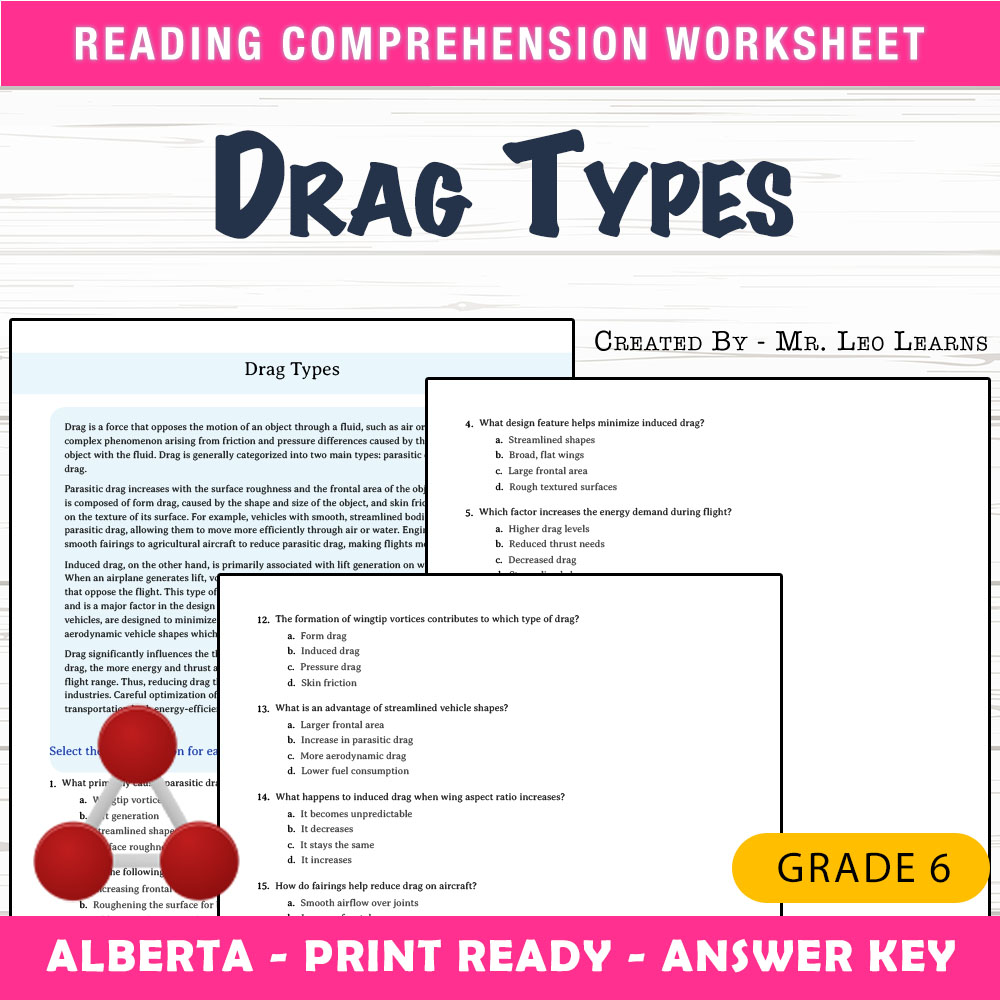
Grade 6 Science — Drag Types Worksheet MCQ Paper for Mastery
Created byThe Resource HubLearning Objectives
- Understand the different types of drag acting on objects in flight and movement.
- Identify factors that influence parasitic and induced drag.
- Analyze design strategies used to reduce drag on vehicles and aircraft.
Also included in: Grade 6 Science | Air and Aerodynamics UNIT Worksheet Bundle (Alberta Framework) +1 more
Instant download
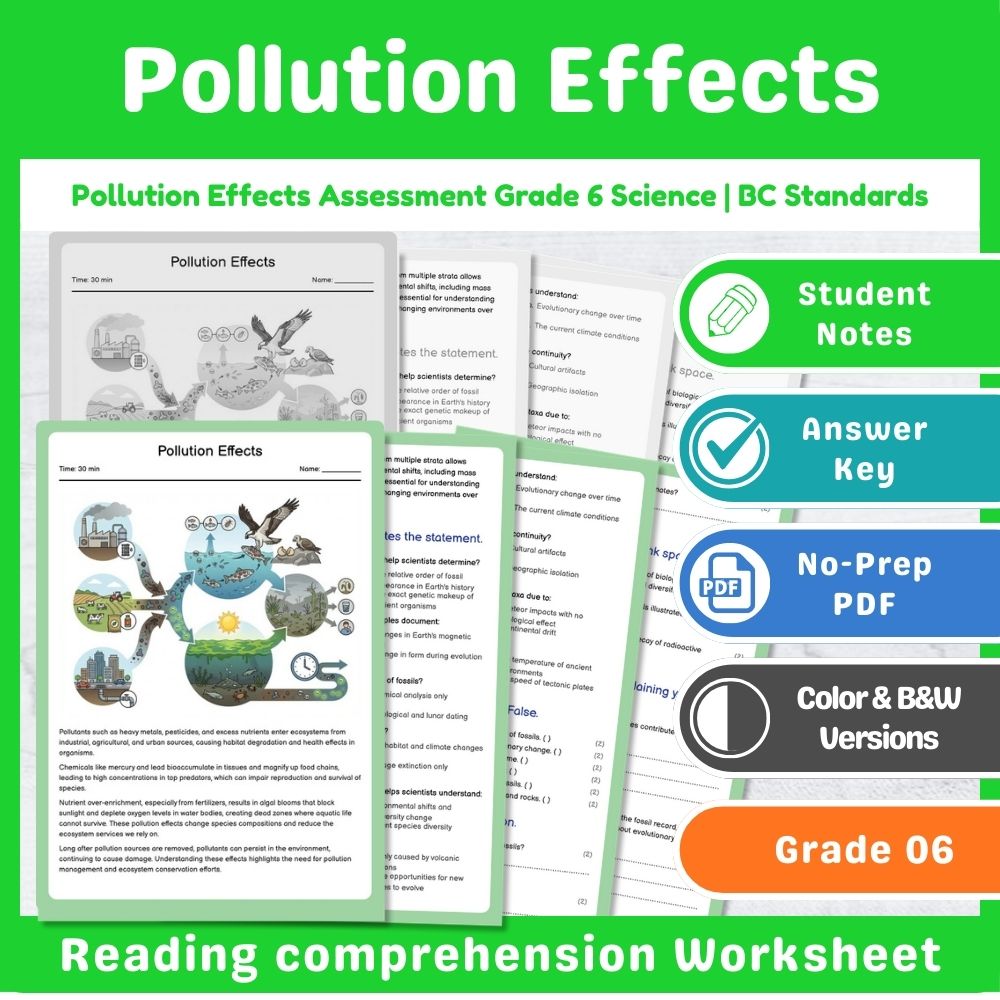
Pollution Effects Assessment | BC Standards Grade 6 Science
Created byPrism Point LearningLearning Objectives
- Understand how pollutants impact ecosystems and organisms.
- Identify bioaccumulation and biomagnification processes.
- Learn the effects of nutrient over-enrichment in aquatic environments.
Instant download
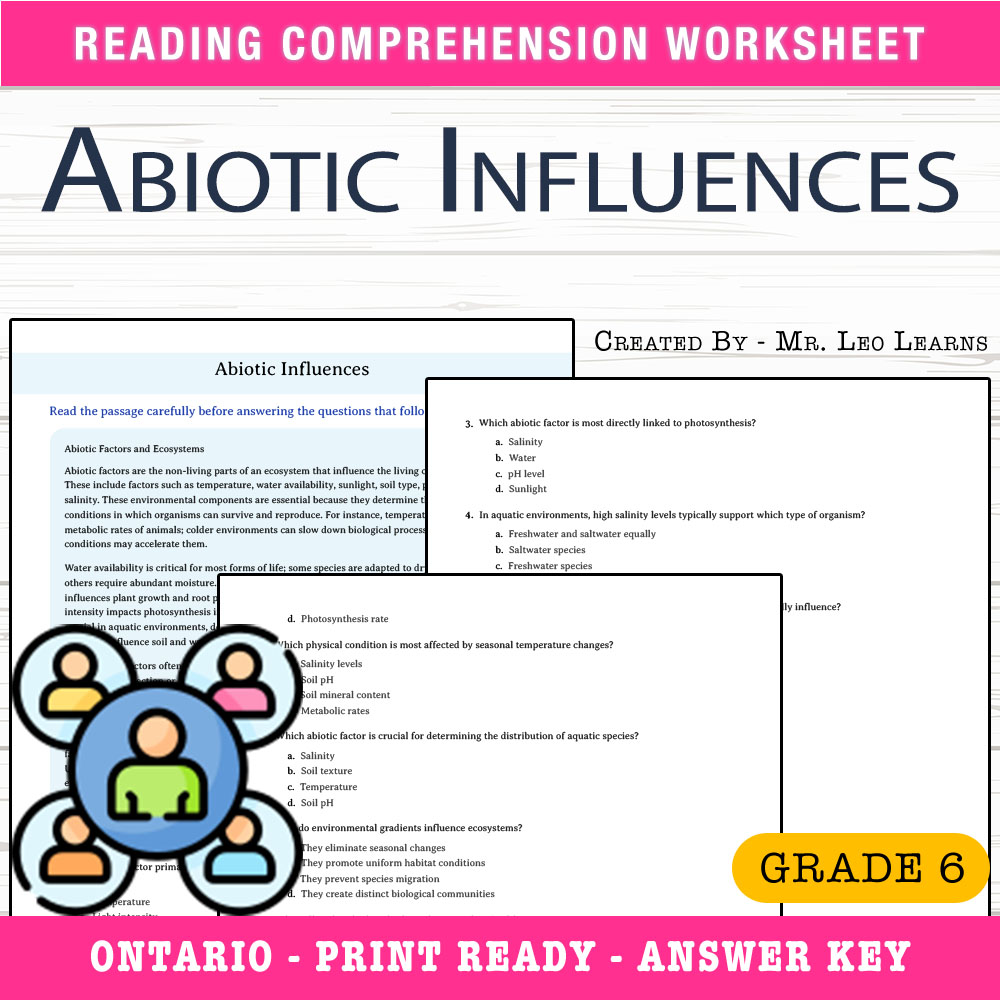
Grade 6 Science – Abiotic Influences Worksheet for Mastery
Created byThe Resource HubLearning Objectives
- Understand how abiotic factors such as temperature, water, and soil influence habitats and organism distribution.
- Identify examples of physical environmental gradients and their effects on ecosystems.
- Explain how abiotic conditions interact with biological processes to shape communities.
Also included in: Grade 6 Science Unit Bundle | Ecosystems & Environmental Relationships
Instant download
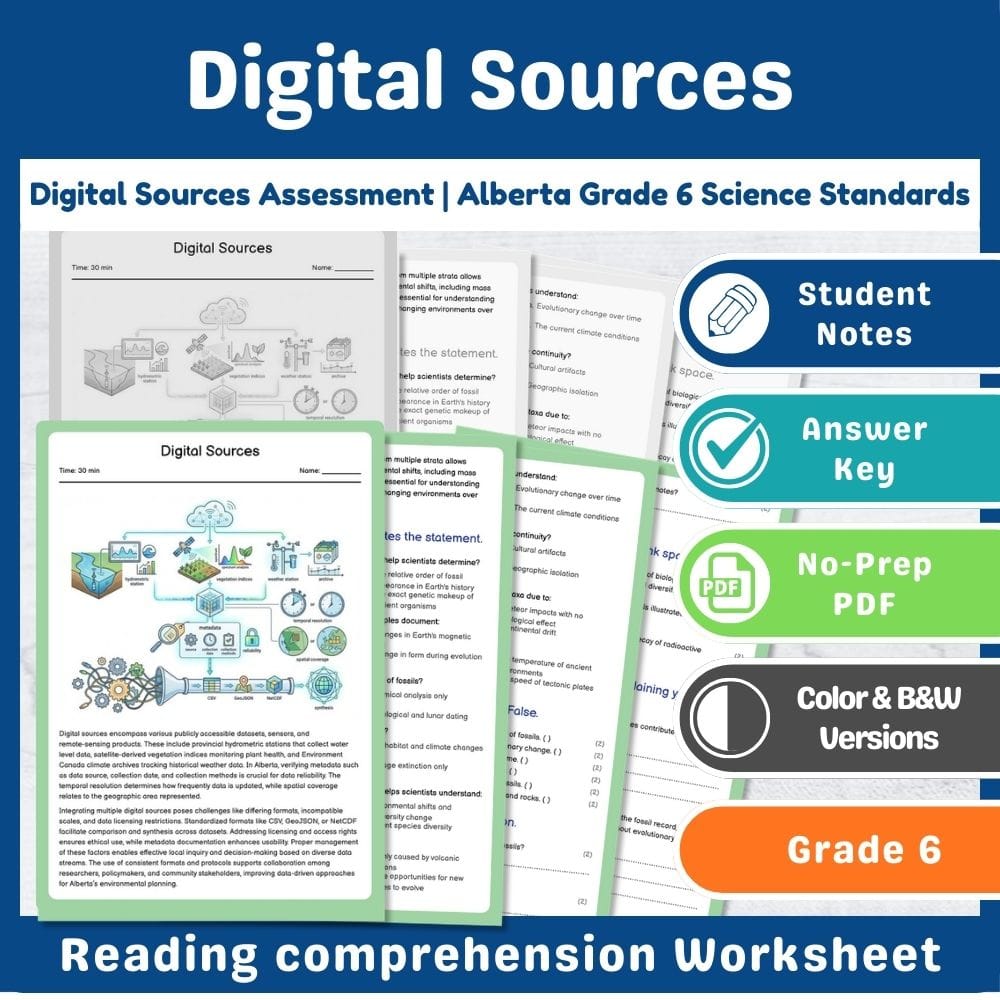
Digital Sources Assessment | Alberta Grade 6 Science Standards
Created byPrism Point LearningLearning Objectives
- Understand examples of digital data sources relevant to local inquiry.
- Identify how metadata, temporal resolution, and spatial coverage are verified for digital datasets.
- Recognize the challenges of integrating digital sources from multiple providers.
Also included in: Lesson Grade 6 Science Mini Bundle | Evidence and Investigation
Instant download
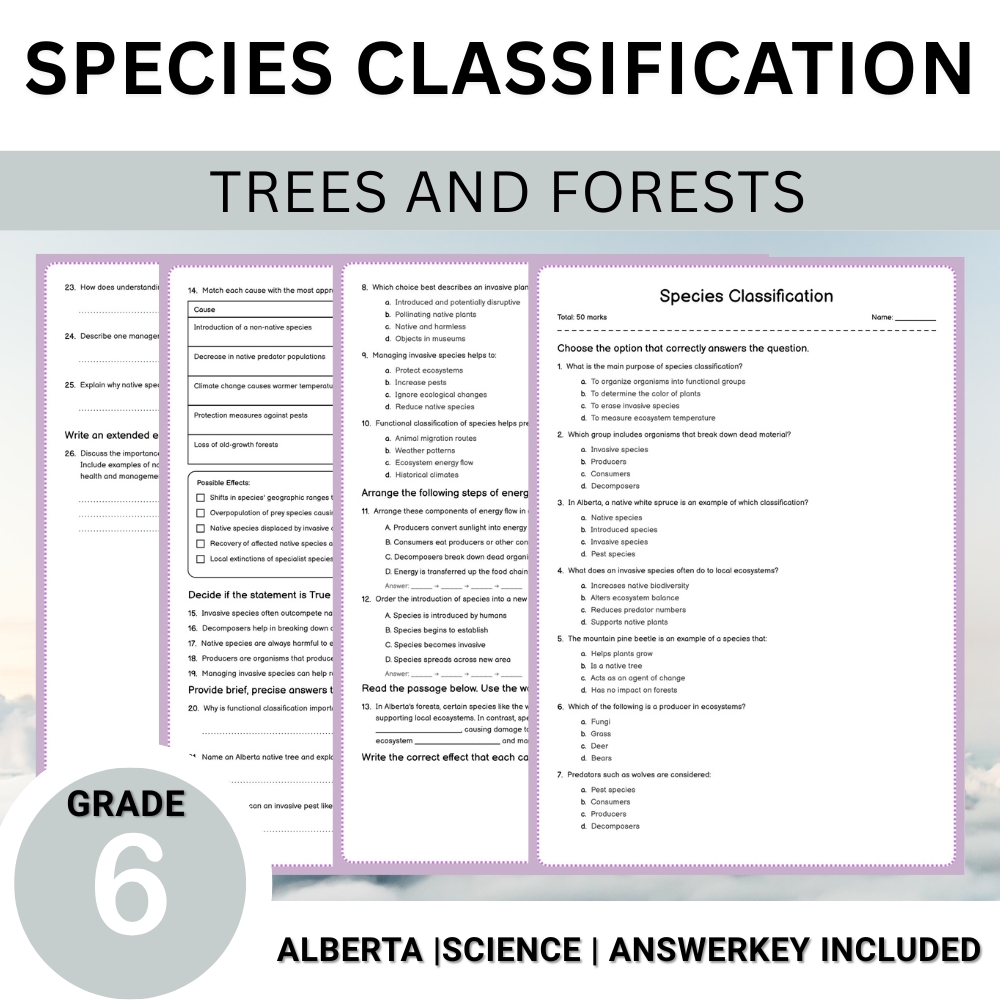
Grade 6 Science – Species Classification Worksheet (Printable PDF) for Assessment & Student Practice
Learning Objectives
- Understand the different functional groups of organisms and their roles in ecosystems.
- Distinguish between native and invasive species in Alberta's biogeographic zones.
- Learn how species classification supports ecosystem management and prediction.
Also included in: Grade 6 Science | Tree Anatomy, Ecology & Conservation Unit Worksheet Bundle +1 more
Instant download
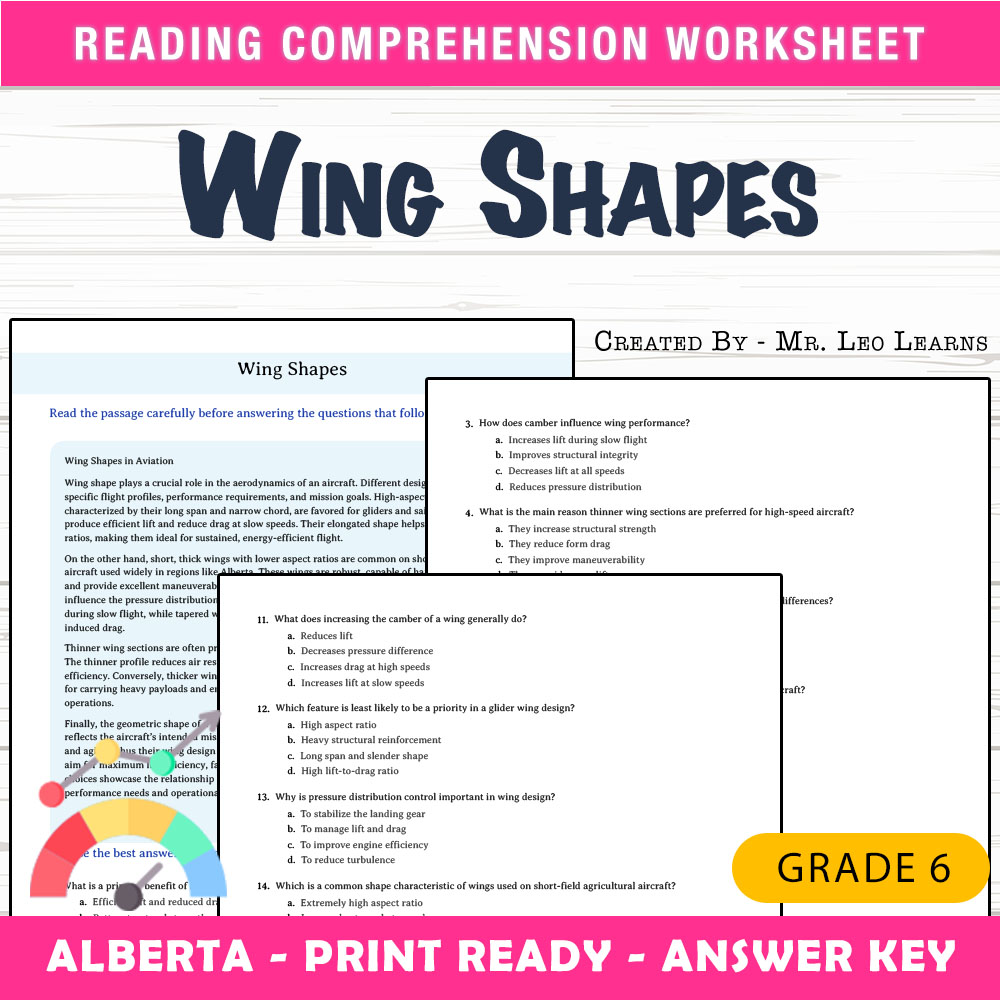
Grade 6 Science — Wing Shapes Worksheet MCQ Paper PDF + Answer Key
Created byThe Resource HubLearning Objectives
- Understand how wing shape influences lift and maneuverability.
- Identify the features such as camber, aspect ratio, and taper that affect flight performance.
- Compare high-aspect-ratio wings with low-aspect, robust wings used in regional aircraft.
Also included in: Grade 6 Science | Air and Aerodynamics UNIT Worksheet Bundle (Alberta Framework) +1 more
Instant download
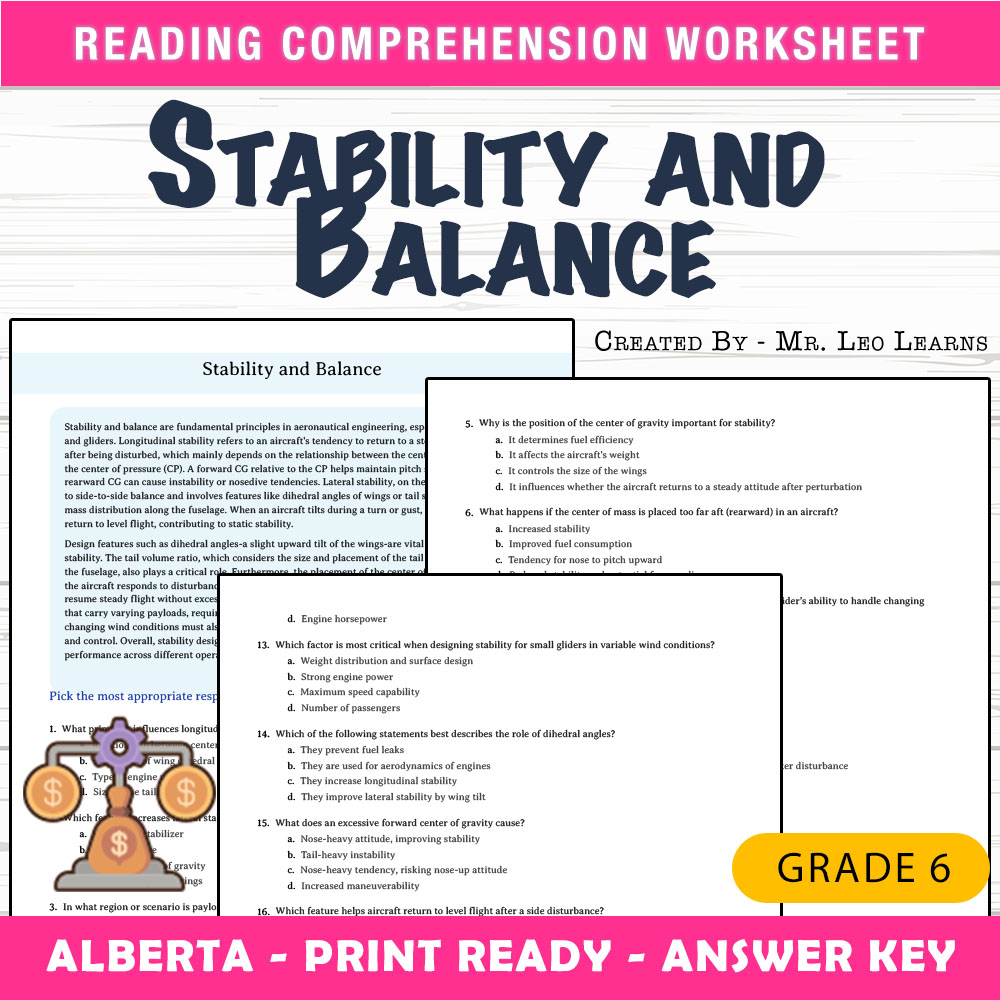
Grade 6 Science — Stability and Balance Worksheet MCQ Paper for Mastery
Created byThe Resource HubLearning Objectives
- Understand the principles of longitudinal and lateral stability in aircraft and gliders.
- Identify how image placement of center of mass and center of pressure affects stability.
- Explain the design features such as dihedral angles and tail volume that enhance static stability.
Also included in: Grade 6 Science | Air and Aerodynamics UNIT Worksheet Bundle (Alberta Framework) +1 more
Instant download

Grade 6 Wing Shapes Worksheet | Practice & Assessment PDF
 Created byClear Sky Classroom
Learning Objectives
- Explain how wing shape features (camber, thickness, and aspect ratio) affect lift efficiency
- Describe how air pressure differences form around wing curvature and influence stall behavior
- Relate wing geometry choices to specific mission needs, such as gliding versus short-field operations
Also included in: Grade 6 Air and Aerodynamics Science Lesson Bundle (Alberta Framework) +1 more
Instant download
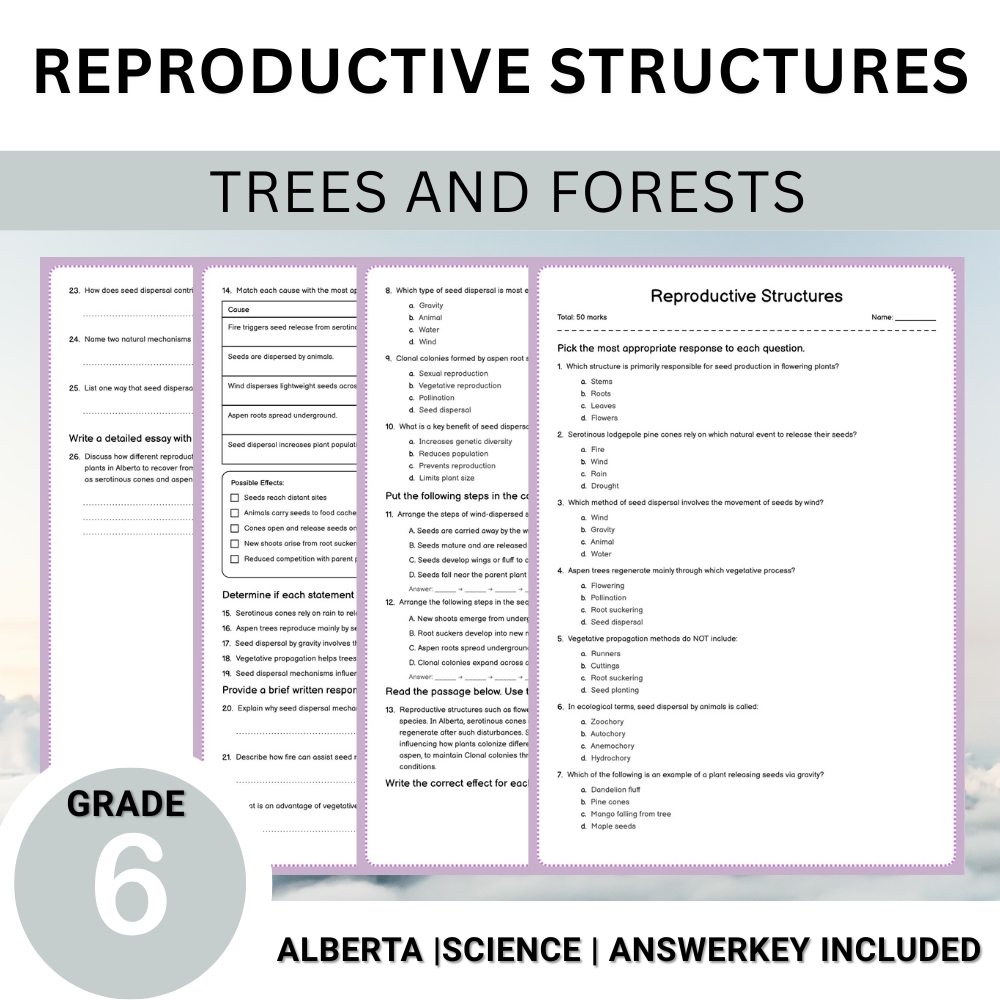
Grade 6 Science | Reproductive Structures Worksheet (Printable PDF & Answer Key)
Learning Objectives
- Identify different reproductive structures in plants and trees.
- Understand seed dispersal mechanisms and their effects on plant distribution.
- Explain regeneration strategies like seed release and vegetative propagation.
Also included in: Grade 6 Science | Tree Anatomy, Ecology & Conservation Unit Worksheet Bundle +1 more
Instant download
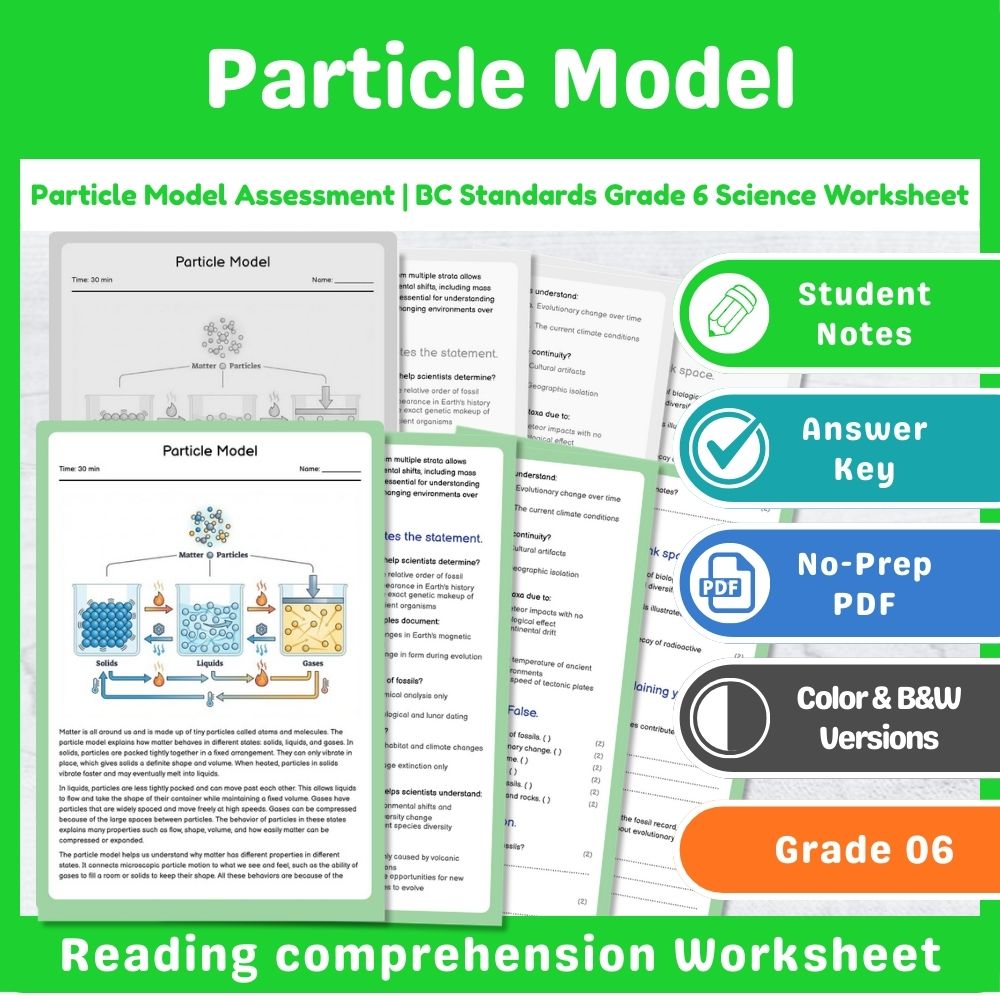
Particle Model Assessment | BC Standards Grade 6 Science Worksheet
Created byPrism Point LearningLearning Objectives
- Describe the particle model of matter and its states: solids, liquids, and gases.
- Explain how particle arrangements affect the properties of matter such as shape, volume, and flow.
- Relate microscopic particle behavior to macroscopic properties like compressibility and flow.
Instant download
Grade 6 Science – Safety and Ethics Daily Reading Worksheet + Answer Key
JCreated byJ.S SheetsLearning Objectives
- Understand the importance of safety protocols in scientific work
- Identify key ethical considerations and practices in science
- Recognize proper handling of tools, materials, and data in lab settings
Also included in: Grade 6 Science STEM Skills and Connections Lesson Bundle with Ontario Framework +1 more
Instant download

Orbital Motion Worksheet & Doodle Notes | NGSS Grade 6 Space Science
 Created byAmber Owl Education
Learning Objectives
- Explain how gravitational attraction between a planet (or satellite) and the Sun maintains orbital motion
- Describe how an orbit’s shape (elliptical) affects orbital speed and distance from the central body
- Use orbital period ideas to compare how mass and distance influence satellite orbits (e.g., Earth–Moon and Jupiter–moon systems)
Also included in: Grade 6 Science Moon Relationships & Day Night Seasons Lesson Bundle | NGSS +1 more
Instant download
Grade 6 Science – Understanding Key Construction Daily Reading Worksheet
Created byQuiet Forest EducationLearning Objectives
- Learn the purpose of dichotomous keys in biological classification.
- Identify the basic structure and components of a dichotomous key.
- Understand how contrasting traits are used to create binary decision points.
Also included in: Ecosystems and Environment Grade 6 Science Daily Worksheets Bundle | Ontario +1 more
Instant download
Grade 6 Science – Water Cycle Daily Reading Worksheet with Answer Key
JCreated byJ.S SheetsLearning Objectives
- Identify the main components of the hydrologic cycle
- Describe processes like evaporation, condensation, and precipitation
- Understand how surface and groundwater interact
Also included in: Grade 6 Science Lesson Bundle: Space, Water, Earth, and Resources TEKS +1 more
Instant download
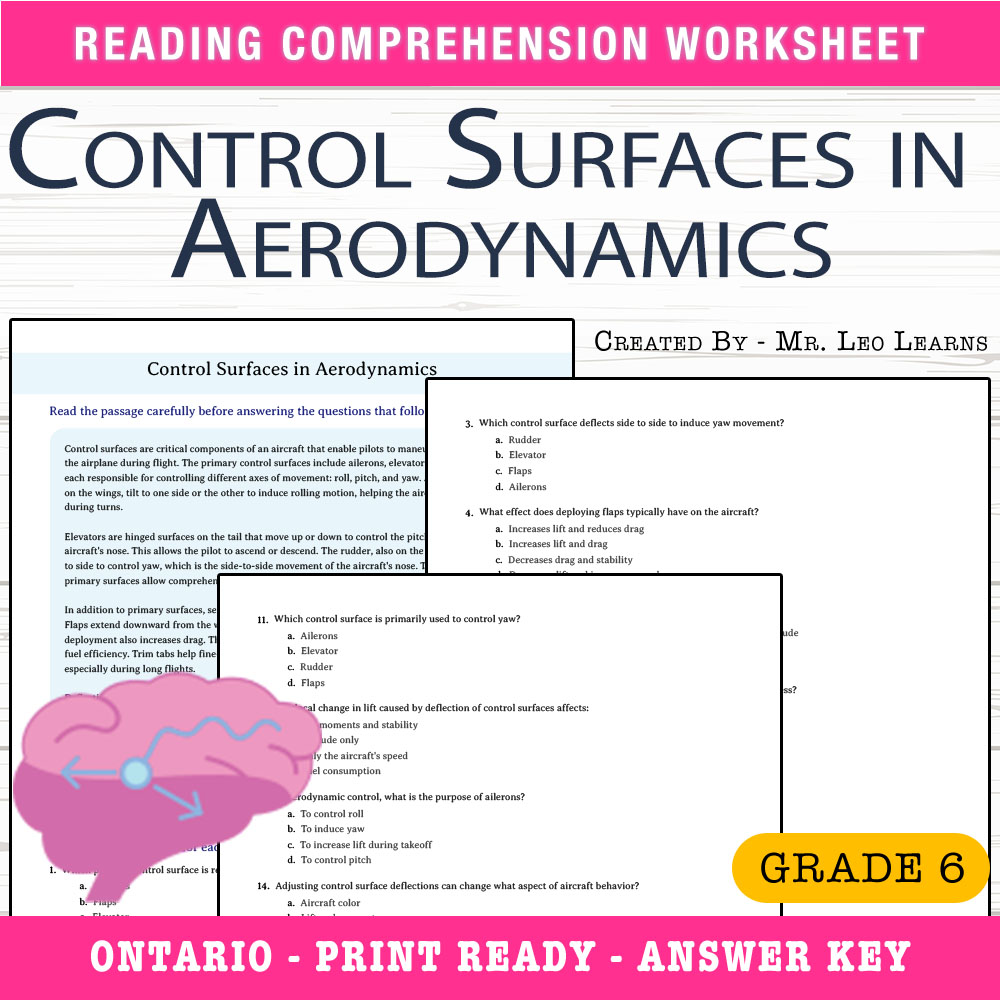
Grade 6 Science — Control Surfaces in Aerodynamics Worksheet for Mastery
Created byThe Resource HubLearning Objectives
- Understand the primary and secondary control surfaces such as ailerons, elevators, rudder, and flaps.
- Explain how deflection of control surfaces affects aircraft movement in roll, pitch, and yaw.
- Describe the concepts of control authority, aerodynamic stability, and how control inputs impact performance.
Also included in: Grade 6 Science | Aerodynamics & Engineering Unit Workbook (Worksheet Pack) +1 more
Instant download
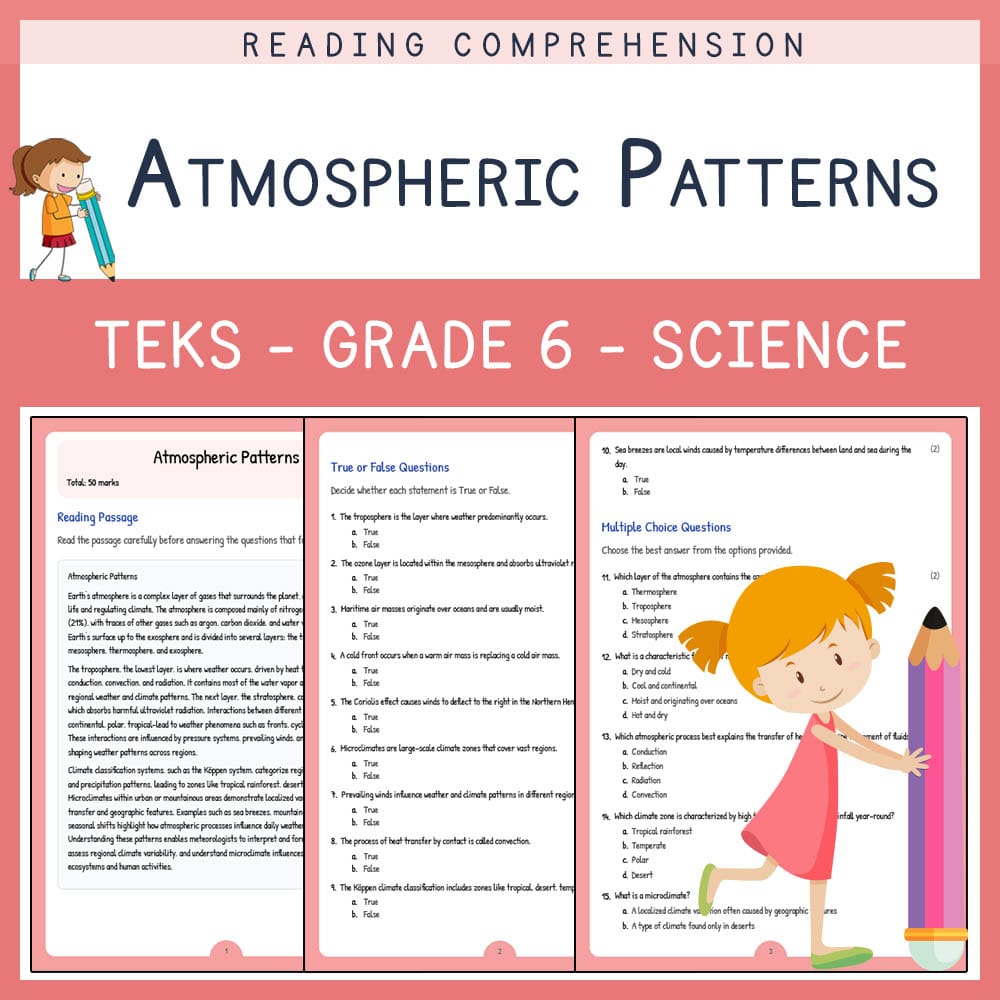
Grade 6 Science | Atmospheric Patterns Worksheet | TEKS Alligned
Created byLumora LearningLearning Objectives
- Understand the structure and components of Earth's atmosphere.
- Identify different types of air masses and their interactions.
- Describe climate classification systems and regional climate zones.
Also included in: Grade 6 Science | Earth and Space Science Unit Bundle | TEKS Standard
Instant download
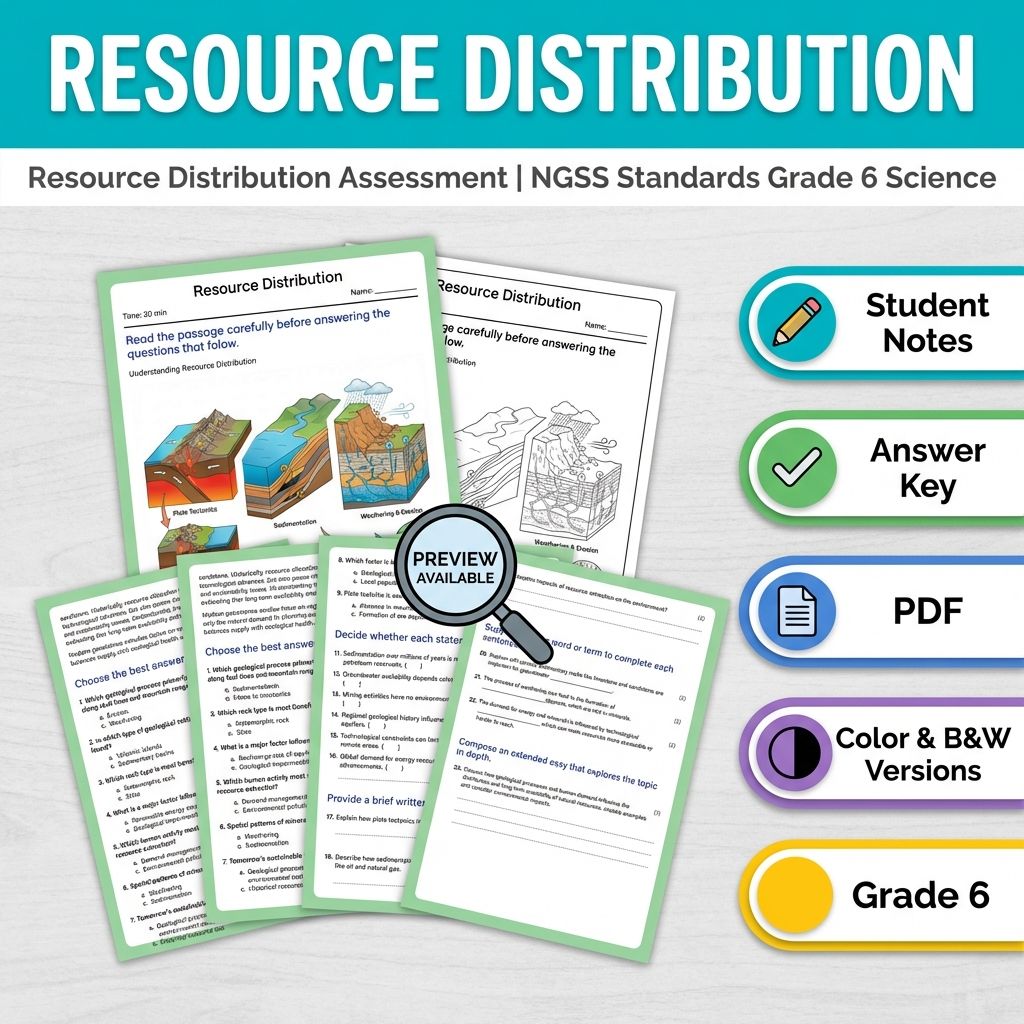
Resource Distribution Assessment | NGSS Standards Grade 6 Science
Created byPrism Point LearningLearning Objectives
- Understand the processes contributing to the distribution of mineral, energy, and groundwater resources.
- Analyze how geological history influences resource patterns and availability.
- Evaluate trade-offs in resource extraction considering environmental and technological constraints.
Also included in: Grade 6 Science Mini Bundle | Earth and Human Activity NGSS Not Specified +1 more
Instant download
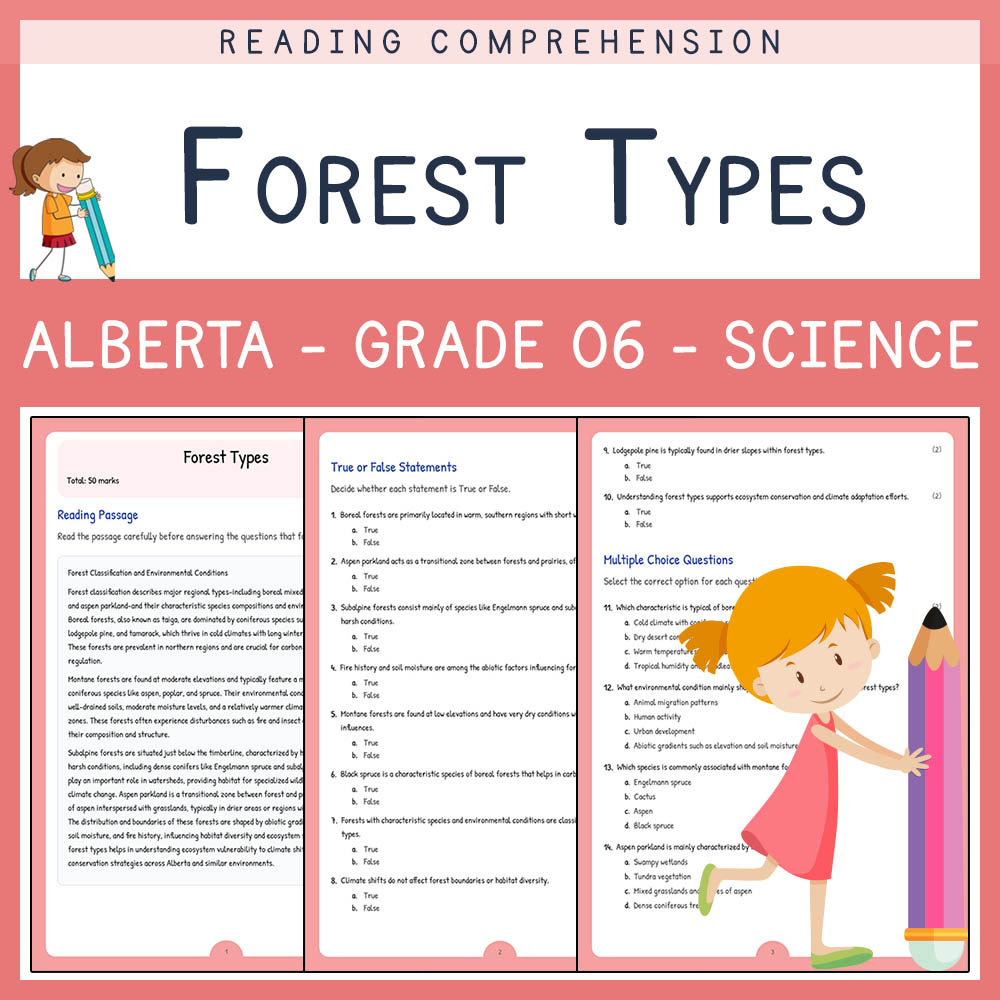
Grade 6 Science | Forest Types Worksheet Elena | Alberta Standards
Created byLumora LearningLearning Objectives
- Describe major regional forest types such as boreal mixedwood, montane, subalpine, and aspen parkland.
- Identify characteristic species and environmental conditions of different forest types.
- Understand how abiotic gradients like elevation, soil moisture, and fire history influence forest distribution.
Instant download
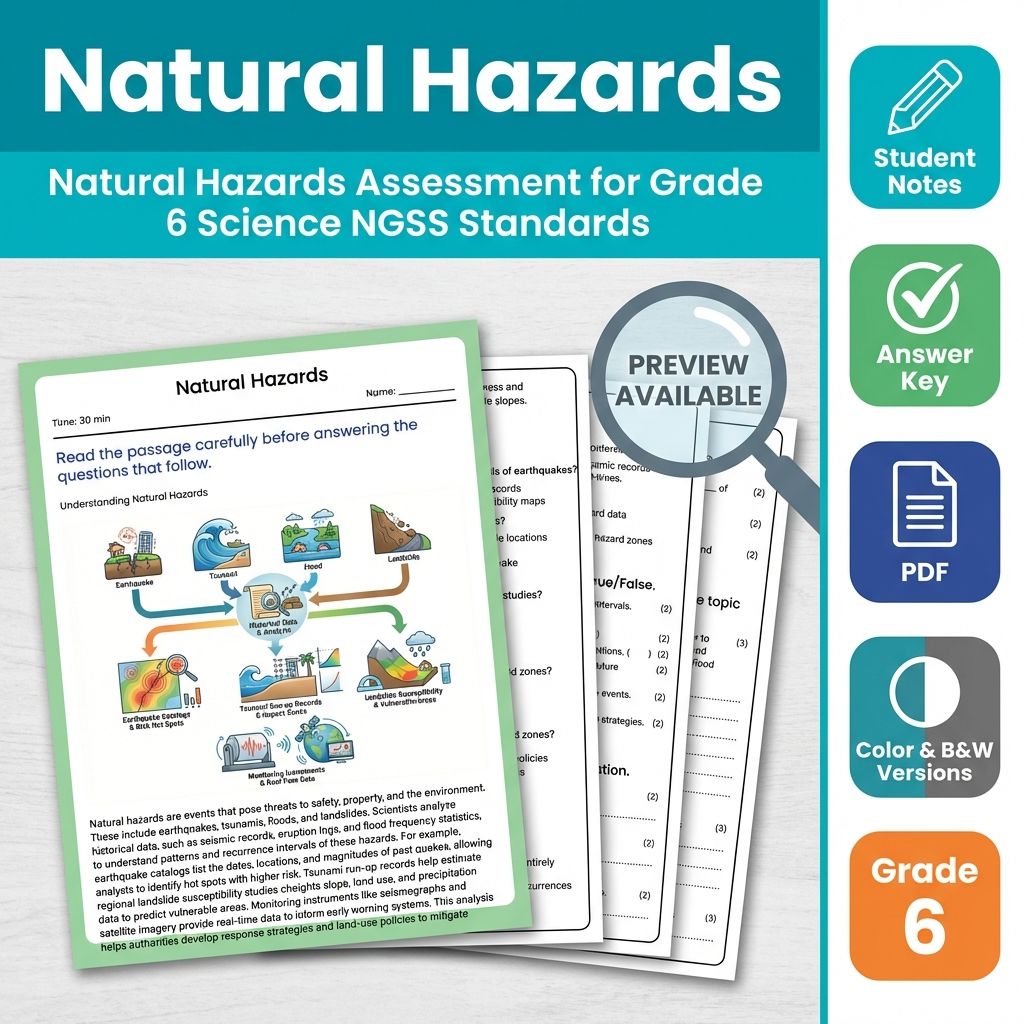
Natural Hazards Assessment for Grade 6 Science NGSS Standards
Created byPrism Point LearningLearning Objectives
- Understand methods for analyzing observational and instrumental data related to natural hazards.
- Identify patterns, recurrence intervals, and probable locations of hazards like earthquakes, tsunamis, and floods.
- Interpret data examples such as eruption histories and flood statistics to assess risks.
Also included in: Grade 6 Science Mini Bundle – Earth's Systems NGSS Standards-Aligned +1 more
Instant download
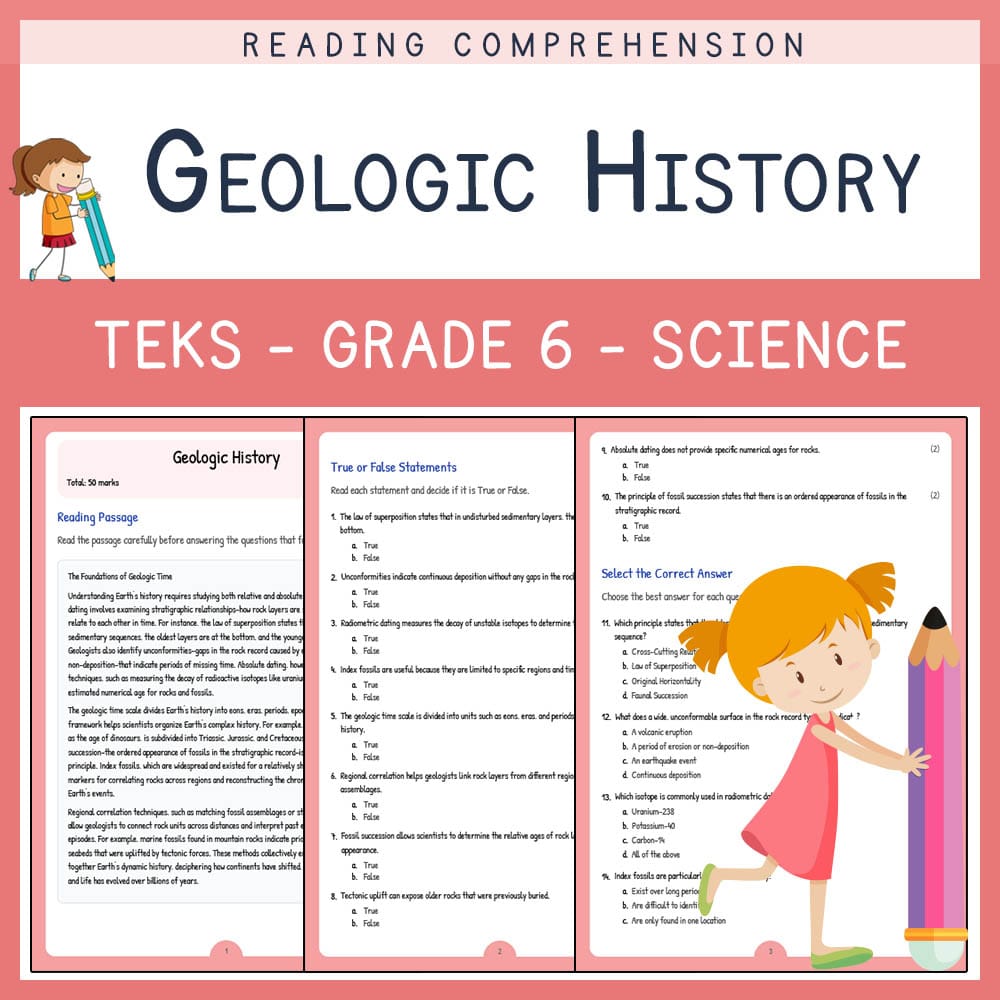
Grade 6 Science | Geologic History Worksheet | TEKS Aligned
Created byLumora LearningLearning Objectives
- Understand the principles of relative and absolute dating of rocks and fossils.
- Identify key features of the geologic time scale and fossil succession as evidence for Earth's history.
- Apply stratigraphic relationships, unconformities, and radiometric techniques to estimate the ages of rocks and geologic events.
Also included in: Grade 6 Science | Earth and Space Science Unit Bundle | TEKS Standard
Instant download
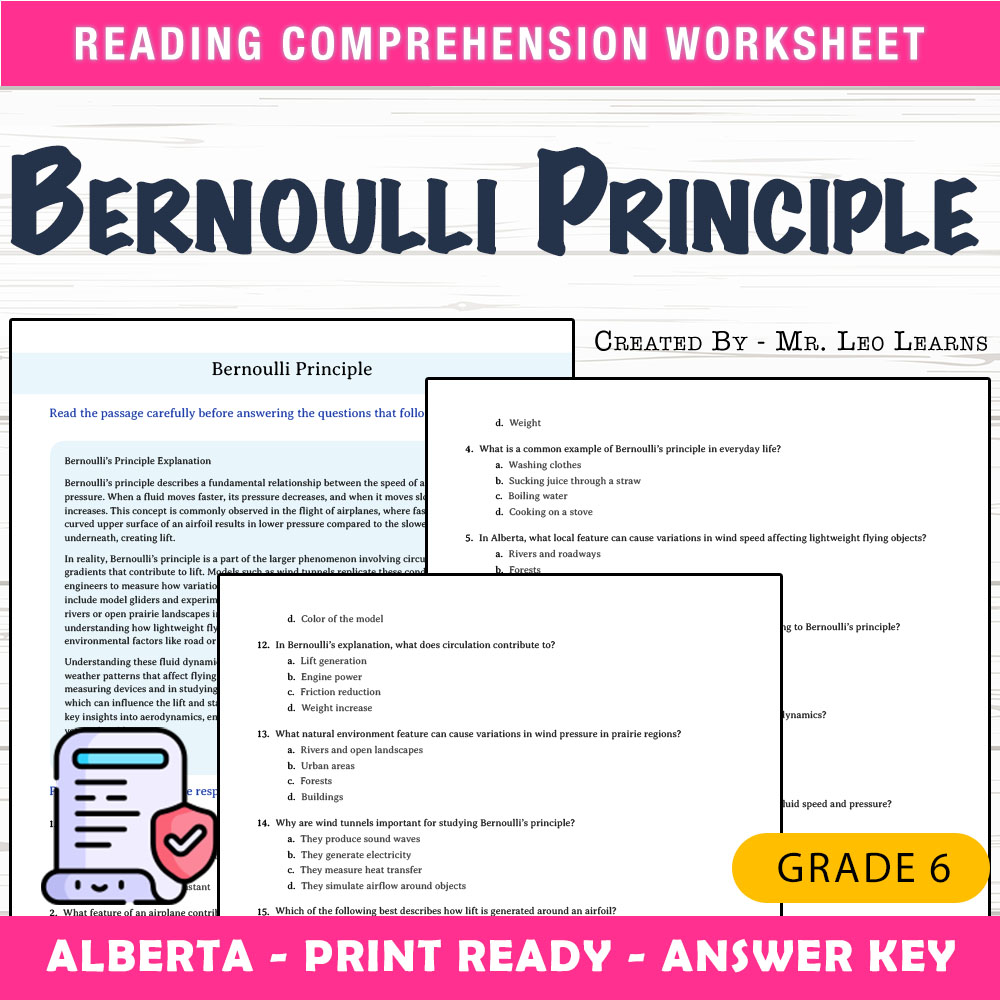
Grade 6 Science — Bernoulli Principle Worksheet MCQ Paper for Mastery
Created byThe Resource HubLearning Objectives
- Explain how fluid speed and pressure are related according to Bernoulli's principle.
- Describe practical applications of Bernoulli's principle such as model gliders and wind tunnels.
- Understand how local wind speeds over surfaces like rivers or roads can influence pressure and lightweight objects.
Also included in: Grade 6 Science | Air and Aerodynamics UNIT Worksheet Bundle (Alberta Framework) +1 more
Instant download
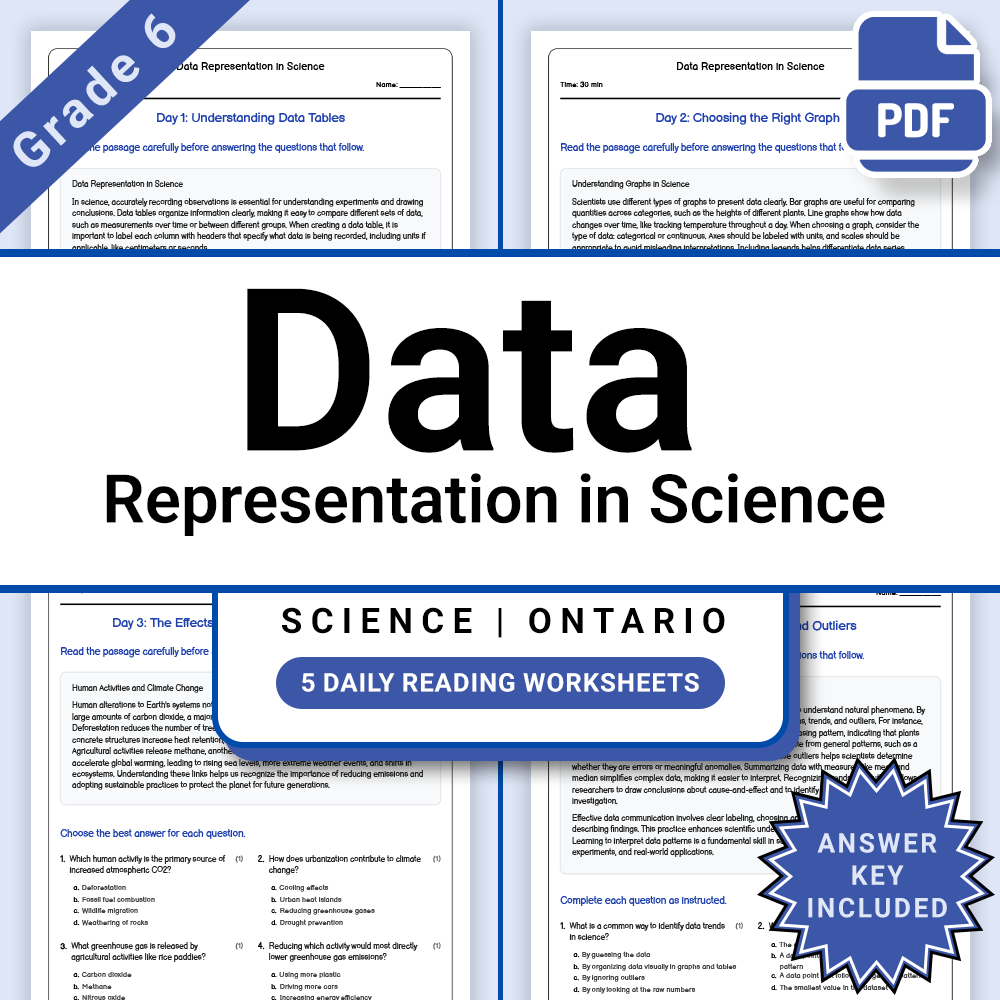
Grade 6 Science – Data Representation Daily Reading Worksheet + Answer Key
JCreated byJ.S SheetsLearning Objectives
- Understand how to organize data into tables
- Interpret information from data tables
- Select suitable chart types to display data
Also included in: Grade 6 Science STEM Skills and Connections Lesson Bundle with Ontario Framework +1 more
Instant download
Grade 6 Science | Digital Sources Worksheet Elena | Alberta Standards
Created byLumora LearningLearning Objectives
- Understand what digital sources are and how they are used in local inquiry.
- Identify various types of digital data, including datasets, sensors, and remote sensing products.
- Learn how to verify metadata, including temporal resolution and spatial coverage, in Alberta contexts.
Also included in: Grade 6 Science | Evidence and Investigation Custom Bundle | Alberta
Instant download
Growth Rings Assessment | Alberta Standards Grade 6 Science
Created byPrism Point LearningLearning Objectives
- Explain how growth rings form and what information they reveal about a tree's age and environmental history.
- Identify factors such as climate and disturbances that affect growth ring characteristics in tree species.
- Describe how dendrochronology is used to reconstruct past climate and forest responses.
Also included in: Lesson Grade 6 Science Mini Bundle Trees and Forests Alberta Standards
Instant download
Grade 6 Science – Introduction to Geologic Time Daily Worksheet + Answer Key
JCreated byJ.S SheetsLearning Objectives
- Understand key concepts related to Science
- Apply knowledge through practice questions
- Demonstrate comprehension of the material
Also included in: Grade 6 Science Lesson Bundle: Space, Water, Earth, and Resources TEKS +1 more
Instant download

Grade 6 Science | Adaptation Tradeoffs Worksheet | BC Aligned
Created byLumora LearningLearning Objectives
- Understand the concept of adaptation trade-offs in organisms and how they impact survival.
- Identify examples of structural and physiological trade-offs in animal adaptations.
- Evaluate the costs and benefits of specific traits in different environmental contexts.
Instant download

Grade 6 Science – Electrostatic Phenomena & Static Electricity | Worksheet
Created byBright Mind ResourcesLearning Objectives
- Understand the basic principles of static electricity.
- Identify sources of electrostatic charge in everyday materials.
- Describe phenomena such as attraction, repulsion, and sparks.
Also included in: Grade 6 Electricity Science Daily Reading Lesson Bundle | Ontario +1 more
Instant download
Grade 6 Science – Synthetic Materials & Plastics | Daily Reading Worksheet
 Created byElena Brooks
Learning Objectives
- Understand the origins of synthetic materials, especially plastics from petroleum.
- Recognize the manufacturing processes involved in producing synthetic materials.
- Compare properties of natural and synthetic materials such as durability, flexibility, conductivity, and biodegradability.
Also included in: Grade 6 Science Matter and Its Interactions Lesson Bundle | NGSS +1 more
Instant download
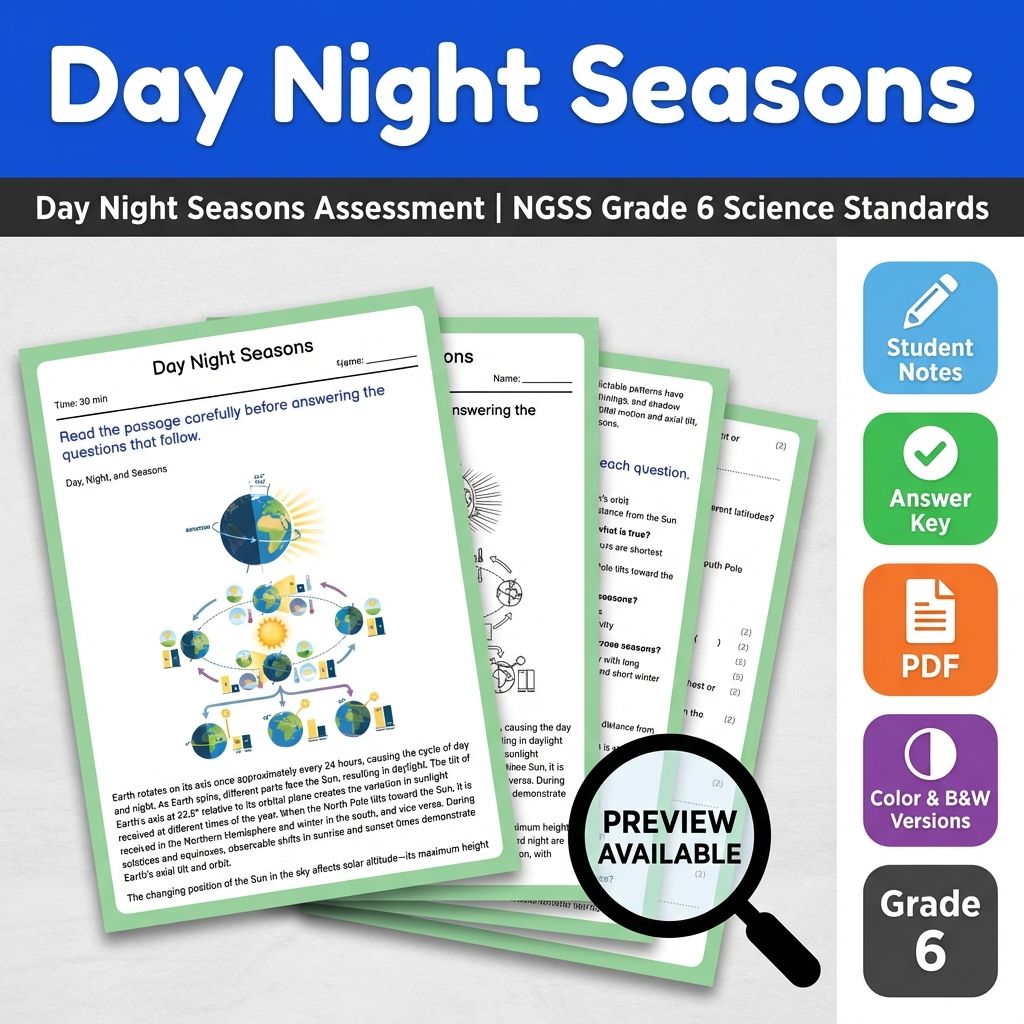
Day Night Seasons Assessment | NGSS Grade 6 Science Standards
Created byPrism Point LearningLearning Objectives
- Explain Earth's rotation and how it produces day and night.
- Describe Earth's orbit around the Sun and how axial tilt causes seasonal changes.
- Identify key observational markers such as solstices and equinoxes.
Also included in: Grade 6 Science Mini Bundle | Earth’s Place in the Universe NGSS Standards +1 more
Instant download

Sun Earth Moon Worksheet Grade 6 Science | Gravity & Orbit Activity
 Created byChalk and Compass
Learning Objectives
- Explain how the Sun’s dominant gravity affects the Earth–Moon system
- Describe how mutual gravity between Earth and Moon leads to an Earth–Moon barycenter and orbital motion
- Connect stable orbits to gravitational balance and mutual motion
Also included in: Space - Grade 6 Bundle +1 more
Instant download
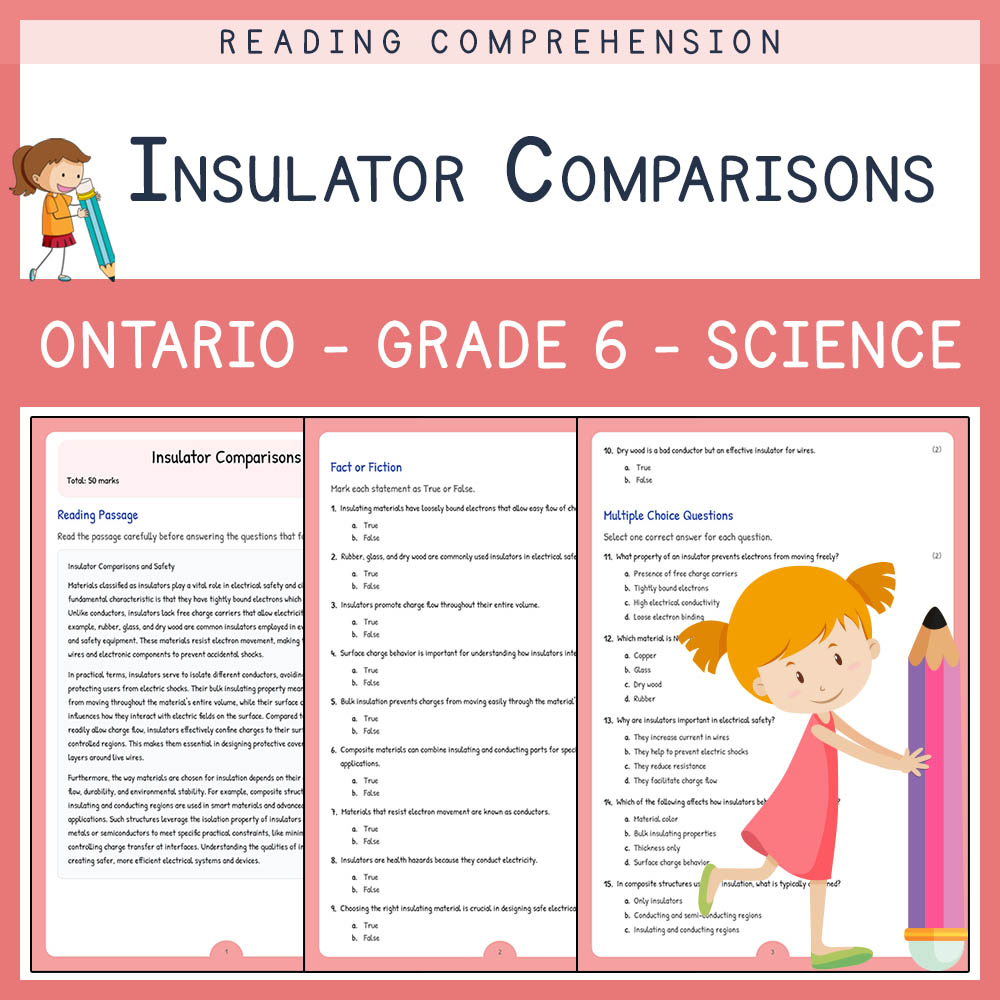
Grade 6 Science | Insulator Comparisons Worksheet & Answer Key (PDF)
Created byLumora LearningLearning Objectives
- Understand the properties that make materials good insulators and their role in electrical safety.
- Compare different insulating materials like rubber, glass, and dry wood based on electron binding and charge carrier presence.
- Explain how insulators prevent charge flow and support safety through isolation.
Also included in: Grade 6 Science | Electricity Unit Custom Bundle | Ontario Framework
Instant download
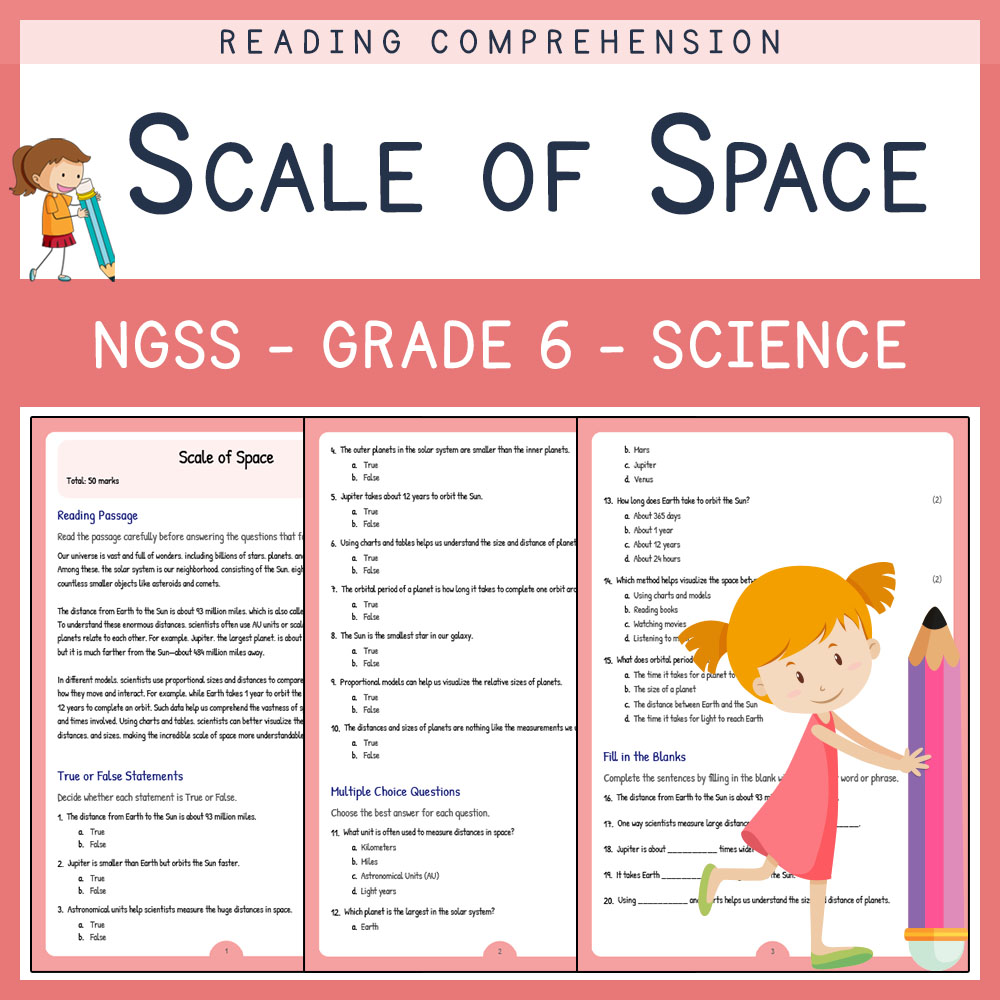
Grade 6 Science | Scale of Space Worksheet (PDF) | NGSS Aligned
Created byLumora LearningLearning Objectives
- Understand the relative sizes and distances of planets in the solar system.
- Learn about astronomical units and how they are used to measure space.
- Compare the sizes and orbital periods of planets like Earth and Jupiter.
Instant download

Cell Evidence Worksheet | NGSS Grade 6 Cells & Scientific Evidence
Created byAmber Owl EducationLearning Objectives
- Describe how microscopy and preserved specimens provide evidence that cells are the basic unit of life.
- Distinguish single-celled organisms from multicellular organisms using observable cell features.
- Explain how the organization from cells to tissues, organs, and whole organisms is supported by empirical observations.
Also included in: Cells & Scientific Evidence Lesson Bundle – Grade 6 Science NGSS +1 more
Instant download

Grade 6 Resource Distribution Worksheet | NGSS Earth Science & Answer Key
 Created byNorthstar Worksheets
Learning Objectives
- Explain how geoscience processes like plate tectonics, sedimentation, and weathering can affect where mineral and energy resources form.
- Describe how groundwater flow and hydrologic conditions influence the location and availability of aquifers.
- Evaluate how demand, extraction impacts, and technology affect trade-offs in resource allocation and long-term availability.
Also included in: Sustainability & Human Impacts Lesson Bundle | Grade 6 Science | NGSS +1 more
Instant download
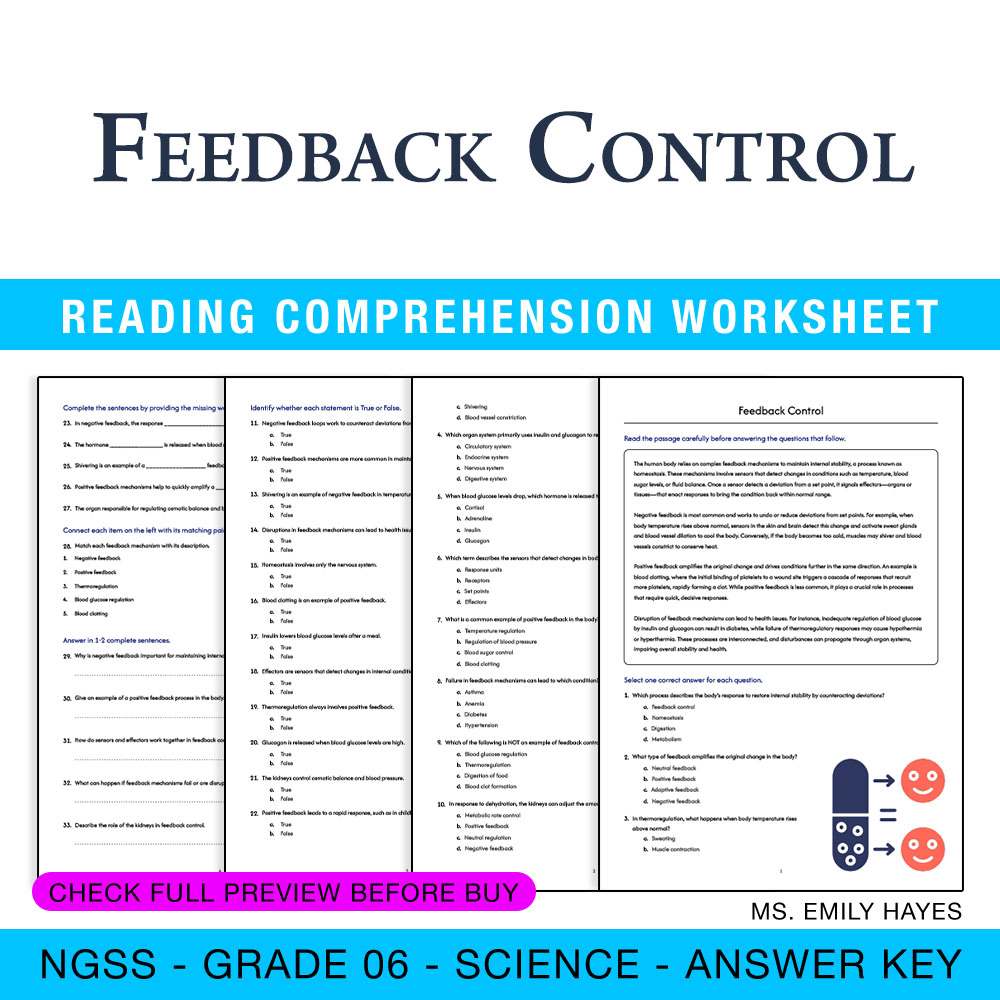
6th Grade Science | Feedback Control Worksheet (PDF + Answer Key)
Created byCopper Leaf ClassroomLearning Objectives
- Describe how negative and positive feedback mechanisms regulate internal body conditions.
- Explain examples of feedback control in human physiological processes such as thermoregulation, blood glucose regulation, and osmotic balance.
- Identify the roles of sensors, effectors, and set points in maintaining homeostasis.
Instant download
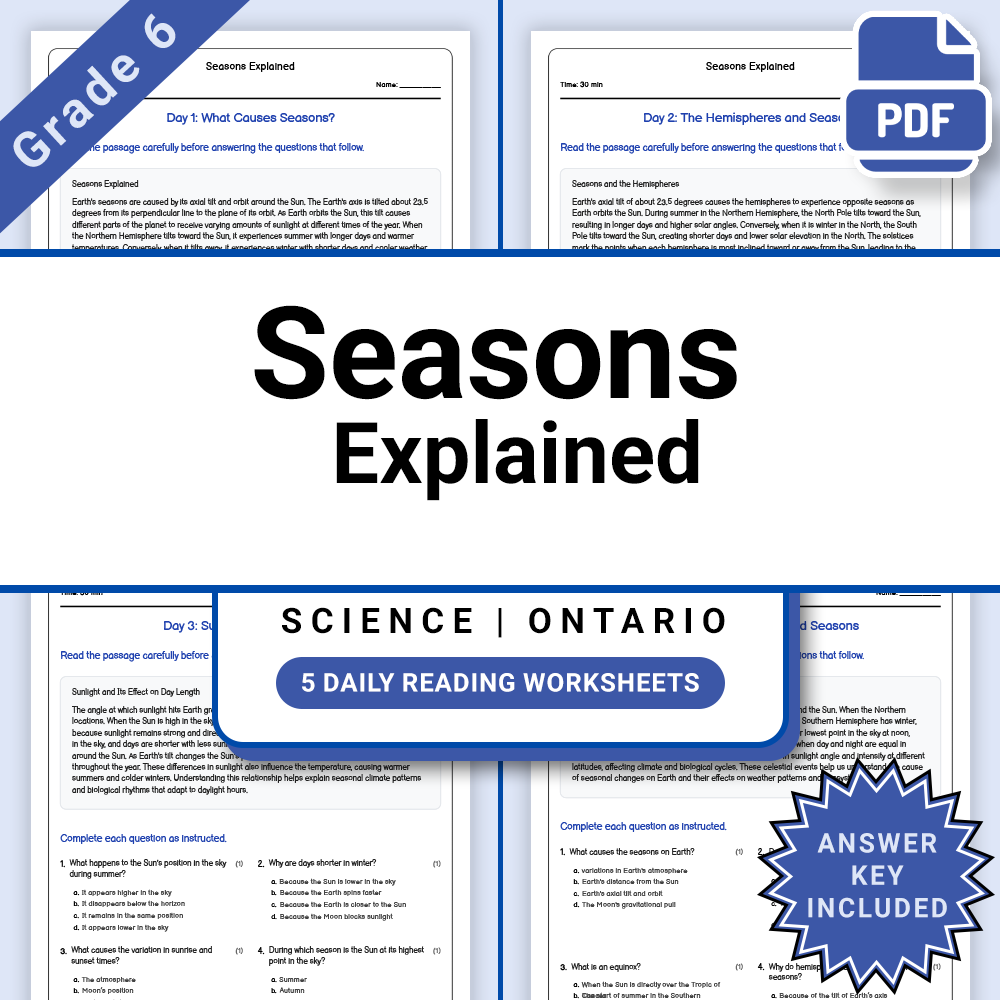
Grade 6 Science – Seasons Explained Daily Reading Worksheet + Answer Key
JCreated byJ.S SheetsLearning Objectives
- Understand how Earth's axial tilt causes seasonal changes.
- Explain how Earth's orbit influences the variation in sunlight during the year.
- Describe why hemispheres experience opposite seasons.
Also included in: Grade 6 Science Lesson Bundle | Sun, Earth, Moon & Space Concepts +1 more
Instant download
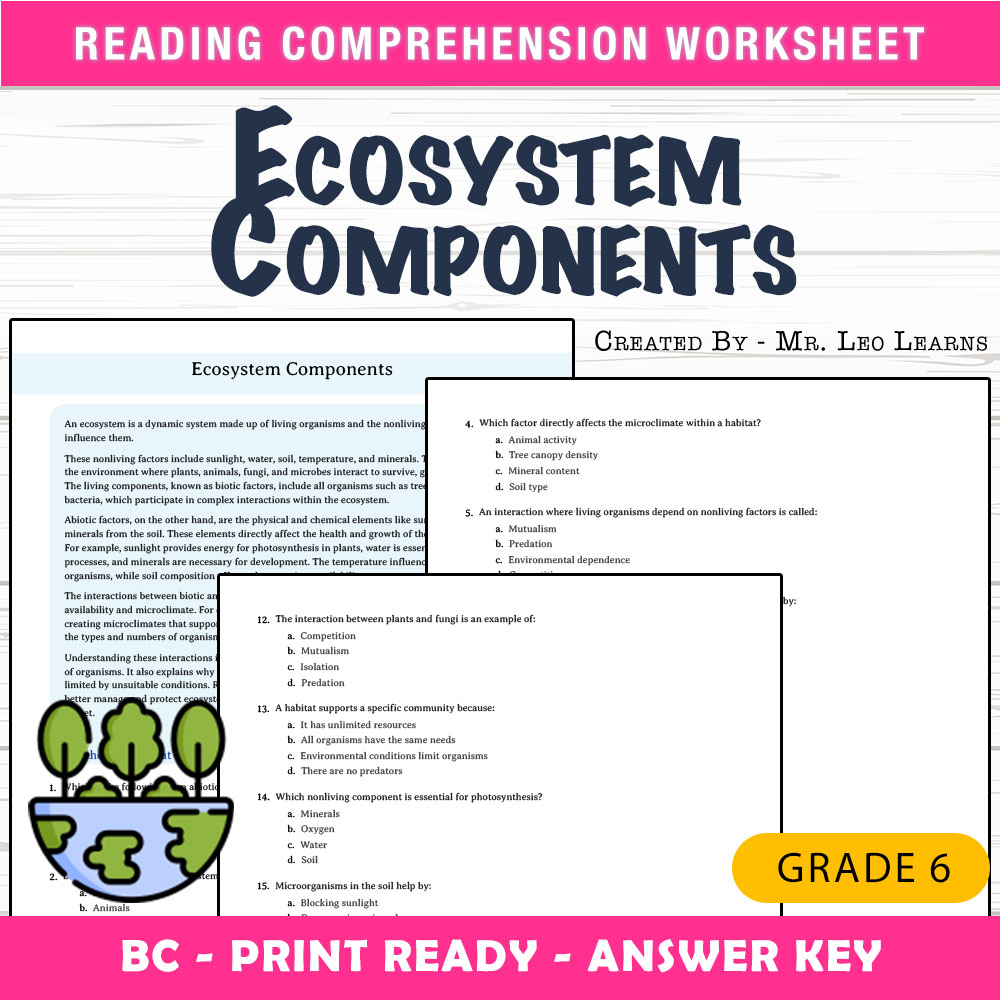
Grade 6 Science — Ecosystem Components Worksheet for Mastery
Created byThe Resource HubLearning Objectives
- Understand the different components that make up an ecosystem.
- Identify the roles of biotic and abiotic factors in ecosystems.
- Recognize how interactions between organisms and their environment influence habitat conditions.
Also included in: Grade 6 Science Ecosystems & Interdependence Worksheet Bundle – BC Curriculum +1 more
Instant download
About Grade 6 Science Worksheets
Explore Grade 6 Science worksheets for classwork, homework, or review. Our 5,997 printables download instantly as PDFs.
MyTeachingSheets worksheets are made by real teacher-authors and checked before they go live. Download any as a print-ready PDF for lessons, homework, or independent practice — most include answer keys, and previews are always free.